Portable Power
EcoFlow Delta Review: A Portable Power Station That Pulls Its Weight on the Job Site
A 1260Wh battery power station with 1800W continuous output, tested here charging tool batteries and running appliances off grid.
Introduction
Most tool-focused gear reviews stay firmly in the world of drills and saws, but every so often a product comes along that earns its place on a job site for a different reason. The EcoFlow Delta is one of those: a large portable power station, essentially a giant battery with regulation built in, that can run appliances and keep cordless tool batteries topped up when there is no wall socket anywhere nearby.
If you have ever needed to charge a drill battery with no mains power, wanted to keep a fridge running at an off-grid cabin, or simply wished for a quieter alternative to a petrol generator during a blackout, this is exactly the problem the Delta sets out to solve.
What the EcoFlow Delta Actually Is
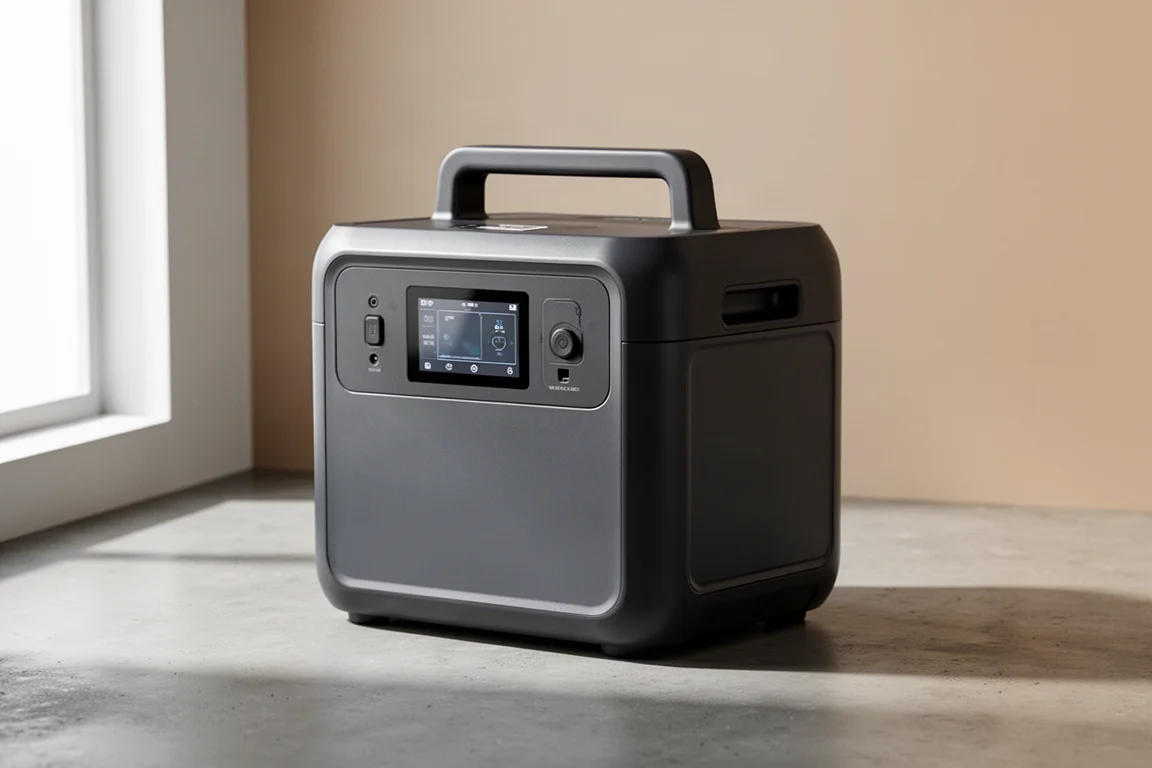
At its core, the Delta is a 1260 watt hour lithium-ion battery rated at 50.4 volts. It has a screen on the front that shows the current charge level and estimated run time, and the display sensibly times out after a few minutes so it is not draining power while idle. Four cooling fans are built into the body, and a panel on the rear handles charging inputs, with a separate bank of outlets on the opposite end.
It can be recharged three ways: from AC wall power, from a car while driving to your destination, or from a solar panel. Charging starts slowly to avoid overheating the cells, ramps up through the middle range, then slows again toward full. Replenishing the full 1260 watt hours from the wall took just over an hour and a half in testing, with input peaking around 1200 watts.
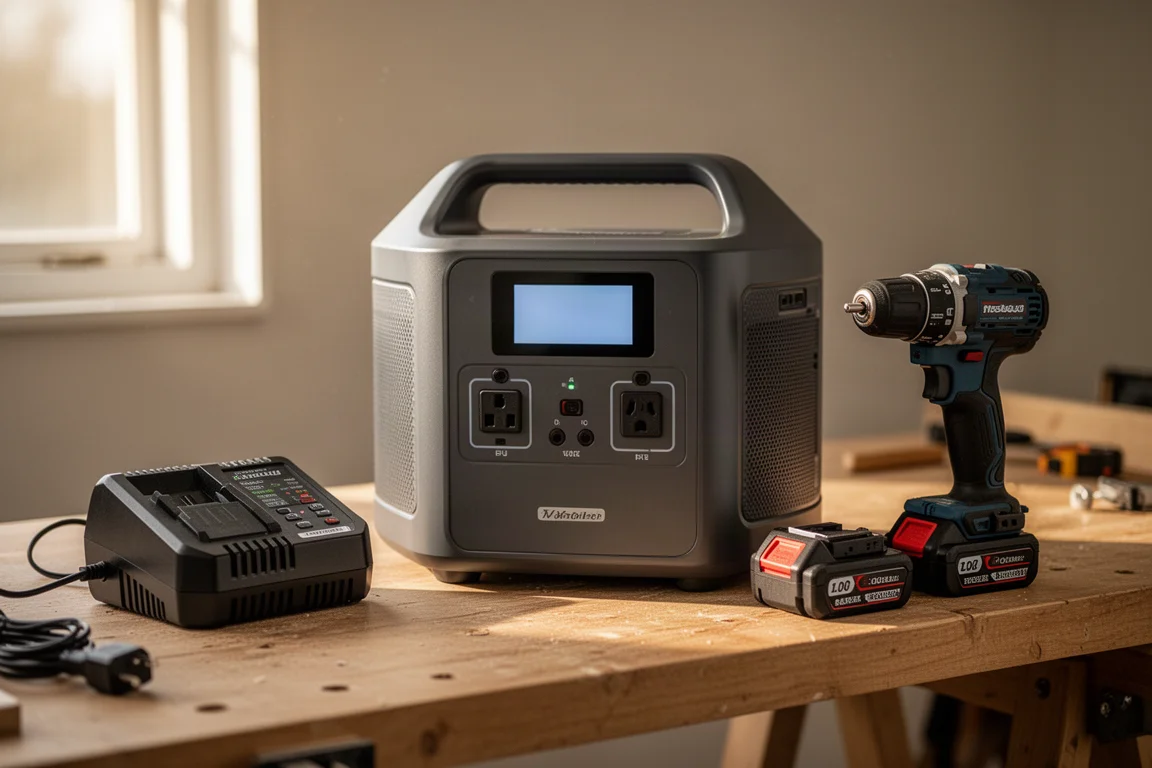
The unit weighs around 14 kg, roughly the equivalent of seven cordless tool batteries, so it is portable in the same way a packed suitcase is portable: you can move it, but you would not want to carry it far. It ships with a padded fabric carry bag with a zip on the side to make getting it in and out easier.
Charging Tool Batteries on a Power-Free Job Site
The most practical test for anyone who works with cordless tools is simple: how many batteries can you recharge before the Delta runs dry? Four chargers were plugged into the AC outlets and filled with a mix of batteries, from a 2.0Ah 12V pack up to two 8.0Ah 40V packs. The idle chargers alone drew around 14 to 15 watts just to run their lights and fans.
With every charger working, the total draw climbed to around 1130 watts, and the Delta charged all of the batteries in a single session, finishing with just seven percent of capacity remaining. In total, the connected batteries added up to 958Ah of stored charge. Some watt hours were inevitably lost along the way, since every charger spends power on its own fans and indicators before the energy even reaches a cell.
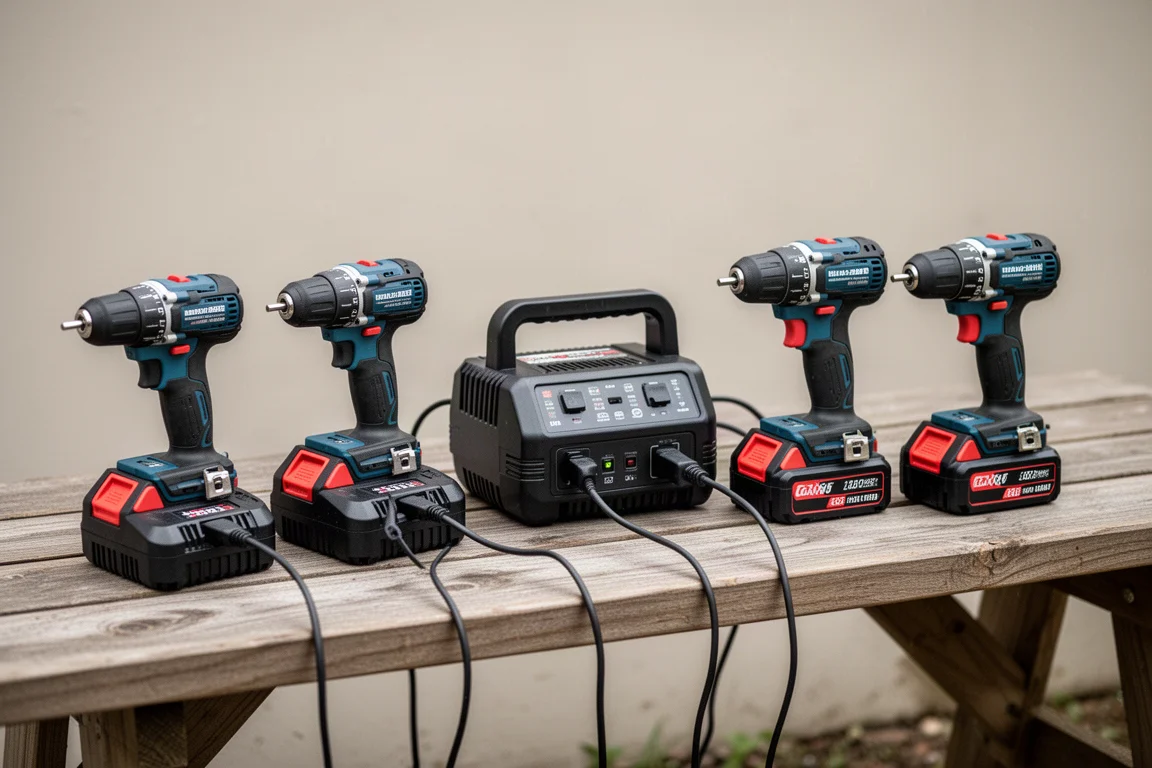
For tradespeople, that math is the real selling point. Rather than burning through your own tool batteries to power corded equipment, the Delta keeps your batteries charged so they stay available for the tools themselves. As a bonus, camera batteries, laptops, and phones can all be charged from it too, which makes it genuinely useful on trips or remote shoots.
Ports, Output, and Everyday Limits
On the output side, the Delta runs up to 1800 watts continuously with a 3300 watt peak allowance, enough headroom for the momentary spike when a refrigerator compressor kicks in. There are four AC outlets on one end plus a car-style socket, and on the front you get four USB ports (two standard, two fast) and two USB-C ports.
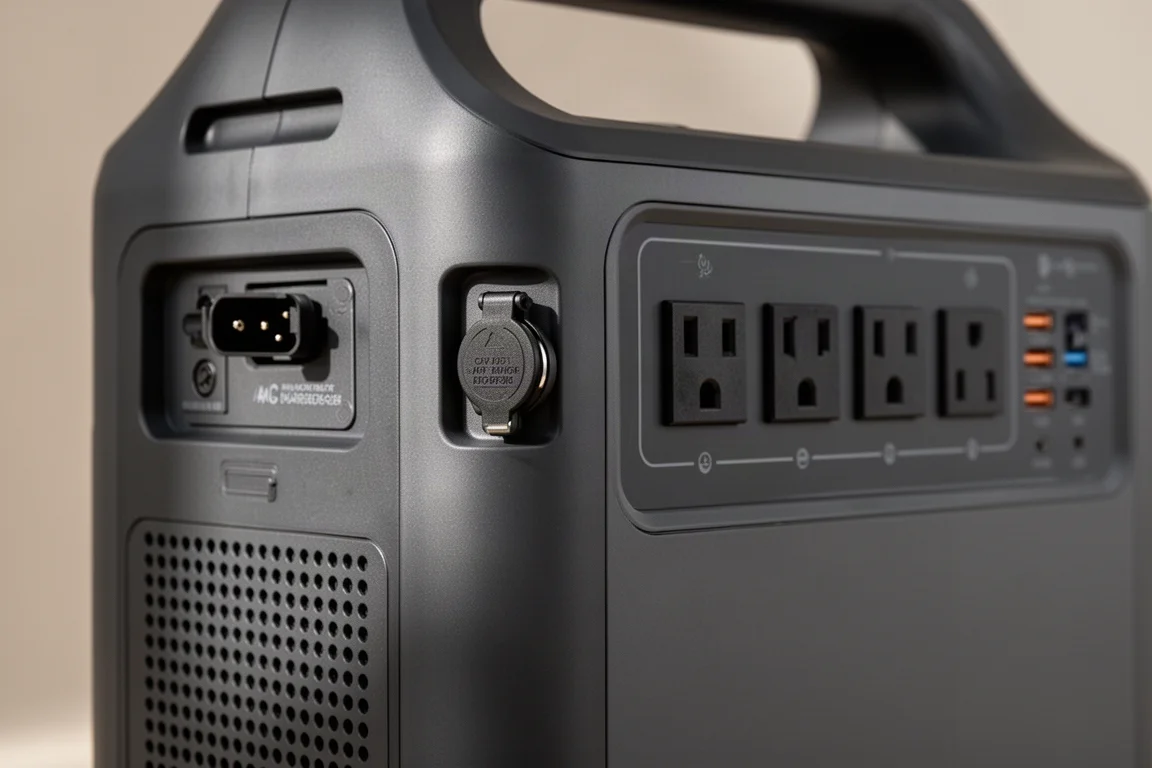
One practical caveat: this is a 240V Australian/New Zealand model, and the four outlets share a single 1800 watt maximum, so you cannot pull the full figure from each socket simultaneously. Large plugs with built-in transformers also tend to overlap adjacent outlets, which is a minor annoyance. Heating appliances are another limit: kettles and powerful heaters draw too much, though most heaters on lower settings are fine. Microwaves, fridges, computers, laptops, and televisions all run comfortably.
The unit also supports external expansion batteries of similar size, which hook up in series for greater capacity without duplicating the controls.
Powering a TV Through a Blackout
An interesting trick is the Delta’s changeover behavior. When it is plugged into the wall and pass-through powering a device, a simulated blackout should switch it to battery power in around 30 milliseconds. In practice, a television dropped its signal briefly and rebooted, so sensitive equipment like data servers is not a safe bet. For a refrigerator, though, a millisecond-level blip is harmless, and that is where the feature makes sense.
Where it really shines is low-draw situations. A television pulled only about 38 watts, meaning the Delta could keep it running for around 36 hours, with the cooling fans staying completely silent because so little power was flowing. That quiet, long-duration performance is exactly what you want in an emergency.
Living With It Around the Home and Off Grid
Durability was tested accidentally and repeatedly: the unit in its bag tumbled down a hill and over a retaining wall, suffering two drops of roughly one to 1.2 meters onto soft grass, and kept working without issue. It is not a drop rating you should rely on, but it says something about the build.
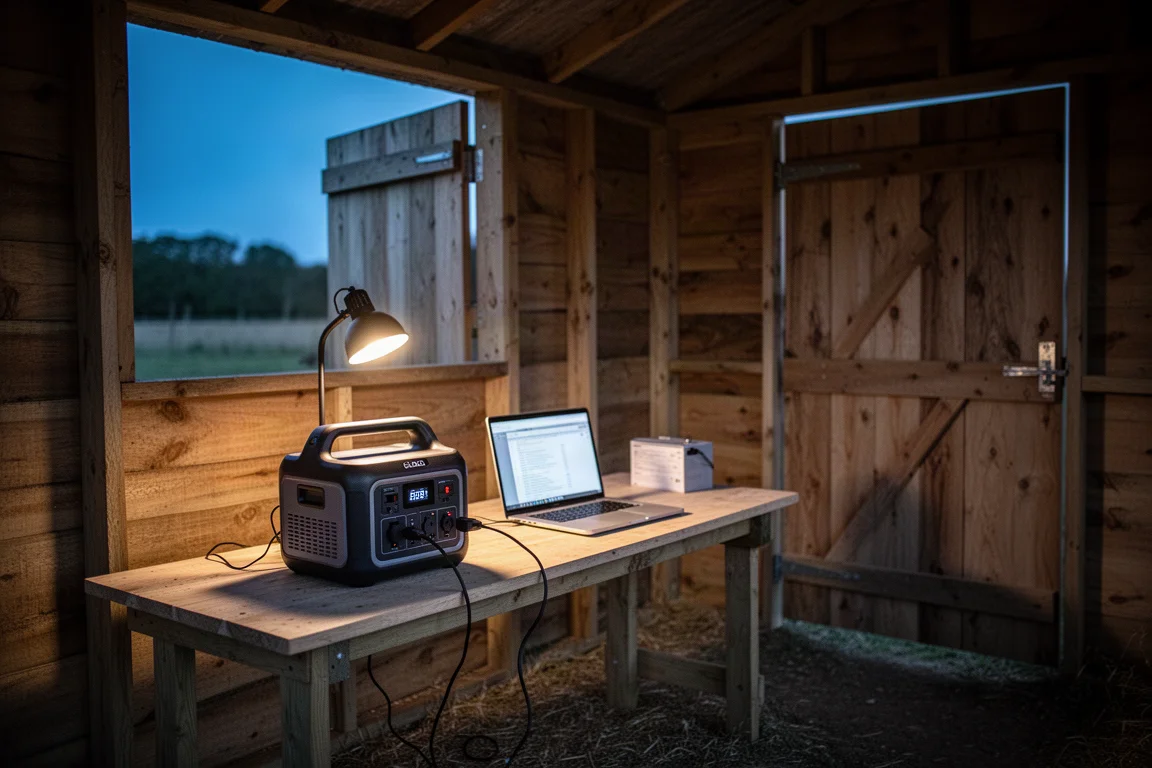
Over several weeks of use, the Delta handled lighting, music, and laptop charging in a shed with no mains power, and it would have been ideal during recent storm-related outages that left whole regions without electricity. Unlike a petrol generator, it can sit quietly indoors and run a fridge all night. Pairing it with solar panels for a permanent off-grid power supply in a shed, with no hard wiring required, is a natural next step, and EcoFlow offers several other models in the range depending on where you live.
Conclusion
The EcoFlow Delta is a genuinely useful bridge between the grid and the job site. It will not run your kettle, and it is too slow at changeover for sensitive electronics, but for charging tool batteries without mains power, keeping a fridge or TV running through an outage, or powering a power-free workspace, it delivers exactly what the spec sheet promises. For anyone who has ever watched a battery charger sit idle because there was nowhere to plug it in, this thing is worth its weight in gold.
Product link
View more details for EcoFlow Delta
This product is mentioned in the review. Check the specifications, options, and compatibility before buying.
View more details for EcoFlow DeltaFurther reading
Related Reviews
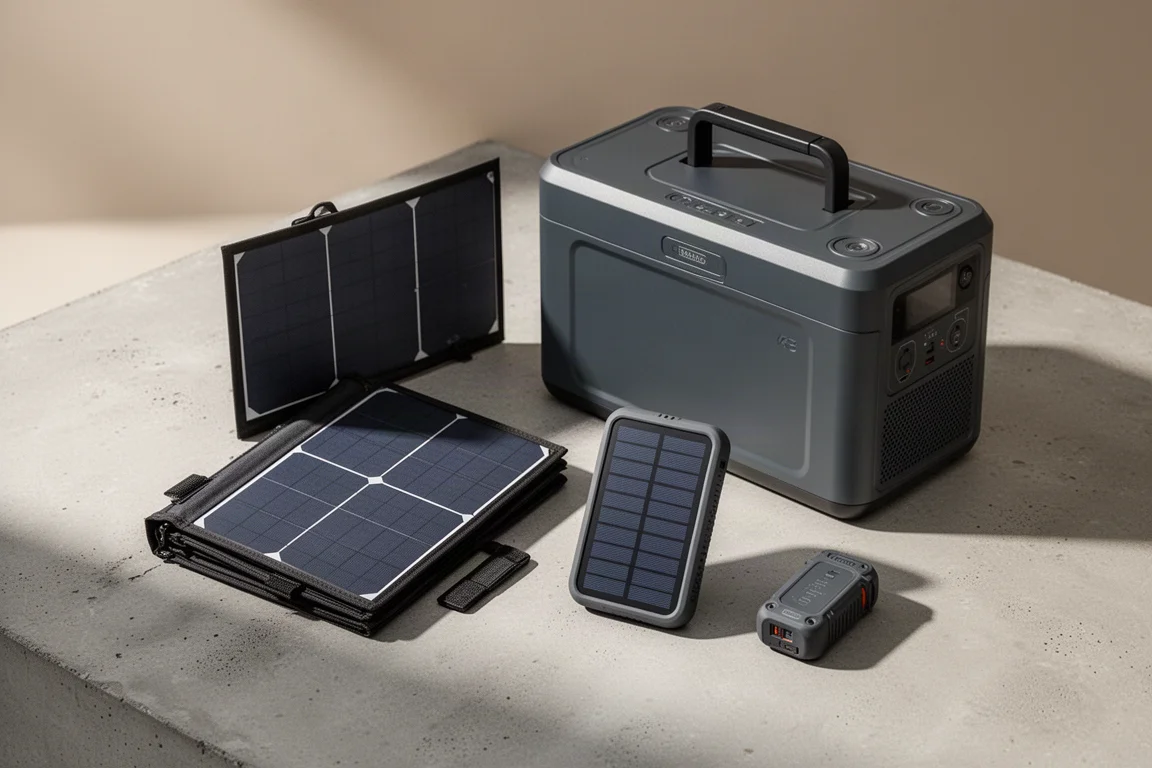
Portable Power
Best Portable Power for Camping and Remote Work: Six Power Banks and Solar Panels Compared
A practical comparison of six portable power options, from a 500W solar generator for car camping to a one pound solar power bank built for backpacking.
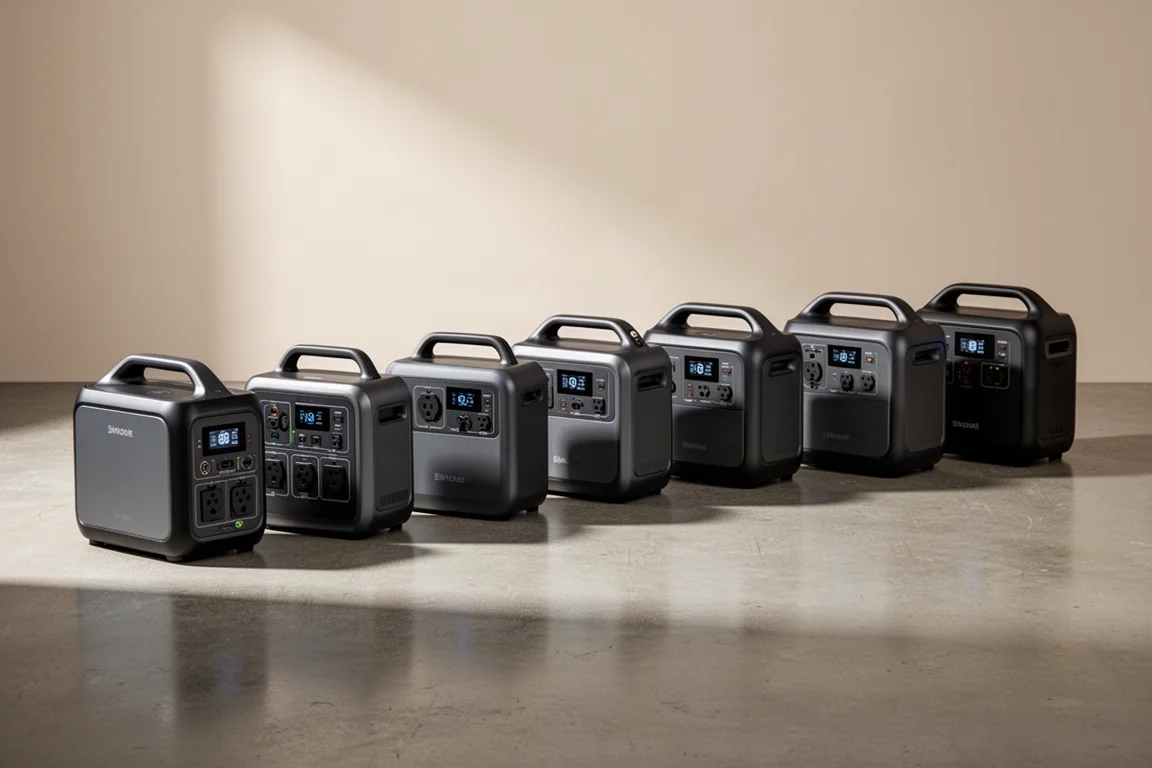
Portable Power
Best Portable Power Stations 2026: Nine Models Compared for Real-World Use
We compared nine portable power stations across output, capacity, charging speed, noise, and UPS performance to find the best value and the best overall pick.
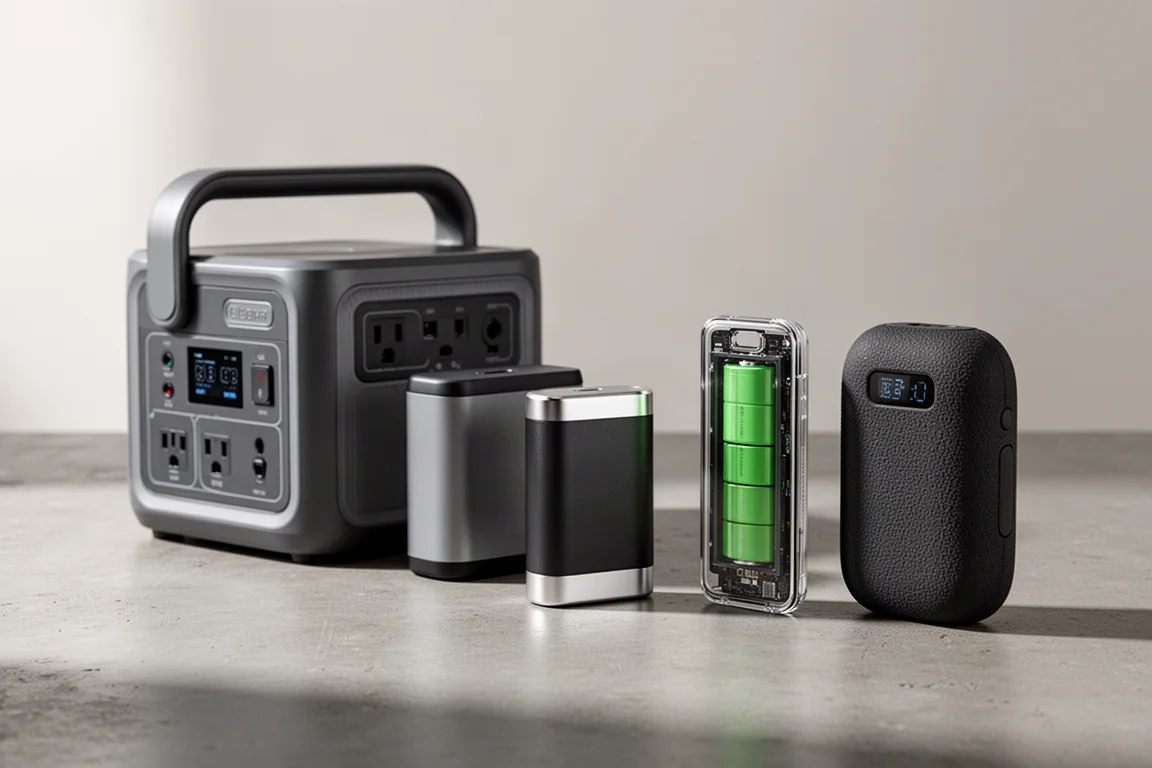
Portable Power
Best Portable Power Stations and Power Banks for Blackouts and Travel
Five portable power solutions compared: two EcoFlow power stations, a flight-friendly Zendure power bank, a see-through Shargeek, and the feature-packed Omni 20c+.