Hi-Fi Speakers
Eclipse TD 510 Z Review: Full-Range Timing in an Egg-Shaped Cabinet
A specialist stand-mounted speaker built around a single full-range driver, with outstanding imaging and midrange clarity but real limits on bass and loudness.
Introduction
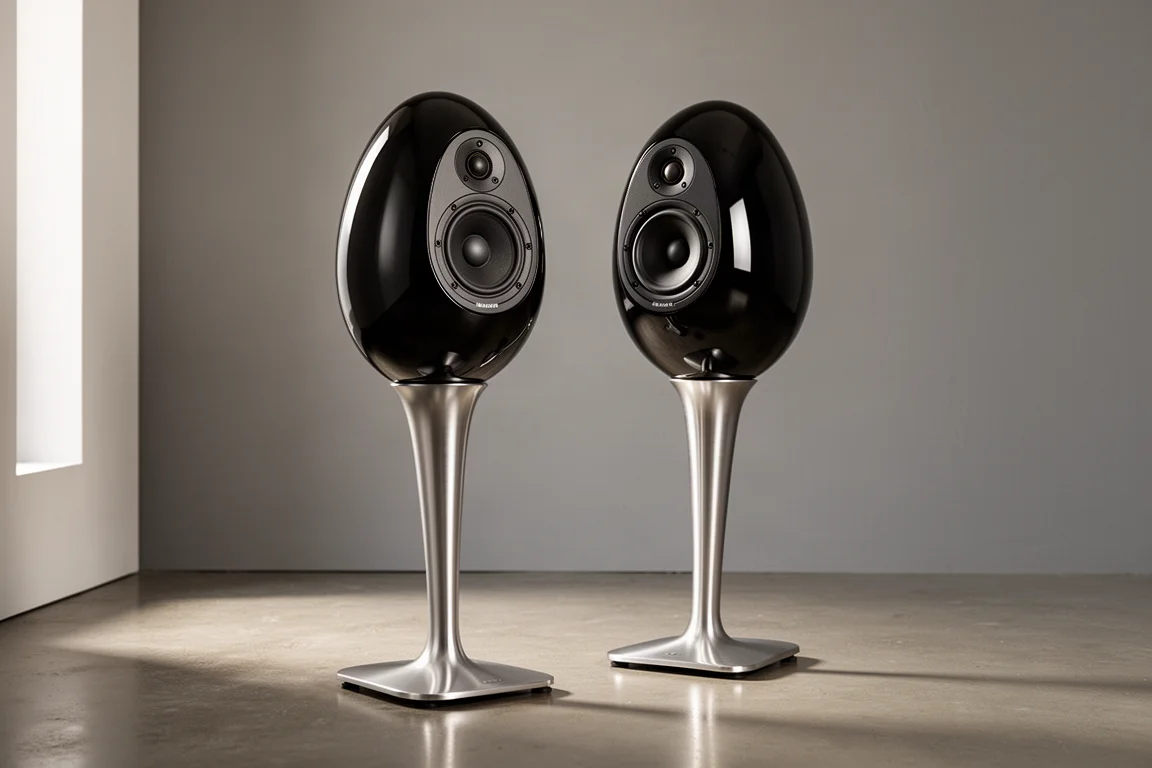
The Eclipse TD 510 Z is a specialist loudspeaker built around a single idea: a speaker should keep time. Its egg-shaped cabinet, its single full-range driver and its sculpted stand are not styling exercises. Each element exists to reduce the smearing that conventional box speakers introduce, so that the signal reaching your ears stays as close as possible to the signal leaving the amplifier.
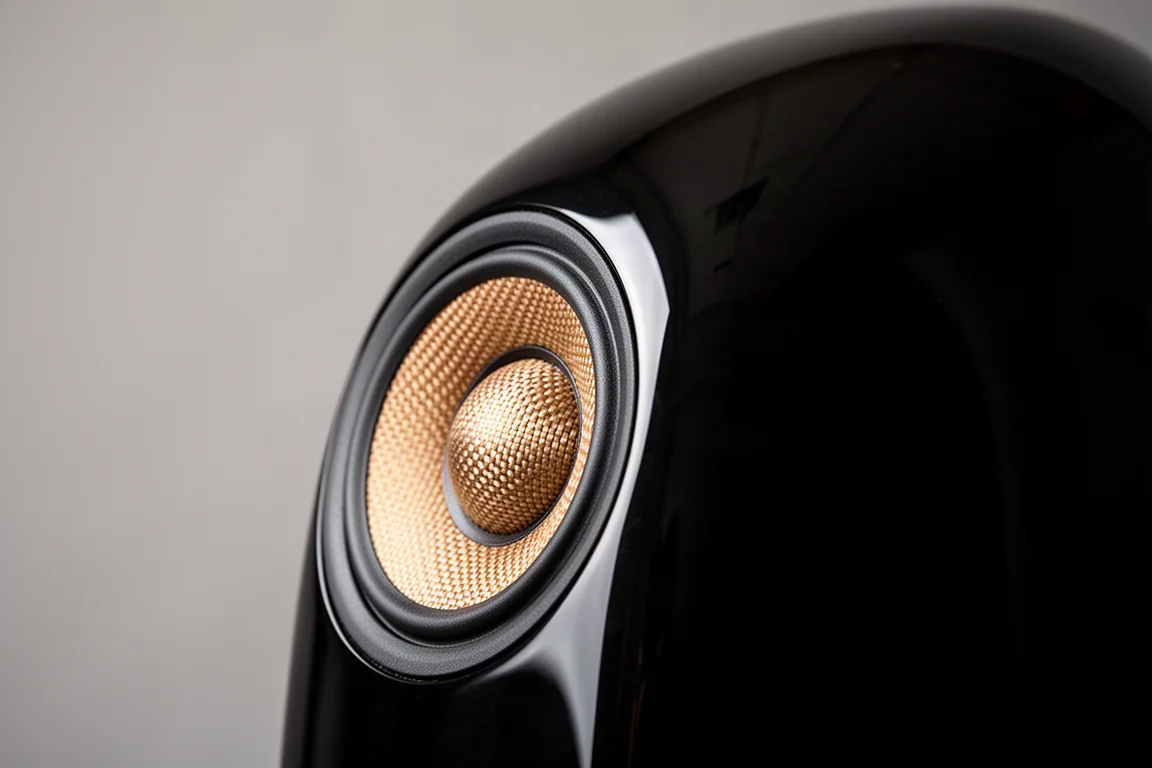
Eclipse is a Japanese brand, and the TD 510 Z is the clearest expression of that philosophy. There is no crossover network. One 10 cm (4 in) full-range driver with a woven fiberglass cone receives the amplifier’s output directly, and the cabinet is shaped to avoid the internal standing waves and edge diffraction that blur detail in rectangular enclosures. A white finish is available alongside piano black.
The result is a speaker that does some things remarkably well and accepts clear limits elsewhere. It images like very little else, it is superb at low volumes, and it will not deliver deep bass or large dynamic swings. Understanding that trade-off is the whole purchase decision.
Who This Product Is For
This speaker suits listeners who prioritise timing, imaging and tonal honesty over scale and weight. It is at its best with jazz, vocals and acoustic recordings where the placement of instruments and the decay of notes matter more than the amount of low-frequency energy in the room. Its strength at low listening levels also makes it a natural choice for small rooms, apartments and late-evening sessions.
It is the wrong choice for anyone who wants a full-range presentation from the main speakers alone. A 4 in driver cannot move enough air for deep bass or large dynamic shifts, so buyers who like to play loud or listen to bass-heavy material should plan on adding a subwoofer. Even with one, the main speakers set the practical ceiling on loudness.
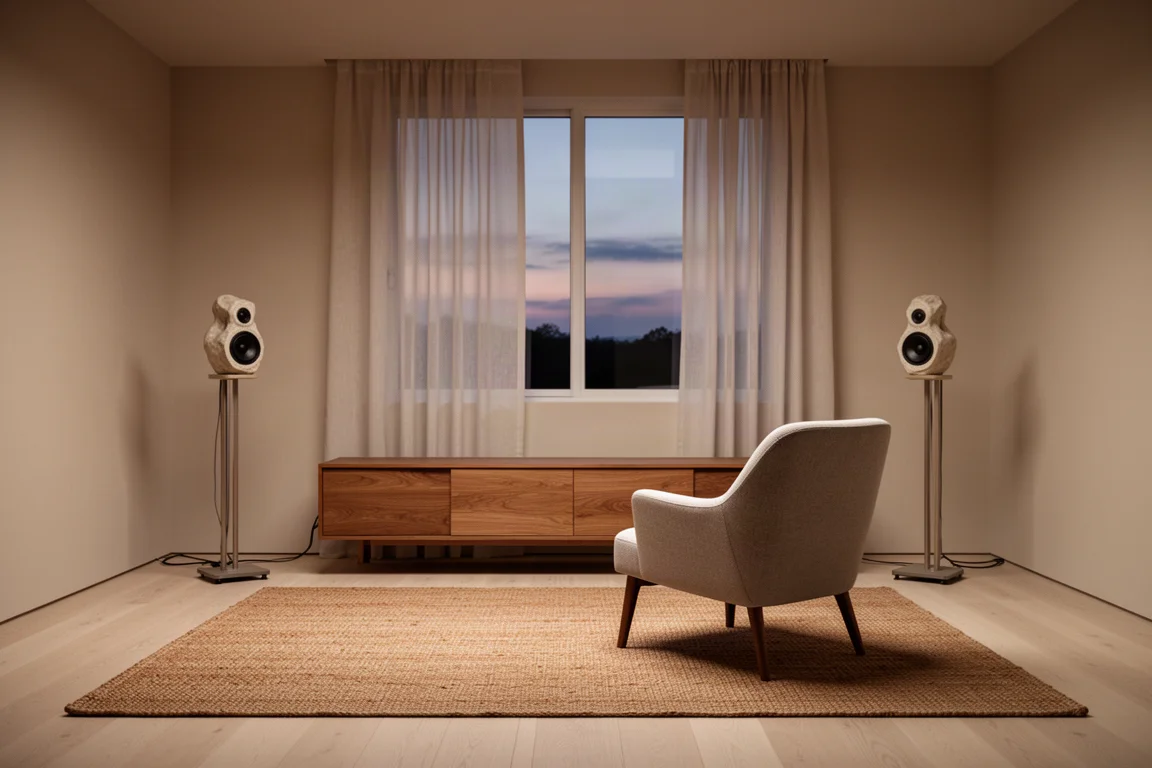
Buyers who care about how a system looks will also want to think about the room. The egg-shaped cabinets and slim aluminium stands are a strong design statement, and they look most at home in a minimalist space.
Main Strengths
Two areas define the TD 510 Z: the way it handles imaging and timing, and the depth of engineering in the cabinet and stand.
Imaging and Soundstage
Imaging is the standout quality. The soundstage is wide and deep, with a strong sense of layering, and performers can be placed not only across the stage but also at different heights in the mix. That precision comes largely from the absence of a conventional front baffle and from the single-driver layout, which removes the crossover region where two units hand over to each other and where integration problems usually begin.
Instrument separation is excellent, and the presentation holds together because nothing is exaggerated. Transients are crisp without sounding etched, notes decay naturally, and there is just enough body to give the sound fullness without colouring it.
Midrange Clarity and Tonality
The midrange is where the design pays off most obviously. Tonality is neutral and natural, detail is high, and the speaker stays engaging at volumes well below what most hi-fi systems need to come alive. At the top end the performance is clean and controlled, though it offers slightly less airiness than multi-driver designs, which is a common limitation of full-range drivers. Bass, where it exists, is clean, tight and well defined rather than extended.
Cabinet, Driver, and Stand Engineering
The egg-shaped enclosure is chosen to eliminate internal standing waves and to reduce the edge diffraction that smears timing in box speakers. The cabinet is rear ported through a flared elliptical aperture, with a single set of gold-plated binding posts positioned discreetly below it. Inside, a five-pillar brace that Eclipse calls a diffusion stay isolates the driver from the enclosure, and a cone-shaped mass anchor behind the magnet structure supports the driver as it moves.
The stand is part of the acoustic design rather than a mounting accessory. The cabinet bolts to it through a heavy-duty steel locking ring, and three steel pegs make point contact so the speaker can be tilted 10 degrees forward or 15 degrees back to aim the driver at the listening position. The stand itself is built from extruded and die-cast aluminium, internally damped with kiln-dried sand of irregular grain size to control resonance, and it is deliberately streamlined to limit diffraction. Even the spikes are die-cast aluminium, shaped as 20 mm bullets to couple the speaker to carpet or hardwood floors.
Things to Consider Before Buying
Bass extension is the first limitation to accept. The speaker rolls off at 42 Hz, and that figure is the minus 10 dB point, so in practice there is little output below roughly 50 Hz. A subwoofer is close to essential for most listeners, and it needs to be a quick one so it can keep pace with the main drivers in small and medium rooms.
Dynamics and loudness are the second. A single 4 in driver will not produce large dynamic swings, and peaks much above 85 dB are asking too much. If you like to listen loud, this is not the speaker for you.
Placement matters more than usual. Keep the speakers at least 90 cm (3 ft) from walls, measured from the centre line of the driver, and adjust the stand tilt so the driver points directly at your ears in the listening position. Moving the speakers further apart with generous toe-in helps balance stage width, a secure central image and the treble energy available on axis.
Cost and finish are the final considerations. The floor-standing version is the more capable model, and Eclipse states that the pedestal stand version delivers around 80% of its sonic capability. Sensitivity is rated at 84 dB into a 6 ohm load, which looks demanding on paper. Finally, the looks will divide opinion, and the stand is priced as an integral part of the speaker rather than an optional extra.
Buying Advice
The good news on amplification is that the numbers understate how easy these speakers are to live with. With no crossover network in the signal path, there are no awkward impedance dips or phase swings to place heavy demands on an amplifier’s power supply, and a modest 30 W per channel amplifier drives them comfortably. More powerful integrated amplifiers and pre and power combinations open up the soundstage further in all three dimensions and add tonal richness, and a 300B valve amplifier is another natural match. What these speakers reward is a quiet, well-timed amplifier with a solid power supply rather than raw wattage.
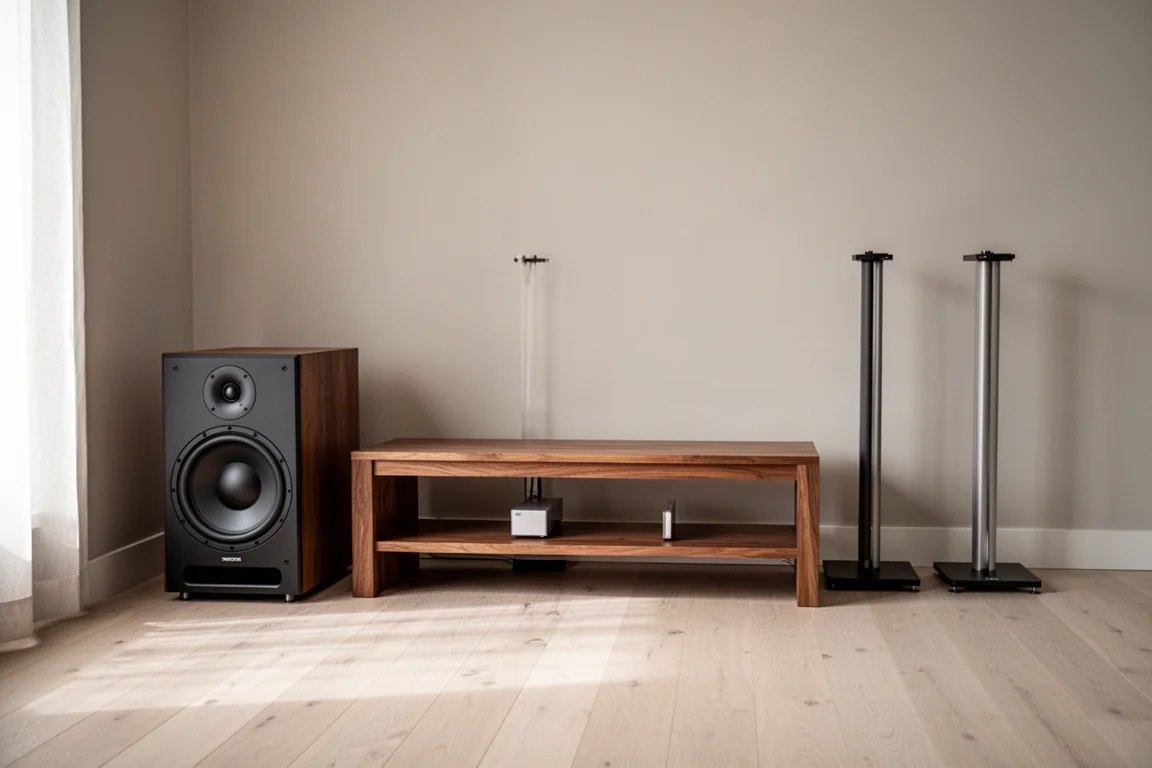
Budget for the subwoofer and for the room setup as part of the total cost. The floor-standing model is priced at around £4,500 per pair, while the pedestal stand version is around £2,500 per pair and, by Eclipse’s own account, gives up roughly a fifth of the sonic capability. If space is tight and the room is small, the pedestal version is a defensible compromise. If the budget allows and the speakers will stay in one place, the floor-standing model is the one that shows what the design can do.
Conclusion
The Eclipse TD 510 Z is a specialist product that will not suit every listener or every type of music. It cannot bend the laws of physics, and its bass and dynamic limits are real. What it offers in return is timing, imaging and midrange clarity that make well-recorded jazz, vocals and acoustic material genuinely immersive, along with a level of build quality and engineering that is evident in every part of the design, including the stand. Buyers who accept the low-frequency limits, add a fast subwoofer and set the speakers up properly will find the result deeply rewarding.
Product link
View more details for Eclipse TD 510 Z
This product is mentioned in the review. Check the specifications, options, and compatibility before buying.
View more details for Eclipse TD 510 ZFurther reading
Related Reviews
Hi-Fi Speakers
1723 THX Tower vs 1528 Bookshelf: Which Speaker Fits Your Room?
Two speakers at roughly the same price, built very differently. How the 1723 THX tower and the 1528 bookshelf compare on construction, bass, power needs, and sound.
Hi-Fi Speakers
Acoustic Energy AE 300 Review: Deep Bass From a Compact Standmount
A two-way standmount with real wood veneer, surprising low-end weight, and a warm, easygoing character. Here is what to know before buying.
Hi-Fi Speakers
Acoustic Energy AE1 40th Anniversary Review: A Modern Take on a British Classic
A compact standmount that revives a 1980s favorite with all-new parts, a warm mid-centric balance, and a price of £1,499 per pair.