Bookshelf Speakers
Dynaudio Heritage Special Review: Big Output, Careful Placement
A limited-run bookshelf speaker with genuine high-output capability, deep bass for its size, and a treble region that rewards careful setup.
Introduction
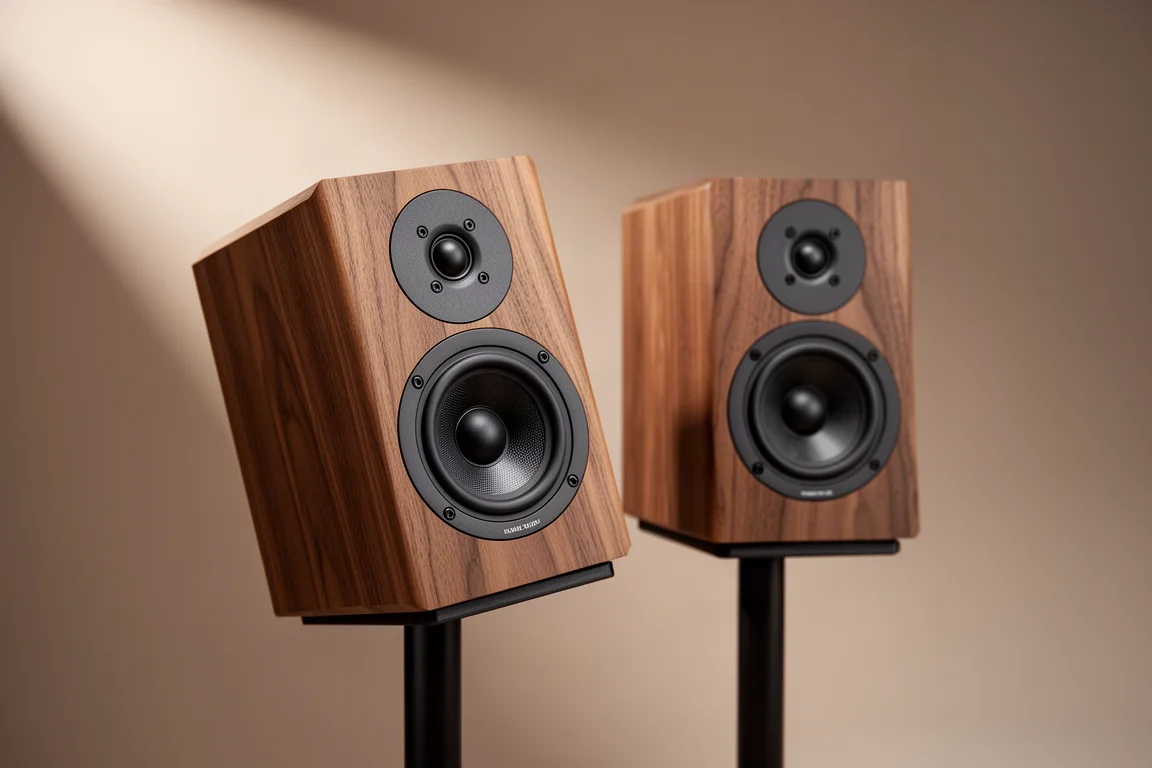
The Dynaudio Heritage Special is a two-way bookshelf loudspeaker produced in a limited run of 2,500 pairs and priced at $7,000 per pair when new. That production run has finished, so new-in-box examples are effectively gone, and open-box pairs have appeared around $5,000. The design pairs a stout dome tweeter with an 18 cm midwoofer, and Dynaudio’s reputation for large voice coils is visible in the midwoofer’s motor.
The appeal here is not subtlety for its own sake. This is a compact speaker that behaves like a much larger one when the volume goes up, and it does so without the mechanical strain that usually shows up in a stand-mounted design. The trade-off is a treble region that needs attention and a listening position that has to be chosen with care.
Who This Speaker Is For
The Heritage Special suits listeners who want output and physical presence from a speaker that fits on a stand. At a listening distance of roughly 3.5 metres it averaged around 100 dB on demanding material, with no port chuffing, no woofer bottoming out and no mechanical noise. Vocal clarity held up at those levels rather than collapsing into shout.
It also rewards owners who are willing to tune placement and who are prepared to sit on the tweeter axis. Buyers who want a speaker that behaves identically in any room, or who mostly listen quietly to wide-dynamic-range recordings, should weigh those strengths against the compromises described below.
Main Strengths
Output capability, bass weight and a large soundstage define what this speaker does well. It also gives up very little as volume climbs, which is the quality that separates it from most compact two-way designs in its class.
Output and Dynamic Headroom
The ability to hold composure under sustained high output is the headline strength. Bass stayed robust as level increased, and the midrange and treble kept their shape. On bass-heavy material the woofers moved visibly and kept working, and vocals remained clear at levels that would normally expose strain in a bookshelf cabinet.
Harmonic distortion measured at 86 dB and 96 dB at one metre is dominated by second-order content, with roughly 15 dB of separation from third-order distortion. That is a benign profile and consistent with how clean the speaker sounded when pushed. Compression behaviour stays tidy at reasonable output levels, with the caveats covered further down.
Bass Behaviour and Room Integration
Low-frequency extension is solid for the cabinet size. Measured F3 sits at 52 Hz with F10 at 38 Hz, which means usable output well into the 40 Hz region in a normal room. There is a port, and bungs are supplied so the enclosure can be run sealed, which rolls off slightly earlier and a little lower below about 30 Hz. That sealed option is useful when the speaker has to sit close to a rear wall.
Below 40 Hz the output tapers and does not deliver real weight, so listeners with a lot of sub-40 Hz content in their library will still want a subwoofer. Crossing over to a subwoofer at around 80 Hz also measurably reduces midrange distortion, which is a practical argument for adding one even when the bass alone feels adequate.
Things to Consider Before Buying
The Upper Midrange and Treble Character
Two regions shape the character of this speaker. The upper midrange sounds soft, and the treble carries sibilance that appears on some tracks and not others, centred around the 4 to 6 kHz area. That selective behaviour points to a narrow peak rather than a uniformly elevated tweeter, and the measurements agree: the on-axis response sits mostly within plus or minus 3 dB apart from a pronounced peak between 4 and 4.5 kHz.
A related dip sits around 1.2 to 1.3 kHz. Transients that should snap tend to back off slightly rather than land with full definition. Listeners who prioritise a relaxed upper midrange may find this pleasant, while those who want maximum bite on percussion may not.
Placement and Vertical Alignment
The speaker is unusually sensitive to aiming. Pointed directly on axis, the treble is too forward. Turned 30 degrees off axis with the cabinet parallel to the wall behind it, the treble becomes too subdued. The practical middle ground is roughly 20 degrees off axis with the speaker about two and a half feet from the rear wall, run in ported mode. Off-axis listening also reduces the 4 kHz peak, which is part of why it works.
Height matters just as much. The vertical listening window is narrow: a couple of degrees below the tweeter axis and up to about 10 to 15 degrees above it are workable. Below that range the response develops a strong dip around 2 to 2.5 kHz, and above it a dip appears near 3.2 kHz. Staying level with the tweeter is the safe choice. Horizontal radiation is broad at roughly plus or minus 70 degrees, so side-to-side placement is far more forgiving than the vertical axis.
Measured Behaviour Worth Knowing
An impedance sweep dips to about 5.1 ohm in ported mode, and a resonance appears near 450 Hz. That resonance persists when the port is sealed, and a nearfield measurement at the port shows the same energy leaking out, which points to an enclosure or driver resonance rather than a port problem. Sensitivity is around 84.6 dB at 2.83 volts at one metre, so the speaker needs a reasonable amount of amplifier power to reach its potential.
Multitone distortion runs above 3 percent, which is higher than ideal. What is interesting is how little that showed up in listening: the low-frequency output kept up well and there were no mechanical noises, so the distortion did not draw attention to itself. Compression is also a factor at the extremes. With a 10 dB dynamic range above a 76 dB reference, behaviour is clean down to about 55 Hz. Push to a 26 dB dynamic range at 102 dB and compression appears in the 150 Hz region. At moderate levels with high-dynamic-range recordings, kick drums can sound slightly less forceful than expected.
One design detail is worth noting given the price. The tweeter is not fully flush mounted and the midwoofer is surface mounted. That fits the Heritage aesthetic, but it sits oddly against a $7,000 per pair figure.
Buying Advice
Because the run is finished, buyers are shopping the secondary market. Open-box pairs have appeared around $5,000, a meaningful discount from the original $7,000 per pair. Check that both cabinets and drivers are unmarked, that the port bungs are included, and that any supplied accessories are present, since parts for a 2,500-pair run are unlikely to be easy to source later.
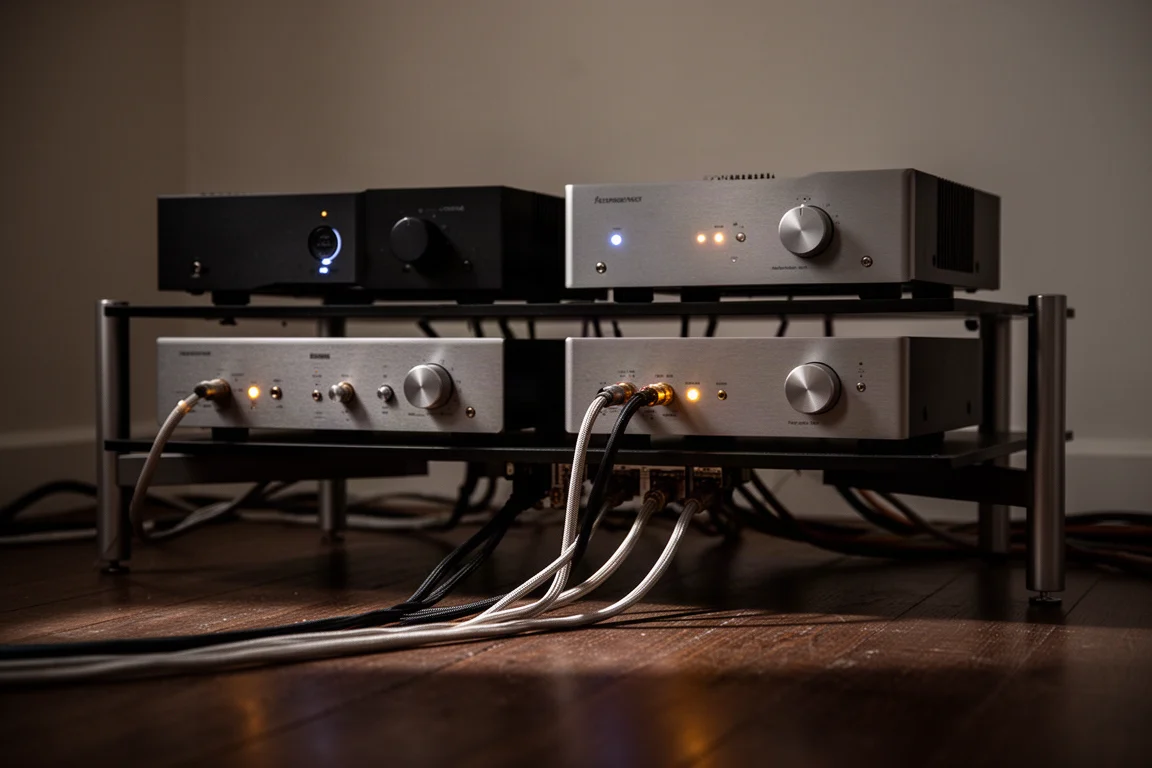
Matching matters more than usual here. The 84.6 dB sensitivity and 5.1 ohm minimum impedance call for an amplifier with real current delivery. Budget for stands that place the tweeter at ear height, and plan on experimenting with toe-in rather than assuming a straight-ahead setup will work. If the library leans heavily below 40 Hz, add a subwoofer and cross it over near 80 Hz to take advantage of the reduced midrange distortion.
For buyers who want a compact speaker that plays loud without complaint and offers a genuinely large soundstage, the Heritage Special delivers. For buyers who want a neutral upper midrange or a set-and-forget placement, the treble peak and the narrow vertical window will be recurring irritations.
Conclusion
The Dynaudio Heritage Special is a limited-run bookshelf speaker that trades neutrality for output, bass weight and scale, and it succeeds at the trade it makes. Its measured peaks and dips explain most of what listeners notice: a soft upper midrange, occasional sibilance, and a placement-sensitive treble. Set up carefully on the tweeter axis, roughly 20 degrees off axis and a couple of feet from the rear wall, it can be a compelling listen for anyone who values dynamics and physicality from a stand-mounted cabinet.
Product link
View more details for Dynaudio Heritage Special
This product is mentioned in the review. Check the specifications, options, and compatibility before buying.
View more details for Dynaudio Heritage SpecialFurther reading
Related Reviews
Bookshelf Speakers
Acoustic Energy A100 Mark II Review: A Compact Standmount With an Expansive Soundstage
The Acoustic Energy A100 Mark II brings clarity, natural tonality and a wide soundstage to an entry-level standmount, with a few setup details worth knowing first.
Bookshelf Speakers
Acoustic Energy AE-100 Mark II Review: Compact Bookshelf Speakers With Standout Imaging
A compact British two-way bookshelf speaker with deep, layered imaging, fast bass, and a slight treble lift to weigh against a crowded $500 field.
Bookshelf Speakers
Acoustic Energy AE100 MK2 Review: Measured Performance and Four Alternatives
A close look at the Acoustic Energy AE100 MK2 bookshelf speaker, what its measured performance reveals, and four alternatives with different trade-offs.