Hi-Fi Speakers
Dynaudio Focus 30 vs KEF LS60 Wireless: Two Streaming Active Floorstanders Compared
A close comparison of two streaming active floorstanders: what the Dynaudio Focus 30 and the KEF LS60 Wireless each do well, where they differ, and which room suits which.
Introduction
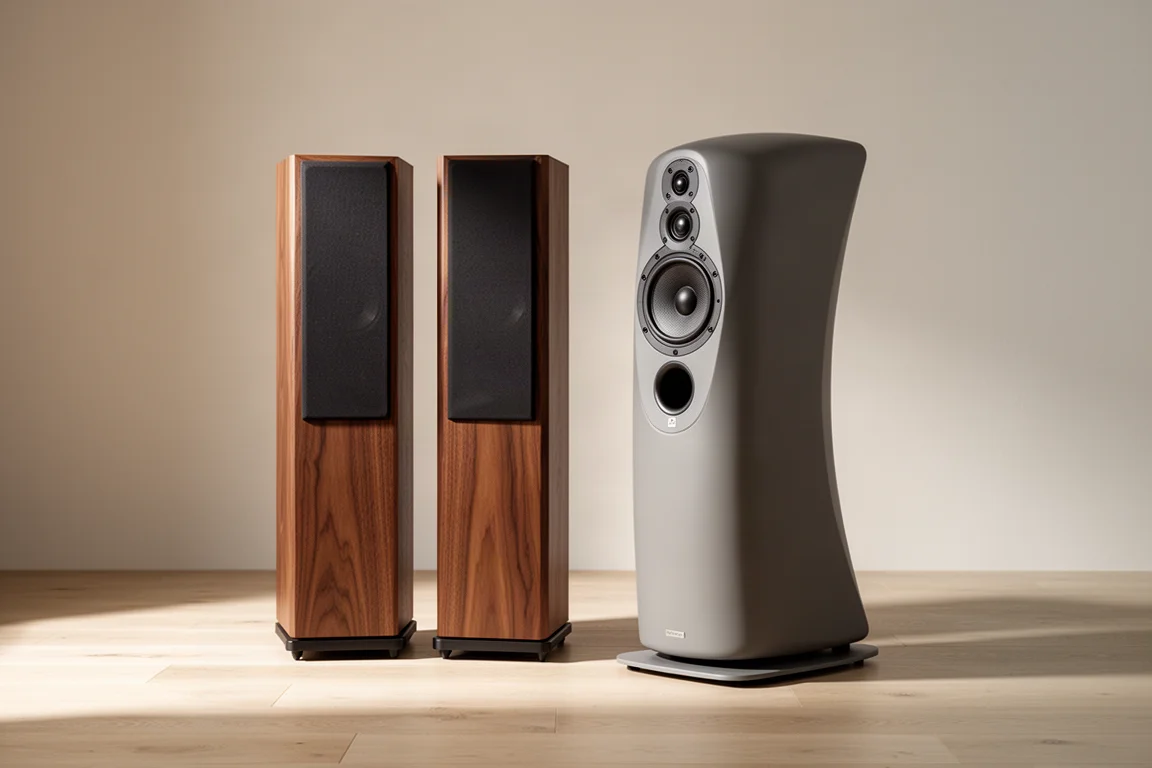
Two floorstanding loudspeakers, both active, both streaming, both designed so that a pair of cabinets and a phone app replace a rack of separates. The Dynaudio Focus 30 and the KEF LS60 Wireless target the same buyer, and on paper their streaming feature sets line up almost exactly. The differences show up in size, output, and the way each one treats detail.
This comparison covers what each speaker does well, where each one gives ground, and which room and listening style suits which cabinet.
What Both Speakers Bring to the Table
Both are streaming active floorstanders. Amplification, digital processing, and network streaming live inside the cabinets, so the system is two boxes, two mains leads, and an app. Both specify Google Chromecast, Apple AirPlay 2, Bluetooth, Tidal Connect, and Roon readiness, and both can be fed over Wi-Fi or a wired network connection.
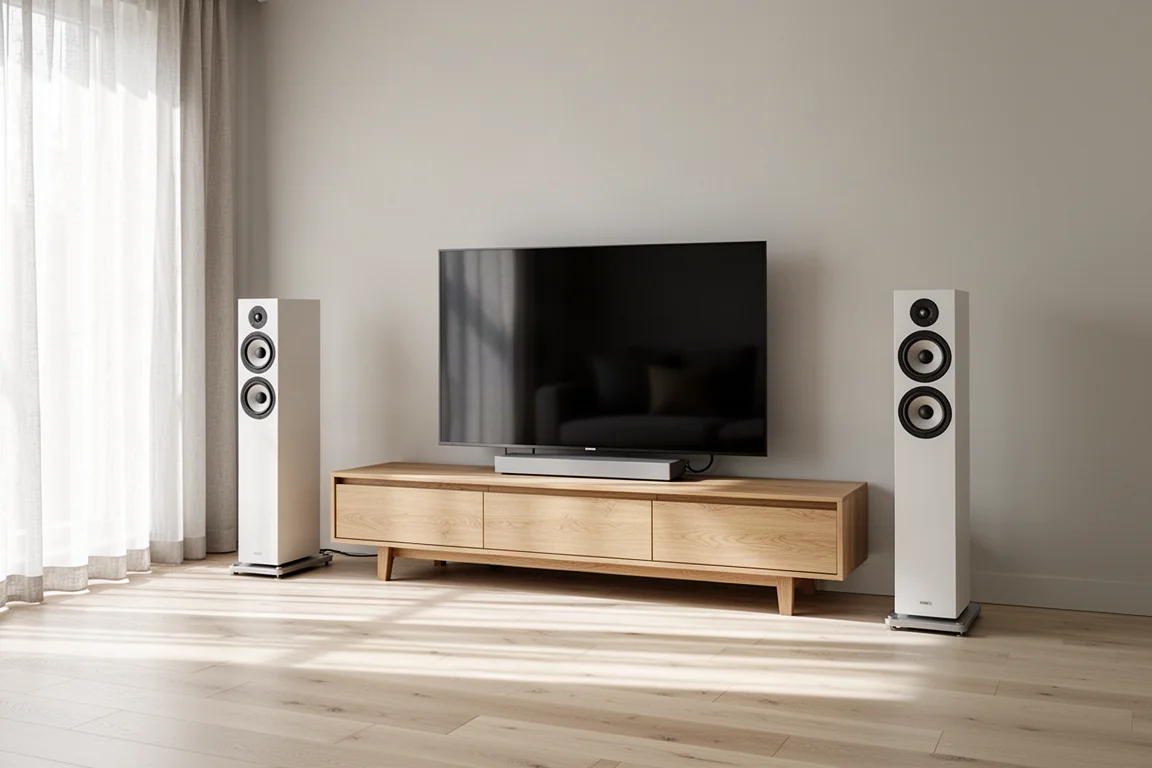
That shared foundation is why the choice is not really about features. It comes down to how much air each speaker moves, how large a room it can fill, and whether you want the extra processing the Focus 30 brings.
Both are also complete systems in the practical sense. There is no separate streamer, no separate DAC, and no separate amplifier to choose or match. You plug in, configure with an app, and play from the streaming service you already use.
Dynaudio Focus 30: The Smaller Floorstander
Cabinet, Drivers, and Amplification
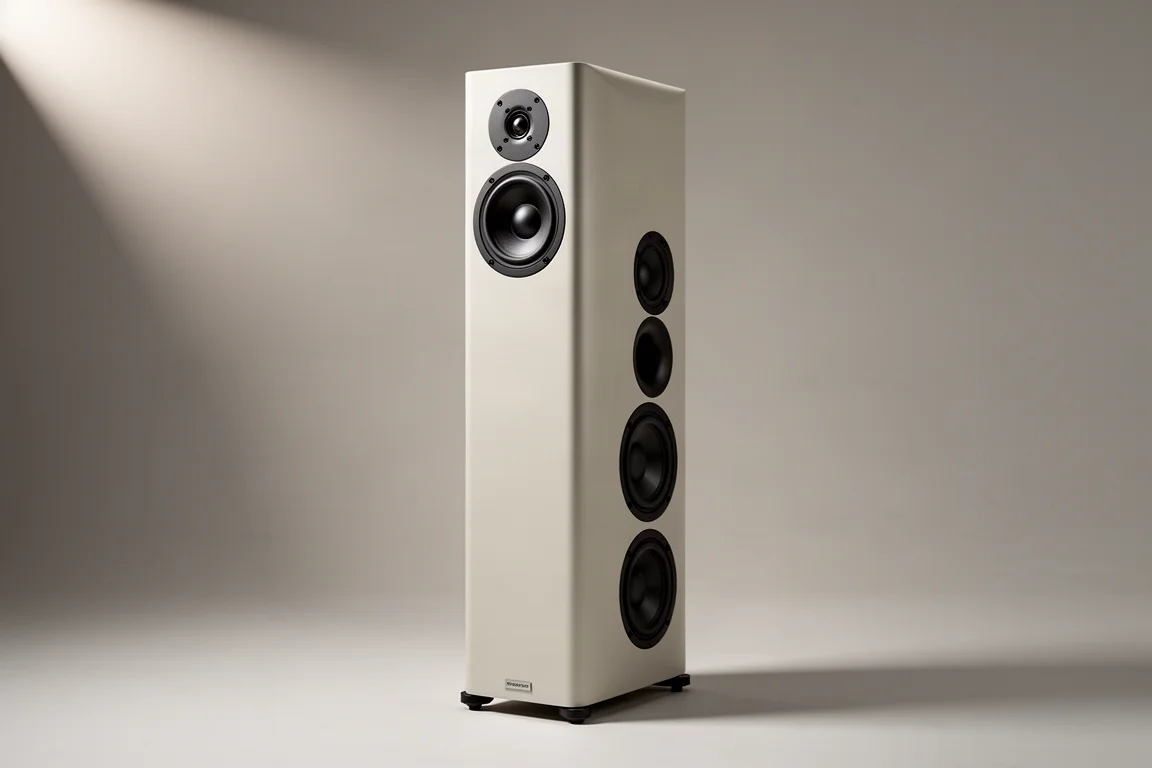
The Focus 30 stands 90 cm tall and weighs around 17 kg per cabinet, which makes it a genuinely manageable floorstander. The walnut finish holds up under close inspection, and the veneer is understated rather than showy, which suits the cabinet’s plain, furniture-like proportions.
It is a two-and-a-half-way design. Two 14 cm drivers sit below a 28 mm soft dome tweeter: the upper cone handles mid-range and bass, the lower one handles bass only, and both are made from MSP. The cabinet is sealed, with no port on the front, rear, or underside.
Because the speaker is active, the electronics live inside the cabinet and each driver gets its own amplifier and its own DAC. The amplifier module comes from Pascal, another Danish company, and the crossover is handled in DSP rather than by passive components. Power delivery is 280 W to the mid-bass and bass drivers and 110 W to the tweeter.
Two details are worth calling out. First, the grilles are magnetic, and each speaker detects whether a grille is fitted and adjusts its output so it sounds the same either way. Second, the supplied remote control feels more substantial than the one that comes with the LS60 Wireless.
Sound Character: Finesse and Micro Dynamics
The Focus 30 is the lighter and smaller of the two speakers, and it sounds that way, though not by a wide margin. It reaches down about as far as the LS60 Wireless, but it does not deliver the same gut punch. Nothing suggested a subwoofer was needed, and the app includes a high-pass filter if you do decide to add one.
Where the Focus 30 pulls ahead is agility. Dynamic contrasts arrive with a nimbleness that makes the speaker feel quick on its feet, and it emphasises elegance and flow rather than weight. It also plays up a recording’s air and sense of space, paying attention not just to the instruments but to the space between them, which makes small details, surface textures, and quiet studio touches easier to follow.
That character is strongest on micro dynamics, the small shifts in level and tone, rather than on the big swings. The app’s treble control, which offers neutral, bright, and dark settings, is a useful companion here, because brighter recordings can be tamed without losing the speaker’s detail.
KEF LS60 Wireless: More Output and Headroom
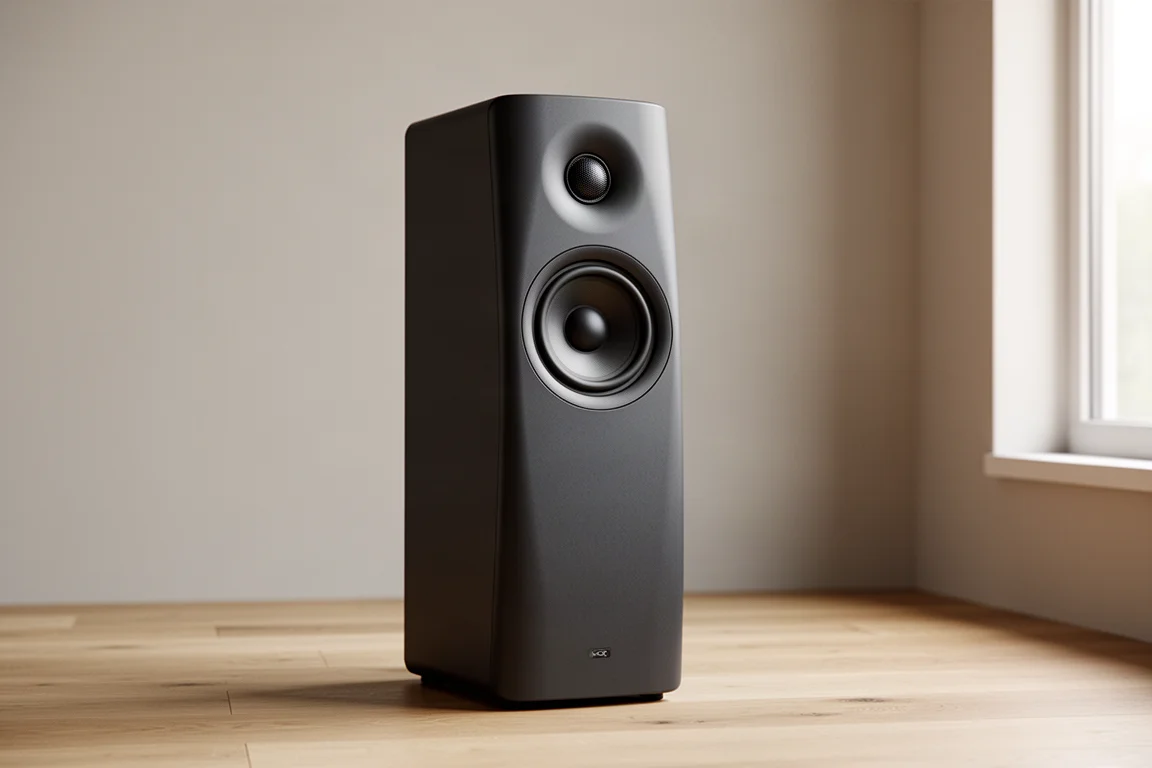
The LS60 Wireless is the physically larger and heavier of the pair, with a more progressive industrial design than the Focus 30’s traditional furniture look. It is also the more forceful speaker.
Low-end output is the clearest difference. The LS60 Wireless has more punch and more physicality, and it communicates macro dynamics, the large-scale swings in a performance, more convincingly than the Focus 30 does.
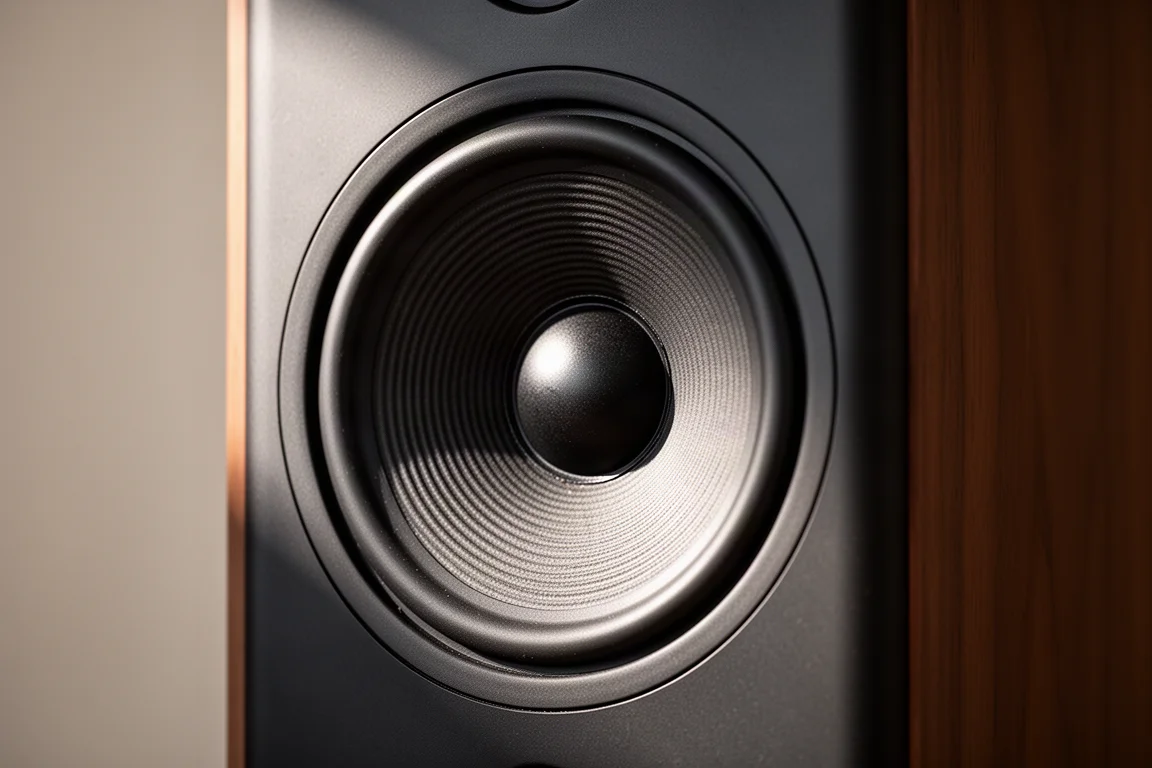
That extra output comes with extra headroom. Listeners who play loudly, or who listen in a large room, will get more from the LS60 Wireless than from the smaller Dynaudio. In a smaller room the same low-end output can tip from generous to excessive, and it was noted as putting out a touch too much bass for one small room used during evaluation.
The streaming side is broadly the same story: the major protocols, Tidal Connect, Roon readiness, and Bluetooth are all specified. The supplied remote control feels less substantial than the Dynaudio’s.
Streaming, Inputs, and Everyday Setup
Both speakers stream over Wi-Fi or Ethernet. On the Focus 30, the two cabinets can talk to each other wirelessly over WiSA at either 48 kHz or 96 kHz, selectable in the app, or over a wired coax link. Note that the wired link is coax rather than Ethernet, so the cable needs to be long enough to reach between the speakers.
WiSA also works as a wireless digital input, which is one reason the primary Focus 30 cabinet has no HDMI socket. The physical connections are limited to coax and RCA analog. Some LG televisions offer a WiSA output, but the standard is still uncommon in TVs. A WiSA SoundSend adapter can bridge the gap, and a hub can take HDMI from a television and send left and right channels wirelessly to the speakers.
The control app, Dynaudio Setup and Control, handles the practical setup: which cabinet is primary, which is secondary, the wireless sample rate, and the treble character. In-app streaming service integration is deliberately thin, with the expectation that you will use the streaming service’s own app and select the speakers from its output menu rather than signing in through the speaker app.
Dirac Live Room Correction in the Focus 30
The Focus 30 is described as the first hi-fi speaker to build Dirac Live room correction into the speaker itself, and that is the feature that most clearly separates it from the LS60 Wireless.
In-room measurements taken during setup showed an excellent baseline response, with only the region below 40 Hz needing significant correction. In a 6 m by 5 m room, Dirac pulled down a lift around 35 Hz and lifted a dip just above it to smooth out the bass, work that would otherwise call for a large number of physical bass traps.
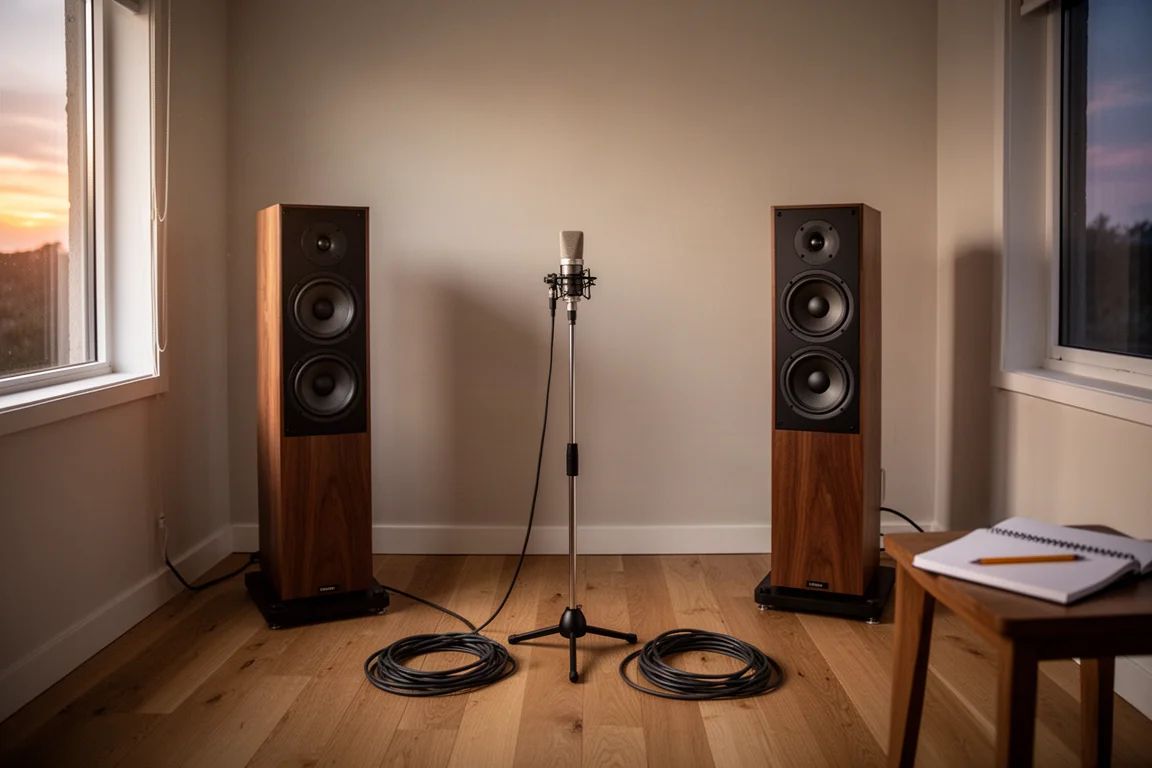
With Dirac engaged, the result is a marginally tighter low end, slightly better mid-range clarity, a slightly wider soundstage, and a more locked-in phantom centre between the speakers. The change was smaller than is often heard when Dirac is applied to passive speakers, which suggests the Focus 30 is already well optimised and is a good acoustic fit for the room it was used in. Several correction curves can be stored, so a curve with more bass for streaming and a leaner one for vinyl playback can sit side by side.
Two caveats are worth knowing. Dirac replaces the speaker’s own treble shaping, so the neutral, bright, and dark presets move into the Dirac curves once it is enabled. And Dirac introduces a small processing delay, which is harmless for music but can throw television lip sync out of step depending on how the signal reaches the speakers. Sending audio from an Apple TV over AirPlay 2 held sync with Dirac on, and a WiSA feed from a television hub showed no lip sync problem at all, though the Dirac filters did not appear to be fully engaged over that input. Over-the-air firmware updates are the route to sorting these wrinkles out.
Where Each Speaker Fits Best
Room size is the first decision. In a smaller room, the Focus 30 is the better acoustic fit: its output is easier to integrate, and Dirac Live gives you a way to deal with the bass problems that small rooms create. In a larger room, or for anyone who listens at high volume, the LS60 Wireless and its extra headroom are the safer choice.
The second decision is what kind of listener you are. If you value finesse, texture, and the small details that make a recording feel three-dimensional, the Focus 30 plays to that. If you want weight, scale, and physical impact, the LS60 Wireless delivers more of it.
The third consideration is who these speakers are actually for. The Focus 30 is not aimed squarely at dedicated separates audiophiles. It is aimed at listeners who grew up with all-in-one streaming systems and now want something considerably better, with room correction included. Anyone who dislikes the idea of electronics living inside the cabinet should look elsewhere.
Buying Advice
Both speakers are complete systems, so the buying decision is simpler than with a separates setup. Two cabinets, two mains leads, an app, and your existing streaming subscriptions are all you need.
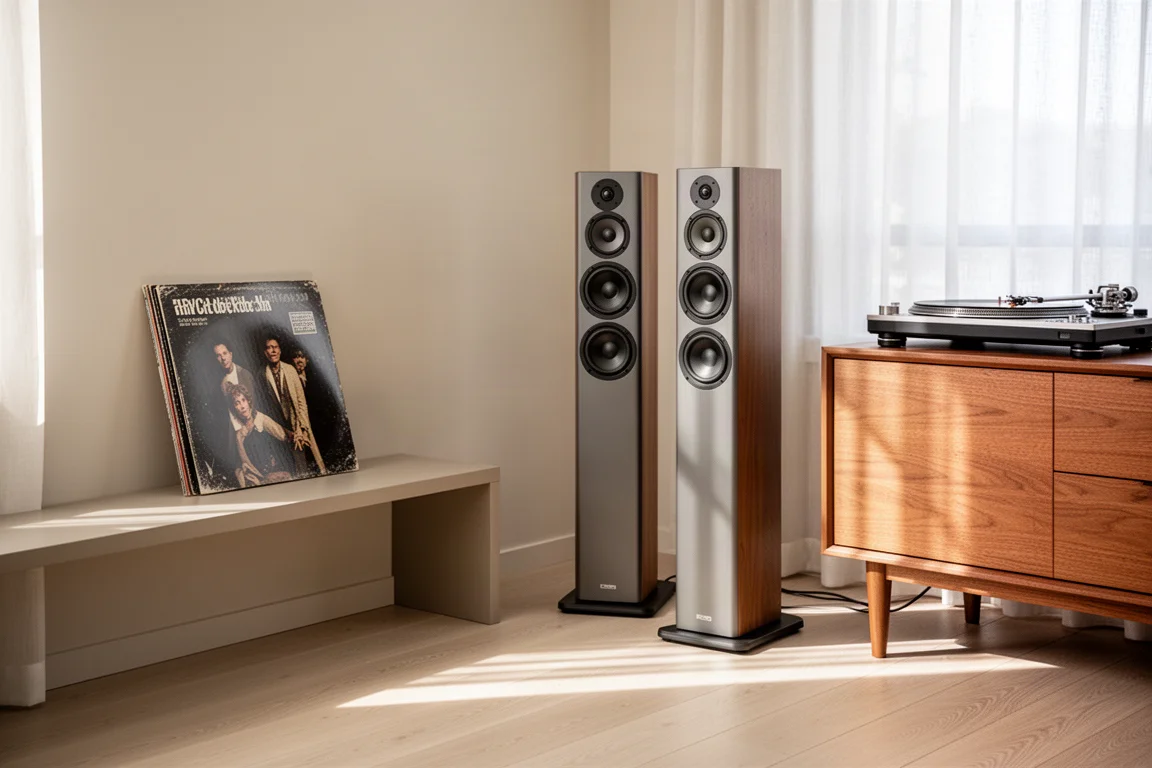
Start with the room. Measure the space and think honestly about listening level, because that is where these two speakers diverge most. Then weigh the processing: the Focus 30’s built-in Dirac Live is the single biggest functional difference, and it is the reason that speaker can be tuned to a room and to taste. Price is the other factor: in store, the Focus 30 costs roughly €900 to €1,000 more than the LS60 Wireless. Finally, think about looks and footprint, because one is a compact, understated floorstander and the other is larger and more sculptural.
Neither speaker needed a subwoofer, and both are capable of filling a room on their own. If you do add one, the Focus 30 app includes a high-pass filter to take some of the load off the mains.
Conclusion
The Dynaudio Focus 30 and the KEF LS60 Wireless are close enough in capability that either one can anchor a modern streaming system. The Focus 30 wins on compactness, finesse, and built-in Dirac Live room correction, which makes it the more thoughtful choice for smaller rooms and detail-led listening. The LS60 Wireless wins on output, low-end punch, and headroom, which makes it the better fit for larger rooms and higher volumes. Match the speaker to the room and to the way you listen, and either pair will serve for years.
Further reading
Related Reviews
Hi-Fi Speakers
1723 THX Tower vs 1528 Bookshelf: Which Speaker Fits Your Room?
Two speakers at roughly the same price, built very differently. How the 1723 THX tower and the 1528 bookshelf compare on construction, bass, power needs, and sound.
Hi-Fi Speakers
Acoustic Energy AE 300 Review: Deep Bass From a Compact Standmount
A two-way standmount with real wood veneer, surprising low-end weight, and a warm, easygoing character. Here is what to know before buying.
Hi-Fi Speakers
Acoustic Energy AE1 40th Anniversary Review: A Modern Take on a British Classic
A compact standmount that revives a 1980s favorite with all-new parts, a warm mid-centric balance, and a price of £1,499 per pair.