Hi-Fi Speakers
Dynaudio Evoke 10 vs KEF LS50 Meta: Two Very Different Bookshelf Speakers
A practical comparison of the Dynaudio Evoke 10 and the KEF LS50 Meta, covering tone, bass texture, imaging, amplifier pairing, and the listeners each speaker suits.
Introduction
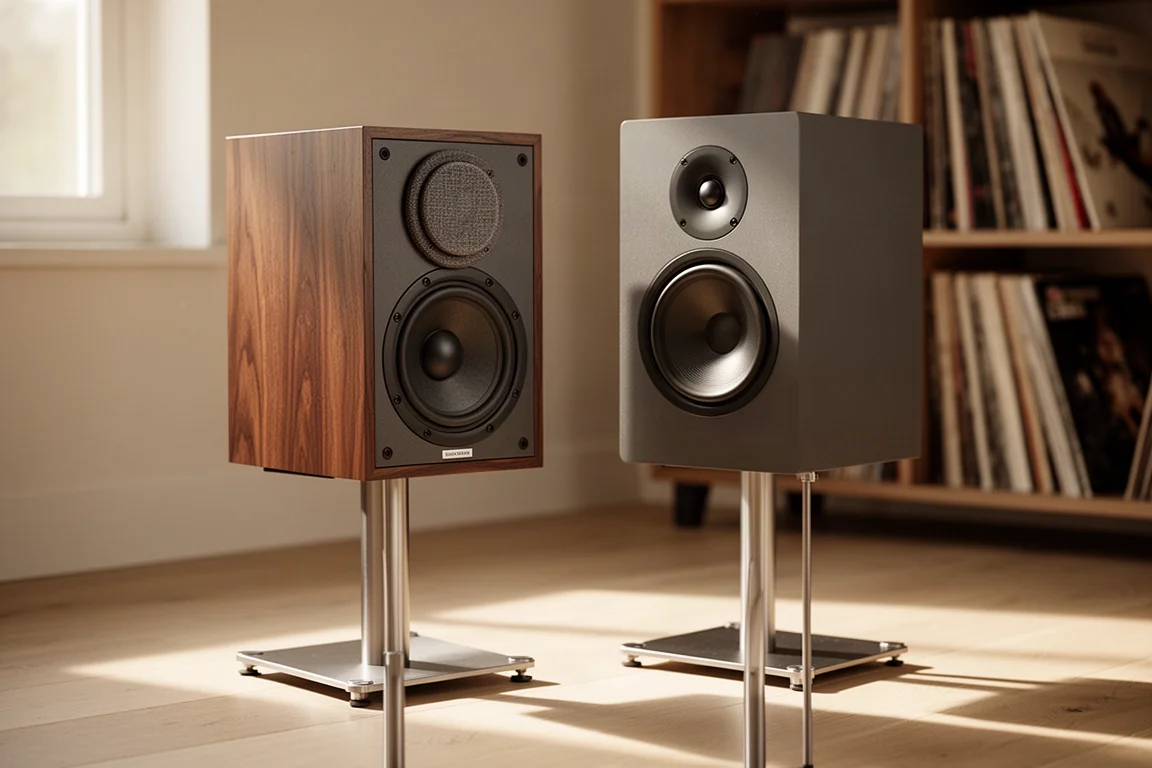
The Dynaudio Evoke 10 is a compact stand-mount speaker that has been on the market for a while, and its price puts it in direct conversation with the KEF LS50 Meta. At $1,700, the Evoke 10 asks to be judged against one of the most respected small speakers around, and the comparison turns out to be more interesting than a simple winner-and-loser story.
The two speakers share a similar footprint and a similar role, but they aim at different listeners. One leans warm, textured, and endlessly easy to listen to. The other leans flat, precise, and studio-reference. This guide walks through what each speaker does well, where each one asks for a compromise, and how amplifier choice can reshape the Evoke 10 more dramatically than most speakers allow.
What Sets These Two Speakers Apart
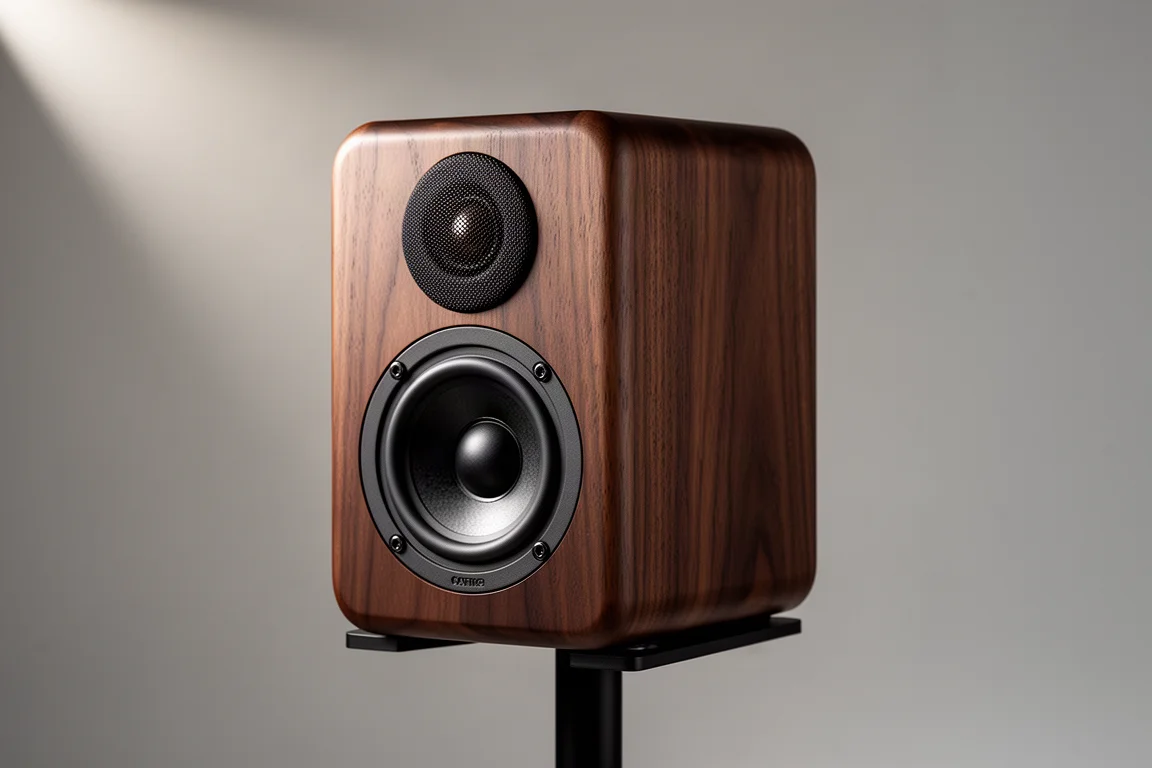
Dynaudio carries a studio heritage, so the expectation going in is a studio-style sound. The Evoke 10 does not deliver that. Instead it offers a warm midrange, textured bass, and an overall easy listening character with a smooth, non-fatiguing top end. That soft dome presentation is a deliberate departure from the bright, forward voicing many modern speakers adopt.
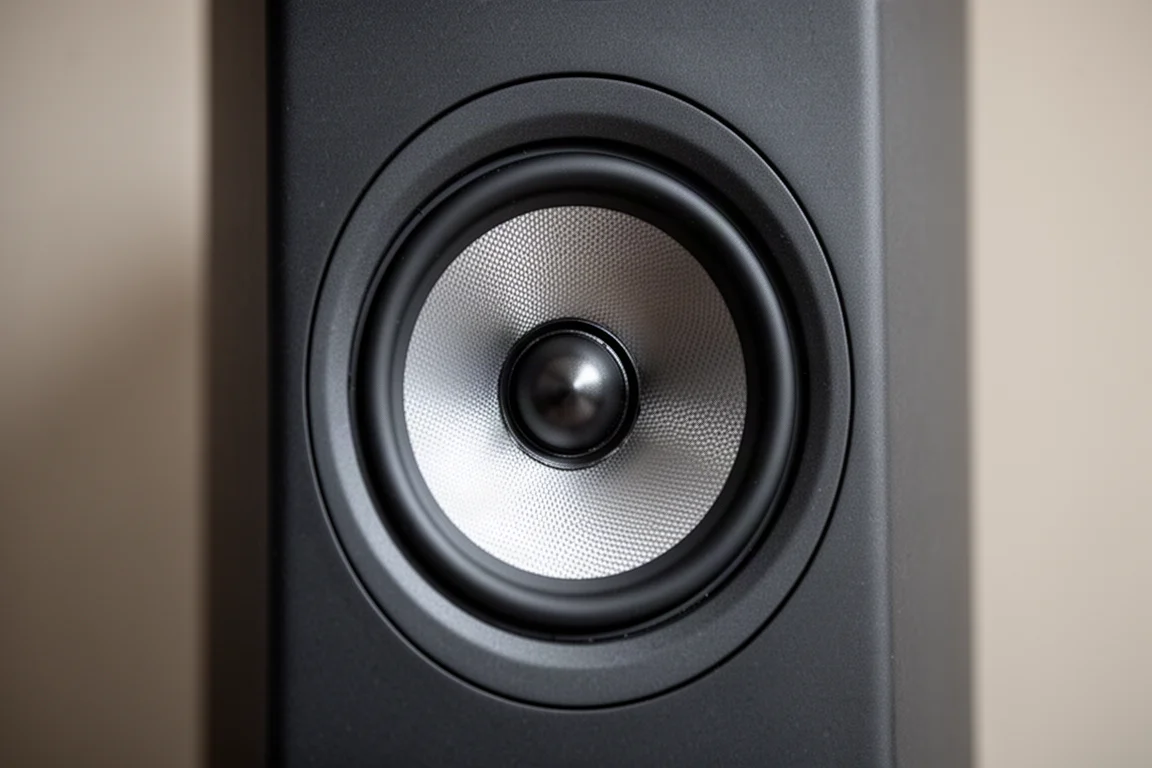
The KEF LS50 Meta takes the opposite approach. Its dual concentric driver arrangement is well built and delivers very good imaging and phase coherency. It is one of KEF’s best-selling designs, and its balance is flatter and more even. Both speakers could plausibly be used in a studio setting, though the LS50 Meta is the more obvious tool for that job.
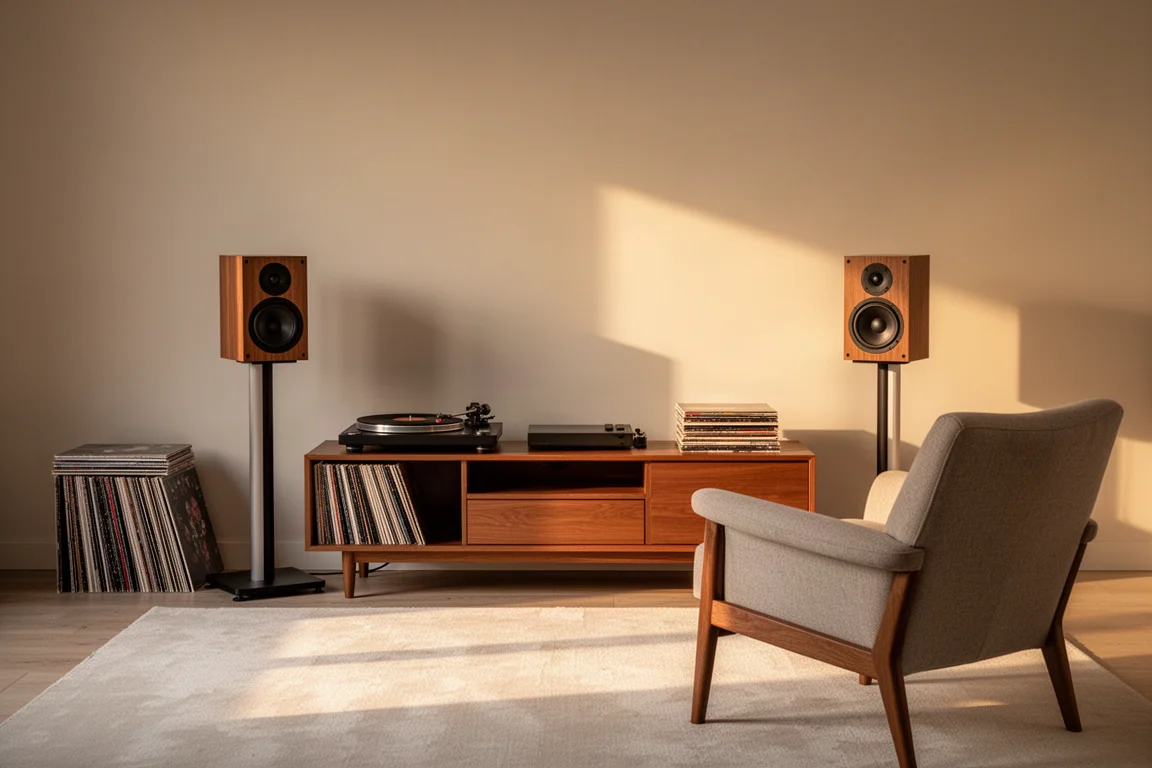
The practical difference shows up in what each speaker prioritizes. The Evoke 10 prioritizes texture, warmth, and long-session comfort. The LS50 Meta prioritizes accuracy, imaging precision, and a sense of depth.
Dynaudio Evoke 10: Warm, Textured, and Easy to Live With
The Evoke 10 is a speaker that rewards patience. Bass is its standout quality. For a cabinet this size, it is dynamic and punchy, and at louder volumes the low end can be felt in the chest rather than merely heard. Bass texture and nuance come through clearly, with detail in the upper mid-bass that is uncommon in a stand-mount design. Drum kicks and bass lines have a tactile quality that is easy to appreciate.
The top end is smooth rather than sparkling. Dense, aggressive recordings that expose brightness in most speakers stay listenable here, and the speaker never tips into harshness. That makes it a strong option for listeners who find modern speakers too bright, whether the material is heavy, imperfectly recorded, or simply played for hours at a time.
The trade-off is presentation. The Evoke 10 is intimate, and its soundstage stays largely within the plane of the speakers. Listeners who want a wide, deep, room-filling image will notice the limitation immediately.
KEF LS50 Meta: Reference Accuracy and Imaging
The LS50 Meta is the more neutral of the two. Its frequency response is flatter, its imaging is more pinpoint, and it produces a stronger sense of depth and space. Phase coherency is excellent, and the dual concentric design keeps the sound cohesive across the range. For critical listening and studio-adjacent work, it is the more accurate instrument.
Amplifier matching is where the LS50 Meta shows its limits. With tube amplification it does not have the drive and dynamics to perform at its best. With Class A/B and Class D amplification the results are far more consistent, though Class D adds a slightly more analytical edge. Solid state amplification is clearly the better fit.
Where the LS50 Meta gives up ground is bass texture and long-session warmth. It is accurate rather than forgiving, and listeners who prioritize musicality over reference flatness may find the Evoke 10 easier to live with.
How Amplifier Choice Changes the Evoke 10
Most speakers keep their tonal character no matter what you drive them with. The Evoke 10 does not. Paired with tube amplification or Class A/B designs, it keeps the warm, slightly dark tone described above, with the main benefit being a wider, deeper, and more holographic presentation that does not sacrifice much imaging accuracy.
Paired with Class D amplification, including Purifi-based designs and compact streaming amplifiers, the speaker becomes a different animal. The balance tightens, the top end gains sparkle and liveliness, and detail becomes more forward. The result moves noticeably closer to the LS50 Meta’s reference character. A listener who dislikes brightness would not enjoy the Evoke 10 in that configuration at all.
That flexibility is unusual, and it is worth knowing before you buy. The amplifier you already own may decide which version of this speaker you get.
Bass, Dynamics, and Room Placement
Placement shapes the Evoke 10 substantially. Pulled four or five feet into the room, it delivers better imaging, a wider stage, and more depth, though the presentation still stays somewhat tied to the plane of the speakers. That much clearance is unrealistic for most rooms.
In a more practical setup, roughly a foot and a half from the wall behind the speakers, the bass gains weight without turning into overblown room gain. The low end becomes meaty, textured, and nuanced, and a usable sense of depth survives. The result is intimate rather than expansive, closer to a performer standing in front of you than a large hall.
Bass quality is the reason many listeners will forgive the narrower stage. Punch, texture, and chest-level impact are all present, and that combination is uncommon at this size.
Matching the Speaker to Your Music
If you play a lot of dense or imperfectly recorded material and you want to hear all of it without fatigue, the Evoke 10 is the more suitable choice. Jazz, metal, and long evening sessions all benefit from its smooth top end and textured low end. It is not a showroom speaker that impresses in the first thirty seconds; it is one that becomes more appealing the longer you listen.
The LS50 Meta asks for a different relationship. It is the better choice when you want to hear exactly what is on the recording, and when imaging, phase coherency, and depth matter more than warmth. It also pairs most naturally with solid state amplification.
Which Speaker Should You Choose?
Choose the Dynaudio Evoke 10 if bass texture, dynamic punch, and a non-fatiguing top end matter most to you, and if you are willing to experiment with amplification to shape the sound. At $1,700 it delivers a specific kind of musical enjoyment that few small speakers match, and its tolerance for difficult recordings is a genuine long-term asset.
Choose the KEF LS50 Meta if you want a flatter, more balanced response with precise imaging and a deeper soundstage, and if you plan to use solid state amplification. It is the more accurate speaker of the two, and the better fit for reference listening.
Neither is a compromise pick. They simply reward different priorities, and both are capable of excellent results when the rest of the system suits them.
Conclusion
The Dynaudio Evoke 10 and the KEF LS50 Meta are close in size, price territory, and role, but they sound like they were built for different listeners. The Evoke 10 brings a warm midrange, textured and punchy bass, and an easy listening character that stays comfortable for hours, with a soundstage that remains intimate. The LS50 Meta brings reference balance, precise imaging, and depth, with a clear preference for solid state amplification.
The deciding factor is what you value: texture and musicality, or accuracy and precision. Pick the one that matches how you actually listen, and either speaker will serve you well.
Further reading
Related Reviews
Hi-Fi Speakers
1723 THX Tower vs 1528 Bookshelf: Which Speaker Fits Your Room?
Two speakers at roughly the same price, built very differently. How the 1723 THX tower and the 1528 bookshelf compare on construction, bass, power needs, and sound.
Hi-Fi Speakers
Acoustic Energy AE 300 Review: Deep Bass From a Compact Standmount
A two-way standmount with real wood veneer, surprising low-end weight, and a warm, easygoing character. Here is what to know before buying.
Hi-Fi Speakers
Acoustic Energy AE1 40th Anniversary Review: A Modern Take on a British Classic
A compact standmount that revives a 1980s favorite with all-new parts, a warm mid-centric balance, and a price of £1,499 per pair.