Bookshelf Speakers
Dynaudio Emit 20 Review: Deep Bass From a Compact Bookshelf Speaker
A two-way bookshelf speaker that reaches about 40 Hz in room and keeps distortion low, with a midrange resonance worth understanding before you buy.
Introduction
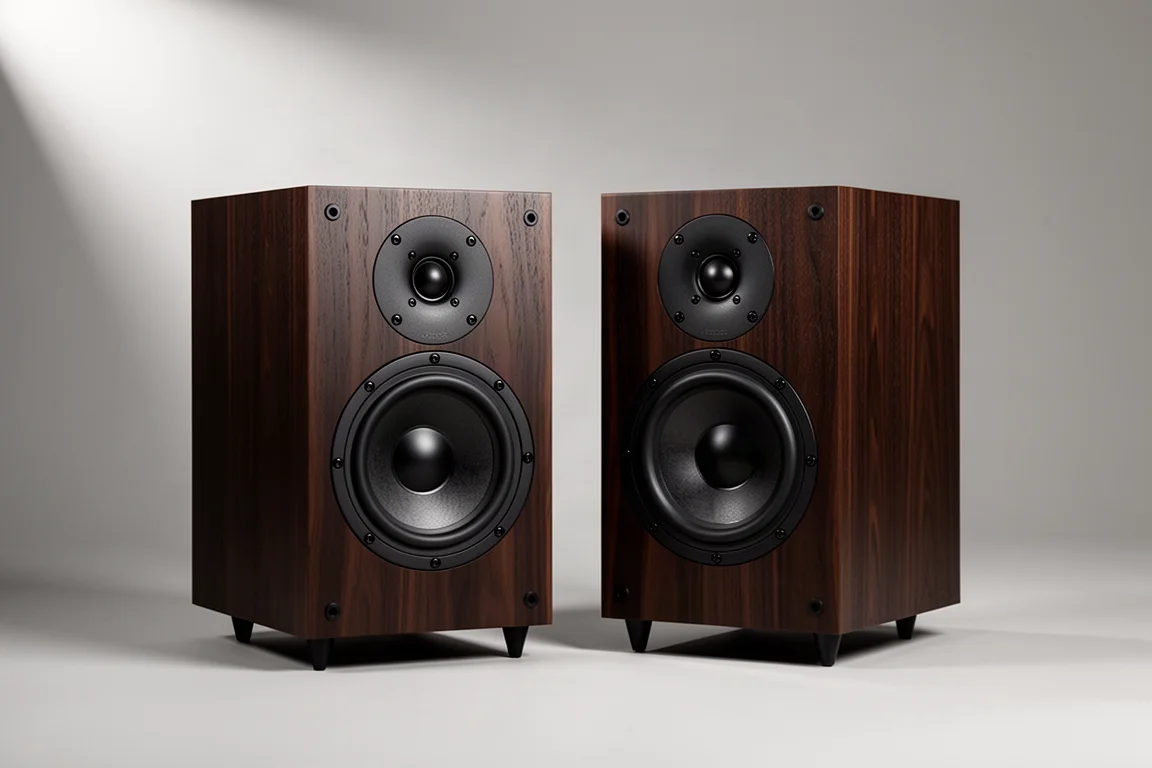
The Dynaudio Emit 20 is a two-way bookshelf speaker built around a straightforward proposition: deliver real low-frequency output from a cabinet that still fits on a stand or a sturdy shelf. Priced at roughly $780 per pair, it competes with speakers that usually ask you to add a subwoofer to reach the bottom octaves. The Emit 20 largely removes that requirement, and that single strength shapes almost everything else about how it sounds.
What follows is a breakdown of where this speaker excels, where its tuning asks for a little care, and what is worth weighing before ordering a pair.
Who This Speaker Is For
This is a speaker for listeners who want a compact stereo setup with genuine bass weight and would rather not spend on a separate subwoofer. It suits small to medium rooms, and it is on the larger side for a bookshelf model, so plan for stands or a solid surface rather than a crowded shelf.
Electrically, it is friendly. The stated sensitivity is 86 dB with a rated impedance of 6 ohms, and measured impedance sits at roughly 5.5 ohms nominal, which should make it an easy load for a standard amplifier. Measured sensitivity came in closer to 83.5 dB at 2.83 V at 1 meter, so a modest amplifier will work, but a little headroom is welcome.
It also rewards a listener who is willing to spend a few minutes on placement. Aiming the speakers directly at the listening position is not automatically the best choice here, and the sections below explain why.
Main Strengths: Deep Bass and Stable Directivity
The headline is bass. The Emit 20 pairs an 18 cm mid bass driver with a 28 mm coated soft dome tweeter in a two-way design, with a first order crossover on the tweeter and a second order crossover on the woofer. In room, the speaker reached 40 Hz without strain and held that output on a 40 Hz test tone. Below that, output falls away, and a tone around 32 Hz made the roll off clear. Measured figures put F3 at about 54 Hz and F10 somewhere in the 30 Hz region.
For most music, that is enough to live without a subwoofer, which is a rare thing to say about a bookshelf speaker of this size.
Distortion is equally impressive. At 86 dB at 1 meter, total harmonic distortion stays below 1 percent down to 40 Hz. Push the speaker to 96 dB and it remains below 3 percent, still reaching down to about 40 Hz before distortion rises. Many two-way bookshelf designs begin climbing in distortion near 80 Hz, and this one does not.
Compression linearity is strong as well. Bass output stays within roughly a decibel from low to high volume, so the low end keeps its character as you turn the level up.
The radiation pattern is the other standout. Output stays wide, roughly plus or minus 50 to 60 degrees, and remains consistent up to about 13 kHz. That consistency gives the presentation a wider sense of space than many bookshelf speakers manage, particularly designs that narrow the lower treble with a pronounced waveguide. The treatment around this tweeter is closer to a beveled edge than a deep waveguide, which helps it strike a balance between the two approaches.
Taken together, the low distortion, the steady compression behaviour, and the wide radiation add up to a speaker that stays composed when pushed. None of that would matter much without the bass extension, and the bass extension is what makes the rest of the package convincing.
Where the Tuning Needs Attention
One region consistently draws attention: 600 to 800 Hz. There, the response shows a peak of about 3 dB followed immediately by a dip of about 3 dB. The dip is the audible part. It shows up as snares that lack impact and a slightly thin, muffled quality through that band. In practice this is a minor issue, but it is persistent once you notice it.
The cause is a resonance in the driver itself. It appears in the impedance sweep, remains when the cabinet port is sealed, and is still visible when the woofer is measured outside the enclosure, so it is not a port artefact. Adding constrained layer damping to the driver frame did not resolve it.
Two other traits are worth knowing. There is a peak around 4 kHz that produces a sharp, edgy character on some material. Above 10 kHz there is a lift of roughly 5 dB, heard as excessive shimmer on cymbals and hi-hats that can sound unnatural. Directly on axis, that upper lift is at its most obvious.
There is also a crossover consequence. Because the design uses shallow slopes, a cancellation notch appears around 5 kHz in the vertical off axis response, and two such notches are visible rather than the single one typical of steeper crossovers. That is a deliberate design compromise rather than a fault, but it belongs in the picture.
The resonance also leaves a mark in the distortion and compression data, where it appears as a sharp Q dip. Depending on volume and listening distance, that could influence perceived dynamics in that band.
The useful framing here is that none of these traits is severe on its own. The 600 to 800 Hz region is the one that reliably announces itself, and the rest are subtle colourations that many listeners will never isolate by ear.
Things to Consider Before Buying
Placement makes a measurable difference. On axis, the lift above 10 kHz is at its strongest. Moving to roughly 10 to 15 degrees off axis was the best compromise, softening that upper brightness while keeping the rest of the response intact.
Equalization is genuinely effective here. A couple of bands of EQ to pull down the 600 to 800 Hz peak and lift the dip smooths out the main complaint, and it also tames the 4 kHz edge. After that adjustment, the speaker delivered the bass extension and open presentation it promised.
The port can be plugged with the supplied bung if a room needs it, though the speaker was evaluated in ported mode throughout.
Finally, preferences vary. This is a design with clear strengths and clear compromises, and listeners who prioritize a neutral midrange may weigh those compromises differently than listeners who prioritize deep bass and a wide soundstage.
Buying Advice
At around $750 to $800 per pair, the Emit 20 delivers low-frequency output that few bookshelf speakers at this size and price can match. If deep bass without a subwoofer is your priority, and you are comfortable spending a short session on placement and a couple of EQ bands, this is a compelling option.
Because taste plays such a large role in whether the 600 to 800 Hz character bothers you, buying from a retailer with a generous return policy is a sensible precaution. Listen across a range of material for a few days before deciding.
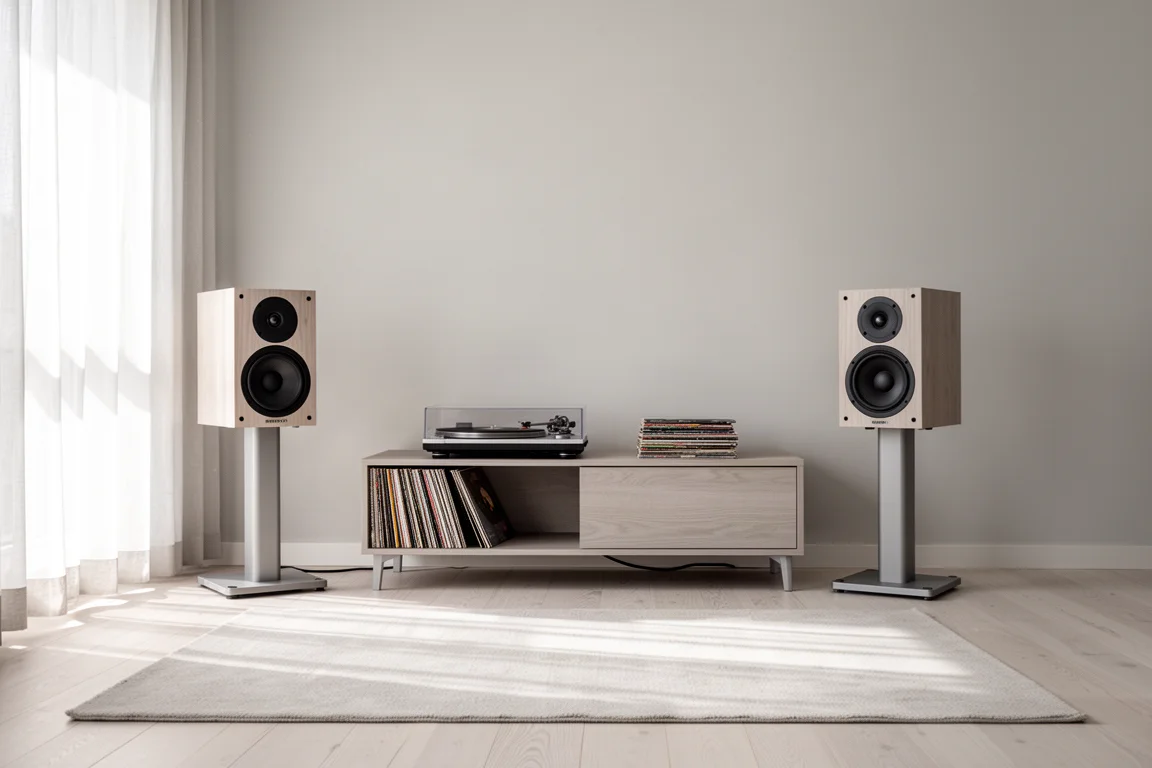
For most listeners, the practical path is straightforward: angle the speakers slightly inward rather than aiming them straight at the seat, give them a little amplifier headroom, and treat the midrange dip if your setup allows it. Do that, and the strengths dominate the experience.
Conclusion
The Dynaudio Emit 20 is not a flawless speaker, and it does not pretend to be. It is a bookshelf design that reaches down to about 40 Hz in room, keeps distortion low at high output, and maintains a wide, stable radiation pattern well into the treble. Those are meaningful strengths for anyone building a compact system without a subwoofer.
The 600 to 800 Hz resonance and the lift above 10 kHz are real, audible, and addressable with modest effort. Whether they matter to you depends on the music you play and how much you value a perfectly smooth midrange. For bass-led listening in a modest room, the trade-off is easy to accept.
Product link
View more details for Dynaudio Emit 20
This product is mentioned in the review. Check the specifications, options, and compatibility before buying.
View more details for Dynaudio Emit 20Further reading
Related Reviews
Bookshelf Speakers
Acoustic Energy A100 Mark II Review: A Compact Standmount With an Expansive Soundstage
The Acoustic Energy A100 Mark II brings clarity, natural tonality and a wide soundstage to an entry-level standmount, with a few setup details worth knowing first.
Bookshelf Speakers
Acoustic Energy AE-100 Mark II Review: Compact Bookshelf Speakers With Standout Imaging
A compact British two-way bookshelf speaker with deep, layered imaging, fast bass, and a slight treble lift to weigh against a crowded $500 field.
Bookshelf Speakers
Acoustic Energy AE100 MK2 Review: Measured Performance and Four Alternatives
A close look at the Acoustic Energy AE100 MK2 bookshelf speaker, what its measured performance reveals, and four alternatives with different trade-offs.