Smart Telescopes
Dwarf 3 vs Seestar S50: Which Smart Telescope Deserves Your Backyard?
Two compact smart telescopes go head to head for astrophotography. Here is how the Dwarf 3 performs, and where the Seestar S50 still holds its ground.
Introduction
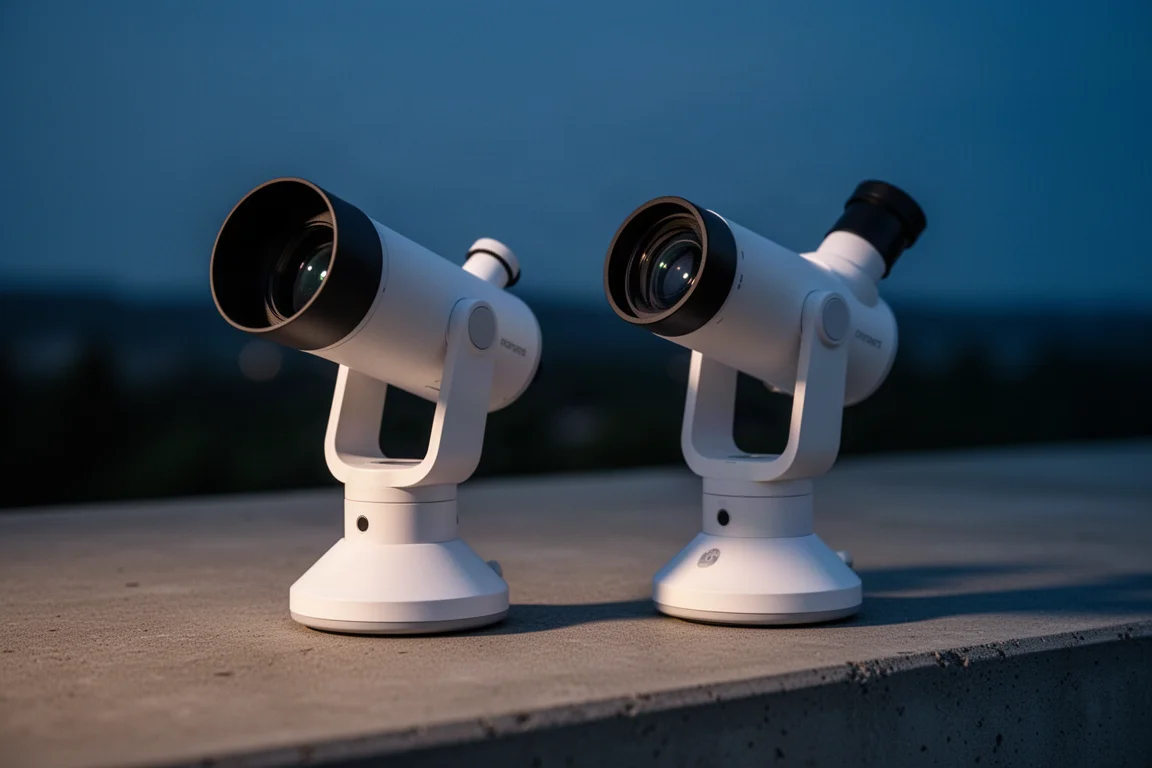
Smart telescopes have quietly become the easiest entry point into astrophotography: an optical tube, a camera, and a computerized mount in one small box that finds, tracks, and stacks your targets for you. Two names dominate this space right now, and the choice between them is genuinely difficult.
The Dwarf Lab Dwarf 3 recently spent a week in backyard testing, and the results were impressive for its price class. The comparison with the Seestar S50 is unavoidable, since both cost about the same and the user experience of each is polished. Here is how they stack up.
What the Dwarf 3 Actually Is
The Dwarf 3 is a smart telescope in the truest sense: it combines a small telescope, an astronomy camera, and a computerized mount that tracks and photographs objects in space. It also includes a secondary wide-angle lens for daytime photos and videos, which turns it into a surprisingly capable all-around imaging device.
The box includes the telescope itself, a soft padded case, a solar filter, and a USB-C charging cable. There is no tripod, so you will need to mount it on your own using the standard thread; a mini tripod works fine given that the whole unit weighs about 3 pounds. The companion smartphone app is required to use it, and the Android experience in testing was smooth throughout.
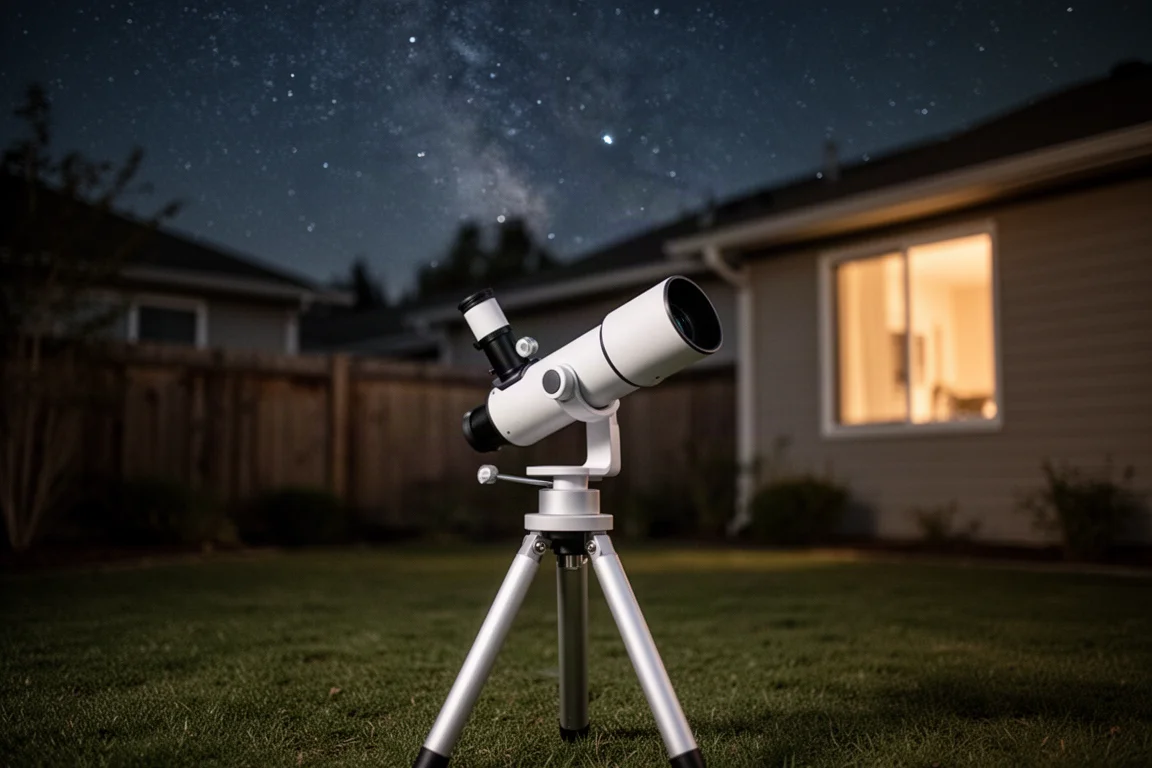
The optical heart is a 35mm aperture, 150mm focal length telescope paired with a Sony IMX678 sensor. The small sensor crops in to give an equivalent focal length of 637mm, which sounds odd on paper but produces a very practical field of view for deep-sky objects, the Sun, and the Moon. The Horsehead and Flame nebulae in Orion, for example, frame nicely in the same shot.
Built-In Filters and Image Options
Two internal filters cover the astrophotography bases. The Astro filter handles broadband targets like galaxies, while the Dual Band filter is the better pick for emission nebulae and supernova remnants, and it proved the most practical option from a light-polluted city. Switching filters is done in the app before you start imaging.
The built-in stacking produces finished images on the spot, and the live stack visibly improves as more subframes accumulate. If you prefer to process your own data, you can save each individual subframe instead, which opens the door to serious post-processing later.
App, Connectivity, and Everyday Use
Connection is via Wi-Fi: hold the button on the side, join the network, and you are in. Once connected you can pan the device around for photos or 4K video (no sound recorded), with responsive slew controls and selectable speeds. At maximum speed it moves fast; for lining up the Moon or Sun, you can slow it right down.
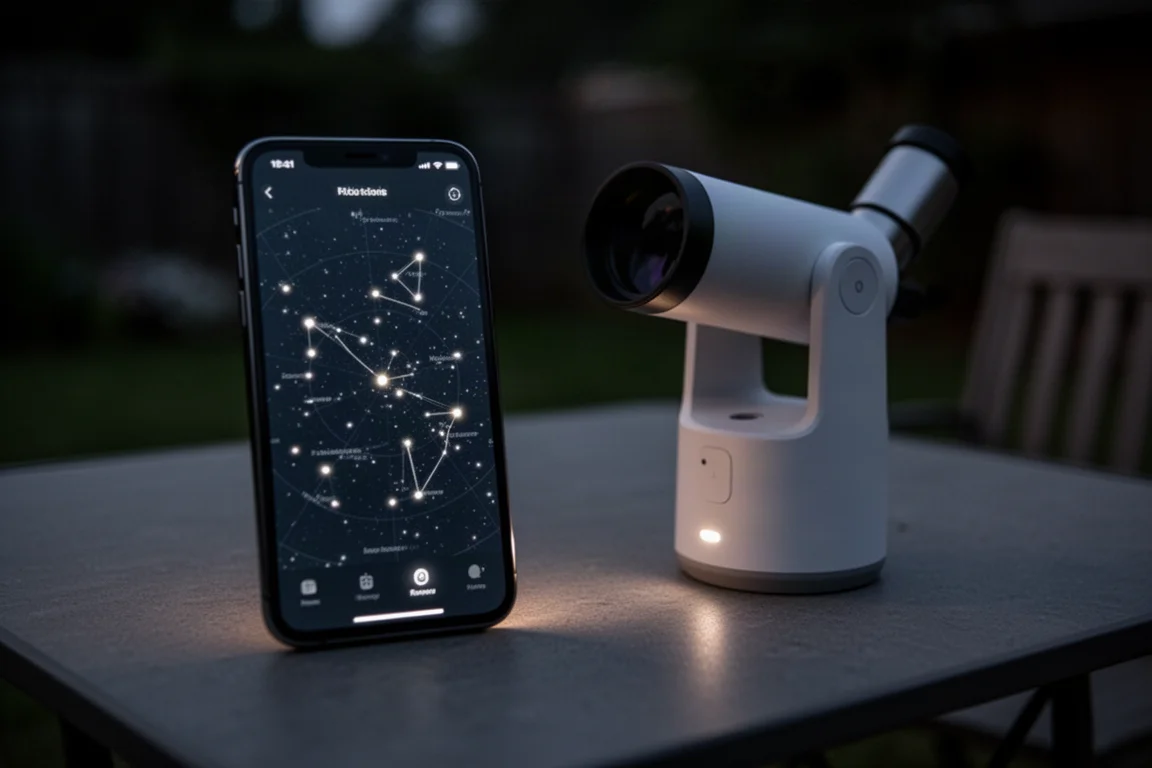
The app includes a sky atlas and planetarium similar to what you would find on other smart telescope platforms, and it is the most natural way to pick a target: look at your available patch of sky and see what is up. You can also search by object name or catalog number, or point manually. In testing, target acquisition and autofocus were remarkably quick, a level of pointing accuracy that not long ago required a manual three-star alignment.
One caveat: the Wi-Fi range is limited. A stable connection held at about 10 to 15 feet indoors, but you cannot wander too far from the device.
EQ Mode: The Feature That Sets It Apart
The standout feature of the Dwarf 3 is its equatorial mode. EQ mode means better tracking, longer exposures, and more options for demanding targets. A built-in polar alignment wizard walks you through the setup: face the rear of the unit toward north, tilt it downward to your latitude angle, and follow the app’s guidance.
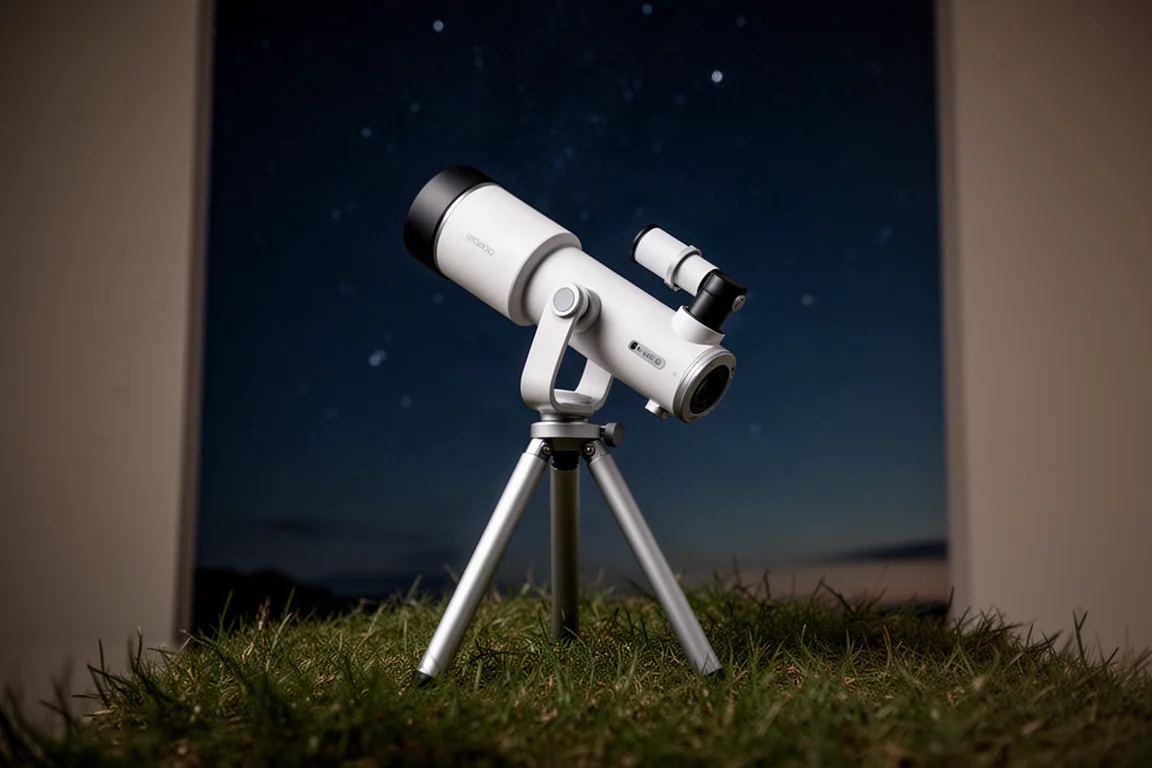
The process can feel awkward at first and the wizard’s corrections are only a rough guideline, so expect a few tries if polar alignment is new to you. Even a rough alignment, though, delivers noticeably better tracking than alt-azimuth operation alone. With EQ mode engaged, 30-second exposures were used successfully in testing; without polar alignment, stick to 10 to 15 seconds.
This is the feature that makes the Dwarf 3 feel like more than a casual grab-and-go scope. If you are serious about imaging, it is well worth the small learning curve.
Solar, Lunar, and Daytime Use
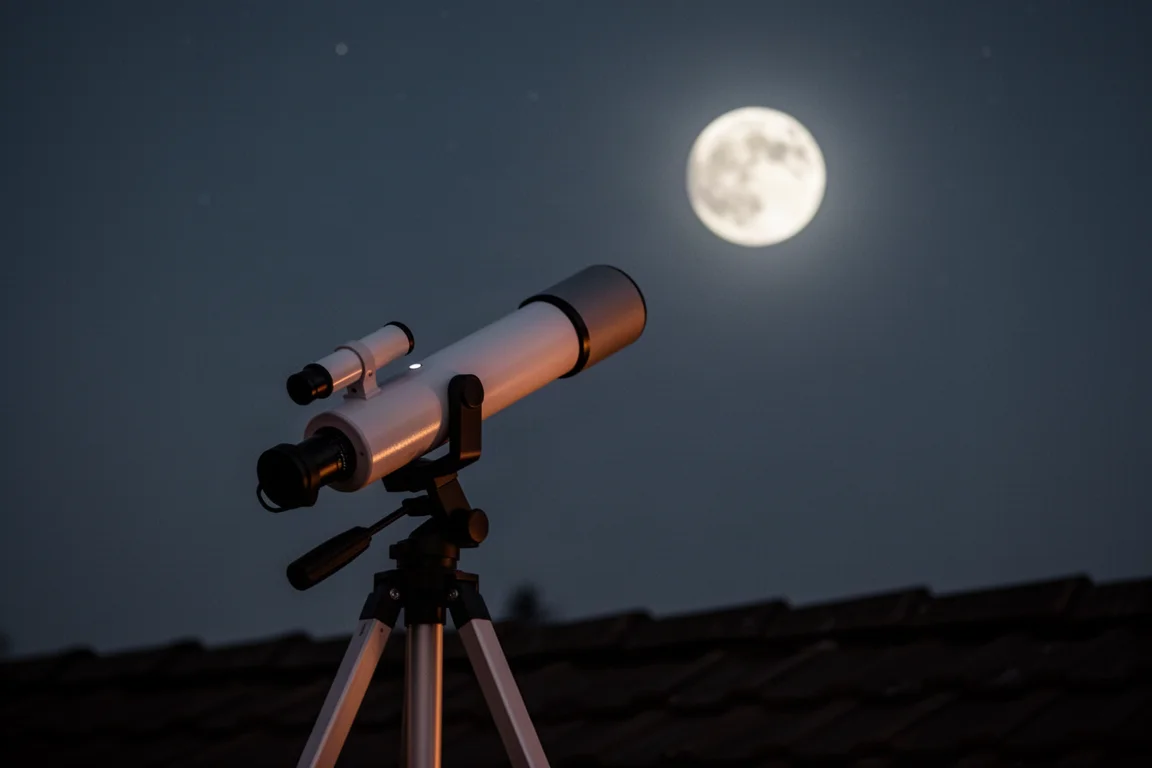
Solar imaging is refreshingly simple thanks to a clip-on magnetic solar filter. Use the wide-angle lens to find and center the Sun, then switch to the telephoto side for the close-up. Moon tracking works very well too, keeping the Moon centered and focused for stills or video, which makes stacking individual frames easy.
At this focal length the Moon and Sun appear a good size, though slightly smaller than through the Seestar S50, whose longer aperture and focal length bring them in a bit closer. That said, the daytime wide-angle plus telephoto combo turned out to be a genuine highlight: scanning the surroundings, zooming in on a bird on a branch, or framing the Moon with reliable autofocus all worked better than expected.
Deep-Sky Results: What to Expect
Deep-sky imaging is where the Dwarf 3 shines. The focal length and field of view suit a wide range of projects, especially large nebula regions. Most galaxies will appear small, but the Andromeda galaxy fits the frame perfectly, which is deeply satisfying to watch build up in the live stack.
The sample images captured straight from the built-in auto-stacking, under a Bortle 6 sky with a nearly full Moon, were genuinely impressive for a smart telescope at this price. Orion was captured in both broadband and dual-band passes, and blending exposures taken through different filters opens up real processing possibilities.
A few honest observations from extended use:
- The frame jumps noticeably between subframes, more than a typical dithering shift of a pixel or two. Some frames shift far enough off-center that you may not want to include them in your own stack.
- Battery life is decent, but on cold nights it drained quickly; a portable power bank keeps it topped up all night.
- The AI enhancement feature performs image stretching and noise reduction only, without adding synthetic or AI-generated content, which is reassuring for purists.
For buyers who want maximum control, the saved raw subframes respond beautifully to dedicated stacking software and post-processing. A personally processed result of the Horsehead Nebula from just one hour of data was noticeably sharper and more refined than the straight-out-of-scope auto stack.
Dwarf 3 vs Seestar S50: The Verdict
Here is the honest part: choosing between these two is genuinely hard. They cost about the same, and both deliver an impressive user experience with impressive results. It is too close to call a definitive winner.
The Seestar S50’s longer aperture and focal length give it a slight edge for solar and lunar close-ups. The Dwarf 3 counters with EQ mode, which is a big deal: it unlocks longer exposures and bigger projects, and having that option available changes what the device can do over time. The Dwarf 3’s dual-band filtering, wide-angle daytime lens, and very complete accessory package add further value.
Conclusion
The Dwarf 3 is an impressive package that makes the most of its compact format. Its inherent limits are those of any smart telescope: a tiny telescope, a small sensor, and a mount that cannot match a traditional equatorial setup. But with EQ mode, thoughtful filters, and strong auto-stacking, the images it produces could give DSLR results a run for their money with enough data and the right processing.
If you are in the market for a smart telescope, either of these is a good destination. Choose the Dwarf 3 if equatorial tracking and versatile daytime imaging appeal to you; choose the Seestar S50 if slightly tighter solar and lunar framing matters more. Clear skies.
Product link
View more details for Dwarf Lab Dwarf 3
This product is mentioned in the review. Check the specifications, options, and compatibility before buying.
View more details for Dwarf Lab Dwarf 3Further reading
Related Reviews
Smart Telescopes
Vaonis Vespera 3 Review: A Premium Smart Telescope With Excellent Optics
A detailed look at the Vaonis Vespera 3 smart telescope, covering its standout hardware, impressive multi-night observations, and the software trade-offs to weigh before buying.
Smart Telescopes
Best Smart Telescopes Compared: Seestar S50 Pro, S50, S30 Pro, S30, and Dwarf Mini
Five of the most popular smart telescopes tested side by side in the desert: what they share, how they differ, and which one suits your budget and targets.
Smart Telescopes
Best Smart Telescopes: Four Scopes That Make Astrophotography Easy
Four smart telescopes that put detailed, color-rich night sky photos within reach of complete beginners, from ultra-portable to full home observatory.