Camping Hammocks
Dutchware Hellbender Hammock Review: Custom Comfort for Hammock Camping
A custom camping hammock with an integrated 20 degree under quilt, a ridge line that removes setup guesswork, and a ridge pole that keeps the bug net open above your face.

Introduction
Hammock camping divides backpackers. Some people sleep better in a hang than on any sleeping pad, while others try it once, wake up feeling curved like a banana, and go straight back to a tent. The difference is usually not the idea itself, it is the gear. A basic gathered-end hammock with a pad shoved inside is a very different experience from a properly built camping hammock with insulation, a ridge line, and a structure that keeps the bug net away from your face.
The Dutchware Hellbender is the second kind. It is a custom hammock with an integrated 20 degree under quilt, a ridge line that takes the guesswork out of tensioning, and a ridge pole that holds the top of the hammock open above your head. It was used on an overnight trip to an alpine lake in the Alpine Lakes Wilderness, a setting with established campsites and plenty of trees, which is exactly the terrain a hammock needs.
Who This Hammock Is For
This hammock is for backpackers who consistently camp in forested terrain, where trees suitable for hanging are part of the landscape rather than an exception. If your trips revolve around lakes, river valleys, and wooded campsites in the Pacific Northwest or comparable environments, the Hellbender fits naturally into that routine.
It is also aimed at anyone who has tried a simple hammock and found it uncomfortable or fussy. The integrated insulation, the ridge line, and the angled sleeping position address most of the complaints that come with entry-level hammock setups.

It is not a universal shelter. Terrain above treeline, desert routes, and open meadows are places where a hammock simply cannot be pitched, no matter how well it is made.
Main Strengths
The most important feature is the under quilt, and the way it is attached. It is sewn to the outside of the hammock, which matters because insulation placed inside a hammock gets compressed by body weight and stops trapping warmth. Sewn to the outside, it stays lofted and keeps working.
The under quilt is also sewn at an angle, matching the diagonal position you sleep in rather than running straight from end to end. Dutchware calls this the Dutch way, and it is a configurable option: head to one side, feet back to the other. That geometry keeps the insulation where your body actually is, instead of bunched to one side.
The ridge line is the second feature worth calling out. It runs between the two ends of the hammock, and setup is as simple as tightening the straps until that line is taut and level. Once it is, the hammock sits at a consistent, comfortable tension every time, with no fiddling and no guesswork.
Setup and Tensioning
Setup starts with two tree straps. The hammock arrives in a double-ended stuff sack, which means one end of the bag can be clipped to a strap and the hammock pulled out of the bag as you walk to the other tree. The bag ends up at the far end, ready for the second connection, and the whole process stays off the ground.
For the tarp, a ridge line can be rigged above the hammock using standard cord and a few hitches: a bowline around one tree, a trucker’s hitch for tension on the other, and prusik loops on the ridge line to hold the tarp’s end attachments. These are conventional backpacking knots rather than anything specific to this hammock, and they are worth practising before a trip. Dutchware also offers a purpose-made ridge line for tarp setup, which is a simpler route if knots are not your strength.
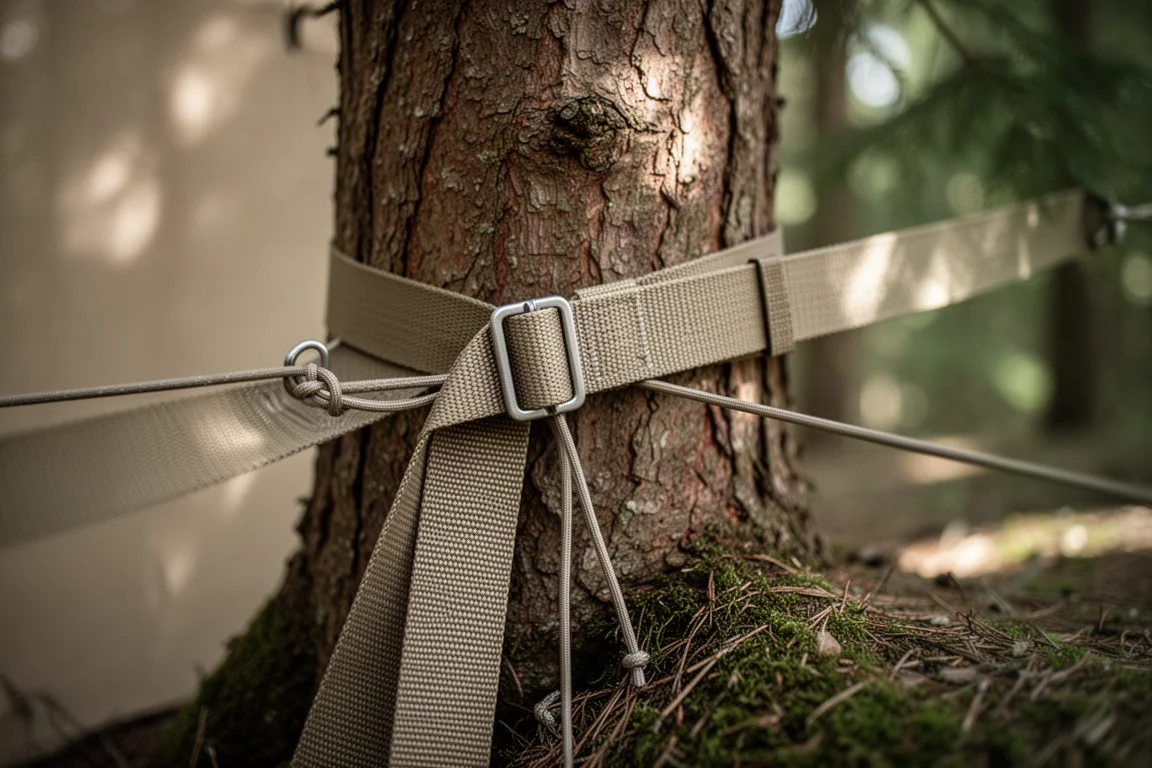
The tarp itself can be stowed in a snake skin style sleeve, which makes it quick to deploy if the weather turns in the middle of the night without leaving the hammock.
Comfort and Sleep Quality
This is where the Hellbender earns its place. Lying on the diagonal, rather than straight end to end, keeps the body flatter and avoids the sunken, curved feeling that gives hammocks a bad reputation. The sewn seams of the under quilt visible inside the hammock give you a visual guide to that diagonal position, so you naturally settle into the right spot.
The insulation package is rated to 20 degrees Fahrenheit, combining the under quilt with a 20 degree top quilt. The top quilt has a draft collar with snaps, a draw cord that cinches around the neck, and a foot box that opens completely into a flat blanket, which makes it usable across a wider range of temperatures.
The result, on a calm night at an alpine lake, was one of the best nights of sleep in a long time, at camp or anywhere else. The gentle movement of the hammock is genuinely sleep-inducing rather than restless.
Things to Consider Before Buying
The honest limitation is location. A hammock needs two trees at a workable distance apart, and the higher you climb, the sparser the trees become. Around popular low-elevation alpine lakes there is usually no shortage of options, but on exposed switchbacks and ridgelines there is nothing to hang from at all. Many backpackers will keep a tent for those trips.
Storage inside the hammock is more limited than in a tent, especially for bulky gear. The Hellbender has four D-rings, two at the head and two at the foot, and a pack can be suspended from a cord strung between the foot-end rings so it does not slide down toward your body. That works well for a pack and small items, but a large camera kit or a lot of loose gear is harder to manage than it would be in a tent.

Getting in and out takes a little practice, particularly the first few times, and site selection matters. Bushes directly under the hammock, or trees spaced too closely together, can make an otherwise good spot awkward.
Getting Organized Inside the Hammock
The D-rings are more useful than they first appear. Strung with a length of cord, they hold a backpack in place at the foot end. They also accept Dutchware accessories such as a small shelf or a gear loft, and an internal ridge line can carry additional lightweight items.
Small details make a difference at night too. The interior zippers are bright yellow while the exterior ones are black, so you can find the right zipper by sight in low light. The ridge pole, a crossbar across the top of the hammock near your face, gives the interior extra room and structure, and when you unzip the bug net the whole front springs open instead of draping across your face. Exiting is quick and uncomplicated.
Buying Advice
The Hellbender is a custom build, which means the configuration is chosen before the hammock is made. The under quilt angle and its pattern are part of that decision, so it is worth thinking about which diagonal you sleep on before ordering, since the insulation is sewn to match it.
If you already own a hammock and dislike it, the upgrade that changes the experience most is insulation. An under quilt on the outside of the hammock does more for warmth and comfort than almost anything else. If you are starting from scratch and you backpack mainly in forested, tree-rich terrain, this is a setup that removes most of the usual friction.

It is also worth being realistic about your trips. This hammock is an excellent shelter wherever it can be hung, and it is not a tent replacement for routes that spend long stretches above treeline. Backpackers who split their time between both kinds of terrain will likely keep both options and choose according to the landscape.
Conclusion
The Dutchware Hellbender answers the main objection to hammock camping. Setup is fast and repeatable thanks to the ridge line, the integrated under quilt keeps insulation lofted and in the right place, and the diagonal sleeping position delivers a genuinely flat, comfortable night. For backpackers who camp where trees are available, it is a shelter worth building a trip around, and it makes a strong case for leaving the tent at home when the terrain allows it.
Product link
View more details for Dutchware Hellbender Hammock
This product is mentioned in the review. Check the specifications, options, and compatibility before buying.
View more details for Dutchware Hellbender HammockFurther reading
Related Reviews
Camping Hammocks
Superior Gear Integrated Under Quilt Hammock Review: Insulation Built Into the Hang
An integrated under quilt hammock that simplifies camp setup, with a cinch buckle suspension, a removable bug net, and a snap-in top quilt option to weigh before buying.
Camping Hammocks
Haven Spectre Review: A Lighter Hammock Tent That Still Sleeps Flat
The Haven Spectre cuts more than three pounds from the Haven XL while keeping the flat sleeping position, the wide XL footprint, and the True Level pad.
Camping Hammocks
Hennessy Hammock Ultralight Backpacker Asym Zip Review: A Complete 2 lb 8 oz Shelter System
A practical look at the Hennessy Hammock Ultralight Backpacker Asym Zip, covering its 2 lb 8 oz packed weight, five-minute pitch, flat asymmetric lay, and the short tree straps and compact fly buyers should plan around.