Camping and Backpacking
Backpacking Sleep System Mistakes: 7 Fixes and Two Gear Essentials
The sleep system mistakes that lead to cold, sleepless nights outdoors, plus two low-cost pieces of gear that solve two of the biggest ones.
Introduction
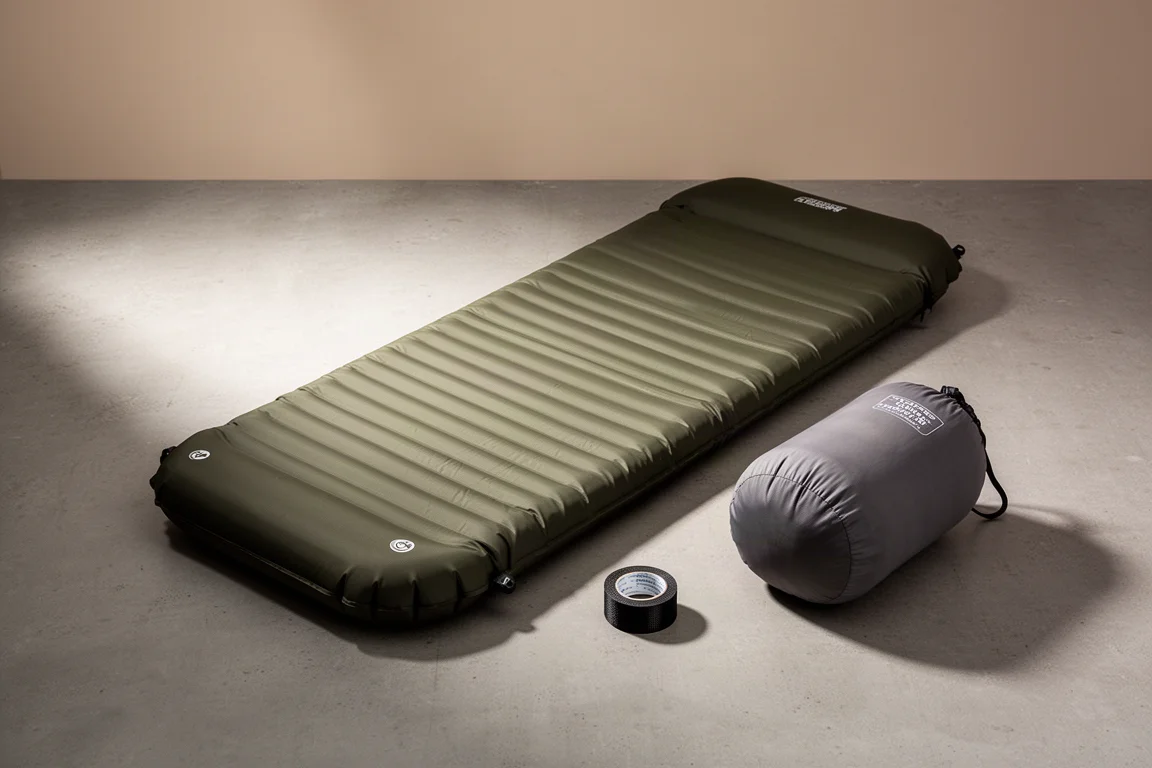
A cold, sleepless night in a tent is rarely the result of one bad purchase. It is usually the sum of a few quiet assumptions: that a warm sleeping bag is enough on its own, that the number printed on the label describes real comfort, that any sleeping pad will do the job underneath.
Those assumptions are easy to make at the checkout counter and expensive to discover at two in the morning. This guide covers the mistakes that most often undermine a sleep system, and it points to two inexpensive pieces of gear that address two of the most damaging ones.
Mistake 1: Your Sleeping Pad Is Half of Your Warmth
The insulation in a sleeping bag only works where it can stay lofted. When you lie on top of a bag, the fill underneath your body is compressed almost flat, and compressed insulation provides very little warmth. Everything below you then depends on the sleeping pad.
That is why a bag rated to minus 15 degrees Fahrenheit can still leave you shivering on a two-season pad. Set that combination up on a 22 degree night and the top half of the system may be fine while the bottom half gives you nothing to work with. The pad is not an accessory to the bag. It is roughly half of the warmth.
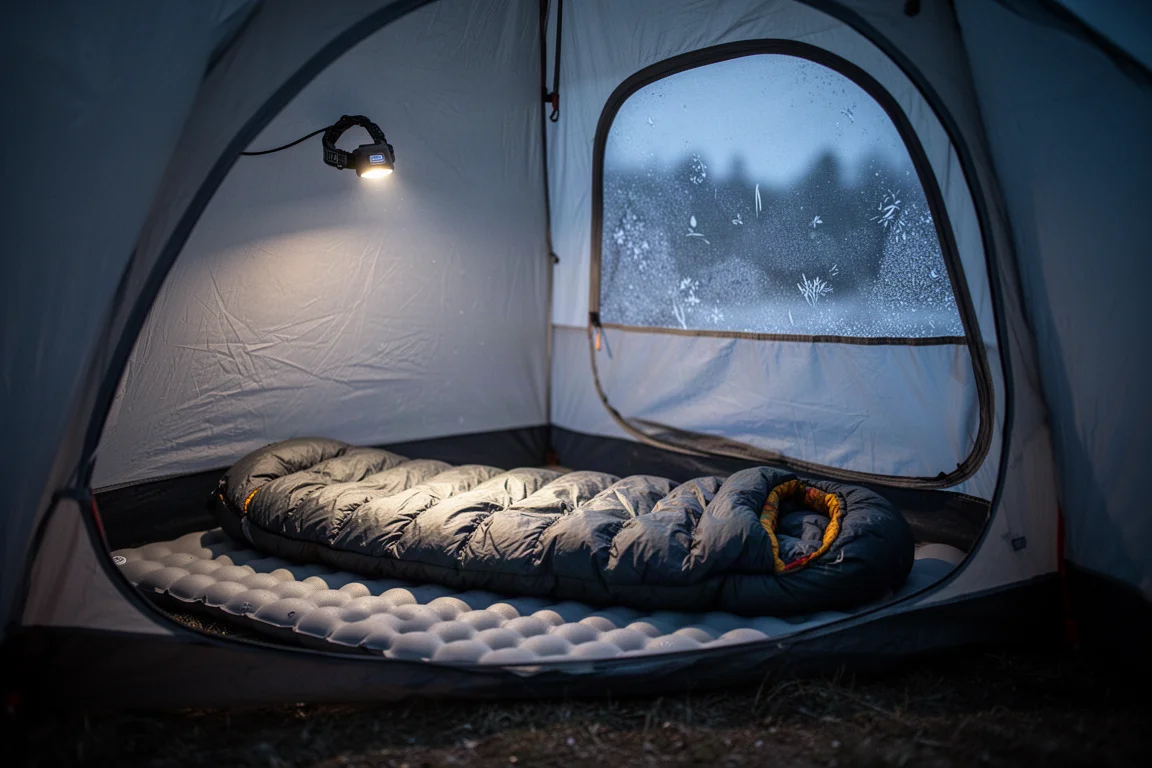
The practical takeaway is to treat the pad and the bag as a single system, and to size both for the coldest night you realistically expect rather than the average one.
Mistake 2: Believing the Temperature Rating on the Bag
Manufacturers can print several different temperature numbers on a sleeping bag. There is a survival rating, a risk rating, and a comfort rating, and a brand can choose whichever one flatters the product most.
An EN rating is a recognised standard that keeps those numbers honest, but it is voluntary. A bag marked 20 degrees Fahrenheit, or minus 6 degrees Celsius, may carry a comfort rating of only 32 degrees Fahrenheit, with a transition range around 20 degrees Fahrenheit where most sleepers begin to feel cold, and a risk range at minus 9 degrees Fahrenheit. The number on the label and the number that describes comfort are not the same thing.
Before buying, look for a brand that publishes EN ratings, then check which figure is which.
Mistake 3: Overlooking ASTM Ratings on Sleeping Pads
Sleeping pads have a comparable standard called an ASTM rating, and it serves the same purpose: it keeps R-value claims comparable between manufacturers.
R-value describes how much warmth a pad holds underneath you. A pad rated around 3.2 is a solid three-season option, while a pad rated around 6.9 is a considerably warmer design. Higher numbers mean more insulation between you and the ground. A very warm pad can feel like too much in the middle of summer, particularly for sleepers who run hot, while a moderate pad covers most of the year comfortably.
The trap is pads sold with a season label instead of a standardised rating. Without an ASTM figure, a four-season claim is difficult to verify.
Mistake 4: Buying a Sleeping Bag in the Wrong Size
Fit changes how a bag performs. A narrow, close-cut bag leaves less dead air inside to warm up, which is efficient but can feel restrictive. A wider bag offers room to move, at the cost of more air to heat before you feel warm. An adjustable bag that unzips along both sides can expand to suit different sleepers and different body sizes, though it usually weighs a little more.
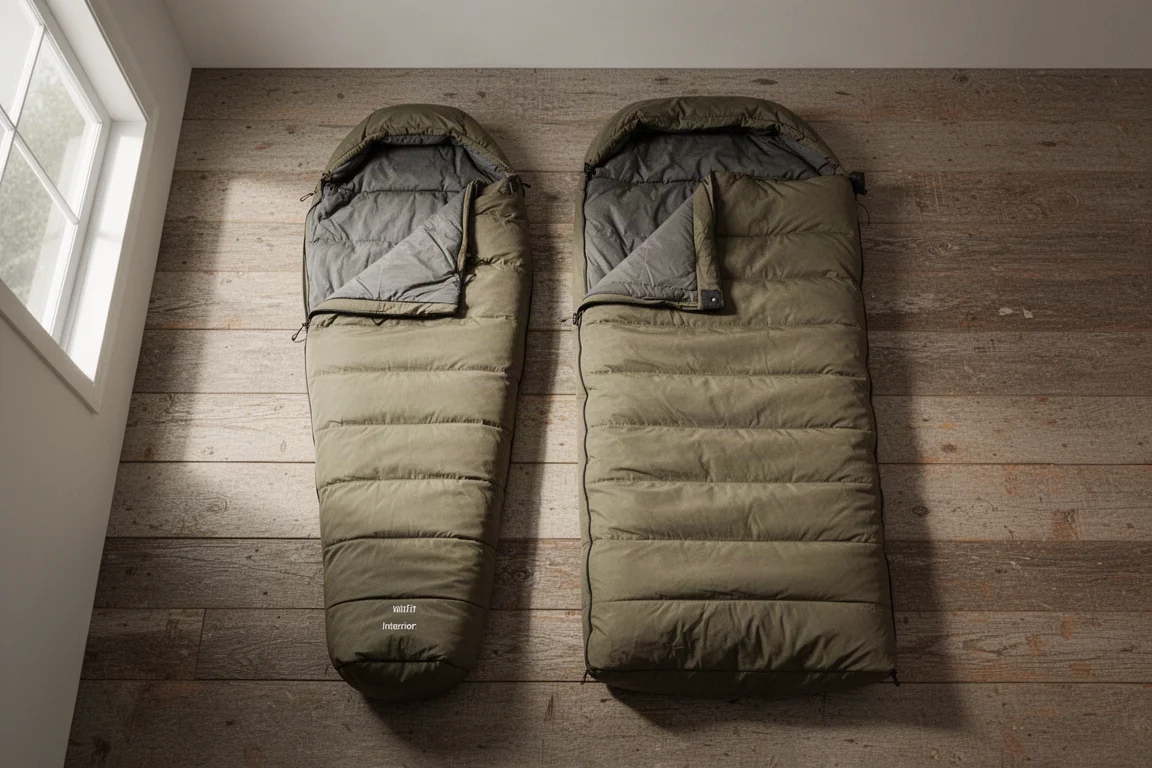
Size also affects how well you sleep. If a bag is too tight, you cannot shift position without dragging the whole bag with you, which leads directly to the next problem.
Mistake 5: Rolling With the Bag Instead of Inside It
Good sleeping bags place their insulation strategically rather than evenly. One common layout puts roughly 70 percent of the insulation on top and 30 percent on the bottom, on the assumption that the pad handles what is underneath you.
That design only works if you roll over inside the bag while the bag itself stays flat. If you roll and the bag rolls with you, the insulation rotates out of position and the cold spots land where you least want them. Buying a bag with enough internal room to turn over inside it is what allows the insulation layout to do its job.
Mistake 6: Skipping the Repair Kit
A puncture in an inflatable pad can end a trip. It is the kind of failure that turns a planned night under the stars into a long, cold walk back to the trailhead.
A small piece of repair tape weighs almost nothing and takes up no meaningful space. Tenacious Tape is designed to patch nylon and dyneema, which covers most sleeping pad and shelter fabrics, and it can turn a deflated pad into a usable one for the rest of the trip.
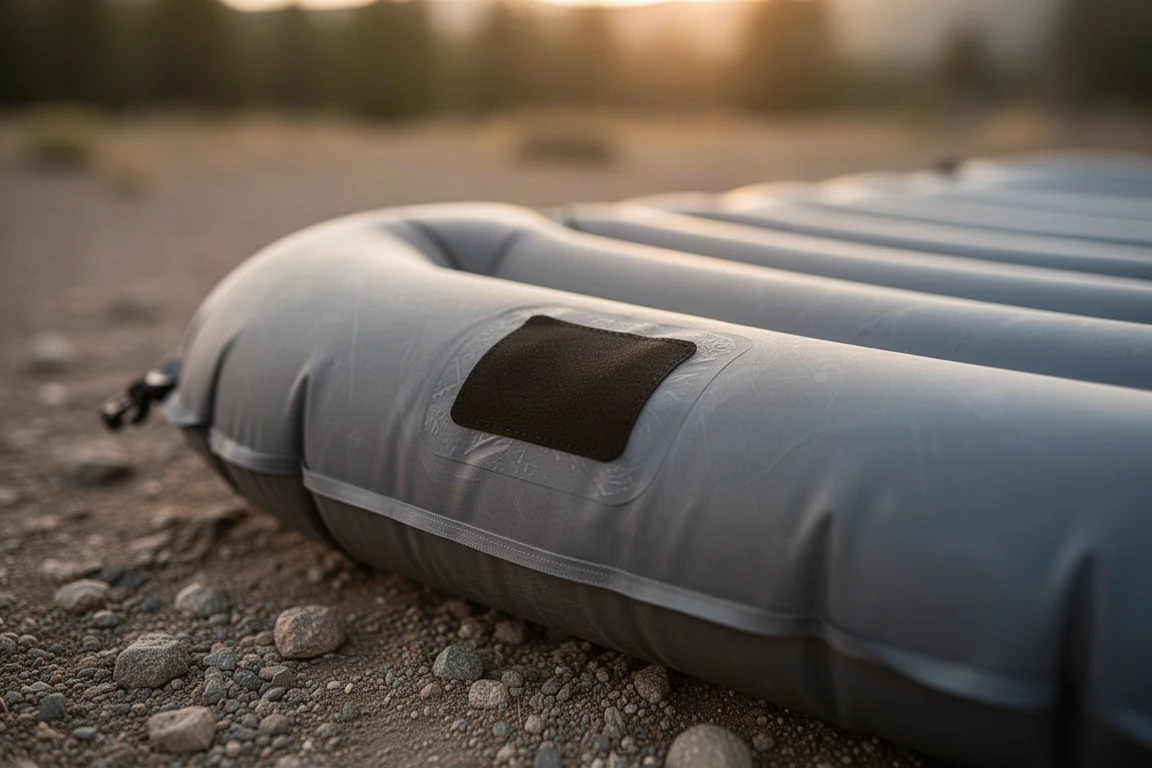
Carrying it is not a sign of paranoia. It is the cheapest insurance in the pack.
Mistake 7: Choosing a Sleeping Pad That Is Too Narrow
Pad width is the quietest mistake of the group. Entry-level pads are frequently around 20 inches wide, which is narrower than most people expect once they are actually lying on one. Twenty-three inches is a reasonable minimum for many adults, and 25 inches feels noticeably more like a real mattress.
Width matters most when you move in your sleep. On a narrow pad, an arm slides off the edge and lands on cold ground, and the whole night becomes a negotiation with the edge of the mat. Through-hikers and very weight-conscious backpackers may accept that trade-off, but for most campers a wider pad is worth the few extra ounces.
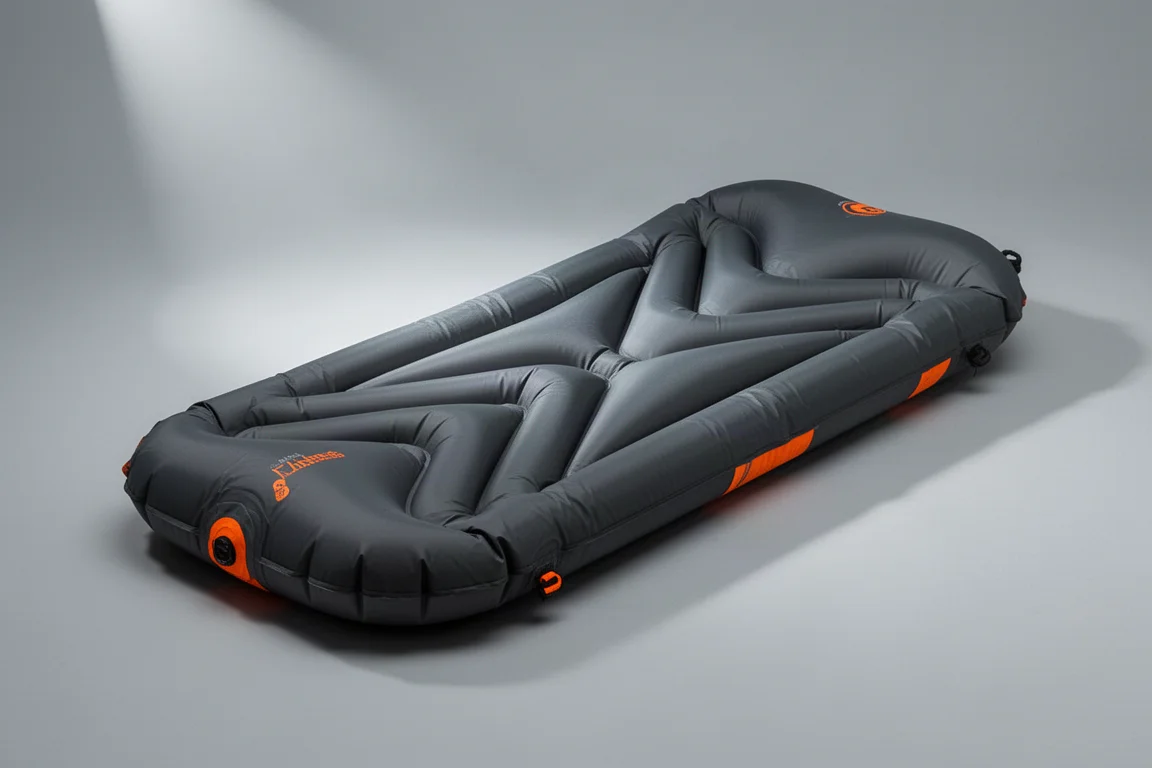
A Lightweight Pad for Warm-Weather Trips: Klymit Insulated Static V Lite
The Klymit Insulated Static V Lite is a useful illustration of why standardised ratings matter. It has been marketed as a four-season pad, and earlier listings quoted an R-value of 4, but its ASTM rating is 1.9. By any reasonable reading, that places it in summer territory rather than four-season territory, and its thin insulation is not built for cold ground.
Where it makes sense is warm-weather backpacking, where low weight and a small packed size matter more than insulation depth. If you understand that you are buying a summer pad, it does that job without asking much of your budget or your pack.
A Pocket-Sized Fix for a Flat Pad: Tenacious Tape
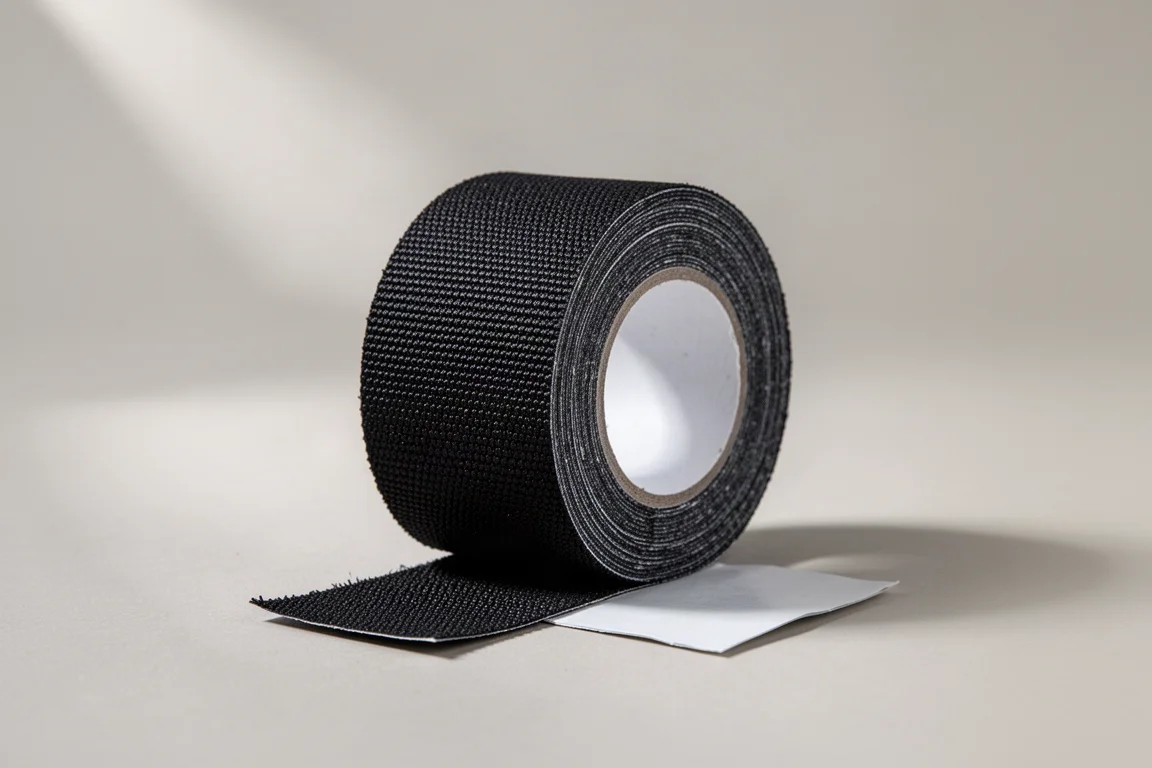
Tenacious Tape is a plain roll of repair tape that bonds to nylon and dyneema fabrics. It is not glamorous and it costs very little, but it addresses the single failure that most reliably ruins a night outdoors.
Keep a short strip in your repair kit alongside your pad. If a seam or a pinhole opens up, you can patch it on the spot and sleep on an inflated pad instead of the ground.
Buying Advice: Building a Sleep System That Matches Your Season
Start with the season you actually camp in, then work backwards. A three-season camper is usually better served by a moderate R-value pad and a bag with a published EN comfort rating than by an aggressive cold-weather bag paired with a thin summer mat.
Check the width before you check the weight. A pad that is too narrow will cost you more sleep than a few extra ounces will cost you on the trail. Confirm that the bag has enough interior room to let you turn over inside it, and confirm that its insulation is placed where the manufacturer says it is.
Finally, treat the small items as part of the system. A repair patch, a pad that matches the forecast, and a bag rated for comfort rather than survival will do more for a good night’s sleep than any single upgrade.
Conclusion
Most cold nights outdoors trace back to a mismatch between the pad, the bag, and the conditions. Correct the mismatch and the rest of the system falls into place.
Two inexpensive additions cover a lot of ground: a lightweight summer pad for warm-weather trips, and a strip of repair tape for the night something goes wrong.
Further reading
Related Reviews
Camping and Backpacking
12 Camping and Backpacking Gear Upgrades Worth Buying Sooner
A practical roundup of quilts, sleeping pads, trekking poles, navigation tools, stoves, backpacks, and trail runners that make backpacking lighter, warmer, and more comfortable.
Camping and Backpacking
Camping and Backpacking Gear Wishlist: Six Upgrades Worth Considering
Six camping and backpacking items worth planning for, from two inflatable sleeping pads and a four-season tent to a 510 g camp chair and two pairs of trail shoes.
Camping and Backpacking
Outdoor Vitals Loftek Hybrid Hood Review: The Missing Piece for Top Quilt Sleepers
A lightweight insulated balaclava built for top quilt users, with hybrid synthetic and down insulation that keeps its loft when your breath soaks it.