Backpacking Tents
Durston X-Mid Pro 1 vs Zpacks Offset Solo: Which Ultralight Solo Shelter Fits Your Hike?
Two Dyneema solo shelters compared on weight, footprint, interior space, and simplicity, with clear guidance on who each one suits.
Introduction
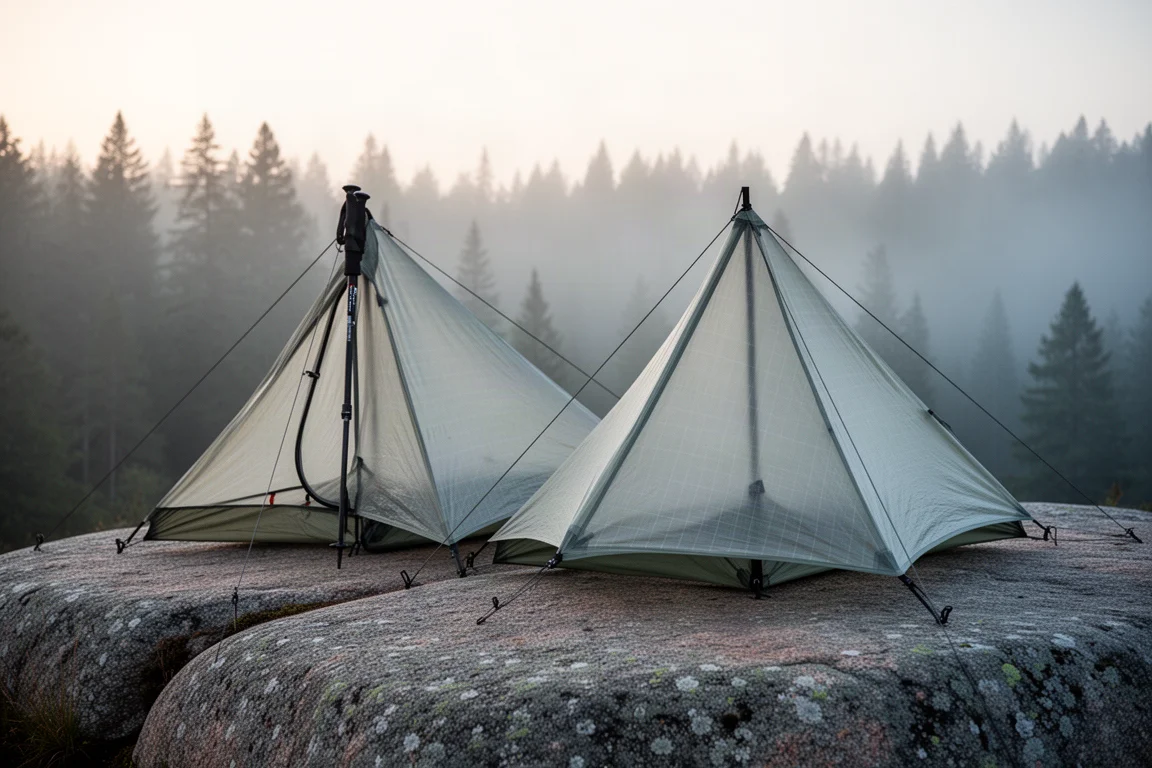
Two ultralight solo shelters, both built from Dyneema composite fabric, both pitched with trekking poles, and both designed around the same idea: a one-person tent can feel far larger inside if the geometry is clever. The Durston X-Mid Pro 1 does it with an asymmetrical offset pole layout. The Zpacks Offset Solo does it by moving the peak off centre and adding a short pole at the foot end. Side by side on paper they look like the same answer. In the field, across multiple trips in dry and rocky terrain, they behave quite differently.
The headline numbers set the tone. The X-Mid Pro 1 measured 17 oz and retails at $549. The Offset Solo measured 19 oz and retails at $749. Both are fully enclosed, both use two doors and two vestibules, and both are aimed at backpackers who count grams but still want to sit up, stretch out, and sleep without a quilt pressed against a wall.
How These Two Shelters Compare
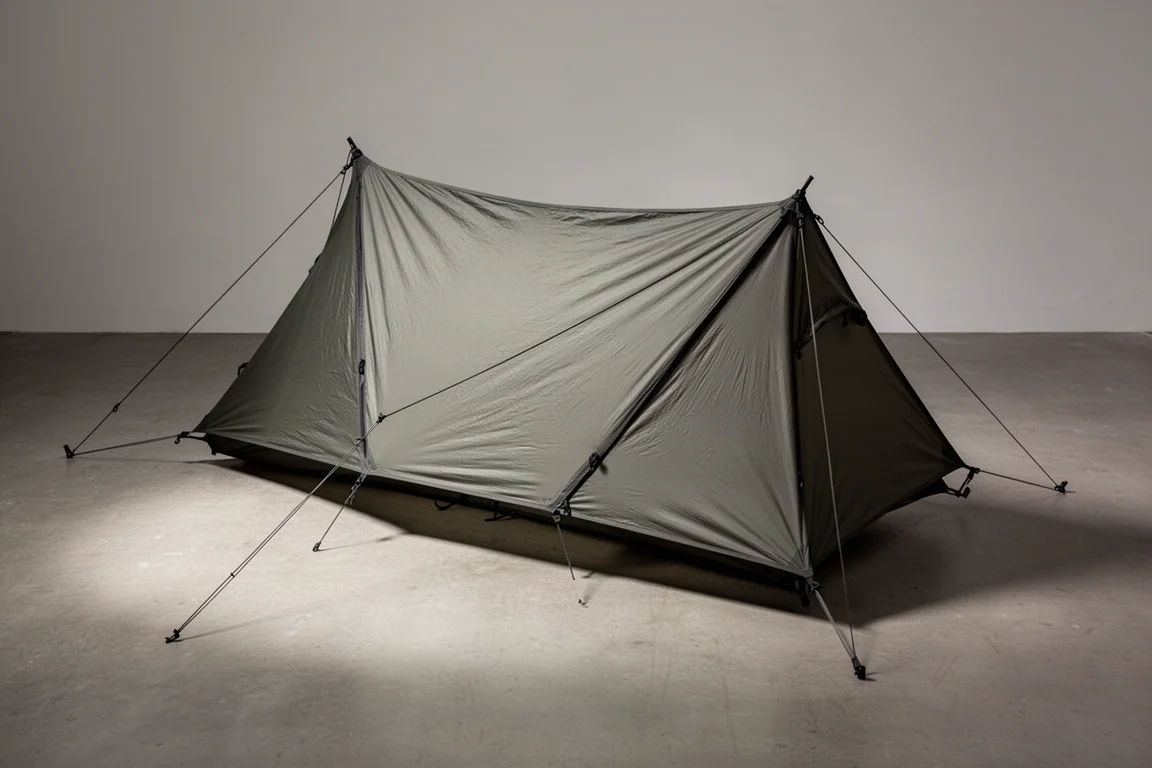
The X-Mid Pro 1 is a one-person, two trekking pole tensioned shelter made from Dyneema composite fabric. The version tested here uses a silnylon floor, with a Dyneema floor available as an option. It is fully enclosed, with two D-shaped zipper doors and two vestibules, plus dual wall pockets, magnetic door toggles, and vents at both peaks to help manage condensation. Its defining feature is the asymmetrical offset pole design, which Durston says creates more internal headroom and living space.
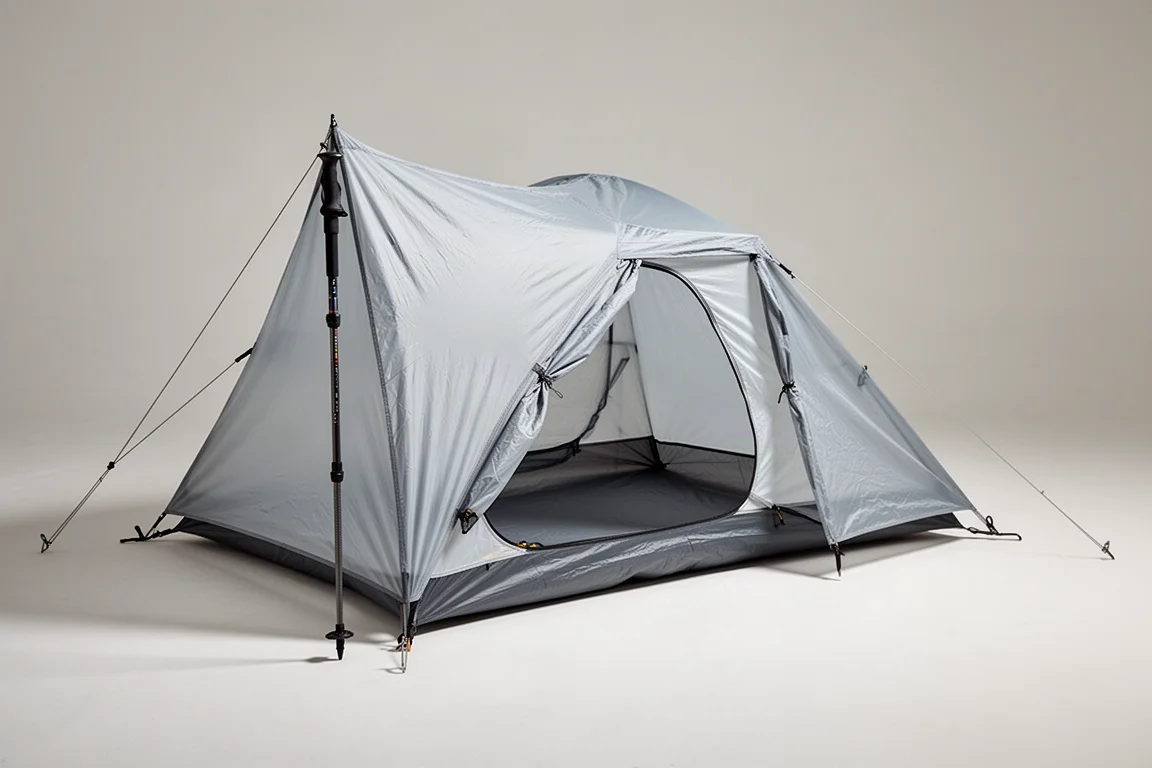
The Zpacks Offset Solo is also a one-person, two trekking pole tensioned shelter in Dyneema composite fabric, and it ships with a Dyneema bathtub floor as standard. It is fully enclosed too, with two L-shaped zipper doors, double vestibules, magnetic door toggles, and dual peak vents. Its asymmetry works differently: instead of offset poles, the peak itself is offset, and the tent includes a 32 inch pole for the foot end that extends the usable length.
Those two approaches produce very different footprints on the ground, which is the first thing most buyers will notice. The Offset Solo keeps a fairly standard solo footprint and can be squeezed into tight, cluttered pitches. The X-Mid Pro 1 spreads out much further, because the fly is essentially a large rectangle while the sleeping area inside is smaller and offset. Both designs chase the same goal, but they ask for different campsites.
Durston X-Mid Pro 1
The X-Mid Pro 1 delivers the most generous head and foot clearance of the two, and arguably the most encountered in a one-person shelter. Even for tall sleepers there is real distance between the quilt and both end walls, which is exactly what the offset pole geometry is meant to achieve. The trade-off shows up in width: the interior floor is narrow, narrow enough to feel confined when you are lying still and want to spread gear around you. Almost all of the extra volume sits in the vestibules, and there is a case to be made that the two vestibules together offer more width than the sleeping area itself. Backpackers who keep their pack and kit inside the tent rather than outside will feel that narrowness more than those who treat a vestibule as a gear closet.
Setup is the X-Mid Pro 1’s strongest argument. Once the pitching method clicks, the tent stakes out, the trekking poles slot in, and the fly tensions quickly and evenly. There is no additional pole to position and no secondary tension point to chase, so a taut pitch happens fast, which matters on late arrivals and in poor weather.
Zpacks Offset Solo
The Offset Solo reads as the roomier tent when you are sitting inside it. Interior width is noticeably better, enough to lay a pack alongside the sleeping pad instead of wedging it near your feet. Head and foot room are both reasonable, and the foot end is longer than the head end, helped by the included 32 inch pole that pushes the foot wall outward and keeps a quilt’s footbox clear of the fabric. The head end wall sits a little closer to the face than the X-Mid Pro 1’s, which is the main compromise of this layout.
That extra pole is also the Offset Solo’s main cost in day-to-day use. It is one more component to carry, pack, and keep track of, and one more tension point to balance when you want the whole shelter drum-tight. It is not a difficult tent to pitch, but it takes longer to get every wall taut than the simpler two-pole design. The standard Dyneema bathtub floor is a genuine advantage on wet ground, and the tighter footprint means it fits the awkward, boulder-strewn spots where a larger shelter simply will not go.
Setup and Pitch Time
Both shelters are easy to pitch once the trekking pole method is understood, and both go up cleanly on flat ground. The difference is in how much room they need and how quickly they reach a fully taut state.
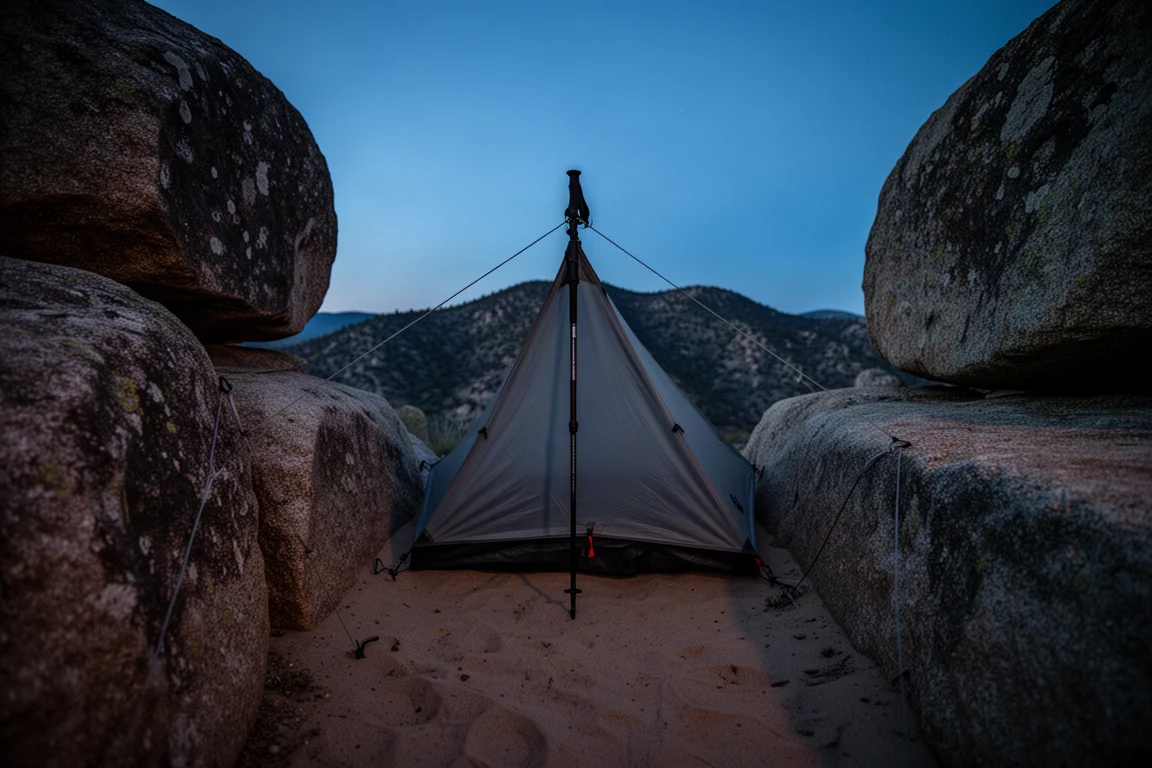
The Offset Solo wins on placement. Its footprint is close to that of a typical one-person shelter, so it slots into gaps between rocks, roots, and trees without much fuss. That flexibility is a real benefit on established trails where campsites are small, uneven, and often already crowded. The X-Mid Pro 1 needs a larger, cleaner patch of ground because of its rectangular fly and offset interior. In a rocky area with limited options, the larger footprint forces more searching for a workable pitch.
The X-Mid Pro 1 wins on tensioning speed. Stake it out, insert the two poles, tension, and it comes up taut and ready. The Offset Solo takes longer, not because it is awkward but because the additional pole creates another point to balance. Getting one wall tight can leave another slightly floppy until the whole structure is adjusted, so the final dialling-in takes a few extra minutes.
Internal Space and Living Room
These two shelters solve internal space in opposite directions, and the right choice depends on how you sleep and where you put your gear.
The X-Mid Pro 1 offers exceptional length and head height. You can sit up, stretch out, and stay well clear of both end walls. What it does not offer is floor width. The narrow interior feels tunnel-like, and there is little room to spread a pack, shoes, and a cooking kit beside the pad. The vestibules are enormous by solo standards, which is excellent if you prefer to keep wet gear outside the sleeping area, and less useful if you want everything within arm’s reach.
The Offset Solo gives up some of that end-to-end clearance, particularly at the head end, in exchange for a wider floor. Being able to place a pack beside the pad changes how the tent feels over a long night, and the extended foot end keeps a quilt’s footbox off the wall. For side sleepers who roll around, or for anyone who dislikes having gear piled at their feet, the wider floor is the more practical kind of space.
Doors and Morning Views
Both shelters use two doors and two vestibules, and in both cases only one door can be rolled back at a time. The X-Mid Pro 1 uses D-shaped doors; the Offset Solo uses L-shaped doors. Each leaves an angled panel in front of the opening.
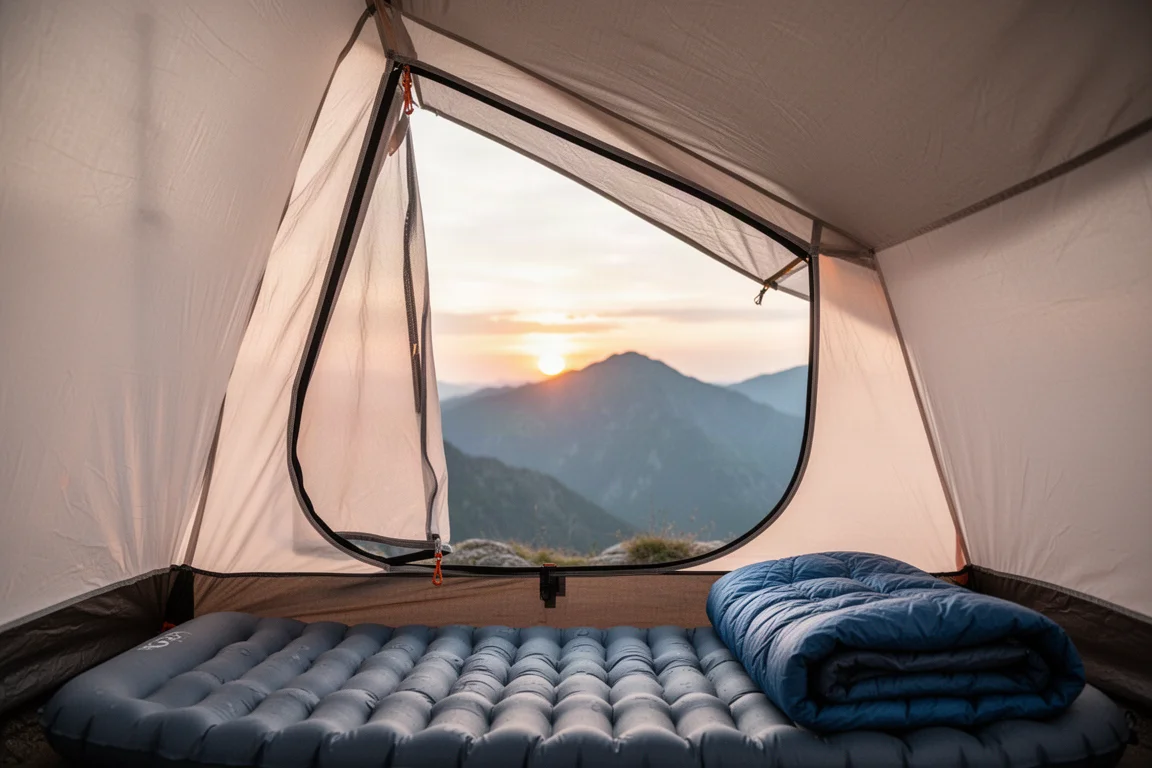
That geometry is worth thinking about before buying. If your routine involves sitting inside the tent in the morning with coffee and a wide open view, neither shelter delivers it. Because the peak is offset and one side of the wall stays closed, you end up sitting off to one side with the view partly blocked, which is a noticeable step down from a shelter whose whole front panel opens up. Backpackers who make coffee outside and treat the tent purely as a place to sleep will not mind at all.
The two-vestibule layout is also worth questioning on a solo shelter. Its usual justification is ventilation, and in practice both tents still gathered condensation inside, including in dry environments. Two doors, two vestibules, and dual peak vents did not prevent a wet inner wall, which is simply part of living with a single-wall shelter.
Condensation, Ventilation, and Small Annoyances
Condensation appeared in both shelters despite the dual peak vents and the two-vestibule design, and it showed up even in dry, arid conditions. That is the nature of single-wall Dyneema shelters: warm, moist air meets cold fabric and condenses. Neither tent eliminates the problem, so plan on a quick wipe-down in the morning and choose pitches with airflow when you can.
Beyond condensation, two smaller details stand out. The X-Mid Pro 1 ships with very short guy lines. In rocky terrain, where lines often need to be routed over a rock or around a root, the stock lines can be too short to reach a usable anchor, and swapping them out or moving the entire pitch becomes the workaround. The Offset Solo ships with longer lines that handle those obstacles more comfortably.
The Offset Solo’s extra foot pole is the other long-term consideration. It works well, but it is a separate component that can be misplaced, bent, or broken over a long season, and it adds a step to every pitch. Backpackers who value a shelter with as few loose parts as possible will notice that trade-off on every trip.
Buying Advice
Three criteria decide this comparison: how the shelter pitches and how quickly it goes taut, how usable the interior is for your body and your gear, and how simple the whole system is to live with.
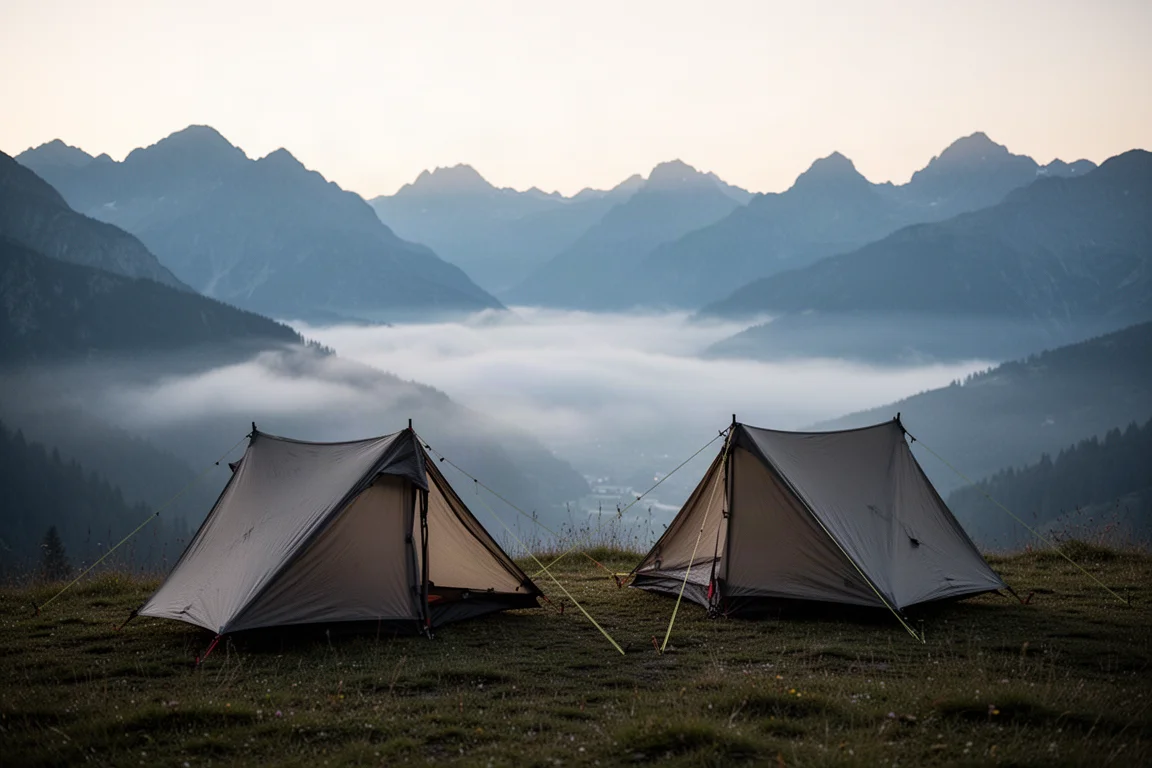
On pitching speed and simplicity, the X-Mid Pro 1 comes out ahead. Two poles, no extra components, and a taut pitch without fuss. On placement flexibility and interior width, the Offset Solo is the better shelter, and its standard Dyneema bathtub floor is a practical bonus on damp ground.
If you are tall, or if head and foot clearance is what makes or breaks a night’s sleep, the X-Mid Pro 1 is the stronger option, provided you can find enough space to pitch it. If your campsites tend to be small, cluttered, and uneven, or if you want to sleep with your pack beside you, the Offset Solo earns its higher price through placement flexibility and floor width. The X-Mid Pro 1 edges ahead overall on the three criteria that matter most, but the gap narrows considerably for anyone who camps in tight terrain.
Budget is part of the decision too. At $549 the X-Mid Pro 1 costs meaningfully less than the $749 Offset Solo, and for many backpackers that difference alone will settle the question.
Conclusion
Both shelters are light, fully enclosed, and genuinely spacious for a one-person Dyneema tent, and both accept the usual single-wall compromises: condensation, one roll-back door, and a less open morning view. The Durston X-Mid Pro 1 is the easier shelter to pitch and the more generous in head and foot room, while the Zpacks Offset Solo is the more flexible to place and the wider of the two inside. Match the tent to the campsites you actually use, and either one will serve you well for a long season of nights out.
Further reading
Related Reviews
Backpacking Tents
3F UL Lanchan Pro 1 Review: A 1 lb 8 oz Single-Wall Trekking Pole Tent
A practical look at the 3F UL Lanchan Pro 1, a single-wall trekking pole shelter with a 1 lb 8 oz weight, 20D silnylon fabrics, and a roomy 90 x 31 x 49 inch interior.
Backpacking Tents
3F UL Taiji 2-Person Tent: A Convertible Backpacking Shelter Worth a Closer Look
A practical look at the 3F UL Taiji two-person tent, covering its materials, true two-person interior, fly-first pitching, and the seasonal inner swap that lets one shelter cover more of the year.
Backpacking Tents
3FUL Lanshan Twoerson Pro Review: A Light Trekking Pole Shelter That Struggled in Rain
A two-person trekking pole shelter with a 2026 redesign, pitched with sticks and put through a night of steady rain. Here is what worked, what did not, and what to check before buying.