Desktop Audio
Duke Audio T6 vs Fosi Audio TB10D: Two Compact Desktop Amplifiers Compared
A close look at two compact desktop amplifiers: the tube-equipped Duke Audio T6 and the value-focused Fosi Audio TB10D, with the trade-offs that matter.
Introduction
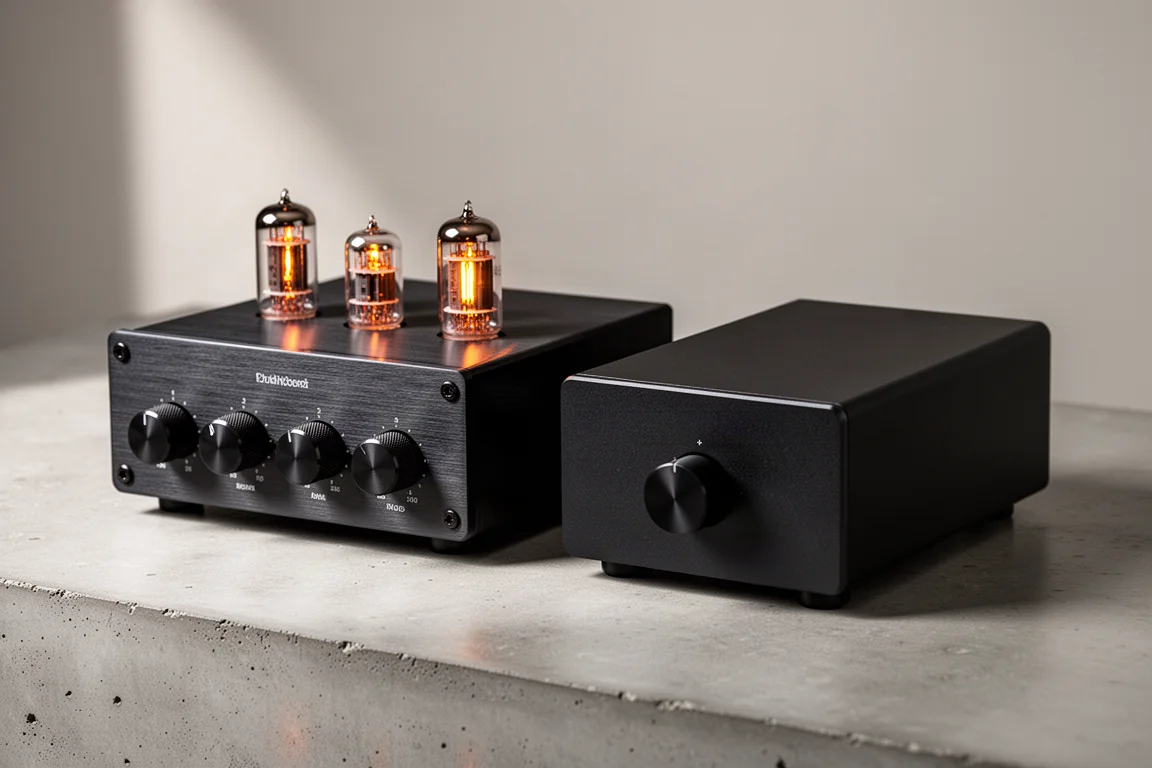
Compact desktop amplifiers have become one of the most practical ways to build a small hi-fi system, and these two models sit at very different points in that market. The Duke Audio T6 is a tube-flavoured design with Bluetooth on board and a price of around $130. The Fosi Audio TB10D is a straightforward class D power amplifier that sells for roughly half that and puts its money into a more powerful power supply instead.
Both are built for a desk, a pair of small speakers, and a source you already own. The difference is in what each one asks you to give up.
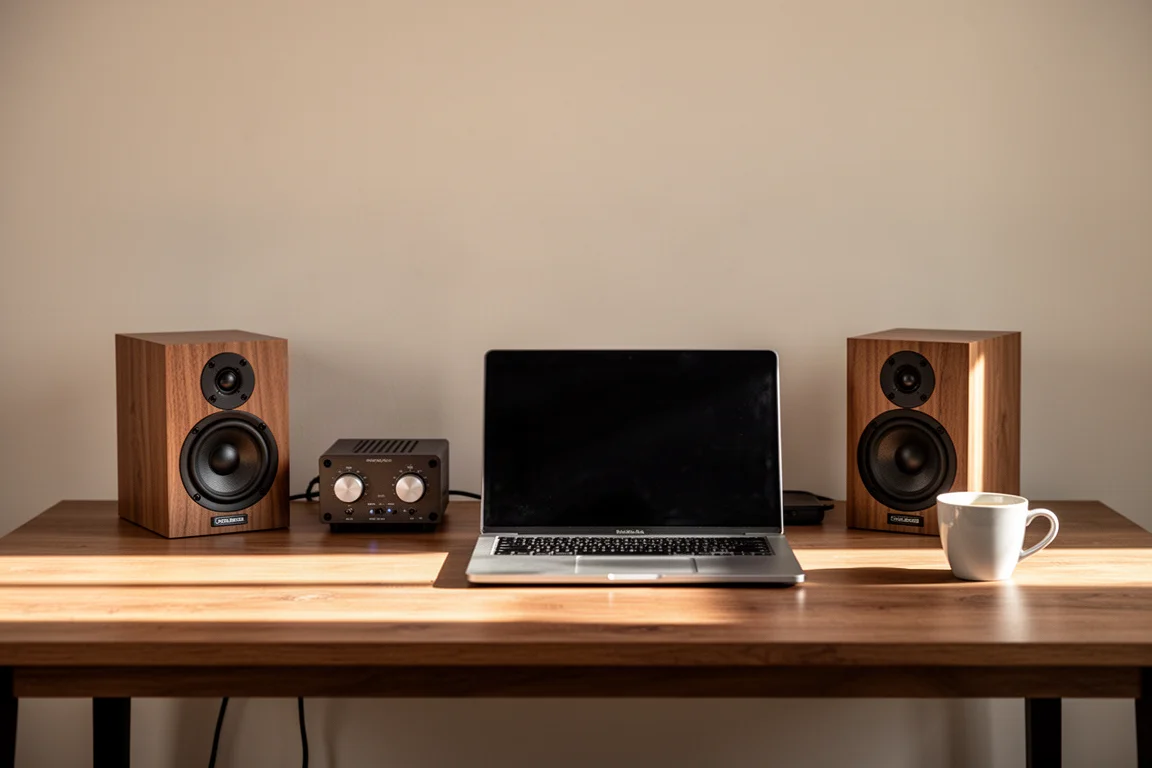
If you want tone controls, tube rolling, and a headphone jack you can use in a pinch, the T6 is the more feature-rich of the two. If you simply want the most usable power for the least money and a clear upgrade path, the TB10D makes a strong case.
What to Look For in a Compact Desktop Amplifier
Four things matter most at this size and price.
Power and headroom. The amplifier chipset and the supply voltage together decide how loud and how relaxed the amplifier sounds. A higher-voltage supply gives you more headroom, but only if the chipset supports it.
Features beyond amplification. Bluetooth, tone controls, a line out for a subwoofer, and a headphone jack all change how the amplifier fits into a desk. Each one adds convenience, and each one adds cost.
Headphone output quality. A headphone jack on a speaker amplifier is often a convenience feature rather than a serious headphone stage. Check the output power before you plan around it.
Build and layout. Knobs, chassis material, and whether anything can sit on top of the unit all matter in daily use on a small desk.
Duke Audio T6: A Tube-Flavored Desktop Amplifier
The T6 is unusually well finished for its price. The chassis is all metal and does not feel hollow, the volume and tone knobs are knurled, and the faceplate gives it a look closer to a much more expensive component. The front panel carries volume, treble, and bass controls, a headphone amp section, an LED colour control that switches between off, green, and orange, and an input selector for off, Bluetooth, or RCA.
Around the back you get a Bluetooth antenna connector, RCA inputs, a line out, and standard speaker binding posts, with power coming in over a 12 to 24 volt DC input. The line out is more useful than it first appears: it can feed a subwoofer, or you can use the whole amplifier as a preamp or tube buffer with working tone controls, which is something most inexpensive tube buffers do not offer.
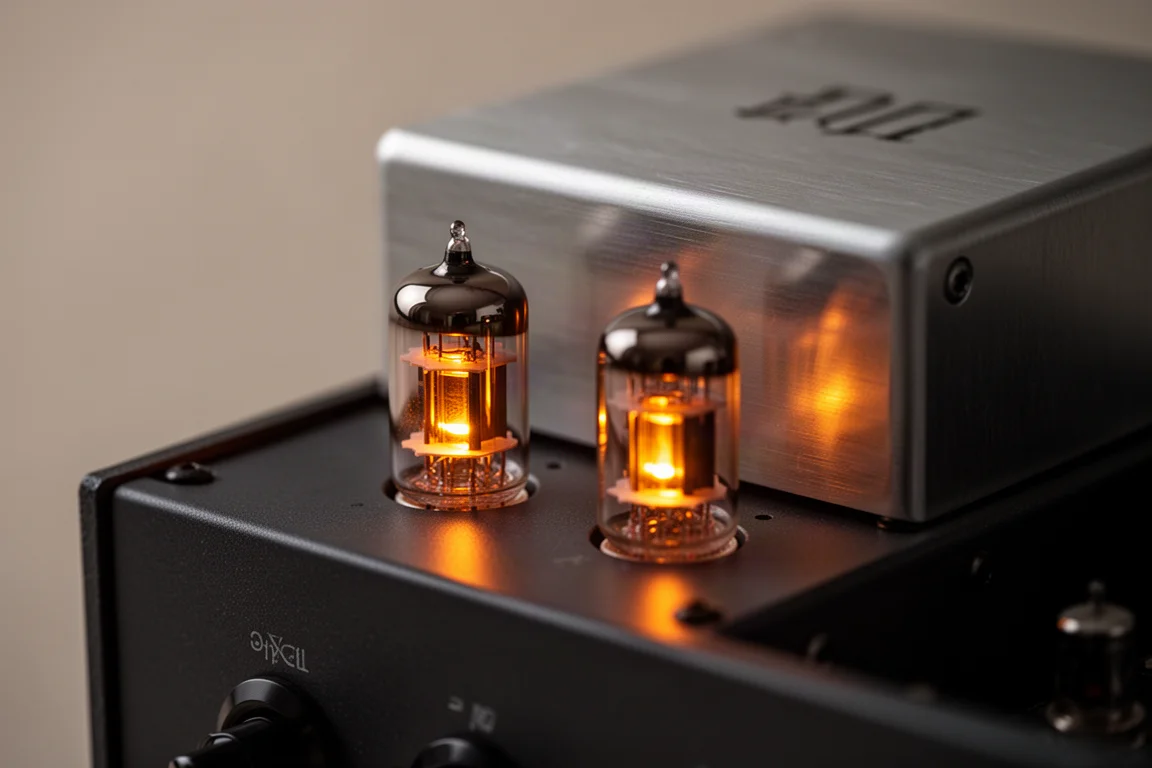
The tubes are a practical set rather than a novelty. The amplifier ships with JAN 5725 tubes and accepts common small-signal alternatives, so rolling is possible without hunting for rare parts. The two small tubes sit on top of the chassis with a vent beside them, which means nothing can be stacked on the unit, though the amplifier stayed cool even during long, hard listening sessions.
Inside, the T6 uses the Infineon MA12070 amplifier chip, a class D design that appears in a number of small amplifiers. It is a proven part, but it is not a high-power one, and the 24 volt ceiling on the supply means you get what you get. In practice that turned out to be more than expected. Driving a pair of low-sensitivity ELAC bookshelf speakers from a fixed-output source, the T6 pushed transients into the upper 80s in decibels at roughly three feet. That is genuinely loud for a desk. It will not fill a living room, but for nearfield listening it has enough.
The headphone output is the clearest compromise. It delivers around 125 milliwatts, and there is no switch to move the amplifier into headphone mode; plugging in a 3.5 mm jack simply cuts the speakers. With a demanding low-impedance planar headphone the result was not good. With easy-to-drive in-ear monitors, or as occasional headphone use alongside a speaker setup, it works fine.
Sound quality depends heavily on what feeds it. Paired with a modest budget DAC, the T6 sounded balanced but slightly veiled through the midrange, and the tone controls helped. Swapping in a considerably better DAC removed that veil entirely, which tells you the amplifier is resolving enough to show the difference. It also does not sound as thin as some other MA12070 designs. If you already own a good DAC, the T6 rewards it.
Fosi Audio TB10D: The Value Alternative
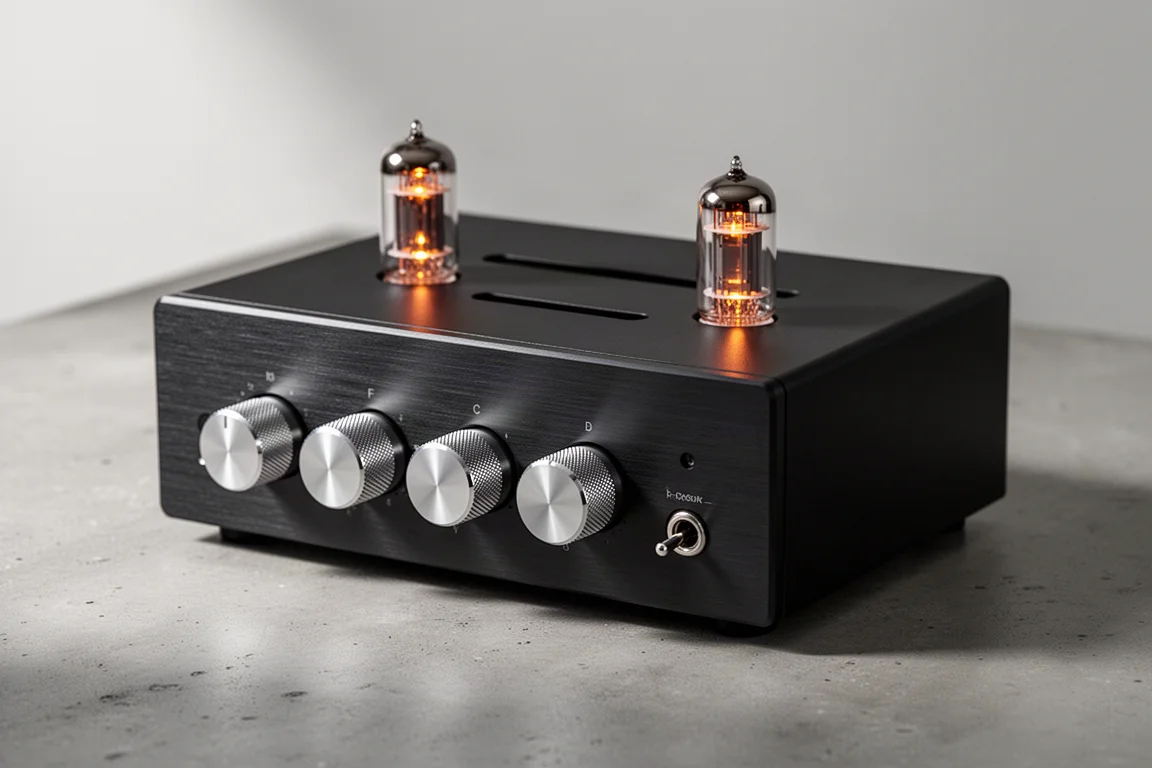
The TB10D takes the opposite approach. It uses the Texas Instruments TPA3255 chipset, a well-known class D part with one key advantage: it accepts higher supply voltages, and the amplifier can be run with a power supply up to 48 volts. That supply is a substantial unit, almost the size of the amplifier itself, but it is the reason the TB10D can deliver noticeably more usable power than its price suggests.
What you give up is character and finish. There are no tubes, the chassis does not feel as carefully made as the T6, and it does not look as good on a desk. But it costs roughly half as much, and it comes with the more capable power supply as standard.
For a buyer who cares about headroom and future flexibility rather than tube flavour and tone controls, the TB10D is the more sensible purchase. It is the amplifier you buy when you want the most power per dollar and you are happy to supply your own DAC and preamp features.
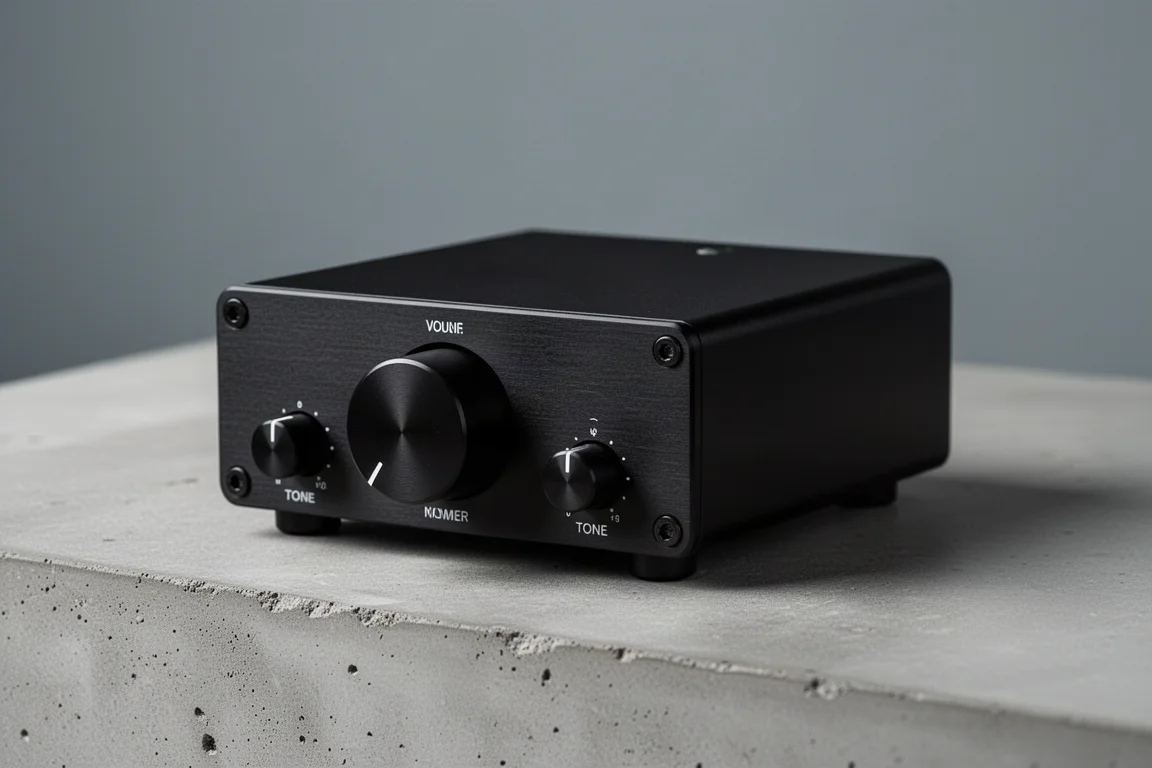
Duke Audio T6 vs Fosi Audio TB10D: Key Differences
Chipset and power ceiling. The T6 runs the Infineon MA12070 with a maximum supply of 24 volts. The TB10D runs the Texas Instruments TPA3255 and accepts supplies up to 48 volts. If you want to push a harder-to-drive speaker, the TB10D has more room to grow.
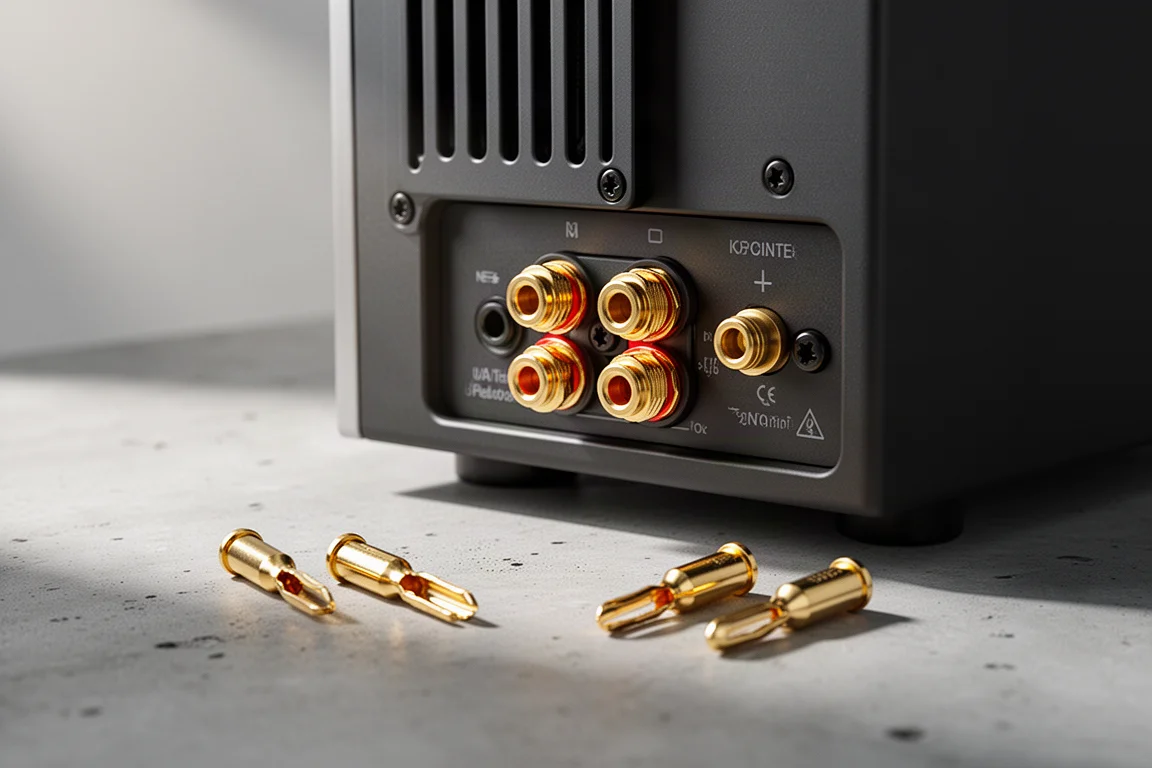
Features. The T6 adds Bluetooth 5.1 with LDAC support, treble and bass controls, a headphone output, and a line out that can drive a subwoofer or act as a preamp. The TB10D is a pure power amplifier, so those features have to come from whatever you connect upstream.
Build and presentation. The T6 is the better-built and better-looking unit by a clear margin, with an all-metal chassis and knurled controls. The TB10D is plainer but perfectly functional.
Price. The T6 sits around $130, while the TB10D lands at roughly half that with a more powerful power supply included. That gap is the single biggest reason to pick one over the other.
Matching the Amplifier to Your Speakers
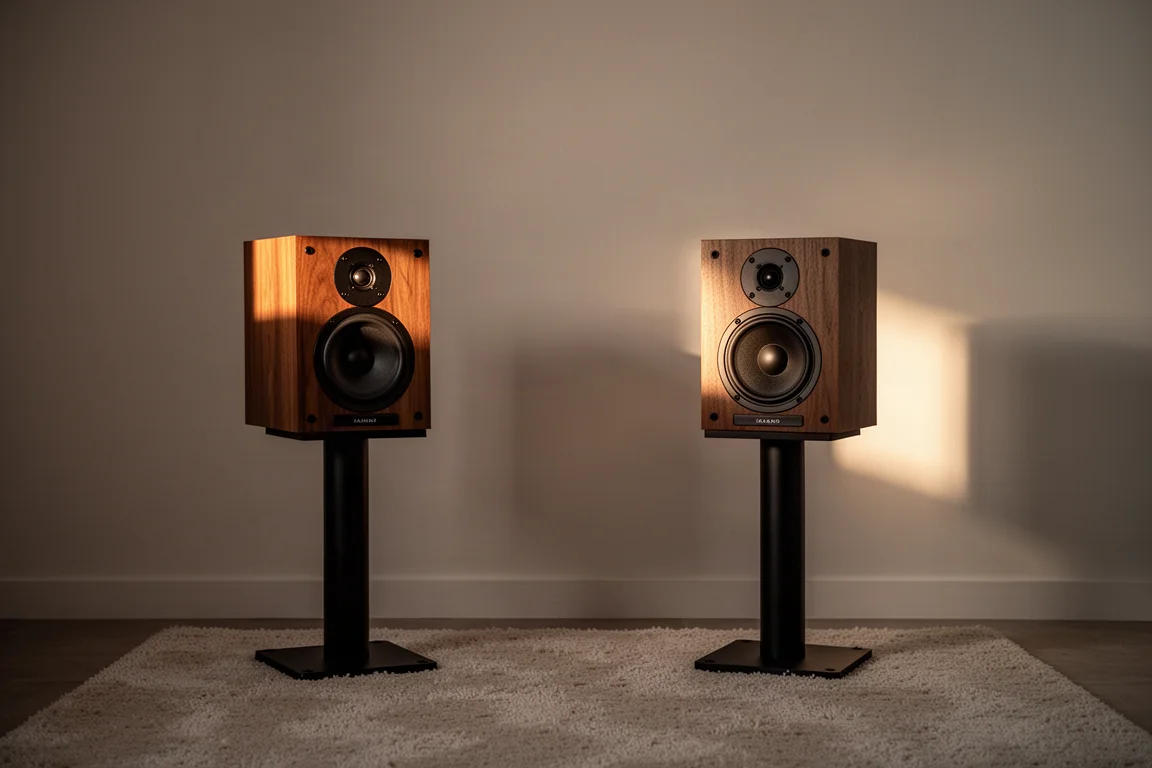
Speaker sensitivity matters more than amplifier specifications at this size. A low-sensitivity bookshelf speaker needs real current to come alive, and the T6 managed it in a nearfield setup with a fixed-output source, reaching loud desktop levels without strain. If your speakers are hungrier than that, or if you listen from further back, the T6’s fixed 24 volt ceiling is the limiting factor and the TB10D’s upgradeable supply becomes more attractive.
Tone controls are the other practical consideration. If your speakers lean bright or lean thin, the T6’s bass and treble knobs give you a way to correct that without changing components. The TB10D offers no such adjustment, so the sound you get is the sound your source and speakers produce.
Finally, think about expansion. If you plan to add a subwoofer, the T6’s line out makes that simple. If you plan to add a better DAC and keep chasing power, the TB10D’s higher voltage ceiling gives you more to work with.
Buying Advice
Choose the Duke Audio T6 if you want a compact amplifier that also acts as a small feature hub: tubes you can roll, working tone controls, Bluetooth with LDAC, a line out for a subwoofer, and a headphone jack for occasional use. The build quality is the standout, and the amplifier resolves enough detail to justify a good DAC in front of it. At around $130, though, it sits in a crowded bracket that includes tube-equipped models such as the Aiyima D03 and T9, and Duke Audio’s own Texas Instruments-based model with a built-in DAC at a similar price. It is a genuinely good amplifier, but it is not the obvious value pick in its class.
Choose the Fosi Audio TB10D if power and price are your priorities. It has no tubes, it is not finished to the same standard, and it will not win a beauty contest on your desk, but it costs about half as much and can be run with a far more capable power supply. For a first desktop system, or for anyone who already owns a good DAC and just needs clean power, it is the easier recommendation on value.
Either way, both amplifiers are worth considering for a nearfield setup. The T6 is the more interesting product; the TB10D is the more efficient way to spend money.
Conclusion
The Duke Audio T6 and the Fosi Audio TB10D solve the same problem from opposite directions. The T6 gives you tubes, tone controls, Bluetooth, and a nicer chassis, and it sounds good enough to reveal the quality of the DAC feeding it, though its headphone output and fixed 24 volt supply are real limits. The TB10D gives you a proven Texas Instruments chipset, a power supply you can upgrade to 48 volts, and a price close to half, at the cost of build quality and features. Match the amplifier to your speakers and your priorities, and either one will serve a small desktop system well.
Further reading
Related Reviews
Desktop Audio
ADAM Audio D3V vs Kali Audio LP-UNF: Two $299 Desktop Monitors Compared
Two compact powered desktop monitors at the same price, compared on bass extension, linearity, placement settings, directivity, and realistic output limits.
Desktop Audio
Aiyima T9 Review: A Compact Tube Desktop Amplifier With a Built-In DAC
A budget desktop amplifier that pairs class D power with two tubes, a full DAC section, Bluetooth, tone controls, and a working VU meter.
Desktop Audio
Aune S9c Pro Review: A Weighty Desktop DAC and Headphone Amplifier With Real Power
A desktop DAC and headphone amplifier with a linear power supply, dual Sabre converters and five watts of balanced headphone output. Here is what to weigh before buying.