Turntables
Dual CS618Q Review: A Direct Drive Turntable Built Around Convenience
A practical look at the Dual CS618Q: quartz-stabilized direct drive, auto stop and tonearm lift, a factory-fitted Ortofon 2M Blue, and the compromises worth knowing before you buy.
Introduction
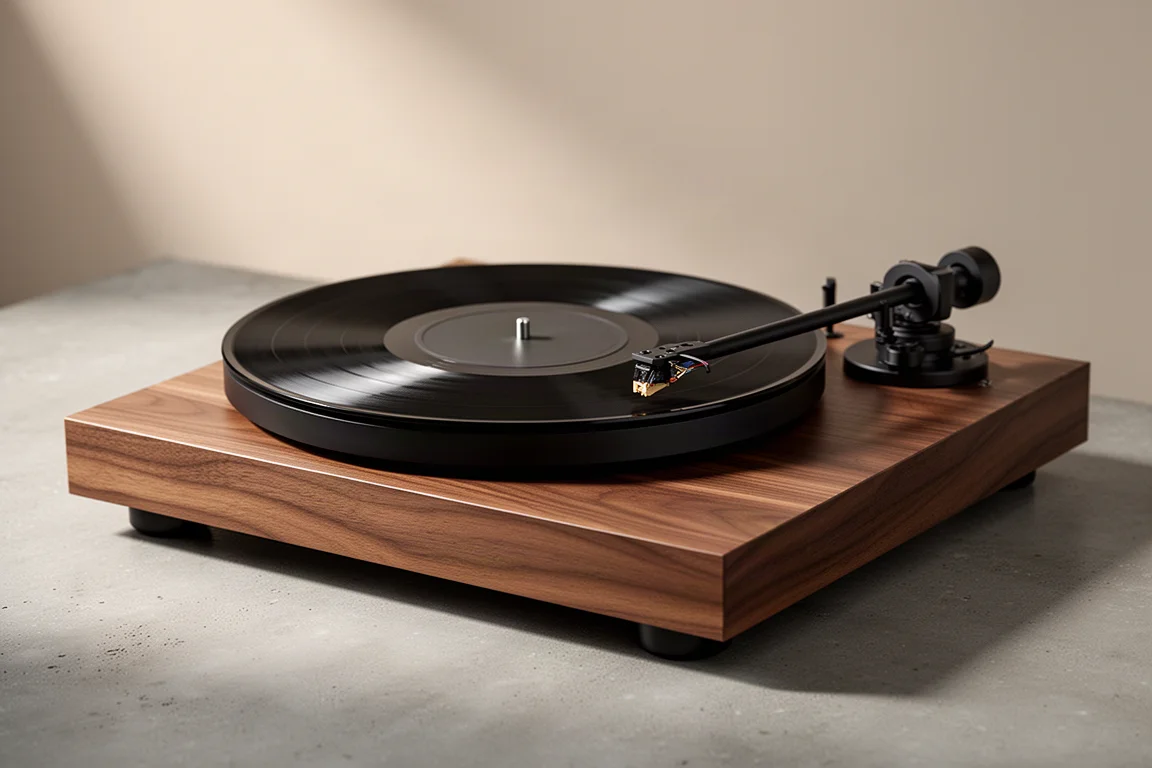
The Dual CS618Q is a direct drive turntable that leans on convenience as much as on sound. It pairs a quartz-stabilized motor with support for 33, 45 and 78 rpm records, a factory-fitted Ortofon 2M Blue cartridge mounted on a removable headshell, and a built-in phono stage you can switch out of the signal path whenever you have something better. Add auto stop and an automatic tonearm lift, and you have a deck designed to be lived with rather than fussed over.
It also carries a clear family resemblance to Dual’s classic designs, with the kind of look that settles into a living room instead of announcing its specification. This review covers what the CS618Q does well, where it falls short, and who should put it on a shortlist.
Who This Turntable Is For
This is a turntable for listeners who value direct drive convenience. There are no belts to move between speeds, the speed control is straightforward to operate, and the platter starts moving once you lift the tonearm and move the pickup over the record. If you have avoided a manual belt-drive deck because of the ritual involved, the CS618Q removes most of that friction.
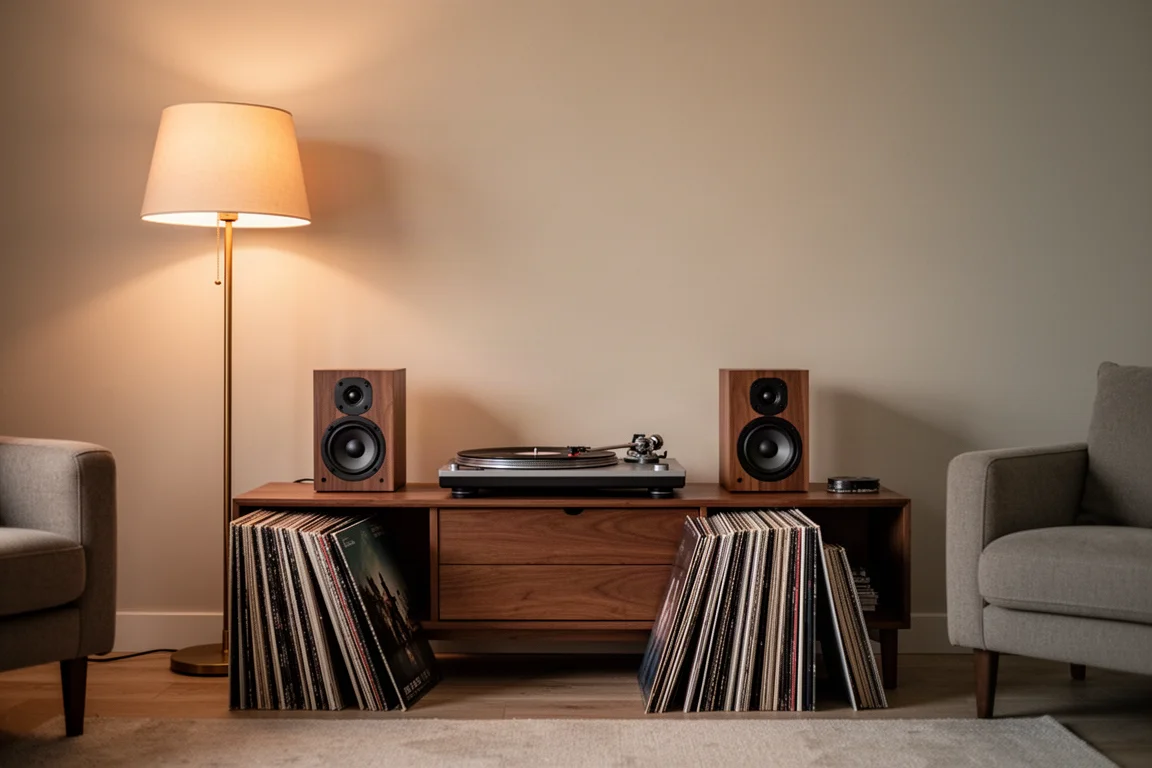
It also suits buyers who want a capable cartridge included from the start. The Ortofon 2M Blue arrives pre-mounted on a removable headshell, which keeps initial setup simple and makes future cartridge swaps considerably easier. For anyone assembling a first serious vinyl system, that combination of a strong stock cartridge and a defeatable phono stage means fewer immediate upgrades are needed.
Main Strengths
The CS618Q’s strongest case is the balance it strikes between sound quality and day-to-day usability. Its folded MDF plinth, aluminum tonearm and direct drive motor give it a precise, agile character rather than a warm or romanticized one.
Sound Quality and the Ortofon 2M Blue Cartridge
With the stock 2M Blue fitted, the CS618Q sounds precise, agile and articulate across the frequency range. Bass is resolute, with good texture and detail, and it outresolves the Sumiko Rainier cartridge fitted to the Pro-Ject Debut Pro, though it does not reach the depth of a far costlier Ortofon 2M Black LVB.
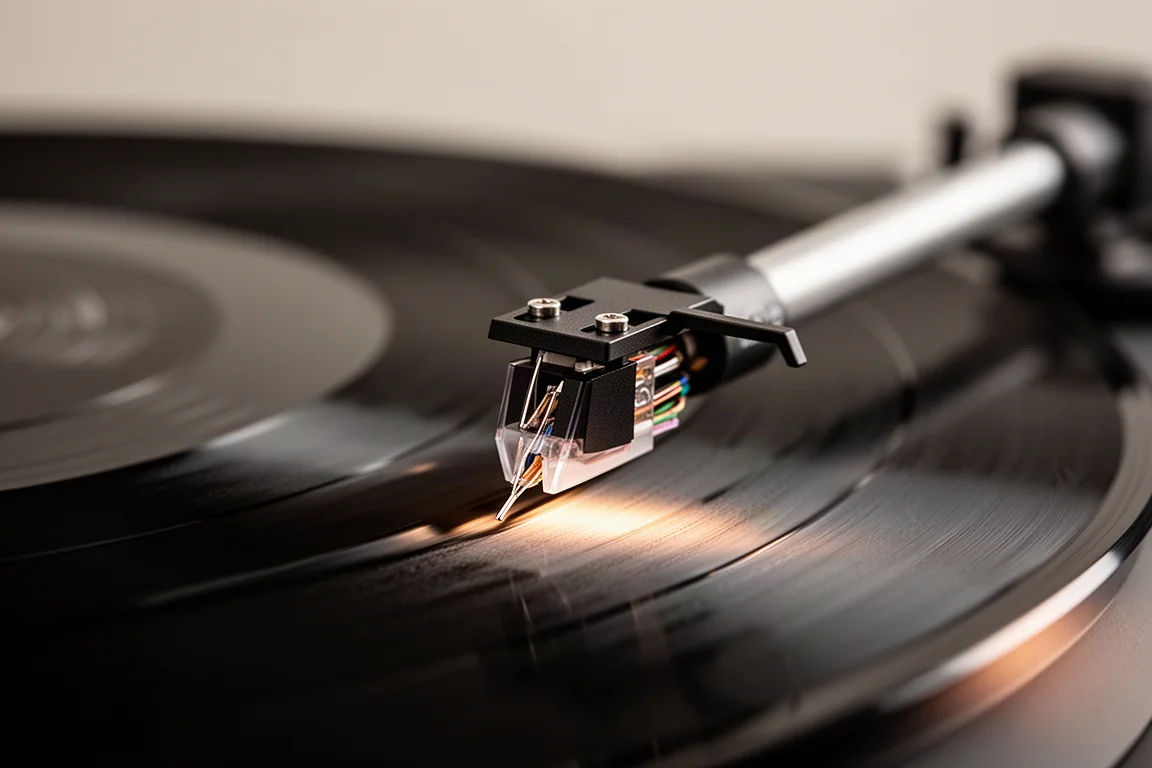
The midrange is where the 2M Blue makes its clearest argument. It is linear and neutral, and it sheds light on nearly every inflection and nuance in the grooves. On Coldplay’s A Rush of Blood to the Head, the slightly worn upright piano on “The Scientist” came through with an organic texture, and the subtle warble of the notes separated cleanly from the vocals and harmonies. The 2M Black LVB extracts more from each groove, but the 2M Blue remains a compelling balance of price and performance.
Highs are articulate and refined, and the soundstage offers very good definition with solid detail and separation. The Blue can show some sibilance on certain albums, and on heavily compressed recordings such as Panic! At The Disco’s Pray for the Wicked, the airier and smoother presentation of the Sumiko Rainier may appeal more. Feed the CS618Q a good recording, though, and the 2M Blue shines. Dynamics are snappy, and the deck sounds mildly livelier than the Pro-Ject Debut Pro without pushing the music forward or making it shouty.
Speed Control, Auto Stop, and Daily Convenience
Where the CS618Q wins most convincingly is functionality. The speed control is excellent and easy to understand, and unlike a belt-drive design it saves you from manually adjusting belts when you move between records. The quartz-stabilized direct drive motor keeps speed stable, and the deck covers 33, 45 and 78 rpm.
Auto stop and automatic tonearm lift are the features that matter most in daily use. When the needle reaches the end of a side, you do not have to drop everything to lift the arm. The tonearm lifts rather than returning to its cradle, which is a compromise, but it is a meaningful convenience all the same.
Things to Consider Before Buying
The finish is the first thing to weigh. The plinth is offered in black, gloss black and walnut veneer, and the walnut option is the most striking of the three. Gloss surfaces can feel less restrained than a matte finish would, and the plinth, while dense and well made, looks less expensive than the price suggests when set beside something like the Pro-Ject X1.
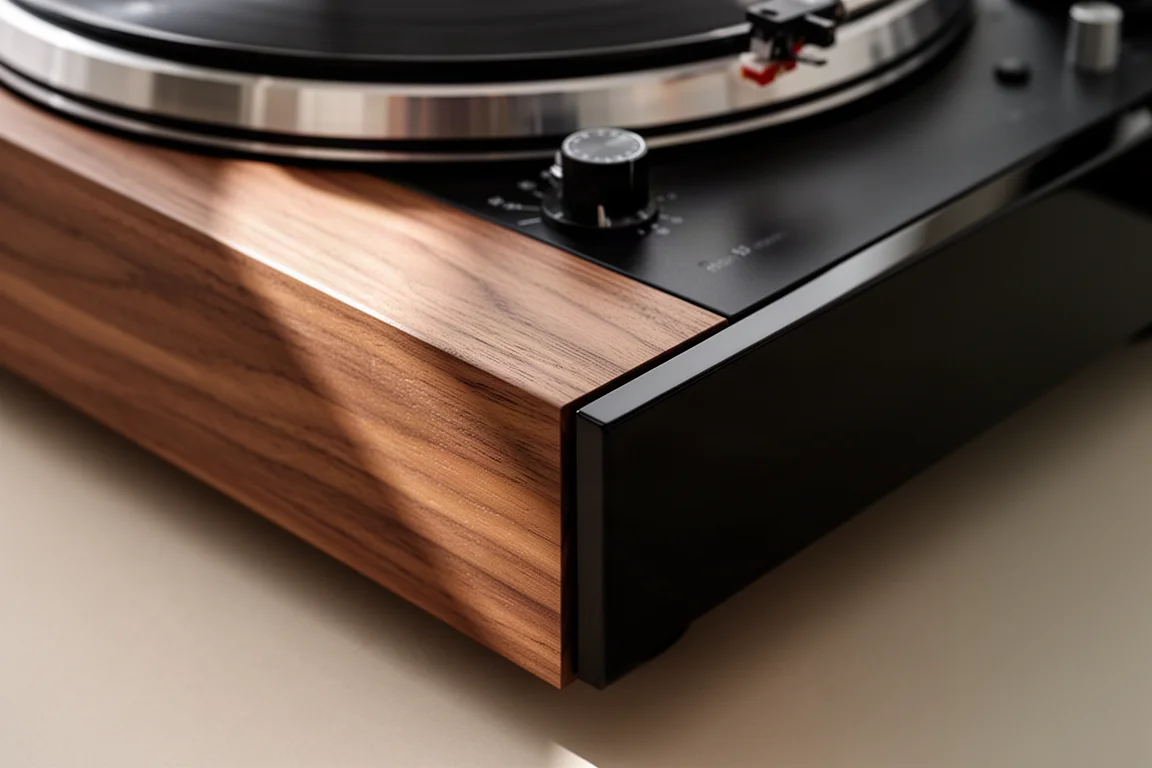
The platter is similarly competent rather than special. It performs fine, but it looks a little drab and, again, cheaper than the rest of the package deserves. The tonearm lift also stops short of returning the arm to its cradle, which some listeners will miss.
The built-in phono stage deserves its own note. It is competitive with standalone solutions costing up to around $500, so if your amplifier, receiver or outboard preamp retails between roughly $200 and $500, you may hear little to no difference between it and the built-in option. With an integrated amplifier at the level of the Audiolab 6000A Play or better, you are likely to hear subtle but appreciable gains from the amplifier’s own phono stage, and a truly reference-level preamp should definitely be used instead. Moving up in phono stages brought improved definition, clearer detail retrieval, more dimensional dynamics and a mildly lower noise floor. If you later fit a higher-end cartridge such as the 2M Black LVB, a better third-party phono stage becomes essential.
How It Compares With Other Turntables
Against the roughly $1,000 Pro-Ject Debut Pro, the CS618Q costs a little more out of the gate but offers the more linear 2M Blue over the warmer, rounder Sumiko Rainier, along with the convenience of direct drive, which makes it the more appealing of the two. The Technics SL-1500C sits higher at around $1,500 to $1,600 and ships with a 2M Red cartridge rather than the 2M Blue, so the Dual gives you more for the money in that respect, though buyers drawn to a vintage heritage look may still prefer the Technics.
Compared with the Fluance RT85, the CS618Q is a worthy upgrade for anyone who puts a premium on a built-in phono preamp, better speed control, direct drive convenience and auto stop. With the same external phono stage, the two sound very close, since both use the 2M Blue cartridge. Against the Audio-Technica LP140XP, the CS618Q is not a performance-based step up. It represents a different set of priorities, with a more furniture-like appearance and the convenience features already covered.
Buying Advice
The CS618Q ranks high among turntables retailing between about $1,000 and $1,500. It is not the turntable to beat at this price point, but it is a solid option with real strengths. If you want a direct drive deck with auto stop, a strong factory cartridge and a phono stage you can use or defeat at the flip of a switch, it is easy to recommend.
Consider your priorities before deciding. If you already own a turntable running a 2M Blue with an external phono stage you like, the sound difference will be small, and the case for the CS618Q rests on convenience and appearance rather than outright performance. If you are starting fresh, or if you have been living with a belt-drive deck and want to stop adjusting belts, the Dual makes a persuasive case. Pair it with a phono stage above the level of its built-in one, plan a cartridge upgrade further down the line, and it will keep up.
Conclusion
The Dual CS618Q is a well-sorted, enjoyable turntable that delivers precise, articulate sound and a genuinely useful feature set. Its gloss finish, ordinary-looking platter and tonearm lift that stops short of returning to its cradle are the main compromises, and none of them undermine the fundamentals. For buyers who value direct drive convenience, auto stop and a factory-fitted Ortofon 2M Blue, it is a confident choice in its price band.
Product link
View more details for Dual CS618Q
This product is mentioned in the review. Check the specifications, options, and compatibility before buying.
View more details for Dual CS618QFurther reading
Related Reviews
Turntables
Best Turntables 2026: Seven Standout Picks From Entry Level to Premium
A practical roundup of seven turntables worth considering, from a US-made budget deck to small-batch premium models with a clear upgrade path.
Turntables
Best Turntables Under $1,000: Five Fully Manual Picks Worth Considering
Five fully manual turntables under $1,000, compared on build quality, cartridges, upgrade potential, and the character of sound each one brings to a system.
Turntables
Best Turntables Under $2,000: Six Vinyl Decks Worth Building a System Around
Six turntables under $2,000, from a value-focused belt-drive deck to a fully balanced design, with the strengths and trade-offs that matter before you buy.