Turntables
Dual CS 518 Review: Warm Vinyl Sound and Easy Setup Under £1,000
A close look at the Dual CS 518 turntable, from its real walnut veneer plinth and preset tonearm to the Ortofon 2M Red cartridge, built-in phono stage and warm, full-bodied sound.
Introduction
Dual has been part of the audio landscape since the earliest days of hi-fi in the 1920s. After the Second World War, the brand presided over the format’s golden age in the 1960s and 1970s and grew into the largest turntable manufacturer in Europe, before bankruptcy in 1981, when intense competition from Japanese manufacturers pushed it out of the market. What followed was a long stretch of changing ownership and licensed use of the name, a period that did little for a brand that had once mattered a great deal.
The picture improved in 2017, when a group of private investors led by Dr Josef Selna, with Alfred Langer as chief engineer, took over Dual. Both are former Dual employees and committed hi-fi enthusiasts, and both are focused on returning the brand to its audiophile roots. Prototypes are designed and built in Germany by Langer, while volume production is handled by a close manufacturing partner in China. The higher tiers of the current Dual range are expected to be built in-house.
The CS 518 is where that revival meets a sub-£1,000 budget. In the UK it sells for £799 in walnut veneer, with a black ash vinyl wrap version available for £100 less.
Who This Turntable Is For
The CS 518 is aimed at listeners assembling a first serious vinyl system, and it is especially relevant if your amplifier has no phono input. Of the decks it is most directly measured against, it is the only one with a built-in phono stage, and that stage can be taken out of the signal path with a toggle switch when you eventually add an external one.
It also suits anyone who wants vinyl without a setup project. Vertical tracking angle, azimuth and zenith all arrive preset, the counterweight carries a calibration for tracking force, and the anti-skate adjustment is spring loaded. A detachable headshell makes cartridge changes far less fiddly, and a dial on the plinth switches between 33, 45 and even 78 RPM without lifting the platter or moving a belt.
Tonally, this is a warm and generous sounding deck. Listeners whose shelves lean towards acoustic music and jazz are the most natural audience.
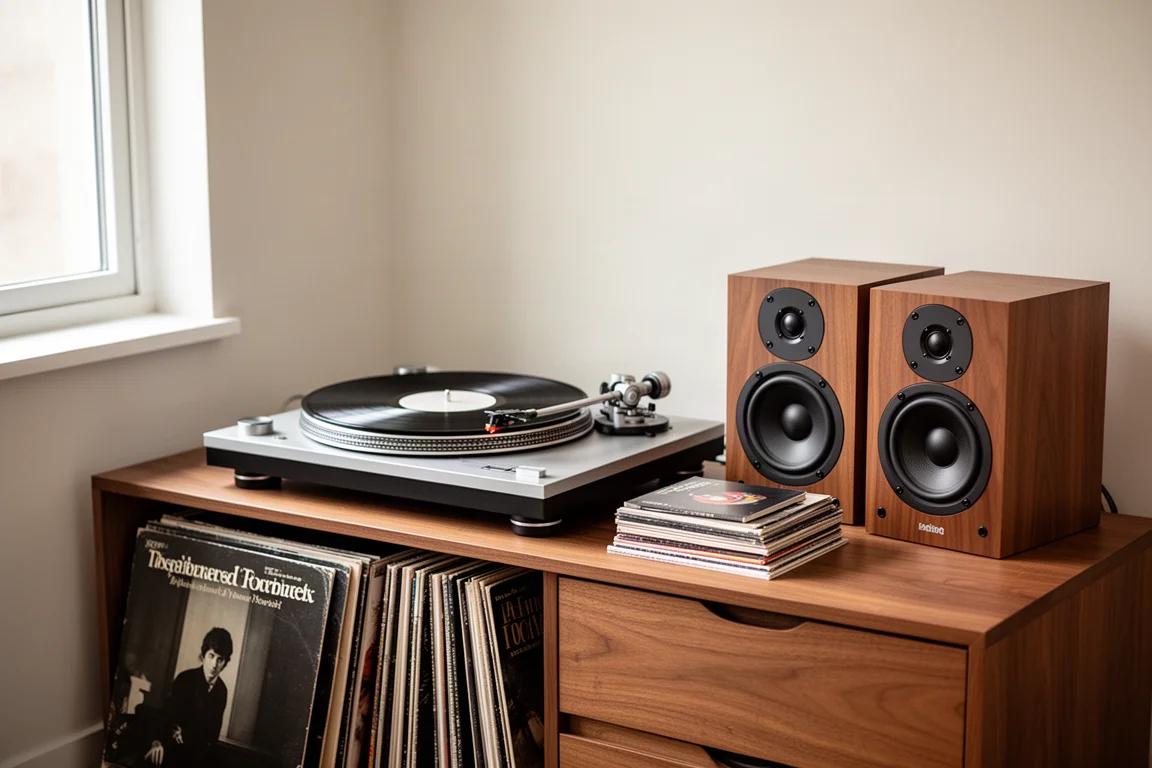
Those with rock, pop and electronic collections have a genuine decision to make, because a well chosen digital source at a similar price can sound leaner, tighter and quicker.
Design and Build Quality
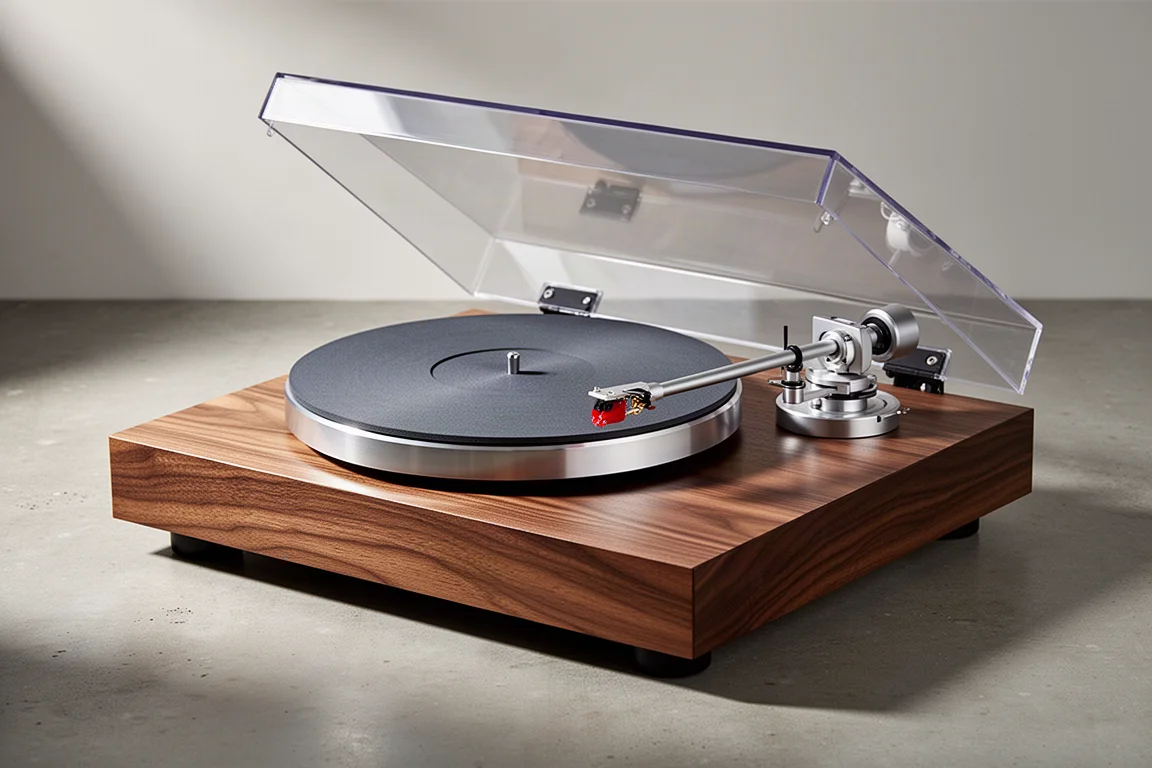
The CS 518 measures 455 by 367 mm and stands 145 mm high with the acrylic dust cover closed, or 17.1 by 14.4 by 5.7 inches in imperial terms. It weighs 5.8 kg, which is 12.8 pounds. Those figures describe a compact, manageable deck that still feels substantial once it is in place.
The plinth is finished in a real walnut veneer, with a black ash vinyl wrap as the alternative. It is the only deck in its immediate company to offer a genuine wood veneer, and the only one to use elastomer layers in the feet to absorb vibration. The MDF platter is 45 mm thick, or 1.75 inches, which is thicker than the platters on the Rega and Pro-Ject decks it competes with.
Under the platter, a die-cast aluminium platter is fitted with a heavy-duty rubber mat for resonance damping. The drive system uses a servo controlled DC motor that keeps wow and flutter below 0.1 percent, a hardened steel spindle running in a brass bushing, and a flat belt rather than a rounded one. The flat profile increases surface contact between belt and pulley, which further reduces flutter. A five-year warranty covers the whole package, which is a generous commitment at this price.
Tonearm, Cartridge, and Setup
The tonearm is unusually sophisticated for the money. Its four-point pivot uses ball bearings arranged symmetrically inside solid aluminium dual gimbal rings, a layout that keeps vertical and horizontal movement completely independent. The geometry is an effective length of 221.5 mm, an offset angle of 22.6 degrees and an overhang of 19 mm.
Setup is genuinely simple. Place the deck on a flat, stable surface, run the belt around the circular ridge inside the platter, pull it through one of the cut-outs to create tension and loop it over the pulley on the motor. The rear panel carries a 12 V power input, a ground terminal and one set of single-ended RCA outputs, and the supplied interconnect is basic enough that an upgrade is worth considering.
An Ortofon 2M Red moving magnet cartridge comes fitted as standard, a well regarded option at this level. It is designed to track at 2 g, and the calibration on the counterweight dial proved accurate in use, though a calibrated stylus gauge is always the safer check. Dual advises setting the anti-skate dial to the same value as the tracking force, then fine tuning from there by playing a record with a firmly central vocal, which in practice meant settling at 1.5.

Because the headshell detaches, moving to a different cartridge later does not require a rewire, which extends the deck’s useful life considerably.
Sound Quality and Tonal Character
The CS 518 is the warmest sounding of the three decks it was tested alongside, and also the least resolving of the group. That trade is deliberate and, for many listeners, welcome. Bass is meaty, and the lower midrange is full enough to give the presentation an almost juicy richness. There is some bleed through into the midrange, but it is not excessive and never distracting.
Where the deck plays to vinyl’s traditional strengths is in the middle of the frequency range. Vocals and instruments take on an acoustic saturation that digital sources at this price rarely match, performers separate cleanly, and the soundstage has real width and depth. Dynamic swings and quick transients are handled confidently too, so the warmth never tips into sluggishness.
Against a comparable digital chain, the picture shifts depending on what you value. A well matched streamer and DAC combination at a similar outlay delivers more detail, tighter bass and a more open top end, with similar soundstage dimensions and instrument separation, but it also sounds leaner. Pair the CS 518 with a good external phono stage and the two approaches land on a par. With a more ambitious phono stage, the vinyl side moves ahead.
It is also worth noting how the deck behaves against a high-end reference turntable costing more than sixteen times as much. That reference is better in every way, as it should be, but the performance gap is narrower than the price difference suggests. Given the number of moving parts and the mechanical precision a turntable demands, the law of diminishing returns appears to arrive early in this category.
Built-in Phono Stage and System Matching
The built-in phono stage is a genuine convenience and a solid performer. It proved slightly cleaner than the phono stage inside a mid-priced integrated amplifier used for comparison, which is why the deck ended up running at line level into the amplifier. It is not the quietest option available, though. A dedicated amplifier with its own phono input offered a lower noise floor and more detail, and an external phono stage takes things further again.
The CS 518 scales well across a range of systems. Paired with standmount speakers and a modest integrated amplifier, it produced a fantastically resolving system for around £2,300 all in. With more capable amplification and a pair of compact premium speakers, it still held its own, though some rounding of edges and a limit to how much subtle timbre it could reveal became apparent.
That behaviour points to a sensible system budget. This deck makes most sense with speakers and amplifiers retailing up to around two thousand pounds, perhaps a little more.
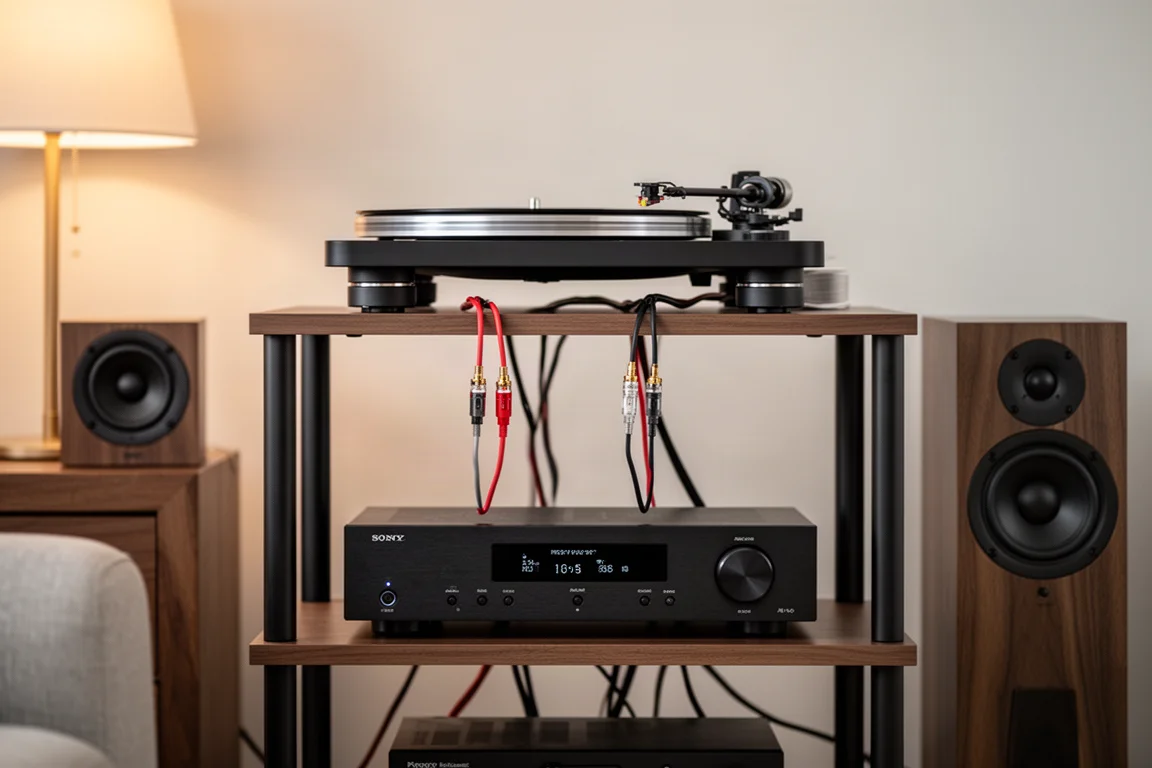
The supplied RCA lead is the first thing worth replacing, and an external phono stage is the logical next step if you want to close the gap with digital sources.
Things to Consider Before Buying
The CS 518’s character is a preference, not a neutral fact. It is the warmest and least resolving of its immediate rivals, and listeners who prize grip, speed and rhythmic drive may find a digital source or a leaner turntable more satisfying.
There is some midrange bleed through from the bass, and the internal phono stage, while convenient, is not the quietest available. A better interconnect and, eventually, a dedicated phono stage will get more out of the deck.
Finally, the walnut veneer and black ash finishes differ by £100 in the UK, so it is worth deciding how much the walnut look is worth to you before ordering.
Buying Advice
At £799 in walnut veneer, or £100 less in black ash vinyl wrap, the CS 518 undercuts the Rega configuration it is measured against by £140 and the Pro-Ject Debut 10 Reference by £200. It is also the only one of the three with a built-in phono stage, which matters if your amplifier has no phono input.
If you are building a system around it, budget for a better RCA cable, set the phono stage toggle to the correct position for your setup, and check the tracking force with a stylus gauge before fine tuning the anti-skate. Plan on speakers and an amplifier up to around two thousand pounds, and the deck will not be the limiting factor.

For anyone who wants a well built, easy to live with vinyl front end with a warm, full bodied voice, this is a straightforward recommendation at the price.
Conclusion
The CS 518 shows that the latest incarnation of Dual is serious about its return. It is solidly constructed, simple to set up and pleasant to use, and it carries two features that are rare at this price: a genuine walnut veneer finish and a capable built-in phono stage. Its tonearm extracts plenty of detail from the Ortofon 2M Red, and the sound is generous in warmth and scale, with soundstage width, depth and instrument separation that most similarly priced digital rigs cannot match.
Against the two most established names at this price point, it performs very well. The warmth is the point, and if that matches the music you play and the system you own, the CS 518 is an easy deck to recommend.
Product link
View more details for Dual CS 518
This product is mentioned in the review. Check the specifications, options, and compatibility before buying.
View more details for Dual CS 518Further reading
Related Reviews
Turntables
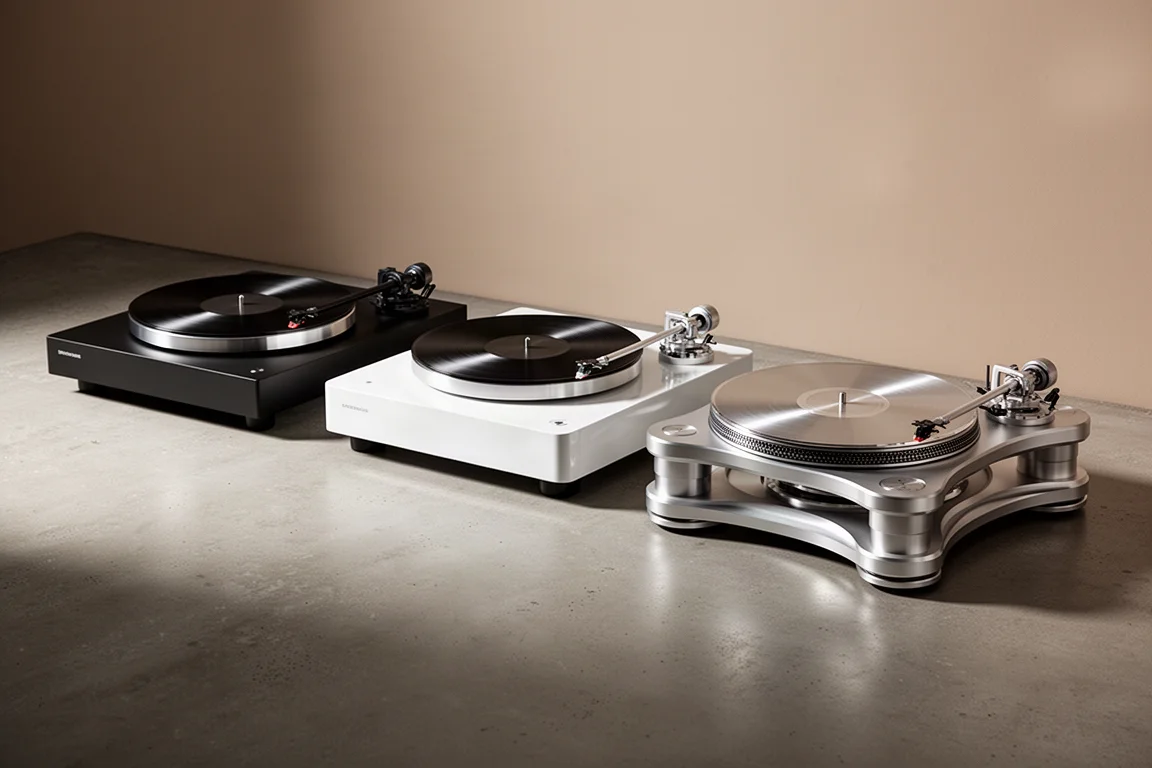
Best Turntables 2026: Seven Standout Picks From Entry Level to Premium
A practical roundup of seven turntables worth considering, from a US-made budget deck to small-batch premium models with a clear upgrade path.
Turntables
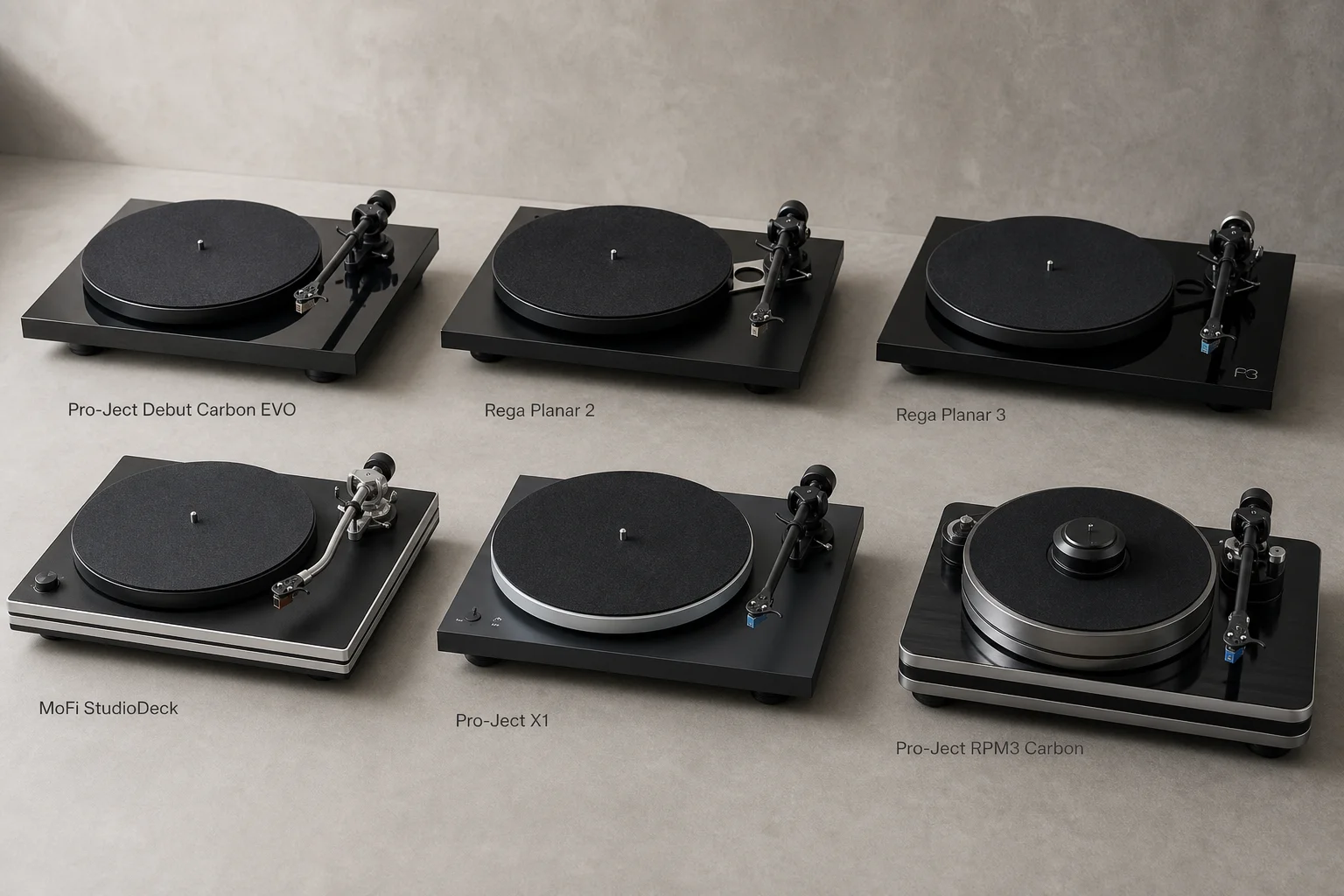
Best Turntables Under $1,000: Five Fully Manual Picks Worth Considering
Five fully manual turntables under $1,000, compared on build quality, cartridges, upgrade potential, and the character of sound each one brings to a system.
Turntables
Best Turntables Under $2,000: Six Vinyl Decks Worth Building a System Around
Six turntables under $2,000, from a value-focused belt-drive deck to a fully balanced design, with the strengths and trade-offs that matter before you buy.