Backpacking Gear
Down vs Synthetic Insulation: Backpacking Quilts and Parkas Compared
A practical look at switching from down to synthetic insulation, with four backpacking pieces compared on weight, price, and warmth.
Introduction
Down insulation has been the default choice for lightweight backpacking for decades, and the case for it is easy to understand: it delivers a lot of warmth for very little weight. But down is not the right answer for every sleeper. For hikers who wake up with a puffy face after a night burrowed into a down quilt, or who test positive for dust mite and feather sensitivities, synthetic insulation can be the more comfortable option even when it costs a few extra ounces.
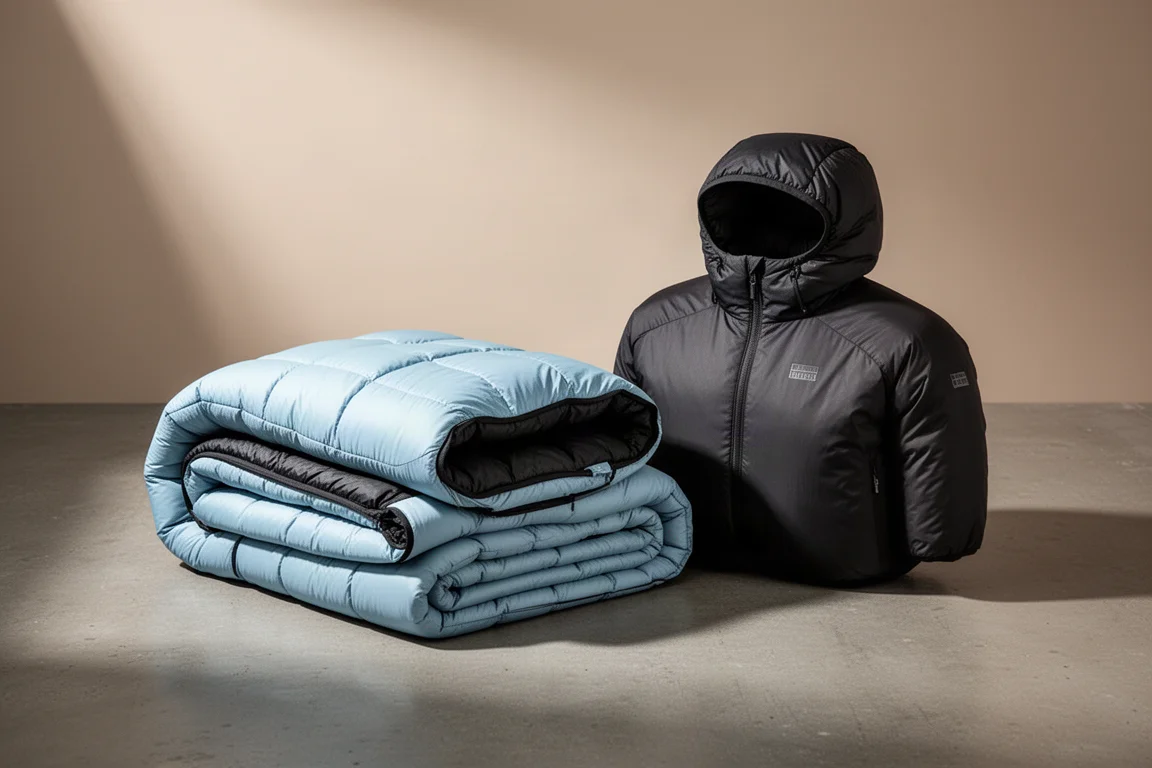
This guide looks at four pieces that frame that decision: two synthetic options from Enlightened Equipment, the Enigma Apex Custom 20 quilt and the Women’s Torrid Custom jacket, plus two Montbell parkas that show what down still does best and where a synthetic alternative fits in.
Why Synthetic Insulation Can Make Sense
The core trade-off is straightforward. Synthetic sleeping bags, quilts, and jackets are generally heavier than down-filled equivalents, and that weight penalty is why many backpackers stay with down for years. The counterargument has nothing to do with weight. It is about how a piece of insulation behaves against your skin and inside your sleeping system across many nights.
Reactions to down are more often linked to dust mites that can live in the fill than to feathers themselves, and a skin test that returns a positive result for feathers may reflect a sample contaminated with dust mites rather than a true feather allergy. Altitude can complicate the picture further. A condition called peripheral edema causes swelling in the arms, legs, or face at altitude, sometimes without any other symptoms, and it appears to affect women more often than men. When a puffy face shows up alongside a positive allergy panel, both explanations are worth holding in mind.
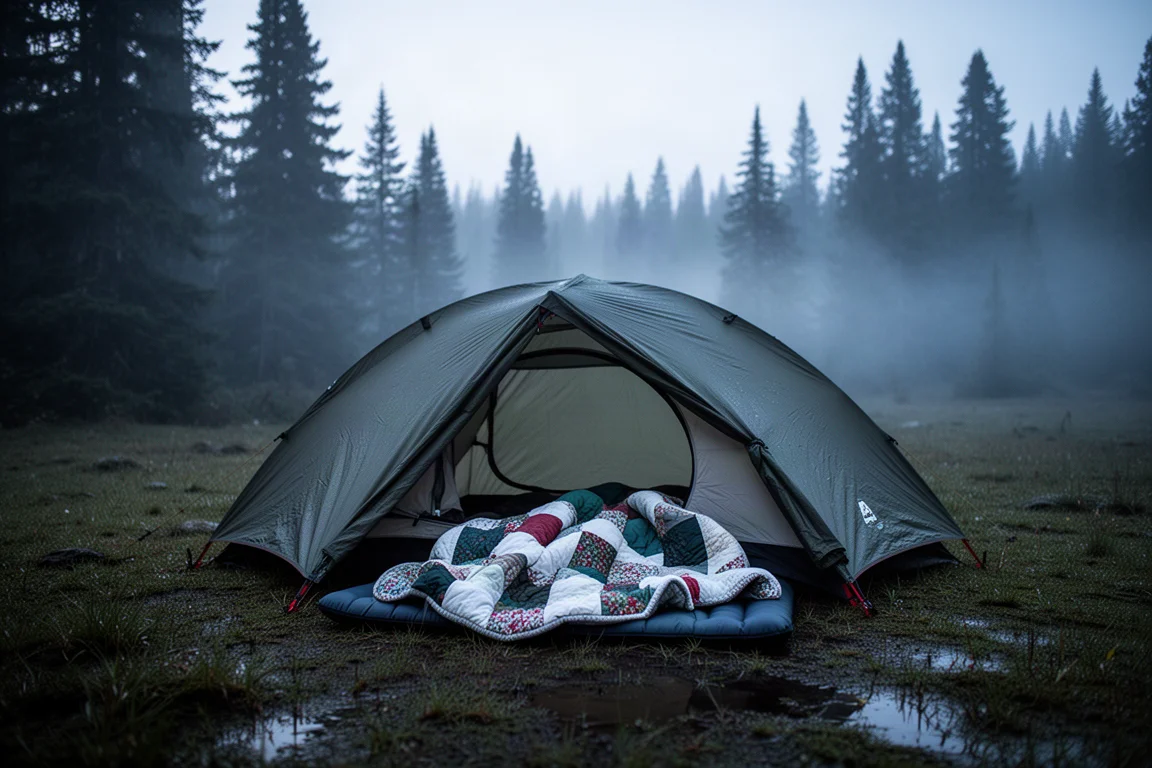
Anyone weighing this up will get the clearest answer from allergy testing with a clinician, followed by a controlled test of a synthetic setup on a familiar trip rather than a committing one. That is exactly what the two Enlightened Equipment pieces below are intended to do: replace a down quilt and a down jacket with synthetic equivalents, then compare how the nights feel.
Enlightened Equipment Enigma Apex Custom 20 Quilt
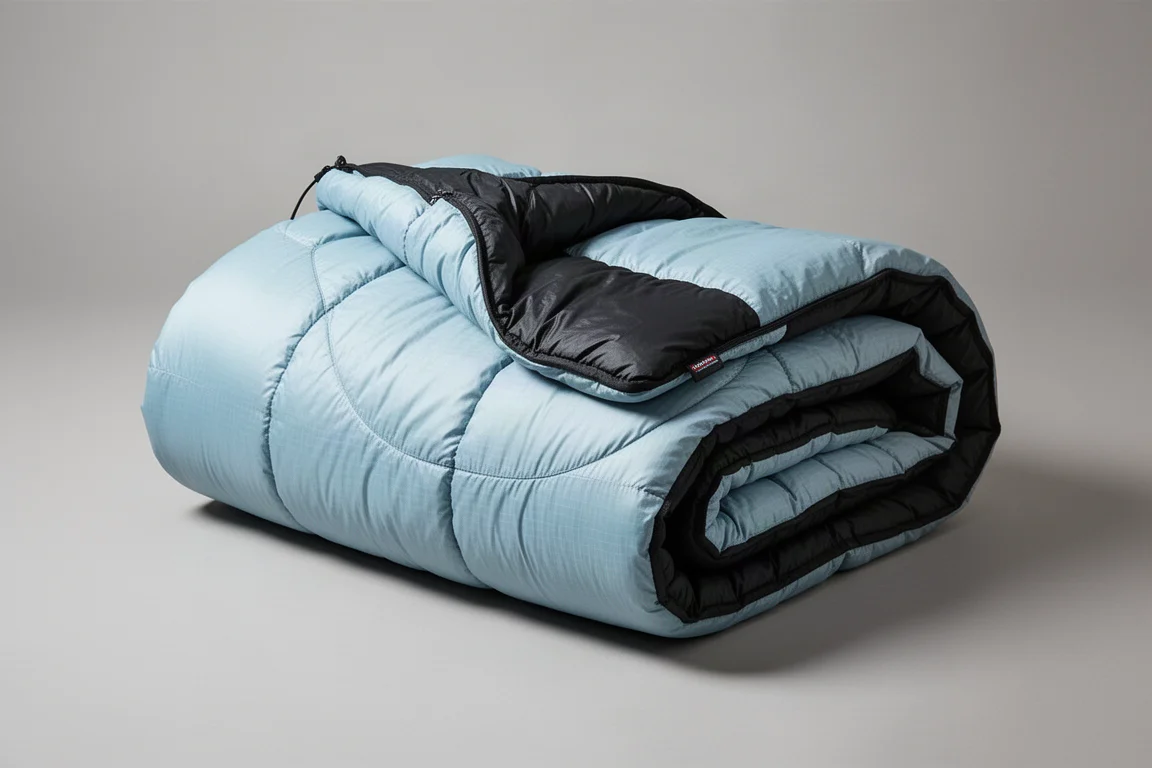
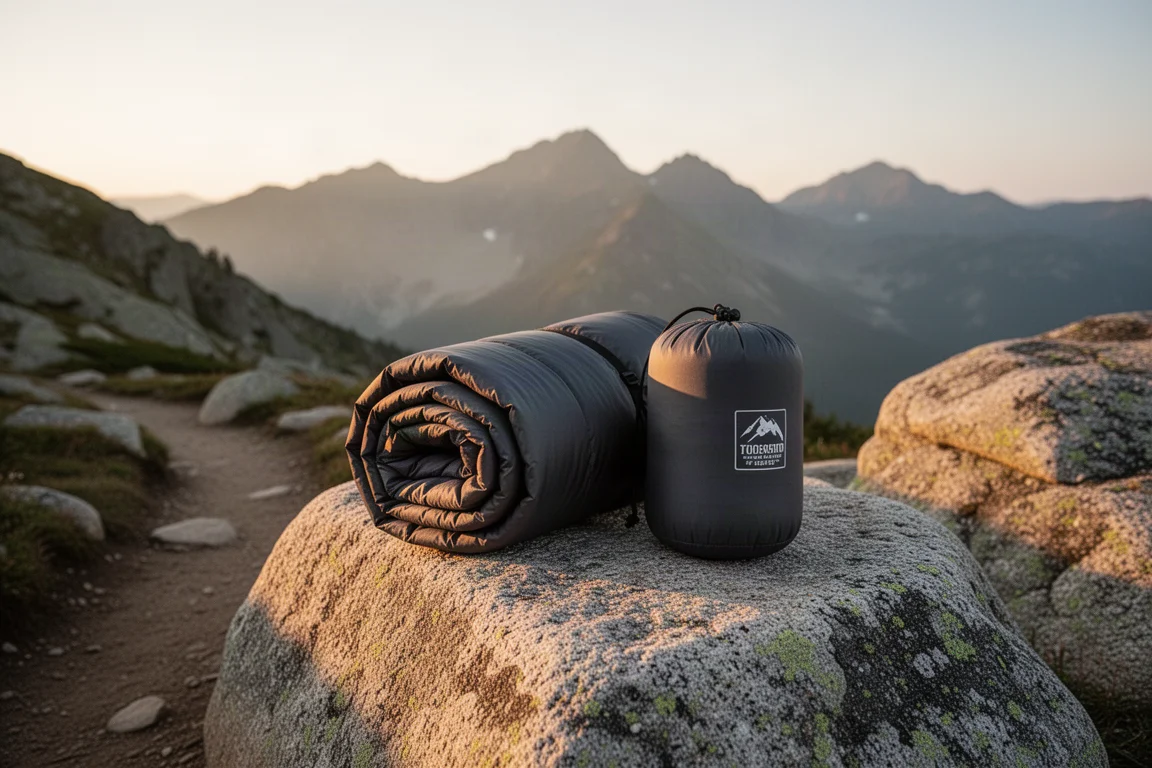
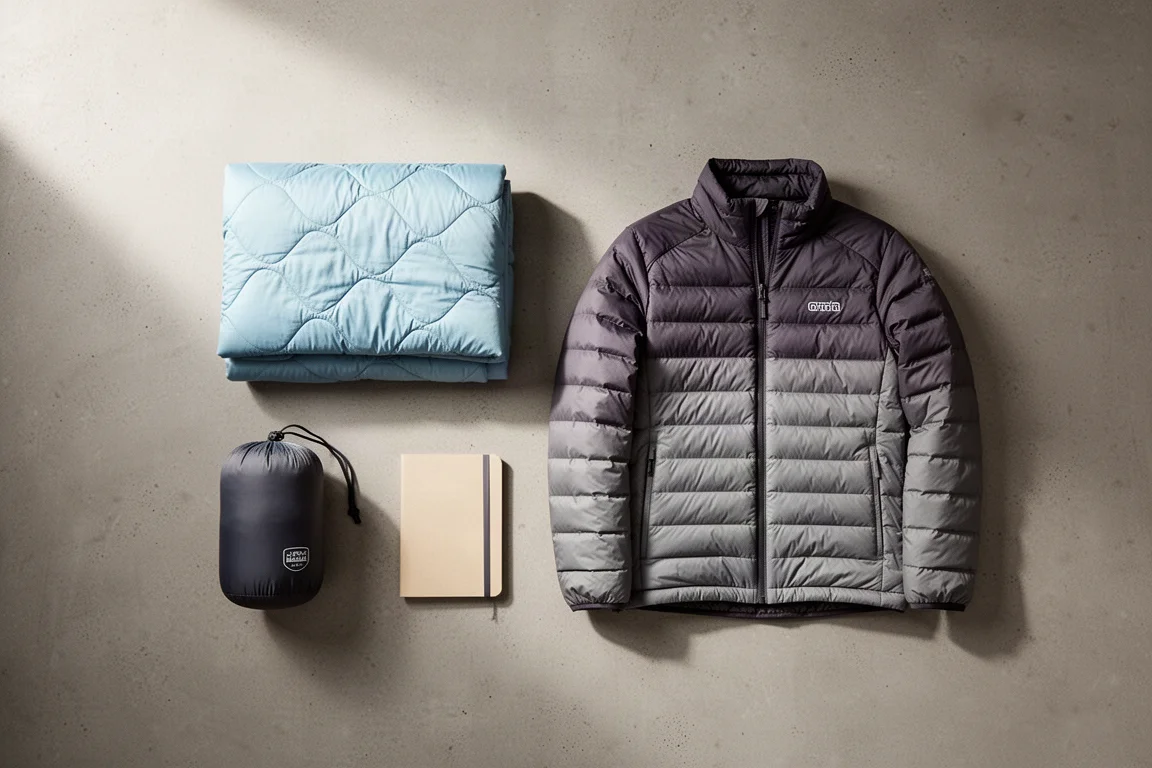
The Enigma Apex Custom is a made-to-order synthetic quilt, and the 20°F rating is the warmest synthetic option available in the Enigma line, which makes it the sensible pick for three-season and shoulder-season use. This configuration used regular length and slim width, with 10D nylon inside and outside, finished in robin eggshell blue on the outside over a black interior.
Total weight comes in at 26.79 oz at a cost of $230. A comparable build with 950 fill power down would weigh 18.06 oz and cost $370, so the synthetic version saves roughly $140 while adding close to 10 oz to the pack.
Enlightened Equipment also sells non-customizable quilts and sleeping bags that ship quickly. Custom builds take longer because each one is made to order, which is worth factoring in if a trip is already on the calendar.
Enlightened Equipment Women’s Torrid Custom Jacket
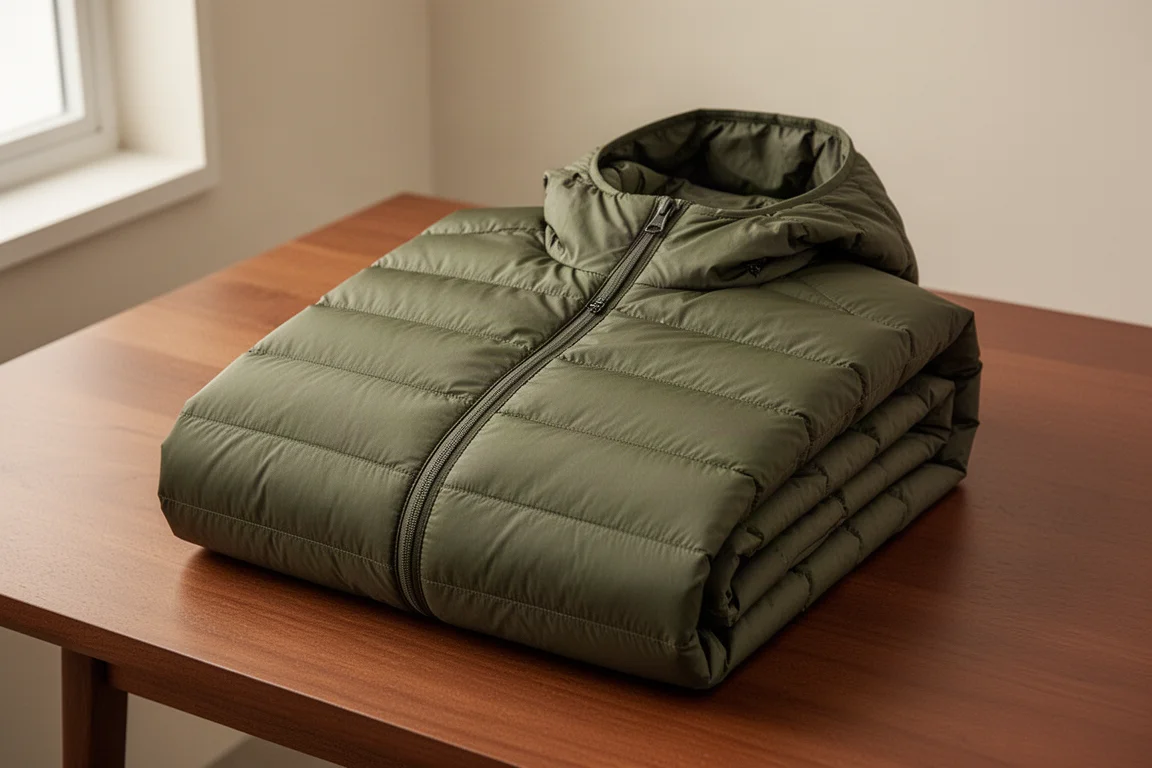
The Women’s Torrid Custom jacket is the synthetic counterpart to a down puffy, and it replaces a down parka that had been a long-standing favourite. This build used a medium size with a hood, 10D nylon inside and outside, and a black exterior with a robin eggshell blue interior.
Total weight is 7.75 oz at a cost of $175. The fill is Enlightened Equipment’s Apex material at 2 oz per square yard, a specification that does not translate directly into a fill power number, so warmth is best judged in use rather than from the spec sheet. Weight and price move depending on the options selected, and custom orders take longer than stock items.
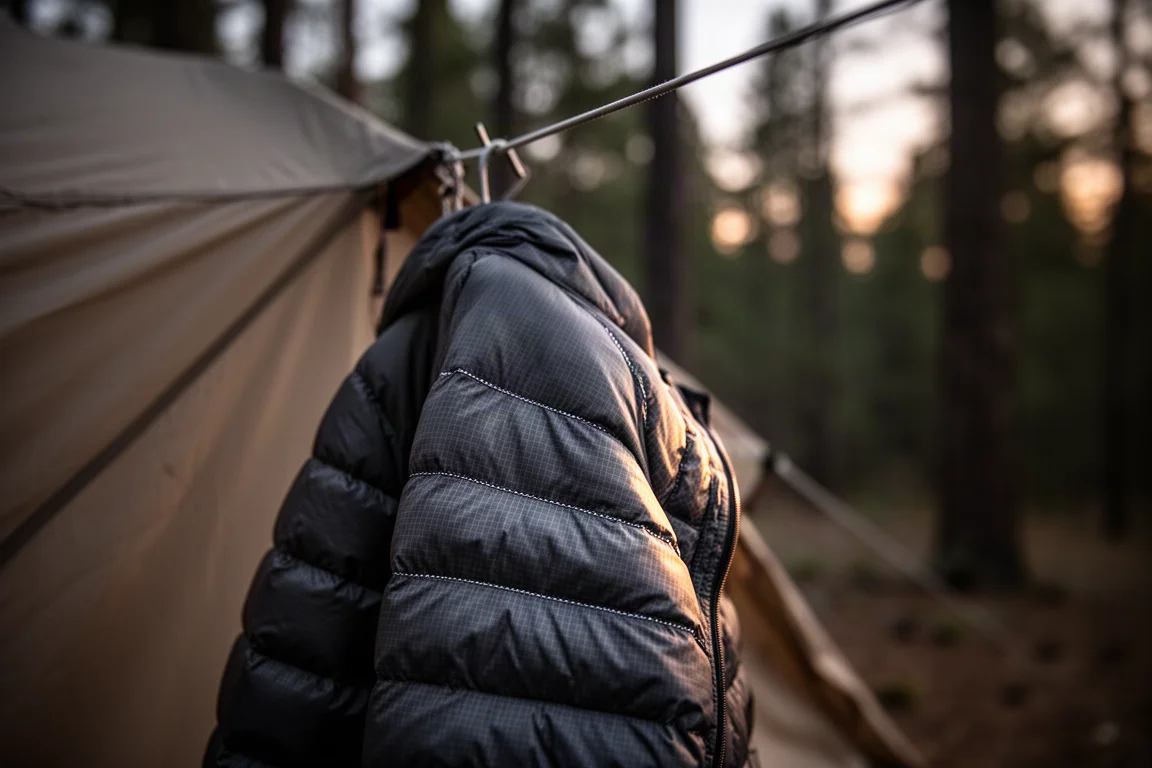
The appeal here is the combination of a low weight and a much lower price than a comparable down jacket, with the added benefit of easier laundering if dust mites turn out to be the culprit.
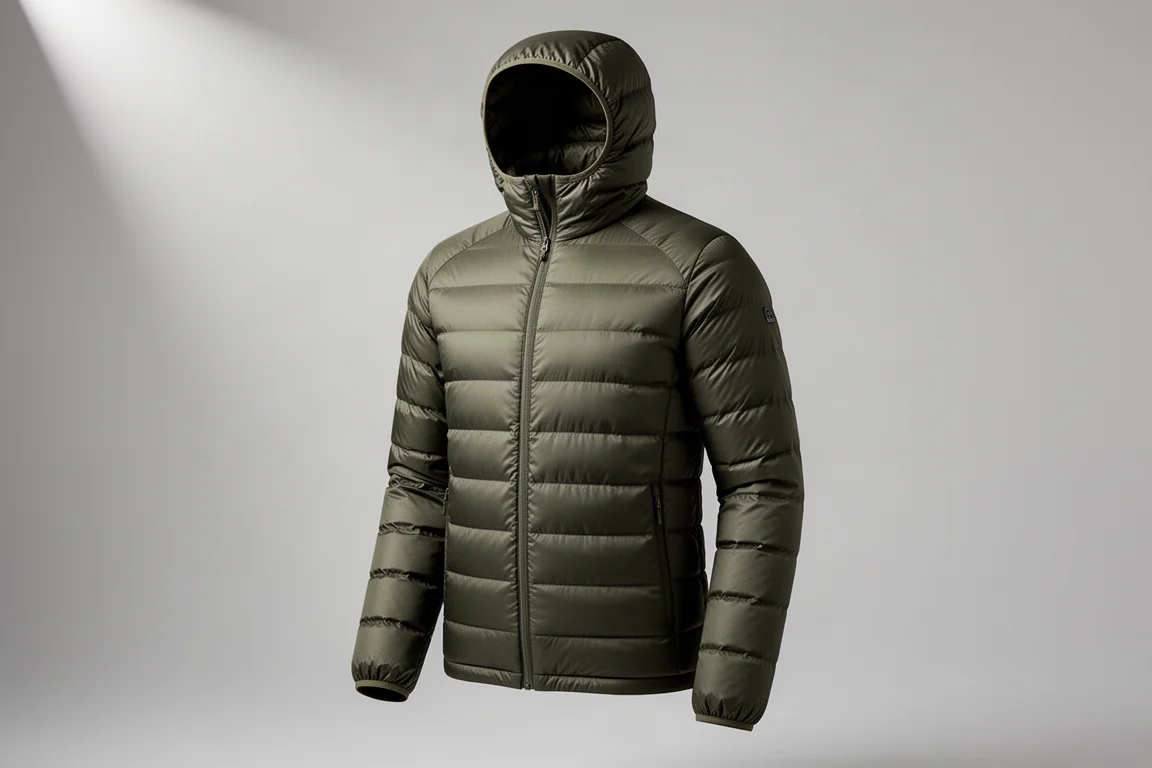
Montbell Plasma 1000 Down Parka
The Plasma 1000 remains one of the lightest down parkas around, and it is the piece the synthetic jacket has to measure up against. The men’s version weighs 8.4 oz and the women’s version 7.9 oz, at $439.
That puts it within about an ounce of the synthetic Enlightened Equipment jacket while costing considerably more, which is the clearest illustration of the trade: down keeps the weight down and the price up, synthetic flips that relationship. For hikers with no sensitivity to down, the Plasma 1000 is still a compelling piece. For anyone testing synthetic fills, it sets the benchmark on comfort and warmth that the synthetic jacket needs to match.
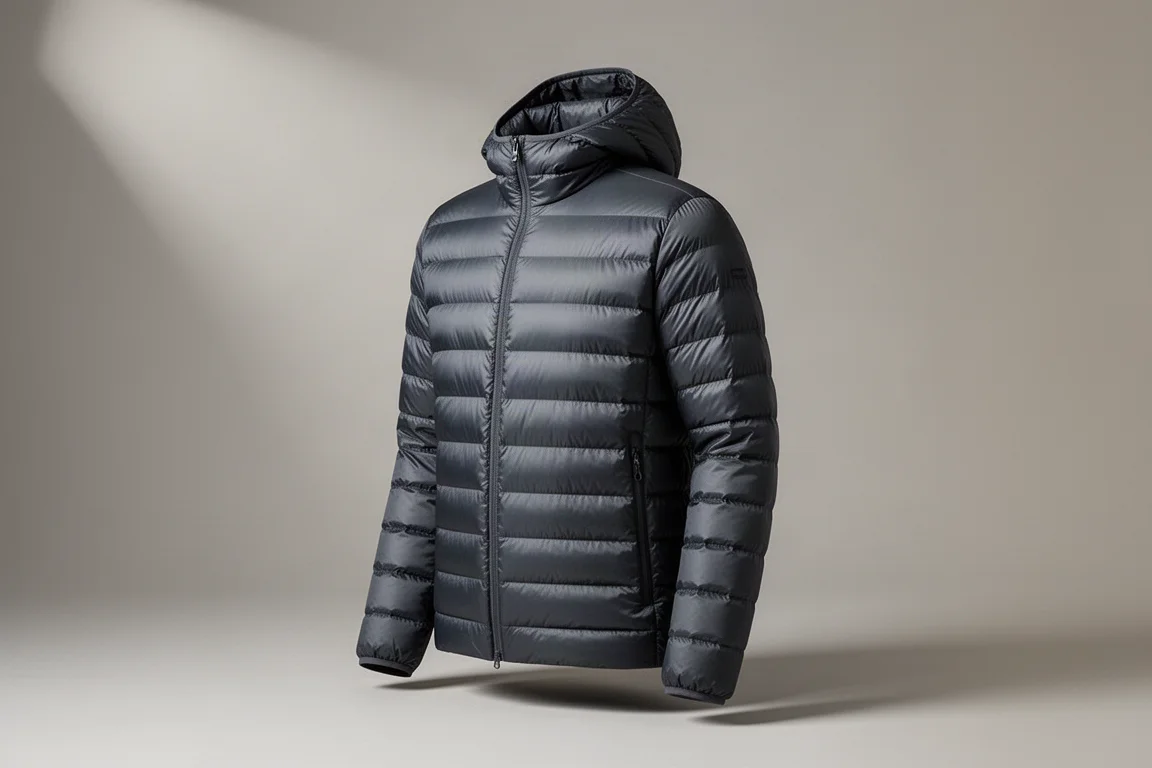
Montbell Ultralight Therma Wrap Parka
The Ultralight Therma Wrap Parka was the other synthetic option considered for the jacket slot. It uses a heavier denier nylon than the Enlightened Equipment jacket, which adds durability but also weight: 8.4 oz, or close to three quarters of an ounce more than the EE jacket, at $209, which is $34 more.
Its fill weight converts to roughly 1.2 oz per square yard against 2 oz per square yard for the EE Apex fill, which suggests it would not be quite as warm despite the higher price and heavier build.
That combination of higher weight, higher price, and a lower fill weight per square yard is why it did not win out here, though the tougher face fabric may appeal to hikers who are hard on their gear.
What the Weight and Price Gap Looks Like
Pulling the numbers together makes the pattern easier to see:
- Enlightened Equipment Enigma Apex Custom 20 quilt: 26.79 oz, $230. A comparable 950 fill power down build: 18.06 oz, $370.
- Enlightened Equipment Women’s Torrid Custom jacket: 7.75 oz, $175.
- Montbell Plasma 1000 Down Parka: 8.4 oz in the men’s version, 7.9 oz in the women’s version, $439.
- Montbell Ultralight Therma Wrap Parka: 8.4 oz, $209.
The quilt is where the weight penalty is largest, at close to 10 oz. The jacket comparison is tighter than expected, because a synthetic jacket at 7.75 oz actually comes in slightly lighter than the down parka it replaces, at less than half the price. The synthetic fill is the variable that matters most: Apex at 2 oz per square yard versus a fill weight of about 1.2 oz per square yard on the Montbell synthetic parka, and a 950 fill power down build on the quilt side.
Buying Advice
Two questions decide this. The first is whether you actually react to down, or whether the swelling has another explanation such as altitude-related peripheral edema. Allergy testing is the way to find out, and a synthetic quilt and jacket are a reasonable way to run a real-world test afterward without giving up much pack weight.
The second question is how you plan to care for the item. Down needs careful washing and takes longer to dry, which makes frequent cleaning impractical on a long thru-hike. Synthetic insulation is simpler to launder, and washing a quilt or jacket immediately before a trip is one way to reduce the dust mites that may be sitting in the fill. That makes synthetic the easier choice for anyone who wants to clean their insulation often.
Custom orders from Enlightened Equipment take longer than stock items, so if a trip is close, the non-customizable options are the faster route. The prices noted here reflect the specific configurations described and will change with size, fabric denier, colour, and fill choices.
Conclusion
For hikers who suspect a reaction to down, a synthetic quilt and jacket are a sensible way to test the theory while keeping costs down. The Enlightened Equipment pair lands at $230 and $175 in the configurations described, against $439 for the Montbell Plasma 1000 Down Parka, and only the quilt carries a meaningful weight penalty of around 10 oz.
The Montbell Ultralight Therma Wrap Parka sits between the two on price and weight, with a tougher face fabric and a lighter fill weight per square yard. In the end, matching the fill to how you sleep and to how willing you are to wash your gear matters more than the label on the stuff sack.
Further reading
Related Reviews

Backpacking Gear
Building a 10 lb Base Weight: An Ultralight Backpacking Gear List
A practical walkthrough of the ultralight pieces behind a 10 lb base weight, from a 765 g pack and a roomy one-person tent to a full camp chair and a dependable water filter.
Backpacking Gear
A 15-Pound Lightweight Backpacking Gear List for Solo Trips
A beginner-friendly 15-pound backpacking setup built from easy-to-find gear, with notes on what each piece does, how it packs, and where to spend your attention.
Backpacking Gear
8 Ultralight Backpacking Gear Upgrades Worth Carrying
Eight small, affordable backpacking upgrades that solve real trail annoyances, from a pillow that stays put to a fuel valve that rescues leftover canister gas.