Audio Amplifiers
Douk Audio A5 Review: A Compact Class D Amplifier With Real Character
A $99 Class D amplifier with a removable glass top, swappable op amps and a front-panel high-pass filter, plus the one omission that holds it back.
Introduction
Class D amplification has become a crowded category, with compact amplifiers from many manufacturers competing on price and chipset choice. The Douk Audio A5 sits in that crowd at around $99, yet it carries a few design decisions that separate it from the usual spec sheet exercise.
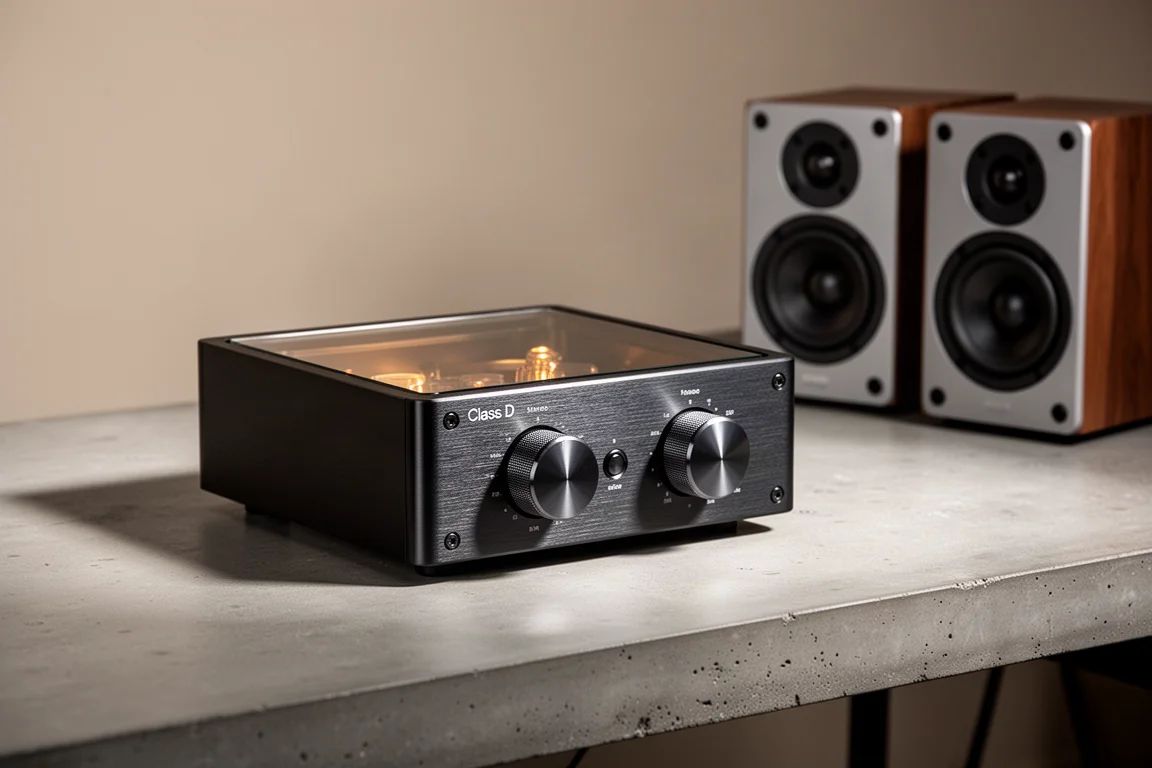
Two of those decisions are visible the moment you unbox it: a removable glass top panel that opens up the interior for component swapping, and a high-pass filter on the front panel. One of them is genuinely useful. The other is a good idea that stops short of being complete.
This article covers what the A5 does well, where it falls short, and who should consider it.
Who the Douk Audio A5 Is For
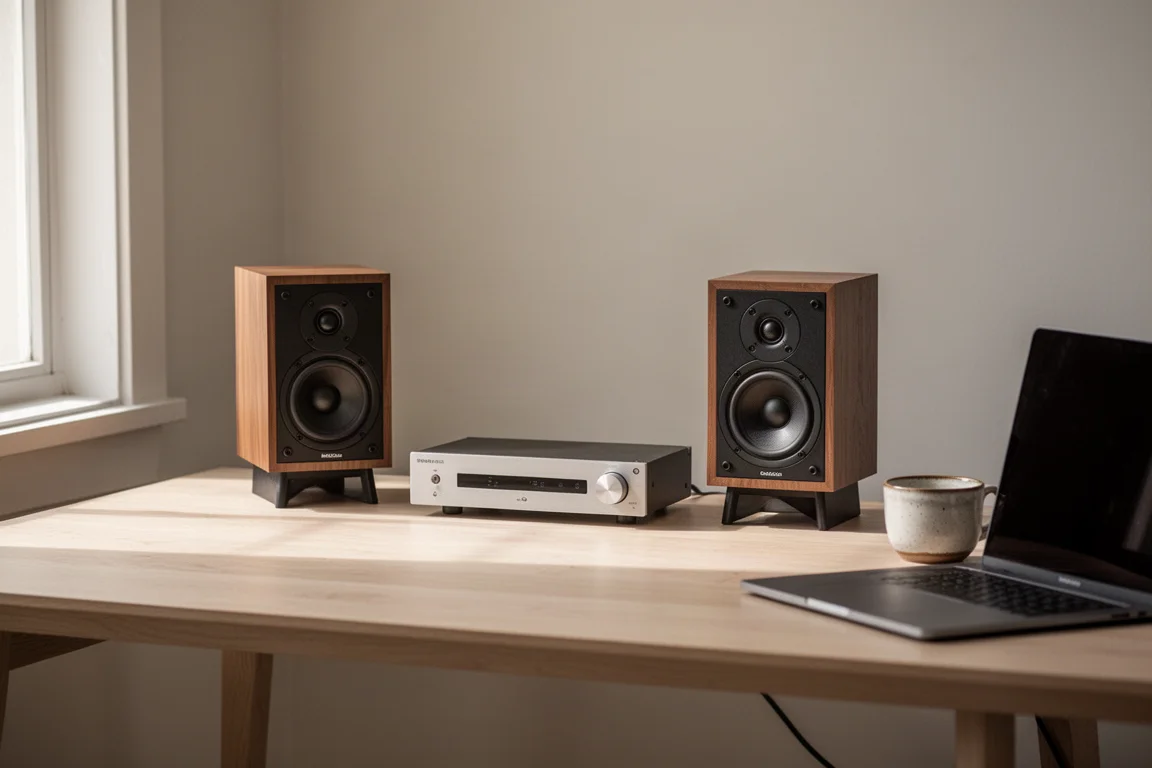
The A5 makes the most sense for listeners building a compact desktop or small-room system around efficient bookshelf speakers. The footprint is small, the chassis is metal, and it accepts a wide range of external power supplies, so it sits neatly on a desk or a low shelf without dominating the room.
It is also a good match for people who like to tinker. Removing the glass top gives direct access to the op amps, which can be swapped for alternatives. That is a rare feature at this price, and it invites experimentation instead of locking the sound signature in place.
The high-pass filter points to a third audience: anyone running small speakers that should not be asked to reproduce deep bass. Rolling off the lowest frequencies protects a modest driver and often cleans up the midrange at the same time.
If you need a subwoofer output, though, this is not the amplifier for you. More on that below.
Main Strengths
The A5 is built around the TPA3255 amplifier chipset from Texas Instruments. It is one of the most widely used Class D chipsets available, and that familiarity works in its favour: it delivers a dynamic, natural, analog-leaning character rather than a thin or clinical one.
Power delivery is flexible. The amplifier accepts anything from a 24V to a 48V supply, and higher voltage translates into more headroom. Units ship with a 32V supply, which is enough for most situations, but the A5 responds well to a 48V upgrade if you want to push it harder.
The chassis is all metal and feels solid in the hand. The volume knob doubles as the power control, so a single click turns the amplifier on and the same knob then sets the listening level. It is a small thing, but it keeps the front panel clean.
Compared with the Fosi Audio V3, another compact TPA3255 design that sells for less, the A5 sounds more dynamic and noticeably fuller at the bottom end. The V3 leans harder into the midrange and top end and offers less low-frequency weight.
Design and Build Quality
Around the back, the layout runs from left to right: a single set of RCA single-ended inputs, an auxiliary output, a pair of speaker binding posts, and the DC power input. The binding posts are basic, which is fair at this price, and the input and output set is deliberately minimal.
The sides of the case are vented, and the chassis warms up under load. In a design this small, the case itself acts as part of the heatsink, so some warmth is expected rather than a fault.
The glass top panel lifts away to expose the interior. Inside, there are op amps that can be replaced, along with a six-pin header and a bank of three DIP switches. The function of those switches is not documented on the unit, so most owners will leave them alone.
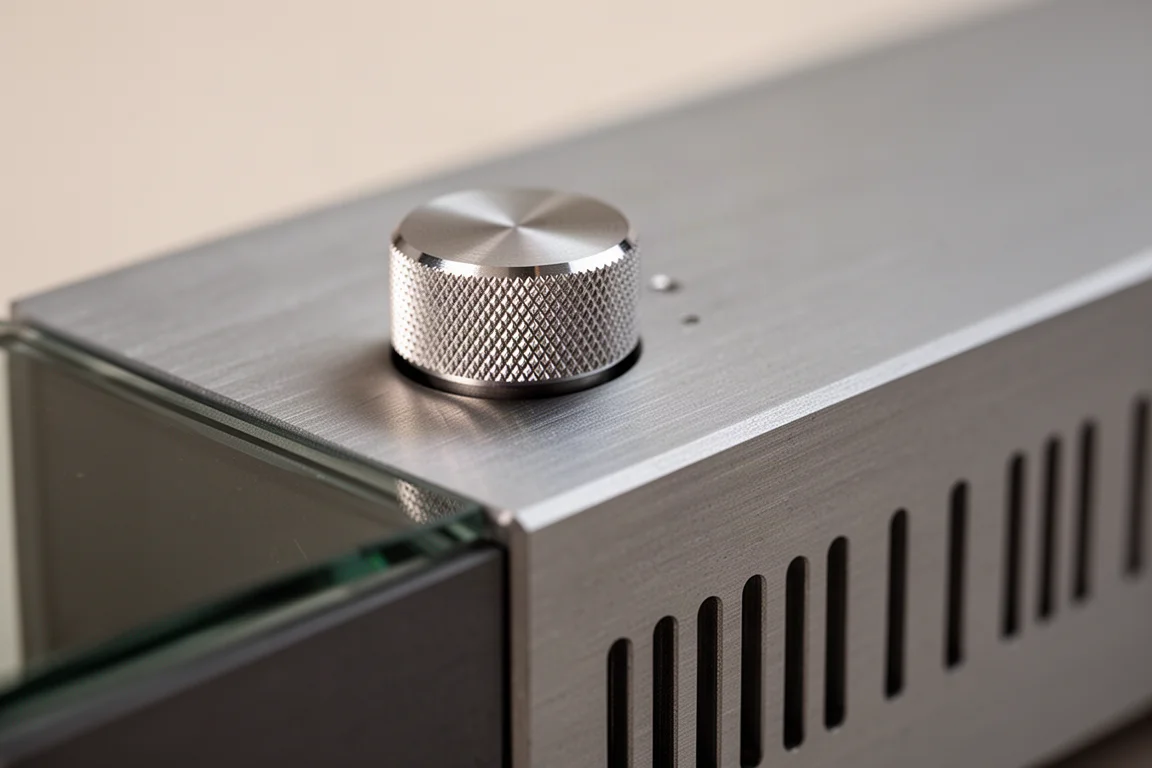
An LED inside the chassis glows through the glass, which gives the amplifier a distinct look in a dim room. It is a small aesthetic flourish, but a memorable one.
The High-Pass Filter and the Missing Subwoofer Output
The left knob on the front panel controls a high-pass filter. It clicks on, sweeps upward to 200 Hz, and can be rolled all the way back and clicked off for full-range operation. There are no frequency markings, so tuning is done by ear: raise it until small speakers sound cleaner and safer, then leave it there.
The intent is good, and for small speakers it is genuinely useful. The problem is what sits beside it on the back panel. There is an auxiliary output, but no dedicated subwoofer output. That means you cannot control the level of signal going to a subwoofer, which makes the high-pass filter far less useful than it could be. A high-pass filter and a subwoofer normally work as a pair, and here one half of that pair is missing.
The filter still has a place. If your source component already handles bass management and provides its own subwoofer output, the A5 filter becomes a secondary tool rather than the centrepiece of the setup. A more complete implementation would pair the filter with a proper subwoofer output instead of an auxiliary connection.
Sound Quality in Practice
Driving a pair of Q Acoustics 5020 bookshelf speakers, which sell for around $900 a pair, the A5 reached roughly 98 dB in a small office at a listening distance of about five feet. That result came from a 48V supply feeding the amplifier through an optical connection from a streamer.
Context matters here. At a five-foot distance in a small room, those figures are easier to reach than they would be in a larger space. Sitting twelve feet away in a bigger room, you should not expect the same 95 dB-plus output. Even so, clearing 90 dB from an amplifier of this size and price is a respectable result.
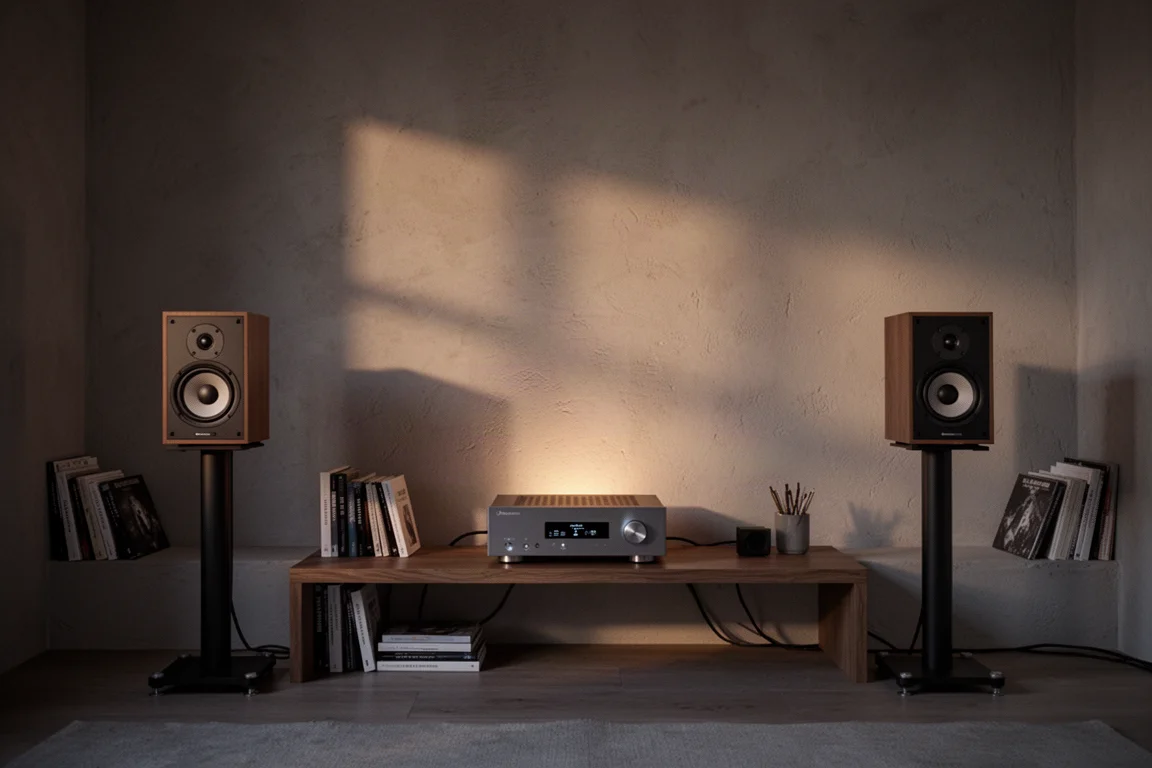
Tonally, the A5 favours a full low end and a lively, dynamic presentation. On bass-heavy material it produces noticeably more weight than the Fosi Audio V3, which comes across as more midrange- and treble-forward by comparison.
Things to Consider Before Buying
The missing subwoofer output is the biggest limitation. If your plan involves a subwoofer and you want to control its level independently, the A5 will not let you do that from the amplifier itself.
Power supply choice matters too. The unit arrives with a 32V supply, and while that works, the amplifier performs better with 48V. A suitable 48V supply typically adds somewhere around $50 to $70 to the total cost, which shifts the value calculation a little.
The high-pass filter is adjusted entirely by ear because the dial carries no markings. That is workable, but it is not precise.
Finally, the footprint does not match the brand’s own see-through DAC, so the two will not stack as a matched pair. The interior LED is fixed as well, so it cannot be tuned to match the lighting of other components in the same family.
Buying Advice
At around $99, the Douk Audio A5 is a fair buy for what it offers: a solid metal chassis, flexible voltage support, accessible op amps, and a sound that favours body and dynamics over clinical precision. It is more dynamic than the Fosi Audio V3 and would be the better pick for listeners who value a fuller low end.
If the amplifier included a 48V supply and a proper subwoofer output, it would be an easy recommendation at a higher price, even around $130 to $140. As it stands, it is a strong option for small speakers in a desktop or nearfield setup, provided you do not need subwoofer integration.
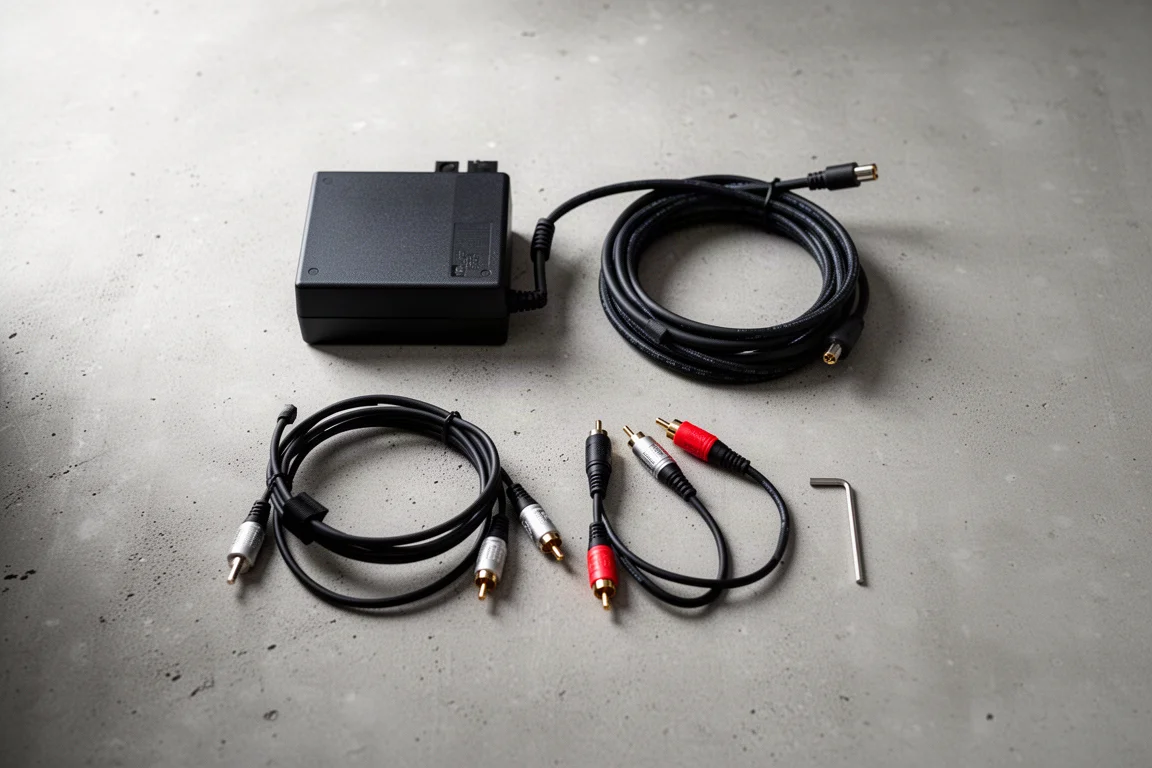
Pair it with efficient bookshelf speakers, feed it the highest voltage supply you are comfortable buying, and treat the high-pass filter as a bonus rather than the reason to buy.
Conclusion
The Douk Audio A5 gets a lot right. The TPA3255 foundation is proven, the build is all metal, the glass top makes op amp swapping genuinely approachable, and the high-pass filter is a useful addition for small speakers. Where it stumbles is the missing subwoofer output, which leaves that filter only half-finished.
For a compact desktop system, it is a fun and capable amplifier with a character of its own. Buyers who want subwoofer control or a matched component stack should weigh those trade-offs carefully first.
Product link
View more details for Douk Audio A5
This product is mentioned in the review. Check the specifications, options, and compatibility before buying.
View more details for Douk Audio A5Further reading
Related Reviews
Audio Amplifiers
AGD Audion Mark III Review: A Compact Class D Amplifier With Tube-Like Musicality
A gallium nitride Class D amplifier that delivers tube-like midrange warmth, serious bass grip, and a modular upgrade path in a very small chassis.
Audio Amplifiers
Best Class D Amplifiers Under $100: Douk Audio A5 vs Fosi Audio V3
Two sub-$100 Class D amplifiers built on the same 3255 chipset, compared on bass weight, midrange body, treble presence, and real-world speaker matching.
Audio Amplifiers
Best Power Amplifiers Under $500: Six Stereo Amplifiers From $74 to $579
A practical roundup of six stereo power amplifiers under $500, covering real-world power, connectivity, cooling, and which kind of system each one suits.