Home Theater Streaming
Dolby Atmos Streaming in 2026: Which Platforms Actually Deliver It
A platform-by-platform guide to which streaming services deliver Dolby Atmos, which tiers unlock it, how easy each one makes it to find, and where physical media still wins on quality.
Introduction
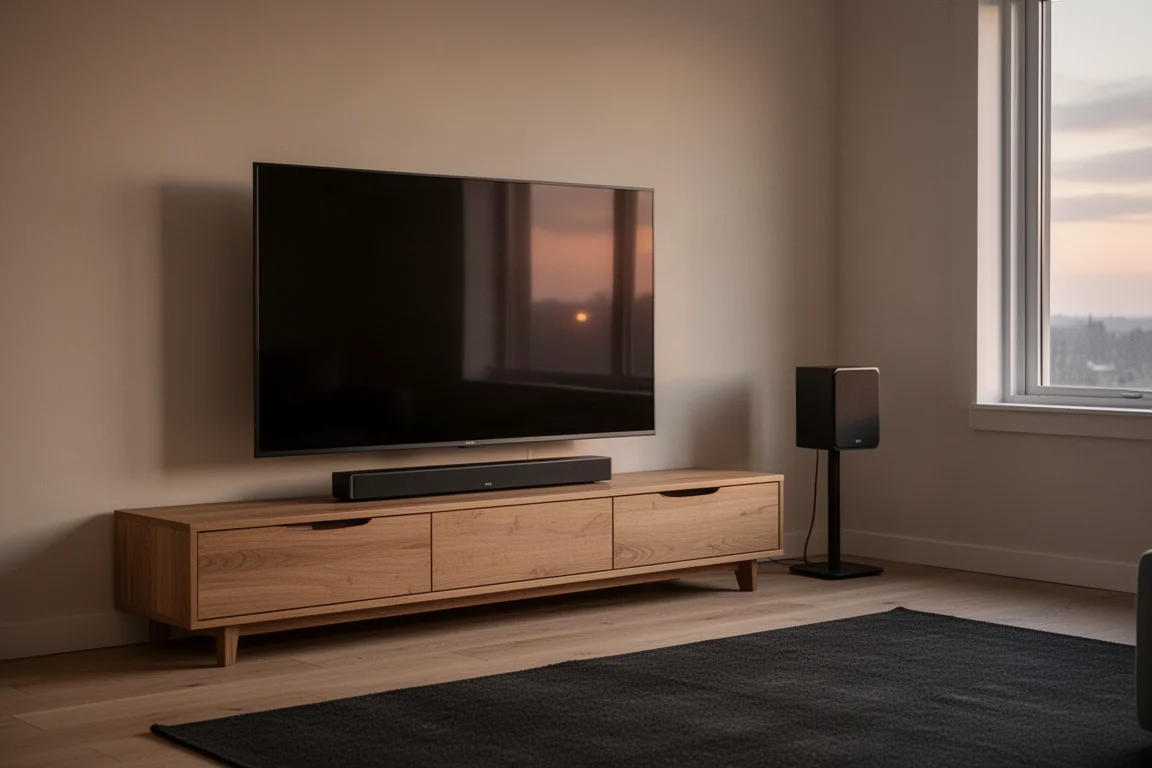
Finding great Dolby Atmos content is not as simple as hitting play. Every streaming platform handles the format a little differently, and most require a specific subscription tier before it unlocks at all. Even when a service does deliver Atmos, the rest of the chain has to be configured correctly before that signal actually reaches your speakers.
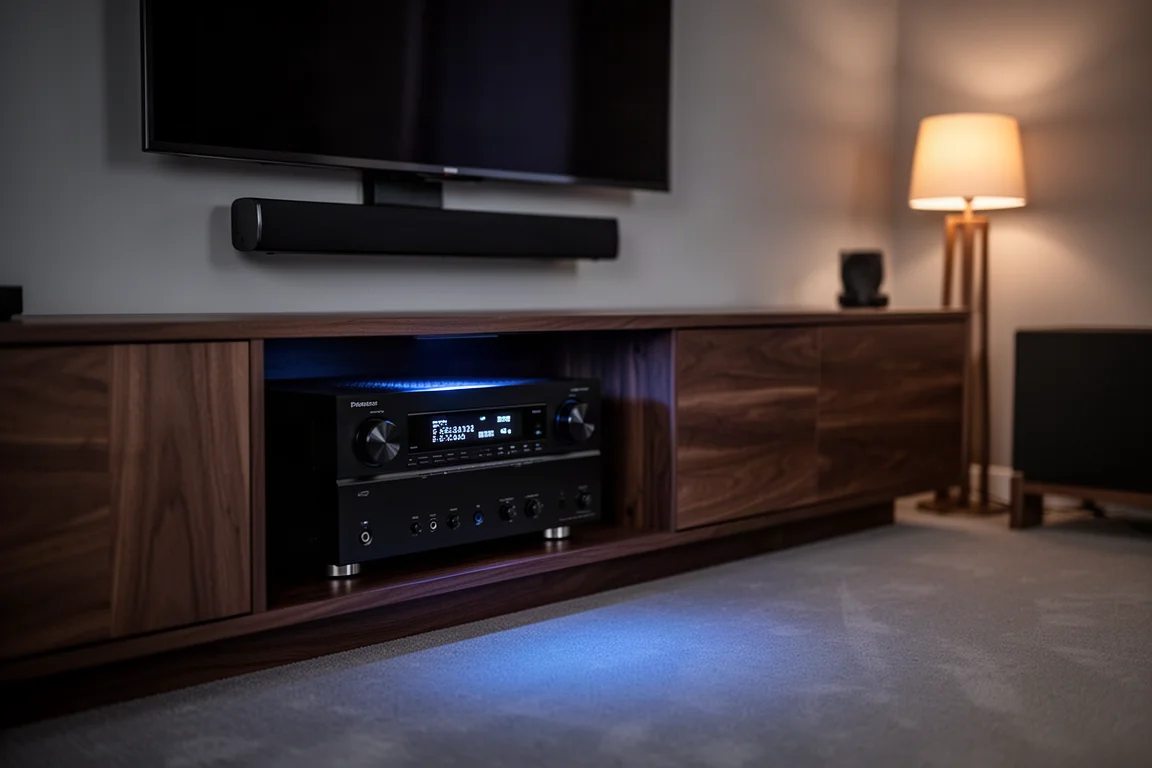
The quickest way to confirm Atmos is arriving is the display on your receiver or sound bar. When everything is decoding correctly, it typically reads Dolby Atmos. If it reads Dolby Digital instead, something in the chain is not passing the format through, and that is worth sorting out before you spend money on a tier upgrade you may not be able to hear.
How to Confirm You Are Actually Getting Dolby Atmos
Once the right tier is active, confirmation happens at the hardware. A receiver or sound bar that shows Dolby Atmos is doing exactly what it should. One that shows Dolby Digital is telling you the signal is arriving compressed or downmixed somewhere between the app and the speaker.
Finding content is the second half of the job. Some services return a genuinely reliable list when you search for Dolby Atmos, others surface only a partial list, and a few return nothing useful at all. In every case, the Atmos badge on an individual title page is the final word before you press play. That badge is the one consistent signal across platforms that a given film or episode is actually mixed in Atmos.
Netflix: The Largest Atmos Library
Netflix carries one of the largest Dolby Atmos libraries of any streaming service, and sheer volume is the main argument in its favor. Access requires the premium plan at $26.99 per month as of April 2026, the only tier that unlocks both 4K Ultra HD and Dolby Atmos.
Finding titles is refreshingly straightforward here. Searching Dolby Atmos directly in the app returns a comprehensive and reliable list, and it is still worth checking the Atmos badge on each title page before you start watching.
The catalog skews heavily toward Netflix originals such as Squid Game, Wednesday, Stranger Things, and a growing slate of original films. Licensed studio blockbusters in Atmos are not really where those live on Netflix right now. For pure volume of Atmos content, though, nothing else on this list comes close.
Apple TV Plus: Atmos Included on the Only Plan
Apple TV Plus has a single plan at $12.99 per month as of April 2026, and it is completely ad-free, with 4K, Dolby Vision, and Dolby Atmos all included on supported content. Almost every other service here makes you pay extra to unlock those formats, which makes the simplicity unusual.
Searching Dolby Atmos inside the Apple TV app returns a mix of subscription titles alongside rentals and purchases, with no way to filter for the subscription alone. Browsing directly within the Apple TV Plus section and checking the badge on each title page is the better approach.
The library is smaller than Netflix or HBO Max, but every Apple TV Plus original is produced in 4K with Dolby Atmos built in. Severance, Hijack, Shrinking, Silo, Slow Horses, Monarch: Legacy of Monsters, and For All Mankind are all in Atmos. If you want a library where every new release is guaranteed to be in Atmos, this is the only service here that can make that promise from a single $12.99 subscription.
Disney Plus: Strongest for Franchise Content
Disney Plus has become one of the best options on this list when franchise content is the priority. The no-ads plan at $18.99 per month is required for Dolby Atmos, since the ad-supported tier leaves it out.
One pricing detail deserves attention. The bundle that includes Disney Plus, Hulu, and HBO Max with no ads looks tempting, but it only provides the standard HBO Max account, which means no Atmos and no 4K on HBO Max. Getting Atmos on both services means subscribing to HBO Max’s ultimate tier separately.
Unlike Netflix, Disney Plus does not have a working keyword search for Atmos, so browsing the catalog and checking the badge on individual title pages is the way to go. The badge is clearly displayed and easy to spot.
The catalog speaks for itself: many of the biggest Marvel films are in Atmos, along with the full Star Wars library including The Mandalorian, Andor, and the saga films, plus Pixar, Avatar, and a solid chunk of National Geographic content.

For households that already rotate through those franchises, the decision is simple, and the Atmos badge here is among the easiest to find on any platform.
HBO Max: The Ultimate Tier Unlocks Everything
Atmos and 4K are unlocked at the ultimate ad-free plan at $22.99 per month, and the catalog behind that tier has grown substantially from the days when its Atmos titles could be counted on two hands.
Searching Dolby Atmos in the app does return results, but it surfaced only about 20 titles rather than the full catalog. Browsing and checking the badge on individual title pages is the better bet here.
What the ultimate tier includes is substantial: the full HBO library, DC Universe films, Warner Bros. theatrical releases, House of the Dragon, The Last of Us, and most major Warner Bros. blockbusters in Atmos. HBO Max has also started rolling out Dolby Vision and Atmos for select live sports, something only a handful of services can currently claim.
Paramount Plus: A Solid Bonus for Existing Subscribers
Paramount Plus does not come up often in Atmos conversations, but it earns a place here, especially for viewers who already subscribe for sports or the Star Trek universe. Atmos requires the premium plan at $13.99 per month.
Searching Dolby Atmos in the app returns solid, reliable results, and the badge shows up clearly on individual title pages as well.
The catalog is smaller than most of the major players. Originals such as Star Trek: Strange New Worlds, Tulsa King, and 1923 are in Atmos, along with select Paramount Pictures films such as Top Gun: Maverick. It is probably not the first destination for Atmos hunting, but it is a genuinely useful bonus if you are already on board.
Peacock: Atmos Without an Ad-Free Upgrade
Peacock is worth knowing about because Atmos is accessible without paying for an ad-free plan. The premium plan at $10.99 per month is the standard ad-supported tier, and Atmos is included.
That is unusual. Every other service on this list locks Atmos behind an ad-free or premium upgrade, with the exception of Apple TV Plus, which has only one plan to begin with. On Peacock you can watch with ads and still get Atmos. Going ad-free, adding offline downloads, and getting the live local NBC channel requires the premium plus plan at $16.99 per month.
Finding Atmos content is a different story. No keyword search worked reliably, so browsing the catalog and checking the badge on each title page is the practical route. The library is still building, with select Universal blockbusters such as The Fall Guy, The Continental, and a handful of originals currently available.
Peacock has also committed to Atmos and Dolby Vision across live sports including NFL, NBA, and MLB over the next year, along with next-generation Dolby formats on the horizon. For a platform carrying that caliber of live sports, that is a development worth paying attention to.
Hulu: No Native Atmos Support
The standalone Hulu app does not support Dolby Atmos at all. There is no badge to look for and no search to run, because the format simply is not available there. The best you will get is Dolby Digital 5.1, which is fine for everyday watching but not what an Atmos system was built for.
There is one exception. With the Duo Premium or Trio Premium Disney bundle, select Hulu content plays through the Disney Plus app rather than the Hulu app directly, and that content runs through Disney Plus’s Atmos infrastructure. Not everything in Hulu’s library works that way, but for the titles that do, Atmos is on the table. It comes down to which app you actually use when you watch.
Amazon Prime Video: Atmos Behind the Ultra Add-On
Amazon has changed the rules for subscribers twice without much fanfare. In early 2024, Atmos and Dolby Vision moved behind a paid upgrade. In March 2026 the company restructured again, rebranding that add-on as Prime Video Ultra, raising the price from $2.99 to $4.99 per month, and pulling 4K behind the same paywall at the same time.
A standard Prime membership now gets HD with ads. Atmos, Dolby Vision, and 4K all require the Ultra add-on, bringing the total to roughly $20 per month.
Searching Dolby Atmos in the app returns some results, but it is not a complete or reliable list. Clicking into individual titles and checking the badge on the detail page is the most dependable approach. The content itself is solid once you are on the right tier, with titles such as The Rings of Power, The Boys, and a growing mix of originals and licensed films available in Atmos.
The most common issue is not the catalog. It is subscribers assuming they already get Atmos through an existing Prime membership when they do not. Checking which tier you are on, and confirming the Prime Video Ultra add-on is active, is the step that matters.
Fandango at Home: Buying Blockbusters in Atmos
Fandango at Home works differently from everything else here. There is no subscription. You rent or buy titles individually, and the platform carries one of the largest blockbuster Atmos catalogs of any digital platform. It was known as Vudu before a 2024 rebrand.
Where Netflix and Apple TV Plus lean heavily on originals, this is where you go to own major studio films in 4K, Dolby Vision, and Atmos permanently.
There is no keyword search, but the Atmos and 4K badges are clearly shown on each title before you commit, so you always know what you are getting. Just make sure you are selecting the 4K UHD version to get Atmos.
It is not a replacement for a streaming subscription, but for building a digital library of films you will actually return to, it is hard to beat on blockbuster content.
Kaleidescape: The Premium Digital Option
For viewers who want to go beyond physical media, Kaleidescape is the premium digital movie platform built for serious home theater enthusiasts, delivering the highest bit rate and the highest quality content available. It is aimed at dedicated rooms where maximum picture and sound quality are the priority, and it sits at the very top of the market rather than competing on convenience alone.
Streaming Atmos vs 4K Blu-ray: What the Bit Rates Mean
Every service on this list delivers Atmos through Dolby Digital Plus, a compressed audio format, and that compression applies on the video side as well.
A streamer averages around 8 megabits per second of data. A 4K Blu-ray runs around 50 megabits per second, roughly six times more picture information actually reaching your screen. On the audio side the gap is bigger still: streaming Atmos comes in under 1 megabit per second, while a 4K Blu-ray’s lossless TrueHD track delivers around 6 megabits per second, roughly eight to nine times more audio data.
Those are not subtle differences on paper, and on a well set up home theater system most people can see and hear them immediately. Add up what it costs to unlock Atmos across all of these services and it easily comes to over $1,000 a year, all for compressed versions. A good 4K Blu-ray player lasts for years, and a 4K Blu-ray of a major film costs around $15 to $25. It is a more deliberate process, but what you get in return is the full quality version of the content, and you own it permanently.
Which Platform Fits Your Setup
The right answer depends on how you actually watch. If you are a casual listener on a sound bar, picking one or two services and enjoying the convenience of streaming is entirely reasonable.

If you are invested in a serious home theater, it pays to be more selective with subscriptions and to put some of that money toward physical media instead. The bundle math is worth checking closely, since a combined plan can quietly leave Atmos locked on one of the services inside it.
Whichever route you take, confirm the tier before you subscribe and confirm the format on your receiver or sound bar display after you press play. Those two checks prevent most of the disappointment people run into with Atmos streaming.
Conclusion
Atmos streaming in 2026 comes down to matching a platform to a viewing habit. Netflix offers the largest volume of Atmos content through its $26.99 premium plan. Apple TV Plus includes Atmos on its single $12.99 plan, and every original is produced in 4K with Atmos. Disney Plus is the strongest pick for franchise libraries at $18.99. HBO Max unlocks its best catalog at $22.99, Paramount Plus is a solid bonus at $13.99, and Peacock is the outlier that includes Atmos on its $10.99 ad-supported tier. Hulu’s standalone app does not support Atmos at all, Amazon requires the Prime Video Ultra add-on, and Fandango at Home is the place to buy blockbusters outright. Kaleidescape sits above all of it for dedicated rooms.
For viewers with a serious system, the honest recommendation is to subscribe selectively and to consider physical media for the films you watch most. The quality gap is real, and ownership lasts.
Further reading
Related Reviews

Backpacking Gear
Building a 10 lb Base Weight: An Ultralight Backpacking Gear List
A practical walkthrough of the ultralight pieces behind a 10 lb base weight, from a 765 g pack and a roomy one-person tent to a full camp chair and a dependable water filter.

Road Bikes
10 New Road Bikes Worth Watching: Aero, Titanium, Steel and Endurance Standouts
A practical roundup of 10 new road bikes, from aero flagships chasing single-watt gains to titanium, steel and endurance platforms built for real roads.

Bikepacking Gear
11 Bikepacking Essentials for Long-Distance Cycling
Eleven bikepacking essentials for long-distance cycling, from a steel gravel frame and a two-person tent to helmet lights, packable gloves, and a frame bag that puts weight in the right place.