Dog Backpacking Gear
Dog Backpacking Gear List: Packs, Sleep Systems, Paw Protection and Trail Essentials
A practical dog backpacking gear list covering custom and standard packs, sleep systems, cold-weather layers, paw protection and the small essentials that keep trail days running smoothly.
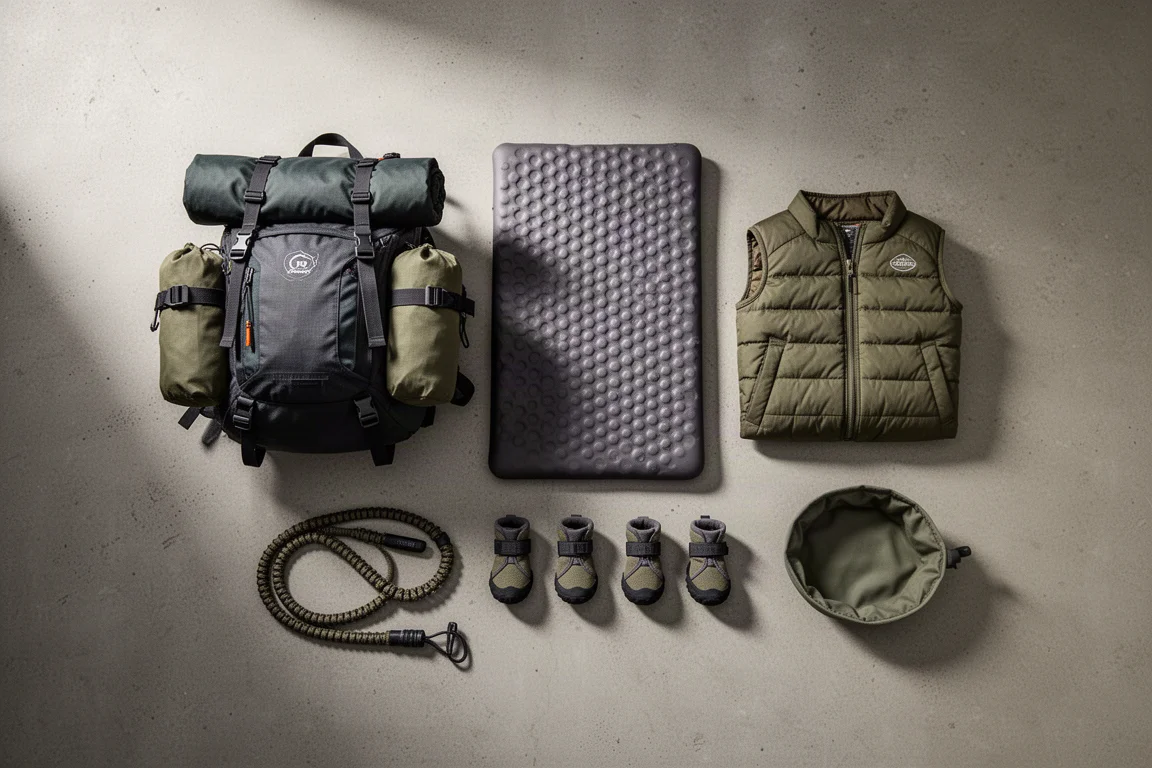
Introduction
Backpacking with a dog means packing for two, and the second pack is usually the harder one to get right. A dog cannot tell you that a strap is rubbing or that a quilt has been pushed flat in the night, so the gear has to be chosen carefully and checked often.
This list covers the categories that matter most: packs, sleep systems, cold-weather layers, paw protection and the small essentials that keep a trail day running smoothly. Every item here has been carried on real trips, and several of them have been replaced or revised along the way for good reasons.
What Matters Most in Dog Backpacking Gear
Fit is the single biggest factor. A pack that performed well for an entire season can start rubbing the following year if the dog’s body changes or the climate shifts. Checking the dog once a day, from head to paws, for red or irritated patches is the simplest habit to build, and it applies to every piece of gear that touches the animal.
Weight is the other decision point. The common rule of thumb is that a dog can carry up to 25 percent of its body weight, but that figure is an upper bound rather than a target. Ten percent or less is a far more comfortable starting point, particularly for dogs new to trail days. Fitness has to be built gradually, exactly as it is for people.
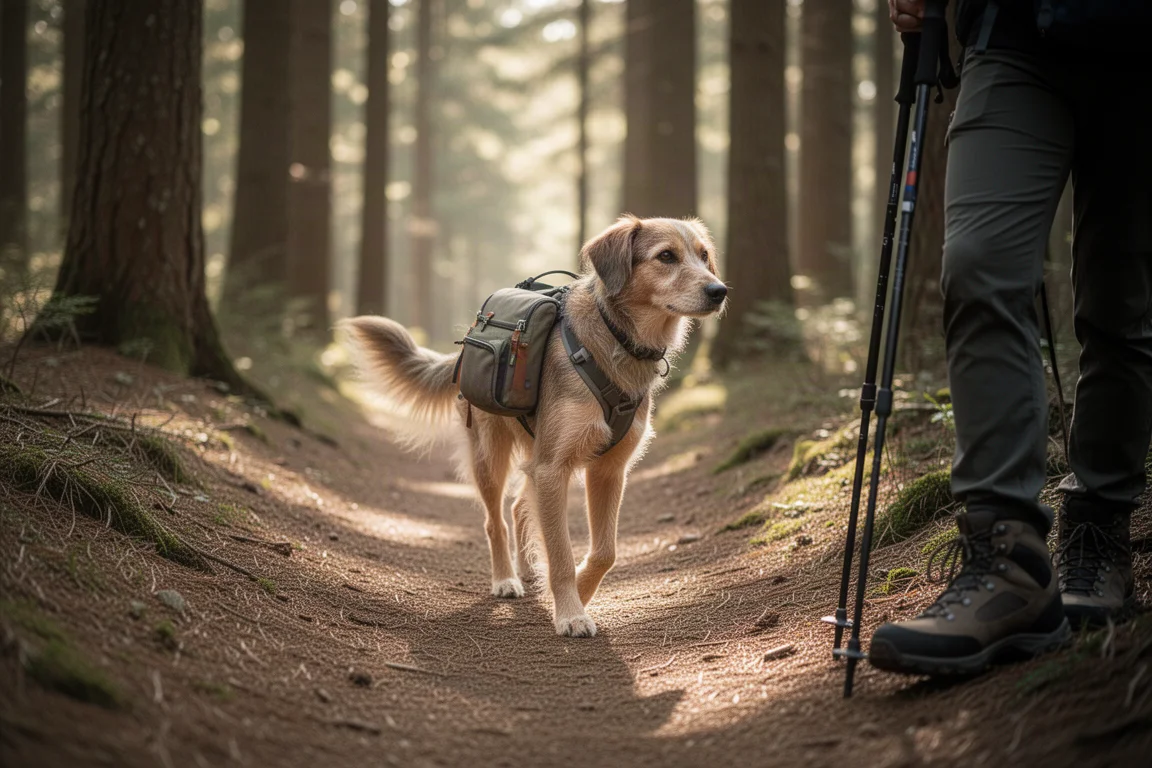
It also helps to accept that the trip belongs to the dog as much as to the handler. If the mileage has to come down, or the pack has to come off entirely and be carried by a human, that is a reasonable outcome rather than a failure.
Dog Backpacks
A well-fitting pack spreads load across the dog’s back and shoulders and stays clear of the armpit, which is where most rubbing begins. Custom sizing is worth considering for dogs with unusual proportions or a history of hot spots.
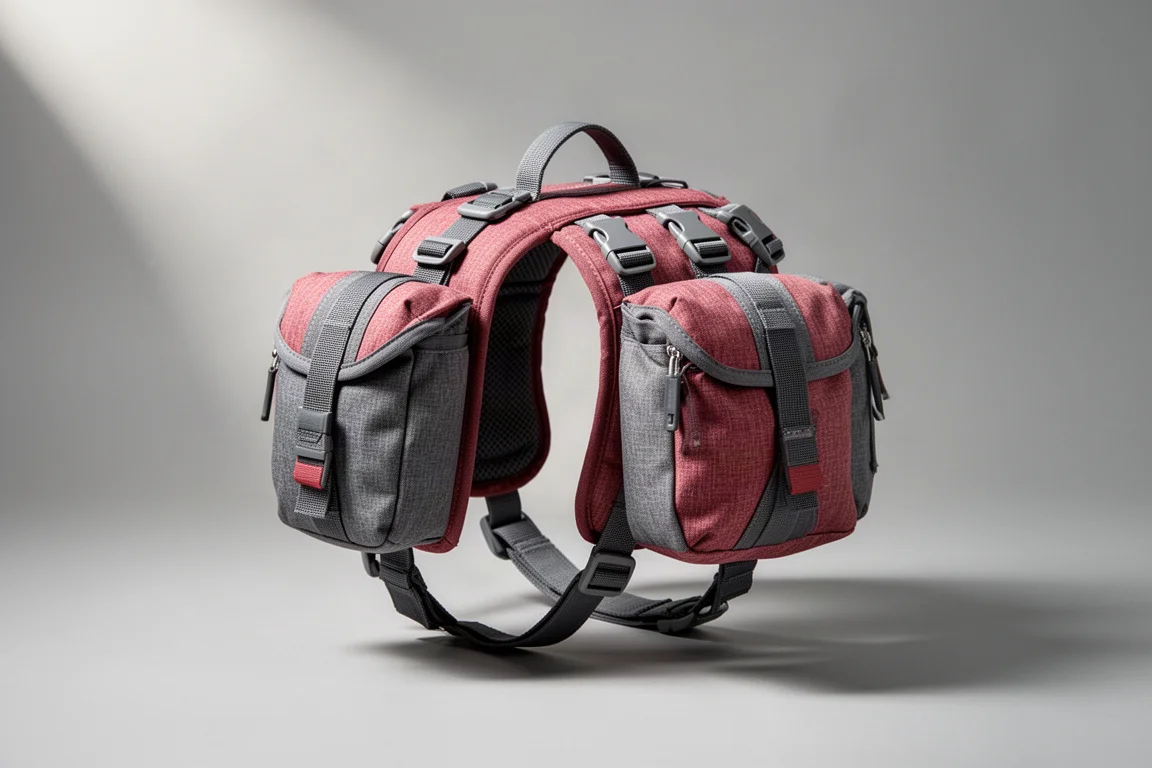
Ruffwear Palisades Pack
This pack carried a full load successfully on a long thru-hike in 2019. On a later long-distance route it started chafing under the dog’s armpit area badly enough that the contents had to be split between the two human packs. Two explanations are plausible: the dog had filled out over the intervening year and the fit became too tight, or the more humid conditions of the new route played a role.
The takeaway is not that the pack is a poor design, but that fit is never permanent. It remains a capable option for dogs whose measurements sit comfortably inside the size range.
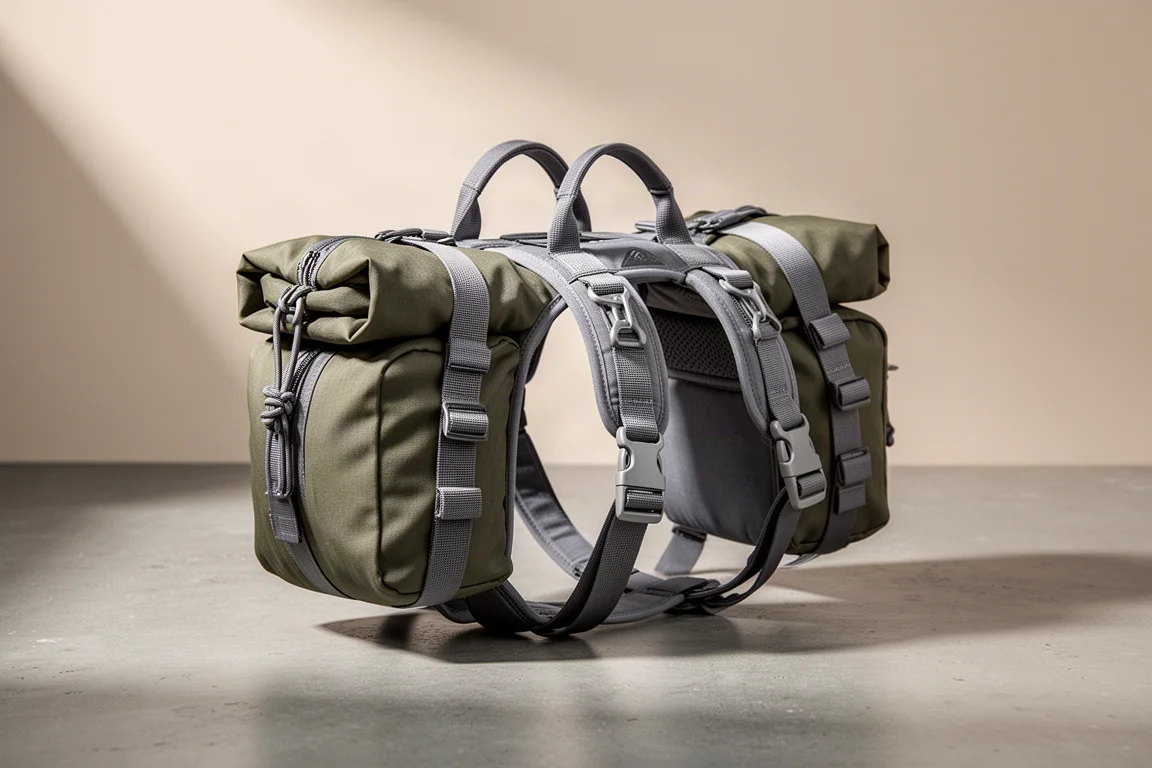
Ground Bird Gear Roll Top Trekking Pack
This is a custom pack built from several measurements supplied by the owner, and it comes with a no-chafe guarantee. Because it is made by a small cottage company, expect a lead time between ordering and delivery, which is worth planning around before a big trip.
The design avoids the armpit area entirely. The saddlebags use a roll-top closure so the pocket volume can be adjusted, and each side has an additional cinch strap that tightens the loaded bag down instead of letting it swing and create friction. Two handles make it easier to lift the dog over a boulder or a rough step, and the harness is a separate piece, so the saddlebags can be unclipped for a lighter day hike. The new pack is also nearly 12 ounces lighter than the previous one.
Sleep Systems
Sleep is where a dog’s comfort is easiest to get wrong, because insulation only works while it stays on top of the animal.
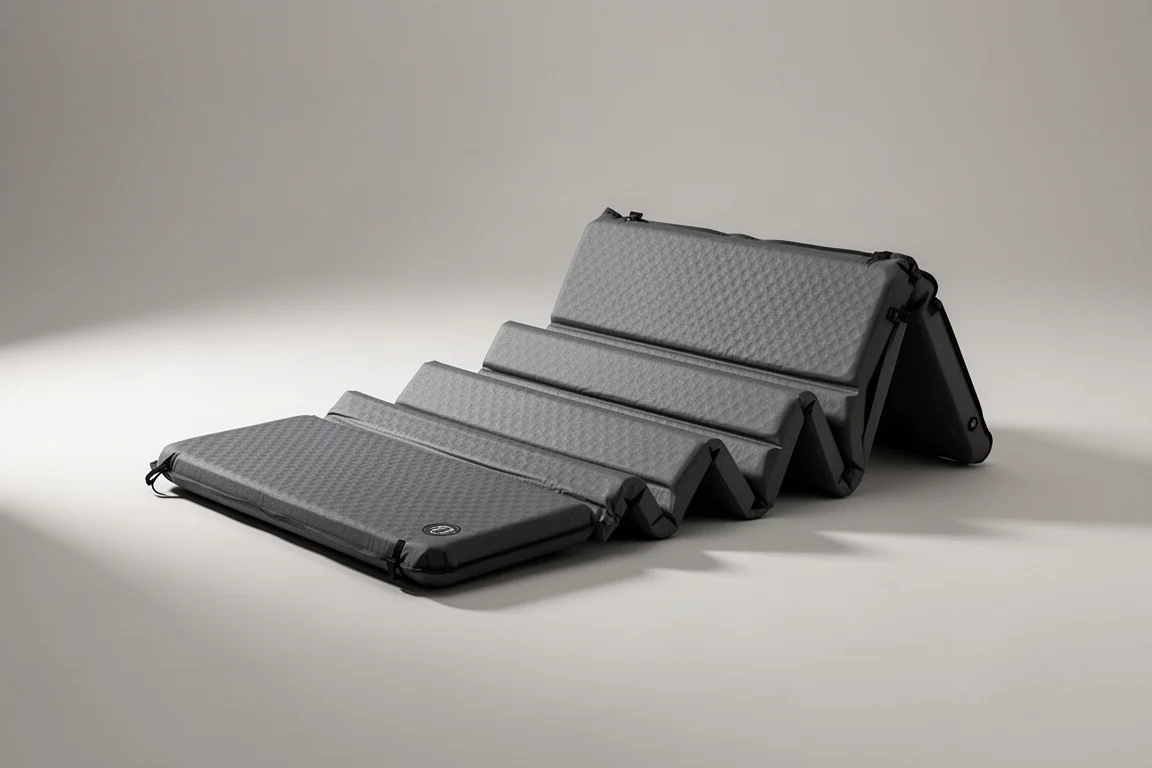
Z Lite Closed-Cell Foam Sleeping Pad
A folding closed-cell foam pad is close to indestructible. There is nothing to puncture, it does not need inflating at the end of a long day, and it can be trimmed to the exact size the dog needs. It has been the baseline pad from the very first trip.
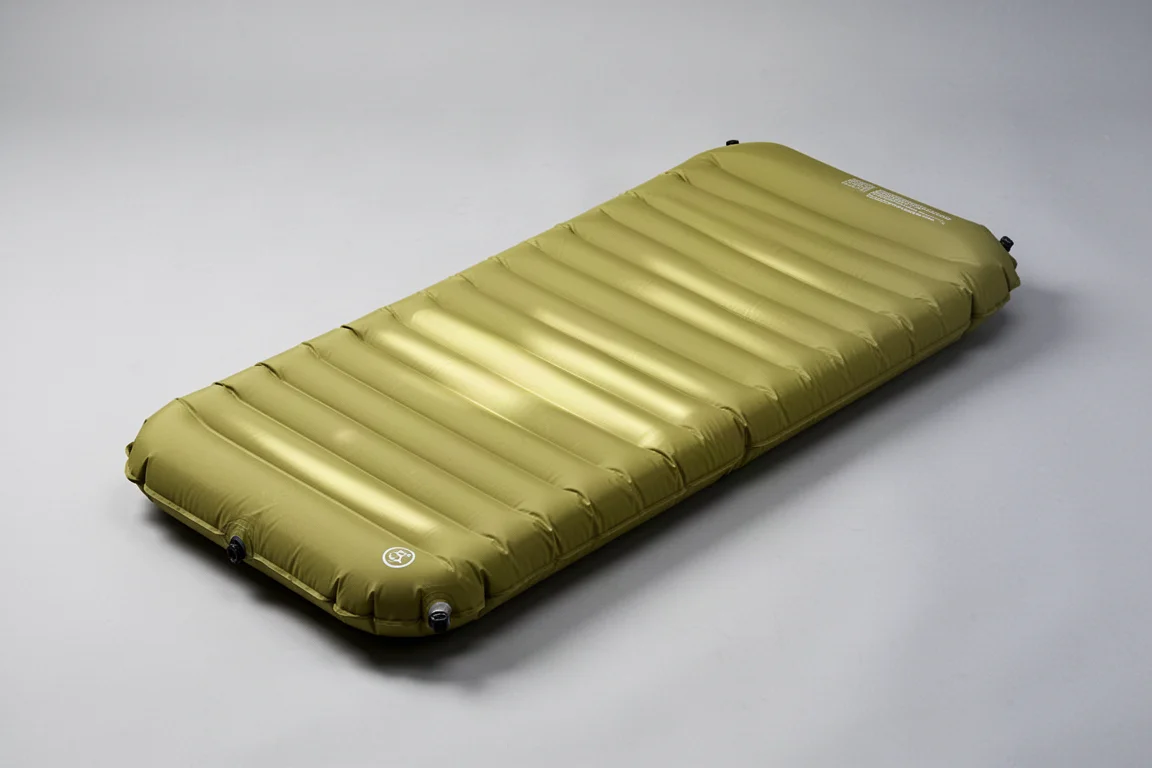
NeoAir X-Lite Sleeping Pad
An inflatable pad that weighs only 8 ounces is a tempting upgrade for a dog that settles quietly in the tent. The dog in this list consistently moves onto the inflatable pad whenever it is left alone in the tent, which suggests a clear preference for the softer surface.
20-Degree Yeti Underquilt
A 20-degree underquilt designed for hammock use happens to work extremely well as a quilt for a medium-sized dog, which makes it a useful piece of dual-purpose gear for cold trips.
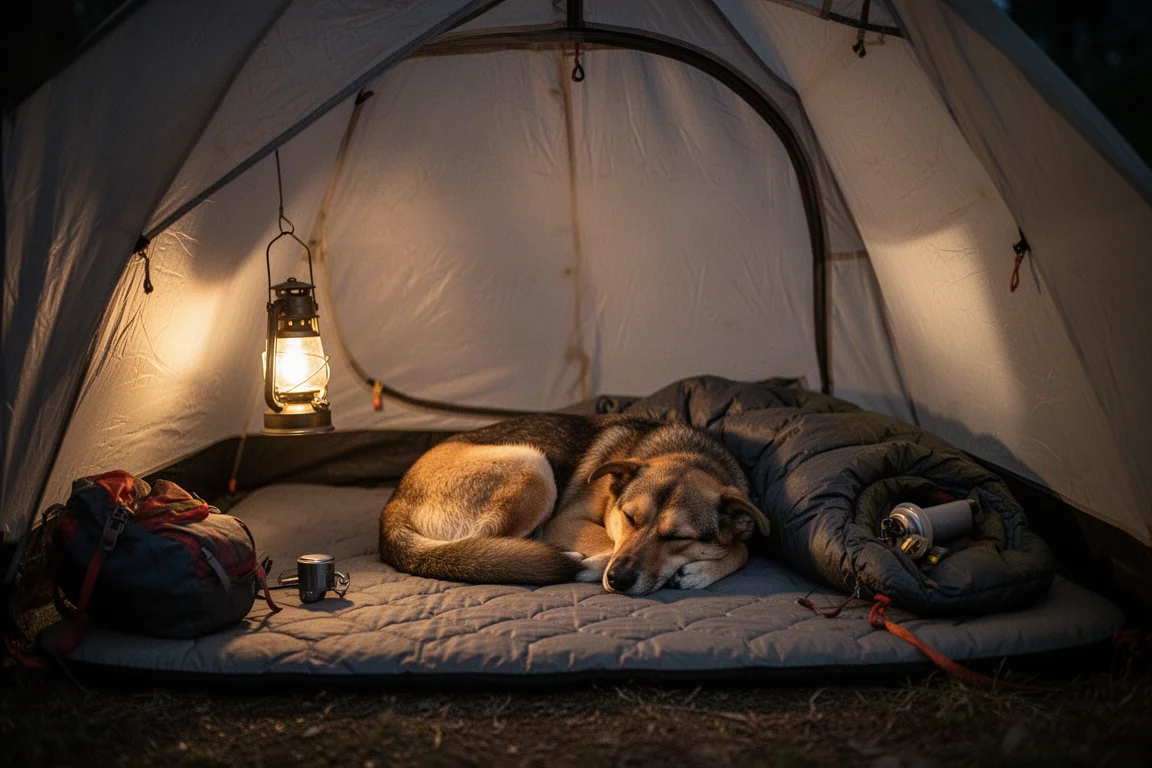
The limitation is movement. A dog that spins in circles before settling can end up lying on top of the quilt, compressing the insulation and getting cold, which means getting up in the night to pull it back over the animal.
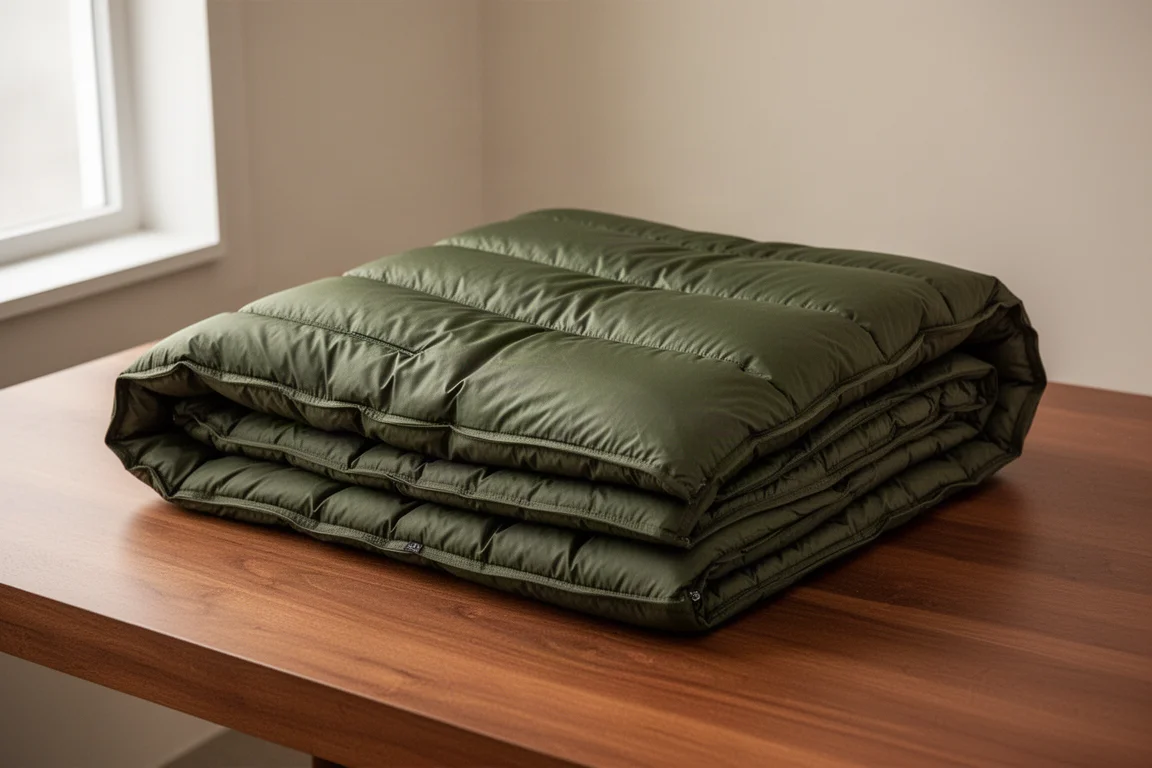
Ground Bird Gear Turtle Top Quilt
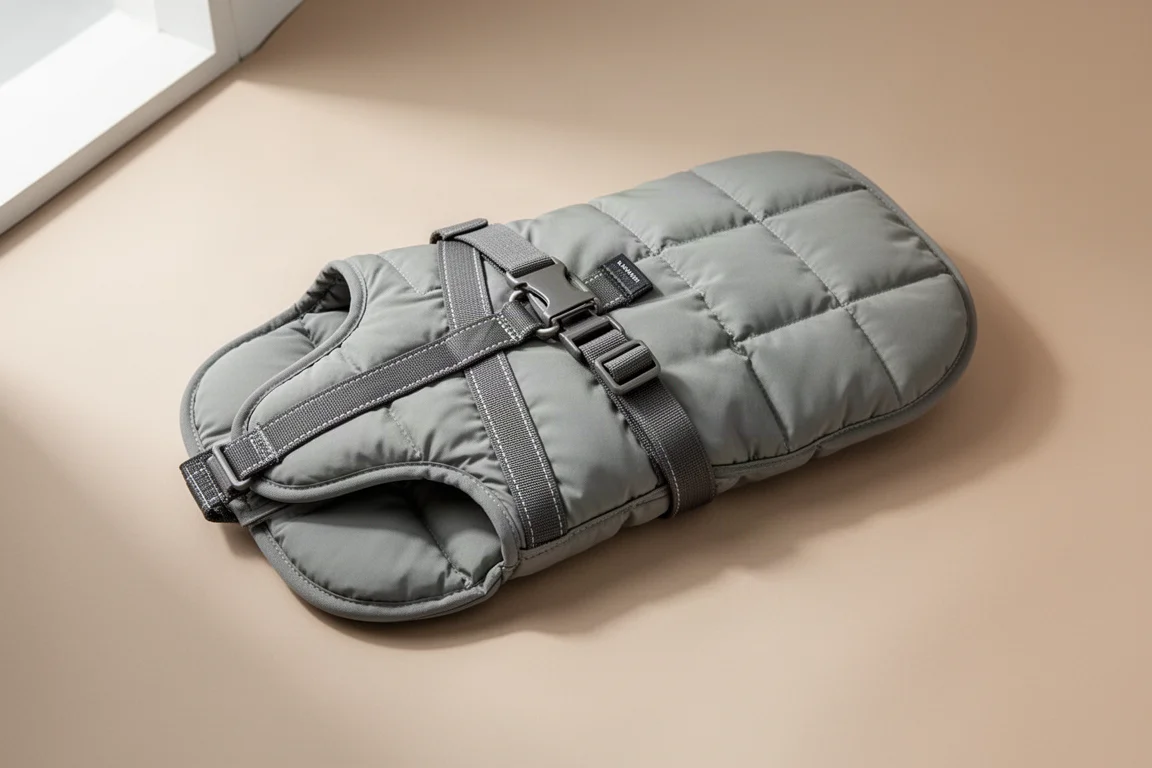
This is a top quilt with a harness stitched directly into it. It clips on, and because it stays attached, it remains draped over the dog even after the dog stands up and turns around. It can also double as a puffy coat, with the collar and the rear section rolling up out of the way.
Two temperature ratings are offered, one for warmer than freezing and one for colder than freezing. On a trip with overnight temperatures in the upper 30s, the warmer version alone was not enough insulation, and combining it with the 20-degree underquilt was what finally kept the dog warm through the night.
Cold-Weather Layers
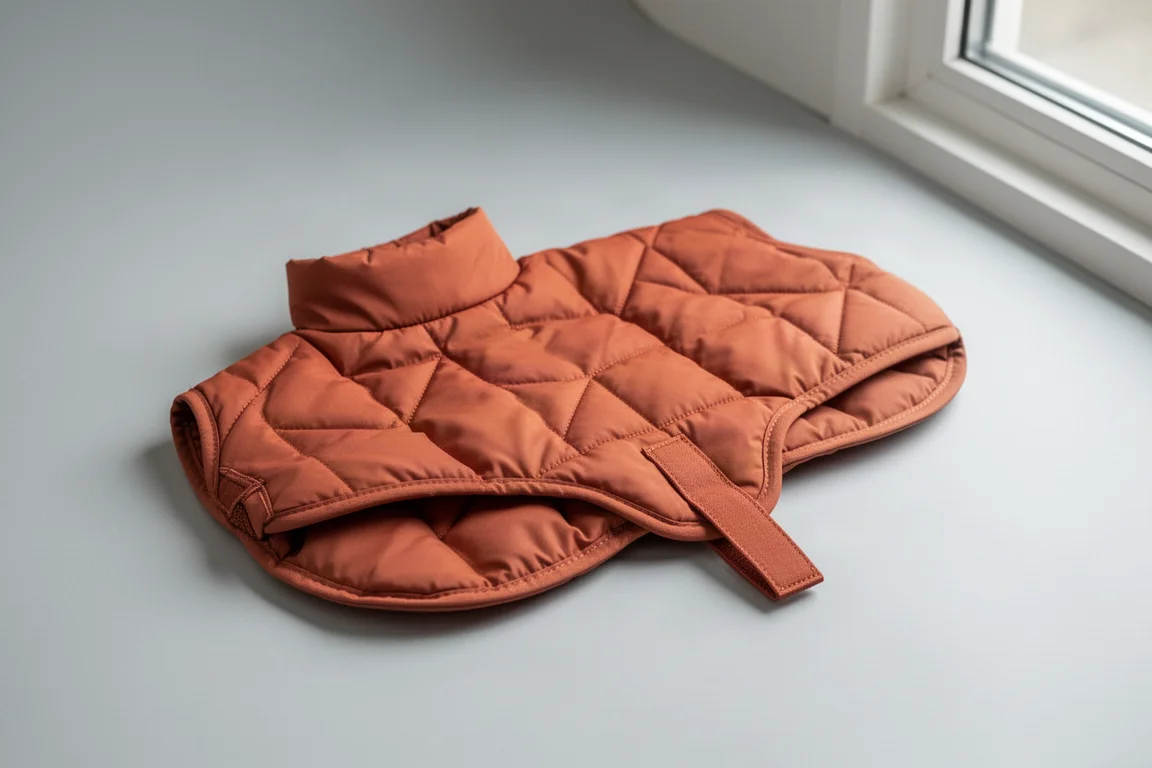
A down quilt is best kept for camp. Down loses its insulating value once it gets wet, and an expensive piece can be damaged by a snag on brush, so a synthetic layer is the better choice for actually hiking in cold weather.
Ruffwear Quincy Insulated Water Resistant Jacket
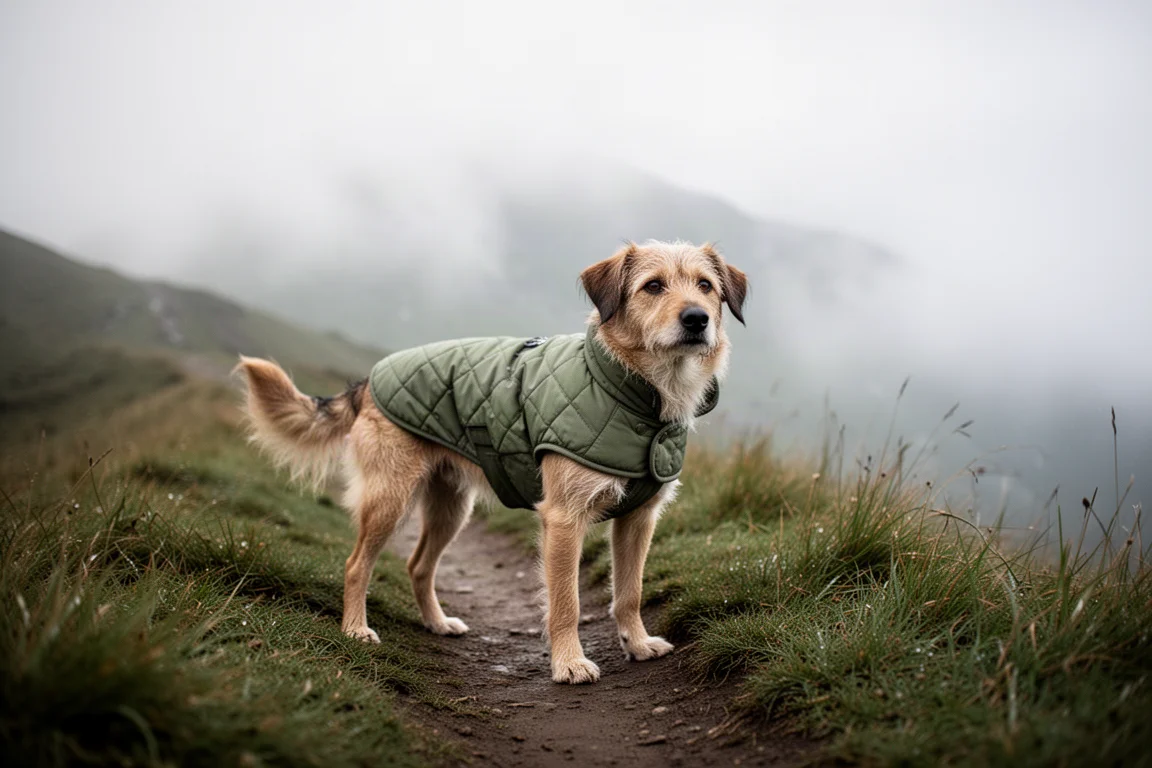
This jacket is water resistant rather than waterproof, and it is not a substitute for a proper rain layer. What it does well is keep a dog insulated in light misting rain or snow: damp on the outside, warm on the inside. For cold, damp days on trail, that is exactly the behaviour you want from a synthetic layer.
Paw Protection
Boots are a backup, not a default. Dogs sweat through their paws, so covering them for long stretches can cause overheating, and any contact point, including velcro straps, can rub. Building paw toughness gradually over shorter days is a better long-term plan than relying on footwear.
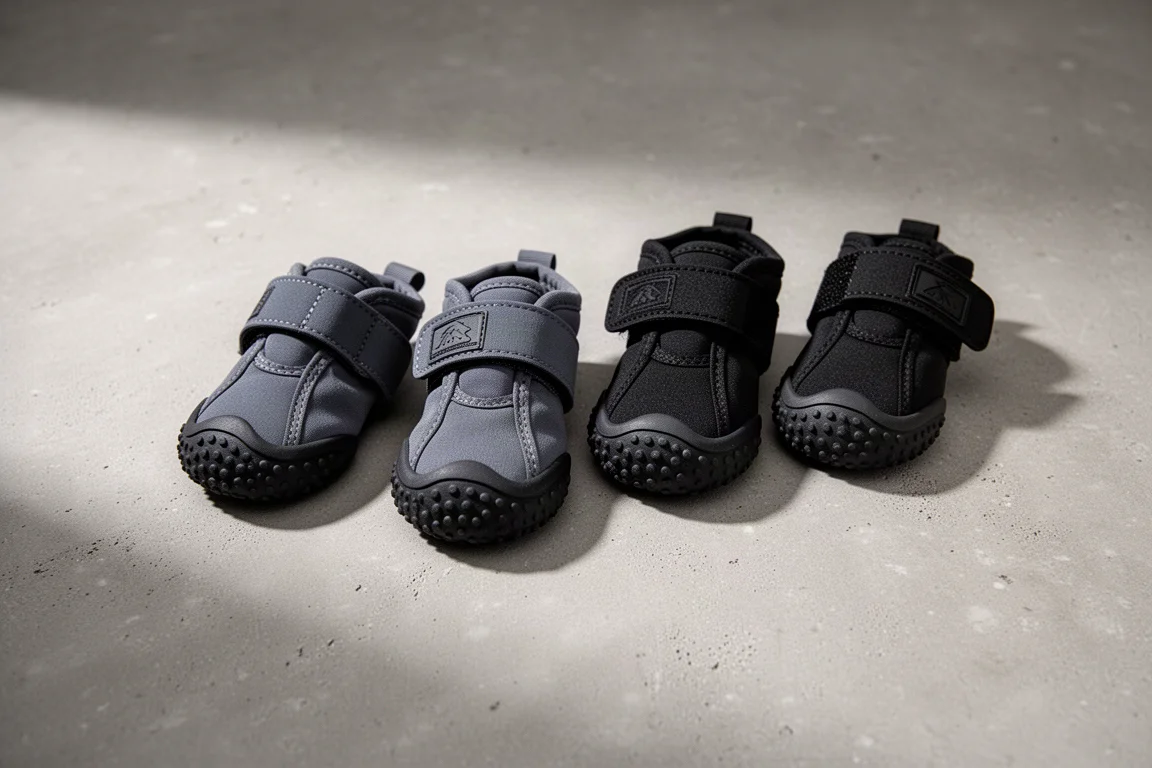
Ruffwear Grip Boots
These boots are used together with sockliners and are worth carrying for extremely hot ground or for long, sustained stretches of rough rock where the pads need protection. They are positioned at the more expensive end of the category, which makes it worth reserving them for the conditions that genuinely call for them.
Boot and Bark Sockliners
Sockliners sit between the paw and the boot and reduce friction at the strap points. Since paws sweat, they also help manage moisture during the limited time boots are worn, which keeps the paw in better condition for the miles after the boots come off.
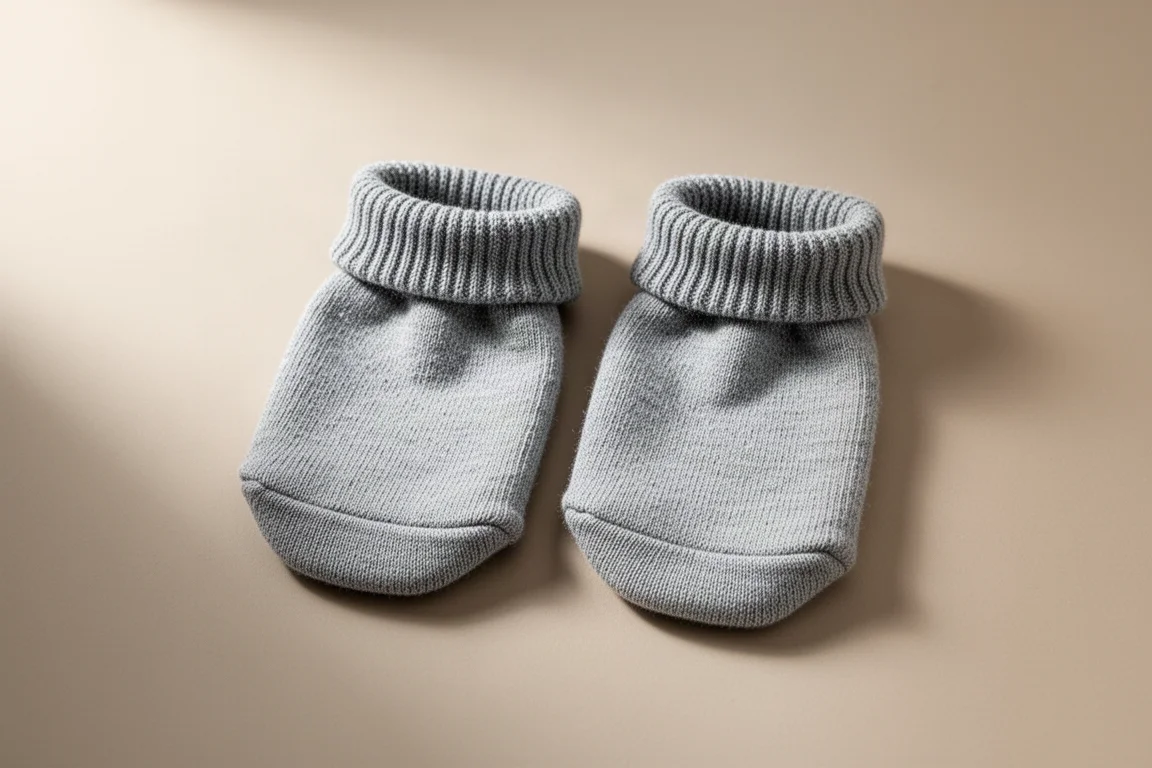
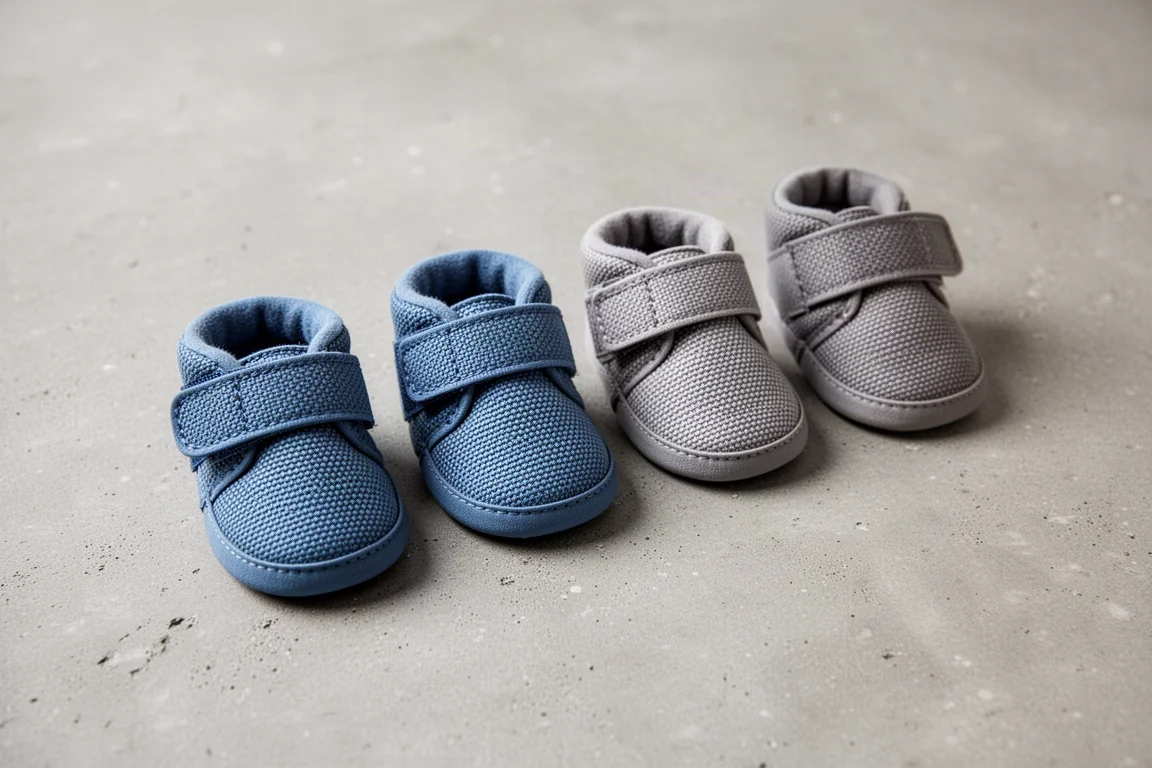
Dogbooties.com 1000 Denier Cordura Booties
These are a low-cost alternative: velcro-closure booties in 1000 denier Cordura at three dollars apiece. They are unlikely to match the durability of heavier trail boots, but they look lighter, which matters for a dog that only wears footwear occasionally or for a specific stretch of terrain.
On-Trail Essentials
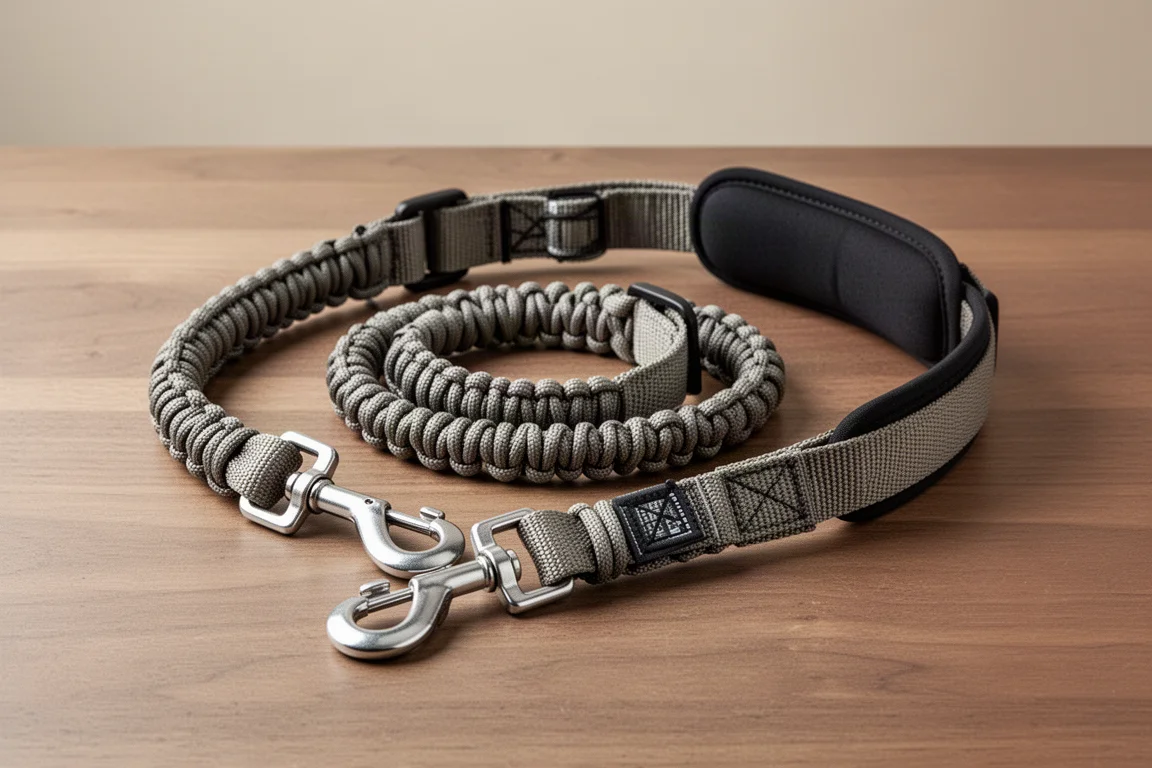
Ruffwear Roamer Bungee Leash
The bungee section absorbs sudden pulls, and the adjustable strap can be worn around the waist, clipped to a hip belt or held on the wrist. There is a handle near the dog’s end for keeping the dog close in tight situations, and the attachment uses a clamp-style hook that presses closed rather than a hook that has to be threaded on.
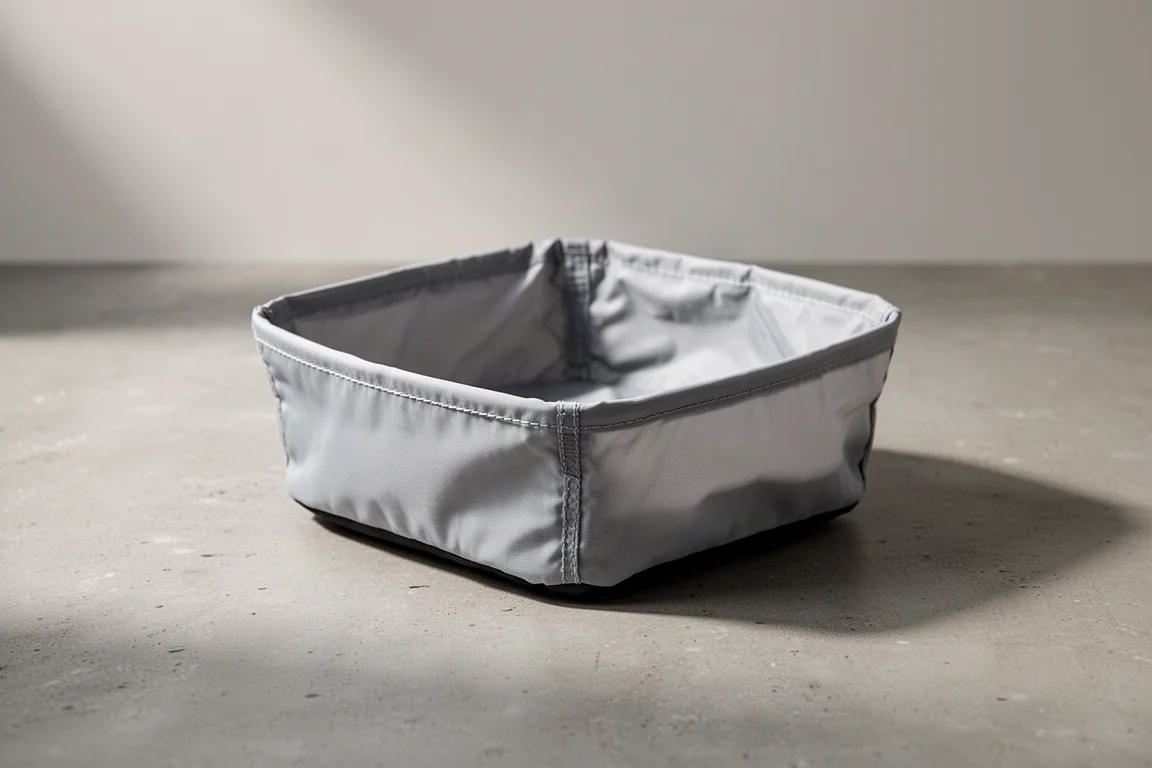
Ground Bird Gear Dyneema Bowl
At under half an ounce and measuring 5.5 by 5.5 by 2.5 inches, this bowl holds a single meal’s worth of food and replaced a heavier bowl whose liner eventually dried out and peeled away from the base.
Pack and Paw Rescue Harness
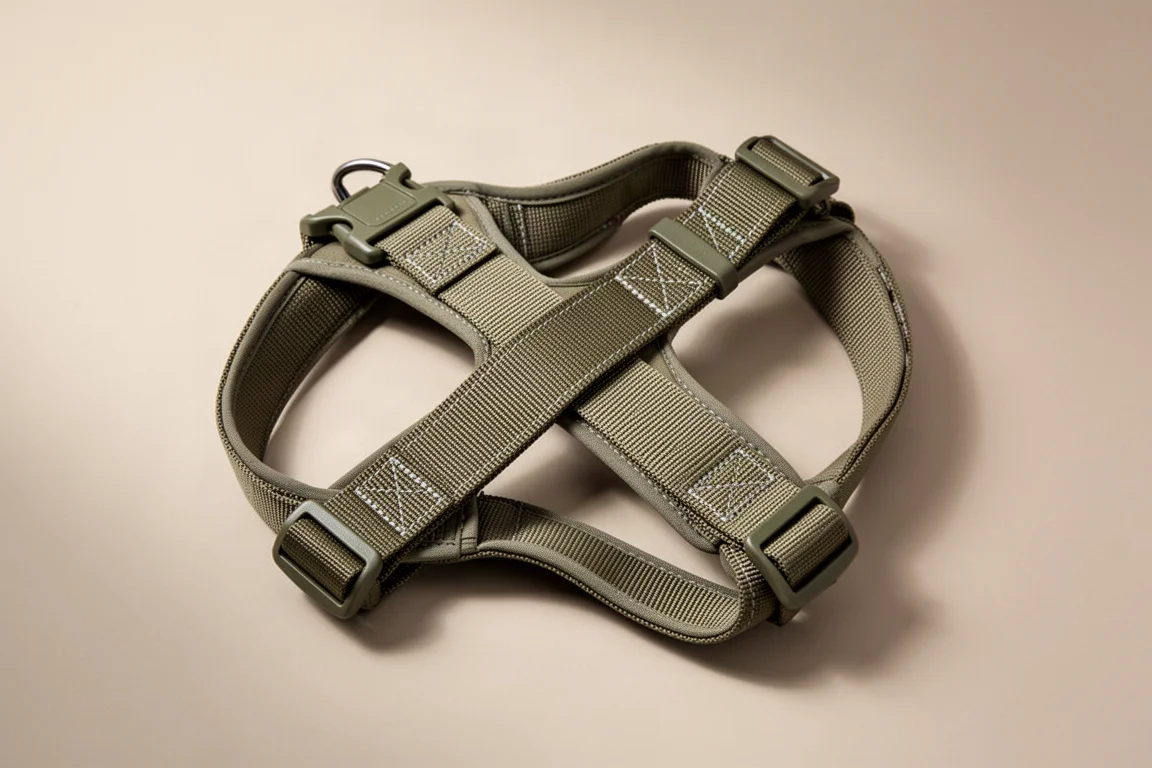
A rescue harness is a contingency item. If a dog is bitten by a snake or breaks a leg, the harness makes it possible to carry the dog out rather than improvising a sling from a jacket or a sleeping pad.
Buying Advice
Prioritise fit and sleep before anything else. A pack that rubs will ruin a trip faster than a pack that carries slightly less, and a cold dog will keep everyone awake. Spend the budget there first, then add paw protection and trail accessories as the trips get longer.
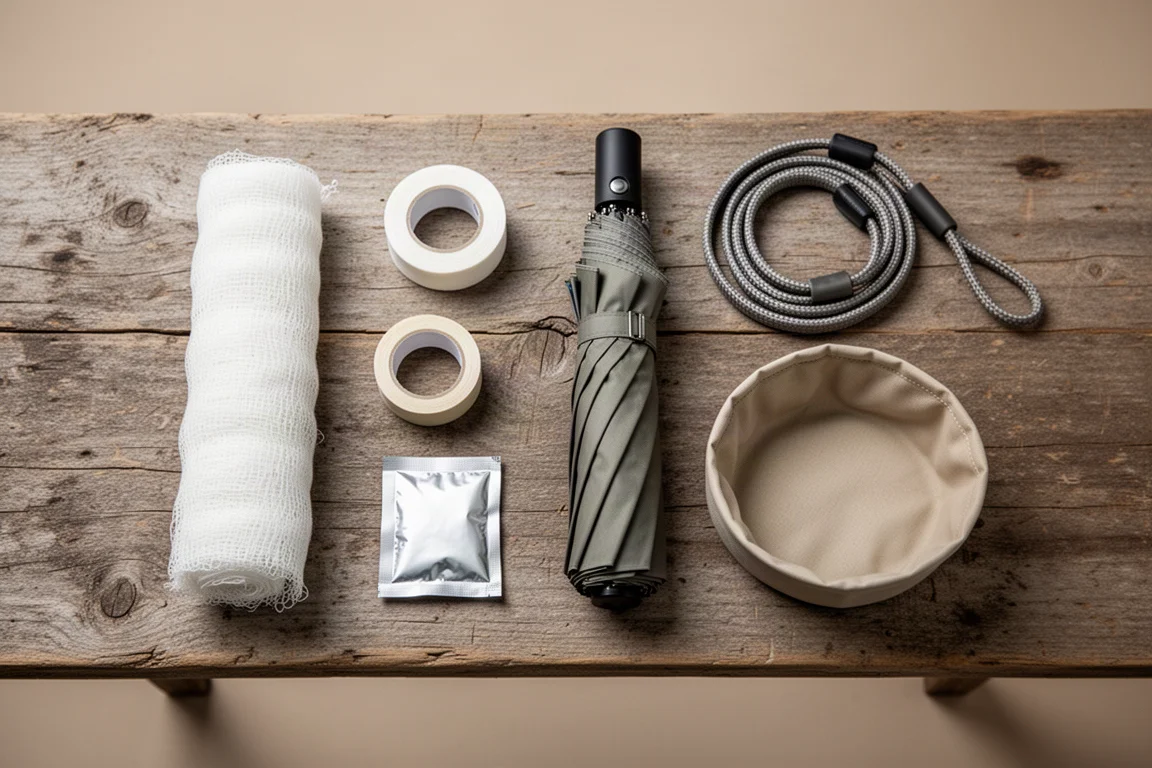
A small first aid kit belongs in every dog setup. Pepto-Bismol is useful for vomiting or diarrhea, and Benadryl is useful for an allergic reaction, but the correct dose for the dog’s weight should be worked out and written down before leaving, since there may be no signal on trail to look it up. Gauze and medical tape handle minor cuts on a foot, and paw wax is an optional extra that helps condition and protect the pads. An umbrella creates instant shade on exposed or leafless winter days and doubles as rain cover.
For reactive dogs, a muzzle carried as a precaution and hiking with a second person makes a real difference: one person leads, the other follows, and the dog stays between them so approaching dogs can be spotted early and given room.
Conclusion
Good dog backpacking gear comes down to fit, warmth and weight, in that order. Start with a pack that stays clear of the armpits and a sleep system that keeps the dog warm through the coldest night you expect, then add boots, a leash and the small essentials as the trips grow. Check the dog daily, keep the carried weight modest, and be ready to change the plan when the dog needs it.
Further reading
Related Reviews
Dog Backpacking Gear
Best Dog Backpacking Gear: A Practical Trail Kit for Hiking Dogs
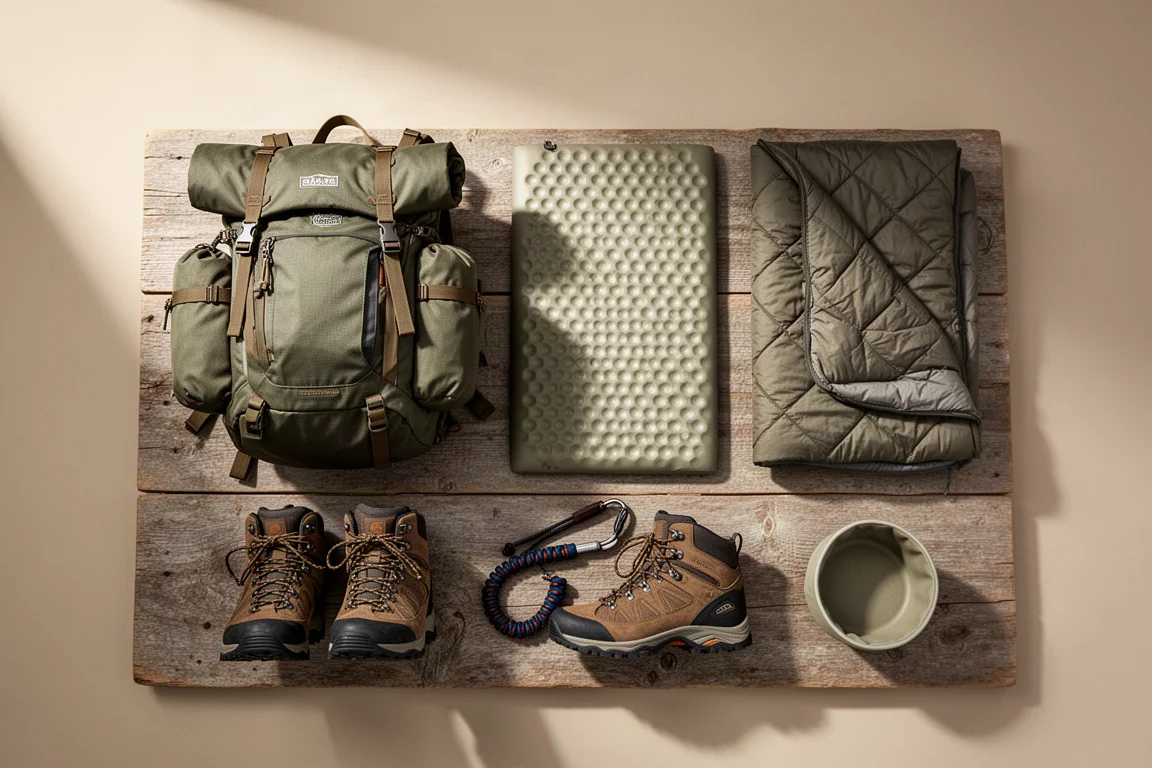
A practical look at dog backpacking gear that holds up on multi-day trails, from custom-fit packs and sleep insulation to paw protection, leashes, and emergency carry options.

Backpacking Gear
Building a 10 lb Base Weight: An Ultralight Backpacking Gear List
A practical walkthrough of the ultralight pieces behind a 10 lb base weight, from a 765 g pack and a roomy one-person tent to a full camp chair and a dependable water filter.
Backpacking Gear
A 15-Pound Lightweight Backpacking Gear List for Solo Trips
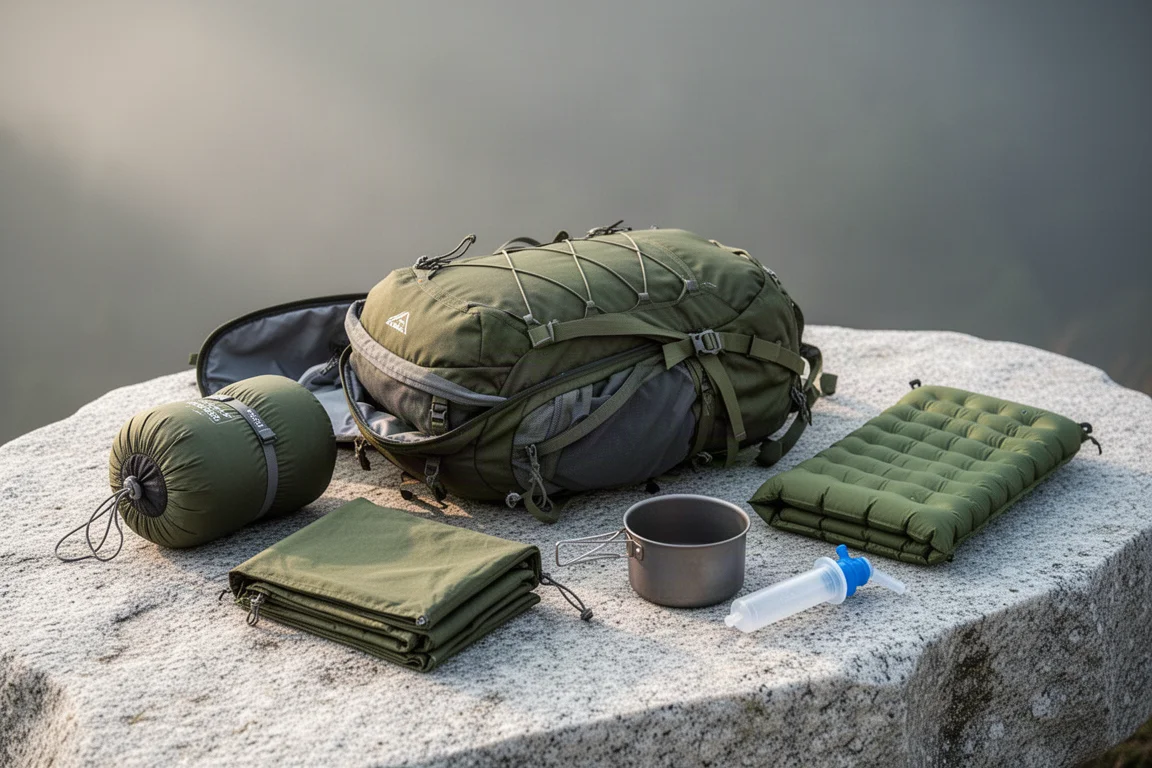
A beginner-friendly 15-pound backpacking setup built from easy-to-find gear, with notes on what each piece does, how it packs, and where to spend your attention.