Dog Backpacking Gear
Best Dog Backpacking Gear: A Practical Trail Kit for Hiking Dogs
A practical look at dog backpacking gear that holds up on multi-day trails, from custom-fit packs and sleep insulation to paw protection, leashes, and emergency carry options.
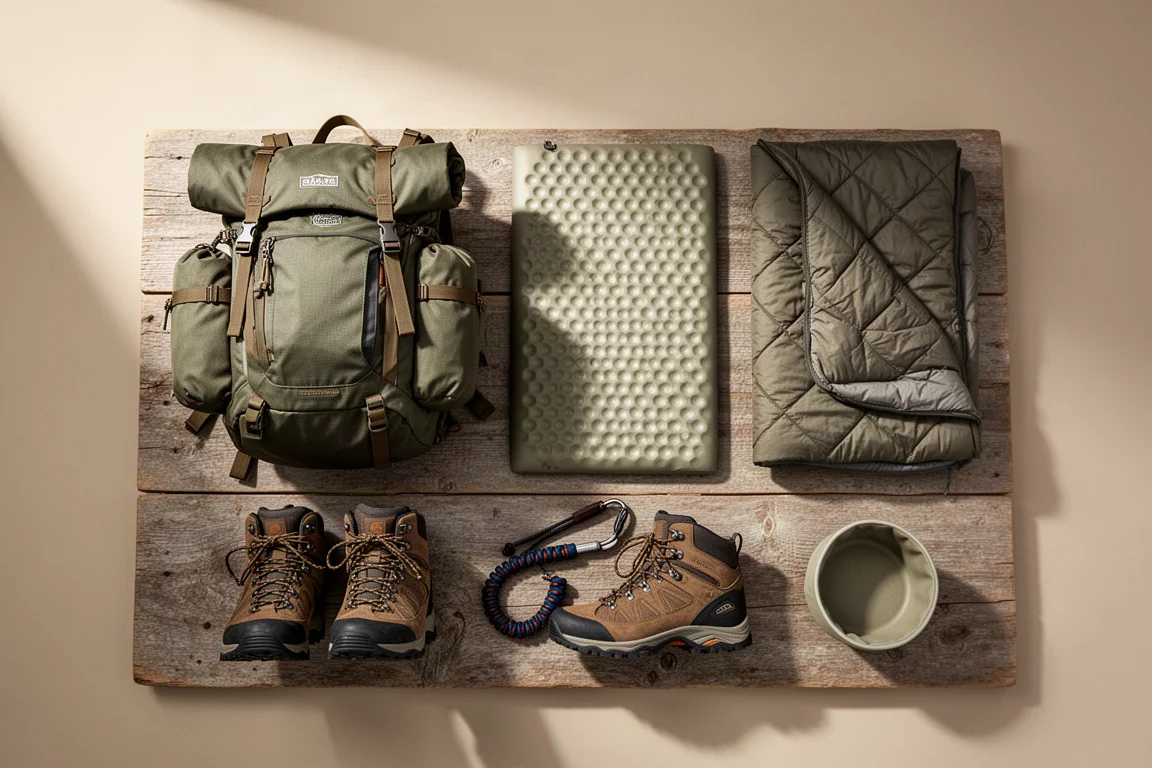
Introduction
Backpacking with a dog comes down to a simple principle: the dog’s comfort sets the pace, and the gear has to support that. A dog cannot explain that a strap is rubbing or that the ground is too cold, so equipment has to be chosen with fit and insulation in mind and checked often once you are out there.
The list below covers the items that have earned a place on real trips: a custom-fit pack, a sleep and insulation system, a cold-weather layer, paw protection, a bungee leash, an ultralight bowl, and a harness for carrying an injured dog out. Each entry notes what works, what to watch for, and where a cheaper option makes sense.
One note before the details: gear that fit a dog two years ago may not fit today. Body condition changes, and conditions change with it. Every item here should be re-checked daily on trail, especially where the pack contacts the body and where boots contact the paws.
How to Choose Gear for a Backpacking Dog
Weight is the first question. The widely repeated rule of thumb is that a dog can carry up to 25 percent of its body weight, but that figure is better treated as an upper limit than a target. For most dogs, and especially for dogs new to carrying a pack, 10 percent or less is a far more sensible range, and the load should build gradually across trips the way a hiker’s mileage does.
Fit matters more than features. Anywhere a strap, harness, or boot contacts the dog is a potential rub point, and problems tend to appear after hours of movement rather than at the trailhead. Checking the whole body once a day, including the armpit area and the paws, catches most issues before they turn into injuries.
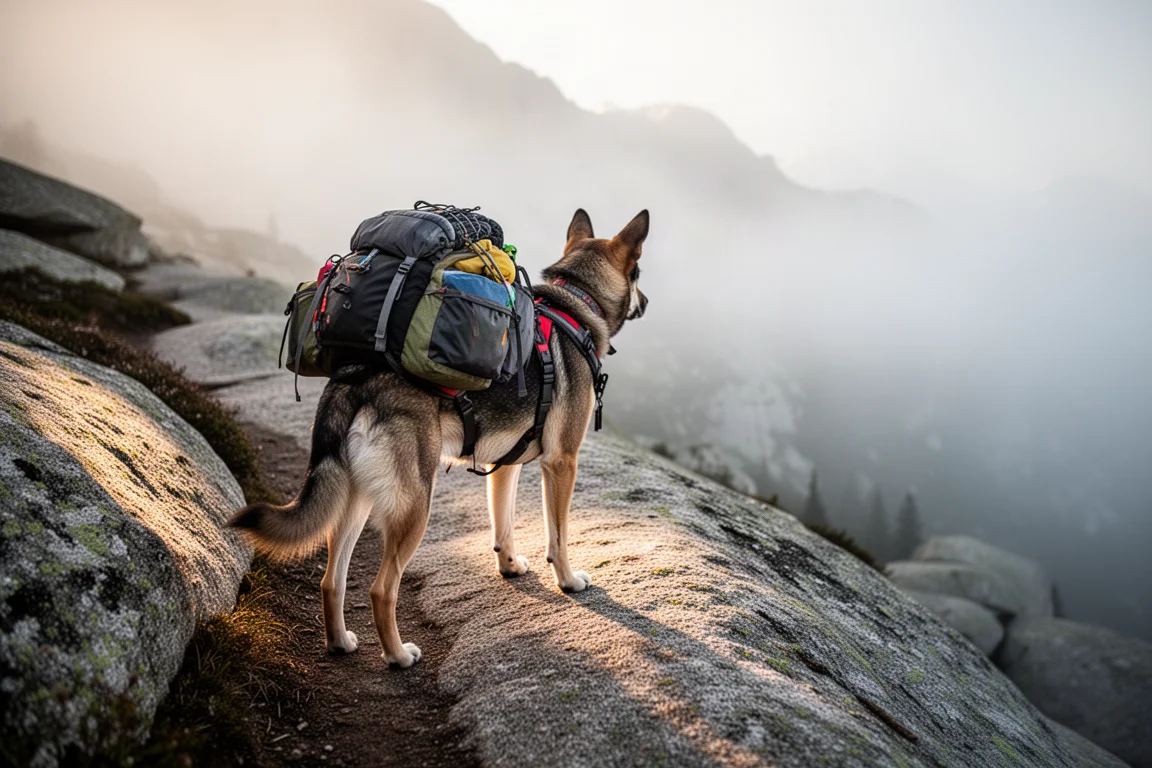
It is also worth remembering that a dog has no say in the itinerary. A dog does not have a mileage goal or a summit list, so the plan should be built around what the dog can comfortably handle. If that means carrying all of the dog’s gear, that is a reasonable trade to make.
Custom gear takes time. Small makers that build to a dog’s measurements usually have a lead time, so orders need to be placed well before a trip rather than in the week before.
Pack: Ground Bird Gear Roll Top Trekking Pack
The case for a custom-fitted pack comes from experience. A pack that had worked well on an earlier long-distance hike later began chafing under the dog’s front legs, most likely because the fit had changed or because conditions were different. That is the argument for measuring rather than guessing.
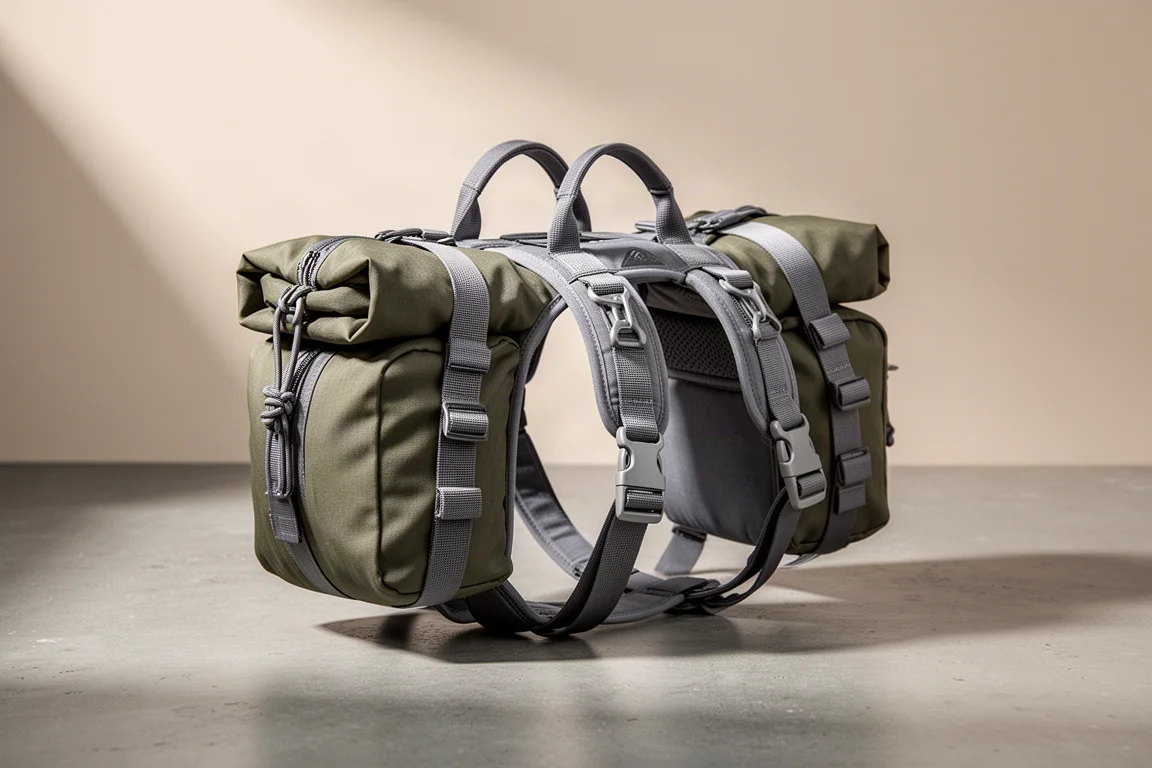
This pack is built to a set of measurements supplied by the owner, and the maker offers a no-chafe guarantee. The design keeps the harness clear of the armpit area entirely. The saddlebags use a roll-top closure so the pocket volume can be adjusted, and each side has an additional strap that cinches the bag down so it does not swing or shift and create friction.
Two handles on the harness make it possible to lift the dog over a boulder or up a step. The harness is also a separate piece from the saddlebags: the bags unclip and come off, leaving a usable harness for day hikes or for giving the dog a break from carrying weight. The pack is roughly 12 ounces lighter than the one it replaces.
Because it is made to order by a small company, expect a lead time before it ships.
Sleep System: A Closed-Cell Foam Pad
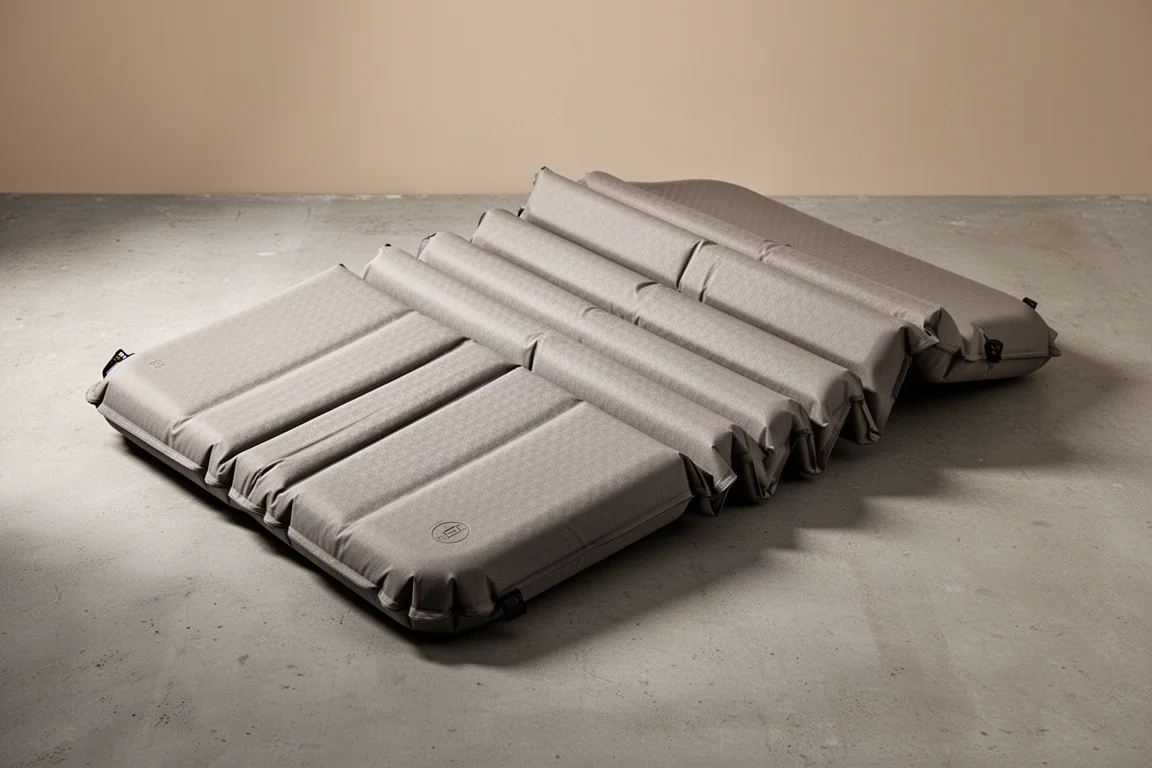
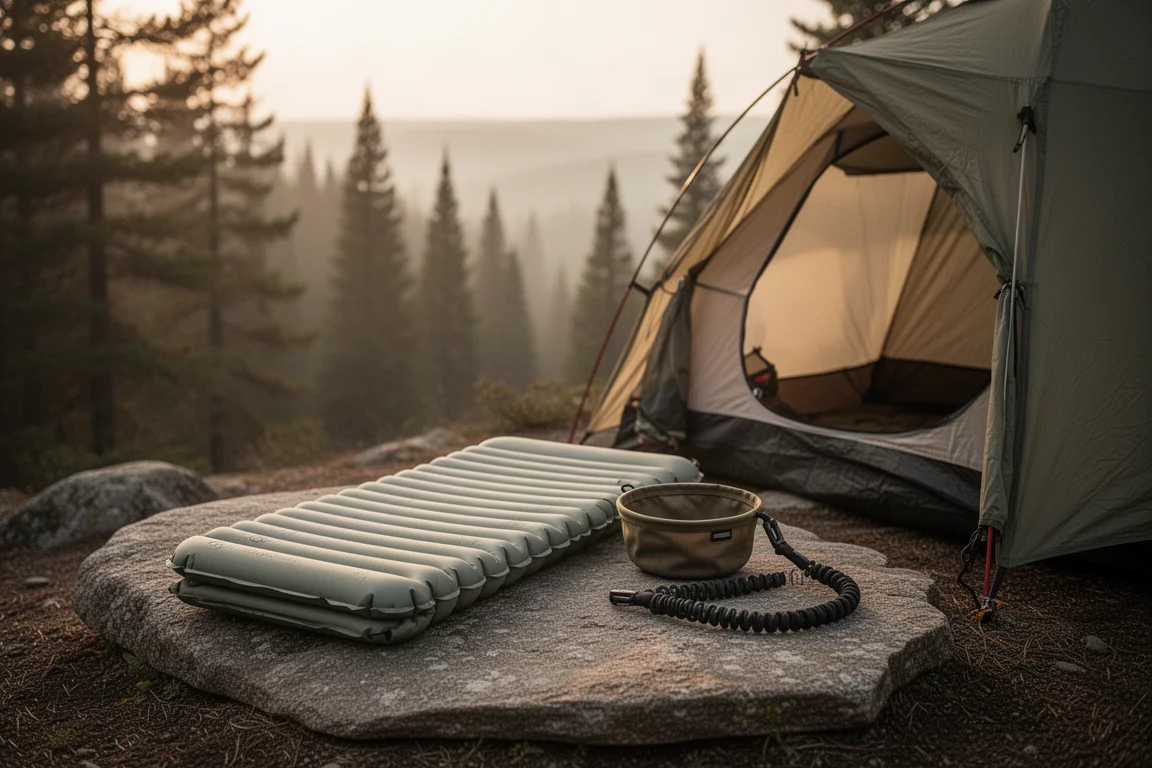
A folding closed-cell foam pad has been the dog’s sleeping surface from the beginning, and for good reason. It cannot be punctured, it does not need to be inflated, and it can be trimmed to whatever length suits the dog. For a dog that settles quickly in the tent and stays put, it is close to indestructible.
An inflatable pad is the other option. A pad in the 8-ounce class is far lighter and more comfortable, and a dog that keeps seeking out a human inflatable pad inside the tent is probably signalling a preference. The trade-off is puncture risk, which means carrying a patch kit and accepting that a repair may be needed in the field. For dogs that stay calm in a tent, it is a workable upgrade.
Warmth: Ground Bird Gear Turtle Top Quilt
A quilt is the simplest way to keep a dog warm at night, but a loose blanket has one obvious flaw: a dog that stands up, turns around, and lies back down ends up on top of the insulation, compressing it and losing the warmth. That is exactly the failure mode a top quilt is designed to avoid.
This quilt has a harness stitched into it, so it clips on and stays draped over the dog through the night, even when the dog shifts position. The shell is a soft material, and the collar and rear sections can be rolled up out of the way. It can also double as a puffy layer.
The quilt comes in two temperature ratings, one for warmer than freezing conditions and one for colder than freezing. On nights in the upper 30s, the warmer option alone was not enough for a dog that sleeps cold, and a 20-degree hammock underquilt was added underneath as a supplement. Anyone planning cold-weather trips should plan on layering rather than relying on a single quilt.
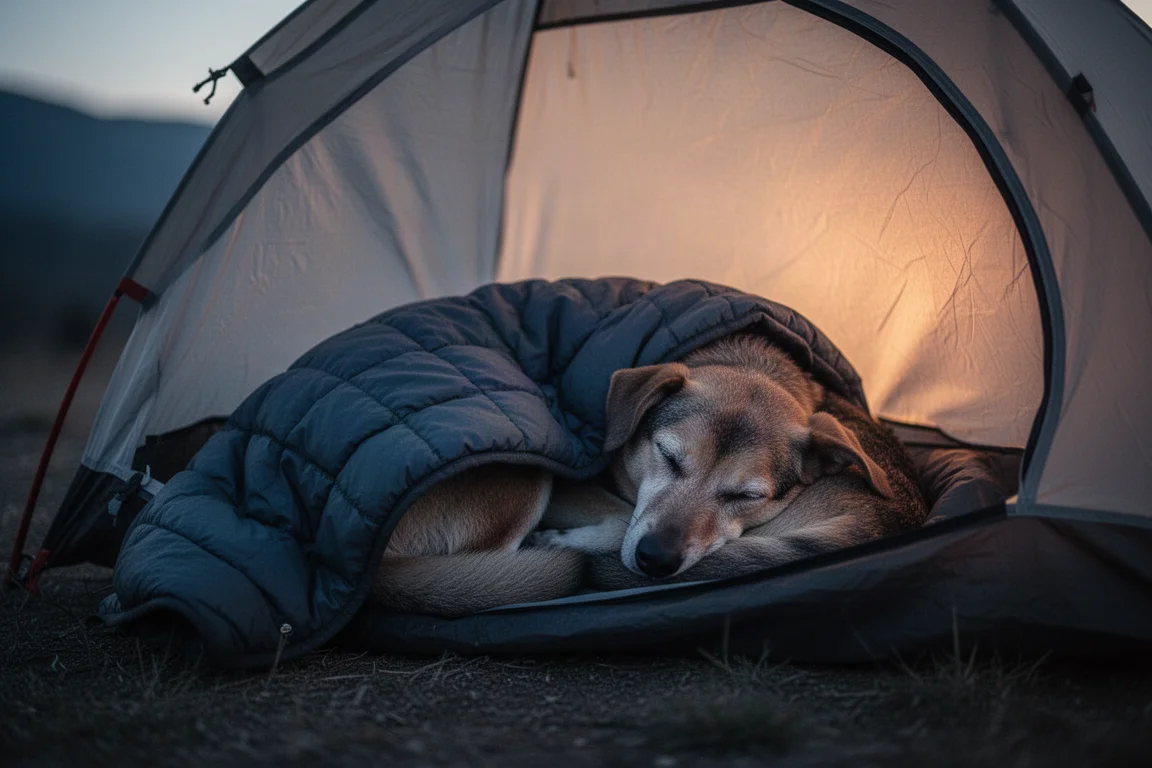
One caution about down insulation: it loses its insulating value once it gets wet, and replacing it is expensive if it snags. That is why a down quilt is best kept for camp rather than worn on the move.
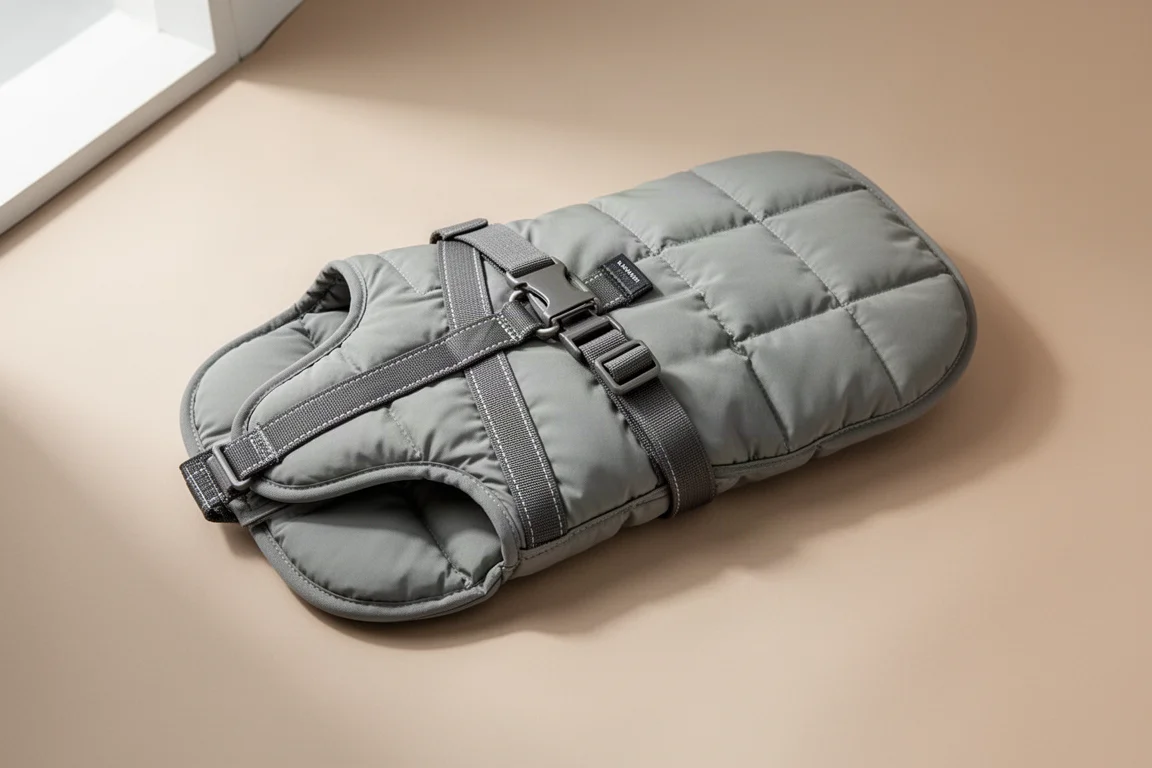
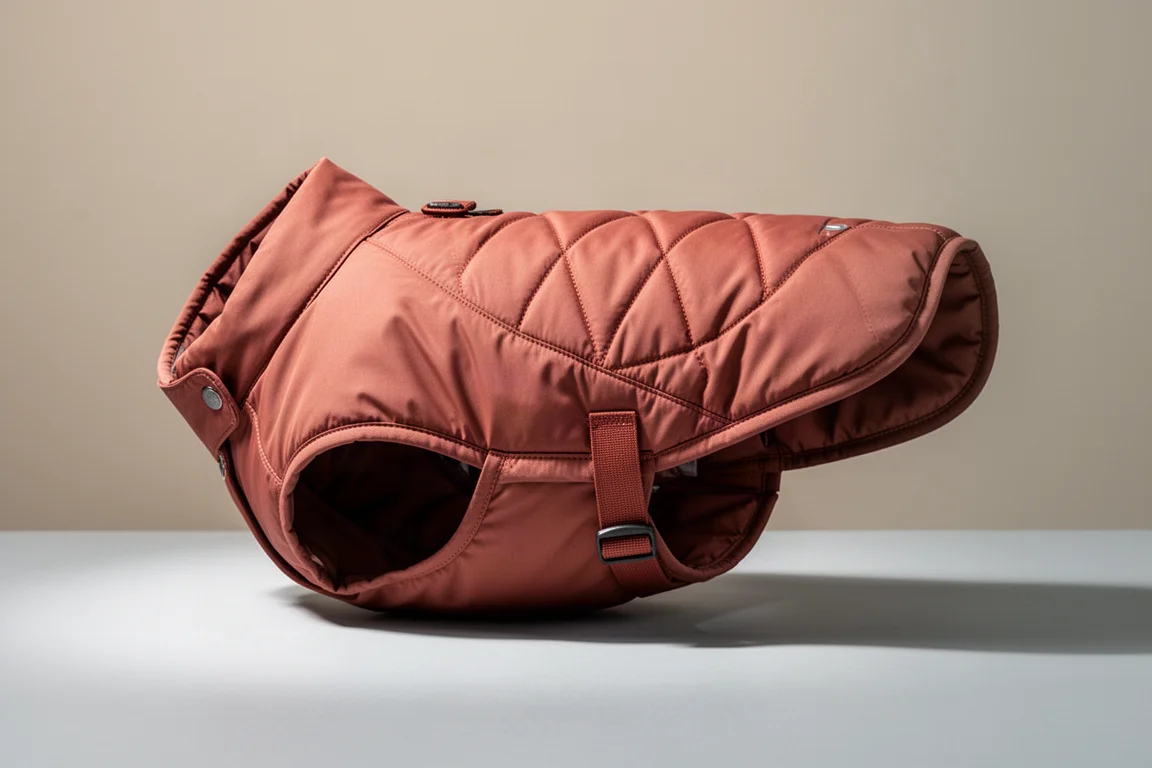
Cold-Weather Layer: Ruffwear Quincy Insulated Jacket
For hiking in cold weather, a synthetic jacket is the more practical choice. Down is warmer for its weight, but it degrades when wet and costs more to replace, and a dog pushing through brush is a strong candidate for snags.
This jacket uses synthetic insulation and a water-resistant shell. It is not waterproof, but it has kept a dog warm on the inside through light misting rain and snow, with the outer fabric damp while the insulation kept working.
It fills the gap between a summer coat and a full rain layer. A proper rain shell for a dog is still worth having, ideally in a waterproof material that does not soak up water and add weight.
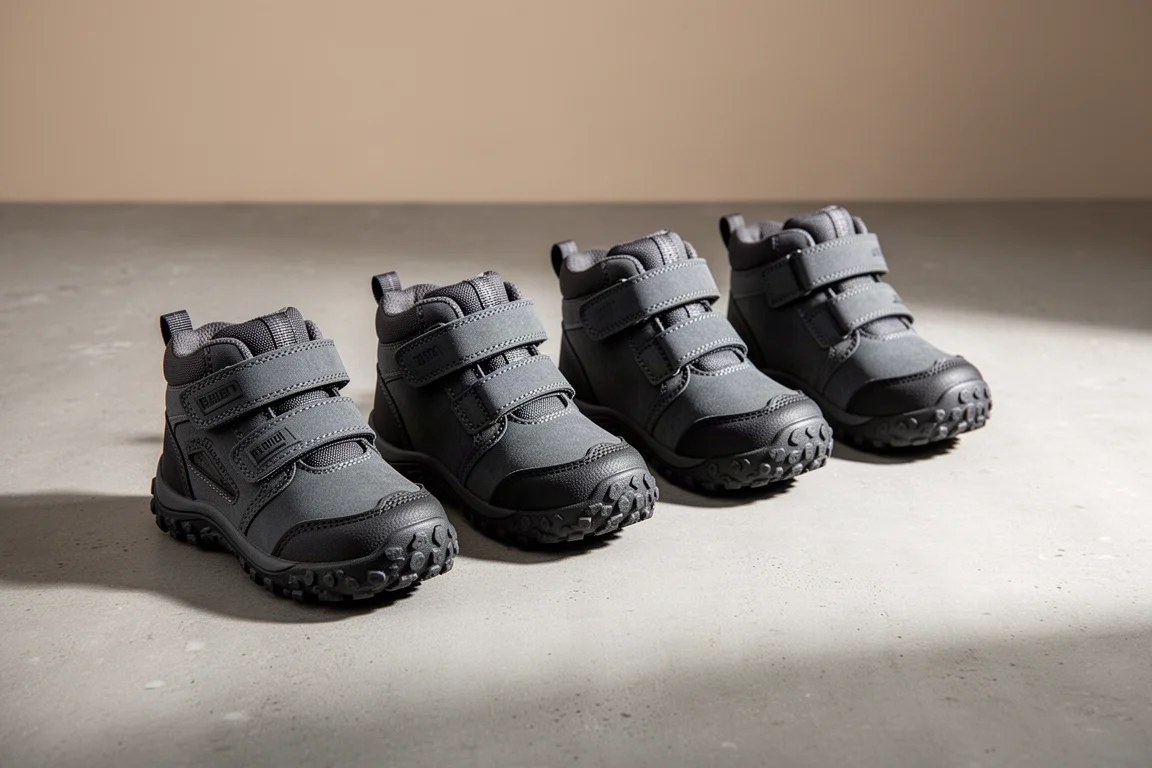
Paw Protection: Ruffwear Grip Trex Boots
Boots are a tool for specific conditions, not a default. Dogs sweat through their paws, so covering them for long stretches traps heat and moisture. The straps that hold a boot in place, and any point where the boot contacts the foot, can also rub.
That is why boots are best reserved for ground that is extremely hot, or for long stretches of rough rock where the pads need protection. In deep snow, on steep terrain, or anywhere the dog needs maximum grip and dexterity, boots restrict movement and reduce traction, so they are better left off.
Thin sock liners worn underneath help manage moisture and add a layer between the boot and the skin. Building paw toughness gradually with shorter days is a better long-term strategy than relying on boots to solve every surface. A lower-cost alternative is a simple 1,000-denier Cordura bootie that fastens with hook-and-loop and sells for around three dollars per boot. It is likely less durable than a purpose-built trail boot, but it is lighter and inexpensive enough to carry as a spare.
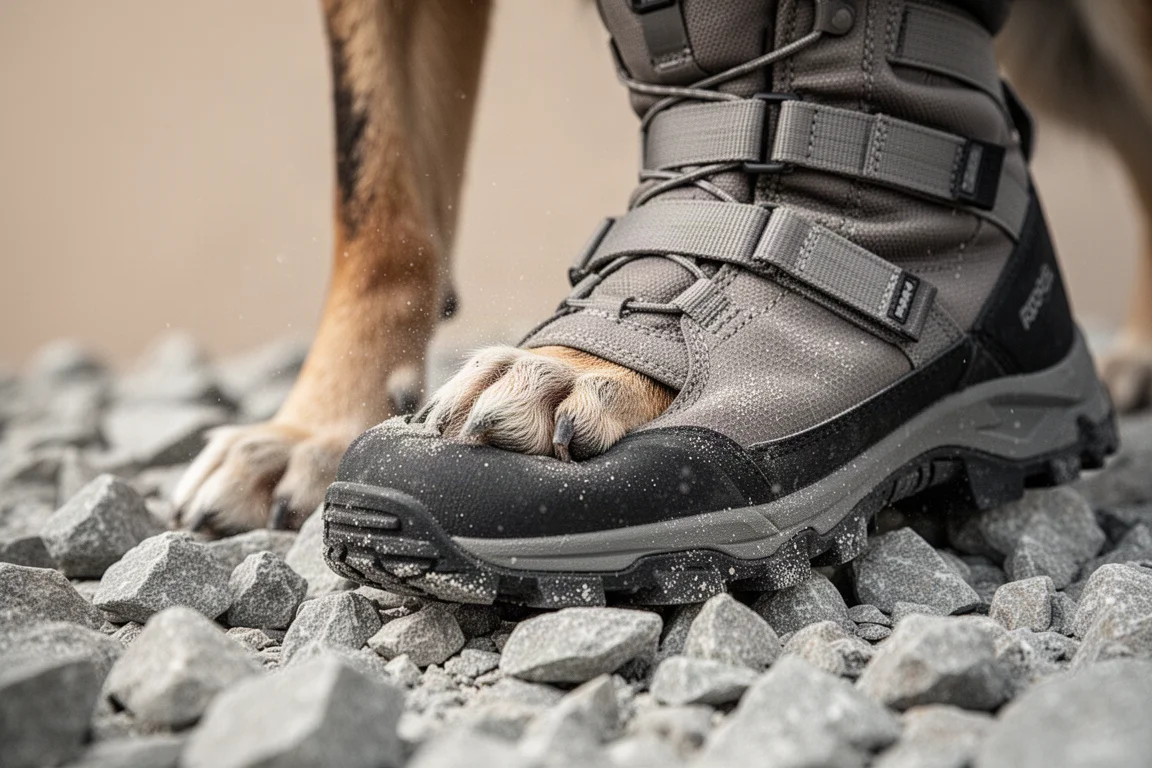
Whatever you choose, carrying at least one pair of booties as a contingency is worthwhile, because a paw injury in the backcountry is a serious problem.
Handling: Ruffwear Roamer Bungee Leash
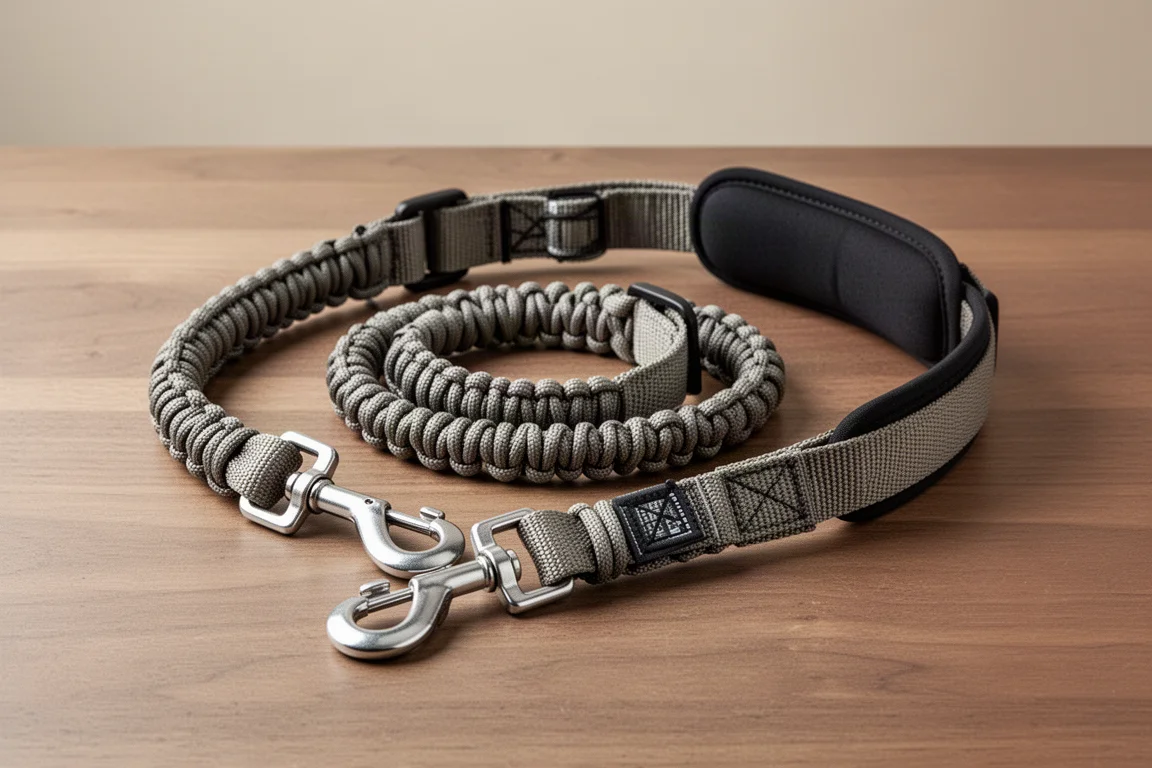
A bungee leash absorbs the pull that comes with a dog moving at a different rhythm than the handler, which makes a long day more comfortable for both. This leash has an adjustable strap that can be worn around the waist, clipped to a hip belt, or carried on the wrist.
There is a handle near the attachment point for bringing the dog in close when needed, and the hook is a clamp style that presses closed rather than a sliding clip, which makes it quicker to attach to a harness or collar.
Food and Water: Ground Bird Gear Dyneema Bowl
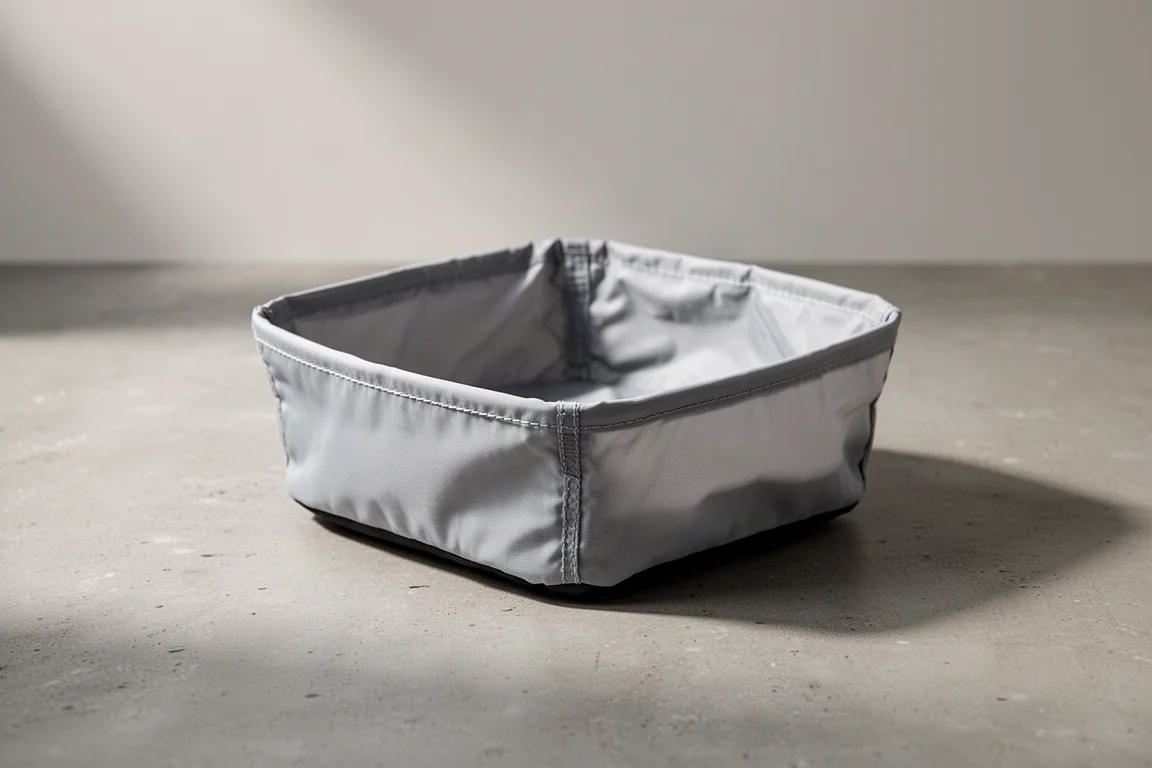
A food bowl is one of the easiest places to save weight, and this one weighs less than half an ounce. It measures about 5.5 by 5.5 by 2.5 inches, which is a good match for the amount of food a medium-sized dog needs per meal.
The material is also more durable than the lined fabric bowl it replaces, which eventually cracked and peeled apart at the base. For water, a lightweight reusable container that holds a small amount is enough. A dog does not need to drink a large volume mid-hike, and a small bowl that fits in a hip belt pocket is easier to reach while walking.
Emergency Carry: Pack and Paw Rescue Harness
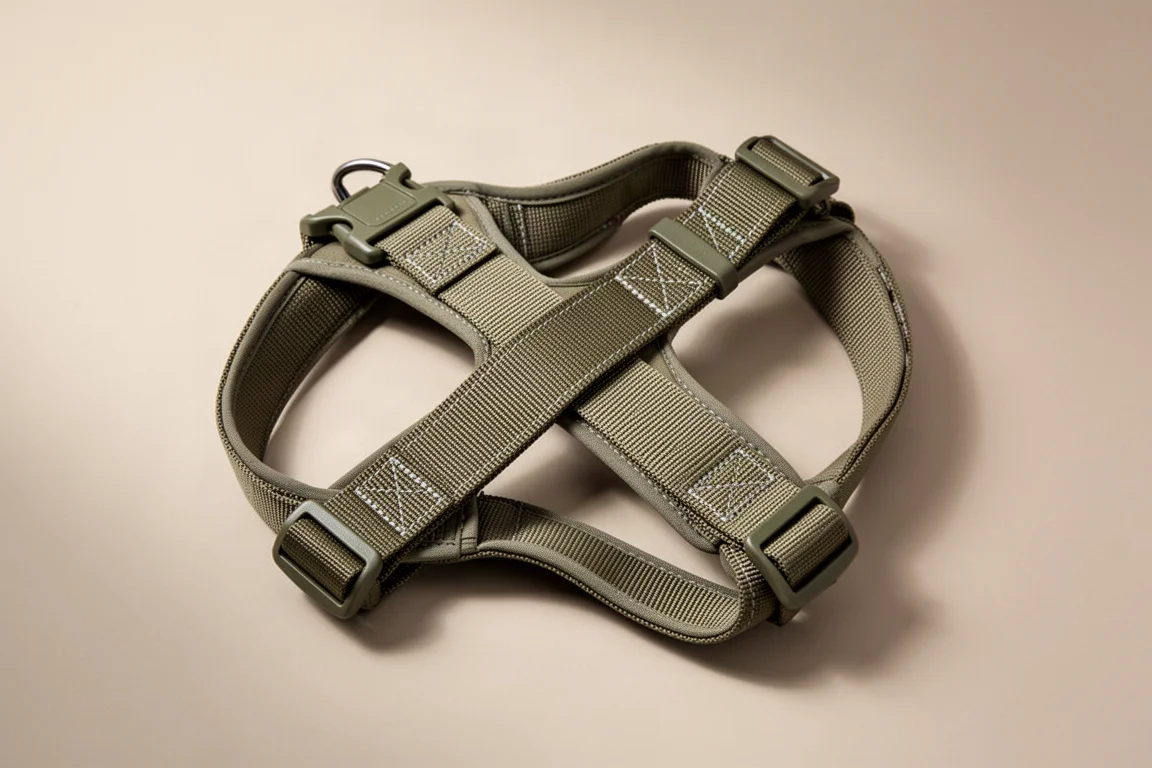
This is the item nobody wants to use. If a dog is bitten by a snake or breaks a leg on trail, the dog still has to get out, and carrying an injured dog over rough ground is difficult without a proper sling.
A rescue harness makes it possible to lift and carry a dog out with its weight distributed rather than concentrated on the legs or chest. It is light enough to justify carrying on every trip even though it may never be needed.
Trail Safety Extras
A first aid kit for a dog should be assembled before the trip, not improvised on trail. Two items are worth naming: an anti-diarrheal medication for vomiting or digestive upset, and an antihistamine for allergic reactions. Dosing depends on the dog’s weight, so the correct amounts should be worked out in advance and written down, because there is no phone reception on most backcountry routes.
Gauze and medical tape handle cuts and paw injuries. Paw wax is optional. It conditions pads and helps keep them supple, but it does not make a noticeable difference for every dog.
A muzzle is a reasonable precaution for a reactive dog, even one that has never bitten. It is also worth planning how to handle loose or hunting dogs that may approach on trail. Hiking with a second person, keeping the dog in the middle of the group, and stepping off the trail to let others pass all reduce the chance of a confrontation.
An umbrella is the last item, and it is more useful than it sounds. It provides instant shade on exposed stretches, whether that is a hot desert section or a warm winter day with no leaf cover, and it doubles as rain protection.
Overall Buying Advice
Priorities differ by dog, but the order that makes sense for most people is fit first, then sleep insulation, then the small weight savers. A pack that rubs will ruin a trip no matter how good the rest of the kit is, and a dog that sleeps cold will be miserable regardless of how light the bowl is.
Buy the pack last if the dog is still growing or still changing condition, and re-measure before ordering. For a dog that only carries a light load, the weight savings from a custom pack and an ultralight bowl are nice to have rather than essential. For dogs covering long distances, they add up.
Boots, a leash, and a bowl are inexpensive relative to the rest of the kit and worth getting right early. The rescue harness and first aid supplies are the items to buy before the first trip rather than after the first incident.
Conclusion
The gear list for a hiking dog is smaller than a human’s, but the stakes are the same: fit, warmth, and safety. A custom pack that clears the armpits, a quilt that stays put through the night, boots used sparingly and correctly, and a rescue harness carried just in case cover most of what a dog needs on a multi-day route. Everything else is refinement, and the best test is still a daily check of the dog’s body for rubs, hot spots, and cold.
Further reading
Related Reviews

Backpacking Gear
Building a 10 lb Base Weight: An Ultralight Backpacking Gear List
A practical walkthrough of the ultralight pieces behind a 10 lb base weight, from a 765 g pack and a roomy one-person tent to a full camp chair and a dependable water filter.

Road Bikes
10 New Road Bikes Worth Watching: Aero, Titanium, Steel and Endurance Standouts
A practical roundup of 10 new road bikes, from aero flagships chasing single-watt gains to titanium, steel and endurance platforms built for real roads.
Bikepacking Gear
11 Bikepacking Essentials for Long-Distance Cycling
Eleven bikepacking essentials for long-distance cycling, from a steel gravel frame and a two-person tent to helmet lights, packable gloves, and a frame bag that puts weight in the right place.