Dog Backpacking Gear
Dog Backpacking Gear Guide: Packs, Sleep Systems, and Trail Essentials
A practical roundup of packs, sleep systems, insulation, paw protection, and safety gear for backpacking with a dog, with the trade-offs of each item.
Introduction
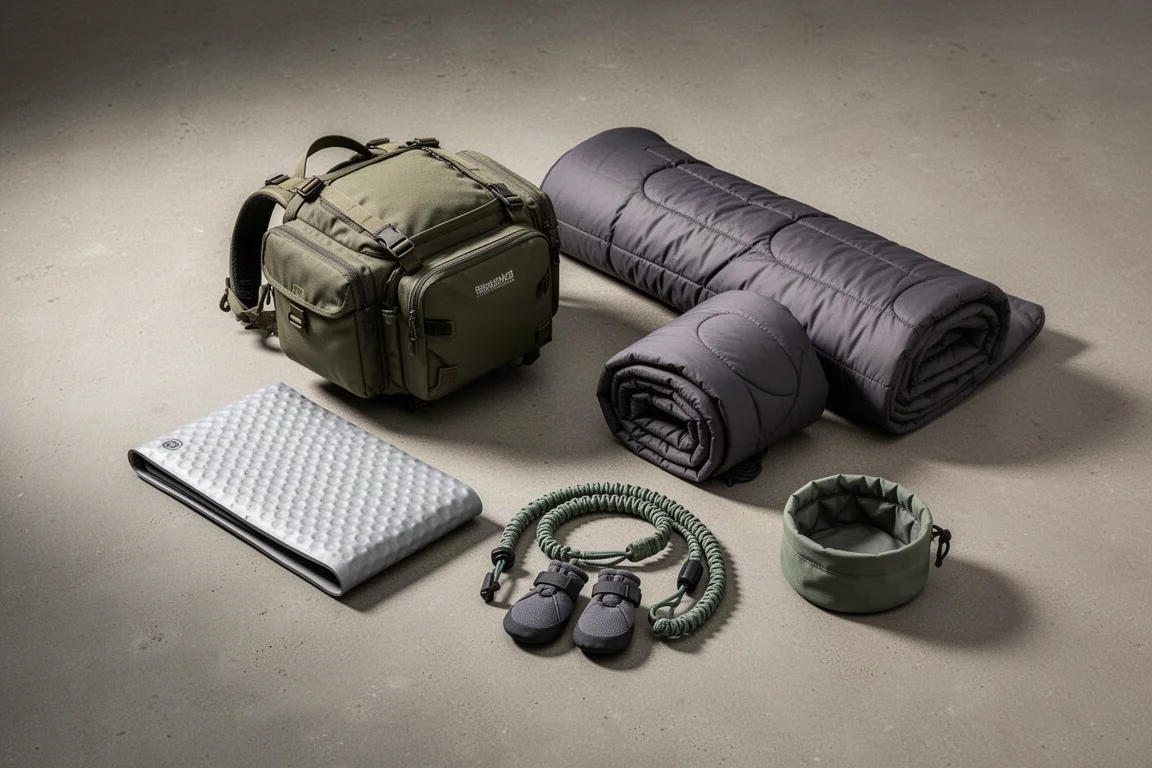
Backpacking with a dog reshapes the planning. The route still matters, but so does whether the dog can carry a pack without rubbing, sleep warm through the night, and keep its paws healthy over consecutive days. The items below cover the categories that do the most work on a multi-day trip: packs and harnesses, sleep systems, insulation, paw protection, and the safety kit that stays in the bottom of the bag.
Each entry notes where an item performs well and where the trade-offs sit, so a decision can be made against a specific dog, a specific season, and a specific trail rather than a generic checklist.
How to Choose Gear for a Backpacking Dog
Fit checks come first. A daily inspection of the whole body, with particular attention to pack contact points and paws, catches rubbing before it turns into an open sore. Gear that worked in one season or one climate may not work in the next. A pack that fitted well on a dry western trail can sit differently in humid conditions, and a dog’s body can change over a year or two.
Weight is the other variable. A widely repeated rule of thumb allows a dog to carry up to roughly 25 percent of its body weight. That figure sits on the high side for most animals, and 10 percent or less is a more sensible target, especially for a dog that is new to trail life. Dogs build fitness the way people do, gradually, and they do not get to choose the itinerary. On a hard day, carrying the dog’s share is a perfectly reasonable outcome.
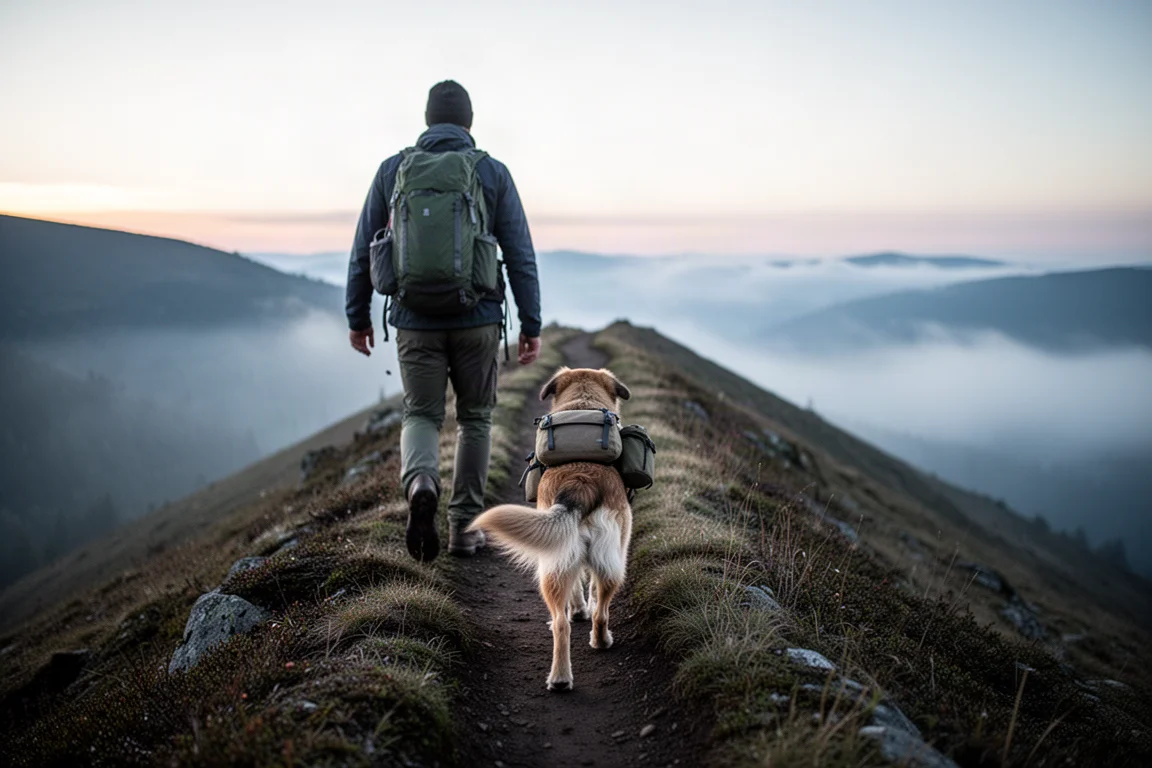
Season and terrain decide what actually gets packed. A dry summer route looks nothing like a wet winter one, and the sleep system should be built around the expected overnight low rather than reused out of habit. Two items that are individually adequate can be worth taking together when temperatures drop below what either one was chosen for.
Pack Option: Ground Bird Gear Roll Top Trekking Pack
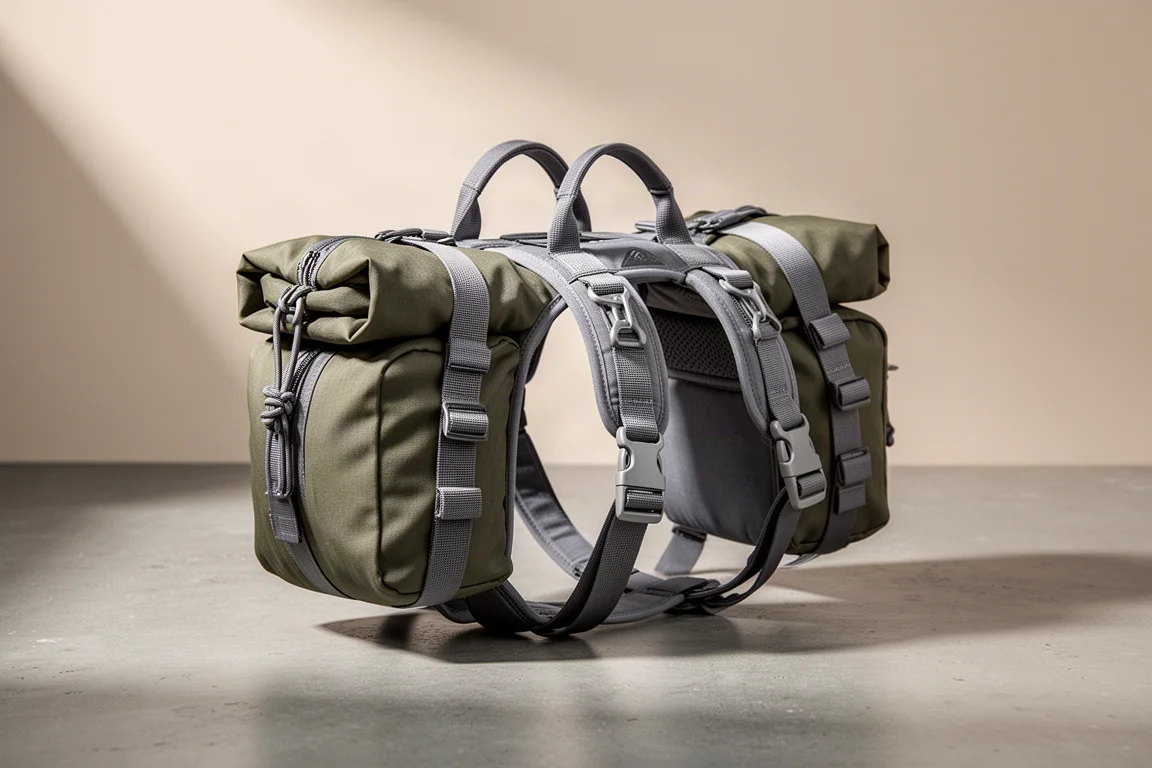
The Ground Bird Gear Roll Top Trekking Pack is a custom-fitted option built from measurements supplied by the handler. Several measurements are requested so the harness sits clear of the shoulders and armpits, and the company backs the design with a no chafe guarantee.
The saddlebags use a roll top closure, which lets the pocket volume be adjusted to the load, and an extra strap on each side cinches the bag down so a partially filled pocket does not swing from side to side and create friction. The harness and the saddlebags are separate pieces, so the bags can be unclipped for rest days or day hikes while the harness stays on the dog. Two handles on the harness make it possible to lift a dog over a boulder or a tricky step. The pack is also close to 12 ounces lighter than the previous pack it replaces.
Because this is a small cottage operation building to order, a lead time is part of the deal, and ordering well ahead of a trip is wise.
What Fit Checks Prevent: Ruffwear Palisades Pack
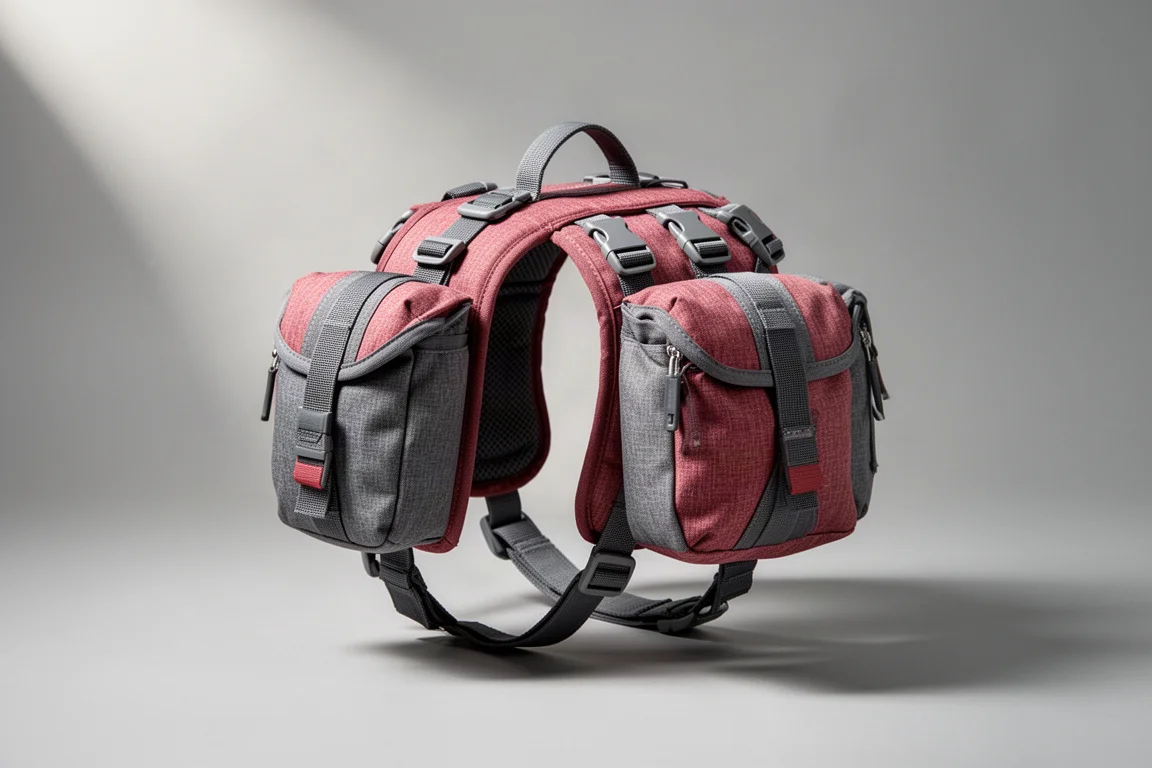
The Ruffwear Palisades Pack has a long track record on extended trails and its saddlebag layout remains a familiar, well-understood design. It performed reliably on a long western route in an earlier season.
On a later trip, however, the same pack began chafing under the armpit area, and it was removed mid-hike with the contents redistributed. The cause is not obvious. Body condition can change over a year or two, and a wetter climate can alter how a harness sits and dries against the coat. The useful takeaway is that fit is dynamic rather than permanent, so the armpit, shoulder, and girth areas deserve a check every single day. For dogs whose measurements match the stock sizing, it remains a well-established choice.
Sleep Systems: Z Lite Closed-Cell Foam Sleeping Pad
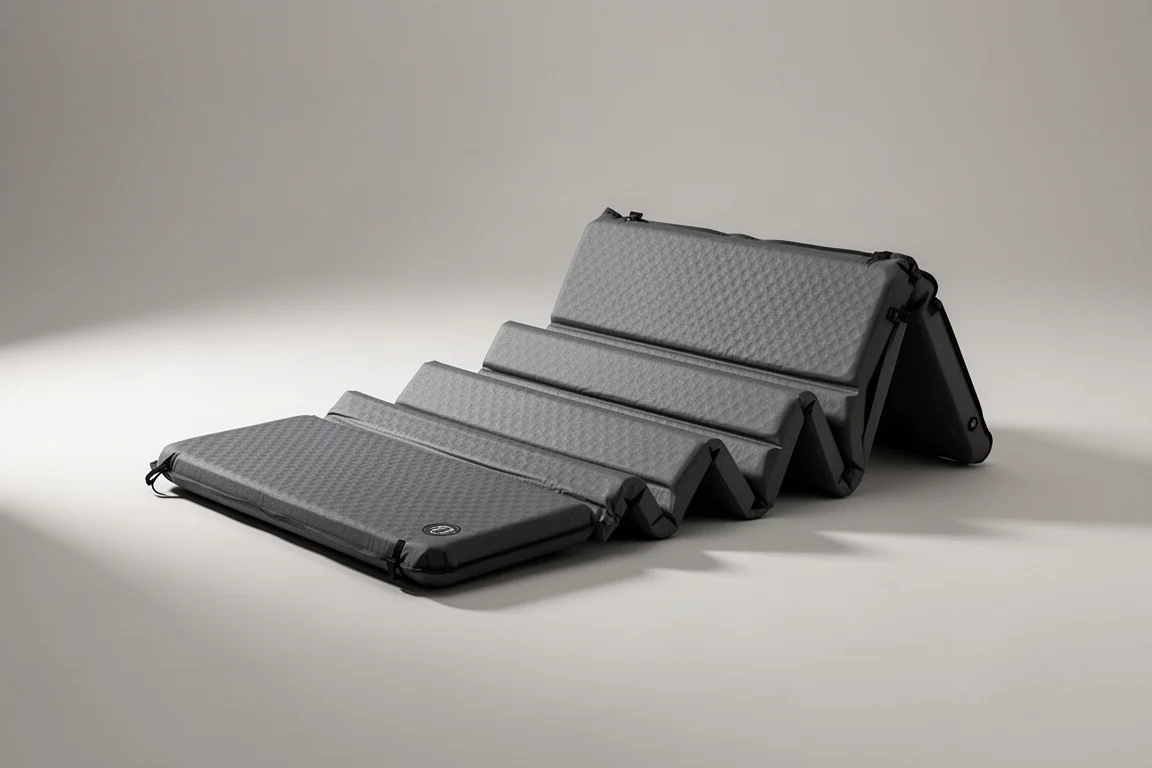
The Z Lite closed-cell foam pad has been the dependable baseline for dog sleep systems. It folds rather than rolls, and because there is no air chamber to puncture, it is effectively bulletproof on abrasive ground. It can also be trimmed down to match the size of the dog, which keeps the packed volume honest.
The trade-off is cushioning. Closed-cell foam is firmer and thinner under a dog than an inflatable pad, and a dog that shifts around at night may find it less comfortable on hard or uneven ground. For a first sleep system, or for a dog that settles quickly, that is usually an acceptable compromise.
The Lighter Sleep Option: NeoAir X-Lite Sleeping Pad
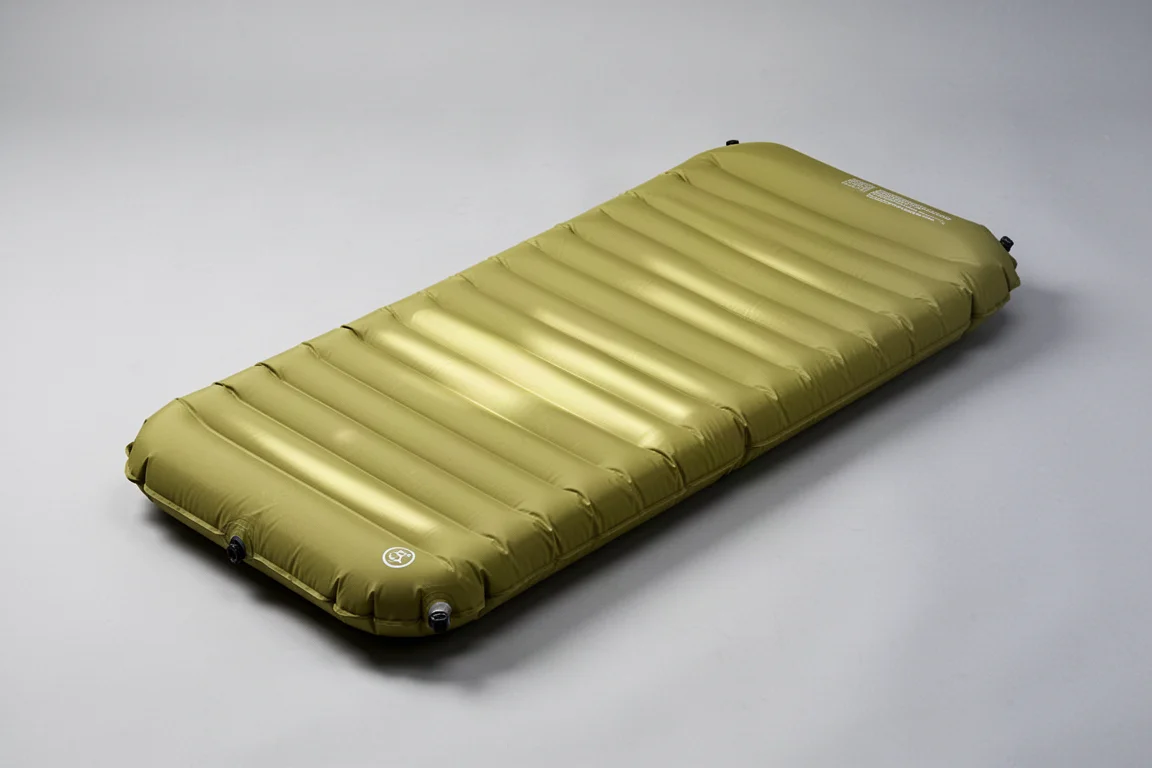
The NeoAir X-Lite is an inflatable pad that weighs only 8 ounces, which is light enough that carrying one for a dog is not a meaningful weight penalty. Many dogs gravitate toward inflatable pads on their own, choosing them over other bedding when given the option.
The obvious risk is punctures. A patch kit carried in the field, plus a spare patch or two, covers most accidents, and a dog that sleeps still through the night is a low-risk user. A dog that digs or chews at bedding is a different story, and closed-cell foam remains the safer answer for that temperament.
Nighttime Warmth: 20-Degree Yeti Under Quilt
The 20-degree Yeti under quilt is designed for a hammock, but its dimensions happen to suit a medium-sized dog as a quilt. It provides a substantial layer of insulation for winter trips, and it has been used successfully on cold-weather outings.
The design has one clear limitation with dogs. An under quilt relies on staying above the insulation rather than lying on it, so a dog that circles and settles on top of the quilt compresses the loft and loses warmth. Handlers with restless sleepers may find themselves digging the quilt back out and re-covering the dog during the night.
Ground Bird Gear Turtle Top Quilt
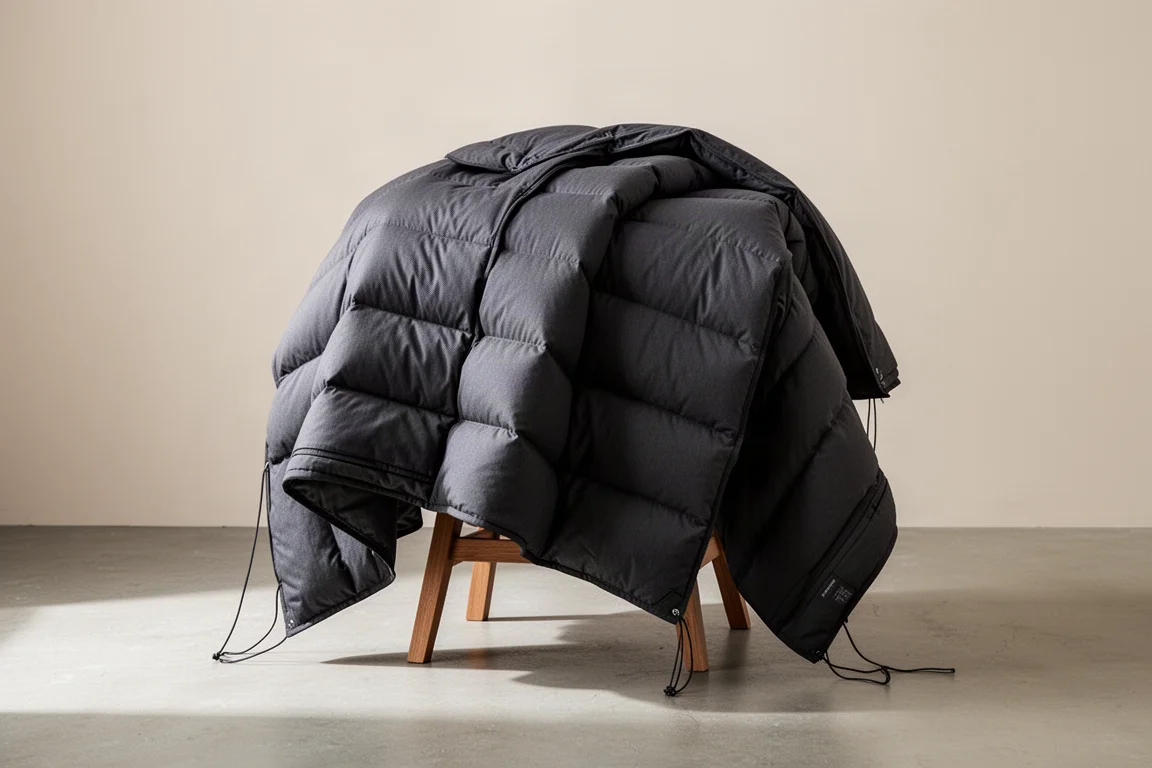
The Ground Bird Gear Turtle Top Quilt takes the opposite approach. It is a top quilt with a harness stitched in, made from a soft material, and it clips together around the dog so the quilt stays draped over the body when the dog stands up, turns around, and lies back down. The collar area and the rear end can both be rolled up out of the way.
It also doubles as a puffy coat, which is a genuinely useful second function. Two temperature ratings are offered, one for warmer than freezing conditions and one for colder than freezing.
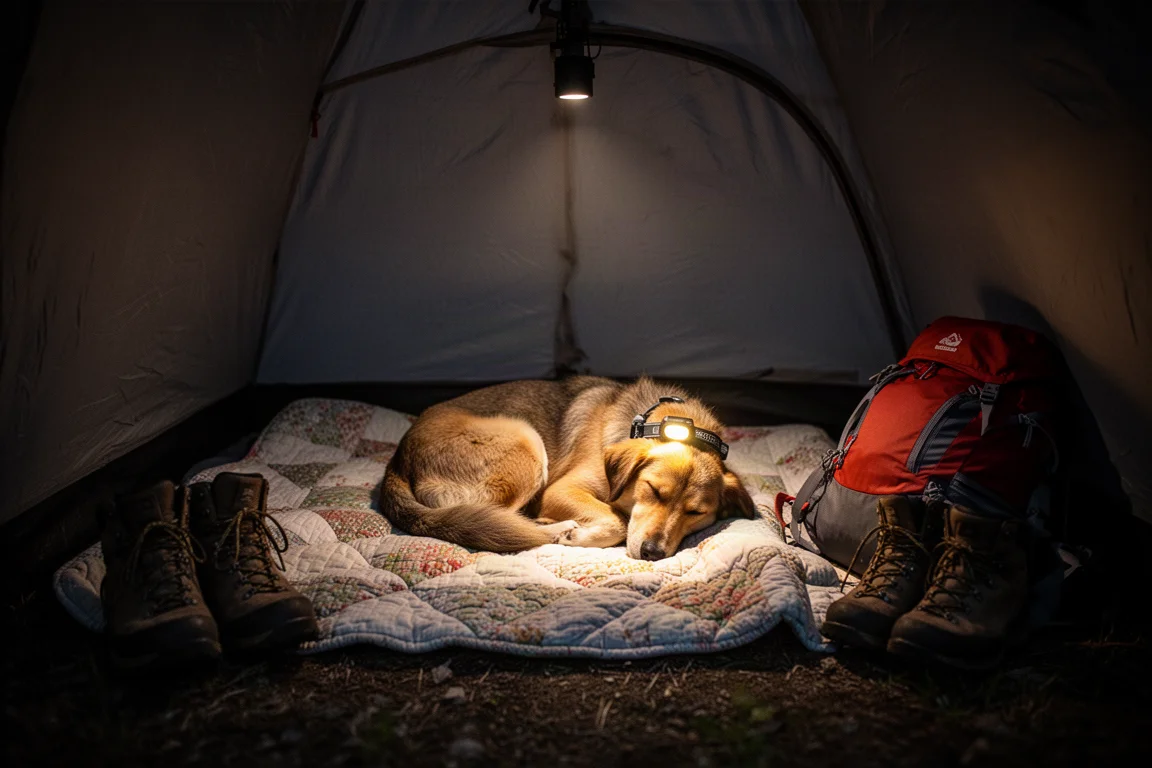
Temperature expectations are worth setting carefully. On a trip with overnight lows in the upper 30s, the warmer of the two ratings was not lofty enough on its own for one cold-sleeping dog, which shivered until a second quilt was added on top. Used together, the two layers kept the dog comfortable. A handler who knows their dog sleeps cold should plan on the colder rating or on pairing the quilt with additional insulation.
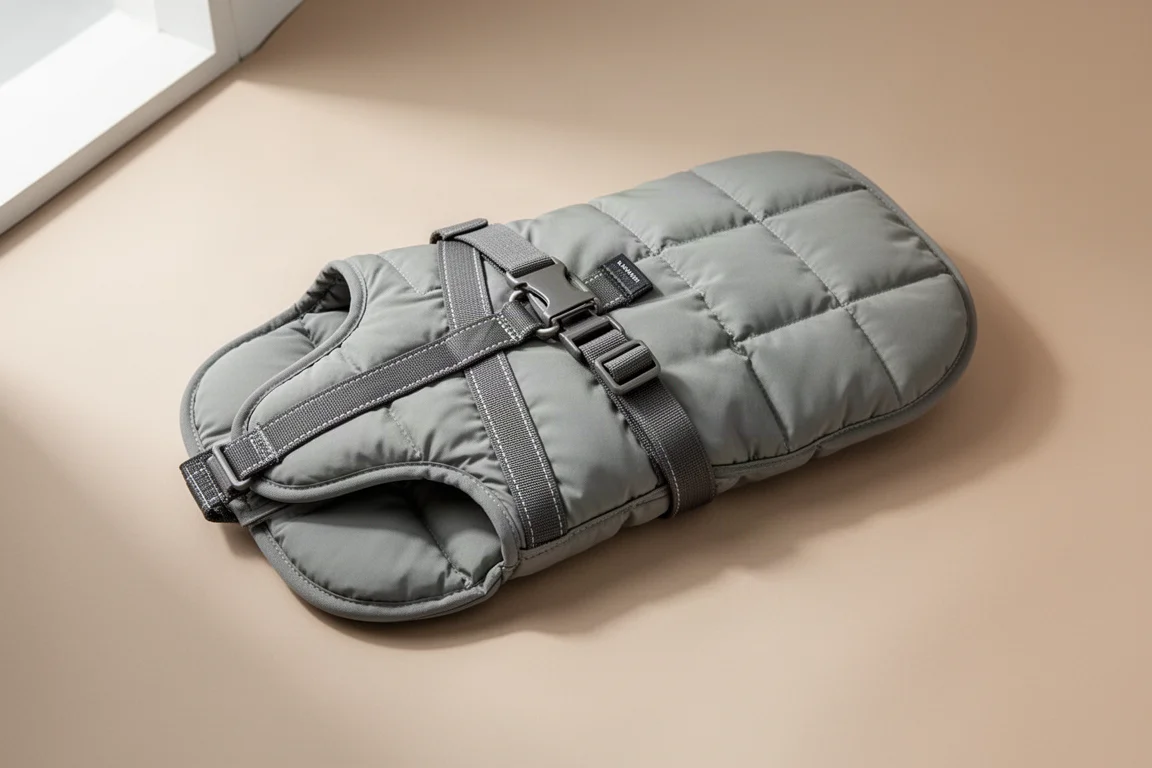
Cold-Weather Hiking Layers: Ruffwear Quincy Jacket
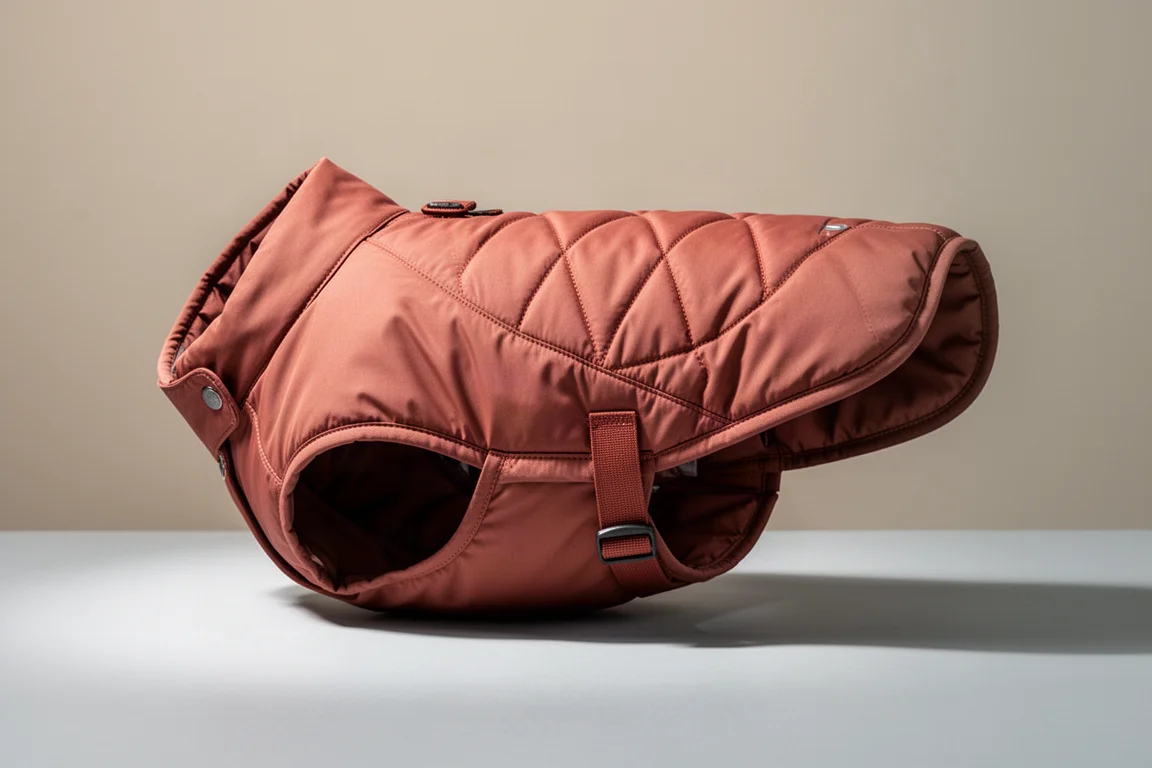
The Ruffwear Quincy jacket is a synthetic insulated, water-resistant layer intended for hiking rather than sleeping. It is not waterproof, but in light misting rain and snow the shell has come back damp on the outside while the dog stayed warm underneath.
Synthetic insulation is the right call for active wear because it keeps working when it gets wet. Down loses its insulating value once it is soaked, and it is also far more vulnerable to snags on brush. A down quilt is best kept for the tent, where it is protected and where its warmth-to-weight ratio matters most.
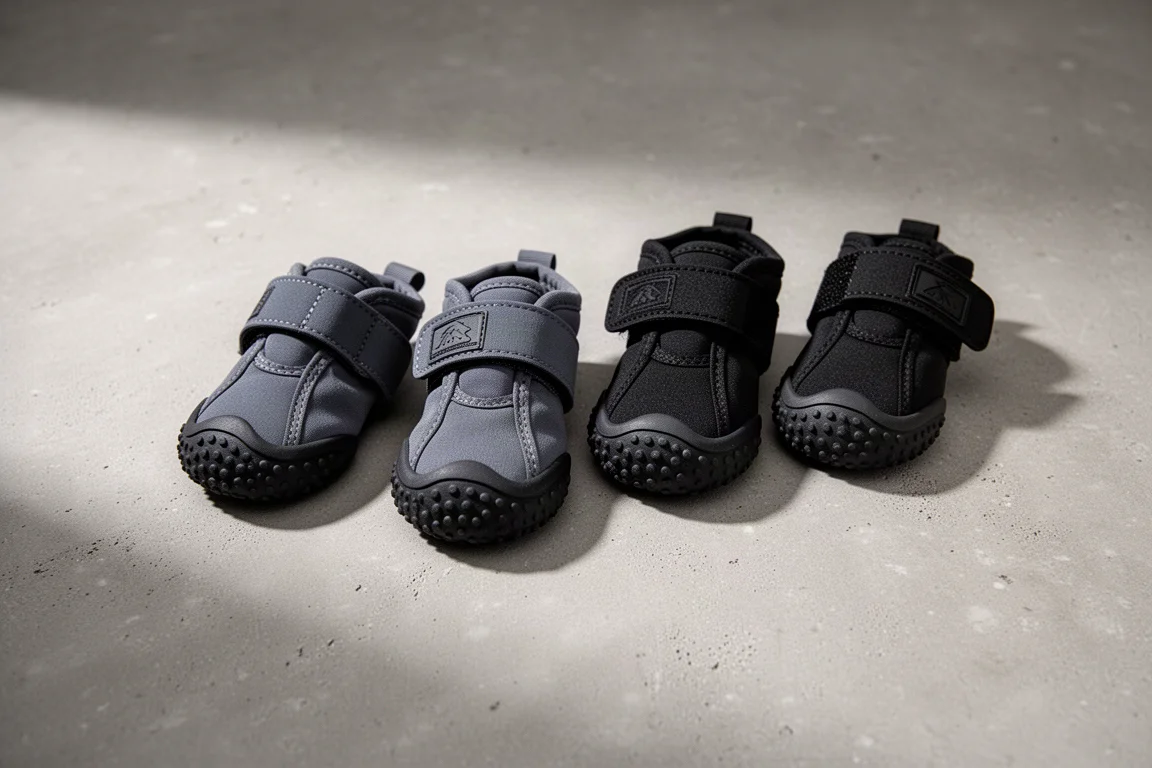
Paw Protection: Ruffwear Grip Boots
The Ruffwear Grip boots are best understood as a tool for specific conditions rather than everyday footwear. Dogs sweat through their paws, so boots that stay on for hours can contribute to overheating, and the straps and contact points can rub just like a badly fitted pack.
They make the most sense on extremely hot ground or on sustained, abrasive rock where the pads would otherwise take a beating. On steep snow or terrain that demands maximum dexterity, boots can reduce grip and restrict natural movement, so leaving them off is often the better choice. Building paw toughness through gradually increasing mileage does more for a dog than reaching for boots on every outing, but carrying a set as insurance is sensible.
Sockliners: Boot and Bark
Boot and Bark sockliners add a soft layer between the paw and the boot shell, which helps manage moisture and reduces direct contact between the foot and the boot’s seams and straps.
They are only useful alongside a boot, so they belong in the same small pouch. For dogs that wear boots occasionally on hot or rough sections, a couple of liners are cheap insurance against a hot spot.
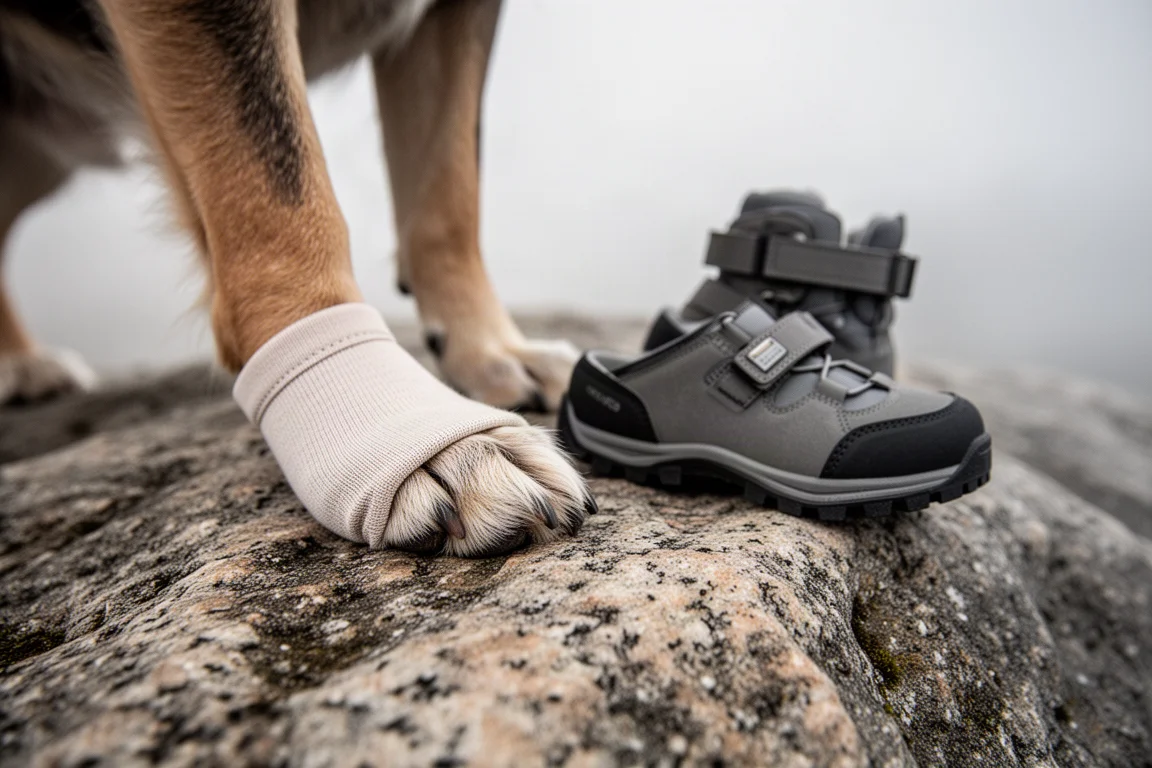
Paw checks still apply with liners in place. Any boot and liner combination should be tested on a short walk before it goes on a long trip, because a liner that bunches inside a boot can create the very rubbing it is meant to prevent.
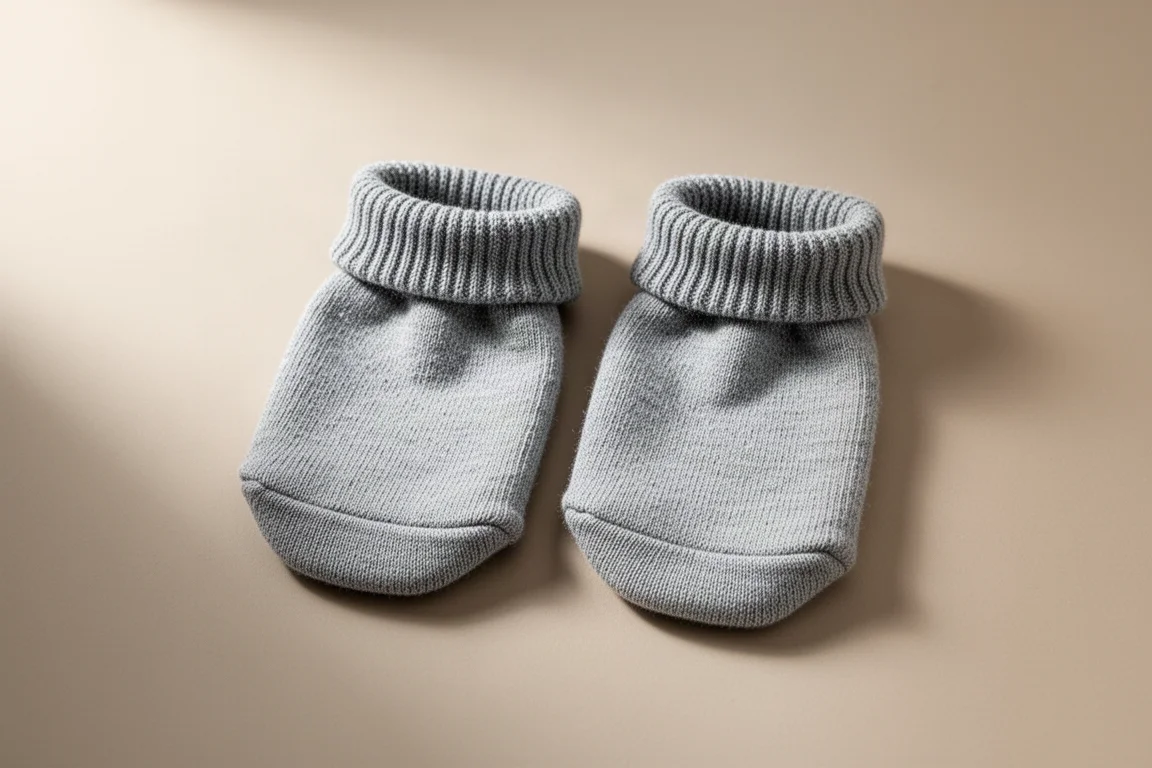
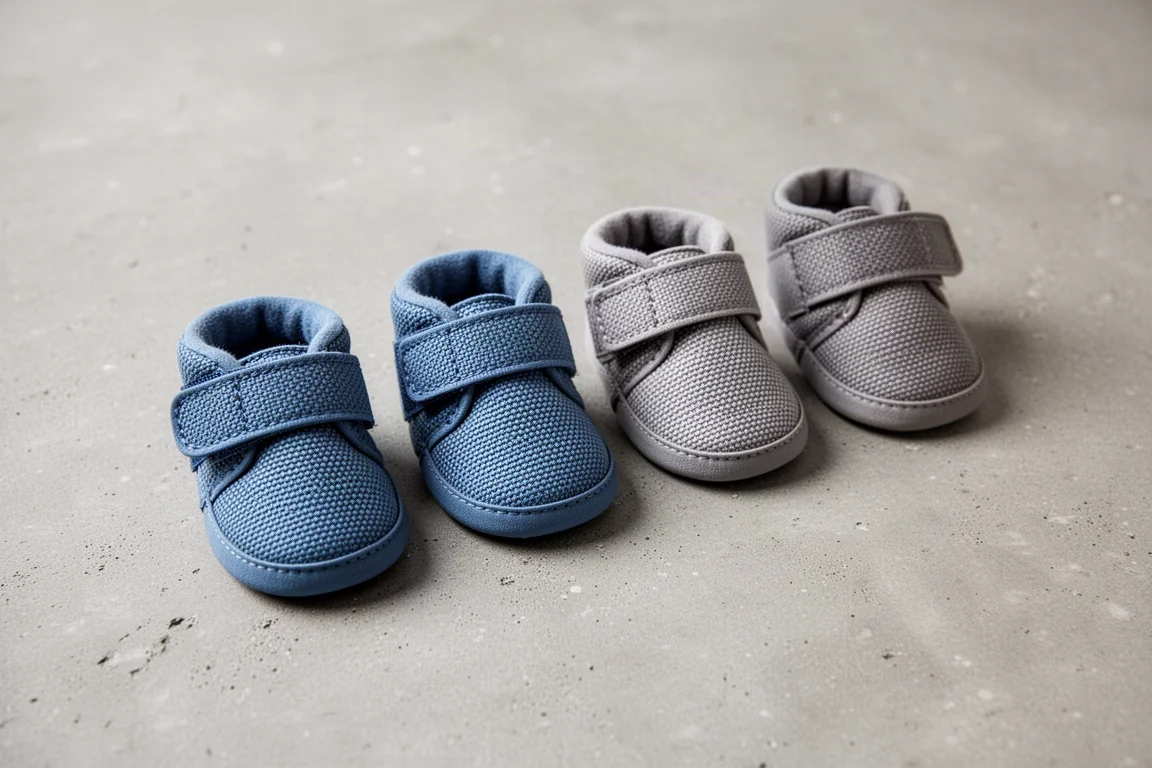
Budget Booties: dogbooties.com 1000 Denier Cordura Booties
For handlers who only need boots occasionally, 1000 denier Cordura booties from dogbooties.com are a low-cost alternative. They secure with velcro and run about three dollars per bootie.
They are unlikely to match the durability of a heavier trail boot, but they are lighter, which is a real benefit for a dog that resents bulk on its feet. As an emergency set that lives in the pack for unexpected heat or sharp rock, the price makes them easy to justify.
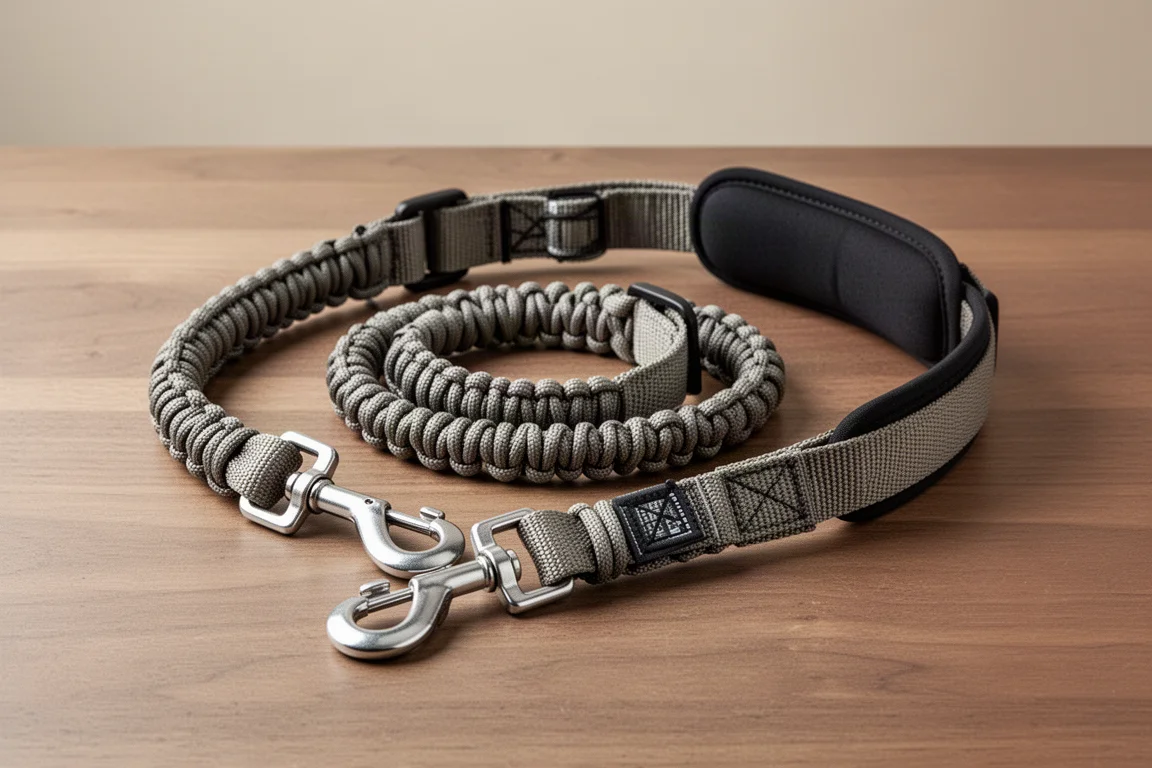
Ruffwear Roamer Bungee Leash
The Ruffwear Roamer Bungee Leash uses a stretch section so the connection is not rigid, which smooths out sudden pulls. The wrist strap is adjustable and can be worn around the waist or clipped to a hip belt, and a handle near the dog end allows the dog to be brought in close when needed. The attachment is a clamp-style hook that presses closed rather than a hook that has to be slid into place.
The stretch does mean tension varies as the dog moves, which takes a little adjustment on technical ground. For hands-free hiking on open trail, the flexibility is worth it.
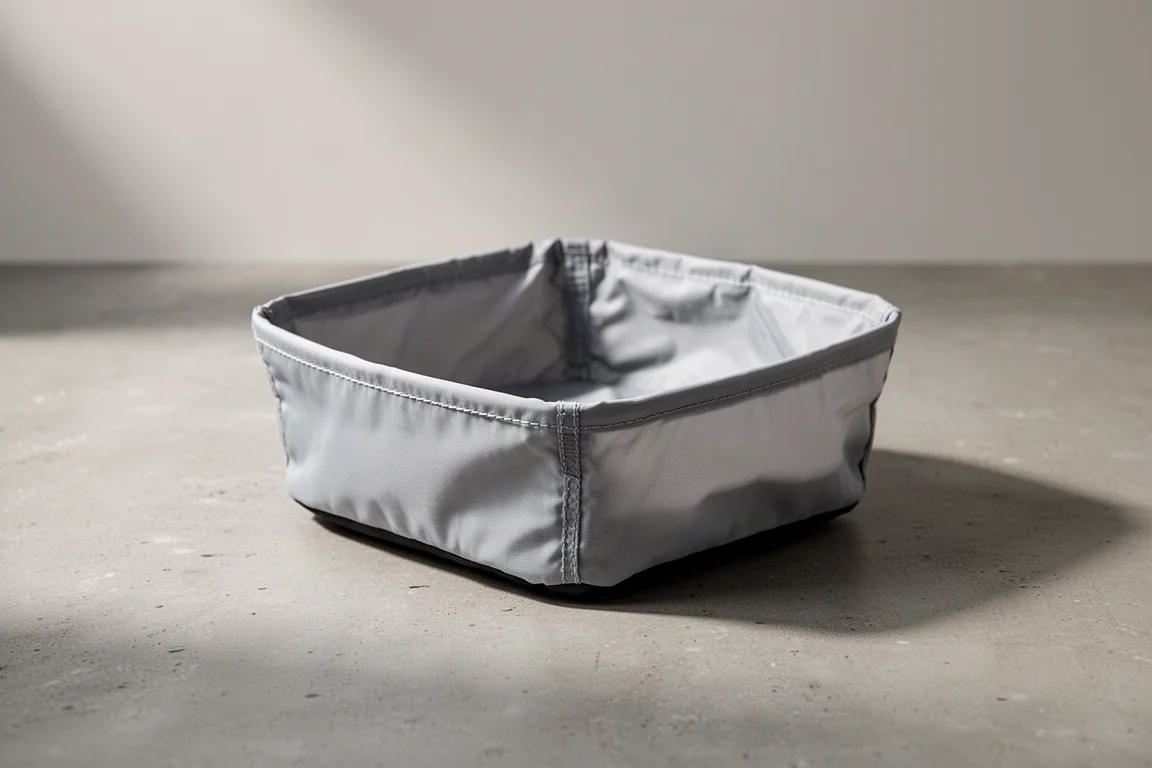
Food and Water: Ground Bird Gear Dyneema Bowl
The Ground Bird Gear Dyneema bowl weighs less than half an ounce and measures 5.5 by 5.5 by 2.5 inches, which is a good match for a single trail meal. It is a fabric bowl, so it is less rigid than a molded one, but it packs flat and it avoids the failure mode of lined soft bowls, where the liner eventually degrades and peels away from the base.
For water, a light reusable container that limits how much a dog drinks in one go is a practical choice. A small clear plastic tub is inexpensive, weighs almost nothing, and fits in a hip belt pocket for quick access on the move.
Emergency Carry: Pack and Paw Rescue Harness
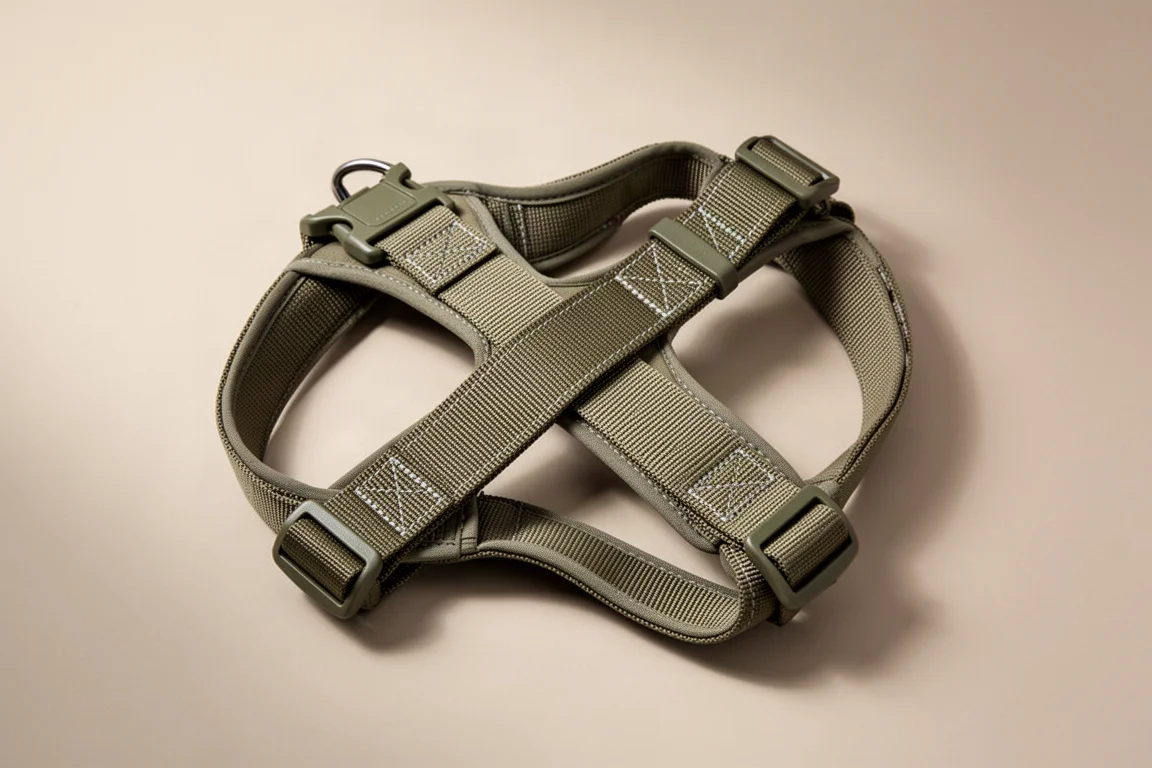
The Pack and Paw Rescue Harness is carried as a precaution for the scenario no one wants: a snake bite, a broken leg, or any injury that leaves a dog unable to walk out under its own power. Having a harness that allows the dog to be lifted and carried makes a difficult evacuation possible rather than impossible.
The rest of the safety kit is small and worth assembling in advance. An antihistamine for allergic reactions and an anti-diarrheal for stomach upset are common inclusions, and the correct dose for the dog’s weight should be worked out and written down before leaving, since there is often no signal on trail. Gauze and medical tape handle minor cuts and pad injuries. A paw wax for conditioning and protection suits some dogs and not others, and a muzzle is a reasonable precaution for a dog that is reactive around other dogs, particularly where off-leash or hunting dogs may be encountered. An umbrella provides instant shade on exposed sections, which matters as much on a bright winter day with no leaf cover as it does in the desert.
Overall Buying Advice
Start with fit and paws, because those two things cause the most trouble on trail. A pack that rubs will ruin a trip faster than any weight saving will improve it, and a dog with sore pads will slow the whole group down. Measure carefully, check the dog daily, and treat every piece of gear as something to be re-evaluated rather than trusted permanently.
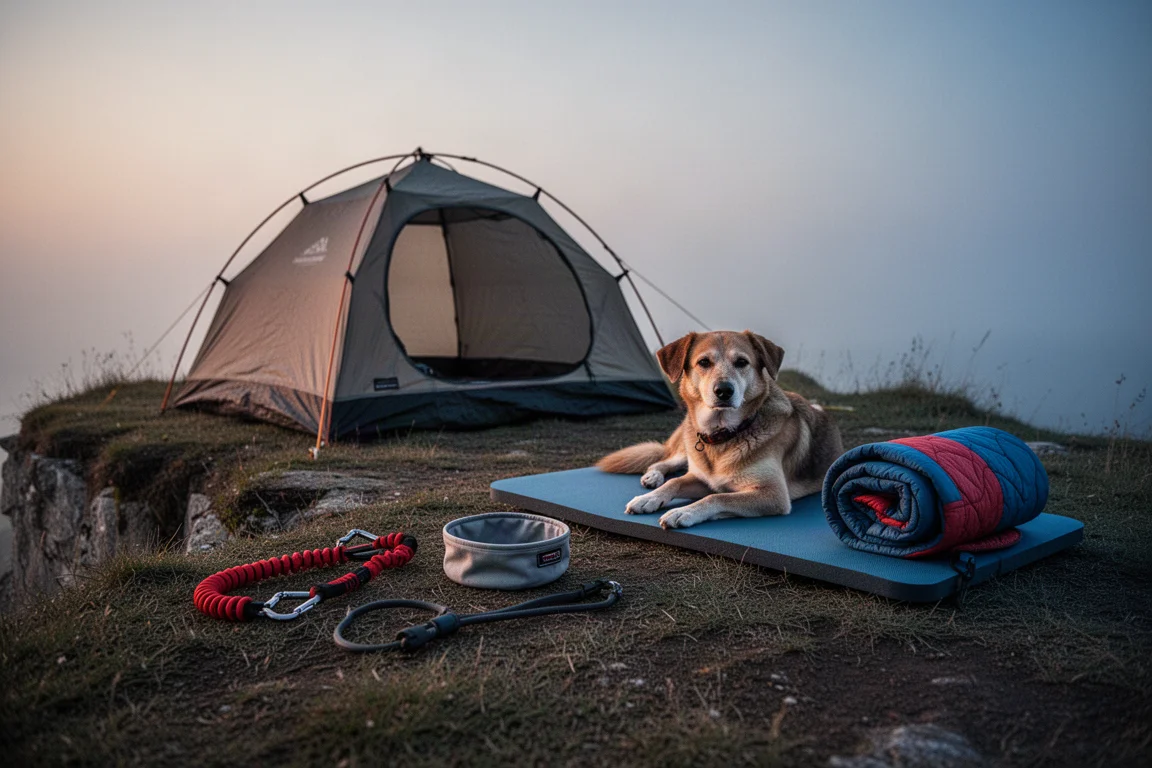
Build the sleep system around the expected overnight low, not around the season label. A quilt rated for warmer than freezing conditions is a fine choice for mild trips, but a dog that sleeps cold may need a second layer or the colder rating. Synthetic insulation belongs on the dog while hiking, and down belongs in the tent where it stays dry.
Finally, budget for the unglamorous items. Booties, sockliners, a rescue harness, and a small first-aid kit cost far less than a custom pack or a down quilt, and they cover the situations where a dog genuinely needs help. Keep the dog’s carry weight low, especially early in the season, and be prepared to take the load yourself when the day turns out harder than planned.
Conclusion
Good dog backpacking gear is less about the most advanced materials and more about fit, warmth, and paw care. A custom-fitted pack, a sleep system matched to the forecast, a synthetic layer for cold hiking, and a compact safety kit cover the essentials. Everything else is refinement, and every item on this list deserves a fresh check before the next trip, because a dog’s body and a trail’s conditions both change over time.
Further reading
Related Reviews
Dog Backpacking Gear
Best Dog Backpacking Gear: A Practical Trail Kit for Hiking Dogs
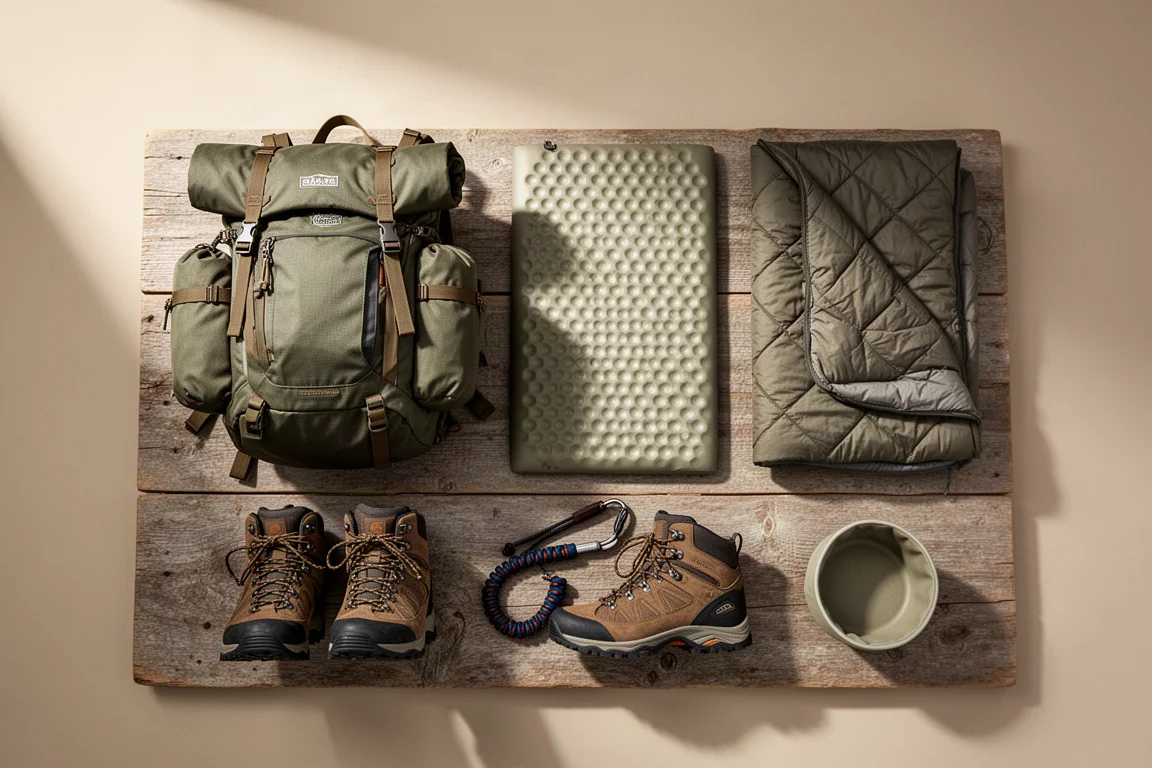
A practical look at dog backpacking gear that holds up on multi-day trails, from custom-fit packs and sleep insulation to paw protection, leashes, and emergency carry options.
Dog Backpacking Gear
Dog Backpacking Gear List: Packs, Sleep Systems, Paw Protection and Trail Essentials
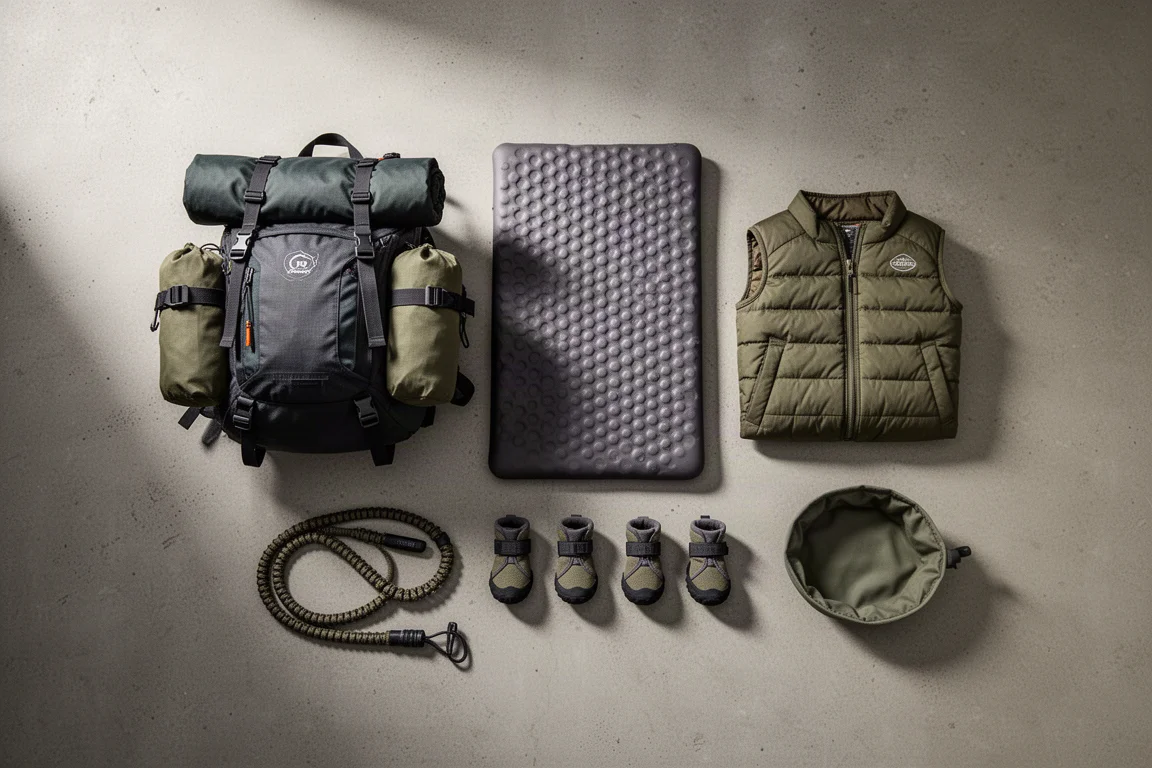
A practical dog backpacking gear list covering custom and standard packs, sleep systems, cold-weather layers, paw protection and the small essentials that keep trail days running smoothly.

Backpacking Gear
Building a 10 lb Base Weight: An Ultralight Backpacking Gear List
A practical walkthrough of the ultralight pieces behind a 10 lb base weight, from a 765 g pack and a roomy one-person tent to a full camp chair and a dependable water filter.