Drone Controllers
DJI RC and DJI RC Pro: 12 Questions Answered Before You Buy
Maps, brightness, range, screen recording, and how the DJI RC compares to the RC Pro, all answered in one practical guide.
Introduction
DJI’s RC controllers with built-in screens answer a lot of practical questions about how you actually fly and manage footage, but many of those answers are hard to find in the marketing material. This guide covers the details that matter day to day, from offline maps and screen brightness to real-world range, storage, and how the standard DJI RC compares with the DJI RC Pro.
Maps and Offline Downloads
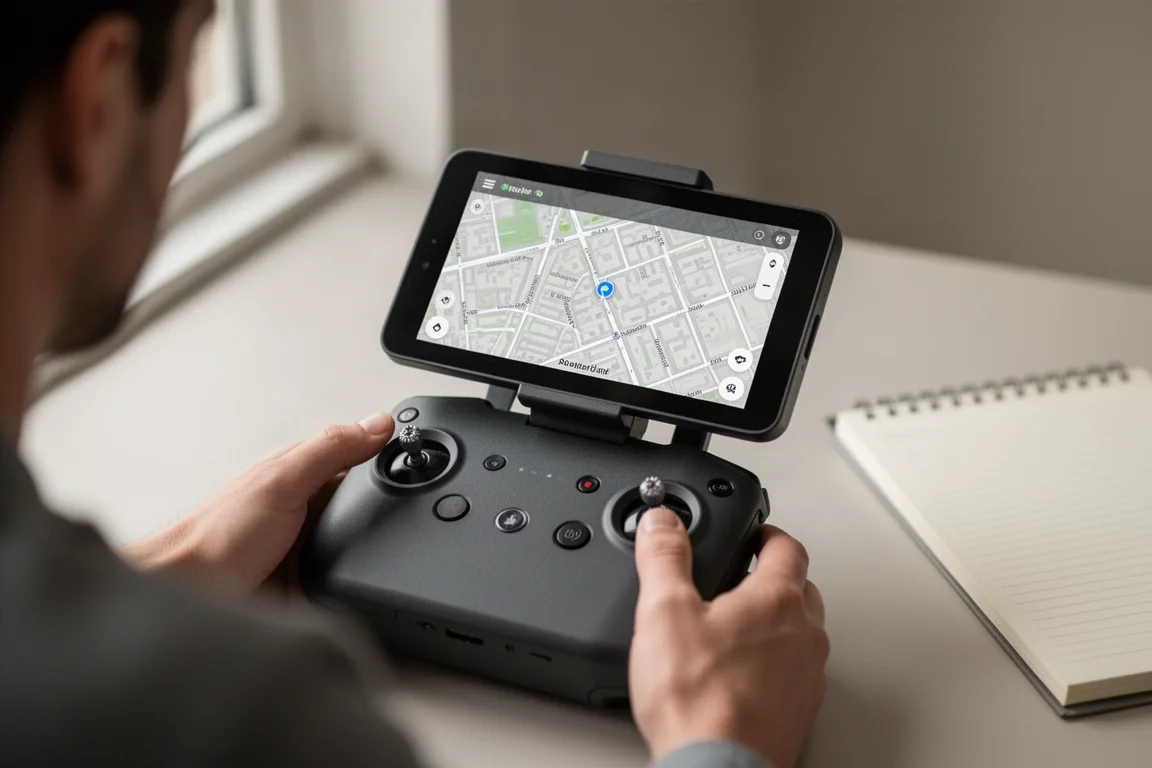
Yes, you can pre-download maps, but the process is slightly fiddly. With a Wi-Fi connection, such as a phone hotspot, open the flying interface, go into the map view, and zoom into your planned flying area as far as the map allows. Once you disconnect, the zoomed-in detail stays cached, including street-level information.
The catch is that caching is zoom-level based. If you zoom into a spot you did not pre-cache, you will only see the coarse road data, not fine details. Also note that the separate “fly spots” map in the corner of the interface does not cache at all, so download what you need in flying mode before you lose connectivity.
Screen Recording and Audio
Screen recording is built in. Swipe down from the top, tap the screen record option, and the recording icon can be dragged to a quiet corner of the interface where nothing overlaps it. Tap stop when finished and the file is saved to the controller’s storage.
The limitation is audio. The DJI RC has a speaker and supports paired Bluetooth headphones, but there is no built-in microphone, and screen recordings capture no sound at all, not even audio playing through paired headphones. That is disappointing for anyone who wants synced audio in post, and it is something a firmware update could theoretically address.
Screen Brightness Outdoors
The DJI RC’s screen tops out at 700 nits. Indoors that is more than enough, but on a bright sunny beach it is workable rather than effortless. You can fly and see the aircraft, but fine on-screen detail is harder to read, and it becomes easy again once you are in shade.
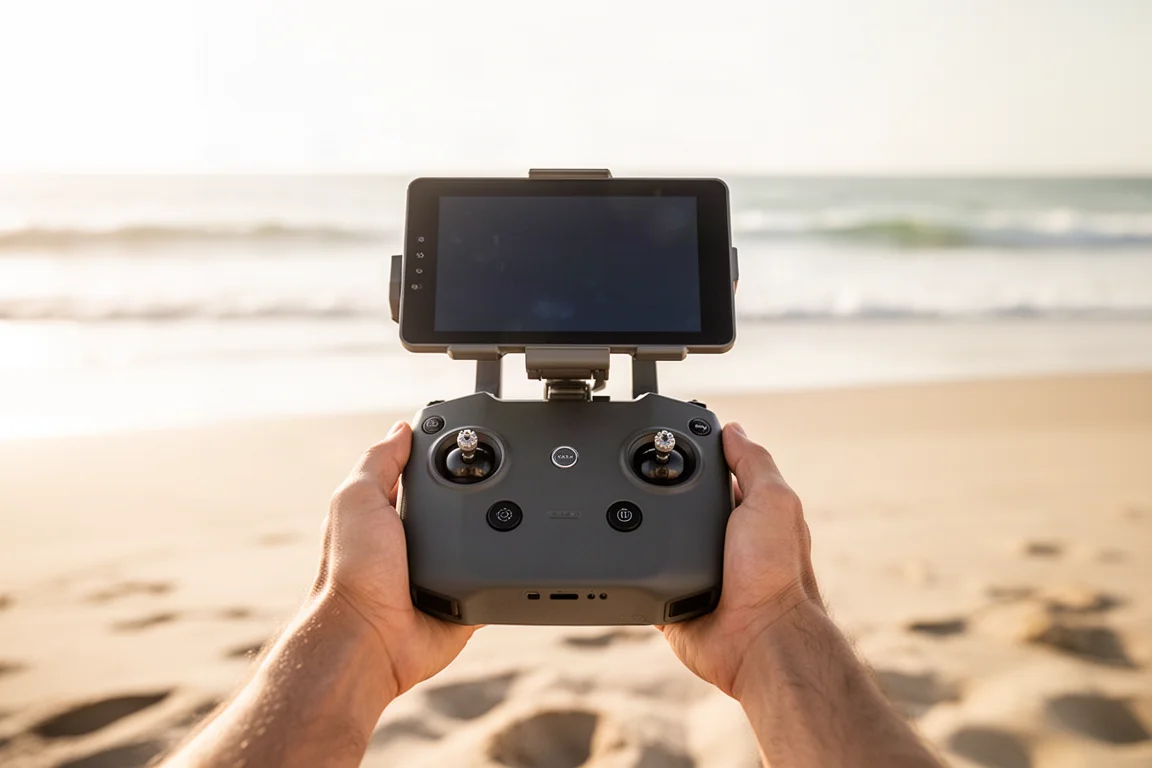
For comparison, the RC Pro’s brighter panel is noticeably easier to read in direct sun. An interesting twist: a modern flagship phone attached to the basic controller was tested on the same beach, and within a few minutes of heat exposure it throttled its brightness down to roughly the same effective level as the DJI RC, making it essentially a wash in those conditions.
Real-World Range
The marketing figure is 12 kilometers between the DJI RC and a compatible drone, but the practical reality is much shorter. In open, coastal flying with the aircraft still visible, signal dropouts consistently started between roughly 1,100 and 1,300 meters, with one run reaching around 1,550 meters before repeated dropouts.
Whether that matters depends entirely on how you fly. If you rarely exceed a kilometer from the takeoff point, it is a non-issue. Results may also differ in other environments, such as mountainous terrain, so treat these figures as one data point rather than a guarantee.
Storage and the SD Card Slot
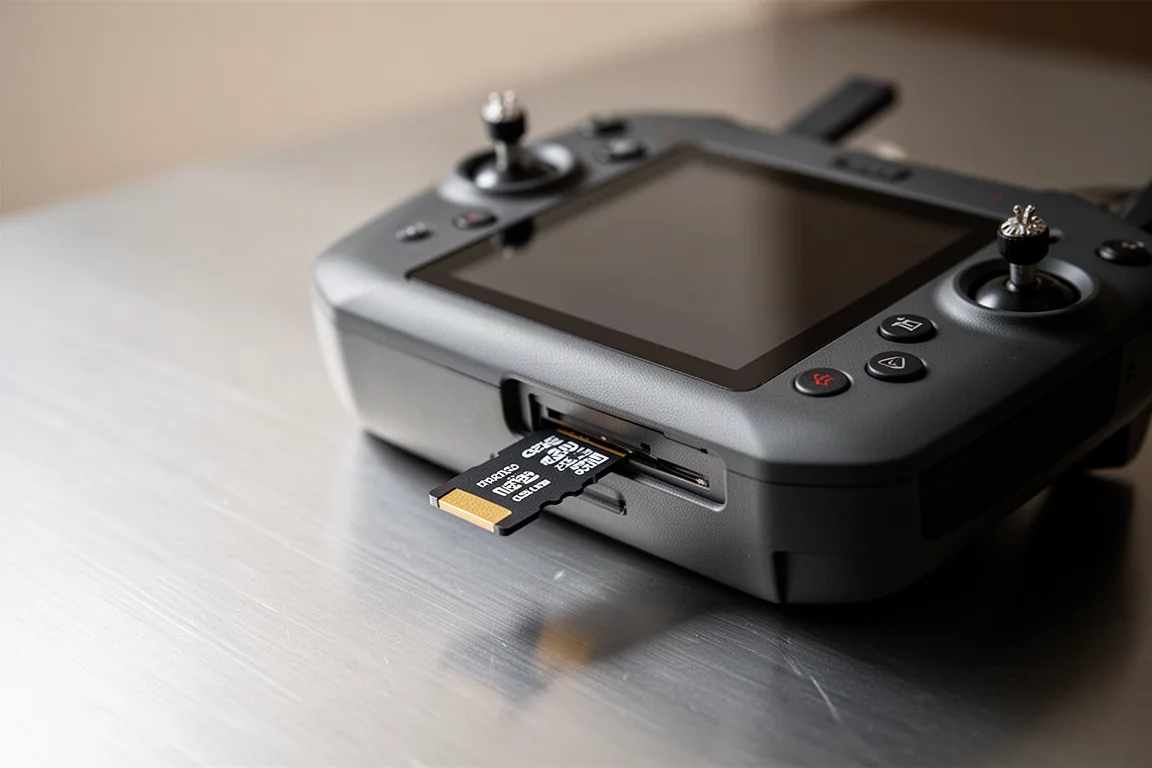
The micro SD slot on the bottom of the controller exists because internal storage is limited. The controller has about 8 GB of storage, of which roughly 2 GB is usable, and that space holds screen recordings plus a low-resolution video and photo cache written in real time during flight. If the drone is lost, you still have something.
Cards up to 512 GB are supported. A 256 GB card is a comfortable middle ground for most people, fast enough for the controller with plenty of headroom.
Getting Footage to Your Phone
The controller keeps cached low-resolution copies of your media, and high-resolution photos can be downloaded from the drone to the controller. High-resolution video downloads to the controller are not supported, unlike with the basic remote-plus-phone setup, and DJI has indicated no plans to change this.
The fast path for getting full-quality files onto your phone is Quick Transfer. It connects the drone to your phone over Wi-Fi directly, bypassing the controller entirely, and transfers at around 30 MB per second, far quicker than going through the controller’s normal download path.
Battery Life
The official four-hour battery figure lines up well with real-world use. Even better, that rating includes phone-charging mode, where the controller can keep an attached phone topped up, which is useful because phones drain quickly when running the flight app. Without phone charging, the controller stretches to around six hours. Charging is via USB-C.
Compatibility and Accessories
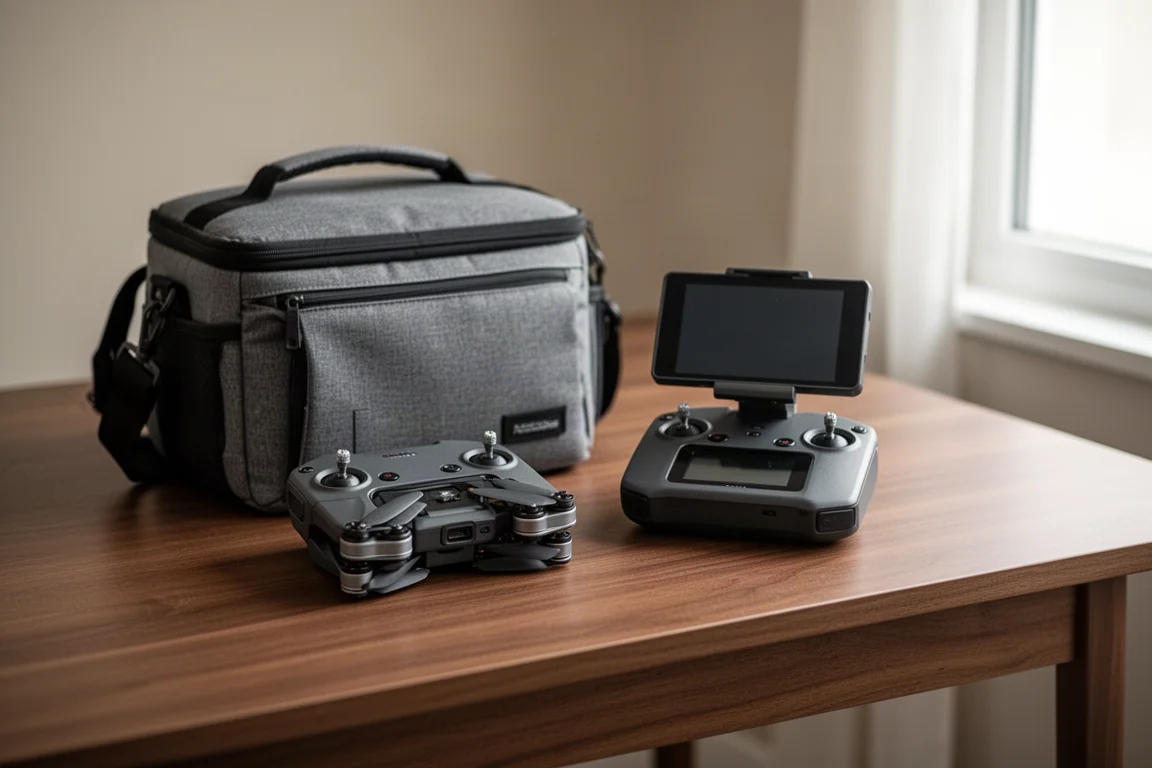
The DJI RC is confirmed to work with the Mavic 3 once a firmware update arrives, with bundles reportedly planned. Compatibility with the Air 2S is not confirmed, but the Air 2S already works with the RC Pro and bundles were sold with that pairing, so it is a reasonable bet. No bike or motorcycle handlebar mount exists for the DJI RC yet, and the existing mount for the basic controller is not compatible. It also does not work with DJI FPV goggles.
DJI RC vs DJI RC Pro
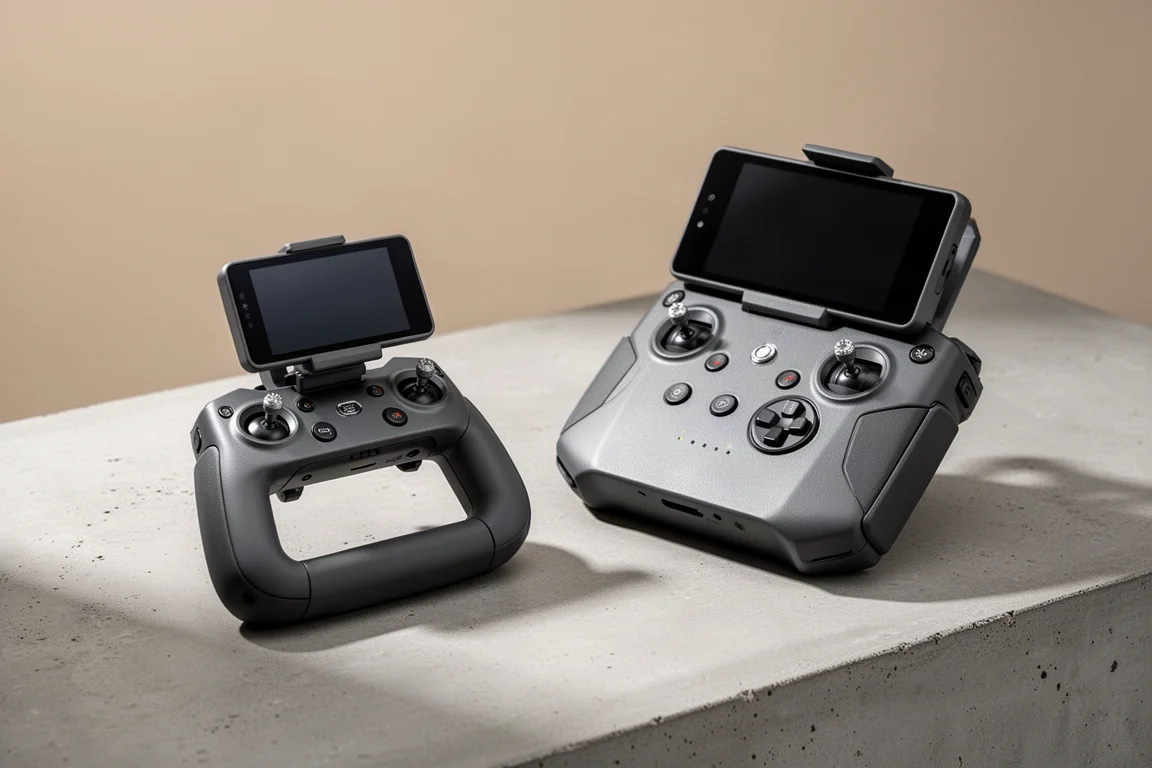
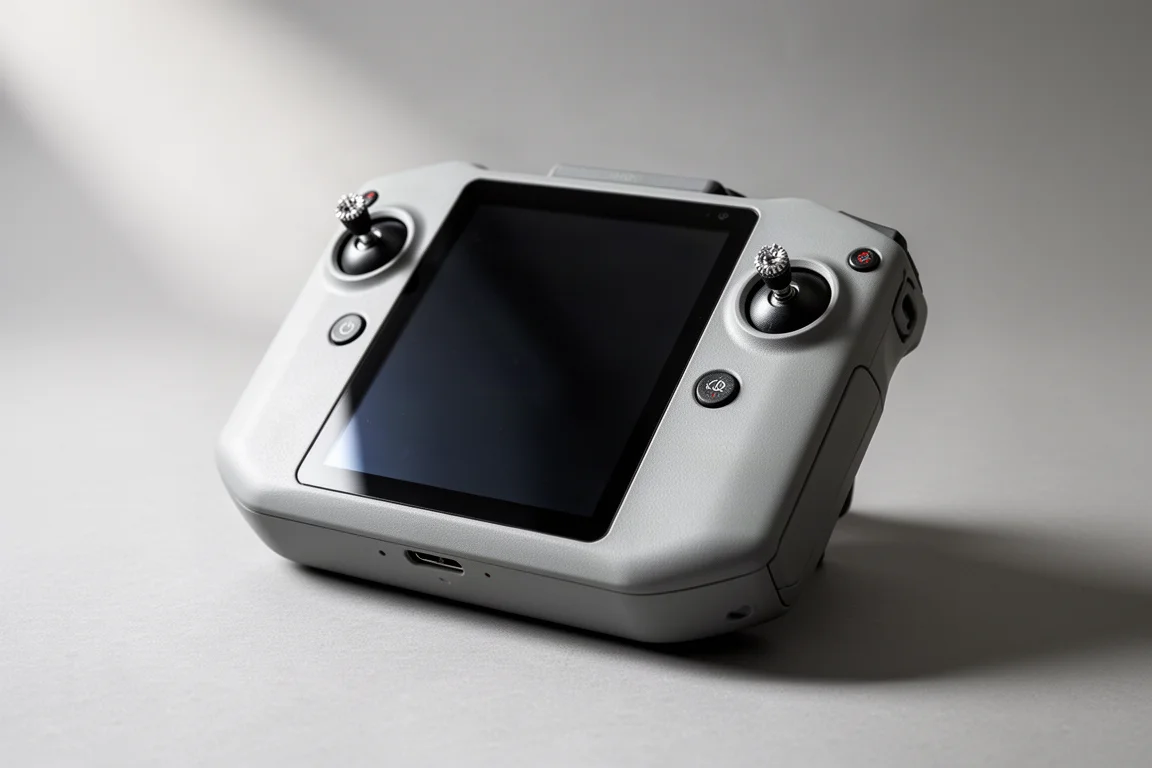
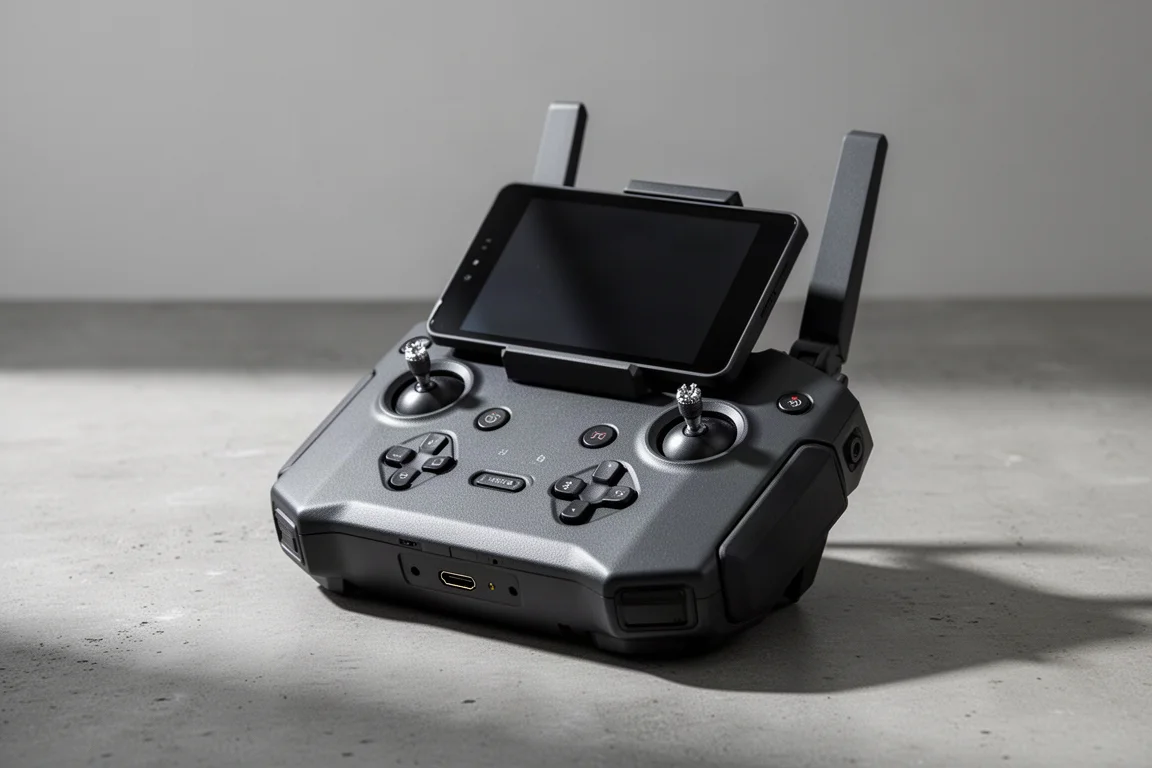
The two controllers are both Android-based units, and the RC Pro pulls ahead in several areas. Its screen reaches 1,000 nits versus 700 on the RC. It has a micro HDMI output, which the RC lacks entirely, including over USB-C. It supports installing third-party apps, it adds extra customizable controls including a five-way pad, and it supports live streaming, which the RC does not.
The RC has a few counterpoints of its own. Its battery is rated at four hours versus three on the RC Pro, it has a cover over the SD card slot, and it is dramatically lighter: about 393 grams against roughly 886 grams for the RC Pro. The basic controller with a phone attached weighs around 591 grams, so the RC is the clear winner on weight.
Both controllers allow full joystick customization across mode 1, 2, 3, or a custom layout, and both have customizable buttons on the back. Neither supports waypoints, apart from manually setting hyperlapse points in the air, and app installation on the RC is officially not supported.
Which Remote Should You Buy?
For most people, the DJI RC over the basic remote is an easy recommendation and one of the few accessories widely considered worth the extra cost. It is light, it slips easily into the Fly More combo bag alongside the drone and charger, and it removes the hassle of mounting and charging a phone. The main thing to weigh is the shorter real-world range described above; if long-distance flying is central to your use, that deserves a hard look before buying.
Conclusion
The DJI RC is a genuinely more portable and comfortable way to fly than a phone-mounted controller, with a few trade-offs in range, audio, and video downloads. The RC Pro adds brightness, HDMI out, app support, and streaming for those who need them, at a much higher price and weight. Match the controller to how far you fly and what you need the screen to do, and both are easy to live with.
Further reading
Related Reviews

Backpacking Gear
Building a 10 lb Base Weight: An Ultralight Backpacking Gear List
A practical walkthrough of the ultralight pieces behind a 10 lb base weight, from a 765 g pack and a roomy one-person tent to a full camp chair and a dependable water filter.

Road Bikes
10 New Road Bikes Worth Watching: Aero, Titanium, Steel and Endurance Standouts
A practical roundup of 10 new road bikes, from aero flagships chasing single-watt gains to titanium, steel and endurance platforms built for real roads.
Bikepacking Gear
11 Bikepacking Essentials for Long-Distance Cycling
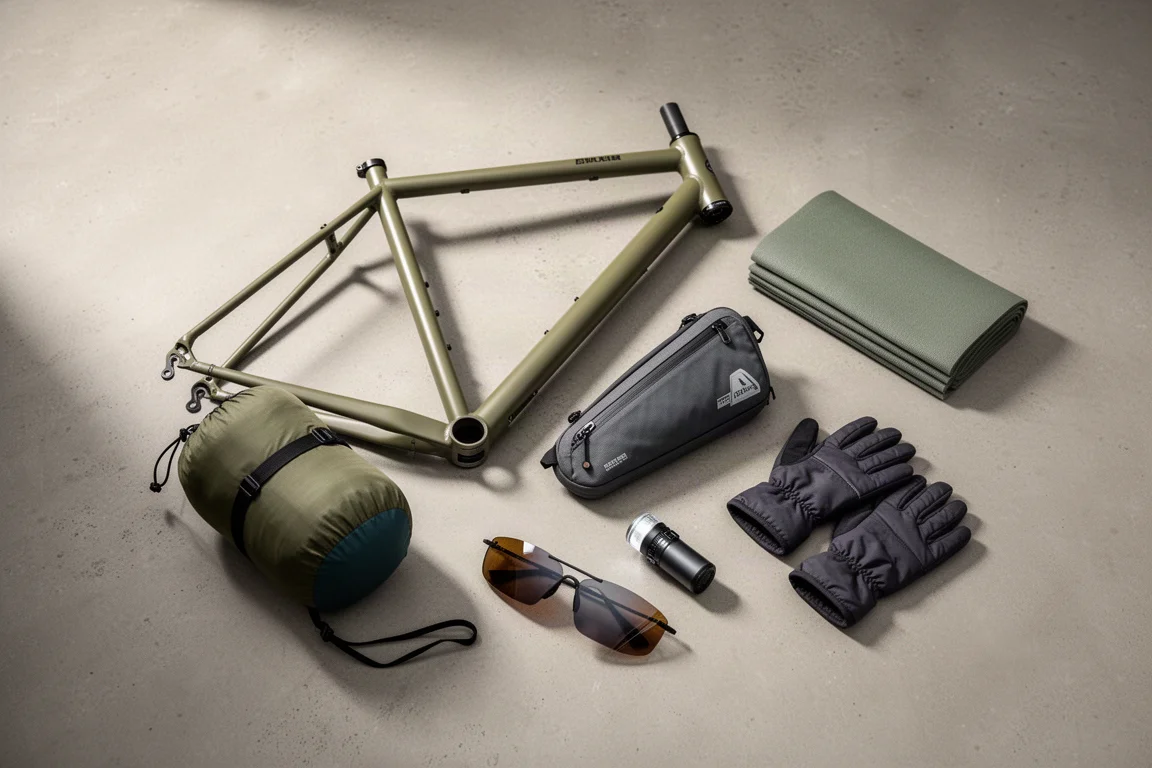
Eleven bikepacking essentials for long-distance cycling, from a steel gravel frame and a two-person tent to helmet lights, packable gloves, and a frame bag that puts weight in the right place.