Camera Reviews
DJI Pocket 4 Review: Compact Gimbal Camera with 1-Inch Sensor and Fill Light
The DJI Pocket 4 brings a 37-megapixel 1-inch sensor, built-in fill light, 4K 240fps video, and 107GB internal storage to a single-handed stabilised camera. A detailed look at what's new and what remains unchanged.
Introduction
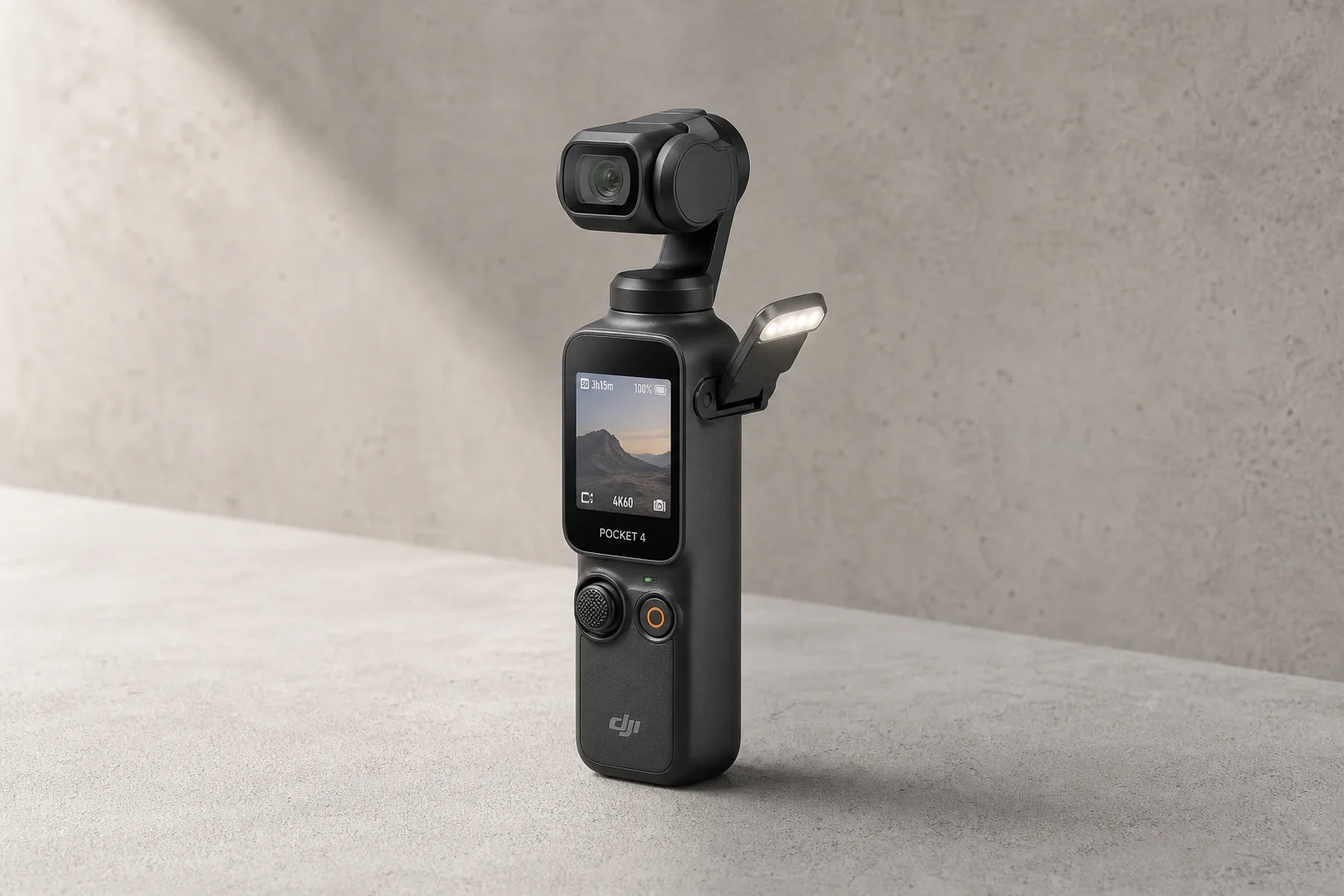
The DJI Pocket 4 arrives with expectations shaped by years of leaks and speculation. Externally, it appears largely unchanged from its predecessor, yet DJI has made substantial internal upgrades. A 37-megapixel 1-inch sensor replaces the previous 9.4-megapixel unit, 107GB of high-speed internal storage enables extended recording sessions, and 4K 240fps video capability adds new creative possibilities. The most visible addition is a built-in fill light that extends from the camera body, a feature that fundamentally changes how users approach self-recording and low-light situations.
For those unfamiliar with the Pocket line, these devices occupy a unique position in the camera market. Unlike smartphones or action cameras, the Pocket combines a large sensor, three-axis mechanical stabilisation, and single-handed operation into a form factor that feels genuinely revolutionary for vlogging and content creation. The Pocket 4 builds on this foundation while addressing several limitations of its predecessor.
Single-Handed Operation and Control Layout
The Pocket 4 maintains the core appeal of its predecessor: rotate the screen to power on, and you’re immediately ready to record. This single-handed workflow remains unmatched among compact cameras and smartphones.
DJI has refined the physical controls with two new buttons flanking the screen. The left button controls zoom, while the right is a customisable button that can be programmed for multiple functions. This customisable button represents a significant usability improvement. Previously, switching between front and rear recording required either manipulating the joystick, pressing a button three times, or tapping the screen. Now, a single press flips the gimbal to face the opposite direction, enabling instant switching between self-recording and capturing your surroundings.
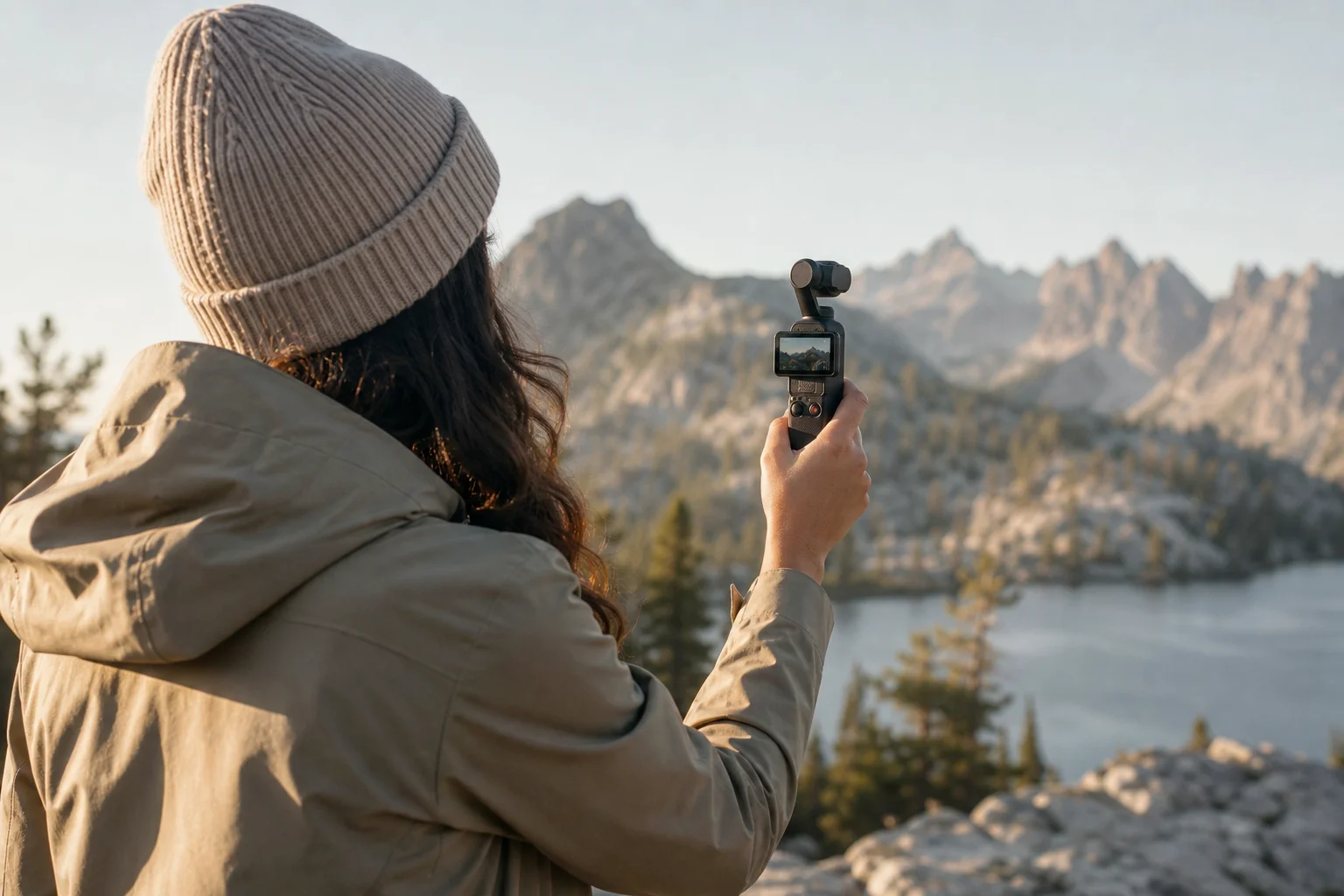
The customisable button supports single, double, and triple-press actions, allowing users to assign frequently used functions such as gimbal centering, photo-to-video switching, or gimbal return-to-centre. This flexibility makes the camera significantly more responsive to real-world shooting scenarios.
Built-In Fill Light and Design Refinements
The most striking visual change is the fill light that extends from the top of the camera body. Resembling a scorpion’s tail, this light draws power directly from the camera’s battery via contact points, requiring no separate power source. The light offers adjustable brightness and three colour temperature settings, making it suitable for supplementing face lighting and eye reflections during self-recording.
The fill light’s raw output is bright enough to produce a visible difference in footage. However, direct hard light on the face can appear unflattering. A simple diffuser—even a makeshift paper lantern—dramatically improves the quality of the light, producing a softer, more natural appearance. Third-party manufacturers will likely develop dedicated diffusers and accessories for this light, addressing any aesthetic concerns.
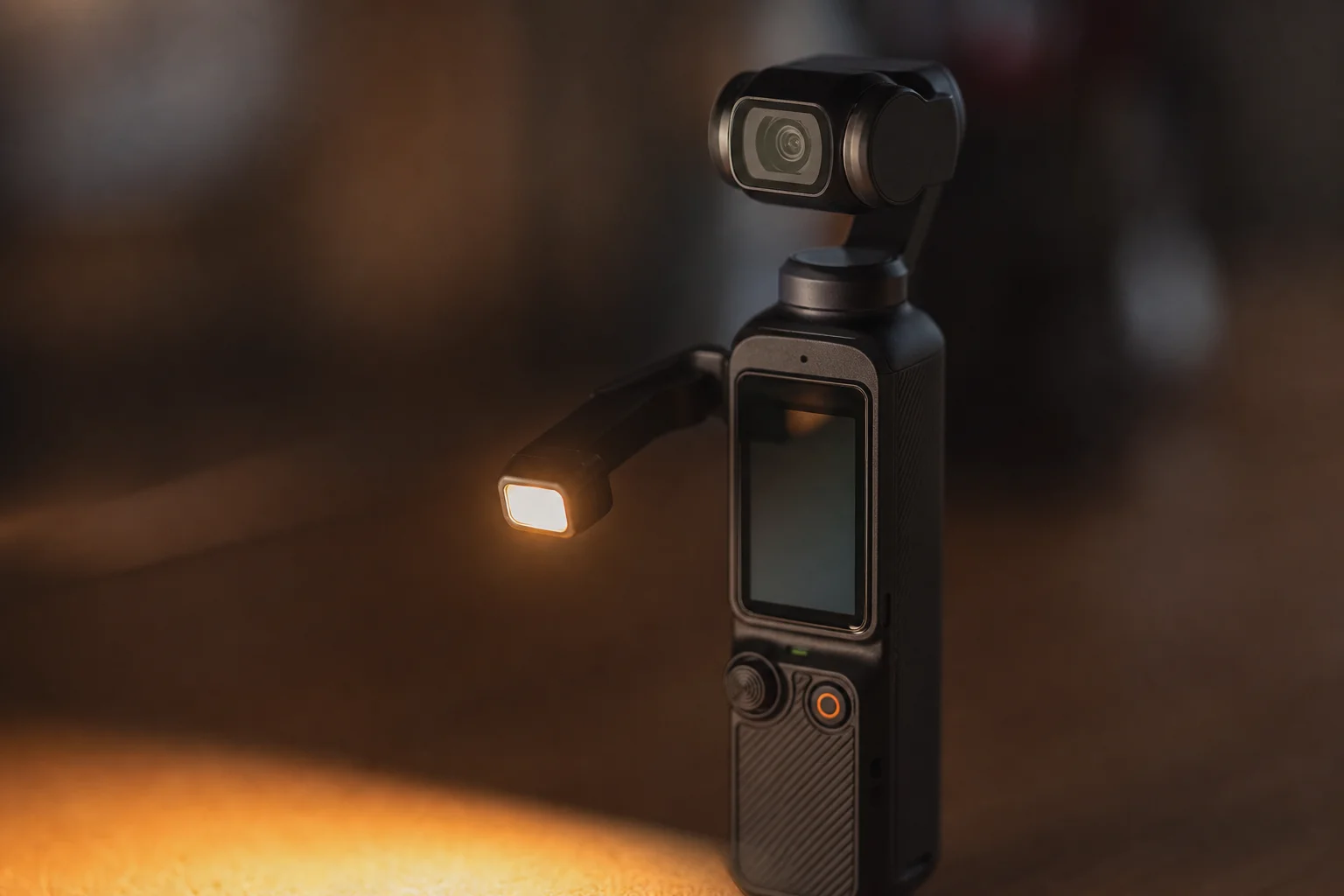
Battery impact is modest. Testing with the fill light at maximum brightness during continuous recording showed approximately 10% additional power consumption. During normal use at lower brightness levels, the impact is negligible, which is a pleasant surprise given the light’s integration into the power system.
Beyond the fill light, DJI has refined numerous details. The grip is now more slip-resistant, a protective shell guards the SD card slot, hand strap attachment points are larger and easier to use, and the screen brightness has increased to 1000 nits. The menu interface has been redesigned with larger text and improved touch responsiveness, reducing accidental inputs. These refinements collectively make the camera feel more polished and user-friendly.
Photo and Video Capabilities
The 37-megapixel 1-inch sensor represents a substantial upgrade from the previous 9.4-megapixel unit. In photo mode, a new ultra-high-resolution mode captures 7.6K 16:9 and 6K 1:1 images, delivering noticeably sharper results than the Pocket 3. The improvement in clarity is genuine, reflecting improved sensor resolution rather than artificial sharpening. Zooming and reframing images in post-production becomes practical, and the overall image quality rivals flagship smartphone main cameras.
Colour science is a key strength. The Pocket 4 handles blue tones beautifully, white balance is accurate, and skin tones are flattering. These qualities distinguish it from smartphone cameras, which often apply different colour grading. Combined with the genuine 1-inch sensor—not a smartphone front camera—self-recording produces noticeably better image quality than any phone.
One notable omission is the absence of beauty filters in photo mode, despite their presence in video mode. Adding this feature would make the Pocket 4 an even more compelling camera for self-recording, as users could confidently share unedited photos directly.
The camera now includes in-camera Live Photo functionality, eliminating the need to import video clips into editing software. However, Live Photos are limited to 4K resolution and 16:9 aspect ratio, lacking the ultra-high-resolution and square formats available in still photography. Support for 4:3 or 1:1 Live Photo formats would better serve users viewing content on vertical smartphone screens.
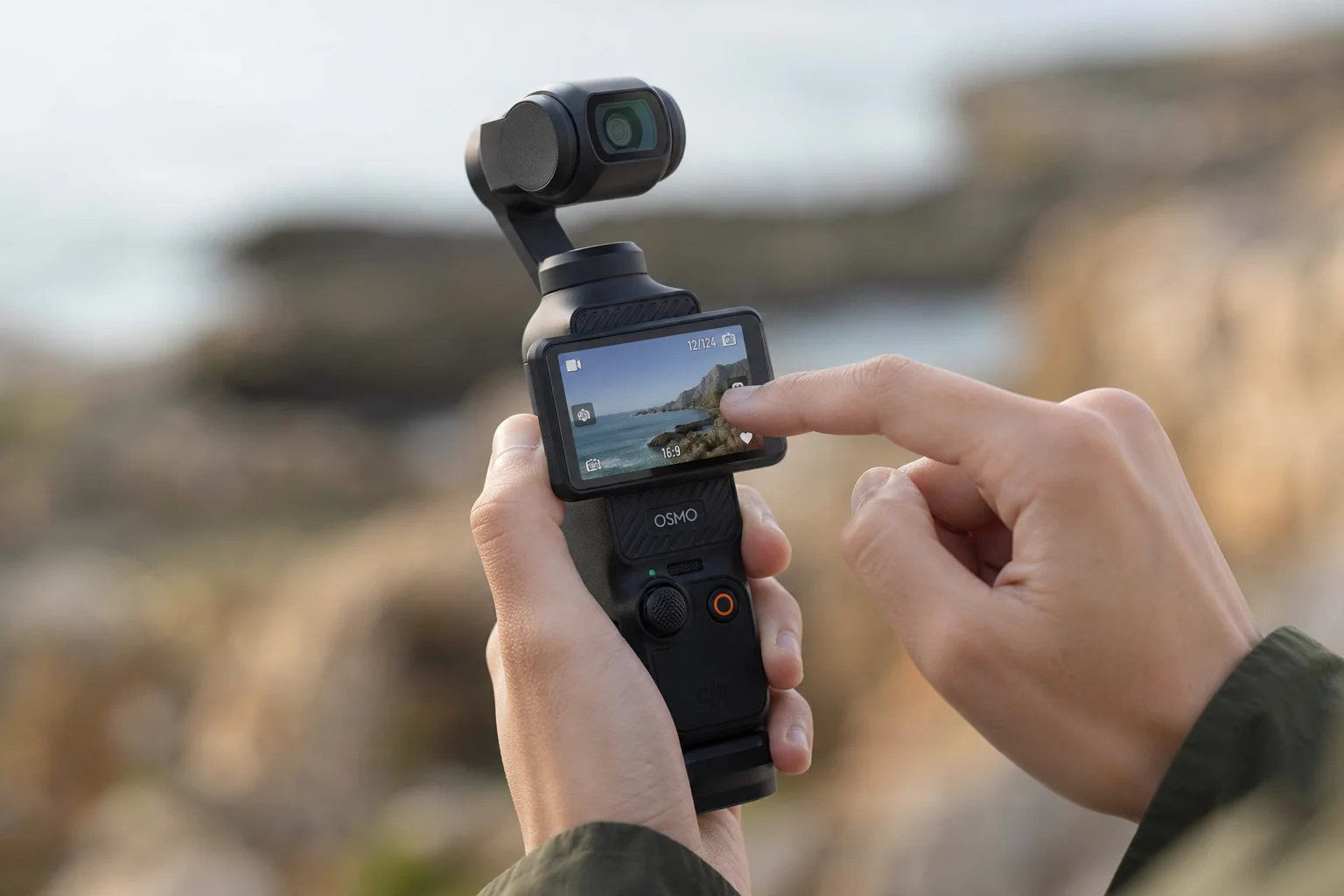
In video, the improvements are more evolutionary than revolutionary. The focal length remains a 20mm equivalent, which is ideal for self-recording without requiring an extended arm reach. The f/2.0 aperture is unchanged. At the widest angle, image quality is comparable to the Pocket 3, but zooming to 2x magnification reveals a significant clarity improvement with noticeably reduced noise. The zoom implementation uses sensor cropping and pixel resampling rather than optical zoom, which is expected but worth noting. Continuous zoom transitions show visible quality shifts between 1.1x and 1.9x magnification, though 4x zoom remains usable for creative effects like Hitchcock zoom shots.
The most significant video limitation remains the gimbal’s asymmetrical range of motion. The gimbal reaches its limit when panning left, creating a dead zone that prevents full tracking range. Panning right encounters no such restriction. This hardware constraint severely limits the camera’s ability to track moving subjects across the full frame, a problem that cannot be resolved without redesigning the gimbal structure. Despite improved tracking performance compared to the Pocket 3, this limitation prevents the camera from realising its full potential.
Vertical recording is possible through sensor cropping, reducing resolution to 3K at 60fps. However, the two physical buttons become inaccessible when the camera is held vertically, making it impossible to adjust zoom without repositioning the device. This is a surprising oversight that undermines the camera’s usability for vertical content creation.
Exposure handling has improved substantially. The Pocket 3 frequently overexposed highlights while maintaining correct subject brightness, but the Pocket 4 preserves highlight detail much more effectively. In standard colour mode, the camera now balances subject and background exposure more intelligently. For advanced colour grading, DJI has added a D-Log curve and in-camera colour monitoring, enabling professional post-production workflows.
In-camera filters remain a weakness. The six available filters feel crude, applying a uniform colour cast across the entire frame rather than sophisticated colour grading. The beauty filter, even at low settings, produces unnatural results. More sophisticated in-camera filters would improve the out-of-camera experience for casual users.
Night video quality is cleaner than the Pocket 3, with reduced noise in low-light conditions. However, the camera cannot match flagship cameras or premium smartphones in extreme low-light scenarios. The low-light video mode is limited to 4K 30fps, and lens flare and ghosting control shows only marginal improvement. For typical evening shooting, the quality is excellent; for extreme low-light work, expectations should be tempered.
The standout video feature is 4K 240fps slow-motion recording. This is not interpolated or AI-enhanced—it is pure sensor performance. A single-handed stabilised camera capable of 8x slow-motion playback is genuinely impressive, even with the slight 1.1x video crop. The creative possibilities for vlogging and cinematic effects are substantial.
Audio Recording and Accessories
Audio quality is critical for vlogging, and the Pocket 4 offers three directional modes: forward, bidirectional, and omnidirectional. The differences between modes are audible and significant. New spatial audio and voice enhancement features add processing options, though the spatial audio effect is subtle and voice enhancement introduces slight distortion. In noisy environments, voice enhancement provides marginal benefit. A simple foam windscreen attached to the microphone produces noticeably better results than any digital processing.
The camera supports two wireless microphones simultaneously and now outputs four audio tracks: two wireless microphones, the built-in microphone, and a mixed track. This eliminates the need to manually align audio in post-production and provides a safety backup if wireless signals are interrupted.
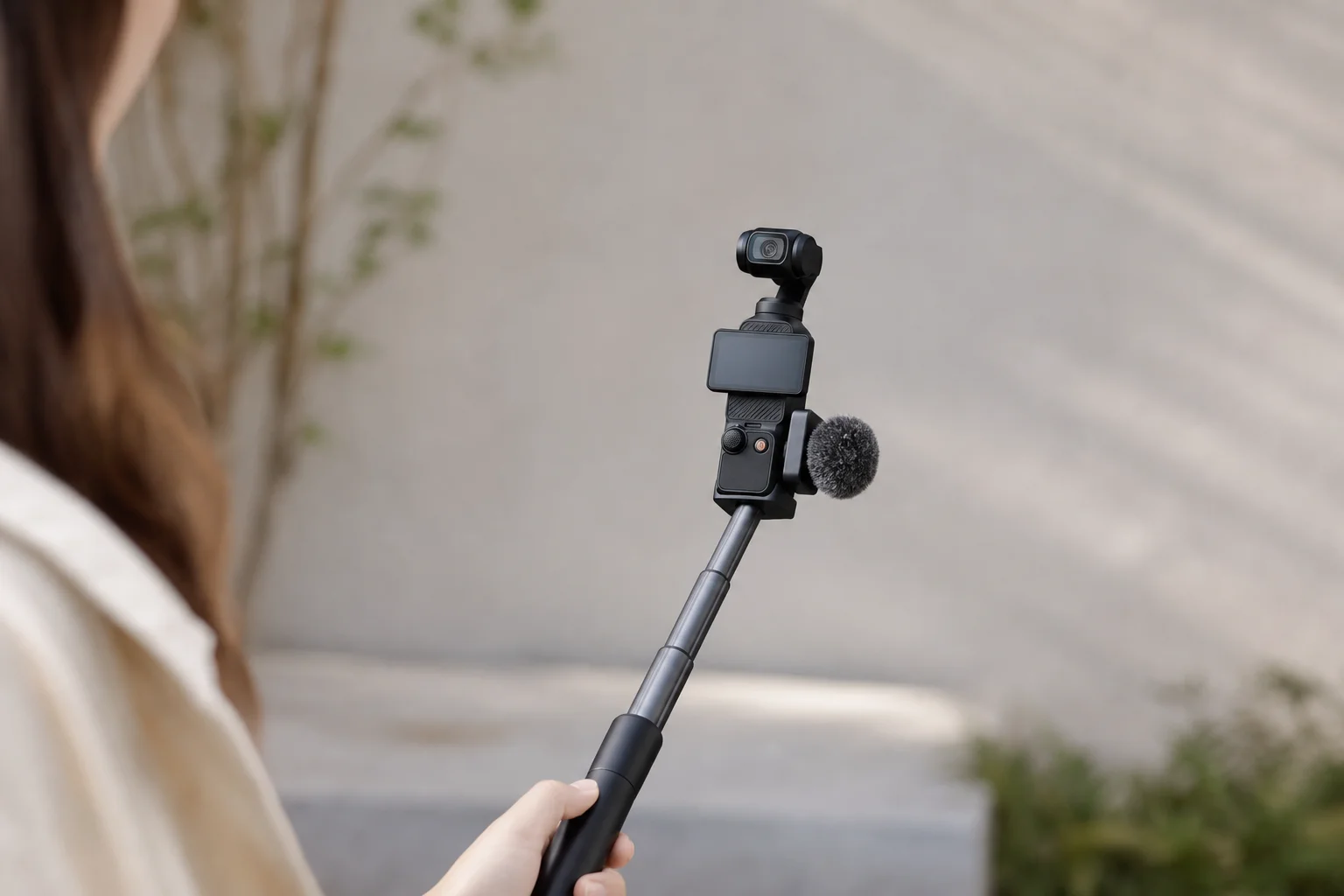
Accessory compatibility is excellent. The gimbal lock design is more compact than previous versions, fitting easily into small carrying cases. Critically, DJI has maintained backward compatibility: the Pocket 3 can use the Pocket 4 battery handle, and the Pocket 4 can use the Pocket 3 battery handle. This is a consumer-friendly decision that expands battery life options. The Pocket 4’s internal battery is 19% larger than the Pocket 3, and the new battery handle adds 13% more capacity, enabling approximately four hours of continuous video recording without overheating. Charging from empty to full takes roughly 30 minutes.
The third-party accessory ecosystem has matured significantly. Magnetic mounts, adjustable angle stands, and creative solutions abound. The ecosystem is now comparable to smartphone accessories, with no shortage of options.
Conclusion
The DJI Pocket 4 is a refinement rather than a revolution. It improves upon the Pocket 3 in nearly every measurable way—sensor resolution, internal storage, video frame rates, exposure handling, and physical ergonomics—yet the core experience remains familiar. The Pocket 3 was so well-executed that the Pocket 4’s improvements, while substantial, feel incremental rather than transformative.
The fill light is the most distinctive new feature, addressing a genuine need for self-recording in variable lighting. The 37-megapixel sensor and 4K 240fps video capability expand creative possibilities. The 107GB internal storage is generous and practical. However, the gimbal’s asymmetrical range of motion persists, and vertical recording usability remains compromised.
For existing Pocket 3 users, the upgrade is optional unless you specifically need the fill light, higher resolution, or slow-motion capability. For new buyers, the Pocket 4 is an excellent choice for vlogging, travel content, and self-recording, offering a unique combination of image quality, stabilisation, and ease of use that smartphones and action cameras cannot match. The camera market for handheld gimbal devices is becoming increasingly competitive, and the Pocket 4 remains a compelling option in this emerging category.
Product link
View more details for DJI Pocket 4
This product is mentioned in the review. Check the specifications, options, and compatibility before buying.
View more details for DJI Pocket 4Further reading
Related Reviews
Camera Reviews
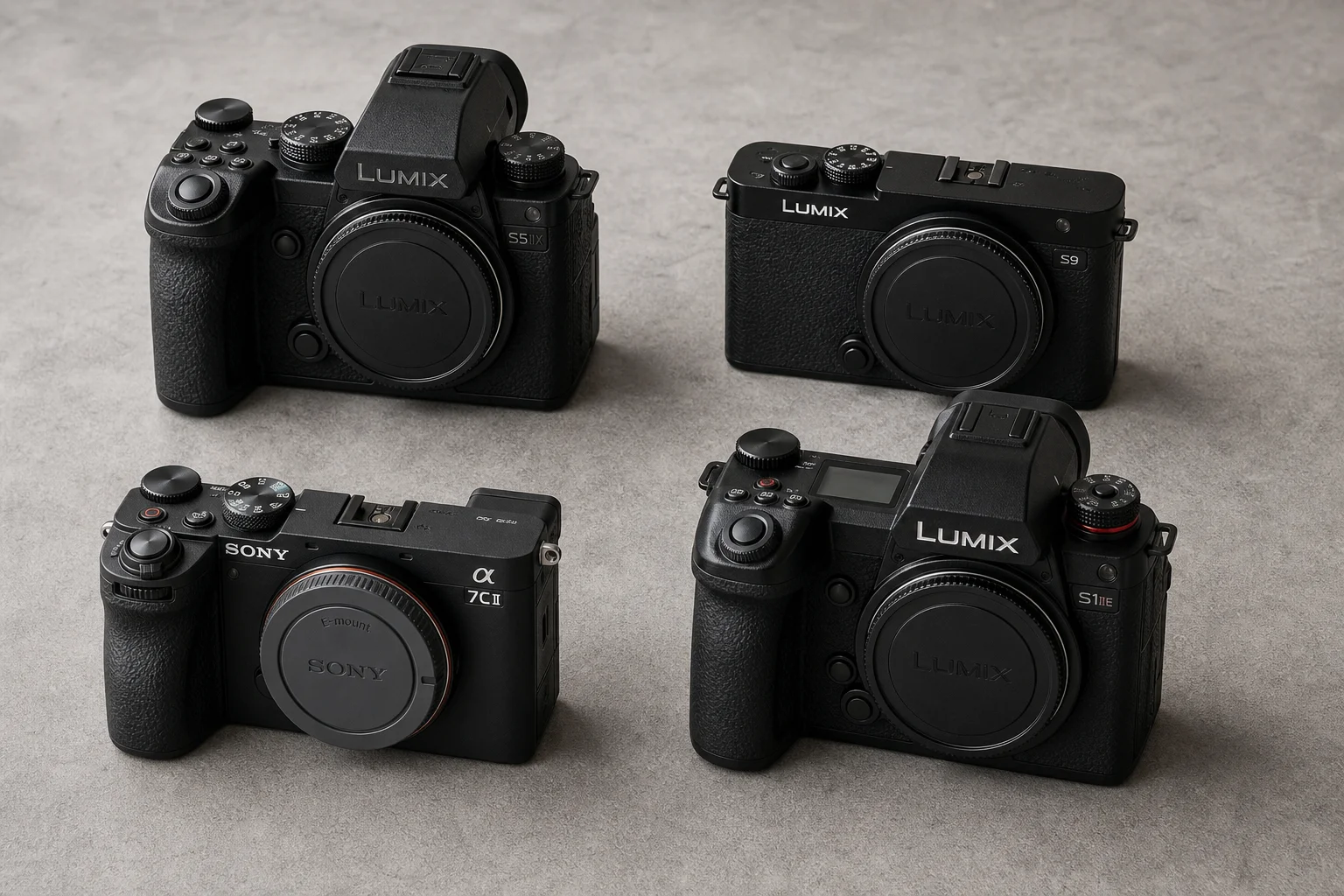
Best Budget Full-Frame Cameras for Video: Four Strong Options Compared
Four full-frame cameras that deliver excellent video capabilities without premium pricing. Lumix leads with unique features, while Sony offers strong autofocus for hybrid shooters.
Camera Reviews
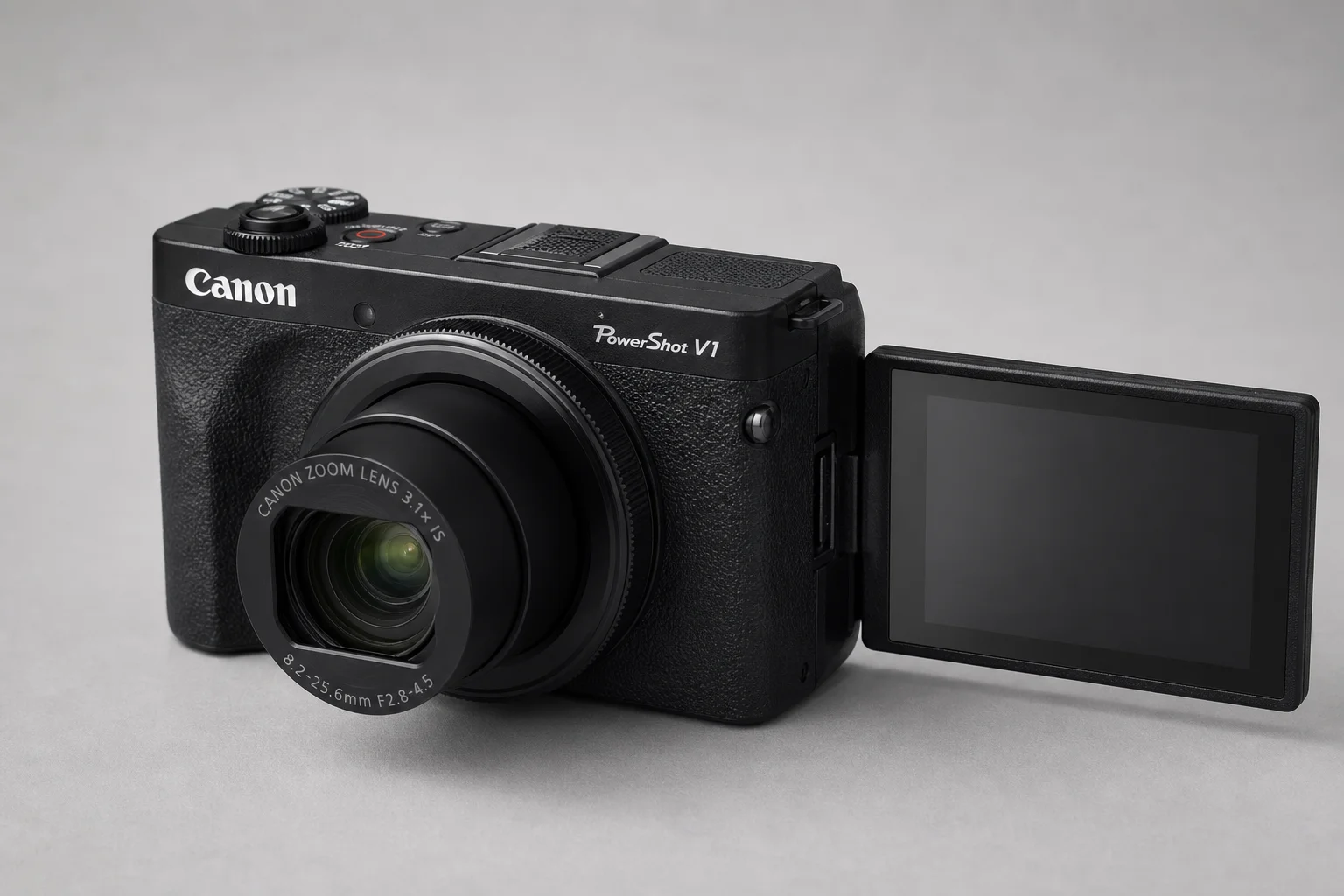
Canon PowerShot V1 Review: A Serious Vlogging Camera with Real Trade-offs
The Canon PowerShot V1 brings a larger sensor and optical stabilization to compact vlogging, but size, battery life, and dynamic range limitations deserve careful consideration.
Camera Reviews
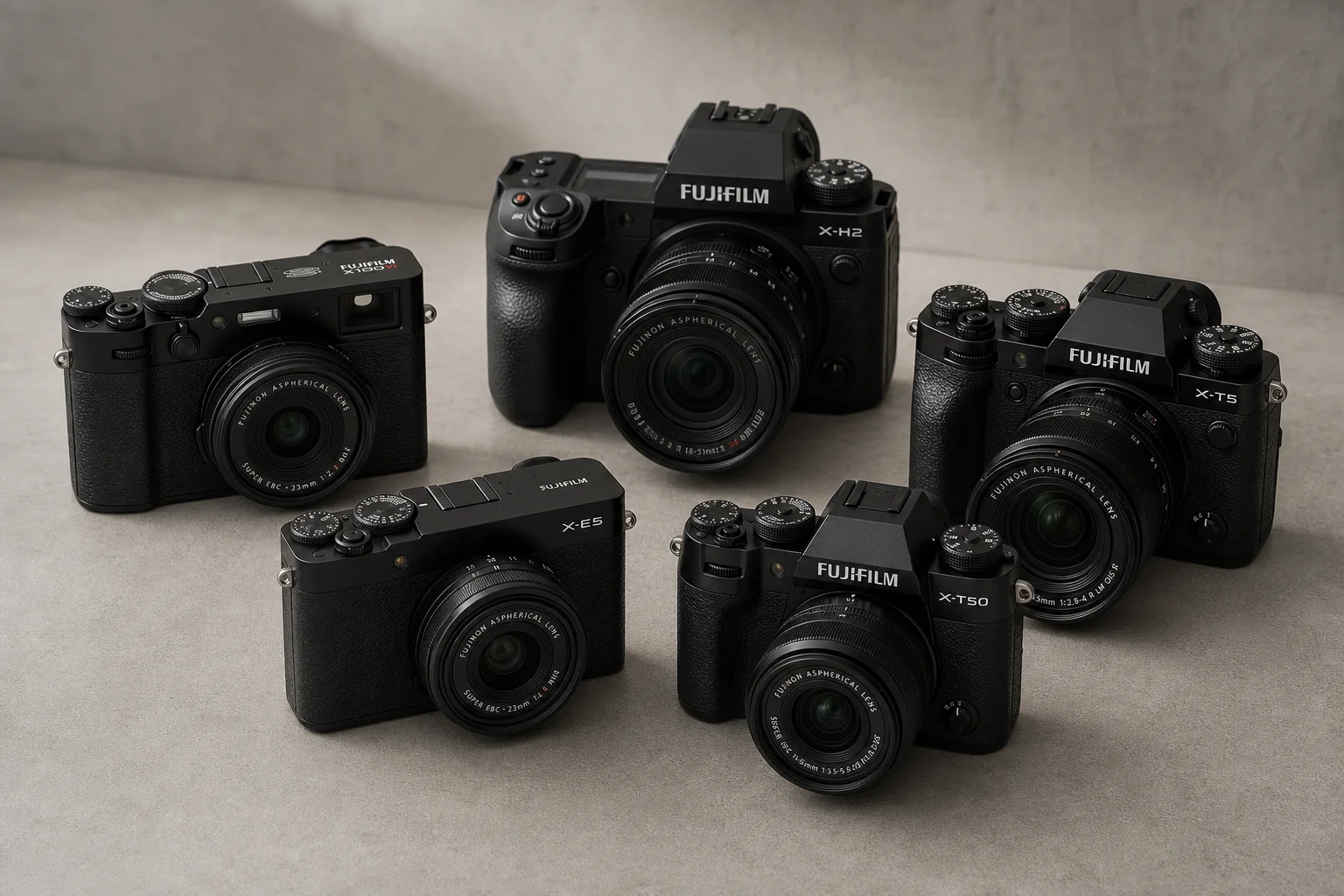
Fujifilm X-E5 vs Competitors: Five Cameras, One Sensor, Different Choices
The X-E5 shares Fujifilm's 40-megapixel sensor with four other models. Here's how to pick the right one for your needs.