Hi-Fi Audio
Diminishing Returns in Hi-Fi: What a $250 Amp and a $2,500 Amp Really Deliver
Two integrated amplifiers at very different prices, a VU meter accessory and a portable speakerphone, and what the price gap actually changes.
Introduction
Diminishing returns is one of the most useful ideas in audio, and one of the least discussed. It means that past a certain point, spending more money buys smaller and smaller improvements. Two integrated amplifiers can share the same basic job, accept the same kinds of sources and drive the same speakers, while sitting thousands of dollars apart.
This guide looks at four pieces of gear from very different points on that curve: an affordable integrated amplifier, a flagship integrated amplifier, a small VU meter accessory that adds some of the flagship’s visual charm for a fraction of the cost, and a portable speakerphone that covers a different part of the desk. The aim is not to crown a winner, but to show where the extra money goes and where it does not.
How Diminishing Returns Shows Up in Audio
Peel the onion back far enough and most integrated amplifiers are doing the same work: selecting a source, controlling volume and amplifying a signal for a pair of speakers. A more expensive model usually adds features and refinement, but the core function does not change.
Manufacturing costs also vary far more than most buyers assume. Some brands apply a large multiplier to their build costs and others a small one, so two products that perform similarly can sit at very different prices. That gap is a business decision, not automatically a sonic one.
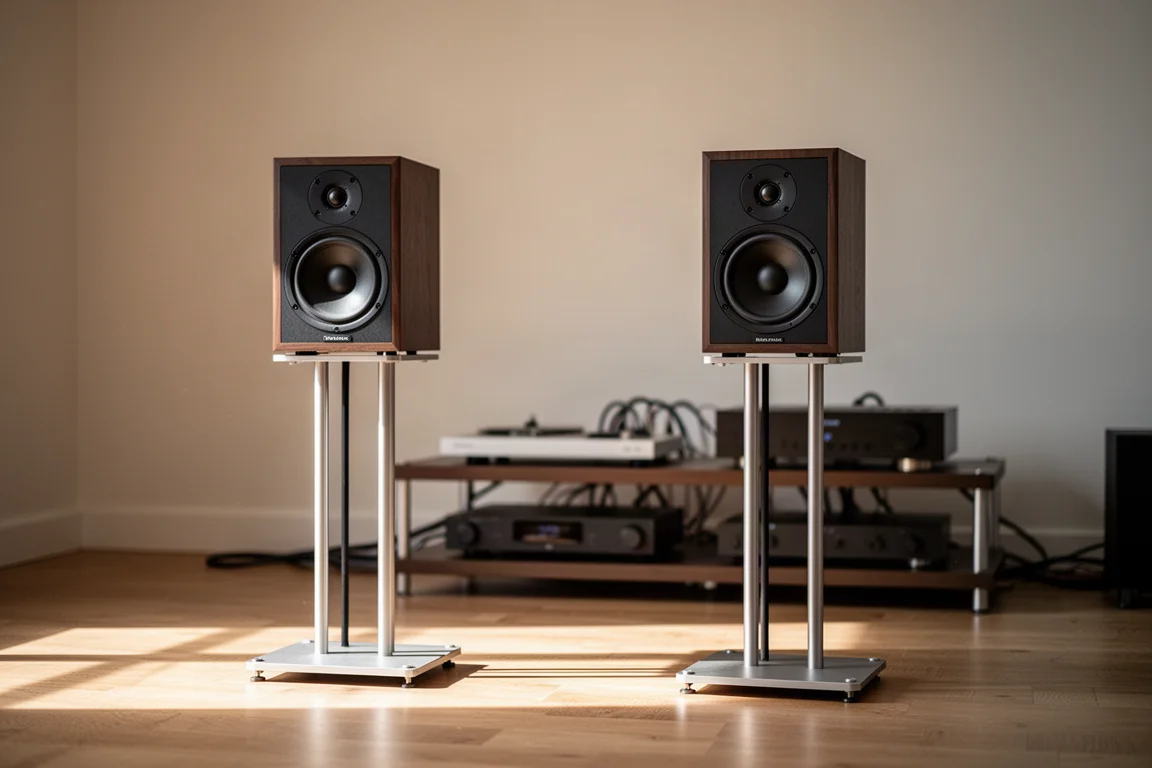
For this comparison, both amplifiers were paired with a pair of Sonus Faber Lumina II Amator bookshelf speakers, a well-regarded standmount design. Keeping the speakers constant lets the amplifiers be judged on their own terms: power delivery, noise, detail, and how well the music holds together when a track gets busy.
The practical takeaway is that a price difference tells you what a product costs, not what it does. The only way to judge value is to compare like with like, on the same speakers, in the same room.
Loxjie A40: An Affordable Integrated Amp That Covers the Basics
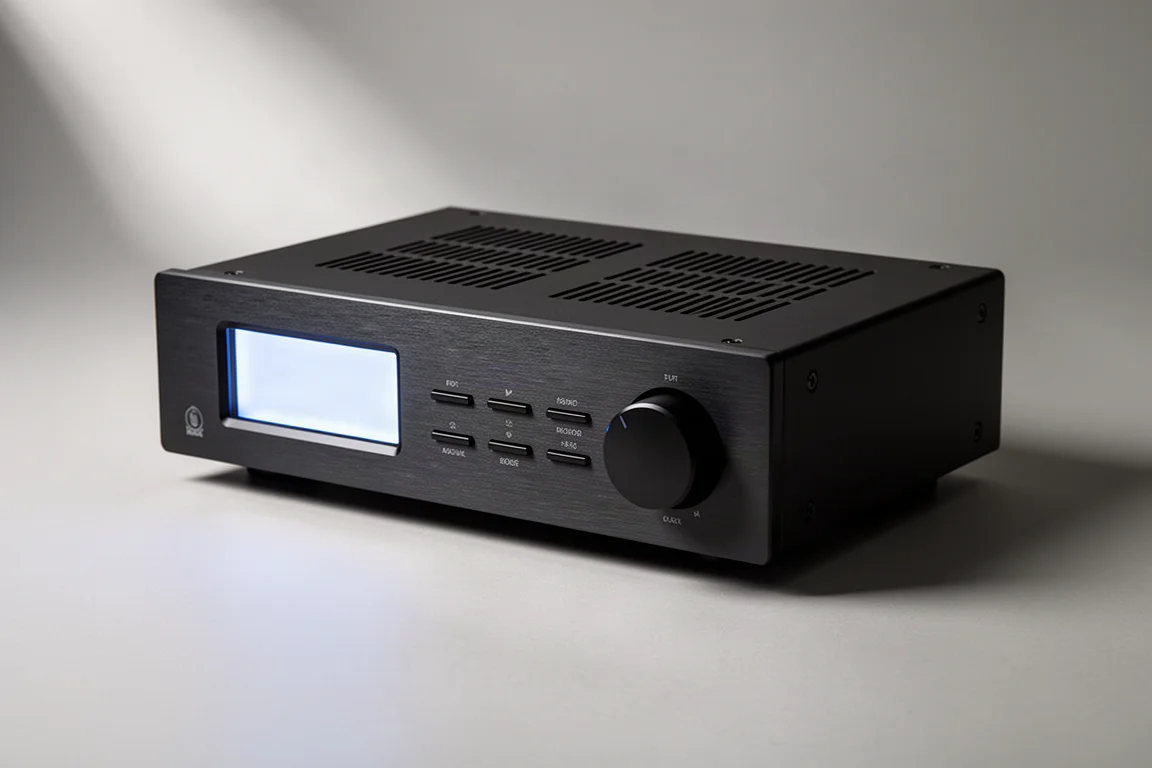
The Loxjie A40 is the affordable end of this comparison at around $250. Visually it is plain: a compact chassis with a simple front panel and nothing designed to catch the eye. Anyone who values the look of their system will notice that immediately.
Functionally it covers far more ground than the price suggests. It offers multiple digital and analog inputs plus a phono stage, so a turntable, a streamer and a disc player can all live on the same amplifier. The input count is lower than the flagship’s, but the types of connection are the same.
Power is sufficient for most people in most situations. Only large speakers with genuinely deep bass extension are likely to leave the A40 wanting, and that is the point at which the flagship’s extra output starts to matter.
Inside, the A40 uses a hybrid DAC arrangement built around a Cirrus Logic chip that also handles headphone amplification. It supports MQA, and the headphone output drove harder-to-drive headphones without any trouble.
On sound quality, the A40 delivers roughly 85 percent of the flagship’s performance. The remaining gap is real, but it lives in the last layer of refinement rather than in the fundamentals, and it is far smaller than the price difference suggests. Paired with an affordable turntable, its phono stage is entirely adequate.
Advance Paris A10 Classic: What the Extra Money Buys
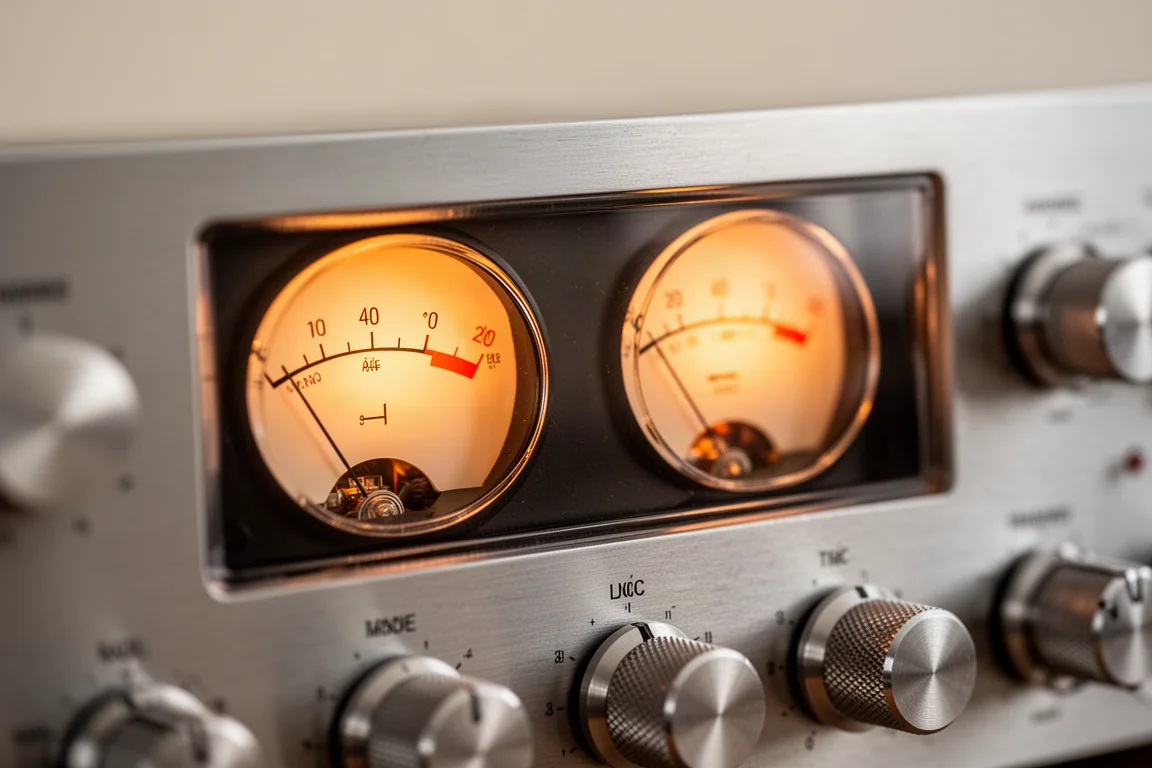
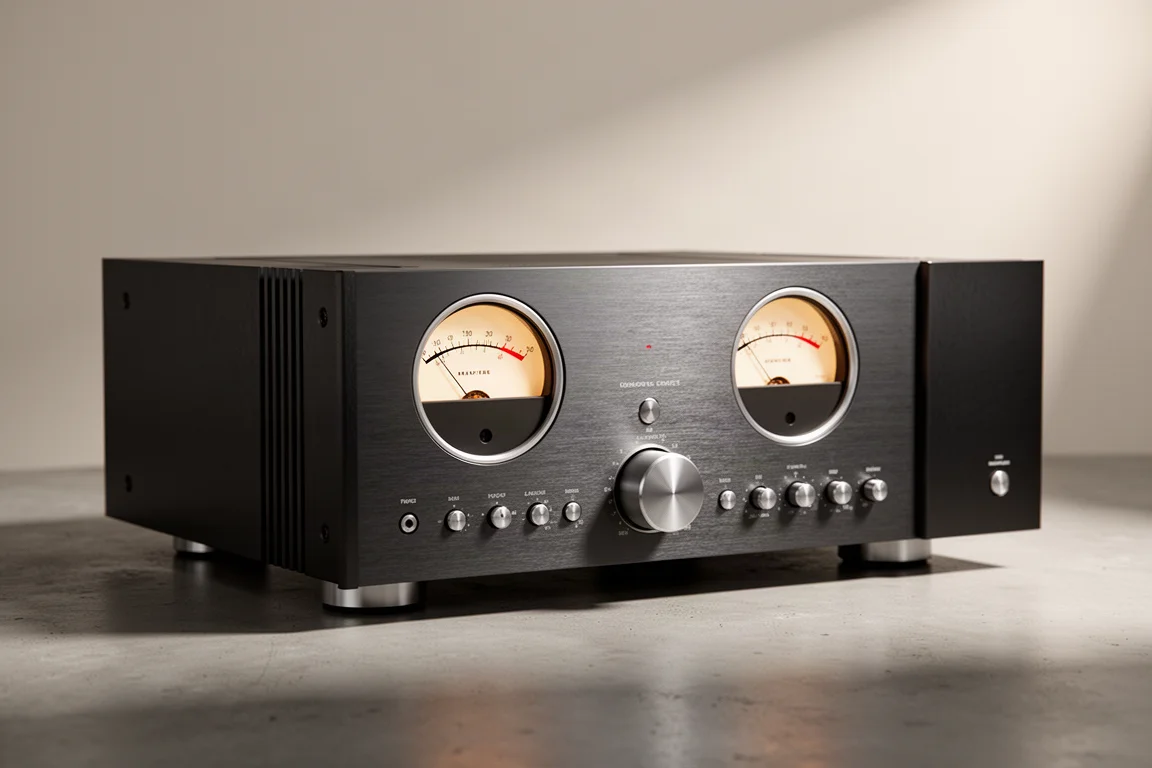
The Advance Paris A10 Classic sits at the other end at around $2,500. It is a vintage-styled amplifier with illuminated VU meters and a finish meant to be looked at as much as listened to, so if the appearance of your system matters, the difference is immediate.
Connectivity is where the A10 Classic pulls clearly ahead. It offers multiple digital inputs, multiple analog inputs and a phono stage, so almost any source collection can be accommodated without extra boxes.
Its phono stage is the stronger of the two: more dynamic, more airy and better at resolving detail, which makes it a natural match for a high-quality turntable. The A40’s phono stage is fine by comparison and is a sensible pairing for the affordable turntables that usually sit with an affordable amplifier.
The A10 Classic uses a Sabre DAC chipset. It sounds good and covers what most listeners need, though it is not the newest generation of that family. The headphone output is the weaker link: it produced channel dropouts and something that sounded like a phase issue, and it could not drive harder-to-drive headphones that the A40 handled without complaint.
In overall listening terms, the flagship is the better amplifier. It is slightly more convincing in transient response, soundstage and musicality, and those differences are audible on good recordings.
Fosi Audio LC30: VU Meters Without the Flagship Price
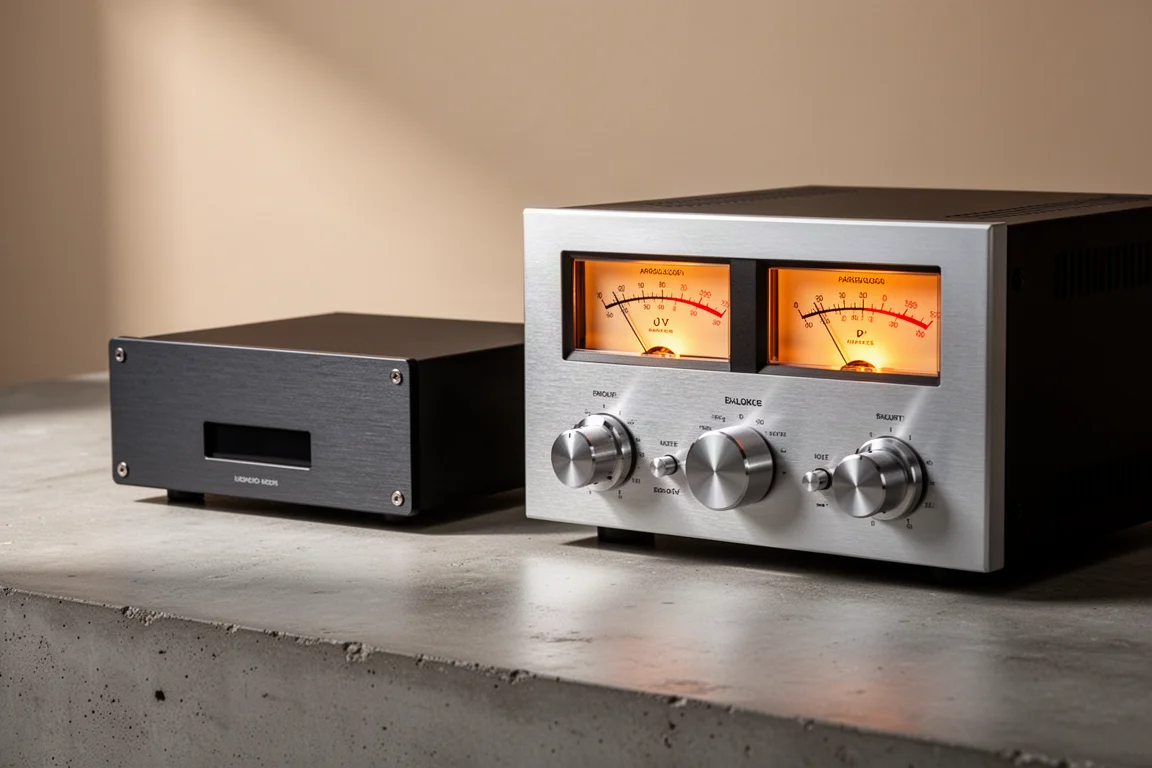
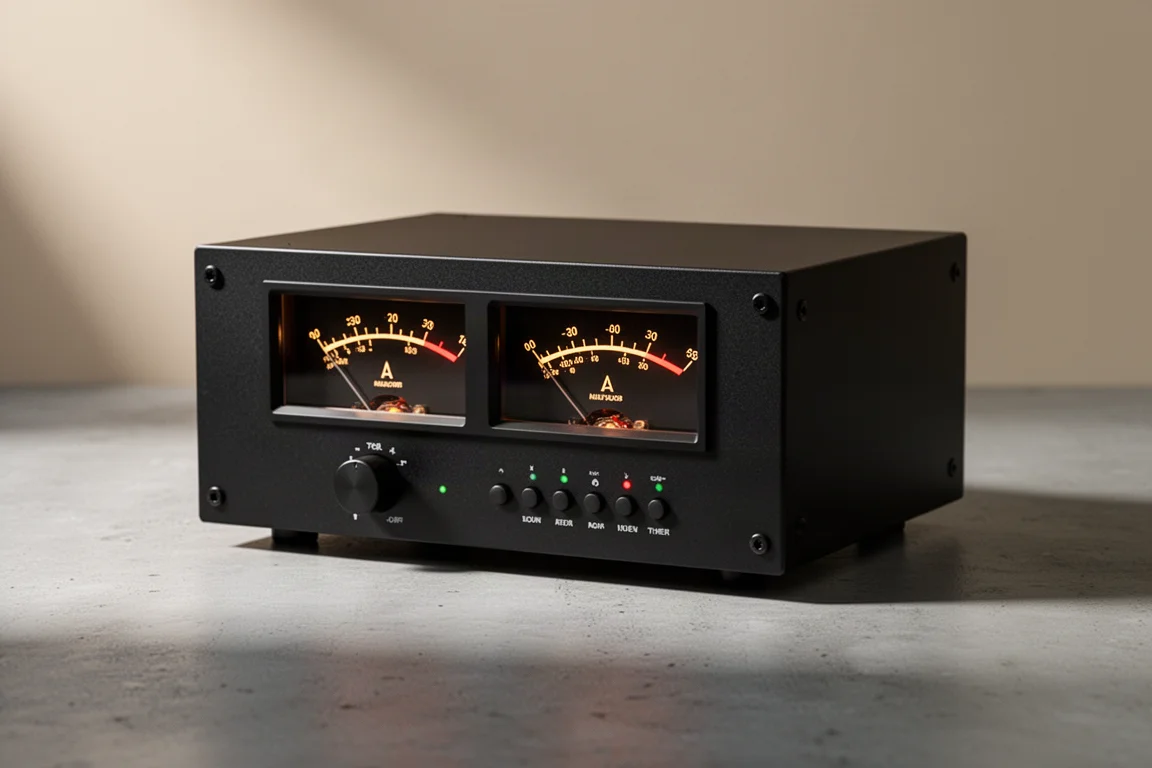
Much of what buyers admire about the A10 Classic is visual rather than sonic, and the Fosi Audio LC30 is one way to bring that character to a budget system. It is a small standalone VU meter unit that gives a modest setup some of the movement and warmth of a vintage faceplate.
There is one detail worth knowing before buying. A knob in the middle of the unit adjusts the sensitivity of the meters, meaning how much throw the needles have, and even at maximum the needles do not move a great deal. If you want dramatic needle swings, this is not the accessory that delivers them. A smaller-footprint alternative from Duke Audio, sold as the V1 or V3, is available at a similar price and does not share that sensitivity issue.
Stock of the LC30 has also been hard to come by, so availability can be uneven. When it is available, it is an inexpensive way to make an affordable amplifier feel more like a piece of equipment worth looking at.
AnkerWork S600: A Portable Speakerphone for Desk and Travel
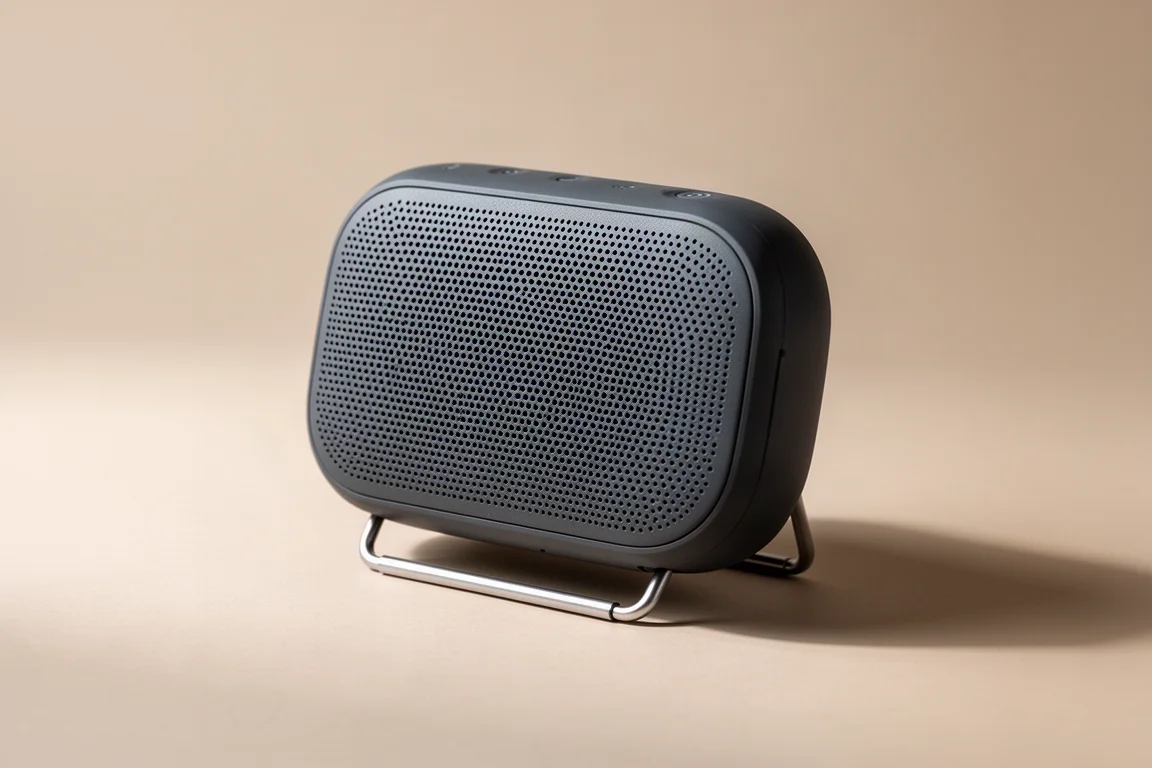
The AnkerWork S600 is not an amplifier, but it earns its place in a desk setup for different reasons. It is a portable speakerphone that can be charged and used as a stand, and it includes 15W of wireless charging for a phone placed on top.
Its headline feature is voice print recognition, which the company positions as a first for a speakerphone. Combined with VoiceRadar 3.5 and AI noise reduction, the unit concentrates on the registered user’s voice and suppresses other voices in the room, which is useful in a busy household or a shared office.
The hardware supports that idea: four microphones arranged around the body, recording at 48 kHz, and recognition of more than 300 types of background noise. Sound is delivered in 360 degrees from a 5W output, so it works for music and video as well as calls, and the viewing angle adjusts by up to 70 degrees for live streaming or watching video.

Because it is portable, the S600 moves between a desk, a kitchen table and a hotel room without fuss. Limited-time early-bird pricing of up to 45 percent off has been offered, which changes the value calculation considerably for anyone who needs a better speakerphone more than another amplifier.
Matching an Amplifier to Your Speakers and Room
The single biggest factor in whether an affordable amplifier is enough is the speaker it has to drive. Efficient standmount speakers in a normal room are easy work, and an amplifier like the A40 will sound comfortable and composed. Large floorstanders with deep bass and low sensitivity ask for more current, and that is where a more powerful amplifier earns its price.
Room size matters almost as much. A small room needs very little power to reach satisfying levels, while a large open space can absorb output quickly. Before spending more on electronics, it is worth checking whether the speakers and the room are the real limit.
None of this requires an expensive amplifier to sound good. It requires an amplifier that matches the load it is given.
Buying Advice
Start with the inputs you genuinely use. If you need several digital sources, multiple analog components and a serious phono stage, a flagship amplifier like the A10 Classic covers all of it in one box. If your system is a streamer, a turntable and a pair of speakers, the A40 handles the same job with fewer sockets and a much smaller bill.
Then decide how much the last few percent of performance is worth to you. The affordable amplifier gets most of the way there, and the difference is easiest to hear on a resolving system in a quiet room. On an everyday setup, the gap narrows further.
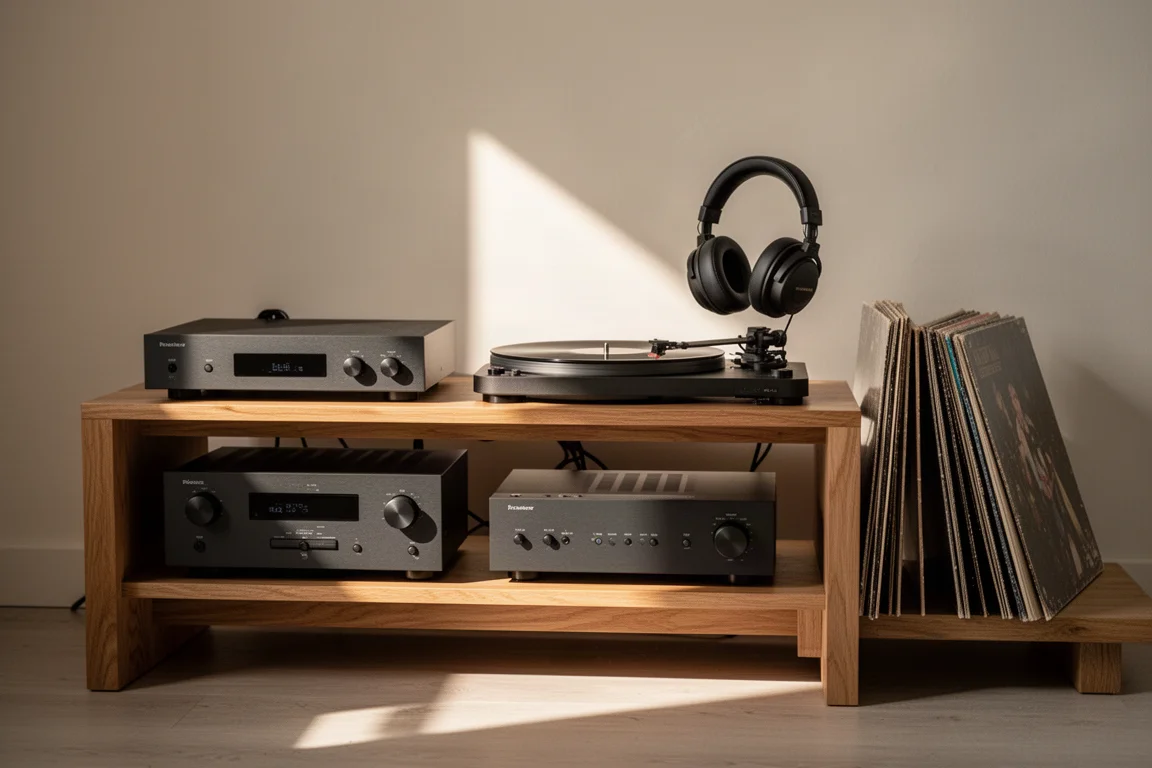
Finally, be honest about aesthetics. VU meters and a vintage faceplate are part of why people enjoy this hobby, and an accessory like the LC30 is a low-cost way to add some of that. It is also worth remembering that a complete affordable system can be put together for under $400, which leaves more room to spend on records.
Conclusion
Diminishing returns does not mean that expensive gear is bad, and it does not mean that all amplifiers sound the same. It means the curve flattens, and the useful question stays the same: what do you gain, and what does that gain cost you?
Here, the flagship amplifier is the better product, with more inputs, a stronger phono stage and a little more polish in the sound. The affordable amplifier covers the same ground for a fraction of the money and gets remarkably close on sound quality. If the budget is tight, that is not a compromise to feel bad about. Put the difference into music.
Further reading
Related Reviews
Hi-Fi Audio
Accuphase C-57 vs Allnic H-7000V: Two High-End Phono Stages Compared
A fully balanced solid-state phono stage with a pitch-black noise floor meets a tube design built for well-loved records. Here is how to choose between them.
Hi-Fi Audio
Active vs Passive Hi-Fi: Five Components for a Modern System
Five components that define modern active and passive hi-fi systems, with the strengths, trade-offs and setup details worth weighing before you buy.
Hi-Fi Audio
Advance Paris A10 Apex Review: A Hybrid Integrated Amplifier That Covers a Lot of Ground
A French hybrid integrated amplifier with a class A tube preamp stage, analogue power meters, and an internal DAC and phono stage good enough to make extra boxes unnecessary.