Portable Power
Running Mains Appliances from Power Tool Batteries: DeWalt Battery Inverter vs EcoFlow River 2
Turn the power tool batteries you already own into mains power with a battery inverter, and see how it compares to a larger portable power station.
Introduction
Portable power stations are more popular than ever: handy for running mains appliances away from home, or as a backup to keep devices charged during an outage. The big drawback is cost. They are expensive.
There is, however, one form of portable power most tool owners already have sitting in the shed: the batteries for your cordless power tools. With the right accessory, those batteries can run devices that normally plug into the wall. This article looks at two very different ways to get there: a compact inverter that runs on tool batteries, and a larger dedicated power station.
How a Tool-Battery Inverter Works
An inverter ramps up the 18 or 20 volts that tool batteries output to 230 volts in the UK, or 110 volts in the US, so it can power items that normally run off mains electricity. That makes it genuinely useful when you are away from the house, out camping, or just want a bit of backup.
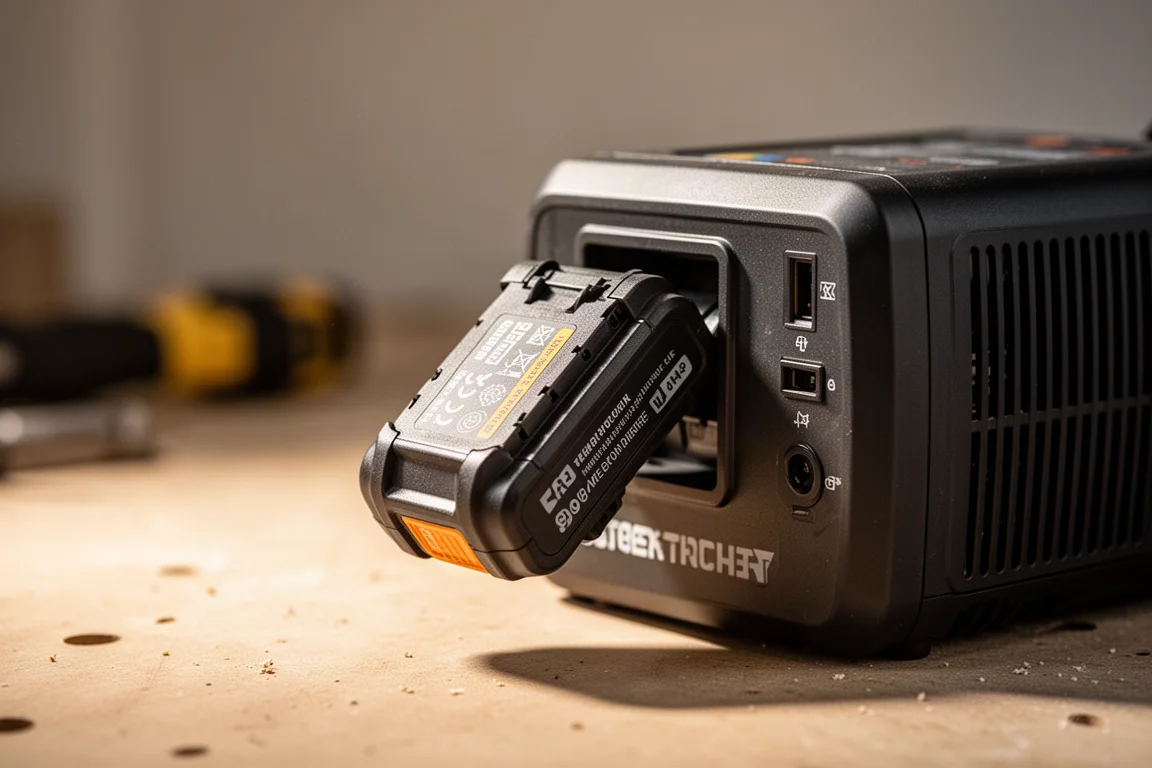
These inverters are sold in versions matched to specific battery platforms, such as DeWalt, Makita or Ryobi, and battery adapters exist if your packs are mixed across brands.
DeWalt Battery Power Inverter
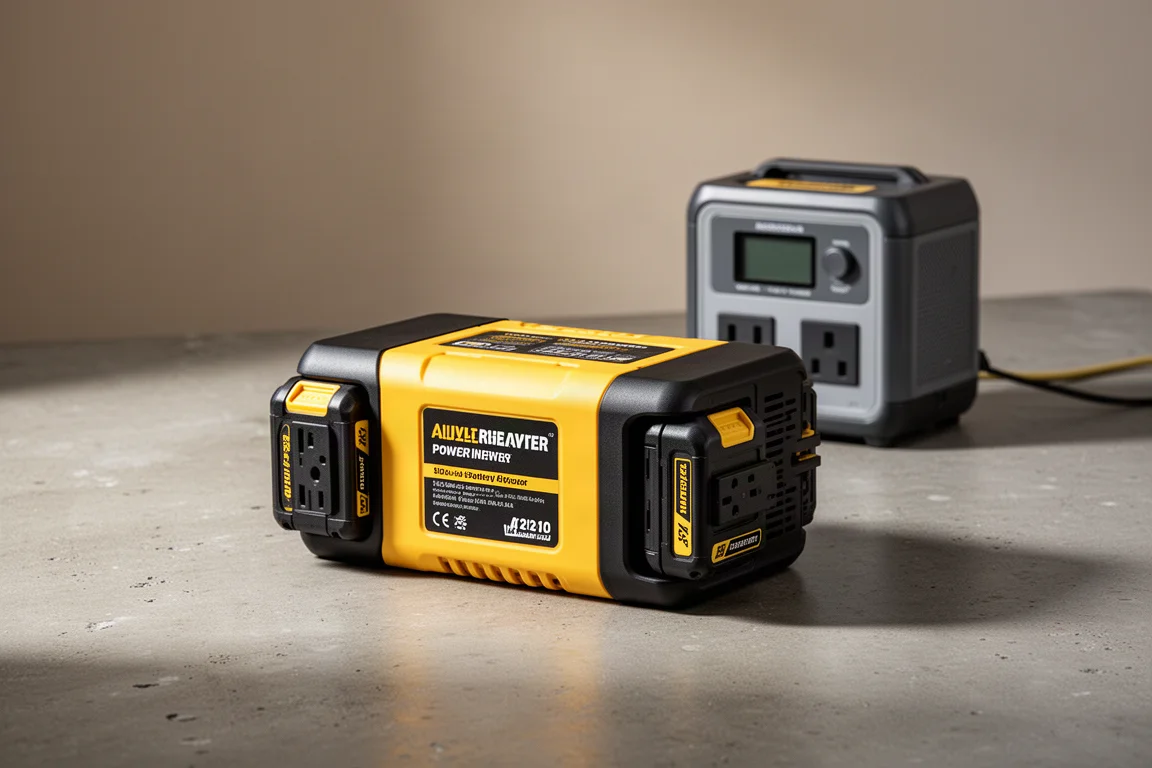
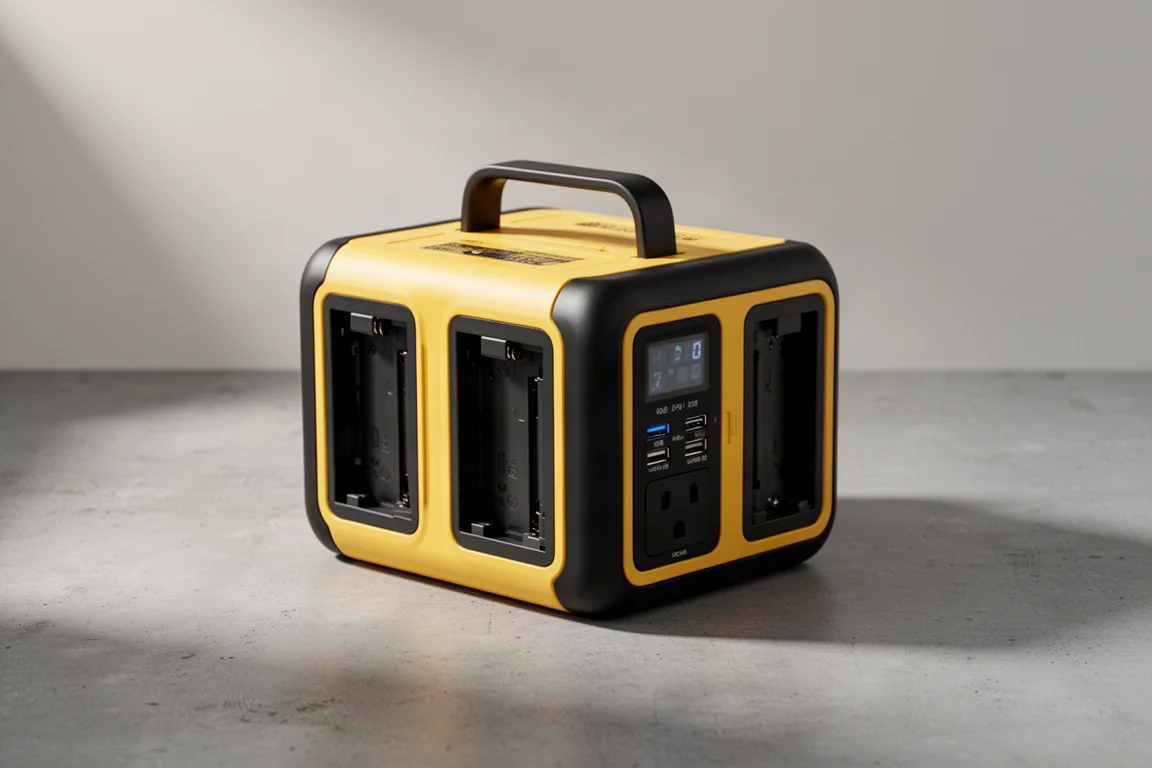
This four-battery inverter takes two packs on either side, and the yellow housing is built for DeWalt batteries. It was picked up for just over £100 during a discount; the usual price is around £115, and the smaller two-slot version typically sits at about £90.
You do not need to fill every slot. One battery is enough for it to work, though a single pack means much less capacity than four. On the front you get a power button (a long press to switch on), a display showing available voltage, three USB sockets, and one USB-C port rated QC3, which charges a phone noticeably faster than a standard charger. There is also a 12V 5A outlet and an emergency lamp on the back that brightens or flashes with each press.
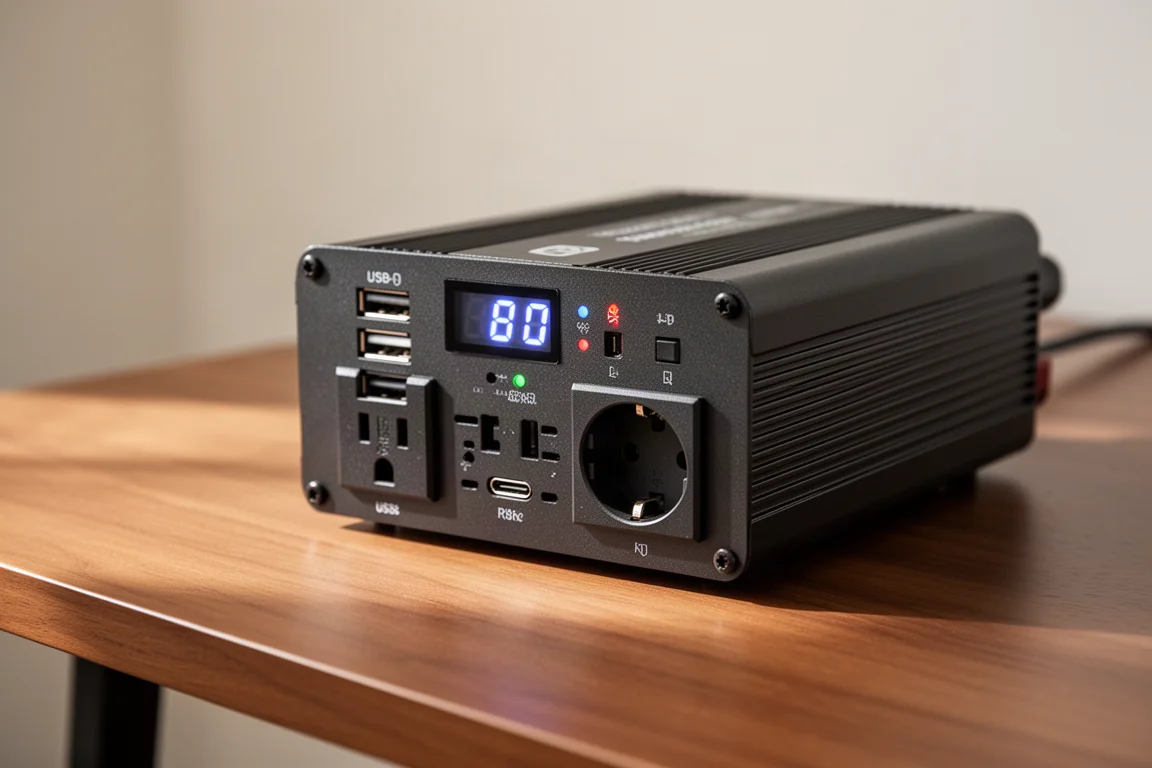
The headline output is a 230V mains socket, but note that inverters like this are rated up to a limit: this one tops out at 350W. Pull more than that and it shuts off automatically to protect itself. Versions rated up to 500W exist, but they cost roughly £20 to £30 more.
What It Can and Can’t Run
The practical limits show up quickly. A Bosch hot glue gun worked fine, drawing around 36 to 38W. A pair of 20W LED site lights ran together at about 46W, and four 50W LED strip lights in an outbuilding pulled roughly 200W.
Running the maths: an 18V battery pack at around 5Ah gives roughly 90Wh, so about 360Wh across four packs. Four 50W strip lights would run for just over an hour and a half; the 20W site lights stretch to around 8 hours.

Kitchen appliances are a different story. A toaster, a kettle and a coffee maker all tripped the overload cutoff as they tried to pull beyond 350W. The realistic use case is lights, charging laptops and phones, and a radio, not anything heavy.
EcoFlow River 2
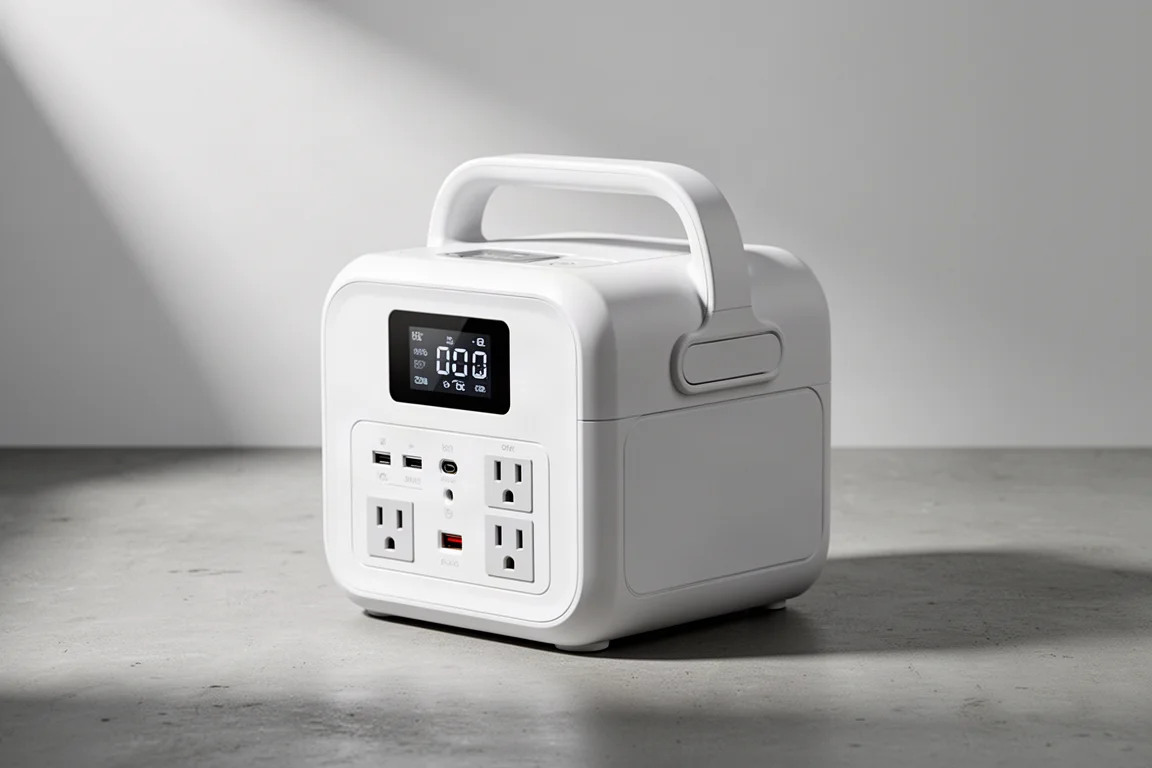
For comparison, the EcoFlow River 2 is a much larger dedicated power station, rated at 750W. That higher ceiling means it copes with more demanding devices than the 350W inverter can, though big appliances like an oven or a large electric heater are still out of reach.
It is also, inevitably, the more expensive option of the two, which is exactly the cost problem that makes tool-battery inverters appealing in the first place.
Buying Advice
If you already own a set of tool batteries, a four-battery inverter is a low-cost way to get limited mains backup: good for lighting, charging and small electronics, useless for anything over 350W. Battery adapters can even bridge brands, so a Makita pack can fit a DeWalt-designed unit.
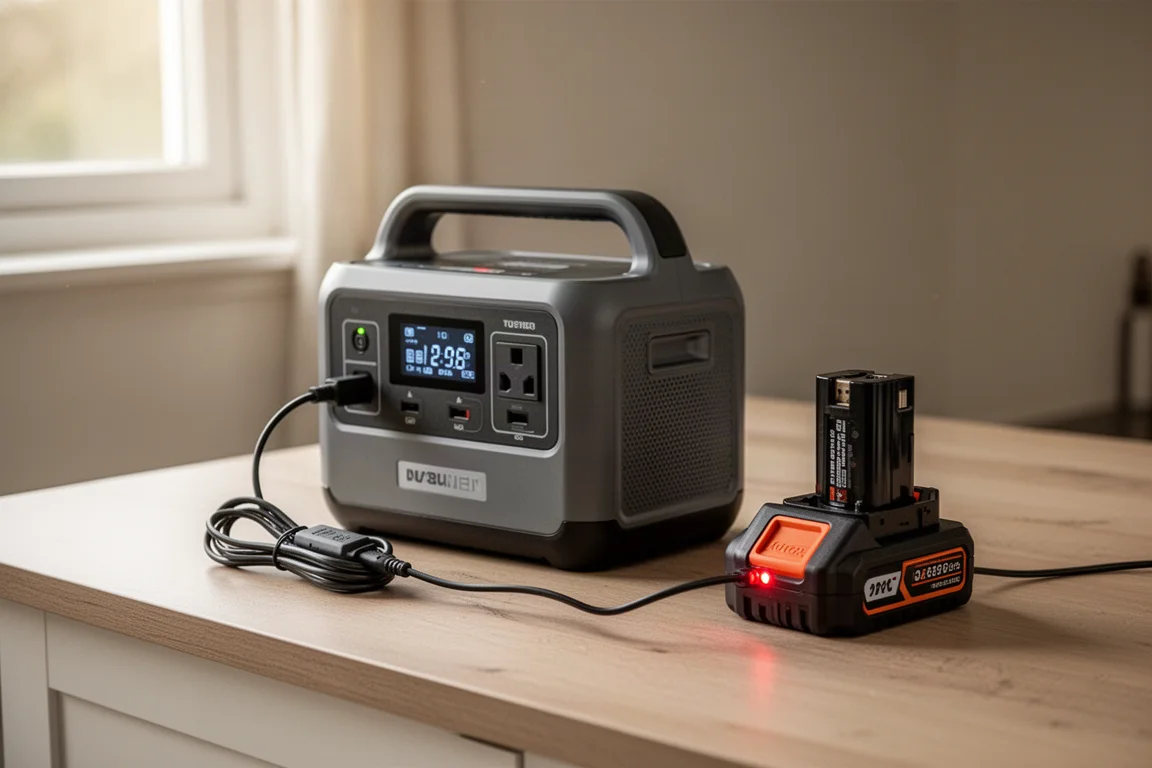
There is also a neat trick with these setups: plug the tool’s own charger into the inverter, and you can recharge a run-down battery, swap it back in, and rotate packs as they drain.
If you need to run heavier devices, or want serious capacity in one box, a dedicated power station like the EcoFlow River 2 with its 750W rating is the stronger, if pricier, choice.
Conclusion
A tool-battery inverter is not a replacement for a power station, and it will never run a kettle. But for lighting, charging and small appliances during a power cut or a trip away from home, it makes clever use of batteries most tool owners already have. Step up to a power station like the EcoFlow River 2 only when you genuinely need the extra wattage.
Further reading
Related Reviews
Portable Power
Best Portable Power for Camping and Remote Work: Six Power Banks and Solar Panels Compared
A practical comparison of six portable power options, from a 500W solar generator for car camping to a one pound solar power bank built for backpacking.
Portable Power
Best Portable Power Stations 2026: Nine Models Compared for Real-World Use
We compared nine portable power stations across output, capacity, charging speed, noise, and UPS performance to find the best value and the best overall pick.
Portable Power
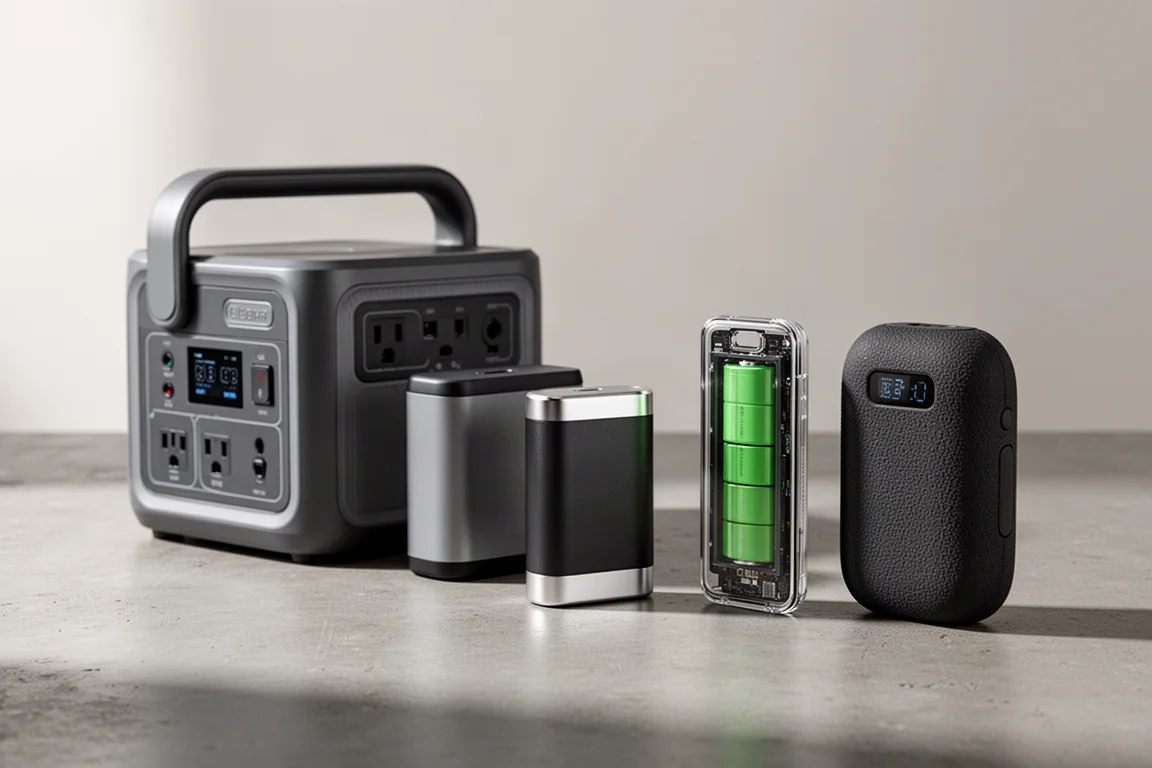
Best Portable Power Stations and Power Banks for Blackouts and Travel
Five portable power solutions compared: two EcoFlow power stations, a flight-friendly Zendure power bank, a see-through Shargeek, and the feature-packed Omni 20c+.