Home Theater
Denon X3900H Review: The AV Receiver Most Home Theaters Actually Need
A 9.4-channel Atmos receiver with 105 W per channel, full preamp outputs, and support for the full Dirac suite including ART. Here is who should buy it and where it runs out of headroom.
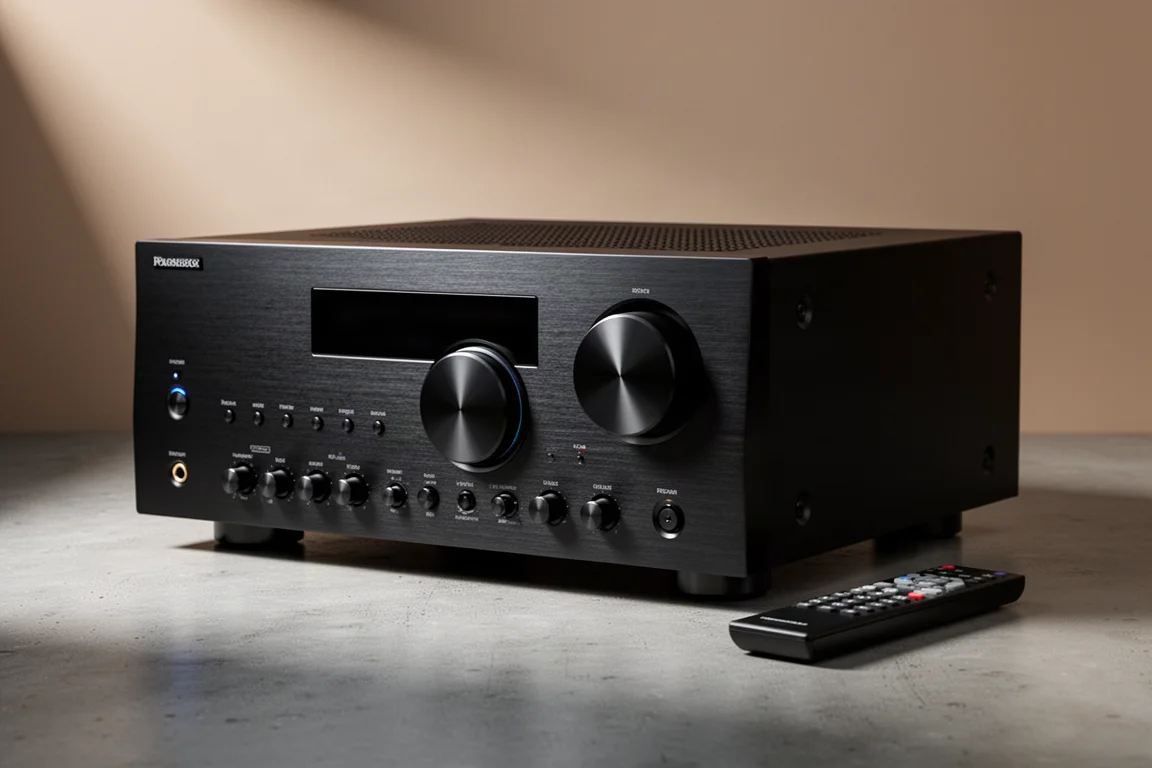
Introduction
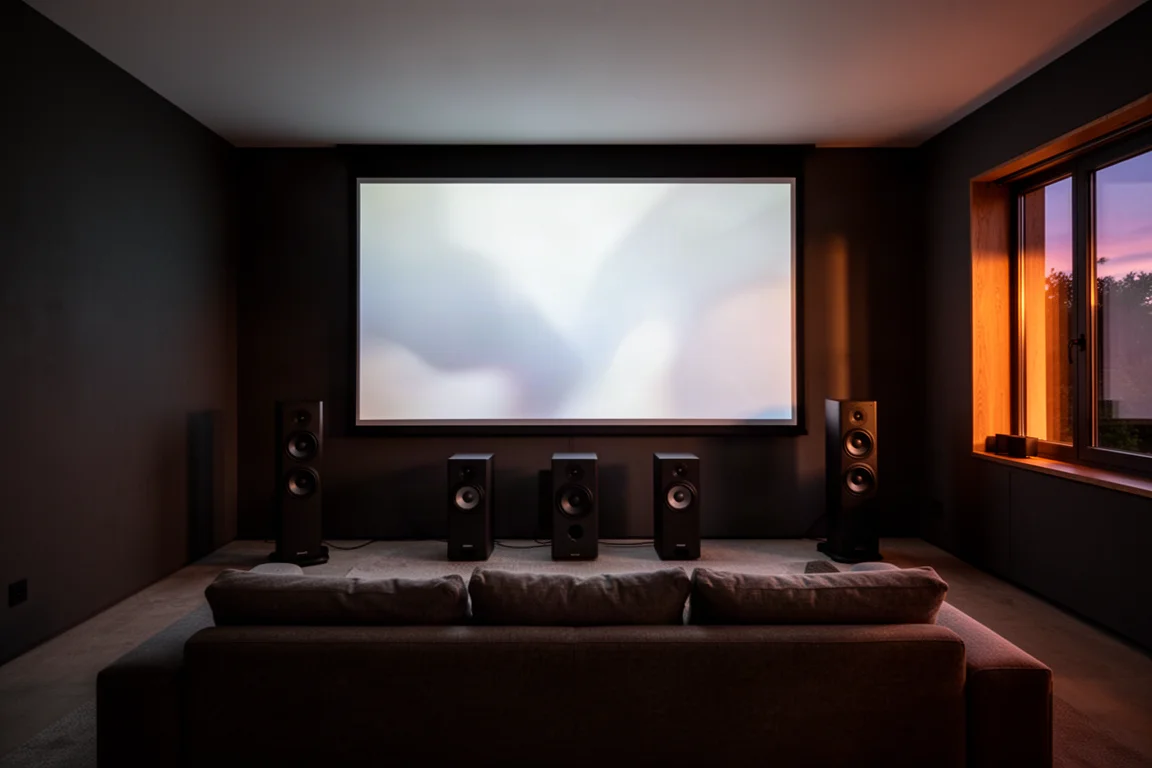
Home theater has reached an interesting point. The question is no longer whether a modern AV receiver can deliver a convincing surround experience, but which one fits a given room and budget. Roughly a quarter of households in the United States have what would count as a home theater, meaning five separate loudspeakers driven by a receiver. Narrow that to systems with more than five channels and the number drops into the single digits, below 5 percent nationwide.
That context matters when looking at the Denon X3900H. It is a 9.4-channel Atmos-enabled receiver priced at $1,849, and it is the first receiver in its price class to support the full Dirac suite, including Dirac ART.
Add the full Dirac package and the all-in figure lands around $2,600. That is roughly half the cost of the higher-tier models that previously offered ART, and for most systems it is the combination worth evaluating.
Who This Receiver Is For
Most mass-market loudspeakers, whether bookshelf or tower, sit between 6 and 8 ohms with a sensitivity around 89 dB. The X3900H’s 105 watts per channel is more than enough to drive that kind of speaker at volumes most listeners would call cinematic. For harder-to-drive setups, the receiver offers full preamp outputs and a dedicated preamp mode, so external amplifiers can be added and the X3900H can serve as a processor for a more advanced system.
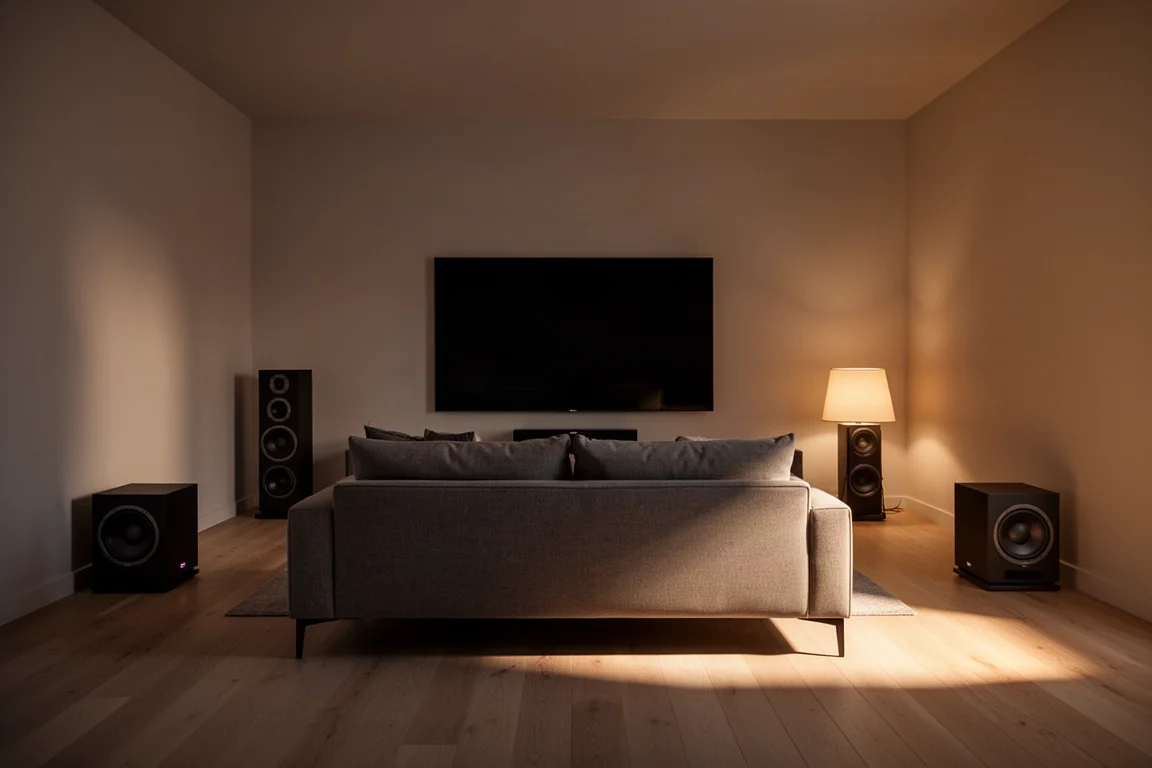
The channel count covers the layouts most people actually build. Nine amplified channels and four independent subwoofer outputs support configurations such as 5.2.2, 5.3.4, or 7.3.2 without external amplification, and the subwoofer outputs are independent rather than shared.
If you already own the X3800H, the previous generation, there is no compelling reason to move up based on the specifications. The X3800H is also ART compatible, so adding Dirac is the more sensible step for that group.
Main Strengths
Beyond amplification, the X3900H covers the practical features a modern system needs: HEOS streaming, 8K video support, four independent subwoofer outputs, and Audyssey room correction included at no extra cost. The Denon control and HEOS apps add a useful degree of flexibility and customization for day-to-day use.
Dirac ART and Room Correction
Dirac ART is not simply another equalizer. Where Dirac Live and Bass Control handle EQ, time alignment, and subwoofer integration, ART looks at how the room behaves as a whole and uses the speakers and subwoofers together to cancel unwanted energy, particularly low-frequency energy that lingers too long.

The effect is measurable. With ART engaged, bass decay between 30 and 120 Hz was reduced by 30 to 60 percent depending on frequency. That is why low frequencies sound clearer and faster: they are not hanging around as long, and the improvement carries into the clarity of the range above them.
The other change is coherence. In a system where the in-ceiling speakers do not sonically match the front mains, ART made the sound field seamless in every direction, side to side, front to back, and floor to ceiling. Dialogue intelligibility improved to the point where artificial voice enhancement features are unlikely to be needed, and multi-channel music became more satisfying than a stereo presentation.
Things to Consider Before Buying
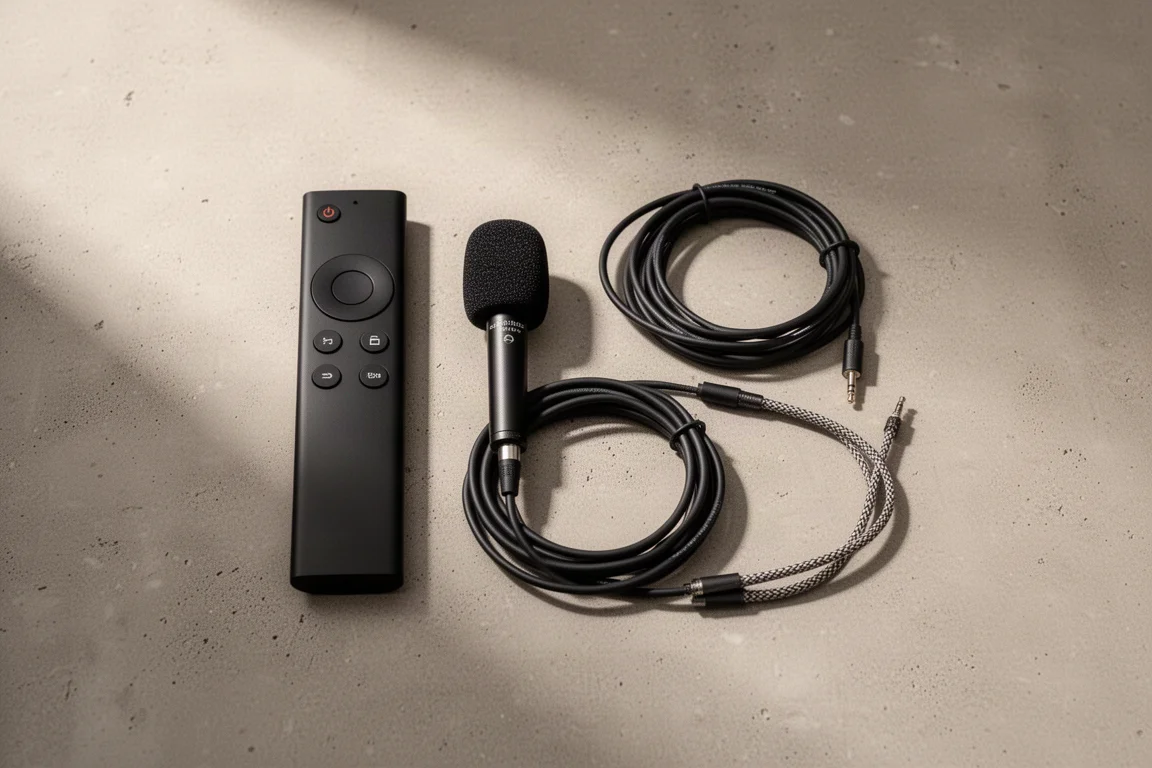
Dirac is far from plug-and-play. The process itself is relatively painless, but arriving at results that reflect the full benefit takes some research and trial and error, and less experienced users are likely to meet a learning curve. Budget time for calibration, not just money for the license.
Dirac ART Costs Extra
Audyssey is included free, and it will handle basic equalization and higher-level subwoofer integration while saving money. It is simply not as capable as ART, and the difference is audible. The full Dirac suite, which includes Dirac Live Bass Control, adds about $800 to the receiver. That makes ART effectively mandatory if the X3900H is the plan; without it, the receiver loses much of its reason for existing.
If the full Dirac suite is out of the question, the Denon is probably the wrong purchase. A receiver such as the Onkyo RZ30 costs around $1,000, includes Dirac Live with an upgrade path to Bass Control, and matches on power and channels. It is limited to two subwoofers, and Onkyo has confirmed that the RZ30 does not have the processing power to run ART, so it cannot replicate these results. Tonally the Onkyo is slightly more lively while the Denon stays more neutral.
Power Demands and Speaker Matching
With mass-market speakers the X3900H has ample headroom. With more demanding loudspeakers it does not. Driving a Wilson Sabrina V and center, audible distortion appeared from the woofers at volumes above 80 dB. A three-channel external amplifier for the front stage is one way around that, but for a system built around genuinely demanding speakers, this is not the ideal long-term pairing.
Buying Advice
At $1,849, or about $2,600 with the full Dirac suite, the X3900H makes the most sense when ART is part of the plan from the start. That combination is what separates it from receivers costing considerably more. It is worth remembering that the receiver is only the beginning of the budget: a complete system built around this level of processing can approach $11,000 once speakers and subwoofers are included.
Compared with the Marantz Cinema 50, which runs about $2,800 and is also ART compatible with the same channel count, the Denon with ART costs roughly $200 less. The Sony 7000ES offers more power, more channels, and 360 sound mapping, but it has seen a $1,200 price increase and is unlikely to gain Dirac support.
For anyone already running the X3800H, the sensible move is to add Dirac rather than replace the receiver, since the X3800H is ART compatible as well.
Conclusion
For a home theater with nine channels or fewer and speakers that are reasonably easy to drive, the Denon X3900H with the full Dirac suite is the new reference point. It pairs ample power and a complete feature set with room correction that meaningfully changes what a room sounds like. Buy it for ART, budget for ART, and the rest of the receiver will keep up.
Product link
View more details for Denon X3900H
This product is mentioned in the review. Check the specifications, options, and compatibility before buying.
View more details for Denon X3900HFurther reading
Related Reviews
Home Theater
Anthem AVM 90 Review: A 15.4-Channel Flagship Preamp Processor
A close look at Anthem's flagship preamp processor, covering its dual ESS DAC architecture, 15.4-channel layout, ARC Genesis calibration and four independent subwoofer outputs.
Home Theater
Apple TV 4K With AirPods: A Best-Value Home Theater Setup
An Apple TV 4K paired with AirPods over Bluetooth makes a compact home theater setup for movies, spatial music and late-night viewing, and it can be assembled for as little as $300.
Home Theater
Arcam AVR15, AVR25, AVR35, and AVP45 Compared: Which AV Amplifier Fits Your System?
Four new Arcam home theater components share nine-channel amplification and Dirac Live, but differ in power, processing ceiling, and channel flexibility.