Streaming Amplifiers
Denon Home Amp vs Marantz M1: Two Compact Streaming Amplifiers Compared
A compact streaming amplifier comparison covering what the Denon Home Amp and Marantz M1 share, how their tunings differ, and which one suits your system.
Introduction
Compact streaming amplifiers have become a practical alternative to bulky integrated amplifiers and receivers, particularly for listeners who rely on streaming services rather than a rack full of analog sources. The Denon Home Amp sits squarely in that idea: a small, lightweight amplifier that streams music, accepts a CD player or turntable, and can be connected to a television.
It shares much of its platform with the Marantz M1, and the two are close enough in size and capability that the decision usually comes down to design and tuning. This guide covers what each amplifier offers, where they genuinely differ, and how to work out which one fits your room and your speakers.
Shared Foundations: What Both Amplifiers Have in Common
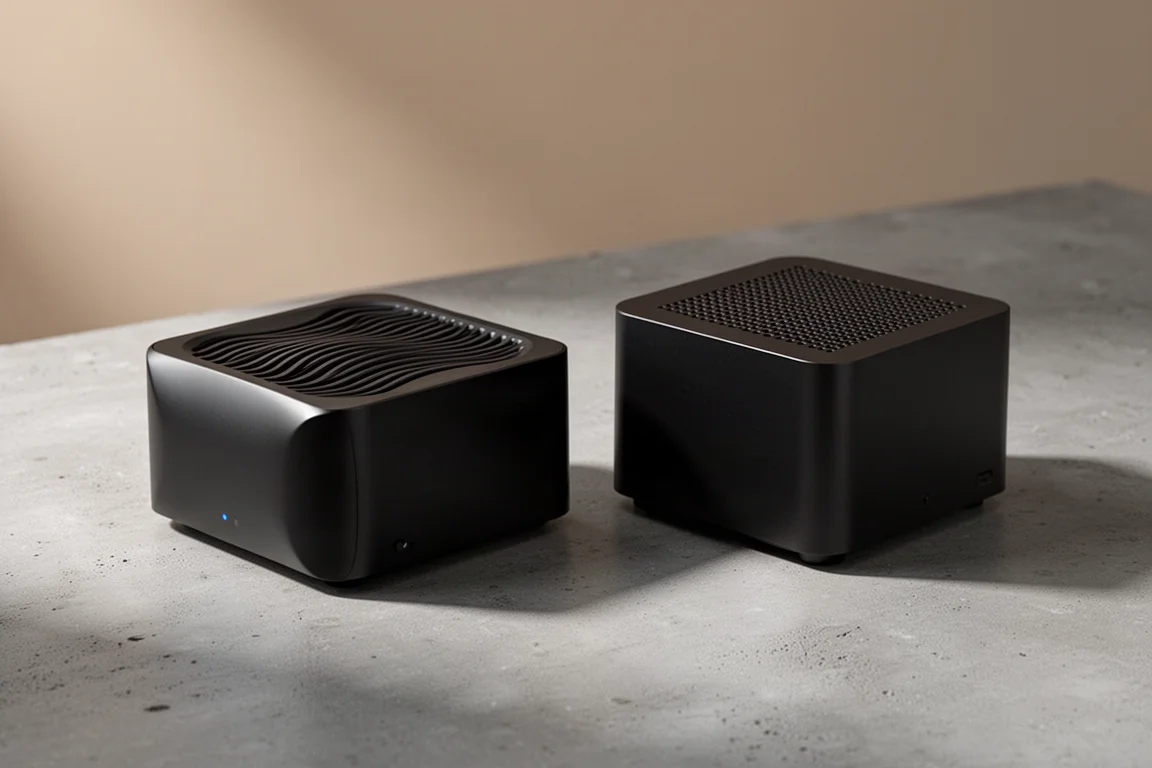
Both the Denon Home Amp and the Marantz M1 are built around Class D amplifier modules, and those modules are tunable, which allows each brand to shape its own sound character from the same underlying design. The two amplifiers have very low distortion and the same output power, and both are tuned by the Sound Master approach used across the two brands. Denon states the Home Amp can run just about any speaker in its price class.
Both also deliver strong imaging and sound staging for the money, and both are comfortable as the main component of a living room music system or as one unit among several in a whole home audio setup. The audible differences between them are minor, and in some systems listeners may not notice them at all.
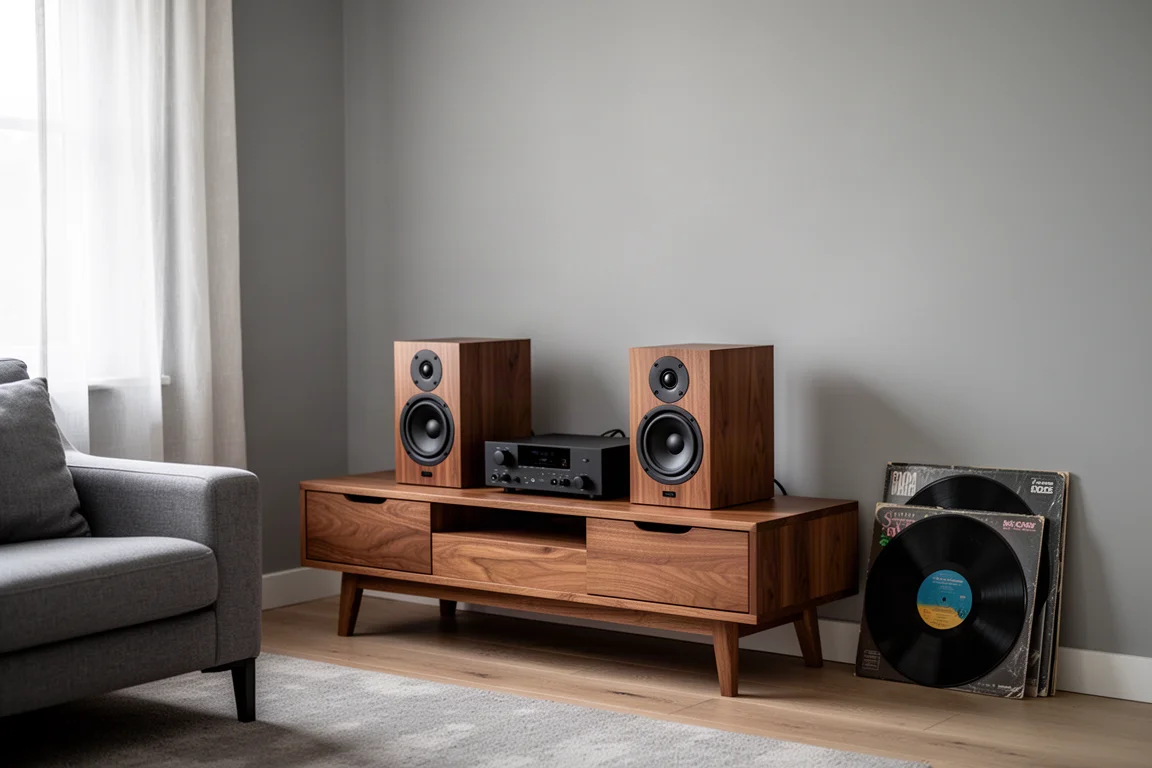
That shared foundation is worth keeping in mind. Because the power, distortion figures and streaming platform are effectively identical, the real choice is about character: how each amplifier is voiced, how it looks on a shelf, and which features matter to your setup.
Denon Home Amp: Design and Connectivity
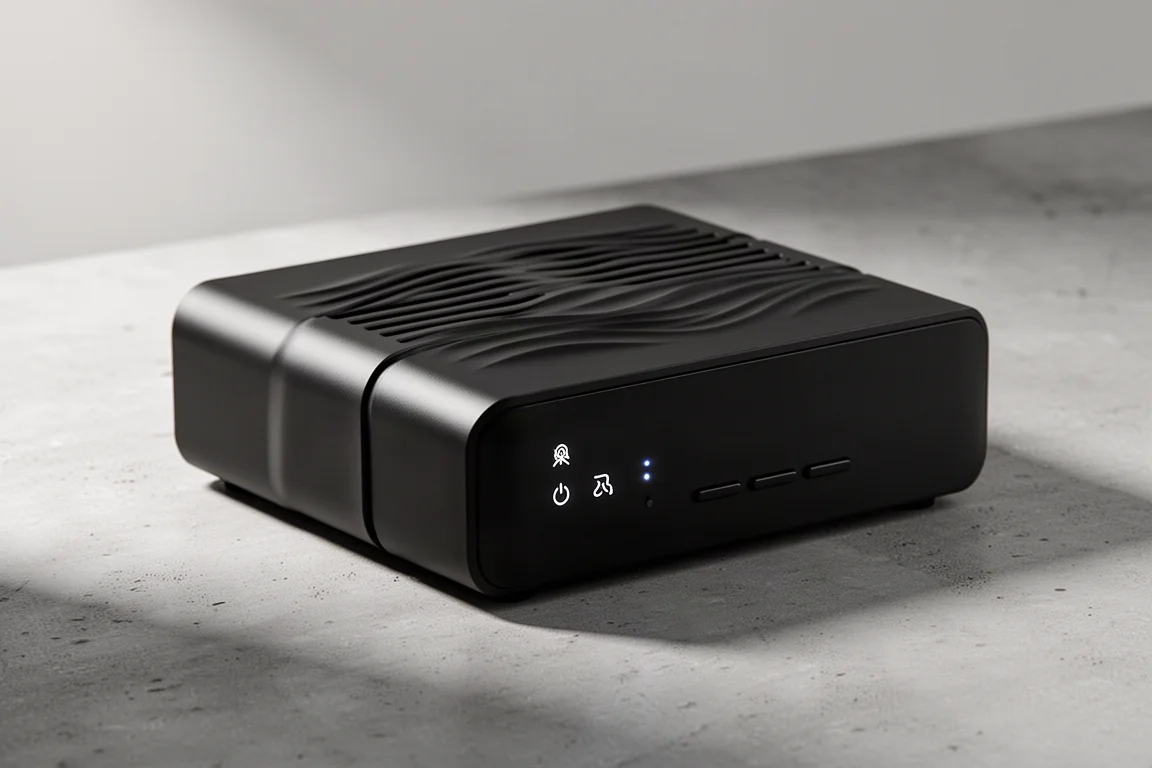
The front panel keeps things simple, with capacitive touch buttons for volume and mute alongside three customisable preset buttons. Those preset buttons are exclusive to the Denon Home Amp and are not found on the Marantz M1.
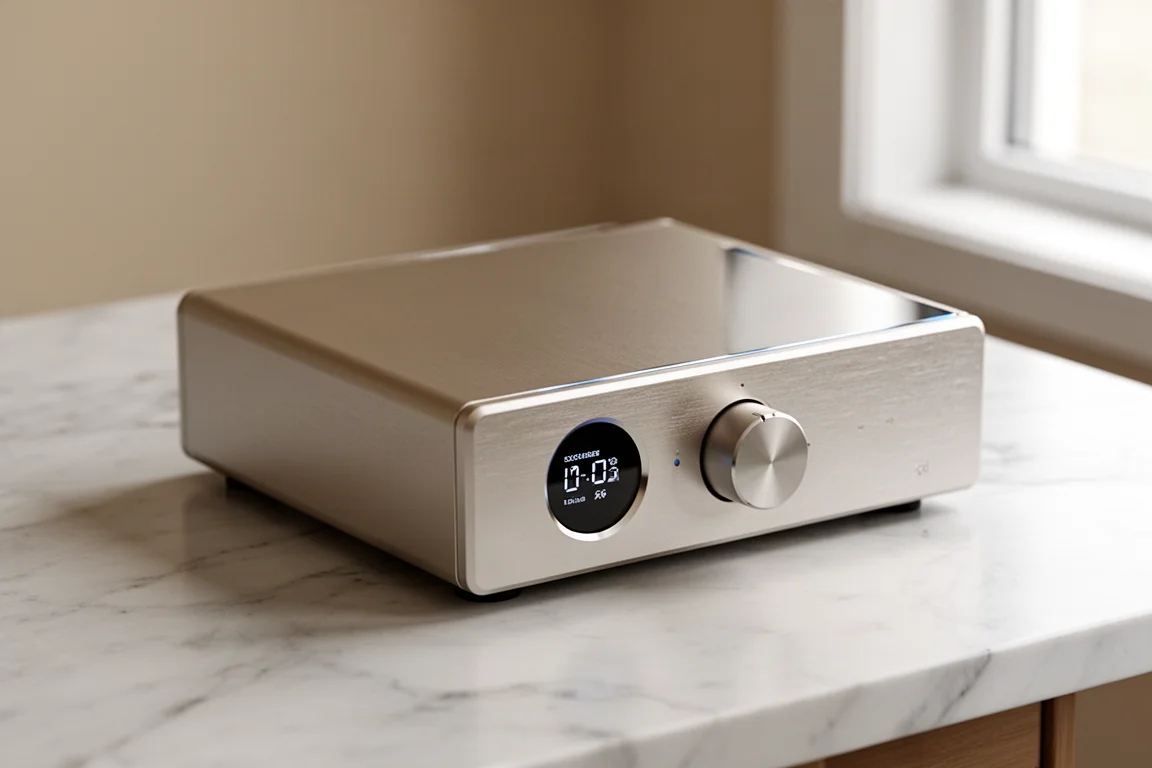
The top plate is vented to help cool the internals and carries a wave pattern that flows into the brand logo. The side panels are smooth and curved, sitting on a base that gives the amplifier a modern, understated look. It is available only in black, with a paintless lower enclosure designed to blend in discreetly.
Around the back, the layout is easy to read: speaker binding posts, Ethernet, HDMI eARC for a television, an analog line input for a CD player or a turntable with a built-in or separate phono stage, a subwoofer output, an optical digital input, USB-A, and a 3.5mm IR input for connecting a home control system. Bluetooth 4.2 is on board.
Two details stand out for installation. The amplifier runs cool and is designed for custom installation into an integrated home audio network, with Crestron, Control4 and AMX compatibility, and two units fit side by side in a single rack unit. The volume limit can also be set anywhere between 80% and 100%, which helps prevent overdriving speakers, including when children are playing music and reach for the dial. Setting that limit to around 80% or 85% is a sensible first adjustment during setup.
Denon Home Amp Sound: Lively and Dynamic
The Denon Home Amp is voiced to be livelier and more dynamic than the Marantz M1, with detail taking centre stage. Listening to Gillian Welch and David Rawlings’ album Woodland, the sound was lively and engaging straight away. Bass was impactful and detailed, vocals and acoustic guitars had good body and tone, and string detail came through clearly. Imaging and sound staging were strong for an amplifier in this class, and only showed their limits when compared directly with far more expensive integrated amplifiers. What stood out most was the sense of drive that kept the music engaging.
On the Swedish rock band Graveyard’s self-titled 2023 album, the Denon Home Amp showed more drive and dynamic impact, while the Marantz M1 leaned more into the soul of the material. Both amplifiers handled the music well, and both offered good detail for their price category, with imaging and sound staging equally capable.
Marantz M1: The Warmer Alternative
The Marantz M1 takes the same concept in a different direction. It is similar in size to the Denon Home Amp but has a blockier, sharper design, and it does not carry the three customisable preset buttons.
Its tuning is warm, lush and laid back, the character Marantz components are known for. It shares the very low distortion and the same output power as the Denon Home Amp, and it is just as capable when it comes to imaging and sound staging. For listeners who want a relaxed, soothing presentation, that warmer balance is the whole appeal.
HEOS App and Streaming Experience
Both amplifiers run on HEOS, and the 2024 update reshaped the app experience considerably. The home screen is now built around the music itself, surfacing recently played tracks, favourite music and preferred content from music services. A Now Playing display sits at the bottom of the screen so the current track is always visible.

HEOS playlists can combine content from different streaming services or from a personal collection, and universal music search finds a track or album regardless of which service it lives on, so there is no need to switch services just to locate a song. Supported services include Amazon Music, Pandora, Sirius XM, SoundCloud, Spotify and Tidal Hi-Res, with Qobuz and Apple Music absent. Tidal Hi-Res allows the Home Amp and other HEOS devices to play tracks up to 192 kHz / 24-bit natively. HEOS also reaches locally stored content on media servers or PCs, and the platform is Roon ready. The HEOS team continues to work on updates and additional services, guided by user input rather than assumption.
HDMI eARC, Subwoofer Crossovers, and TV Use
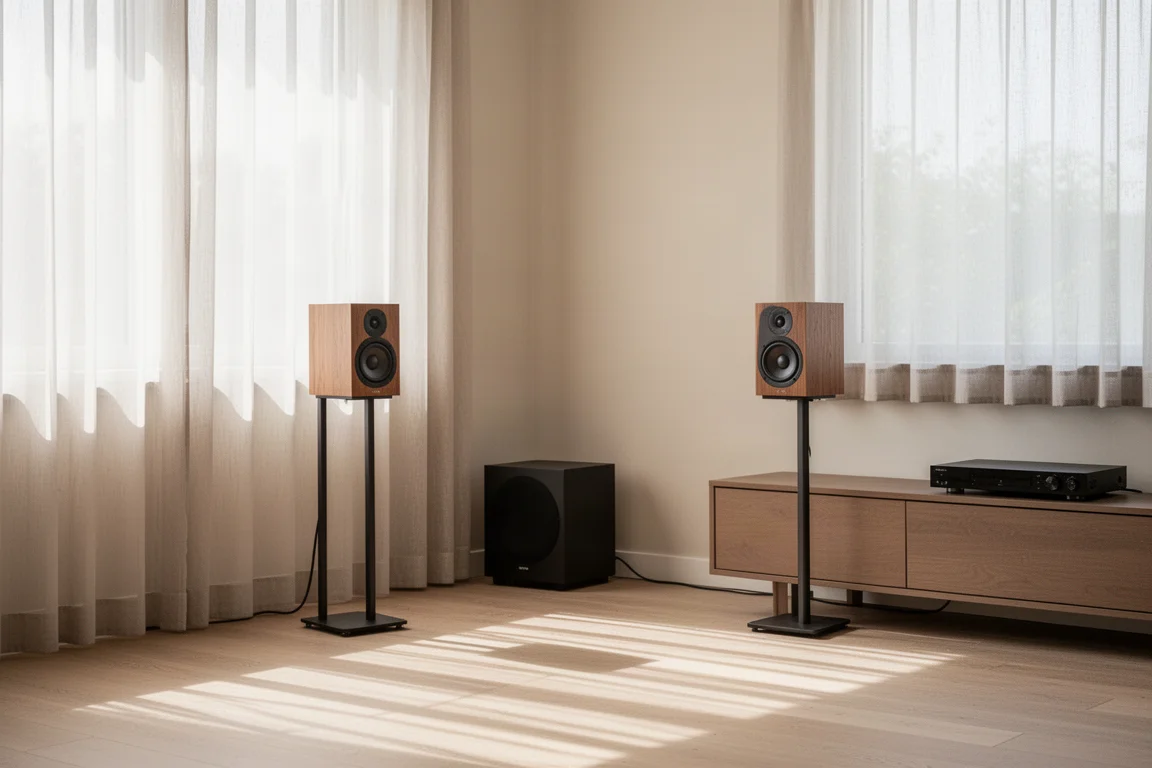
With an HDMI eARC connection to a television and a subwoofer added to the system, the Denon Home Amp can serve as a 2.1 channel AV amplifier. The added liveliness suits movie soundtracks and television shows, giving them more drive and impact.
The built-in crossovers for the subwoofer and the main speakers make the biggest practical difference here. The subwoofer low pass filter is adjustable from 40 to 120 Hz, and the speaker high pass filter from 40 to 250 Hz. Sending bass to the subwoofer and crossing over the main speakers lowers distortion, because the main speakers no longer have to produce low bass and the subwoofer can do what it does best. Owners of bass limited speakers or small stand mount speakers will benefit most from these controls.
Buying Advice: Matching the Amp to Your Room and Speakers
Choose the Denon Home Amp if you want the livelier, more dynamic presentation, the three preset buttons, and a compact chassis that fits neatly into a rack or a custom installation with two units per rack unit. The crossover controls and HDMI eARC input make it a strong fit for a television based 2.1 system, and the adjustable volume limit gives useful protection in shared living spaces.
Choose the Marantz M1 if you prefer a warmer, more relaxed sound and a sharper, blockier design. It offers the same output power and the same very low distortion, so the decision is mostly about the sound character you enjoy and the equipment it will be paired with.
Because the audible differences are minor, the room and the speakers often matter more than the amplifier’s tuning. Both are comfortable as the centre of a living room music system or as part of a whole home audio network, and both are tuned to sound excellent in their own way.
Conclusion
The Denon Home Amp and the Marantz M1 share a platform, an output power rating and a very low distortion figure, and each is voiced to sound excellent in its own way. The Denon Home Amp takes the livelier, more detailed route, while the Marantz M1 stays warm and laid back. Either is a confident choice for listeners who want streaming, analog inputs and television connectivity in a compact chassis that is easy to live with.
Further reading
Related Reviews
Streaming Amplifiers
Best High-Performance Streaming Amplifiers: Seven Full-Size One-Box Picks
Seven full-size streaming integrated amplifiers for serious two-channel systems, each chosen for a different priority: room correction, power, minimalism, musicality, or reference build.
Streaming Amplifiers
Best Mid-Tier Streaming Amplifiers: NAD M10 V2 vs Naim Uniti Atom
Two compact all-in-one streaming amplifiers compared on interface, app experience, sound character, and connectivity.
Streaming Amplifiers
Bluesound Power Node N331 Review: A Streaming Amplifier Built for More Than Stereo
The Bluesound Power Node N331 keeps the compact chassis of its predecessor and adds a more powerful amplifier, a dedicated center channel output, and a THX AAA headphone stage.