Turntables
Denon DP-500BT Review: A Flexible $899 Turntable With a Clear Upgrade Path
The Denon DP-500BT pairs a belt-drive design and a die-cast aluminum platter with semi-automatic operation, 78 RPM support, a bypassable phono stage, and aptX Bluetooth. Here is who it suits and what to weigh before buying.
Introduction
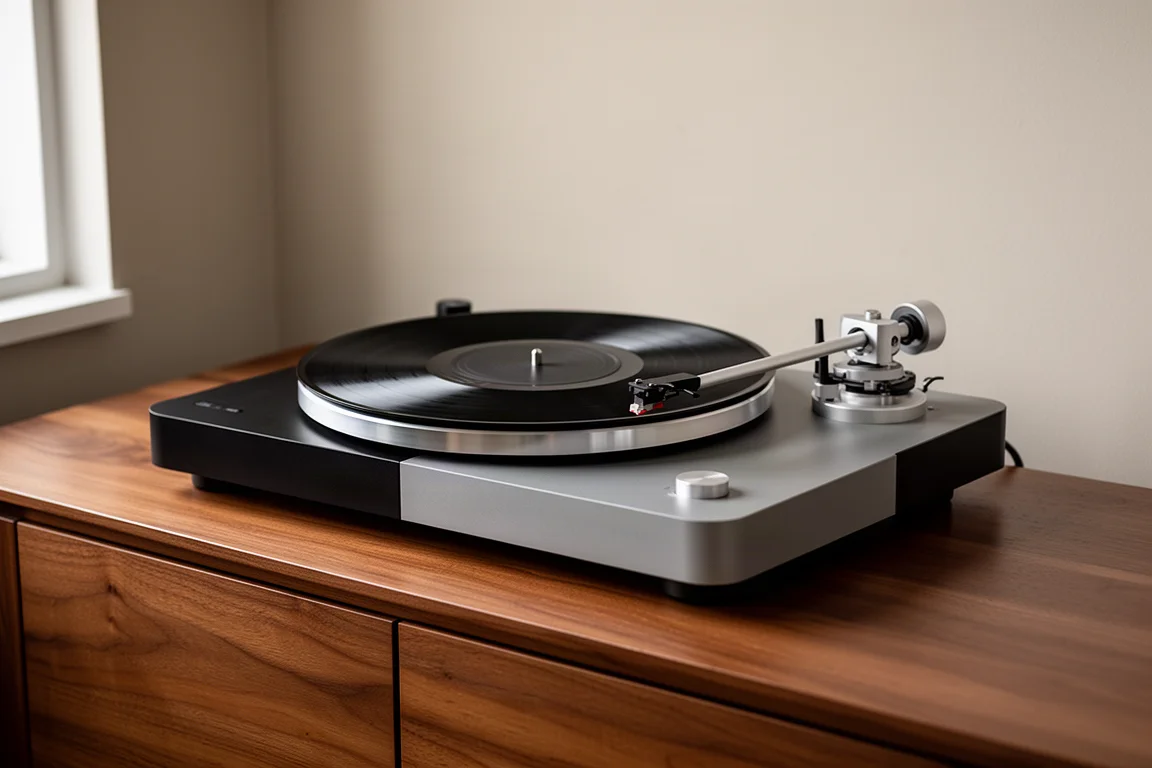
Shopping for a turntable has become a crowded exercise. There are affordable options for people just getting started, serious rigs for dedicated collectors, and a great deal in between. The Denon DP-500BT lands in the middle of that market at $899, and it brings a handful of things most of its direct competition at that price does not.
It helps to know where Denon comes from. The company’s turntable history reaches back to the 1960s, when it built broadcast-grade direct-drive turntables for Japanese radio stations that had to perform flawlessly day after day under professional conditions. That background shaped how the company thinks about platter mass, bearing precision, and speed stability, long before it ever sold a turntable to a home listener.
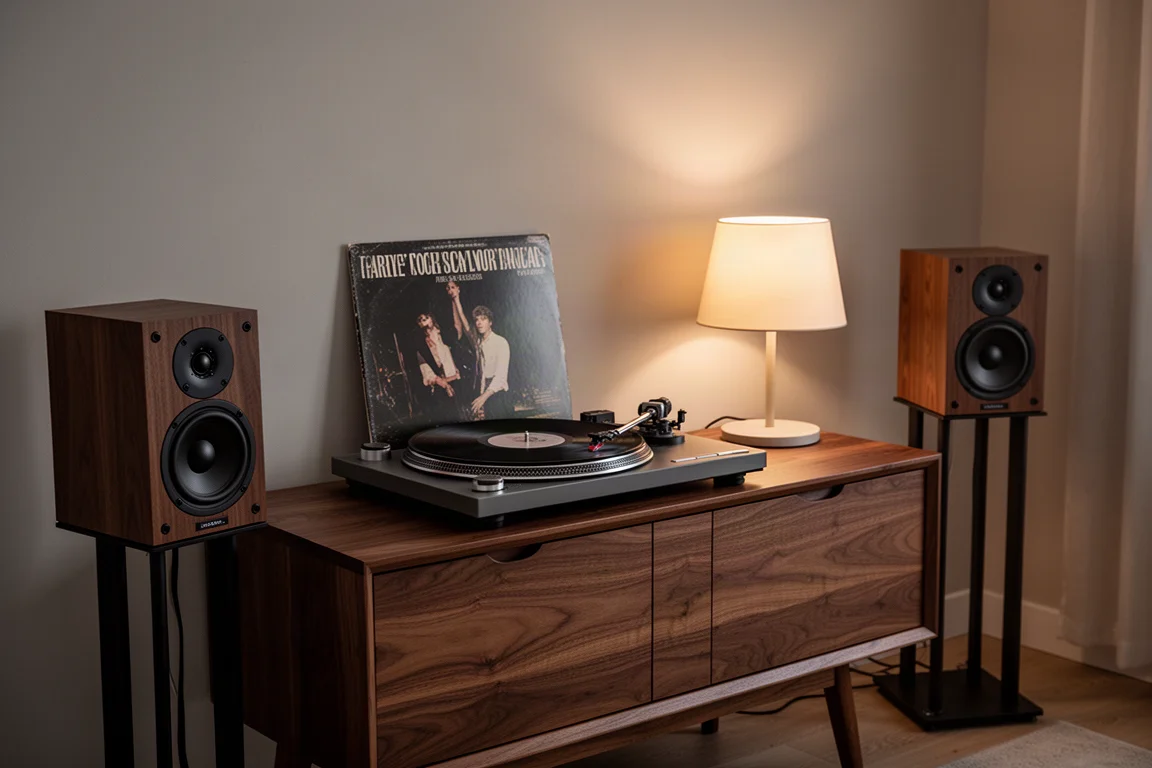
The DP-500BT also borrows design cues from Denon’s current flagship, the DP-3000NE, including a minimalist two-tone matte finish and an S-shaped tonearm profile. That is a welcome thing to share with a reference table that sells for around $2,500.
Who the Denon DP-500BT Is For
This is a turntable for the listener who wants flexibility and convenience without giving up a clear path to better sound later. It works wired or wirelessly, protects records with semi-automatic operation, plays 78s, looks at home in a living room, and accepts cartridge upgrades without tools.
It is also a genuinely approachable first turntable. Getting it running takes roughly five to ten minutes, and while the tonearm does need to be balanced before the first record, the process is straightforward enough for a beginner to follow from the instructions.
It becomes a harder sell if you already own a dedicated phono preamp, or a receiver with its own phono stage, and have no interest in wireless audio at all. In that situation you are paying for capability you may never touch.
Build Quality and Speed Stability
The build feels solid, and the die-cast aluminum platter is the reason. Its mass provides the rotational stability that keeps speed consistent: once a heavy platter reaches speed, it holds there without constant micro corrections. Denon rates wow and flutter at 0.1% WRMS, which is a strong figure at this price.
Cast metal feet do real work as well, absorbing vibration from whatever surface the table sits on. That matters because a stylus is extraordinarily sensitive and picks up far more than the record groove alone.
The belt-drive design physically separates the motor from the platter, keeping motor vibration out of the playback path in a way that direct-drive designs at this price struggle to match. Direct drive has genuine advantages, including instant start-up and the ability to handle a record by hand, which is why DJs favor it. For sitting down and listening, belt drive is the right call here.
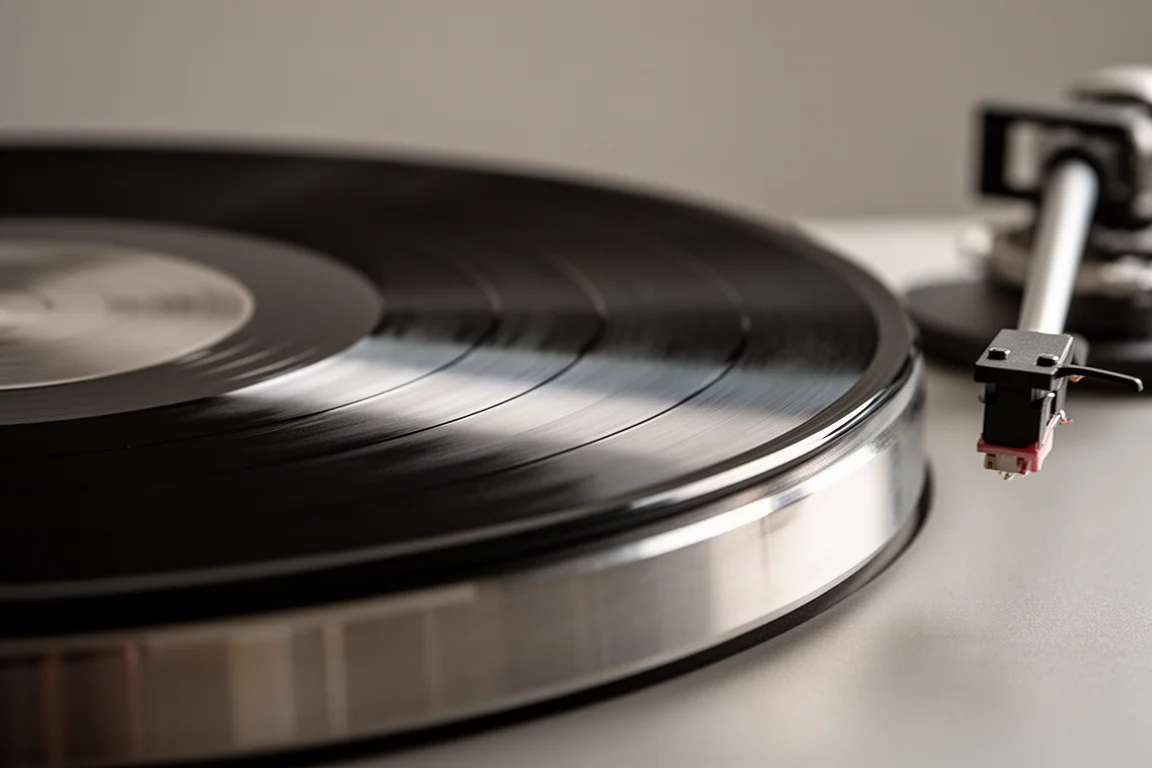
That combination of platter mass and belt drive comes through in listening. On John Mellencamp’s “Pink Houses”, the table held the rhythm and pace of the track particularly well, which is exactly what stable speed delivers on music with a strong rhythmic foundation. The built-in phono stage is transparent enough that it does not hold anything back at this level, and the overall sound quality is excellent for the category.
The Tonearm, Cartridge, and the Upgrade Path
The tonearm is a static balanced S-shaped design with a low-resonance profile and a universal headshell that twists and locks into place. That headshell is one of the most practical details on the entire table. When you are ready to change cartridges, you twist the headshell off and lock a new one in. No tools, and no complicated alignment process from scratch.
The included cartridge is Denon’s own moving magnet design with a spherical stylus. A spherical tip is the most durable option and the easiest to set up, which makes it a sensible choice at this level: it gets you listening immediately and tracks records safely. When you want to hear what the tonearm can really do, a cartridge with an elliptical stylus brings noticeably better detail retrieval and groove tracing.
Semi-Automatic Operation and 78 RPM Support
Semi-automatic operation makes the table easy to live with day to day. When a record ends, the tonearm lifts and the platter stops on its own. Fall asleep on the couch and the stylus will not sit in the run-out groove all night, wearing itself down to the point where it needs replacing.
The table also supports 33 1/3, 45, and 78 RPM. That third speed is a real differentiator at this price, since many turntables skip 78 entirely as a smaller market. If you own older shellac records or collect early twentieth century pressings, this table can play them. Those records are cut with a wider groove than modern vinyl and prefer a spherical stylus, which the included cartridge provides. Keep a second headshell mounted with a dedicated 78 stylus and you can swap between them in seconds.
Both details matter more over time than they do on a specification sheet. A turntable that stops itself and plays every speed in a typical collection is one you can use without thinking about it, which is precisely the point of a table at this level.
Connectivity: Built-In Phono Stage and Bluetooth
A built-in phono preamp with a rear-panel switch covers the basics. Connecting to powered speakers, or to an amplifier without a phono stage, means leaving the preamp switched on. Going into a receiver that already has a phono stage, or running a separate outboard preamp, means flipping the switch and sending the raw phono signal straight out of the RCA outputs instead.
The built-in stage sounds perfectly decent for casual listening and will not hold the table back at this level. The bypass switch is what matters, because it means an outboard preamp in the $200 to $400 range can make a meaningful difference when you are ready to take that step.
Bluetooth is where this table separates itself from most of its price competition, with aptX, aptX HD, and aptX Adaptive support for near CD-quality wireless playback when the paired device supports the same codecs. Pairing is simple: hold the Bluetooth button until the indicator flashes, put your device in pairing mode, and connect. The RCA and Bluetooth outputs work simultaneously, so you do not have to choose one over the other.
It is worth being clear about the trade-off. Vinyl is an analog format, and transmitting wirelessly converts that analog signal to digital. If a pure analog signal path matters to you, particularly with AAA pressings recorded and mastered entirely in the analog domain, cables will always give you the better result. Use Bluetooth when convenience is required, and the RCA outputs when sound quality is the priority.
Things to Consider Before Buying
The main question is whether the feature set matches the way you listen. Buyers who already own a phono stage and have no interest in wireless audio are paying for Bluetooth and a preamp they will not use. There are turntables near this price that put more of the budget into the mechanical side, such as the Pro-Ject Debut Evo 2 at $799, which uses a carbon fiber tonearm and offers neither Bluetooth nor a built-in phono stage. For that listener, the DP-500BT’s extra capability is simply money spent elsewhere.
The included spherical stylus is a starting point rather than a destination. It is durable and safe for your records, but an elliptical upgrade is where the tonearm’s real capability shows up.
Placement deserves a thought as well. The cast metal feet help absorb vibration, but a turntable still rewards a stable, level surface away from heavy foot traffic and speaker cabinets.
Buying Advice
At $899, the DP-500BT makes the most sense for a listener who wants a single table that covers a lot of ground: wired or wireless, automatic at the end of a side, capable with 78s, and upgradeable later.
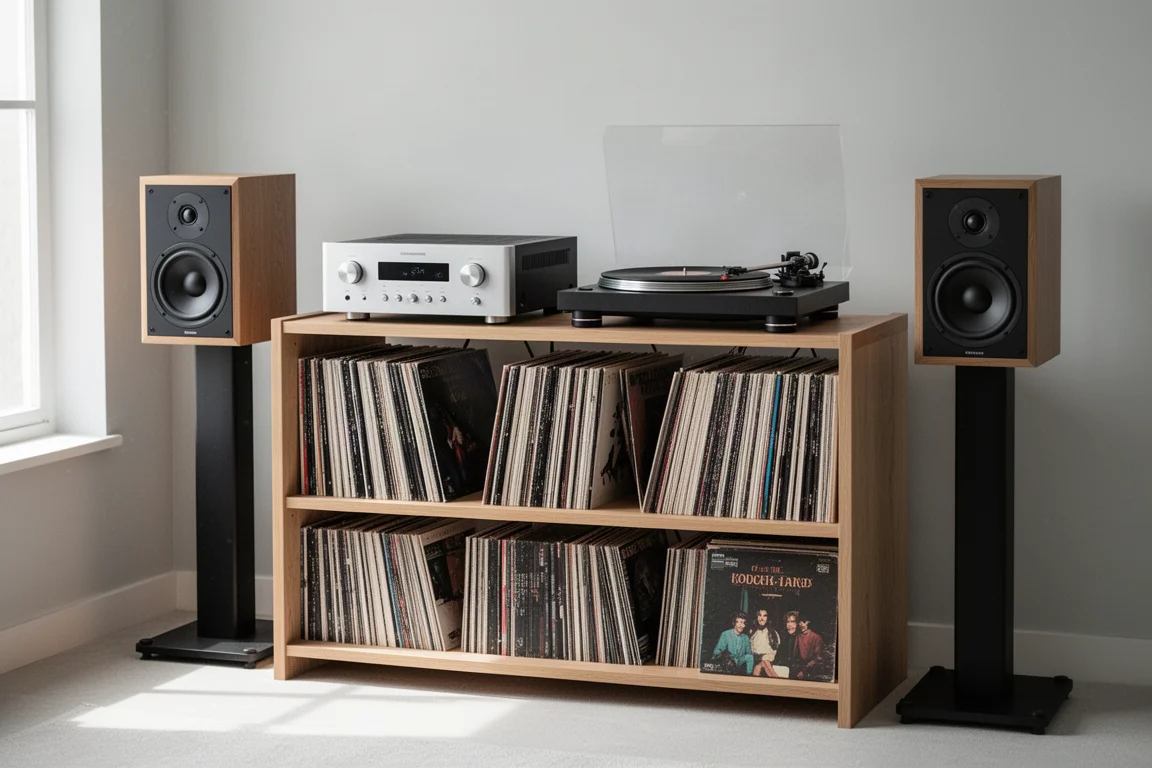
Plan the upgrade path in stages rather than all at once. Live with the included cartridge first, then move to an elliptical stylus when you want more detail from your records. Add an outboard phono preamp in the $200 to $400 range if you want to push the analog side further.
Finally, decide how you will connect it. Keep the RCA outputs for serious listening and reserve Bluetooth for late-night headphone sessions or rooms where running cables to your speakers simply is not practical.
Conclusion
The Denon DP-500BT is a well-built and unusually flexible turntable, leaning on a die-cast aluminum platter, a belt-drive design, and a genuinely practical tonearm and headshell system. Semi-automatic operation, 78 RPM support, a bypassable phono stage, and aptX Bluetooth give it versatility that few tables at this price can match. If you want convenience now and a clear path to better sound later, it is a solid choice. If you already have a phono stage and want your budget spent purely on mechanical performance, look closely at what else your money buys before deciding.
Product link
View more details for Denon DP-500BT
This product is mentioned in the review. Check the specifications, options, and compatibility before buying.
View more details for Denon DP-500BTFurther reading
Related Reviews
Turntables
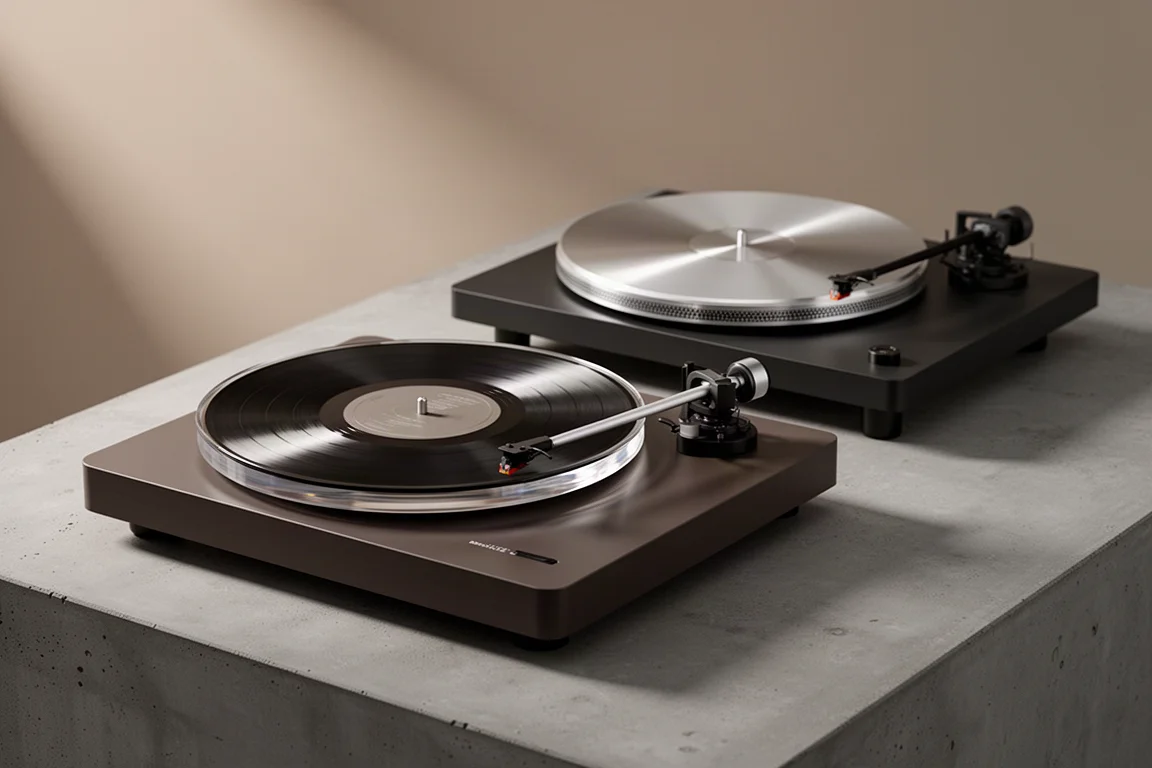
Best Turntables 2026: Seven Standout Picks From Entry Level to Premium
A practical roundup of seven turntables worth considering, from a US-made budget deck to small-batch premium models with a clear upgrade path.
Turntables
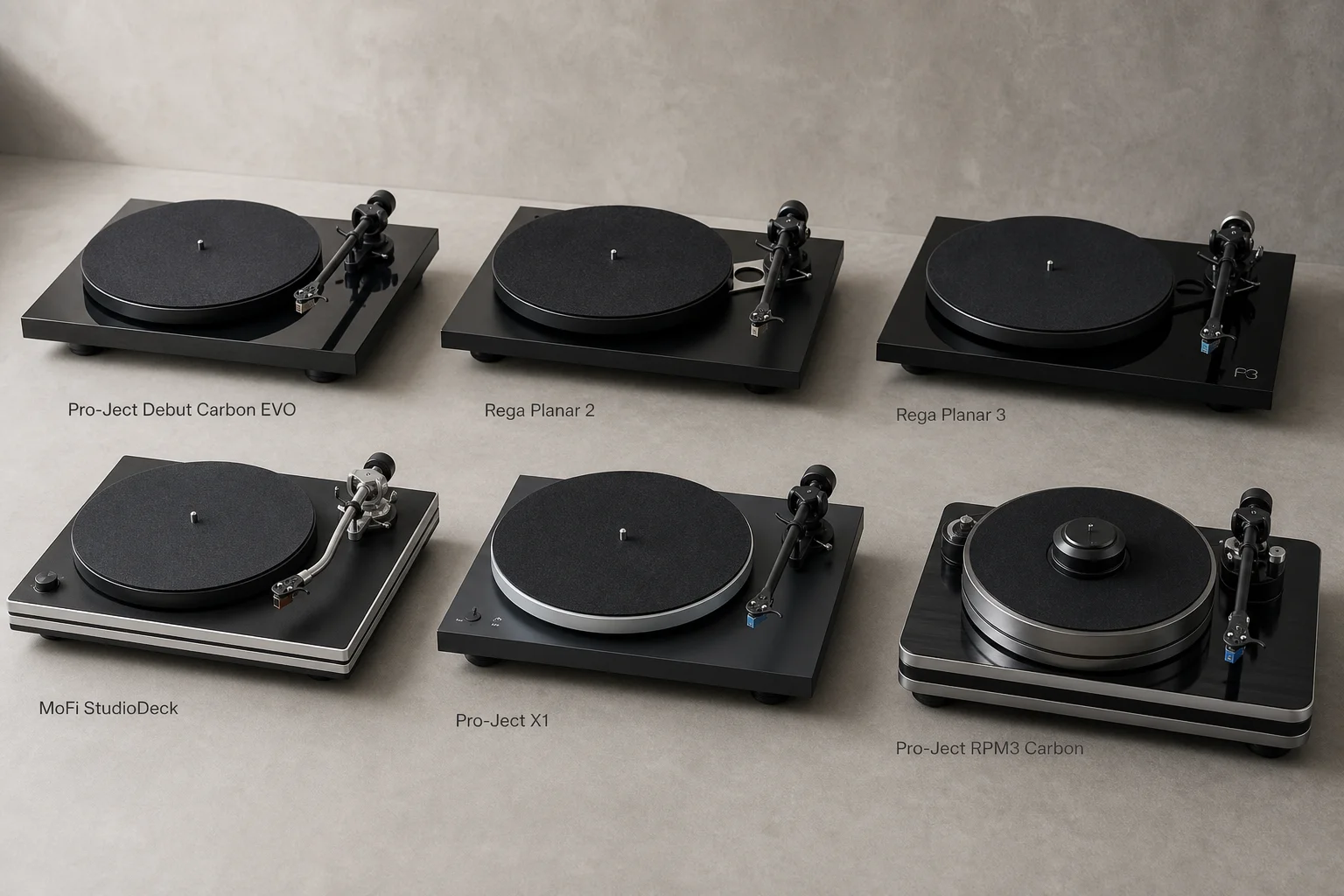
Best Turntables Under $1,000: Five Fully Manual Picks Worth Considering
Five fully manual turntables under $1,000, compared on build quality, cartridges, upgrade potential, and the character of sound each one brings to a system.
Turntables
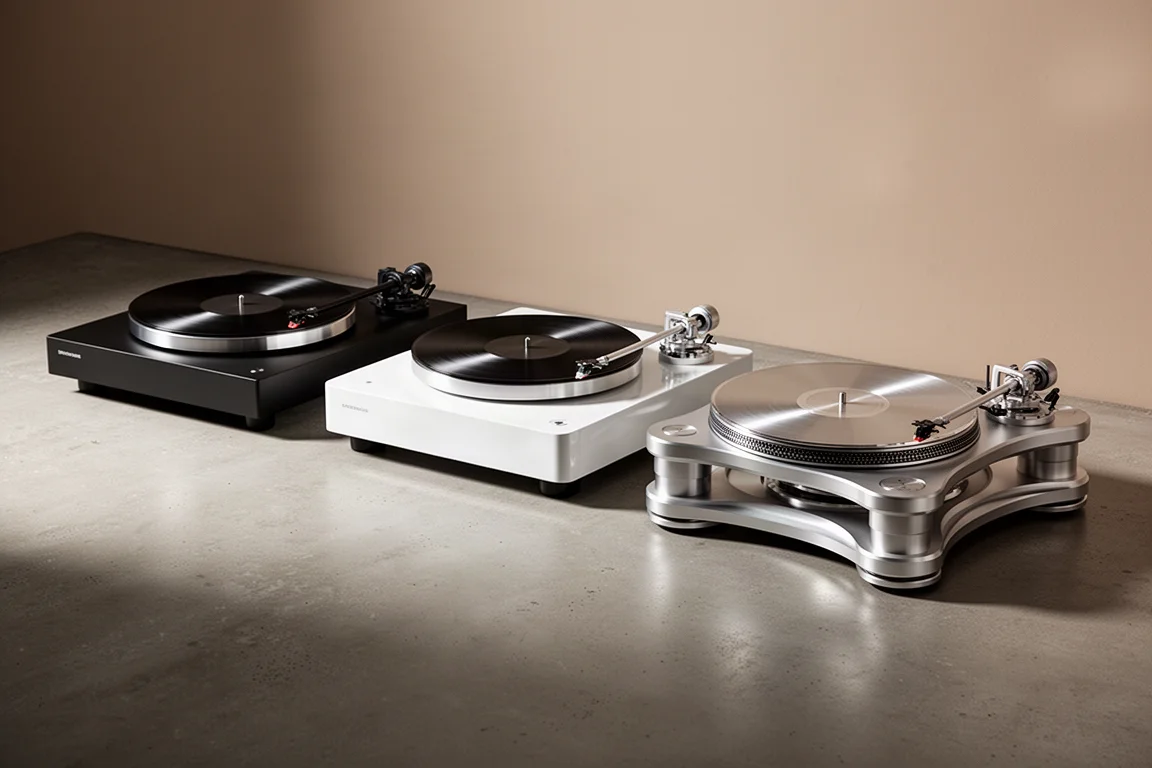
Best Turntables Under $2,000: Six Vinyl Decks Worth Building a System Around
Six turntables under $2,000, from a value-focused belt-drive deck to a fully balanced design, with the strengths and trade-offs that matter before you buy.