AV Receivers
Denon AVR-X6800H Review: An 11-Channel AV Receiver Built for Flexibility
A detailed look at the Denon AVR-X6800H, an 11-channel AV receiver with seven 8K HDMI inputs, four independent subwoofer outputs, and both Audyssey and Dirac room correction.
Introduction
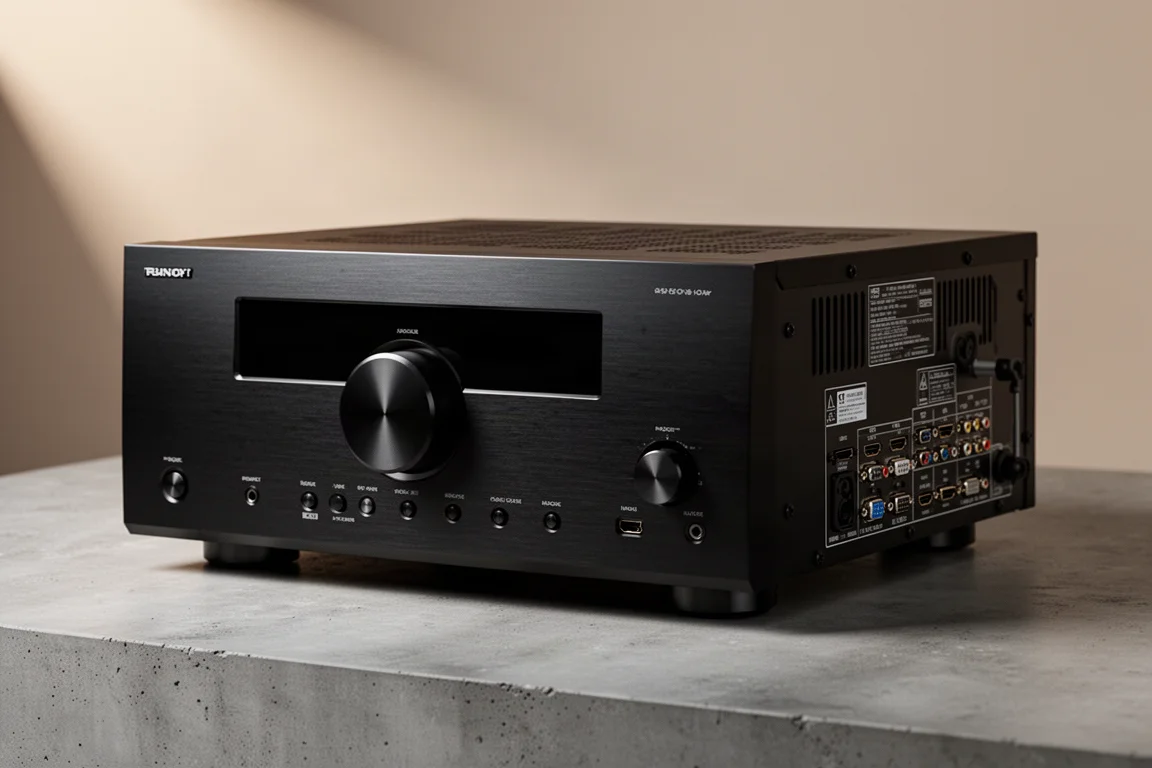
The Denon AVR-X6800H is the successor to the AVR-X6700H, a receiver that arrived in 2020 and still handles the major surround formats. The newer model keeps that foundation and widens the connectivity and calibration options considerably. It provides 11 channels of amplification and 13 channels of processing, and it carries a retail price of $3,500.
For anyone building a serious home theater around a single box, the appeal is the combination of broad format support and the flexibility to grow the system later.
Where the AVR-X6800H separates itself from its predecessor is in the details: more high-bandwidth HDMI inputs, more subwoofer outputs, and a preamp mode that can now be applied selectively rather than to every channel at once.
Who This AV Receiver Is For
This receiver suits two broad groups. The first is the home theater owner who wants one component to drive a full surround system, including height channels, without adding external amplification right away. With 11 channels of amplification and 13 channels of processing, it can support a complex layout while leaving room to expand.
The second group is the owner who plans to add separate power amplifiers over time. Preamp mode disconnects the internal amplifiers from the preamp stage, and on this model that disconnection can be applied per channel. Someone can start with external power for the main speakers, add a center channel amplifier later, and keep using the internal amps for heights or a second zone.
It also makes sense for listeners who want to compare room correction approaches inside one system, since both Audyssey and Dirac are available here.
Main Strengths
The AVR-X6800H builds on a familiar platform, and most of its improvements address specific requests rather than broad redesigns. Four areas stand out.
HDMI Connectivity and 8K Support
The AVR-X6700H offered a single 8K-capable HDMI input. The AVR-X6800H raises that to seven 8K inputs, which matters for households with several high-bandwidth sources such as a game console, a streaming device, and a disc player.
Each input can be configured independently. An older DVD player can be set to standard HDMI 1.4, a 4K streaming device to enhanced, and a current game console to 8K enhanced. The practical benefit is fewer handshake problems and more reliable compatibility, and it removes the all-or-nothing approach of earlier generations where one setting applied to every input.
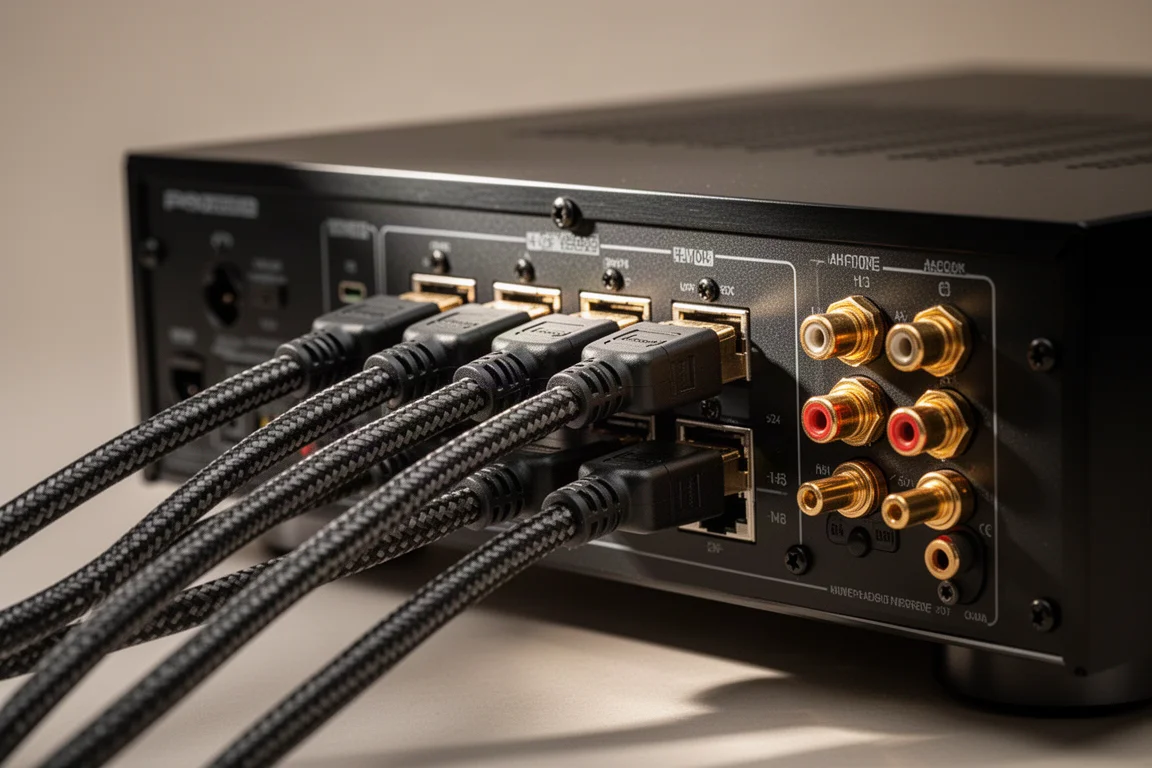
The video board is the same design used in the company’s flagship receivers, so the video processing here is not a step down from the top of the range.
Independent Subwoofer Outputs and Directional Bass
Subwoofer outputs increase from two to four, each with independent level and delay control. Adding subwoofers and positioning them separately smooths the peaks and nulls that a single subwoofer produces in a room, so more outputs give owners more freedom in how they address uneven bass response.
The four outputs also support directional bass. All connected subwoofers still reproduce the LFE channel, while the subwoofer closest to the channel where the action is happening plays additional bass from that channel when the corresponding speaker is bass managed.
Room Correction: Audyssey and Dirac
Both Audyssey and Dirac room correction are available, and the receiver provides two speaker presets. Dirac can store up to three filter sets under speaker preset two, so an owner could keep an Audyssey calibration on one preset and multiple Dirac calibrations on the other for different configurations.
The two systems behave differently. Audyssey sets crossover points automatically and includes Dynamic Volume, which lifts low and high frequencies and the center channel at lower listening levels. Dirac requires manual crossover setup and does not include that feature.
There is also a level-matching detail worth knowing. Audyssey applies a reference level calibration, so 0 dB on the relative volume scale corresponds to reference level. Dirac does not, so a Dirac calibration can play noticeably louder. Any comparison between the two should be made at matched levels.
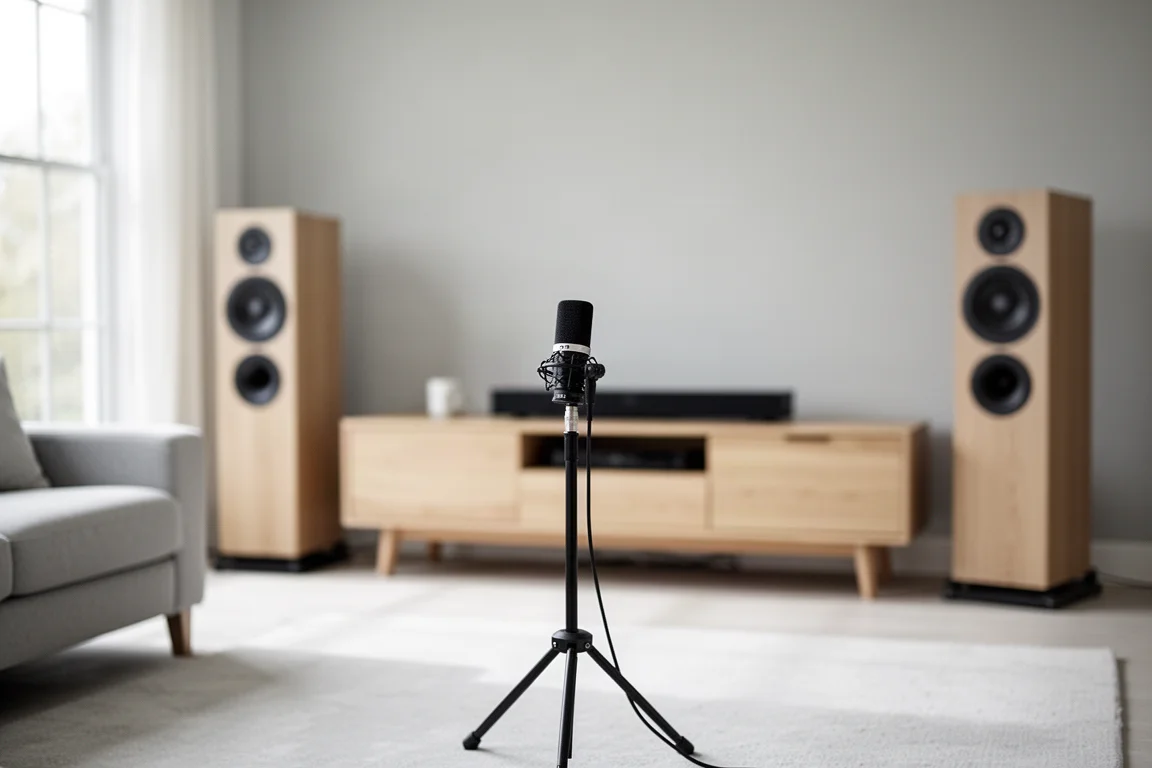
Dirac limited and Dirac full are both supported, and additional versions of Dirac are expected in the future, though no timeline has been confirmed.
Preamp Mode and Amplification
Preamp mode has been refined from an all-or-nothing switch into a per-channel choice. In the menu, the receiver asks which channels should be disconnected from the internal amplifiers. The internal amps remain powered but are separated from the preamp signal path, which avoids the distortion that can appear when the amplifier stage reaches maximum gain and feeds back into the preamp output.
The preamp outputs deliver a clean 4 volts RMS, which is more than most external amplifiers need to reach full output at typical gain. Power ratings match the previous generation at 140 watts across 11 channels, with roughly 100 watts per channel available with all channels driven.
Other features include an updated on-screen interface, reorganized for larger displays with speaker size and crossover settings grouped on a single screen, plus a new web interface. That web interface also provides access to an HDMI diagnostics tool with cable testing and EDID monitoring and modification, aimed at custom installers and experienced users. Supported formats include Dolby Atmos, IMAX Enhanced, DTS:X, Auro-3D, and Sony 360 Reality Audio.
Things to Consider Before Buying
A few practical points are worth weighing before committing.
Room correction comparisons take care. Because Dirac does not apply the same reference level calibration as Audyssey, the two will not sound equally loud at the same volume setting, and impressions formed without level matching can be misleading.
Dirac setup is more hands-on. Crossover points and related parameters are configured manually, and the extra filter slots under the second speaker preset assume the user is comfortable working inside the calibration software.
The HDMI diagnostics tool is an advanced feature. It sits in an advanced web menu and is intended for installers and enthusiasts who understand EDID behavior. Casual owners are unlikely to need it.
Format support depends on the source chain. Sony 360 Reality Audio is supported by the receiver, but content has to reach it through a compatible service and device, so availability varies by setup.
Finally, at $3,500 retail, this is a substantial purchase, and its value depends on actually using the channel count, the subwoofer outputs, or the calibration flexibility.
Buying Advice
If the goal is a single receiver that can drive a complex surround layout, handle several high-bandwidth sources, and manage four subwoofers, the AVR-X6800H covers all of it without external amplification. The seven 8K inputs alone solve a common frustration for households with more than one modern source.
If the plan is to add separate amplifiers, the per-channel preamp mode makes the transition gradual rather than an all-at-once commitment. Start with external power for the main speakers, keep the internal amps for the rest, and expand when it makes sense.
If room correction is the deciding factor, the ability to run both Audyssey and Dirac in one chassis is the strongest argument for this model. Buyers who prefer a simpler, largely automatic calibration may find Audyssey on its own sufficient, while those who want to tune target curves will value the Dirac options. Either way, plan on level matching when comparing the two.
Conclusion
The Denon AVR-X6800H is a well-rounded successor to the AVR-X6700H. It widens HDMI bandwidth across seven inputs, adds two subwoofer outputs with independent control and directional bass, keeps both major room correction systems in one box, and makes preamp mode flexible enough to grow with a system. At $3,500 retail, it is aimed at buyers who will use that flexibility rather than those who simply need a receiver that works.
Product link
View more details for Denon AVR-X6800H
This product is mentioned in the review. Check the specifications, options, and compatibility before buying.
View more details for Denon AVR-X6800HFurther reading
Related Reviews
AV Receivers
Anthem MRX 740 8K Review: Composed Home Theater Sound With a Few Rough Edges
A close look at Anthem's mid-tier MRX 740 8K receiver, covering its sound, ARC Genesis room correction, HDMI 2.1 features and the daily quirks worth knowing before you buy.
AV Receivers
Anthem MRX 740 vs MRX 1140: Which AV Receiver Fits Your System?
A measured look at the Anthem MRX 740 and MRX 1140, covering preamp output performance, amplifier behaviour, bass management, and expansion headroom.
AV Receivers
Best AV Receivers for Home Theater: Denon, Onkyo, Marantz and Yamaha Compared
Four home theater receivers compared on features, sound character, setup and value, with clear guidance on which one fits which kind of buyer.