AV Receivers
Denon AVR-X3700H Review: A 9.2-Channel Receiver That Nails the Fundamentals
A practical look at the Denon AVR-X3700H, a 9.2-channel Dolby Atmos receiver with Audyssey MultEQ XT32, independent dual subwoofer outputs, and 4K 120Hz gaming support.
Introduction
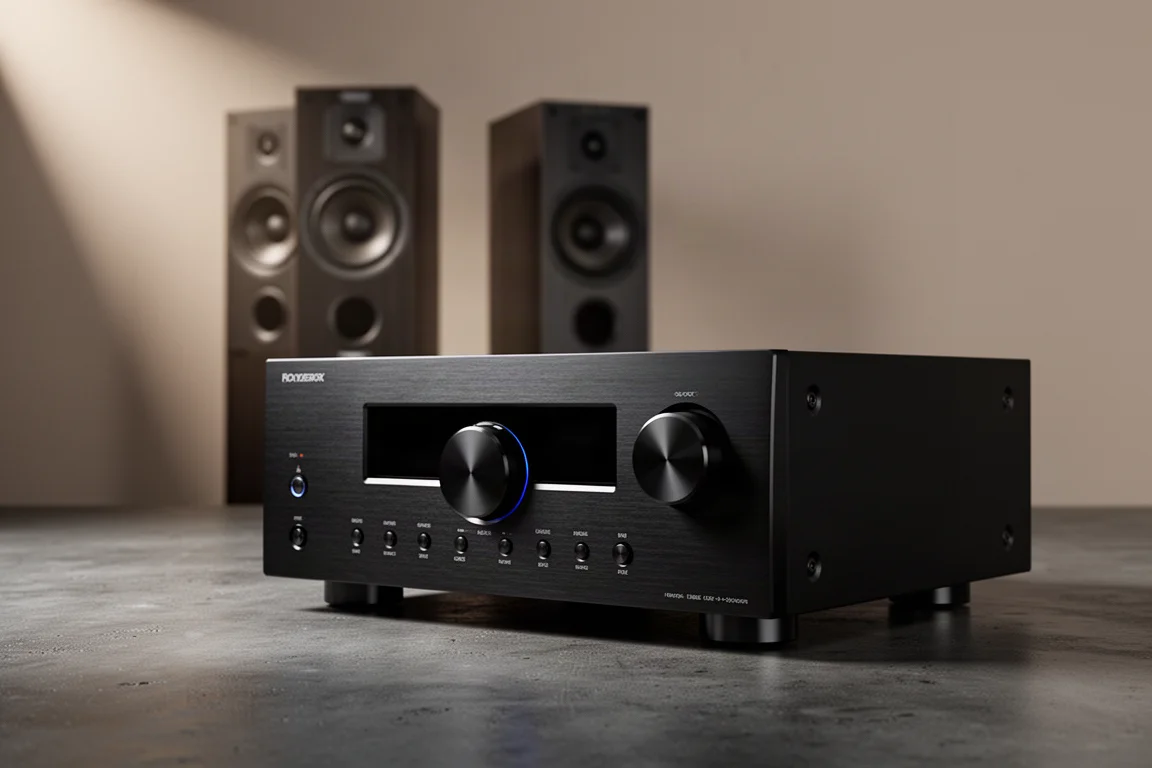
The Denon AVR-X3700H sits in the middle of Denon’s performance-focused X series of home theater receivers, and it is a genuinely interesting place to be. It is a 9.2-channel surround receiver with Dolby Atmos and DTS:X support, rated at 105 watts per channel with two channels driven, and it carries the room correction, preamp outputs and gaming features that buyers in this bracket tend to care about most.
What makes it worth a closer look is how it handles the fundamentals: bass management, room correction and video switching. It is not the most feature-dense receiver at its price, and there is one limitation that will matter a great deal to some buyers. But in the areas that shape how a system actually sounds and behaves day to day, it is a convincing package.
Who the Denon AVR-X3700H Is For
This receiver makes the most sense for two kinds of buyers.
The first is someone building a 9.2-channel Dolby Atmos system who wants independent dual subwoofer outputs. The X3700H’s two subwoofer outputs are independent of one another, which means two subwoofers can be calibrated separately rather than treated as a single output. For anyone running a pair of subs, that is a meaningful advantage.
The second is a gamer who wants 4K 120Hz and HDR support without stepping up to a more expensive receiver. The X3700H supports variable refresh rate and low latency modes, and 4K 120Hz output held up reliably, including in a fast-paced shooter.
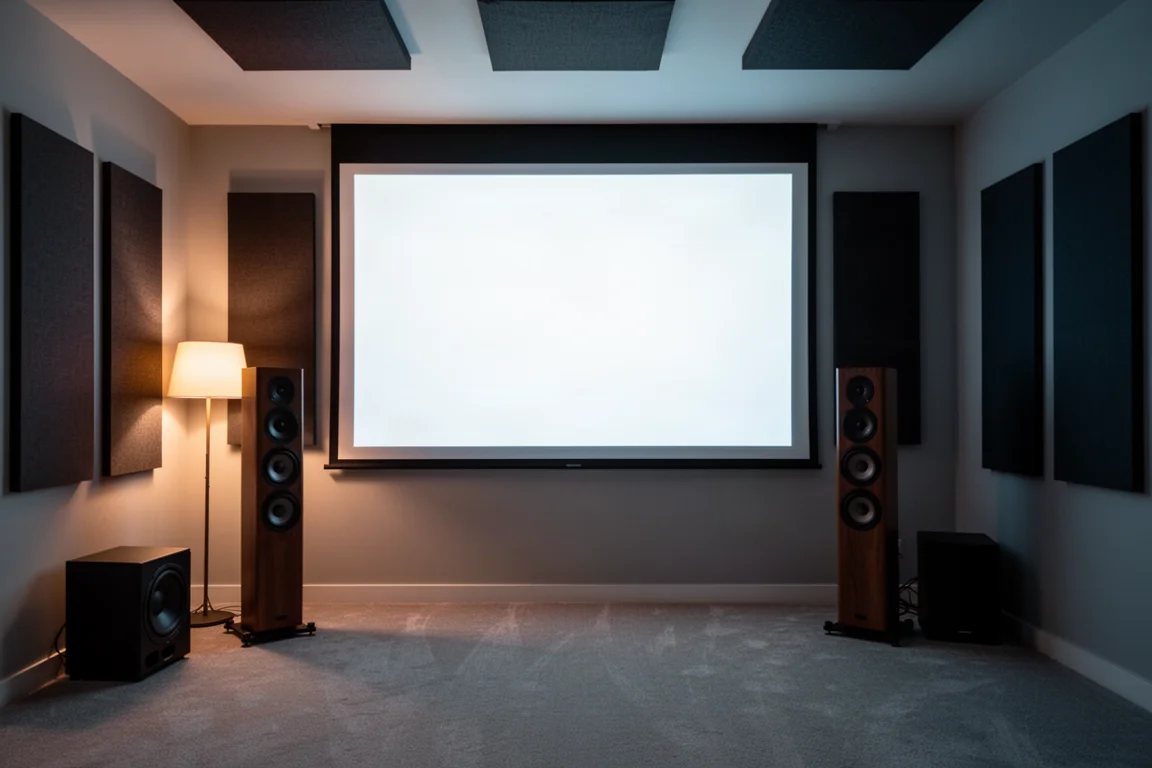
It is also a sensible choice for someone new to home theater who wants a guided setup. The receiver includes a step-by-step on-screen procedure that walks through speaker placement and connection, which removes much of the guesswork from a first build. Buyers who already know their way around a receiver can skip straight into the menus, because the interface has not changed much.
Main Strengths
The X3700H earns its place on three things: bass management done well, a wide and deep soundstage, and video switching that behaves.
Sound Quality and Room Correction
Out of the box, the bass is a touch lighter than some competitors and can sound slightly soft in focus and detail. Running the Audyssey MultEQ XT32 calibration firms it up considerably, adding weight and definition. Calibration produced consistently strong results across three different speaker systems.
Adding a subwoofer is where the receiver settles into its class. The way Audyssey blends the subwoofer with the main speakers is impressive and close to seamless, and the resulting bass is comparable to other receivers at this price. There is also a low frequency containment setting that keeps very deep bass from traveling through walls. It works well, though the default is aggressive; a lower setting keeps the peace without gutting bass response, and it can simply be switched off.
The midrange is smooth and slightly warm, and it is easy to listen to for long sessions. It is not the sharpest at conveying fine nuance compared with some rivals, and the highs, while smooth, develop a slightly digital edge at the extremes that costs a little natural airiness.
Where the X3700H stands out is soundstage depth. With both music and film material, the presentation extends well behind and between the speakers. Center focus is solid without being laser precise, and separation is good, though a few competitors manage more. Switching to a Dolby Atmos mix improves placement further, and the receiver’s upmixing of non-Atmos content into a virtual height presentation is convincing enough that it can be left in that mode by default.
Video, Gaming, and HDR Support
Video switching is quick and largely painless. 4K 120Hz with HDR worked without issues, and the receiver supports Dolby Vision, HDR10+, HDR10 and HLG.

Genuine 8K content and players remain scarce, so 8K signals are scaled rather than passed through natively, and the long-term verdict on 8K handling is still open. For 4K at high frame rates, though, it delivers what it promises.
Setup, Control, and Streaming
Setup is straightforward. The on-screen menus are easy to follow, and the guided procedure covers speaker placement and wiring for anyone who wants it.
Day-to-day control is flexible. HDMI-CEC means a television remote can handle volume and input switching, while the companion app covers deeper adjustments. The app is capable but slightly sluggish, and changing sound modes briefly interrupts audio, which also happens when using the physical remote. It is worth knowing about rather than a reason to avoid the receiver.
Streaming is handled through HEOS, with Wi-Fi, Bluetooth and AirPlay 2 on board. HEOS is a matter of personal taste; it works, but it does not feel as modern as some alternatives. The on-screen menu graphics also look dated next to the next-generation video features the receiver offers.
Things to Consider Before Buying
The most significant limitation is HDMI input flexibility. There are seven HDMI inputs and three outputs, but only one input accepts an 8K 60Hz or 4K 120Hz signal; the rest are limited to 4K 60Hz. Two outputs are main outputs, and a third serves a second zone.
That single high-bandwidth input is a real constraint for anyone running two current-generation consoles. A PlayStation 5 and an Xbox both wanting 4K 120Hz will not both get it.
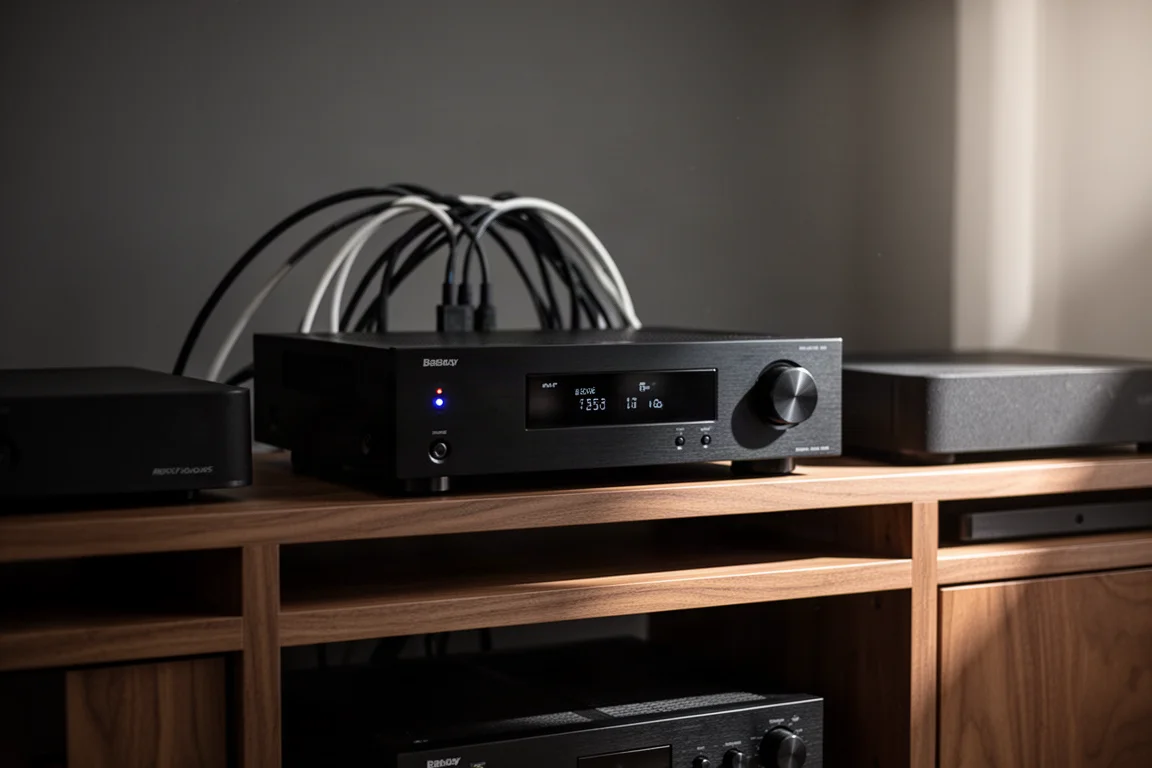
It is also worth understanding the HDMI board situation. Denon AV receivers manufactured in 2020, before the updated board was introduced, have HDMI limitations that require a free breakout adapter box to resolve. The box adds the extra high-bandwidth inputs needed for 8K and 4K 120Hz content. Units with a serial number ending in 70000 or higher already have the updated board and do not need it, while anything below that number comes from the earlier production run.
That makes buying new, factory sealed stock from an authorized retailer the sensible move. Open-box and B-stock units are a gamble here, and the serial number can be checked on the box or confirmed with the seller before purchase.
How the Denon AVR-X3700H Compares to Other Receivers
Against the Onkyo RZ50, which costs roughly the same, the X3700H holds its own. With room correction switched off, the two sound fairly close. Audyssey adds more of a bass lift and a fuller overall presentation, while the Onkyo’s Dirac correction comes across as more neutral and organic. The Onkyo also offers more next-generation HDMI inputs and sounds more confident at lower listening volumes, though the two converge once volume climbs into the higher range.
Higher up the range, the Rotel 1580 and NAD T778 offer a more refined, hi-fi character, but they cost considerably more for what amounts to a modest improvement in sound quality, and even less of one for movies. The Yamaha Aventage A8A is closer in price but trails on video capability, with a feature set that feels carried over from an earlier generation.
Within Denon’s own range, the X series is a clear step up from the S series in sound quality. If a budget can stretch at all, the X series is the better long-term buy.
Buying Advice
The X3700H is a strong performer that gets the important things right. Its independent dual subwoofer outputs, effective Audyssey room correction and reliable 4K 120Hz switching cover ground that some rivals at the same price do not.
If you need two high-bandwidth HDMI inputs, want the most neutral room correction available, or listen mostly at low to moderate volumes, the Onkyo RZ50 is the better fit. If you run two subwoofers, prefer Audyssey, and want the simpler setup path, the Denon is the one to choose. Either way, buying brand new from an authorized retailer and confirming the serial number avoids the HDMI board question entirely. Within Denon’s lineup, the X series starts at around a thousand dollars with the 2700H, making it a reasonable entry point, while the 3700 and the Onkyo RZ50 sit where diminishing returns begin to set in.
Conclusion
The Denon AVR-X3700H is not the most comprehensive receiver in its class, but it covers the essentials well enough to stay competitive. Bass management is excellent once calibrated, the soundstage is wide and deep, and gaming at 4K 120Hz works exactly as advertised. Its limits are clear and easy to plan around: one high-bandwidth HDMI input, a dated interface, and the 2020 board caveat that a careful purchase avoids. For buyers who value dual subwoofer outputs and Audyssey correction, it remains an easy recommendation.
Product link
View more details for Denon AVR-X3700H
This product is mentioned in the review. Check the specifications, options, and compatibility before buying.
View more details for Denon AVR-X3700HFurther reading
Related Reviews
AV Receivers
Anthem MRX 740 8K Review: Composed Home Theater Sound With a Few Rough Edges
A close look at Anthem's mid-tier MRX 740 8K receiver, covering its sound, ARC Genesis room correction, HDMI 2.1 features and the daily quirks worth knowing before you buy.
AV Receivers
Anthem MRX 740 vs MRX 1140: Which AV Receiver Fits Your System?
A measured look at the Anthem MRX 740 and MRX 1140, covering preamp output performance, amplifier behaviour, bass management, and expansion headroom.
AV Receivers
Best AV Receivers for Home Theater: Denon, Onkyo, Marantz and Yamaha Compared
Four home theater receivers compared on features, sound character, setup and value, with clear guidance on which one fits which kind of buyer.