AV Receivers
Denon AVR-X1700H Review: A Budget 7.2-Channel AV Receiver Done Right
A practical look at the Denon AVR-X1700H: punchy 7.2-channel surround sound, three 8K60 HDMI inputs, and the speaker matching rules that decide whether it works for your room.
Introduction
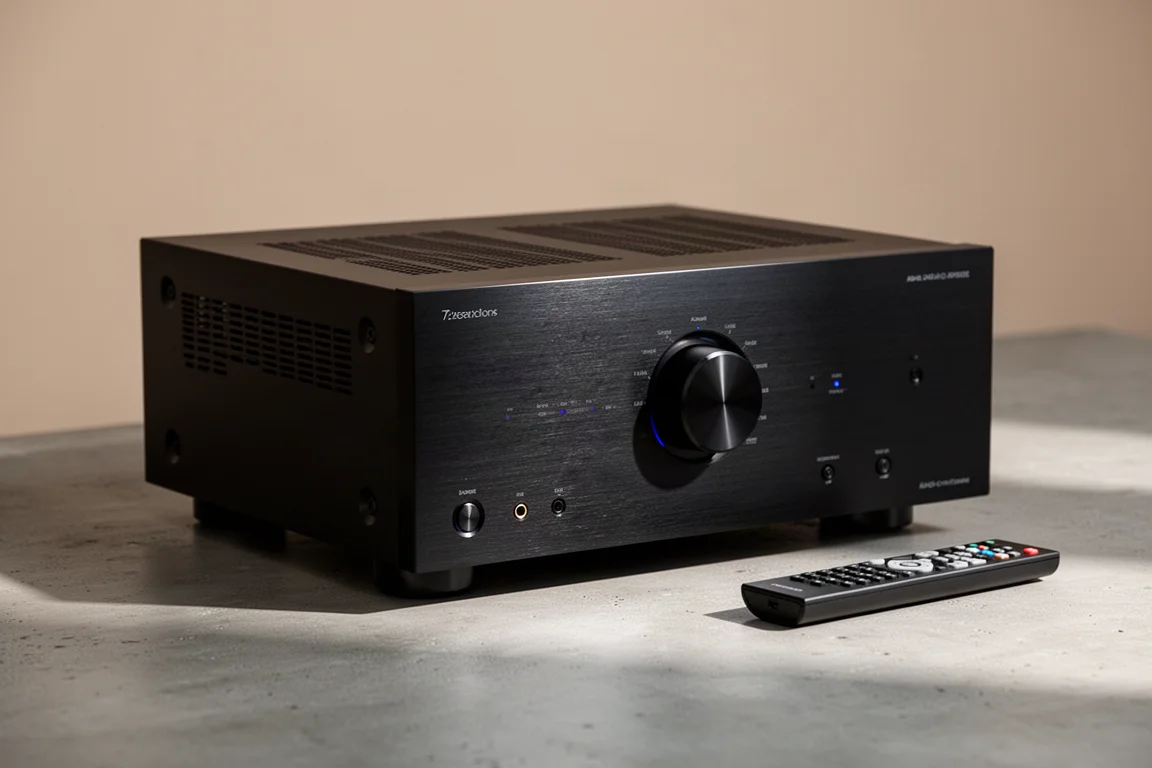
Denon’s recent budget receivers have not always earned an easy recommendation, and the AVR-X1700H arrives with that history hanging over it. This 7.2-channel model supports Dolby Atmos and DTS:X, sits at just under $700, and aims to give first-time home theater builders a receiver that covers the essentials without charging for channels and features they will never use. It is not a giant killer, and it will not outclass receivers costing twice as much, but it is a far more confident effort than the budget Denon models that came before it.
Who the Denon AVR-X1700H Is For
The AVR-X1700H is built for listeners assembling a 7.2-channel Atmos system on a sensible budget. Denon rates it at 80 watts per channel into 8 ohms in stereo, and output likely falls to around 50 watts when several channels are driven at once. Denon does not publish official all-channels-driven figures, so real-world results depend heavily on the speakers you connect.
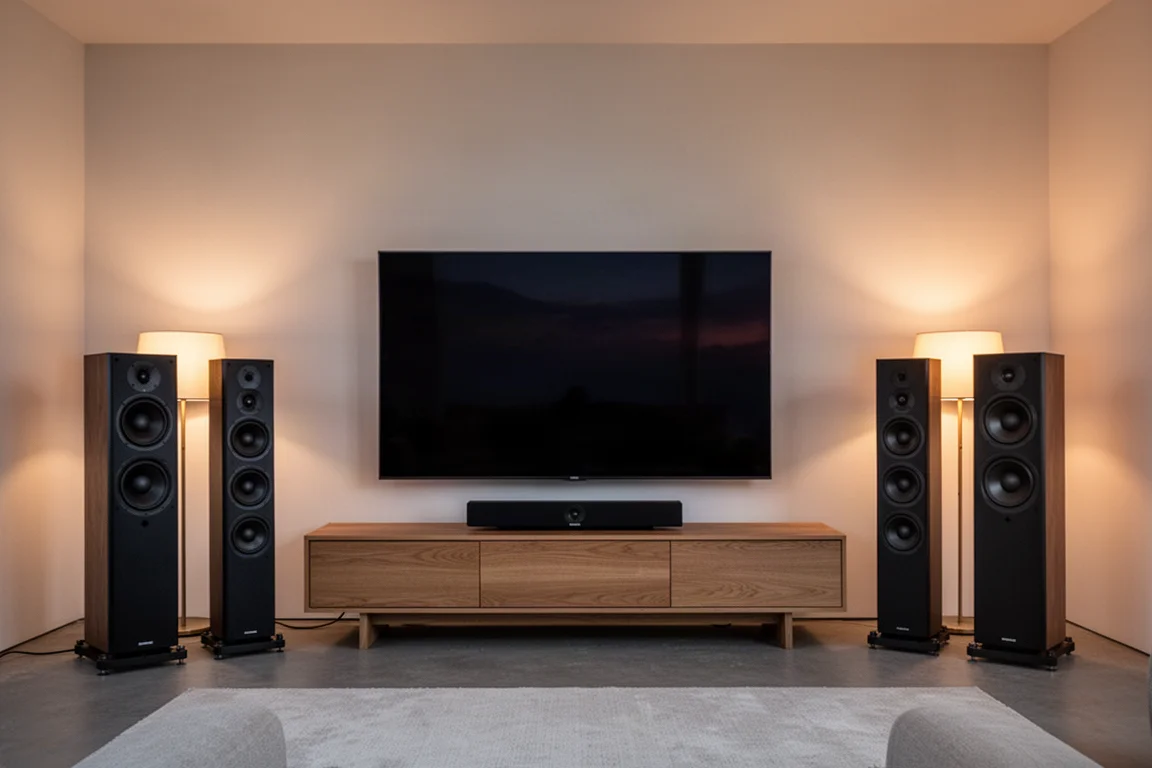
That makes speaker matching the single most important decision here. Efficient designs with a sensitivity of 88 dB or higher and an impedance above 6 ohms play to the receiver’s strengths. In testing, speakers such as the Polk XT60, Klipsch R50M and JBL Stage 190S were all well suited to it. Harder loads, including premium Bowers & Wilkins, Focal and Polk Reference models, exposed the receiver’s limits: rising volume brought audible distortion and a noticeable increase in operating temperature. A speaker rated at 6 ohms or higher, with limited impedance swing, is the safer pairing.
Setup and Everyday Usability
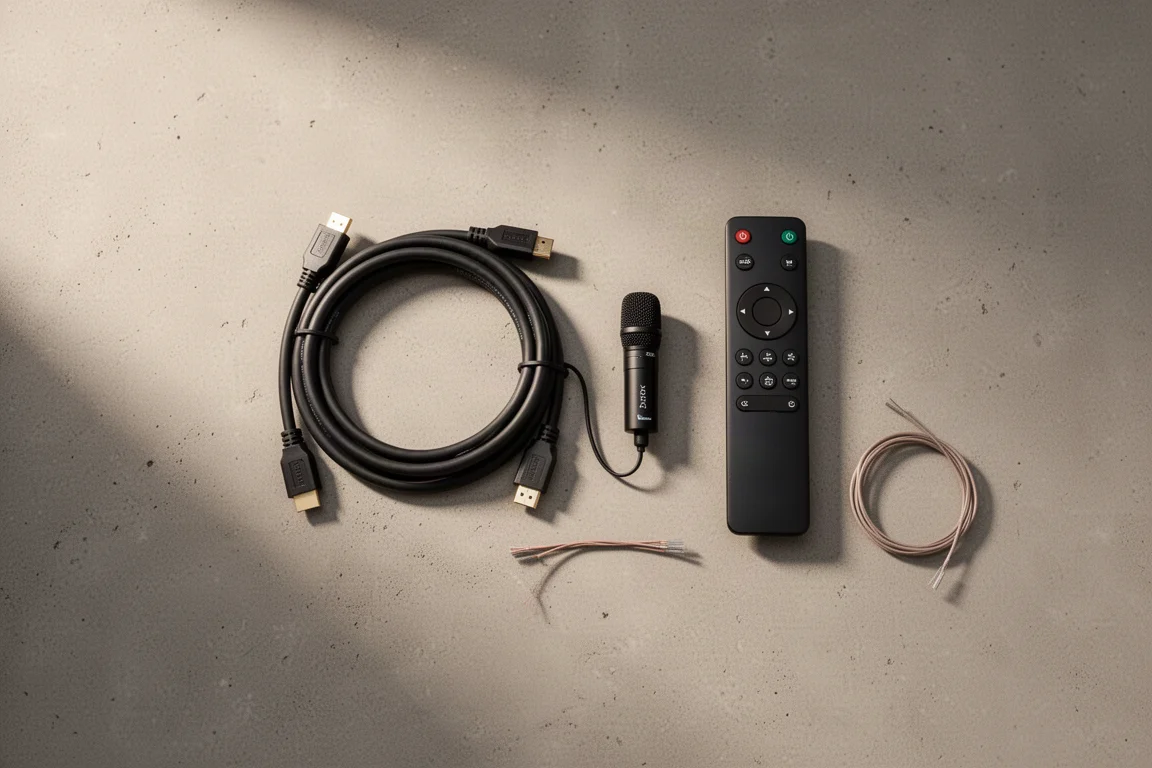
Getting the AVR-X1700H running is painless. The on-screen guide and Audyssey auto room calibration had a full system up and running in roughly 30 minutes during testing. The receiver also lets you save separate sound profiles, so you can compare a calibrated result against a manual setup and switch between them without redoing the work. That is a genuinely useful feature for anyone tuning a room by ear.
The trade-off is the interface. The menus use the older Denon layout rather than the more modern design seen on the Cinema 50 and AVR-X3800H, so none of that polish has trickled down. Everything you need is present and functional, but the visuals feel dated for a receiver at this price.
Main Strengths: Sound Quality and Home Theater Performance
The AVR-X1700H has a fun, punchy character with a real sense of weight down low. Bass is not overbearing or uncontrolled, and it is a clear step up from the vague low end of the older S960H, landing closer in character to the more expensive AVR-X3800H. If your speakers are small enough that low frequencies are handed to a subwoofer, that quality will matter less, but with capable mains it adds genuine presence.
Dialogue through the centre channel is solid. The midrange leans neutral, if slightly soft around the edges, and intelligibility held up well. Listeners who want more bite can raise the centre channel level or use one of the receiver’s dialogue enhancement modes, both of which work very well.

The treble is good without being exceptional. At higher volumes, and with less polished recordings, the top end can thin out and turn a little brittle. In a demanding action sequence built around missile launches, gunfire and jet engines, playback above roughly 90 to 95 dB introduced some extra compression and grain that more expensive receivers avoided. At normal or slightly elevated levels, the Denon stayed composed.
In stereo, the receiver prioritises width over depth, and separation and focus are more generalised than precise. It is not a bad two-channel performer, but it is not the best available at the price. Listeners who care most about music reproduction should weigh the Pioneer LX105 or, better still, the LX305.
Surround performance is where it shines. In both 7.1 and 5.1.2 configurations the receiver handled Atmos and DTS:X material well, with 5.1.2 the more satisfying layout. Upmixing stereo and older Dolby content into a height-channel presentation was effective and dynamically impressive, provided the speakers are efficient.
Gaming and Video Connectivity
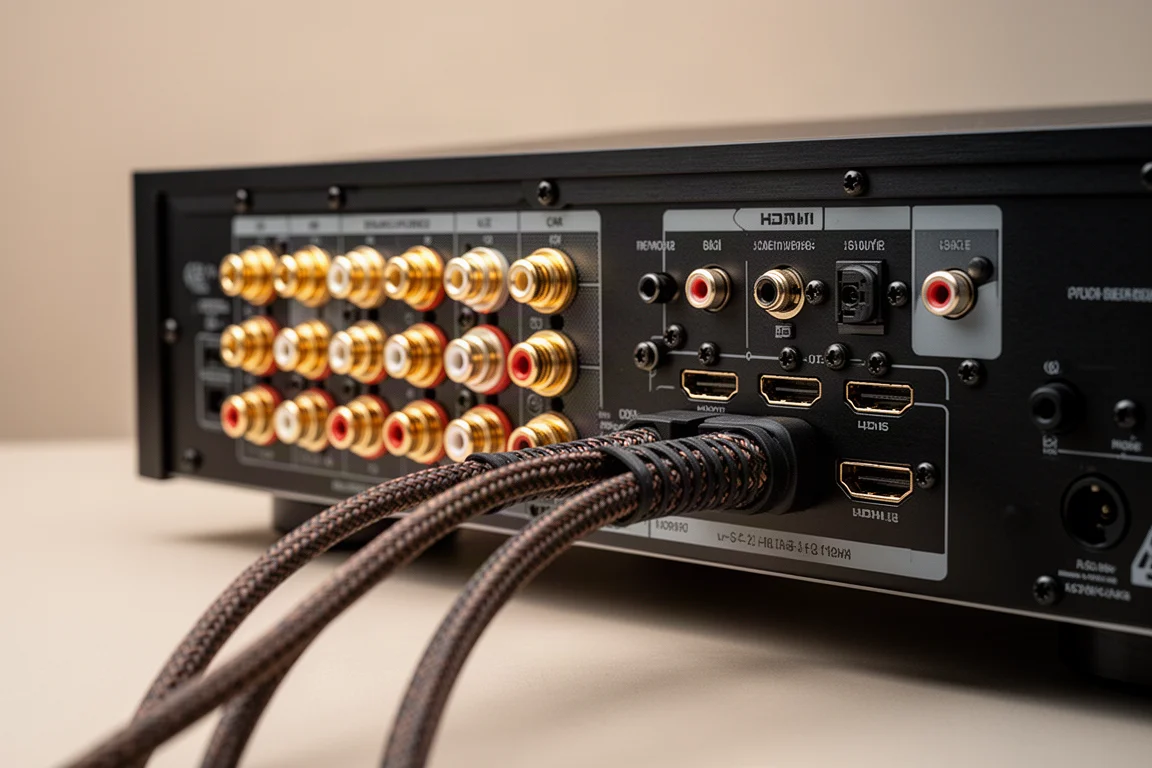
Around the back you get six HDMI inputs, three of which accept signals up to 8K60. Legacy HD and 4K sources can also be scaled up to 8K depending on your settings. A single HDMI monitor output carries ARC and eARC, and the receiver passes Dolby Vision, HDR10+, Dynamic HDR and HLG.
Gamers are well covered with support for auto low latency mode and variable refresh rate. Connected to a PlayStation 5, the AVR-X1700H played 4K120 in HDR without a single issue in testing, a contrast to the recurring problems encountered with older hardware in the same role.
Things to Consider Before Buying
The main caveats are power and heat. Demanding, low-impedance speakers will expose the receiver’s limits, and extended loud playback warms the chassis noticeably. Buyers with hard-to-drive speakers should plan on a more powerful model.
It is also worth being clear about room correction. The AVR-X1700H is not expected to support Dirac Live, so buyers who want that upgrade path should look at other models in the range or at competing brands.
How It Compares to Alternatives
The Pioneer LX305 impressed more overall, with additional channels, more power and Dirac built in, though it costs more. The LX105 sits below it and is worth a look for buyers who cannot stretch to the 305.
The Yamaha V6A remains a capable receiver with a leaner, more agile sound and a stronger sense of detail, but its hardware is ageing, and it struggled with next-gen video features where the newer Denon had no trouble at all.
Within Denon’s own range, the AVR-X2800H is the logical step up. It brings more power, broader next-gen video support and preamp outputs for adding a separate stereo amplifier later, which makes it the better choice for difficult speakers.
Onkyo offers compelling value at lower price points. The Onkyo 5100 matches the Denon’s channel count and power rating for $599 but uses push-pin speaker terminals rather than binding posts. The Onkyo 6100 at $799 adds 100 watts per channel, HDMI 2.1 ports with 8K60 and 4K120, VRR and ALLM, plus its own auto room EQ system. The Onkyo 7100 moves to roughly $1,299 and adds Dirac, putting it in the same territory as the Pioneer LX305.
Buying Advice
At just under $700, the AVR-X1700H is a sensible starting point for a first 7.2-channel Atmos system. Build quality is a step above the cheapest options in the category, and the feature set covers what most rooms actually need.
Match it carefully. Choose speakers rated at 6 ohms or higher with sensitivity around 88 dB or above, and the receiver will deliver a confident, enjoyable home theater experience. If you already own demanding speakers, or plan to add them later, put the extra budget toward the AVR-X2800H, the Pioneer LX305 or the Onkyo 7100 instead.
Conclusion
The AVR-X1700H is the budget Denon receiver that finally earns a recommendation. It is not a giant killer, and it will not match receivers costing twice as much, but it gives first-time buyers a solid foundation with the features that matter and few that do not. Pair it with the right speakers and it will serve a home theater well for years.
Product link
View more details for Denon AVR-X1700H
This product is mentioned in the review. Check the specifications, options, and compatibility before buying.
View more details for Denon AVR-X1700HFurther reading
Related Reviews
AV Receivers
Anthem MRX 740 8K Review: Composed Home Theater Sound With a Few Rough Edges
A close look at Anthem's mid-tier MRX 740 8K receiver, covering its sound, ARC Genesis room correction, HDMI 2.1 features and the daily quirks worth knowing before you buy.
AV Receivers
Anthem MRX 740 vs MRX 1140: Which AV Receiver Fits Your System?
A measured look at the Anthem MRX 740 and MRX 1140, covering preamp output performance, amplifier behaviour, bass management, and expansion headroom.
AV Receivers
Best AV Receivers for Home Theater: Denon, Onkyo, Marantz and Yamaha Compared
Four home theater receivers compared on features, sound character, setup and value, with clear guidance on which one fits which kind of buyer.