AV Receivers
Denon A1H Review: A 15.4-Channel Flagship Receiver With One Big Caveat
The Denon A1H delivers fifteen channels, four independent subwoofer outputs and superb surround sound once Dirac Live is added, but the licence cost is part of the real price.
Introduction
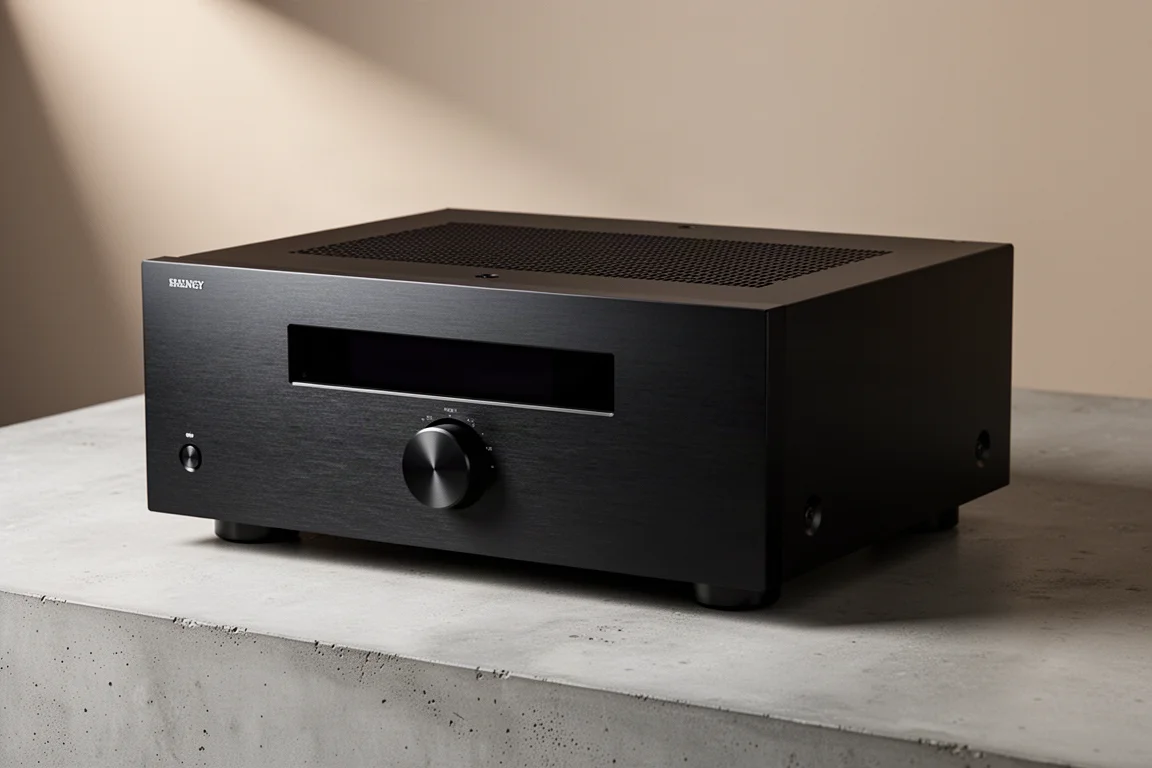
The Denon A1H is the company’s flagship 15.4-channel Dolby Atmos AV receiver, made in Japan and priced at $6,500. On paper it is one of the most comprehensively equipped receivers on the market: fifteen channels of amplification, four independent subwoofer outputs, seven HDMI 2.1 inputs, and a feature list that stretches from a built-in phono stage to HEOS multiroom streaming.
The important nuance is that the A1H does not deliver its best sound straight out of the box. Audyssey MultEQ XT32 is included, while Dirac Live sits behind a paid licence, and the difference it makes is wide enough to change both how the receiver should be judged and how much it genuinely costs to own.
Who This Receiver Is For
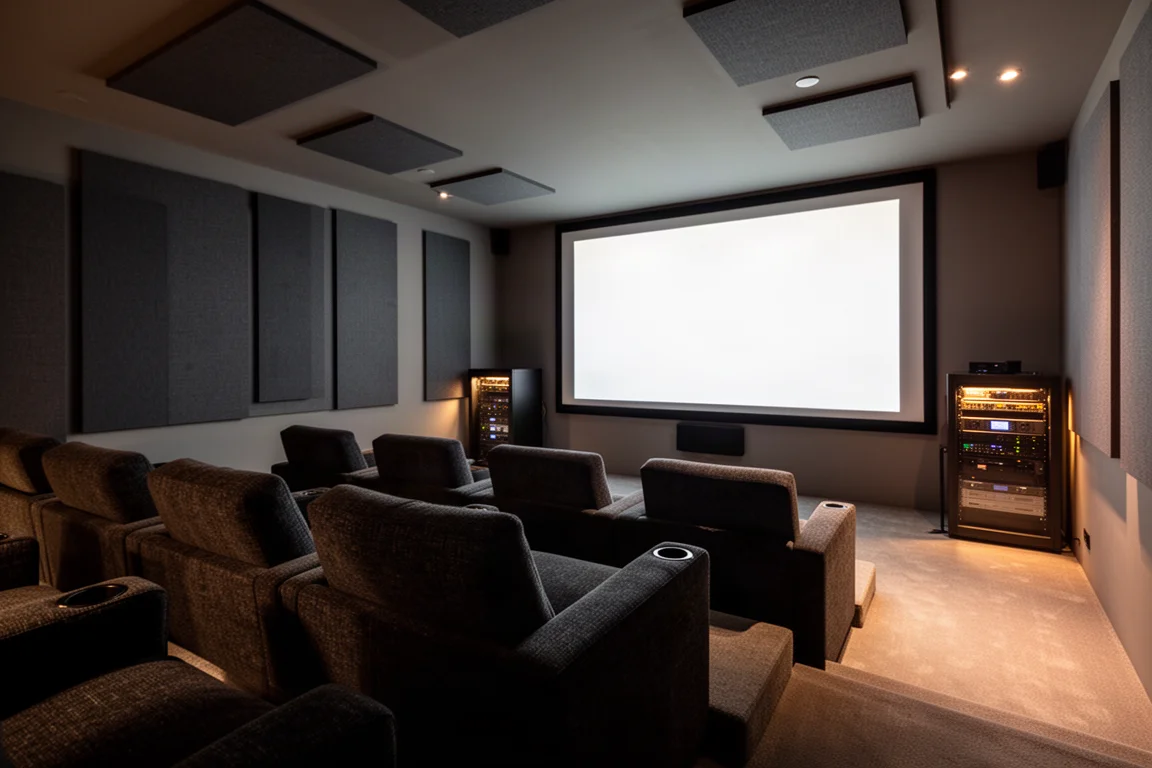
The A1H makes the most sense for listeners who have both the room and the speaker count to use its channel capacity. It can be configured from a straightforward stereo setup all the way up to 9.4.6, and the four subwoofer outputs are independent rather than summed, which is genuinely useful in rooms where low-frequency consistency is difficult to achieve.
Most buyers will never use fifteen channels. Even in a large room, practical Dolby Atmos layouts often top out around 7.4.2 or 5.4.4, and a 5.1.2 or 5.1.4 arrangement is a realistic landing point for many installations. That does not make the extra amplification wasted, because the receiver can also be run in a strict preamp mode and used as a home theater processor with third-party amplifiers.
It is also worth checking the connection details before committing. The subwoofer preamp outputs offer both RCA and XLR connections, while the remaining preamp outputs are unbalanced. That is common at this level, but anyone expecting a fully balanced signal path across every channel should confirm it against their own amplifiers first.
Power and Channel Configuration
Denon rates the A1H at 150 watts per channel into 8 ohms with two channels driven, and reports 190 watts into 6 ohms in stereo. Multi-channel figures with all channels driven are not published, and applying the rough 70 percent convention that some manufacturers follow would put the five to seven channel output somewhere near 100 watts per channel. Buyers who want a firm published number for every channel will not find one here, but the size of the power supply and the overall amplifier construction suggest plenty of headroom for real-world speakers.
In practice the receiver drove demanding loads comfortably. Bowers & Wilkins 801 Signature towers present a difficult impedance curve, and the A1H handled them without any signs of stress. Adding a separate 300-watt amplifier did produce better control and depth from the speaker’s dual 10-inch woofers, which is a useful reference point for anyone planning to pair this receiver with power-hungry towers.
A more typical pairing, Focal Aria Evo X No.2 towers with a matching centre channel, in-ceiling speakers and a KEF KC92 subwoofer, worked very well together and needed no external amplification. For surround duties with that speaker set, the A1H had more than enough power on its own.
HDMI, HDR and Gaming Support
The A1H provides seven HDMI inputs and three HDMI outputs, all of them HDMI 2.1 and capable of carrying 8K60 and 4K120 signals. The main output supports ARC and eARC, and the receiver handles all the major HDR formats including HDR10+ and Dolby Vision. Legacy signals can even be scaled up to 8K, and gaming features include variable refresh rate, auto low latency mode and Quick Frame Transport.
Switching between HDMI inputs was fast and error free, high frame rate gaming worked with and without HDR, and there was no noticeable lag to worry about. That reliability matters more than any single specification, because a flagship receiver becomes the hub that everything else passes through.
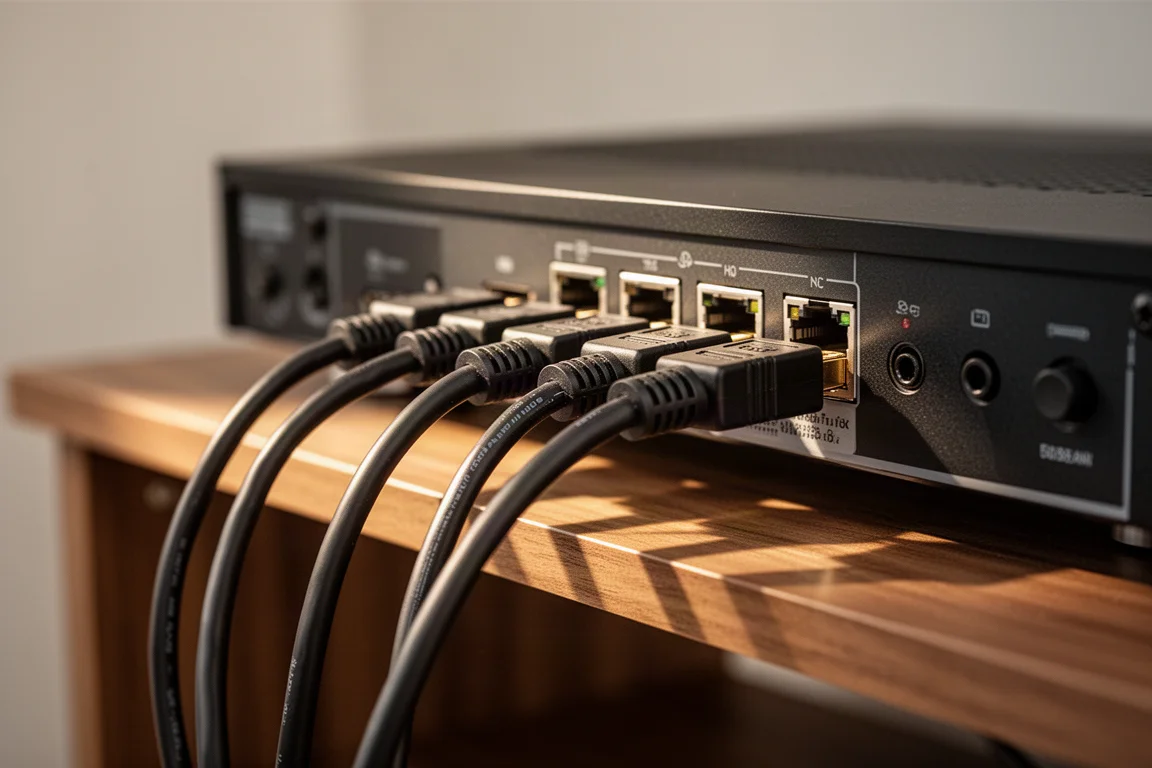
Physical and wireless connectivity is equally broad. There is a built-in phono preamp, an AM/FM tuner, Bluetooth, AirPlay, HEOS multiroom audio, streaming app support, Roon tested status, and smart home integration with Google Home, Alexa and Siri. Few receivers cover this much ground in a single chassis.
Room Correction and Sound Quality
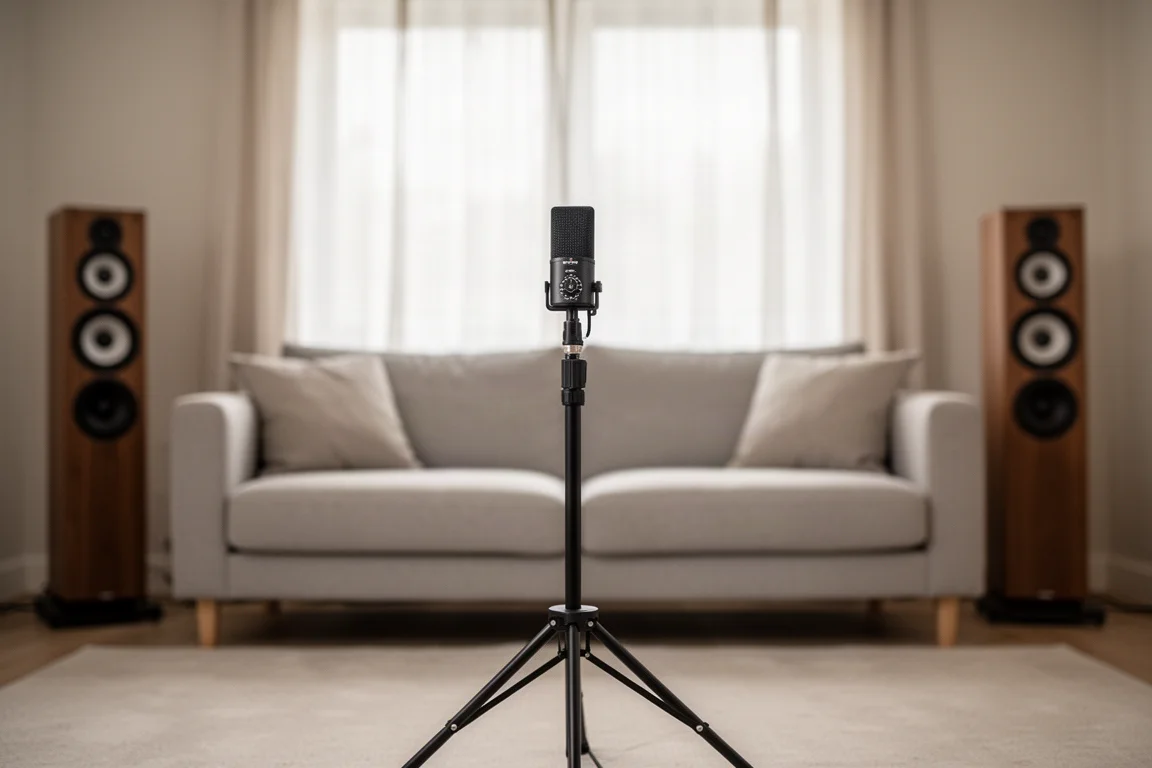
Audyssey MultEQ XT32 is included with the receiver. Dirac Live is a separate purchase at $299, and in this configuration the full Dirac suite plus bass control for a single subwoofer added $649, bringing total cost of ownership to $7,148. Support for multiple subwoofers adds roughly $150 more, which pushes the figure to about $7,300.
Sound quality depends heavily on which of those paths you take. Without Dirac, the A1H comes across as soft, warm and slightly polite: the detail and definition are present, but edges feel rounded and dynamics stay a little distant. With Dirac engaged, the character changes substantially, becoming firmer, more detailed and more dynamically interesting at every volume. In surround use, the fully calibrated A1H delivered a cinematic performance that surpassed the Sony 7000ES. With Audyssey alone the sound turned more treble forward and less intelligible, and with no room correction at all it was too bass heavy and laidback to satisfy.
Dialogue intelligibility with a dedicated centre channel was top notch, with nothing to report. With a phantom centre configuration, however, dialogue took a noticeable step backwards in surround listening. Everything remained understandable, but it was not as clear or as anchored as a dedicated centre channel.
Video Processing and Everyday Use
The receiver’s built-in video processing is best left switched off, which thankfully is the default. The upscaling and video mode presets oversaturated colours and crushed black levels to the point of robbing dark scenes of definition, so it is better to let the display or the source component handle processing and use the A1H purely for switching.
The control app is a genuine highlight. It gives full access to the entire setup menu in real time from a phone or tablet, which makes comparing different settings and Dirac profiles remarkably straightforward. Guided setup and clear on-screen menus make the initial configuration relatively painless, and experienced users can skip the walkthrough and go straight to the settings that matter.
Manual tuning is where the receiver falls short. There is a basic graphic equaliser and a set of tone controls, but no parametric EQ, which is thinner than expected at this price point.
Things to Consider Before Buying
The biggest consideration is that Dirac Live is not included with a receiver that already costs $6,500. Out of the box the A1H is solid, but the gap between Audyssey and a full Dirac calibration is wide enough that the licence is better treated as part of the purchase price than as an optional extra. Anyone planning to skip it should weigh the alternatives carefully, because the receiver simply does not have the same edge without it.
Heat is another practical factor. The A1H runs warm, particularly during spirited listening sessions, so it needs real clearance in an open rack rather than a closed cabinet. At roughly 80 lbs it also needs a shelf that can carry the weight and a second pair of hands during installation.
Two smaller points are worth knowing before ordering. On power up, half of the front display sometimes fails to show the source name and volume; switching inputs brings it back, and the glitch has no effect on sound or overall performance. Manual tuning, meanwhile, is limited to a basic graphic equaliser and tone controls, with no parametric EQ available.
Finally, the multi-channel power figures with all channels driven are not published. Buyers who need a guaranteed number for every channel should account for that uncertainty when comparing options.
How It Compares With Other Flagship Receivers
The Sony 7000ES remains a strong alternative: it costs less than half as much, and while a fully calibrated A1H is the better receiver, the gap is narrower than the price difference suggests, and without Dirac the Sony takes the edge for cinema sound. The Onkyo RZ70 offers broadly equal features and power and includes Dirac with the purchase, with bass control available for a much smaller additional cost, and it leans toward a more neutral, dynamically punchy tone. The Yamaha A8A sells for less than the Denon, delivers similar power with fewer channels, and skips both Dirac and Audyssey, but its manual tuning options and neutral presentation make it appealing for listeners who want to shape the sound themselves.
Buying Advice
Budget for Dirac from the start. The receiver is $6,500, the Dirac Live licence adds $299, and a full suite with bass control for a single subwoofer brought the total to $7,148, rising to roughly $7,300 once multiple subwoofer support is included. If that total is acceptable, and you have the speakers and the room to justify fifteen channels, the A1H is a compelling flagship.
It is also worth asking whether the channel count is genuinely needed. A 5.1.4 or 7.4.2 layout is realistic for most rooms, and much of the A1H’s value comes from its amplifier quality and subwoofer flexibility rather than from the raw channel tally. Buyers who intend to run it with Audyssey only may find a less expensive receiver delivers more satisfaction per dollar, while those who want the best surround performance available should plan on the full Dirac suite from day one.
Conclusion
The Denon A1H is an exceptional receiver when it is set up properly. It drove difficult speakers without complaint, handled HDMI 2.1 sources and high frame rate gaming without issues, and once Dirac was applied it delivered the most convincing surround performance in this comparison. The caveats are real: the licence cost, the heat, the occasional display quirk, the limited manual EQ and the weaker phantom centre behaviour. Buyers who accept those terms and budget for calibration will find a flagship receiver that is very hard to beat right now.
Product link
View more details for Denon A1H
This product is mentioned in the review. Check the specifications, options, and compatibility before buying.
View more details for Denon A1HFurther reading
Related Reviews
AV Receivers
Anthem MRX 740 8K Review: Composed Home Theater Sound With a Few Rough Edges
A close look at Anthem's mid-tier MRX 740 8K receiver, covering its sound, ARC Genesis room correction, HDMI 2.1 features and the daily quirks worth knowing before you buy.
AV Receivers
Anthem MRX 740 vs MRX 1140: Which AV Receiver Fits Your System?
A measured look at the Anthem MRX 740 and MRX 1140, covering preamp output performance, amplifier behaviour, bass management, and expansion headroom.
AV Receivers
Best AV Receivers for Home Theater: Denon, Onkyo, Marantz and Yamaha Compared
Four home theater receivers compared on features, sound character, setup and value, with clear guidance on which one fits which kind of buyer.