Hi-Fi Amplifiers
Denafrips Thallo Review: A Balanced Power Amplifier With Real Grip
A compact, fully balanced power amplifier with serious power supply hardware, refined treble, and a warm, punchy low end that rewards careful system matching.
Introduction
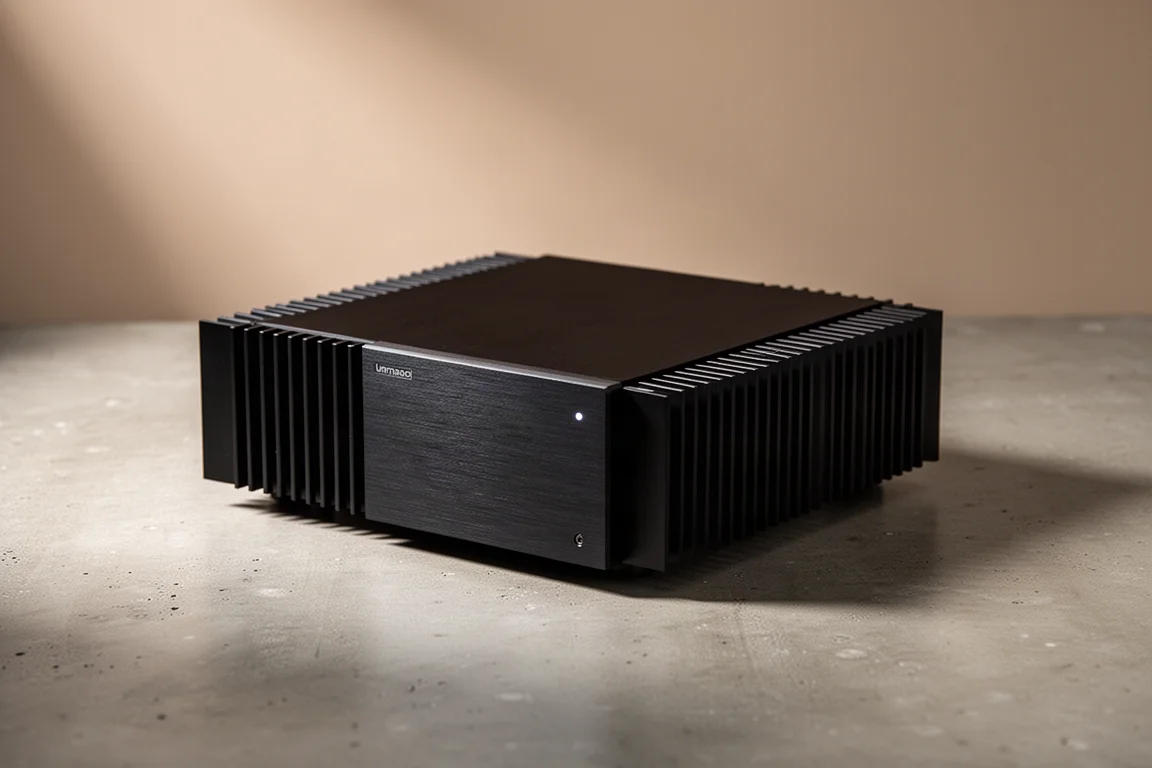
Denafrips Thallo is a compact power amplifier built around a fully balanced circuit and a genuinely serious power supply. It sits above the brand’s earlier Hyperion design, and the step up is not cosmetic: the transformer is roughly twice the size, the filter capacitance is larger, and the rated output climbs to 120 watts into 8 ohms and 220 watts into 4 ohms.
What makes it compelling is how it behaves at the extremes. Large dynamic swings, from near silence to full-scale transients, are handled without strain, and that composure shapes everything else about the sound.
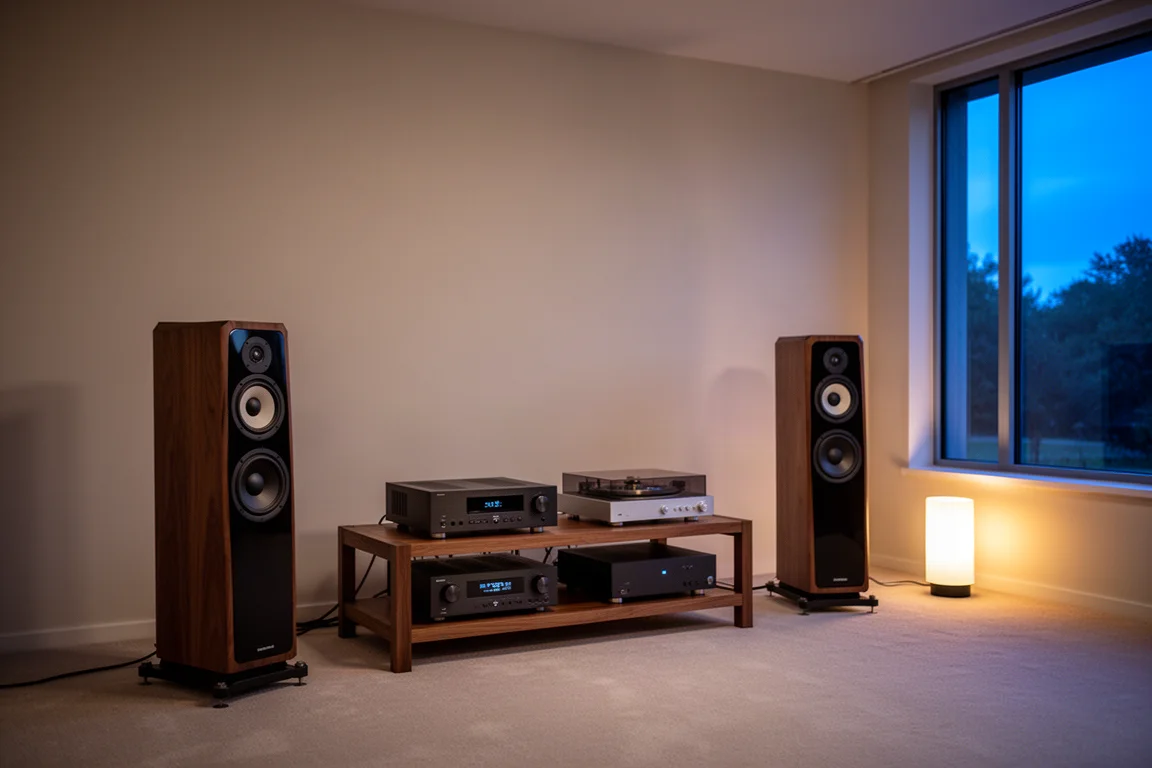
The rated figures are not extreme on paper, but the amplifier has handled a wide spread of speaker loads, from efficient designs to demanding 4-ohm and planar magnetic speakers, without ever sounding thin or strained.
Who This Product Is For
The Thallo suits listeners who want an amplifier with grip and body rather than a strictly neutral, lean presentation. It has enough current delivery to drive sensitive speakers comfortably and enough stability to take on difficult loads, including 4-ohm designs and planar magnetic speakers such as Magnepan models. It has also been used successfully with speakers like the KEF LS50 Meta.
It is a natural fit for a two-channel system that doubles as a movie setup. The added midrange weight gives dialogue more presence, which matters when the same system handles films and music.
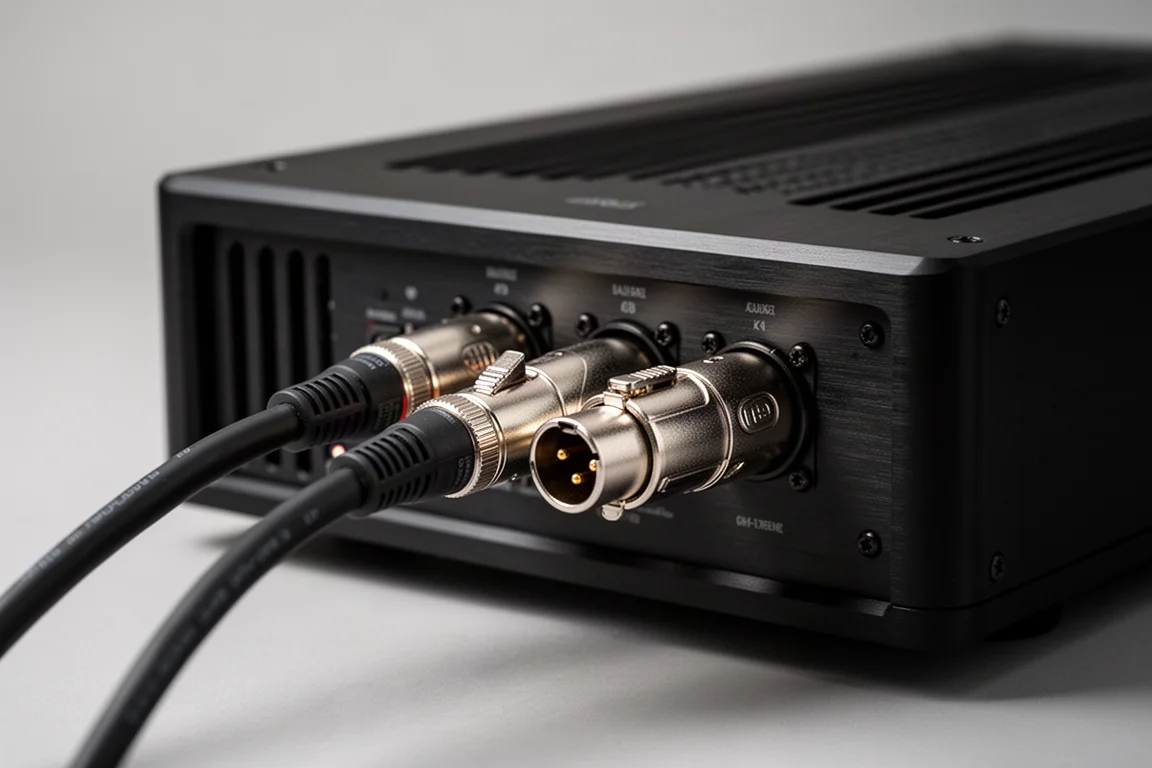
Buyers should plan around one requirement: the Thallo is a fully balanced design with balanced inputs only. If your preamplifier has single-ended outputs, you will need a converter, and it is worth confirming compatibility with both the brand and your preamplifier before ordering.
Main Strengths
Power Delivery and Dynamic Headroom
The power supply is the headline. A 600VA toroidal transformer, roughly twice the size of the one used in the Hyperion, is paired with more than 200,000 microfarads of filter capacitance spread across 36 capacitors. That is a specification normally associated with much larger full-size amplifiers, and the Thallo packages it in a comparatively compact chassis.
In listening, that headroom shows up as ease. Tracks with heavy low-frequency demands, or electronic music that jumps between quiet passages and loud peaks, keep their shape instead of flattening out.
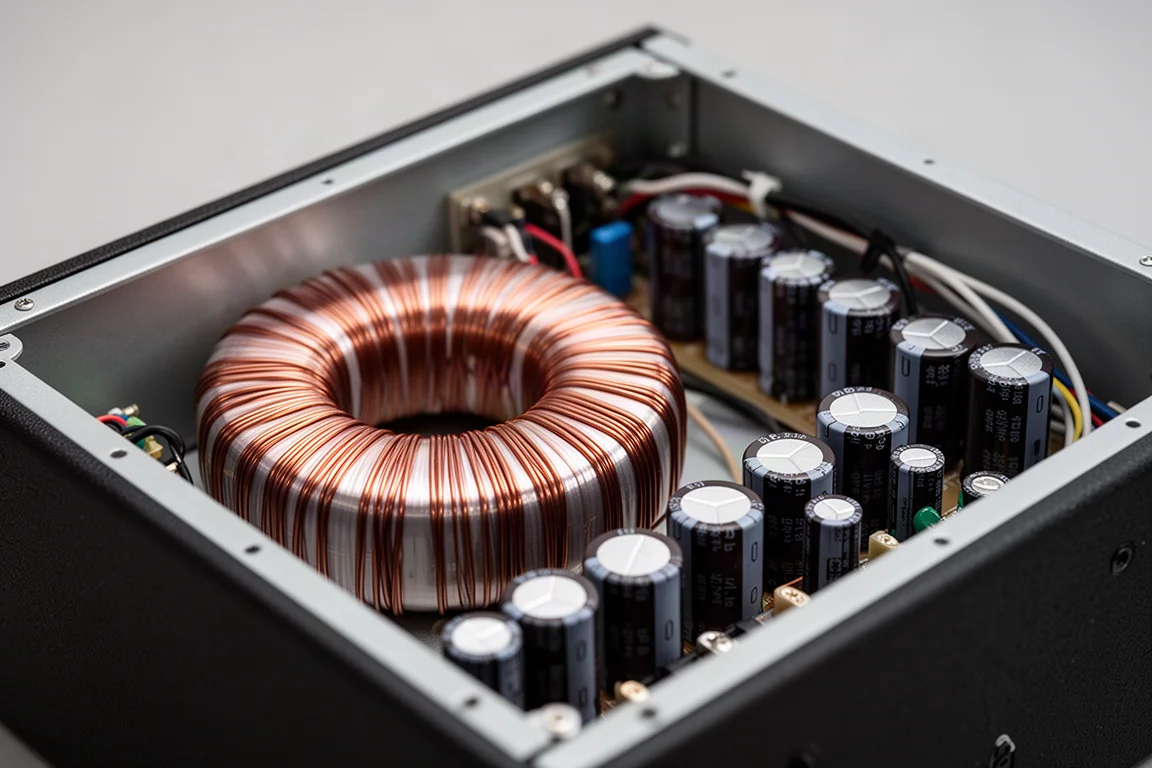
The amplifier runs in class AB with a generous class A bias, which is part of why it sounds as substantial as it does.
Tone, Midrange Body, and Bass
The Thallo is not a flat, colorless amplifier. It has a deliberate tonal character, with an earthy midrange and a firm lower register. Male vocals in particular gain body and weight, and bass-led tracks translate into a punchy, tight mid-bass with linear extension into the sub-bass regions.
That voicing is a matter of taste. Listeners who prefer a leaner, more strictly neutral presentation may find the added warmth too much, while those who want instruments and voices to sound fuller will find it immediately appealing.
Refinement, Imaging, and Soundstage
Treble is refined rather than sharp. Detail retrieval is strong, but edges are rounded just enough that long sessions stay comfortable, and sibilance is kept under control even on bright recordings. Poorly recorded material that tends to sound harsh elsewhere comes across as far more listenable here.
Imaging is precise, with stable placement across the stage and a convincing center image. The soundstage is wide and deep, giving recordings an enveloping quality that holds up across different material.
Design and Connections
The build uses quality components, including Wima capacitors and relays, and the internal layout is tidy. Connections are balanced only, which follows the design philosophy: the amplifier is meant to be used in a fully balanced chain so it can perform at its best.
Things to Consider Before Buying
The balanced-only input is the first practical consideration. It is not a flaw in the circuit, but it does mean the rest of your system has to match, either with a balanced preamplifier or with a converter whose compatibility you have confirmed in advance.
Heat is the second. Because the amplifier runs class AB with more class A bias than typical designs, it gets hot during long listening sessions. In a well-ventilated rack that is manageable, and in winter it is barely a concern, but in a warm room without air conditioning it is worth planning for.
The third consideration is tonal. This is an amplifier with character rather than a transparent wire with gain, and that character is the main reason listeners will either love it or look elsewhere.
Setup and Pairing Notes
Pairing changes the balance more than you might expect. With the brand’s own Hestia preamplifier, the result is the most even-handed: strong bass grip, extended and refined highs, and a wide, deep stage. That combination is the reference point, and it is easy to hear why the two were designed together.
With a tube preamplifier, the presentation shifts toward a more holographic, three-dimensional sound with extra treble extension and excitement, at the cost of some of the bass control. With a smoother solid-state preamplifier, the sound becomes gentler across the board, but bass definition and treble refinement both take a step back.
Speaker matching matters too. The amplifier has driven both sensitive designs and demanding ones without sounding thin, and the midrange fullness stays intact whether the load is easy or difficult.
Buying Advice
The Thallo earns its place for listeners who want an amplifier with real low-frequency authority, a refined top end, and enough current to work with a wide range of speakers. It is a meaningful step above the brand’s lower-tier amplifier, and the price gap between the two is around $500, which makes the upgrade math unusually favorable at this level.
If your priority is strict neutrality, more neutral designs such as the Kinki Studio EX-M1 Plus or the NAD C298 may suit you better. If you want body, grip, and a slightly warmer tonal balance, the Thallo is the more satisfying choice, and it pairs most convincingly with a balanced preamplifier from the same brand.

Budget for the practical details as well: a balanced preamplifier, adequate ventilation, and a rack with room to breathe. Those three items matter as much as the amplifier itself when you are putting a system together.
Conclusion
Denafrips Thallo is a compact power amplifier that behaves like a much larger one. Its power supply, balanced topology, and refined voicing add up to a presentation that is full-bodied, dynamic, and easy to listen to for hours on end. The trade-offs are clear: balanced inputs only, noticeable heat, and a tonal signature that favors richness over strict neutrality. For the right system, those are easy terms to accept.
Product link
View more details for Denafrips Thallo
This product is mentioned in the review. Check the specifications, options, and compatibility before buying.
View more details for Denafrips ThalloFurther reading
Related Reviews
Hi-Fi Amplifiers
Accuphase E-280 Review: Entry-Level Accuphase With Flagship Attention to Detail
A close look at the Accuphase E-280 integrated amplifier, covering its champagne build, AAVA volume control, sound quality, and the speakers and sources that suit it best.
Hi-Fi Amplifiers
Advance Paris A10 Classic vs Yamaha A-S301: Two Integrated Amplifiers Compared
A practical comparison of a $350 integrated amplifier and a $2,500 reference model, covering the differences that matter and the ones that do not.
Hi-Fi Amplifiers
Affordable Chinese Amplifiers Worth Buying: Five Budget Hi-Fi Amps Compared
A practical look at five affordable amplifiers, what each one does well, and the trade-offs to weigh before you buy.