Hi-Fi Audio
Denafrips Terminator 2 Review: A Discrete Resistor Ladder DAC With More Space and Depth
A close look at the Denafrips Terminator 2, a fully balanced resistor ladder DAC with three configurable I2S inputs, a solid aluminum chassis, and a manual, display-free design.
Introduction
The Denafrips Terminator 2 is the successor to the original Terminator, a digital-to-analog converter that has served as a long-term reference in a high-end system for around two years. From the front, the two components look almost identical. The rear panel is where the visible changes appear, with a different set of inputs, but the more meaningful updates sit inside: a new oscillator board, improved isolation, and a revised power supply. Nothing about that list is monumental on paper, yet the two converters genuinely do not sound the same.
That difference is worth stating carefully. The Terminator 2 does not reinvent the sound of the original. It refines it. Listening over an extended period rather than in quick switching sessions makes the change easier to hear, because the improvements show up in the way the presentation is organised rather than in any single obvious trait.
Who This DAC Is For
This converter makes the most sense for listeners who already own a revealing system and a library of well-recorded material. It rewards quality at the source. Where a recording is spacious, unprocessed and cleanly captured, the Terminator 2 lets more of that space through. Where a recording is heavily compressed or heavily processed, the converter will not disguise it.
It is also a strong fit for anyone running an I2S-capable digital transport. There is no universal standard for I2S pin configuration, so the Terminator 2 lets you configure its I2S input to match a wide range of sources, though not every source on the market. If you own a transport that outputs I2S, that flexibility is a genuine practical advantage.
Finally, this is a component for people who are comfortable operating their gear by hand. Input selection, phase inversion and filter changes are all handled with physical buttons on the front panel. If you expect to adjust those settings from a sofa, this is not the DAC for you.
Main Strengths
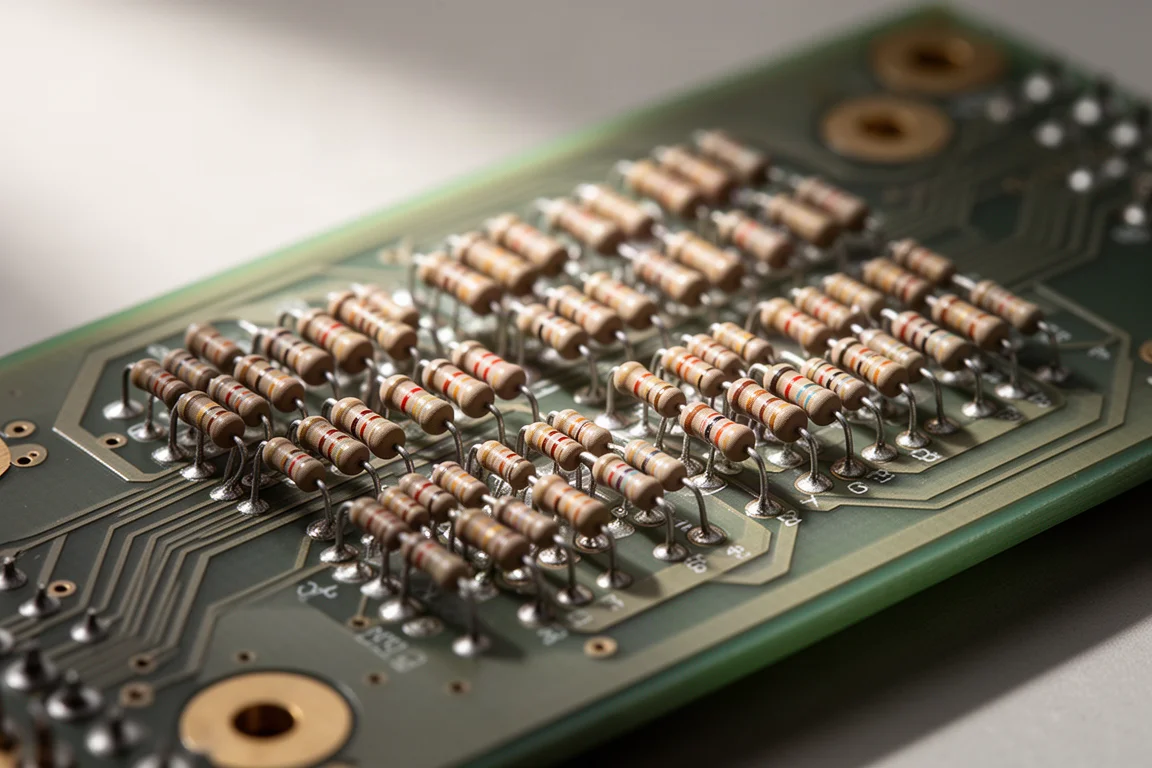
The core of the design is a discrete resistor ladder converter. Denafrips does not use off-the-shelf DAC chips here. Instead, the company builds its own ladder, and this particular implementation uses over a thousand precision resistors arranged across four banks. The converter is fully balanced from input to output, which is a meaningful structural choice at this price and quality level rather than a marketing line.
The chassis is another clear strength. It is solid aluminum with no folded metal parts, and it feels absolutely inert in the hand. That kind of construction tends to inspire confidence in a component you plan to keep in a rack for years.
Connectivity is unusually generous for the category. Around the back you get balanced XLR and single-ended RCA analog outputs, along with three I2S inputs, a count that is rare among competing converters. Denafrips advises against using the XLR and RCA outputs at the same time. Running both does not cause anything dramatic to happen, but the converter sounds slightly better when you commit to one output or the other.
Design and Build Quality
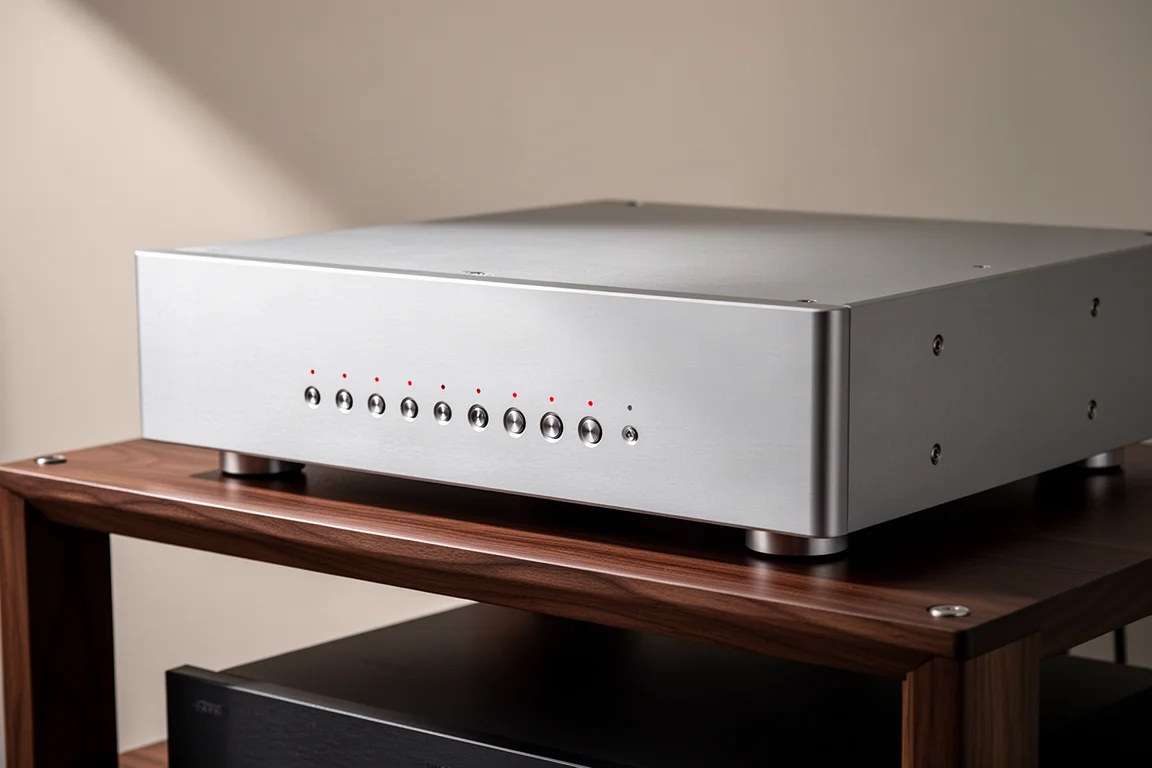
The front panel is deliberately plain. There is no LED or LCD display anywhere on the unit, and the labeling on the panel is very small, which makes it genuinely difficult to read in dim light and sometimes tricky even in a bright room. The indicator lights are tiny red LEDs that are easy to miss in normal use. In day-to-day listening this is rarely a problem, because you set the converter once and leave it, but a display would make the ownership experience noticeably easier.
Around the rear, the analog output section pairs balanced XLR with RCA, and the three I2S inputs sit alongside the rest of the digital connections. The ability to reconfigure the I2S pin assignment is what allows the Terminator 2 to work with a broad range of transports. Between the solid aluminum chassis and the internal changes over the original, this is a component that feels built to a high standard rather than assembled to a price.
Sound Quality in Practice
The first thing that stood out when returning to the original Terminator after living with the Terminator 2 was space. On a large-scale organ recording, the newer converter sounded spatially bigger, with the instrument reaching a little deeper and the acoustic of the room more clearly laid out. The original still sounded excellent, but it presented the same music on a slightly smaller stage.
That pattern held across other material. On an acoustic live session, more of the performer’s humanity came through with the Terminator 2, a subtle gain in presence rather than a dramatic shift. With a well-recorded Havana studio album streamed at 96/24, the newer converter added depth and a more three-dimensional quality, with the interplay between musicians easier to follow. The original conveyed the same performance with less of that sense of there being something there.

The clearest demonstration came with minimalist recordings captured using only two microphones, with no dynamic range compression, no equalization and no processing. On material like that, the converter became genuinely transparent. The sound stopped feeling like it was coming from the speakers and started feeling like it was coming from somewhere well beyond them, and it did so effortlessly. For comparison, a high-resolution reissue of a classic 1969 album sounded heavily processed and dynamically compressed next to those unprocessed sessions, which says more about the recording than about the converter. The Terminator 2 simply tells you which is which.
Things to Consider Before Buying
There is no MQA support. If MQA decoding matters to your library, this converter will not handle it, and that is a firm limitation rather than a minor one for listeners who rely on that format.
There is also no remote control. Changing inputs, inverting phase or switching filters all require walking over to the unit and pressing buttons. The buttons themselves feel very nice to use, but the process is entirely manual. Combined with the absence of a display, that means checking the current state of the converter involves getting up and looking closely at very small labeling and very small indicator LEDs.
Pricing and logistics are worth understanding before you order. The Terminator 2 is priced at 4,450 dollars in either silver or black, and that figure includes free shipping worldwide and, in the US, no sales tax. Denafrips is a Chinese company and the Terminator is manufactured in China, while worldwide distribution runs through Vinshine Audio, based in Singapore. Vinshine Audio lists prices in Singapore dollars, so buyers outside Singapore need to convert to their local currency. Shipping is free, but the tax situation depends entirely on where you live. The warranty runs for three years.
Buying Advice
The strongest case for the Terminator 2 is value within its own category. Given the build quality and the sound quality on offer at 4,450 dollars, it looks underpriced by high-end audio standards. That is a rare thing to be able to say about a component at this level, and it is the main reason the converter is easy to recommend to the right buyer.
The right buyer is someone with a resolving system and a collection of clean, minimally processed recordings. Under those conditions, the extra space, depth and transparency over the original Terminator are audible and worthwhile. If your library leans heavily on compressed modern masters, or if you need MQA decoding, a remote control or a front-panel display, the practical trade-offs will matter more than the sonic gains. Pairing the converter with a transport that can use one of the three I2S inputs is the most natural way to get the most from it.
Conclusion
The Denafrips Terminator 2 is a considered evolution rather than a reinvention. A new oscillator board, better isolation and an improved power supply sit inside a solid aluminum chassis around a fully balanced discrete resistor ladder, and the result is a converter that opens up the presentation compared with the original. It asks for patience, good recordings and a willingness to operate it by hand. For listeners who can meet those conditions, it delivers a level of transparency and spatial depth that is difficult to argue with at the price.
Product link
View more details for Denafrips Terminator 2
This product is mentioned in the review. Check the specifications, options, and compatibility before buying.
View more details for Denafrips Terminator 2Further reading
Related Reviews
Hi-Fi Audio
Accuphase C-57 vs Allnic H-7000V: Two High-End Phono Stages Compared
A fully balanced solid-state phono stage with a pitch-black noise floor meets a tube design built for well-loved records. Here is how to choose between them.
Hi-Fi Audio
Active vs Passive Hi-Fi: Five Components for a Modern System
Five components that define modern active and passive hi-fi systems, with the strengths, trade-offs and setup details worth weighing before you buy.
Hi-Fi Audio
Advance Paris A10 Apex Review: A Hybrid Integrated Amplifier That Covers a Lot of Ground
A French hybrid integrated amplifier with a class A tube preamp stage, analogue power meters, and an internal DAC and phono stage good enough to make extra boxes unnecessary.