Hi-Fi Audio
Denafrips Pontus 15th Anniversary Review: An R-2R DAC That Resets Expectations
The Denafrips Pontus 15th Anniversary brings the architecture of the Venus 12-1 down to a £2,100 price point. Here is how it performs, what it asks of a system, and how it compares with the Gustard R26, LHY Harmony, Holo Audio Cyan 2, and Gustard X30.
Introduction
Denafrips has built its reputation on ladder converters that pair high resolution with a rich tonal character and a spacious soundstage, and the Pontus 15th Anniversary is the clearest expression of that approach so far. It is based on the outgoing Venus 12-1, which means the company’s mid-tier converter now inherits the architecture of the model above it.
The pricing makes the shift more interesting still. At £2,100, the Pontus 15th Anniversary undercuts what an equivalent R-2R ladder design would have cost a decade ago, when such a converter would have set you back the best part of £10,000, or even last year, when the figure was closer to £3,000.
There is company news behind the product line as well. Denafrips has parted ways with long-time global distributor Vinshine Audio and now sells primarily through its own website, while continuing to use distributors in selected markets. Vinshine has taken on the LHY brand, whose first product, the Harmony DAC, has been well received. For buyers, though, the practical question is straightforward: what does the Pontus 15th Anniversary deliver, and how does it compare with the alternatives at and above its price?
Who the Pontus 15th Anniversary Is For
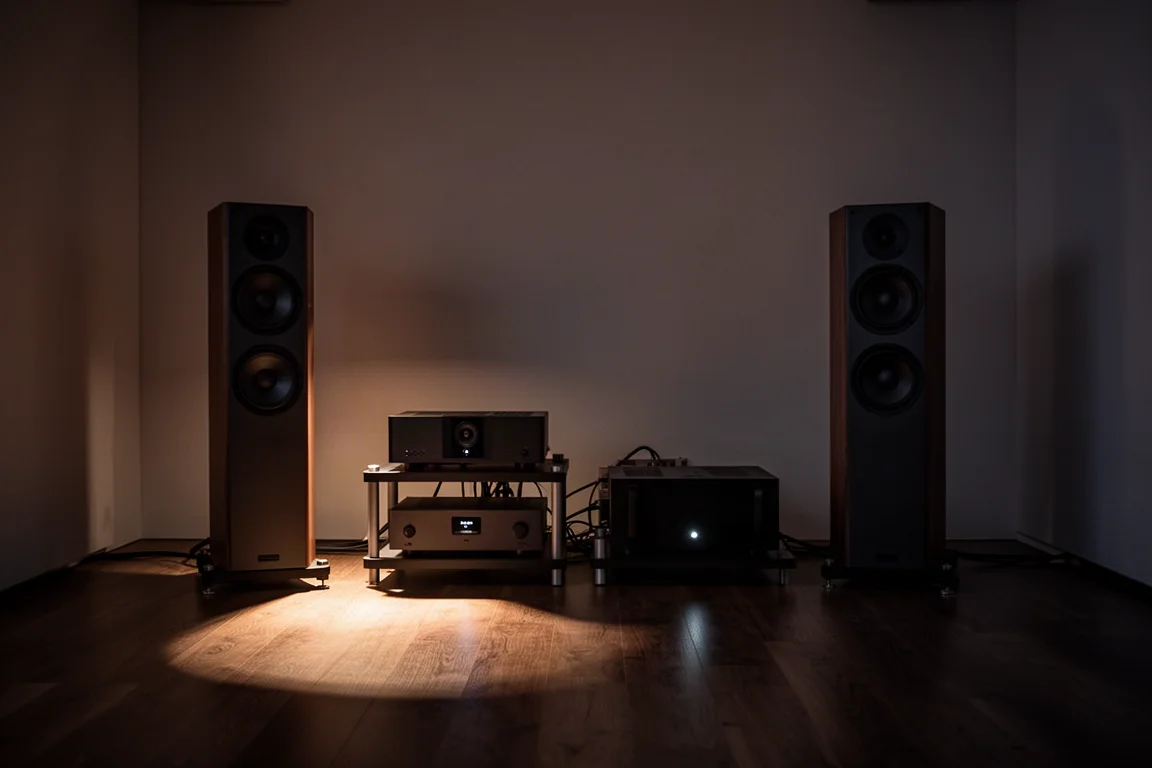
This is a converter for a resolving two-channel system. It makes most sense when the amplifier and speakers are already settled and the digital front end is the remaining weak link, particularly if you are running an integrated amplifier whose built-in DAC has started to feel like a compromise.
It also suits amplifiers that have no converter at all, from premium integrateds down to more accessibly priced designs. If your budget is tighter, the Denafrips Ares 15th at just over £1,000 is the more sensible match for amplifiers retailing up to about £2,000 and similarly priced speakers. The Pontus 15th Anniversary is for listeners who want the digital stage to keep pace with the rest of the chain rather than hold it back.
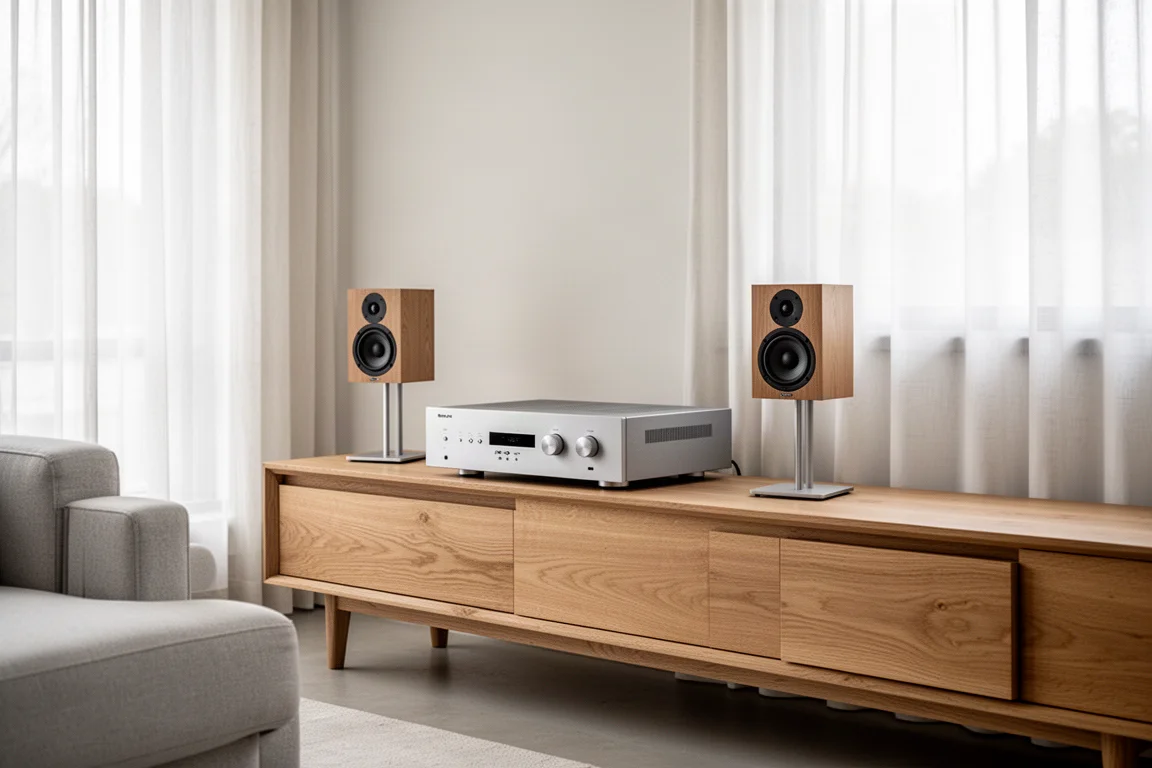
That said, the DAC does not require an exotic system to justify itself. It will reward a well-balanced setup of modest cost, and it will keep revealing more as the partnering equipment improves.
Design, Build, and Connectivity
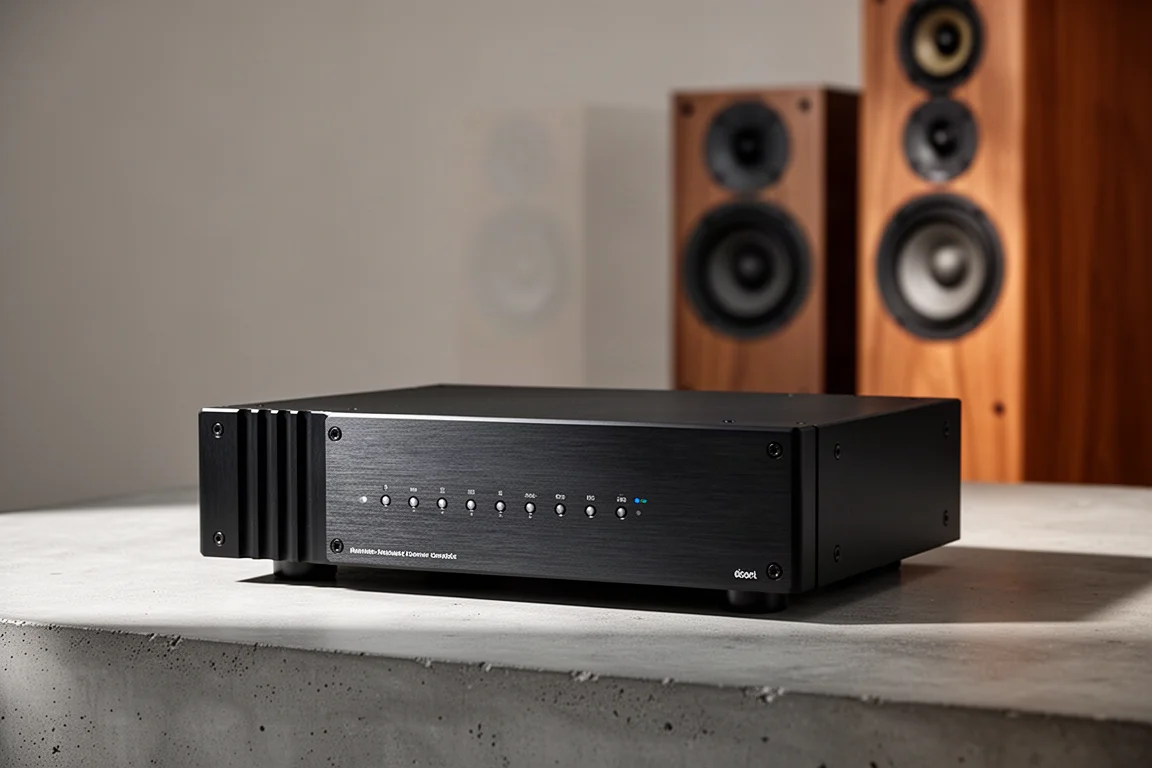
Denafrips has kept the industrial design consistent between generations, and the result is a clean, purposeful chassis. The casework is formed from thick aluminium plate, which helps suppress vibration, and the unit measures 330 by 110 by 320 mm at 8.5 kg (13.0 by 4.3 by 12.6 in and 18.7 lb).
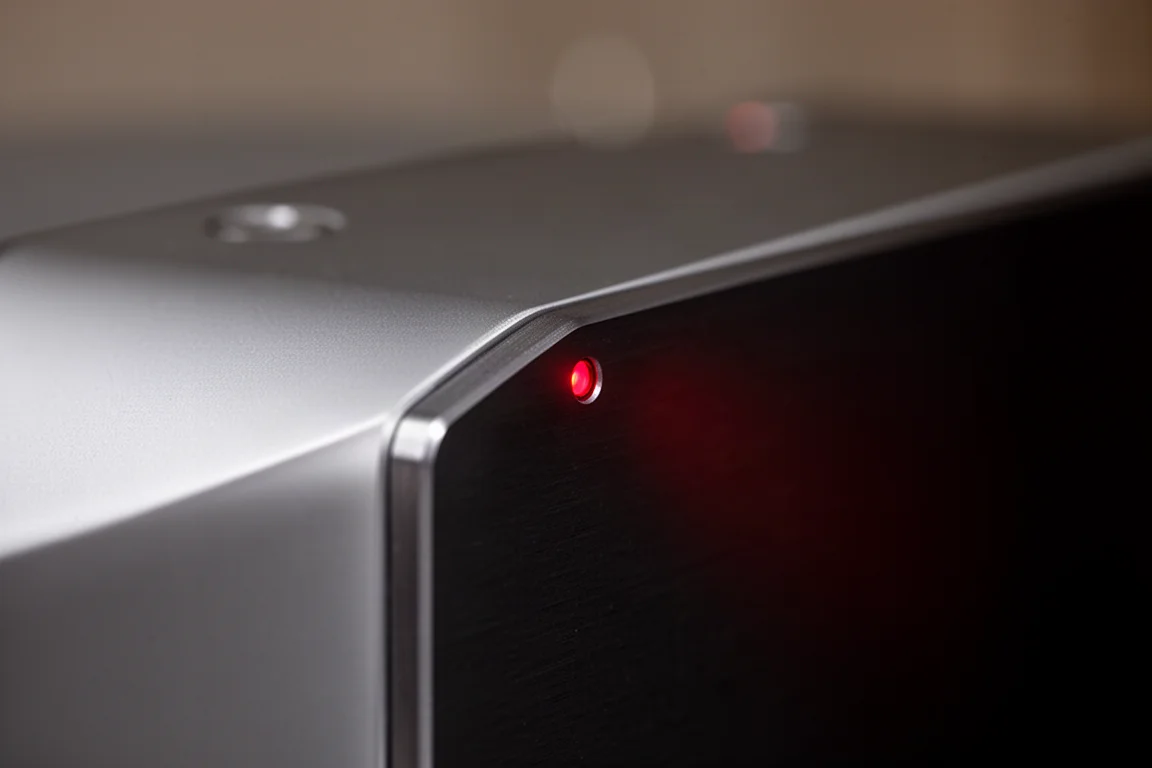
The front panel is deliberately restrained. A couple of subtle red LEDs indicate power, with six more for input selection, phase inversion, oversampling on or off, mute, and a mode button that configures the I2S pin layout or selects between the two digital filters when oversampling is engaged.
Around the back, balanced XLR and single-ended RCA outputs cover the analogue side. The digital inputs are comprehensive: coaxial, BNC, two AES/EBU, optical, I2S, and USB, which means most sources can be connected directly without an external converter.
Inside the Chassis: Power Supply and Ladder Networks
The power supply is housed in a completely shielded enclosure to keep noise away from the sensitive electronics above it, and it uses two oversized O-core transformers that keep the digital and analogue sections fully independent. O-core transformers radiate less noise than toroidal types, and Denafrips has fitted a generous number of filter capacitors to remove ripple from the voltage, some of them built in-house.
The conversion stage uses 26-bit R-2R and 8-bit DSD ladder networks built from 0.005% precision hand-matched resistors, arranged in a differential balance ladder architecture. Altera Max II FPGAs control the resistor switching, and temperature control crystal oscillators handle the clocking. The DSP board carries a further Altera FPGA.
Compared with the Venus 12-1, the Pontus 15th Anniversary uses an upgraded circuit board. There are also a couple of extra pin connectors and an additional IC that suggest a feature or upgrade path held in reserve for later.
Main Strengths
The Pontus 15th Anniversary delivers the three qualities that define the best Denafrips converters: strong resolution, a rich tone, and excellent spatial ability. Bass is tight and controlled with only marginal bleed into the midrange, transient attacks arrive crisply, and the background is quiet enough that the texture and decay of notes emerge easily.
Tonally it sits on the warm side of neutral, which gives acoustic instruments and voices a sense of body and mass without blurring detail. That combination is difficult to find at this price, and it is what makes the converter as convincing with a solo double bass as it is with a large orchestral arrangement.
Build quality is equally convincing, inside and out. The shielded supply, the hand-matched resistor networks, and the tidy internal layout all point to a component that has been engineered rather than simply assembled.
How It Compares With Other DACs
Against the Gustard R26, the LHY Harmony, and the Holo Audio Cyan 2, the Pontus 15th Anniversary sits a tier above. The Gustard R26 at £1,650 remains an excellent converter with class-leading detail retrieval, a neutral tone, and the layered soundstage that R-2R designs are known for, but it sounds small and lightweight next to the Denafrips. The LHY Harmony, at around £2,700, offers better scale and a fuller body than the R26 along with slightly superior instrument separation, although its top end is more recessed and its optical and coaxial inputs sound a little muddy compared with USB and I2S. The Holo Audio Cyan 2, at roughly £1,300, counters with weightier bass than the R26 and almost as much midrange detail, but it rolls off more in the highs and has had automatic switching issues.
The closer comparisons are more interesting. The older Denafrips Venus 2 sounds very similar, which is hardly surprising given how much the two share internally. The Pontus 15th Anniversary is a little cleaner, with slightly tighter bass, marginally less bleed into the midrange, crisper transients, and a quieter background, but those differences are subtle.
The Gustard X30 is a different proposition. It uses twin potted toroidal transformers, four ESS 9039 Pro converter chips running in mono balanced mode, an oven-controlled crystal oscillator, and an Analog Devices SHARC processor running custom filtering code. It has even better bass control than the Pontus 15th Anniversary, and its soundstage is just as wide and deep. Where it cannot match the Denafrips is the midrange, specifically acoustic mass and the reproduction of natural timbre.
That leaves the decision between the two closer to a matter of taste and partnering equipment than an outright win for either. Listeners who prefer a slightly drier, more analytical presentation may lean toward the Gustard, while those who prioritise the body and realism of voices and acoustic instruments will find more to like in the Pontus 15th Anniversary.
Settings That Shape the Sound
Two settings are worth experimenting with. The converter sounds cleaner and more spacious with oversampling engaged, which is indicated by the LED being off. In oversampling mode there are two digital filter options, sharp and slow roll-off, and pressing mute before toggling the mode button switches between them. The single time sample rate LED is lit for the slow filter and off for the sharp filter.
The sharp roll-off filter produces a flatter frequency response but introduces more digital artefacts. The slow roll-off filter gives up a little treble energy in exchange for fewer artefacts, and it is the more refined and faithful of the two. Leaving the indicator lit is the sensible starting point.
The difference between the two filters is modest rather than dramatic, so either can be lived with happily. The more meaningful gain comes from running the converter in oversampling mode in the first place.
Things to Consider Before Buying
Denafrips has a history of releasing closely spaced revisions, and buyers who value a stable product cycle should weigh that up. The 15th Anniversary range does represent a genuine change from the 12-1 models that preceded it, but the reasonable hope is that this generation runs for a couple of years rather than a few months.
The tonal balance is the other consideration. This converter leans warm, and listeners who want a drier, more analytical sound may prefer a delta-sigma alternative. It is also worth noting that the input suite is wired digital only, so a separate transport or streamer is required.
Buying Advice
At £2,100, the Pontus 15th Anniversary is priced below the LHY Harmony and well below what an equivalent ladder converter would have cost only a few years ago, while outperforming designs that cost considerably more. For anyone assembling a system around a resolving amplifier and a good pair of speakers, it is an easy recommendation.
The practical caveat is system balance. A converter at this level will expose weaknesses elsewhere in the chain, so it makes most sense once amplification and speakers are settled. If the rest of the system is still modest, the Denafrips Ares 15th is the more sensible place to put the budget.
Buyers moving up from a Gustard R26 will notice a substantial step forward. Those already running a Venus 2 will find the improvement real but incremental, which is worth keeping in mind before committing.
Conclusion
The Denafrips Pontus 15th Anniversary changes what can reasonably be expected from a converter at this price. It inherits the architecture of the model above it, adds an upgraded circuit board and a thoroughly shielded power supply, and delivers the resolution, tone, and spatial ability that have made Denafrips converters distinctive. The build is faultless inside and out, and against the alternatives it represents strong value at £2,100.
The main reservation has nothing to do with sound. It concerns how long this generation will stay current before the next revision arrives. Buyers who accept that caveat will find a converter that is genuinely easy to recommend for a well-balanced system.
Product link
View more details for Denafrips Pontus 15th Anniversary
This product is mentioned in the review. Check the specifications, options, and compatibility before buying.
View more details for Denafrips Pontus 15th AnniversaryFurther reading
Related Reviews
Hi-Fi Audio
Accuphase C-57 vs Allnic H-7000V: Two High-End Phono Stages Compared
A fully balanced solid-state phono stage with a pitch-black noise floor meets a tube design built for well-loved records. Here is how to choose between them.
Hi-Fi Audio
Active vs Passive Hi-Fi: Five Components for a Modern System
Five components that define modern active and passive hi-fi systems, with the strengths, trade-offs and setup details worth weighing before you buy.
Hi-Fi Audio
Advance Paris A10 Apex Review: A Hybrid Integrated Amplifier That Covers a Lot of Ground
A French hybrid integrated amplifier with a class A tube preamp stage, analogue power meters, and an internal DAC and phono stage good enough to make extra boxes unnecessary.