Hi-Fi Audio
Denafrips Iris Review: Cleaner Timing and Lower Noise for a Serious DAC
A practical look at the Denafrips Iris, a digital-to-digital converter built to reduce electrical noise and jitter before the signal reaches your DAC.
Introduction
Getting digital audio from a transport to a DAC is rarely as simple as plugging in a cable. Three things matter: a lossless, bit-perfect transfer of the data; the lowest possible level of electrical noise; and low jitter, meaning the timing of the information itself arrives cleanly. Bit-perfect transfer is largely settled when you use USB and your music is encoded in WAV, FLAC, or Apple ALAC. Noise and jitter are where the work continues, and they are the two problems the Denafrips Iris is built to address.
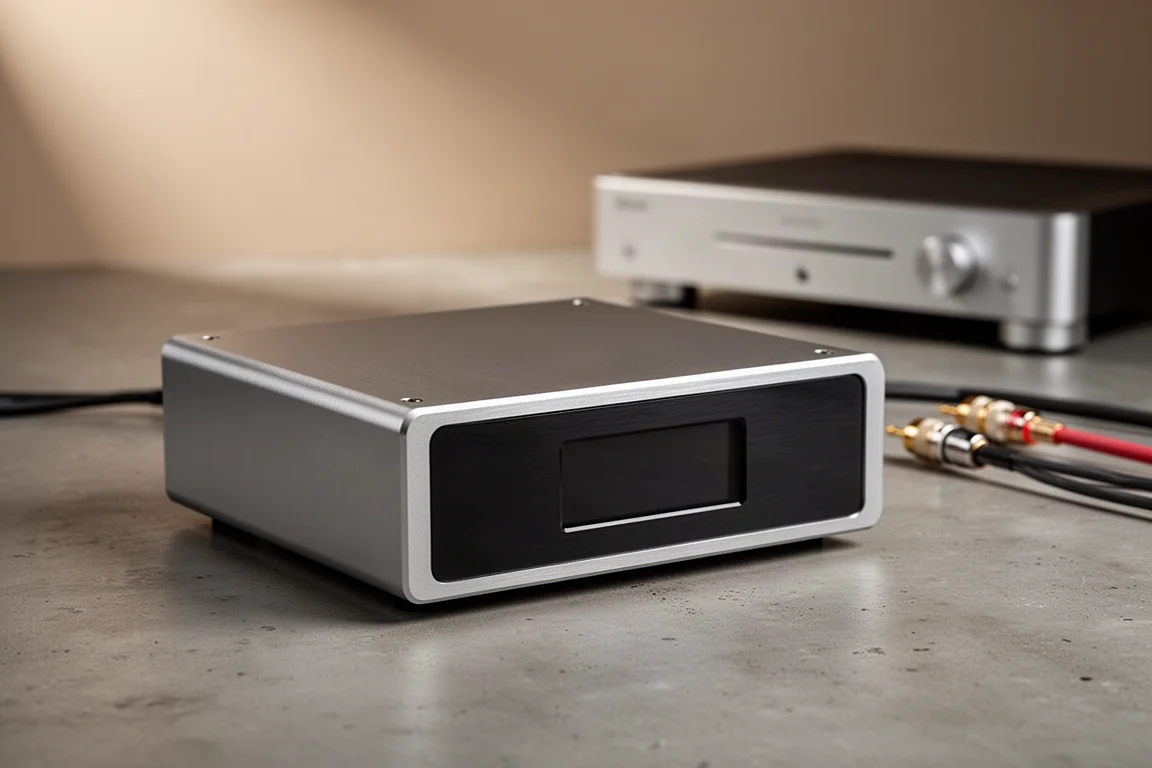
The Iris is a digital-to-digital converter. It takes a digital signal, unpicks it, isolates it from electrical noise, and passes it on to a DAC fitted with an I²S input, such as the Denafrips Pontus 2. In plain terms, it sits between your transport and your DAC and hands the converter a cleaner signal than it would otherwise receive.
Why does that matter? Because noise and jitter are measurable, and jitter has been shown to affect the operation of a DAC in objective, quantifiable ways. Power components inside digital devices are often electrically noisy, and RF or EMI can creep in from outside. If that noise reaches the sensitive circuitry of a DAC unchecked, it degrades performance.
Who this product is for
The Iris is aimed at listeners running a fairly resolving system who want to reduce the noise and jitter arriving at their DAC. It is most compelling for anyone whose DAC has an I²S input, since that is the format the Iris is designed to feed.
It also makes particular sense alongside a DAC that already offers galvanic isolation on its inputs, such as the Pontus 2. In that pairing you double up on isolation: the signal is isolated optically as it leaves the Iris and again galvanically as it enters the DAC. No isolation technique is perfect in implementation, so stacking two different approaches lowers the noise floor further rather than being pointless overkill.
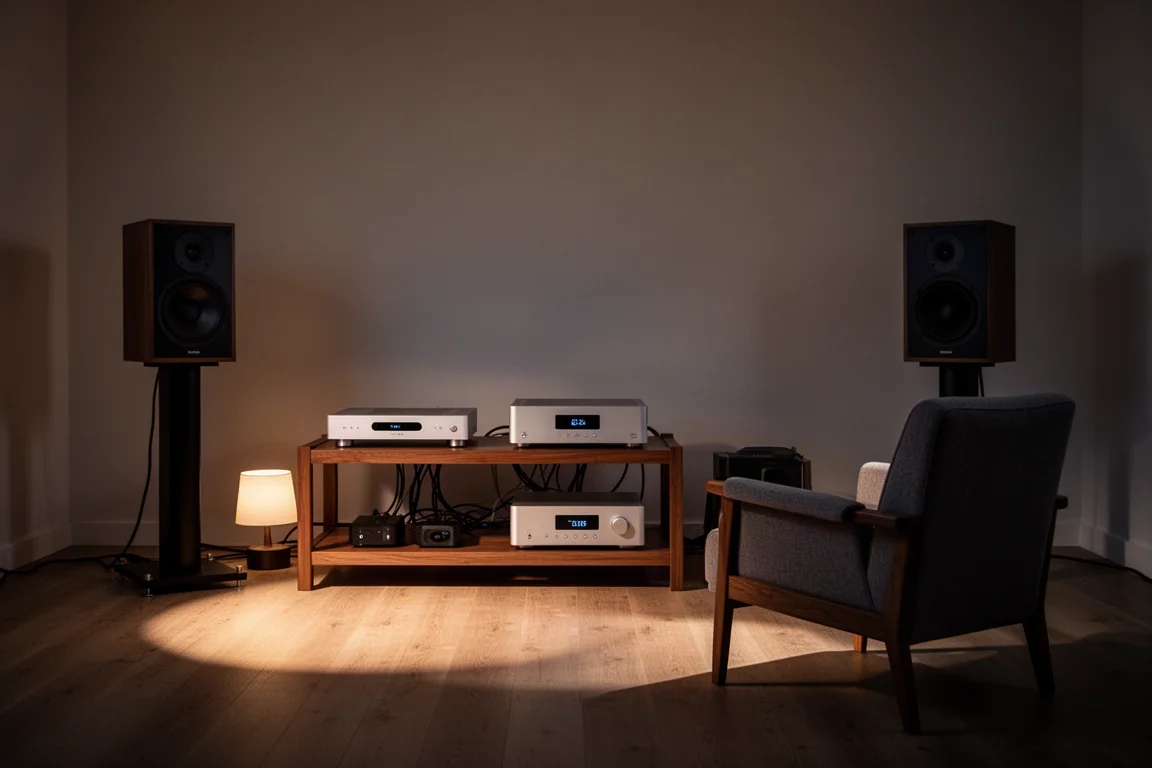
If your system is modest, or your DAC has no I²S input, the benefit is harder to justify. The Iris is a component for people who have already invested in the rest of the chain and want to address a specific, measurable weak point.
Main strengths
The Iris targets two separate problems, electrical noise and jitter, with a distinct approach for each. Both are worth understanding before deciding whether the device belongs in your system.
Optical Isolation on Every Digital Output
Isolation is the first half of the job. The most common approach is a transformer, known as galvanic isolation, which relies on electromagnetic induction. The windings on the primary coil are not electrically connected to the windings on the secondary coil, so the signal crosses magnetically while the electrical noise travelling along the wire does not. This is a feature you will not find on cost-effective DACs, though some high-end models build it in.
The Iris takes a different route: optical isolation. Converting the signal to light and back breaks the electrical connection between the two devices. Every digital output on the Iris is optically isolated, so noise picked up or generated upstream does not ride along into the DAC.
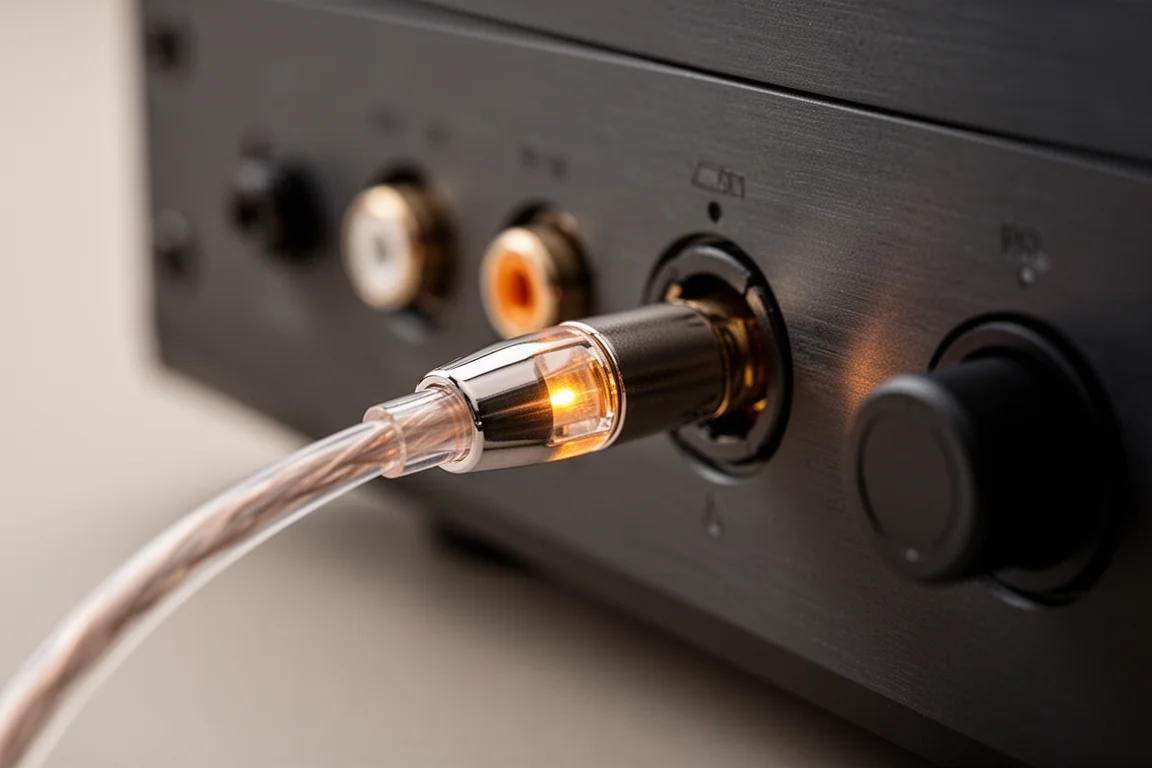
The practical result is a lower noise floor reaching the converter, which is the point at which sensitive DAC circuitry is most vulnerable.
A Clock Borrowed From a Higher Tier
Jitter is the second half, and it is more involved. Inside a digital device, data is handled in an I²S format: separate lines carry the data itself, a master clock for overall timing, and a word clock that identifies the packets of information. Eight bits make a byte, and bytes are packaged together into packets for transfer.
Legacy connections such as S/PDIF multiplex all of that into a single signal that has to be unpicked by the DAC at the far end. Worse, with S/PDIF the timing is governed by the transport rather than the DAC, and most transports carry a clock far inferior to the one in a decent DAC. Jitter levels rise accordingly. USB audio improved matters by making the DAC responsible for timing, an arrangement still called asynchronous, and by holding data in a FIFO buffer that checks the incoming stream is a bit-perfect copy of what it is holding. Even then, the harder that buffer works, the more jitter and electrical noise creep up inside the DAC.
I²S sidesteps the multiplexing problem, but it is not asynchronous. The transport still controls timing, which means a genuinely good clock has to exist somewhere in the chain. This is where the Iris earns its place. The clock inside it is better than the one fitted to the Pontus 2, and it is the same quality of clock used in the more expensive Venus 2.
That clock is a temperature compensated crystal oscillator, with a thermistor circuit that accounts for variations in temperature in an attempt to stabilise the output. The Aries 2 and Pontus 2 use NDK femtosecond voltage controlled crystal oscillators, which are excellent but vary in stability, and therefore output, as temperature changes. Denafrips reserves oven controlled crystal oscillators for its Terminator and Terminator Plus DACs: larger, more expensive, more power hungry, and housed in their own thermally insulated enclosure with heating elements holding the oscillator at its optimum temperature.
Things to consider before buying
The Iris is a focused component rather than a universal upgrade. It is built to feed a DAC over I²S, and most transports do not offer an I²S output. If your source cannot provide one, the device’s core advantage is difficult to realise, even though the hope is that more transports will adopt I²S over time.
It is also worth being clear about what the Iris does not do. It does not turn an I²S connection into an asynchronous one, and it does not remove the transport’s role in timing. What it does is place a better clock at the point where the signal is handed on, and isolate that signal from noise along the way.
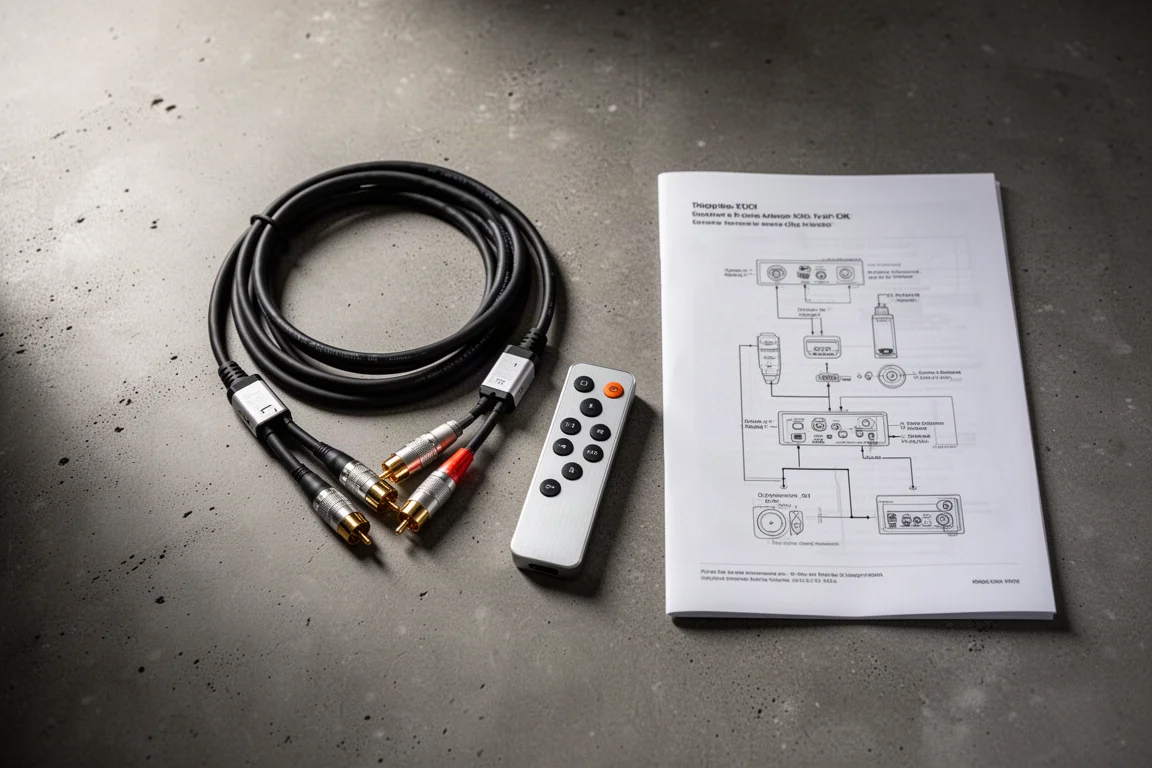
Finally, expect the usual practicalities of an extra box: another component to house, another set of connections, and a signal path with one more stage in it. For a system that already resolves fine detail, that trade is usually worth considering. For a simple setup, it is likely unnecessary.
Do You Already Have an I²S Path?
Before buying, check the input list on your DAC. If it has an I²S input, the Iris has a clear role to play. If it does not, there is no route for the Iris’s output to reach the converter in the format it was designed to deliver.
Buying advice
The strongest case for the Iris is a system built around a DAC with an I²S input and a source that can feed it, particularly where the DAC also applies galvanic isolation on its inputs. In that arrangement the Iris does exactly what it was designed to do: unpick the digital signal, isolate it optically, and pass it on with a clock that outclasses the one in the DAC it is feeding.
If you are working with S/PDIF or USB alone, the honest answer is that the Iris is a specialist tool for a problem your chain may not currently have. Buy it because you have an I²S path you want to improve, not because a converter seems like a good idea in the abstract.
Conclusion
The Denafrips Iris addresses two real and measurable issues in digital audio: electrical noise and jitter. Optical isolation on every digital output keeps noise from travelling downstream, and a temperature compensated clock of the same quality used in a more expensive DAC gives the signal a cleaner timing reference than most transports can provide.
It is not a universal upgrade, and it asks for a DAC with an I²S input to be worthwhile. But for listeners who already have that path in place, and especially for those pairing it with a DAC that adds its own galvanic isolation, the Iris is a sensible and well-targeted way to lower the noise floor and steady the timing arriving at the converter.
Product link
View more details for Denafrips Iris
This product is mentioned in the review. Check the specifications, options, and compatibility before buying.
View more details for Denafrips IrisFurther reading
Related Reviews
Hi-Fi Audio
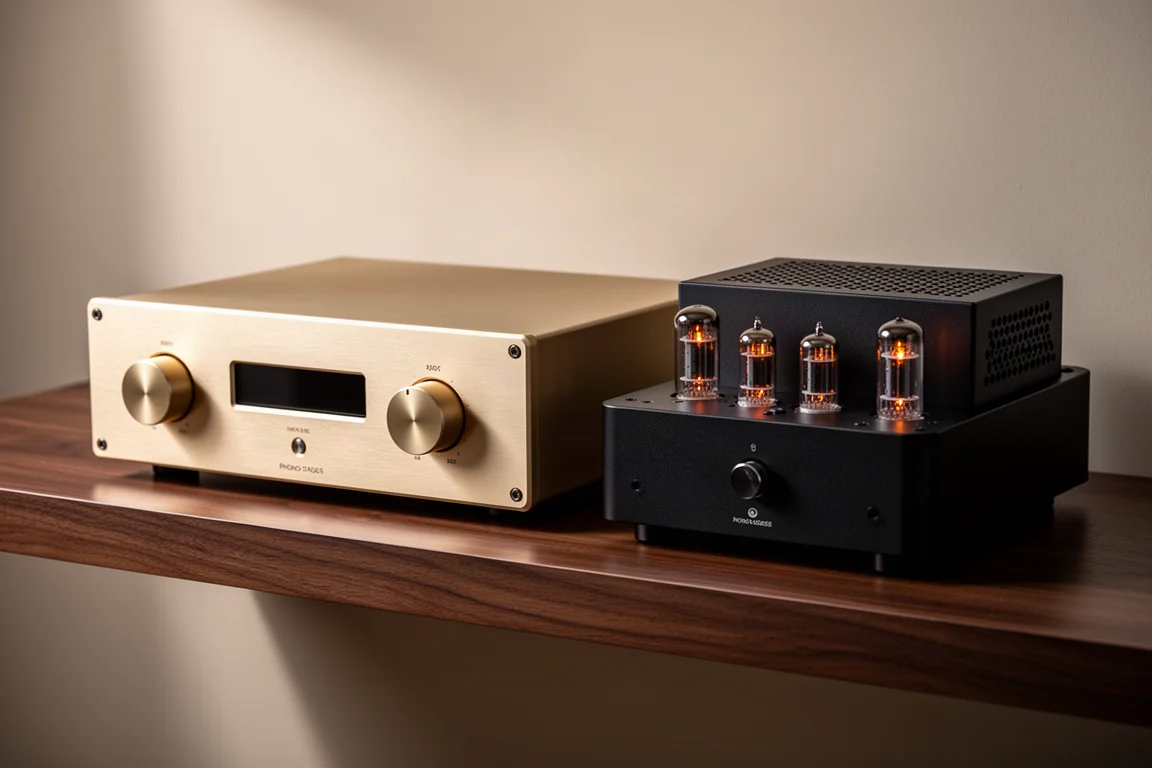
Accuphase C-57 vs Allnic H-7000V: Two High-End Phono Stages Compared
A fully balanced solid-state phono stage with a pitch-black noise floor meets a tube design built for well-loved records. Here is how to choose between them.
Hi-Fi Audio
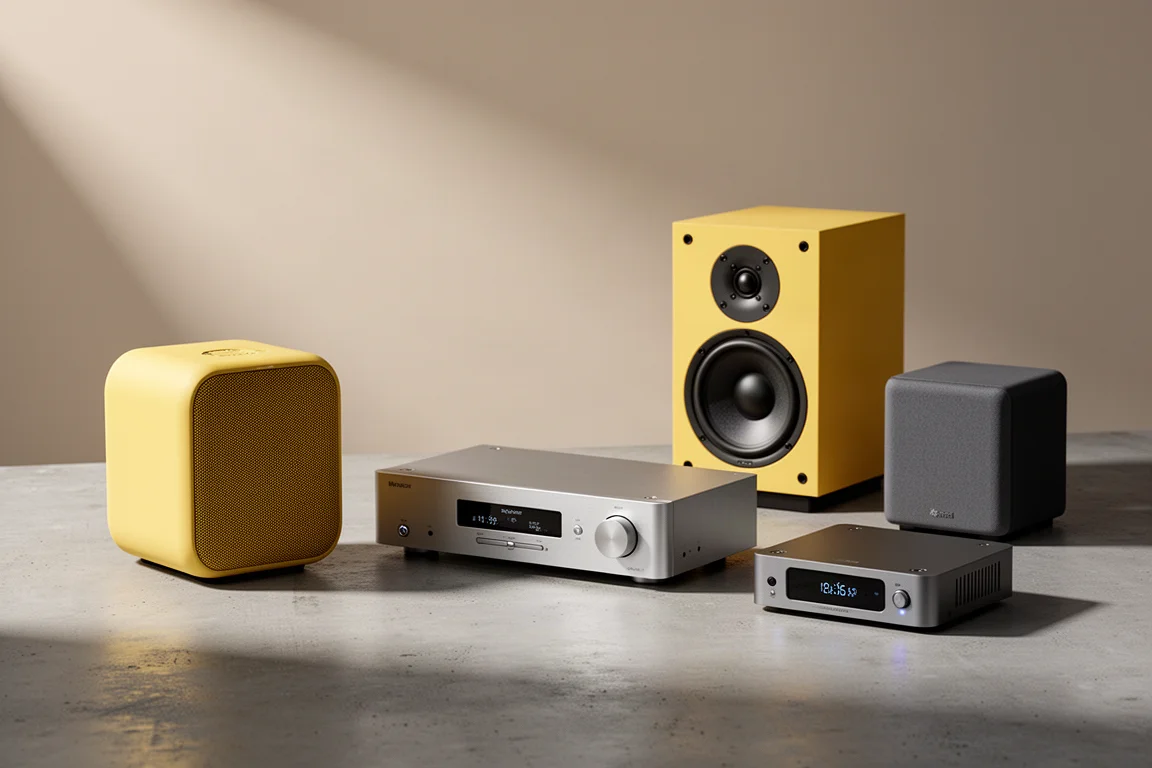
Active vs Passive Hi-Fi: Five Components for a Modern System
Five components that define modern active and passive hi-fi systems, with the strengths, trade-offs and setup details worth weighing before you buy.
Hi-Fi Audio
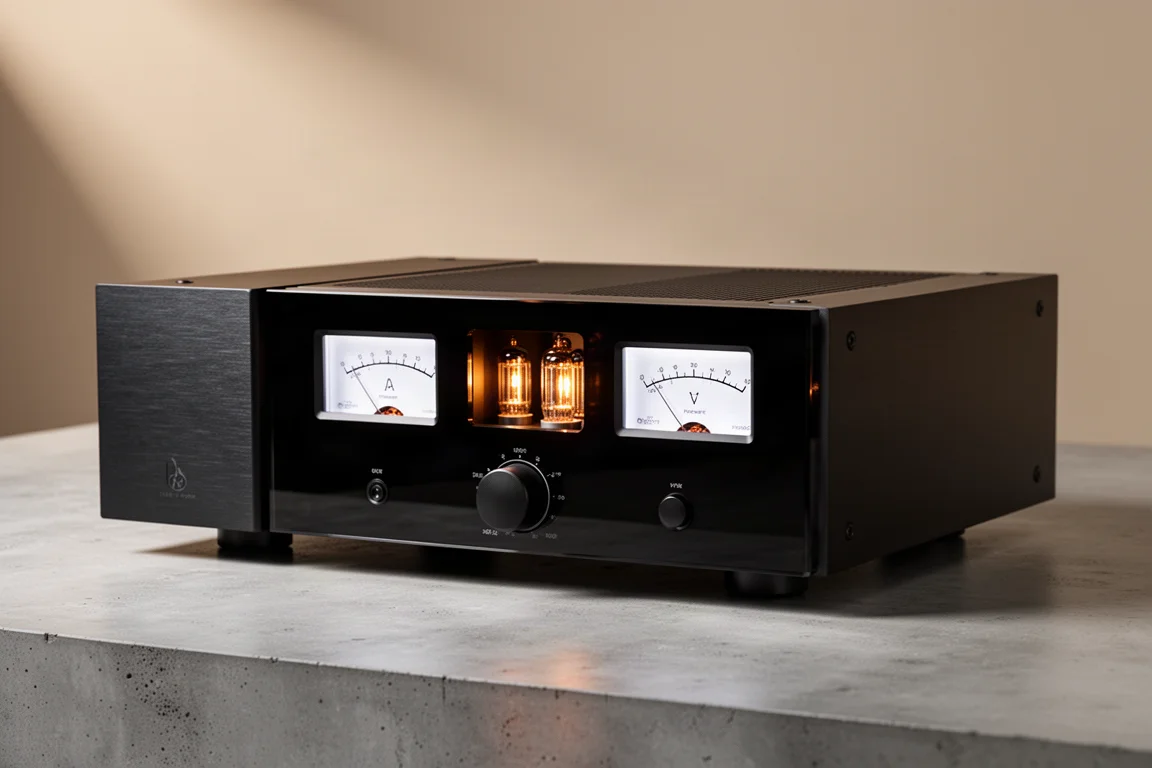
Advance Paris A10 Apex Review: A Hybrid Integrated Amplifier That Covers a Lot of Ground
A French hybrid integrated amplifier with a class A tube preamp stage, analogue power meters, and an internal DAC and phono stage good enough to make extra boxes unnecessary.