Hi-Fi Amplifiers
Denafrips Hades and Phthalo Review: A Fully Balanced Preamplifier and Power Amplifier Pair
A fully balanced preamplifier and power amplifier pair with exceptional clarity, grip, and low-frequency control, plus the scale and dynamics trade-offs to weigh first.
Introduction
Denafrips has built a strong reputation on its digital-to-analogue converters, and the Hades preamplifier and Phthalo power amplifier carry that same design language into analogue amplification. Both are sold direct through the brand’s global distributor, Vinshine Audio, so there is no dealer network to visit for an audition, and the specification sheet does a lot of the talking before anything is connected.
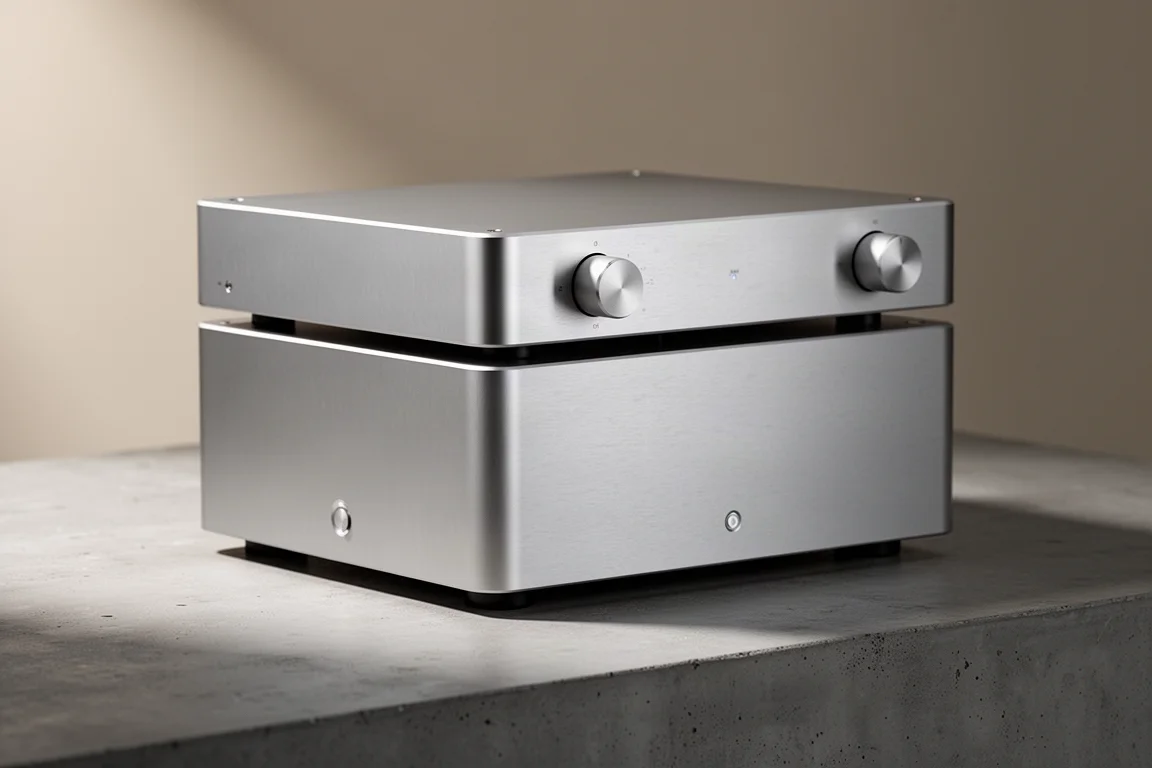
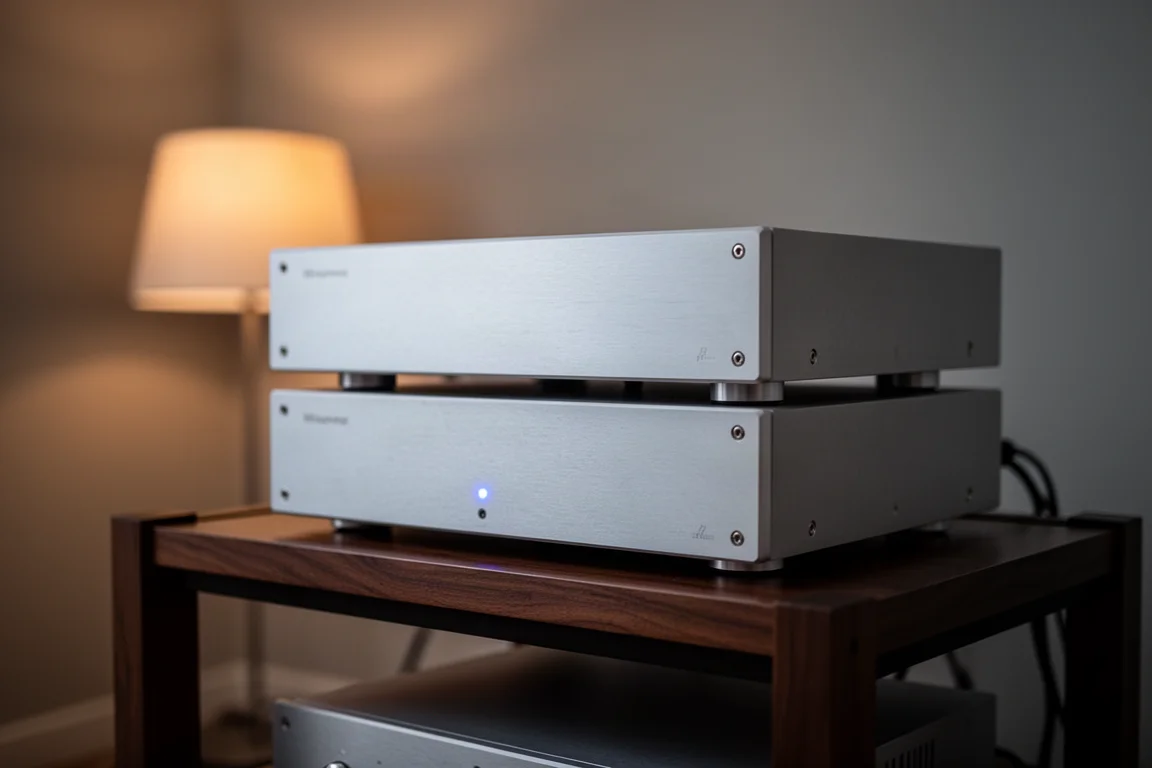
The Hades retails for S$1,849, which works out to roughly £1,000 before shipping and taxes. The Phthalo is priced at S$2,894, or roughly £1,600 before tax and shipping. Stacked one on top of the other, the two chassis look like a single component, and the finish matches closely enough that the pairing reads as a designed system rather than two separate boxes.
The interesting question is whether the same formula that made the brand’s converters so well liked translates to amplification. The short answer is that it mostly does, with a couple of clearly defined trade-offs that are worth understanding before you commit.
Design, Build, and Controls
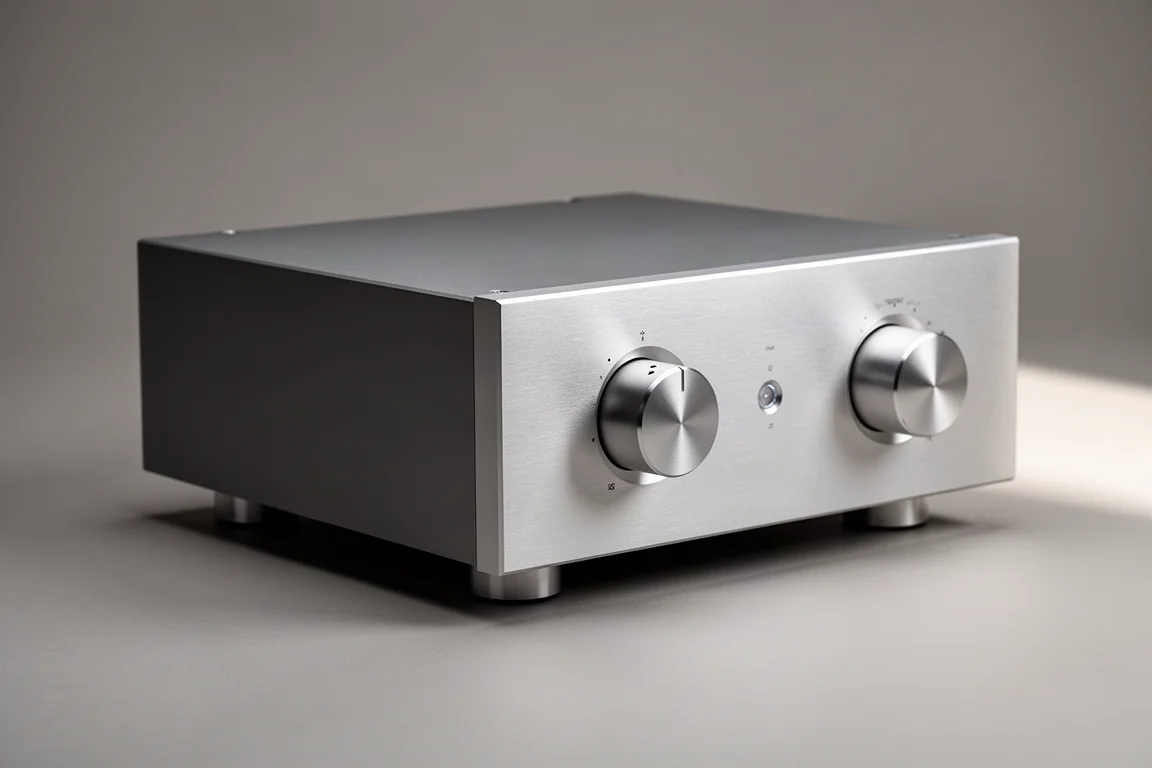
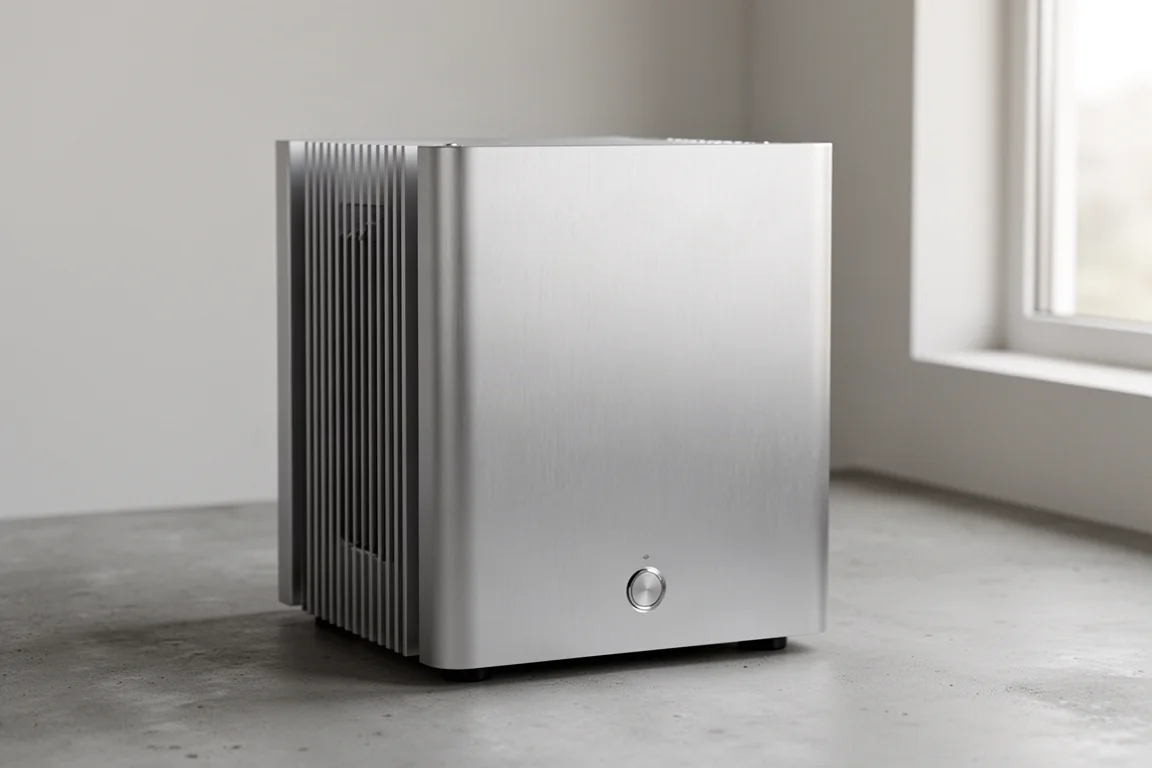
Both units use a brushed silver all-aluminium chassis, and the construction and finish are excellent throughout. The Hades measures 60 by 320 by 380 mm and weighs 9 kg, which is reassuringly heavy for a preamplifier. The Phthalo shares the same width but stands 140 mm tall and is slightly deeper at 400 mm, at 19 kg.
Controls are deliberately minimal. On the Hades, a quick press of the left knob drops the unit into standby, and the same knob cycles through the three inputs. The right knob operates a stepped relay volume control that clicks satisfyingly as you move through its range. A supplied all-metal remote control covers the same functions from the listening position, and it is built heavily enough that dropping it is more likely to mark the floor than the remote. The Phthalo is simpler still, with a single button that turns from red to flashing blue while the power supply charges, then stays blue.
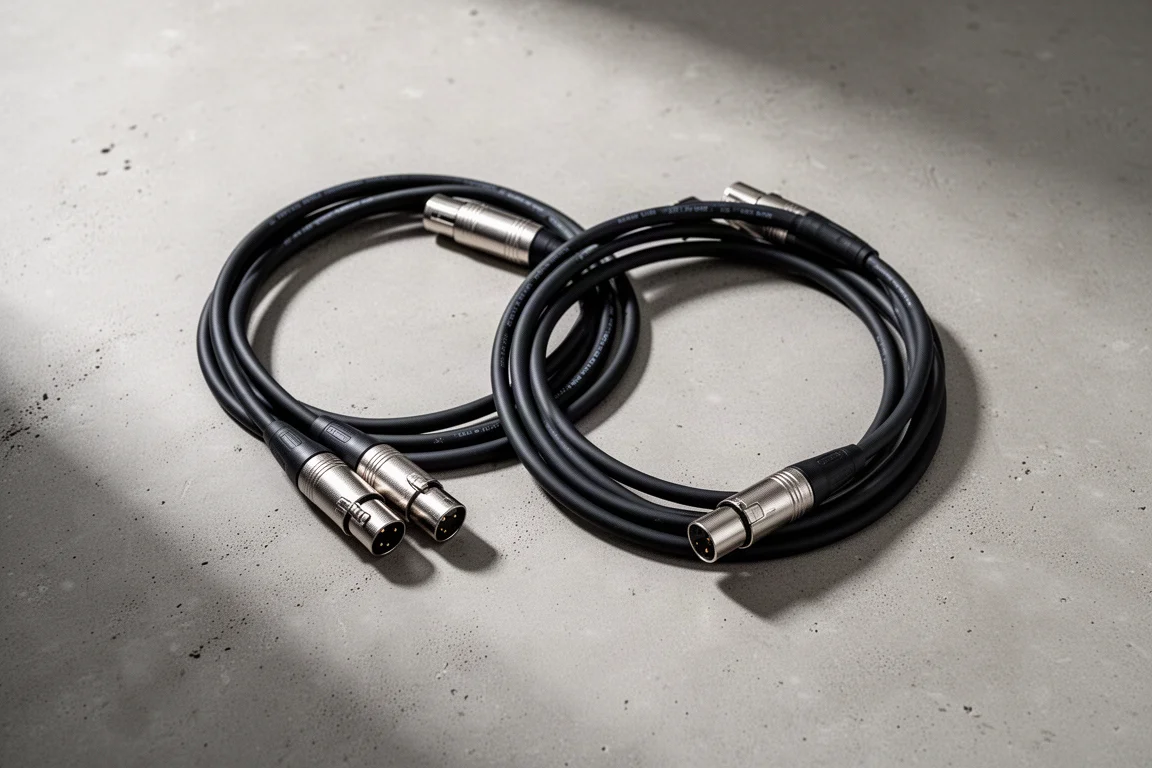
At the rear, the Hades offers three analogue inputs: two fully balanced XLR inputs and a single RCA. There is one RCA output and one balanced XLR output, and the XLR output is the one to use with the Phthalo. Fully balanced preamplifiers are uncommon at this price, and the internal layout explains why the feature is worth paying attention to.
The Hades Preamplifier
Inside the Hades, the circuit board is laid out cleanly. The AC inlet feeds a main power supply module that converts AC to DC, and the supply itself centres on a large O-core transformer, a design that radiates less noise than a toroidal type. Filter capacitance comes from Elna, a well-regarded American manufacturer, and the metallized capacitors are Wima parts that appear to sit in a decoupling role between stages.
The preamplifier is active rather than passive, but it has no gain. Volume is handled by relays working with high-precision resistors instead of a conventional potentiometer, which is a more elaborate approach that brings better matching between left and right channels and better linearity across both the frequency range and the volume range. There are 60 steps in total. The whole circuit is fully balanced, which doubles the component count and the cost, and exists to keep noise as low as possible.
The Phthalo Power Amplifier
The Phthalo is built around a 600 VA toroidal transformer rather than an O-core unit, since power amplifiers tend to be noisier and the extra expense of an O-core would not be justified here. The power supply uses plenty of filter capacitance from Elna, and the designers chose many smaller capacitors rather than four large ones, on the basis that smaller capacitors charge more quickly and can therefore deliver transients more quickly.
Output is rated at 120 W into 8 ohms and 220 W into 4 ohms. Each power amp module carries four pairs of bipolar junction transistors, twice as many as the Hyperion model below it in the range, and the modules mount directly to the internal heatsinks. The amplifier is fully balanced and offers 26 dB of gain, which is around normal and should let it pair reasonably well with other preamplifiers.
Why the Fully Balanced Design Matters
A fully balanced circuit carries both a positive and a negative signal path, which is what allows common mode rejection: noise picked up along the way can be isolated and removed rather than passed on to the speakers. That requires twice as many components as a single-ended design, and twice as many components means double the cost, which is why the approach is rare in this price bracket.
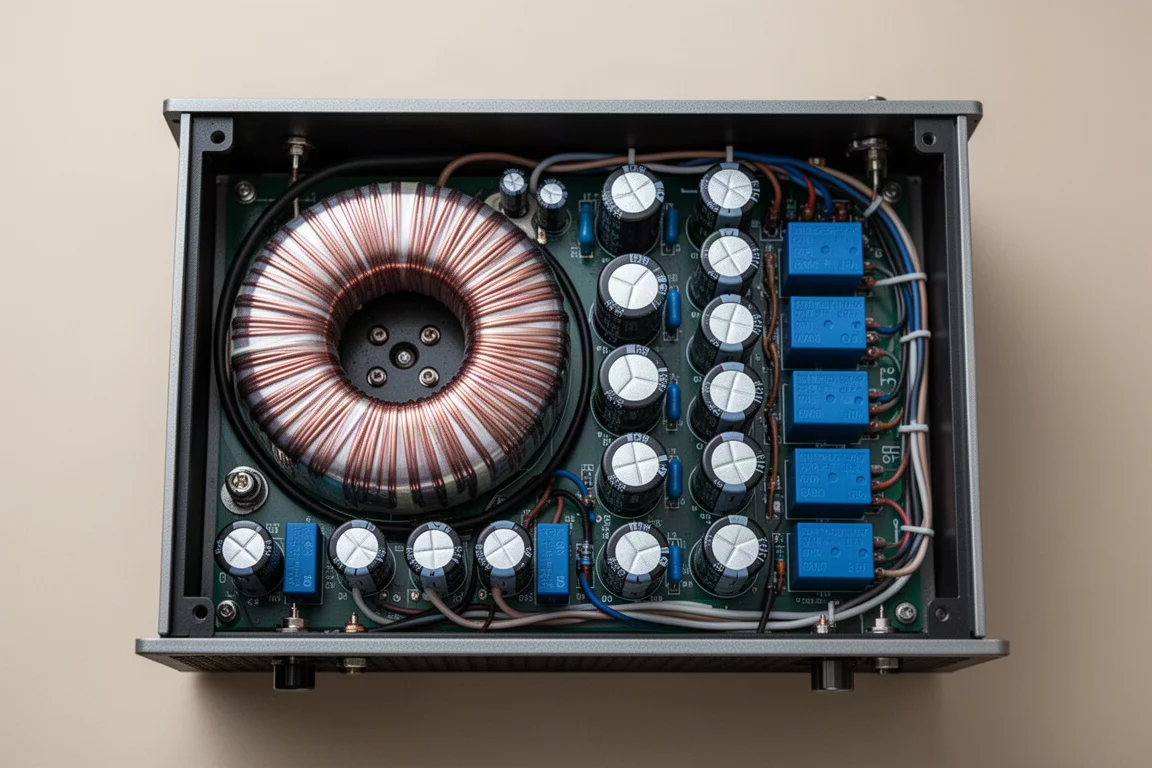
The practical result is a very low noise floor, and it shows up in the way fine details are rendered and in how clearly one instrument separates from another. There is no bleed between the two, and the effect is at its most obvious when the chain is balanced from end to end: a balanced converter feeding the balanced Hades, which in turn feeds the balanced Phthalo over XLR connections.
How the Combination Sounds
The strengths here are immediate. Clarity, grip, and control are exceptional, and they exceed what the Exposure 21 preamplifier and 18 Super Monoblocks deliver as a reference pairing. Low bass is as well defined as anything at this level, and the midrange lays out the beginning, middle, and end of every note without smearing them together. There is a touch of warmth in the lower midrange as well, so this is not a cold-sounding amplifier.
The trade-off sits in the mid-bass. In the 50 to 60 Hz region there is a lack of weight, which is easy to miss with snares and toms but obvious with kick drums. Since that region carries much of the rhythmic drive in a lot of music, the presentation can come across as dynamically restrained, and you end up listening to what is in the recording rather than being pulled into the performance. Deep, powerful vocals are not rendered with full authority either.
The soundstage is slightly diminished. It extends beyond the speakers a little to the left and right and has a reasonable sense of depth, but it is not as deep or as wide as some amplifiers at this price. Imaging, on the other hand, is spot on, with a very well defined picture even if the canvas is a touch smaller. The high frequencies are beautifully extended and refined, with no hint of over-sibilant behaviour.
Scale, Dynamics, and the Unity Gain Question
Part of the character comes down to the Hades running unity gain, where most preamplifiers offer 10 or 12 dB. That design choice is associated with improved bass weight and the impact it can have on scale and dynamics. In use, it means turning the volume dial higher than you might expect, with listening often falling in the 40s and 50s across the 60 steps. The stepped relay control adds no distortion along the way, so this is a matter of mental adjustment rather than a problem.
Power was never an issue driving 85 dB sensitivity ProAc speakers in a fairly decent-sized room, where the combination played as loud as anyone could reasonably want. Listeners running inefficient speakers in larger rooms may find themselves short of headroom, and anyone tempted to move to a preamplifier with gain for extra volume should check with Denafrips first to confirm the power amplifier can handle the additional voltage, otherwise there is a risk of clipping at its input.
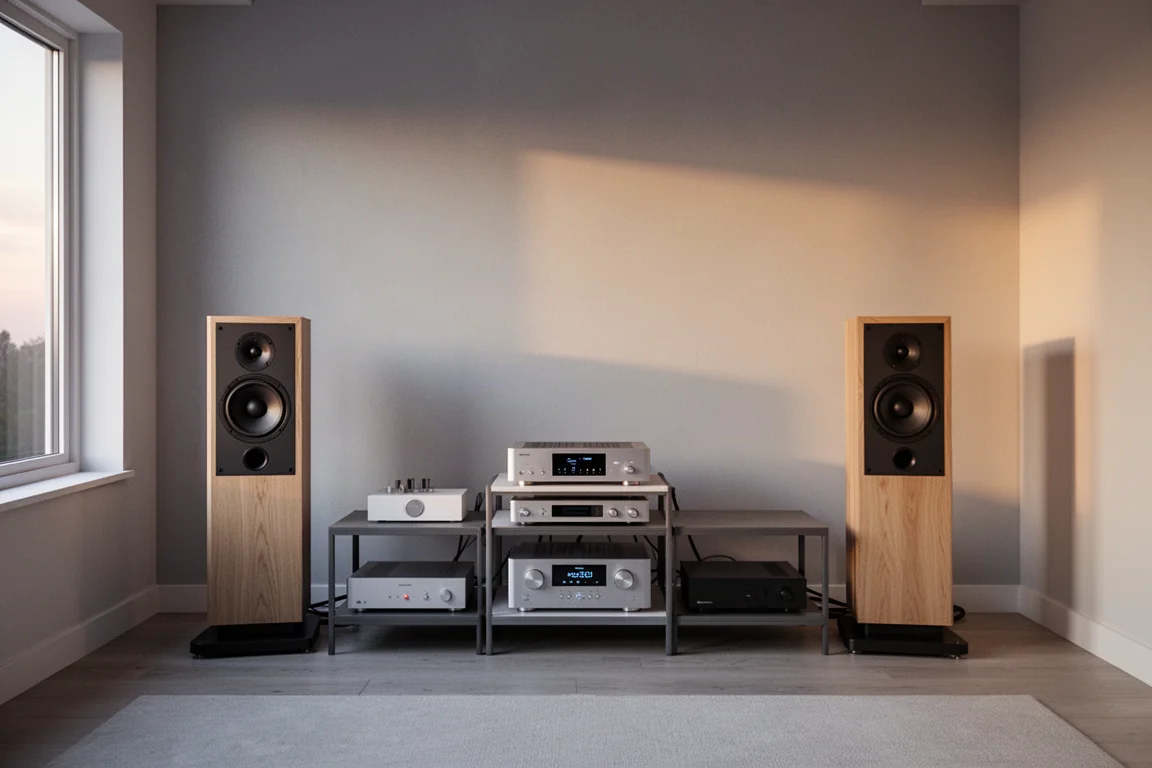
A swap test sheds some light on where the character comes from. Connecting the Hades to Exposure 18 Super Monoblocks produced a modest reduction in scale and dynamics, but not to the same degree as running the Phthalo. That suggests both units contribute to the effect rather than one carrying all the blame.
Speaker Pairing and System Matching
Speaker choice shapes the outcome significantly here. The Triangle 40th Anniversary Comet, at around £1,500, is a warm and engaging speaker with good clarity, and it made for a balanced presentation with the Hades and Phthalo. The Amphion Argon 1, at around £1,200, is an extremely resolving and quite punchy small speaker, and it made the clarity and control of the pairing very obvious. A fuller-sounding speaker makes a natural partner, and a lean one will emphasise exactly what the amplifiers already do well and what they hold back on.
The wider lesson is about matching components. Pairing a preamplifier from one brand with a power amplifier from another is almost always problematic, because impedance matching, gain matching, and the sonic characteristics of each unit all have to line up. Staying with the same brand for both, unless you know precisely what you are doing, is the safer route.
Buying Advice
Context helps here. The Hegel H190 is likely to cost a similar amount to the Hades and Phthalo combination in most markets. It has nowhere near the clarity of this pairing and falls behind on grip and control, but it offers a greater sense of scale and dynamics along with a more consistent and neutral tonality. The Exposure 21 preamplifier and 18 Super Monoblocks lose out on clarity and control by a much smaller margin, yet bring greater scale, dynamics, and tonal richness, which gives music a stronger sense of dimensionality.
That framing points to who should buy. If you prioritise detail retrieval, grip, and low-frequency control above everything else, and you are willing to choose speakers that fill in the mid-bass, this pairing delivers those qualities at a level that is hard to match. If scale, weight, and a generous soundstage matter more to you than the last word in clarity, the alternatives above will suit you better.
It is also worth remembering that Denafrips sells direct, so an audition is unlikely to be possible before purchase. Reading carefully, matching the speakers thoughtfully, and keeping the chain balanced from source to power amplifier is the practical way to get the most from the system.
Conclusion
The Hades preamplifier and Phthalo power amplifier bring exceptional build quality, remarkable detail retrieval, and outstanding low-frequency control. The clarity and control on offer are the strongest available in this pairing’s price territory, and a fully balanced signal path from a balanced source keeps the noise floor out of the way of the music.
The limitations are real but narrow: a modest sense of scale and dynamics, and a mid-bass region that does not carry as much weight as some listeners will want. Both are manageable with careful speaker selection, and neither undermines what the amplifiers do brilliantly. Denafrips has set a very high benchmark with its converters, and these amplifiers take their own distinct route rather than matching that benchmark in every respect. As a pairing, they earn a recommendation, particularly for listeners who value precision over size.
Further reading
Related Reviews
Hi-Fi Amplifiers
Accuphase E-280 Review: Entry-Level Accuphase With Flagship Attention to Detail
A close look at the Accuphase E-280 integrated amplifier, covering its champagne build, AAVA volume control, sound quality, and the speakers and sources that suit it best.
Hi-Fi Amplifiers
Advance Paris A10 Classic vs Yamaha A-S301: Two Integrated Amplifiers Compared
A practical comparison of a $350 integrated amplifier and a $2,500 reference model, covering the differences that matter and the ones that do not.
Hi-Fi Amplifiers
Affordable Chinese Amplifiers Worth Buying: Five Budget Hi-Fi Amps Compared
A practical look at five affordable amplifiers, what each one does well, and the trade-offs to weigh before you buy.