Hi-Fi Audio
Denafrips Enyo 15th Anniversary DAC Review: Entry-Level Price, Serious Sound
A $699 ladder DAC with a fully balanced circuit, generous format support, and a clear step up from the Ares in speed, resolution, and clarity.
Introduction
Denafrips has earned its reputation by building converters that deliver considerably more than their price suggests, and the Enyo 15th Anniversary follows that same playbook. It is the company’s current entry-level DAC, priced at $699, and its specification sheet would not look out of place on a component costing several times as much: a resistor ladder conversion stage, a genuinely balanced circuit, and support for extremely high sample rates.
Listeners with large CD libraries will recognise the appeal immediately. A great deal of music never made it to vinyl and is not available to stream at all, and a good converter is what allows those discs to sound their best. The Enyo 15th is designed for exactly that situation, and it also handles the streaming side of a system without complaint.
Who This DAC Is For
This is a converter for listeners who want one well-built hub for several digital sources at once. It accepts USB, coaxial, optical and I2S inputs, which covers a CD transport, a network streamer and a computer without juggling adapters or extra boxes. Anyone running a transport with an I2S output will find that input unusually generous at this price.
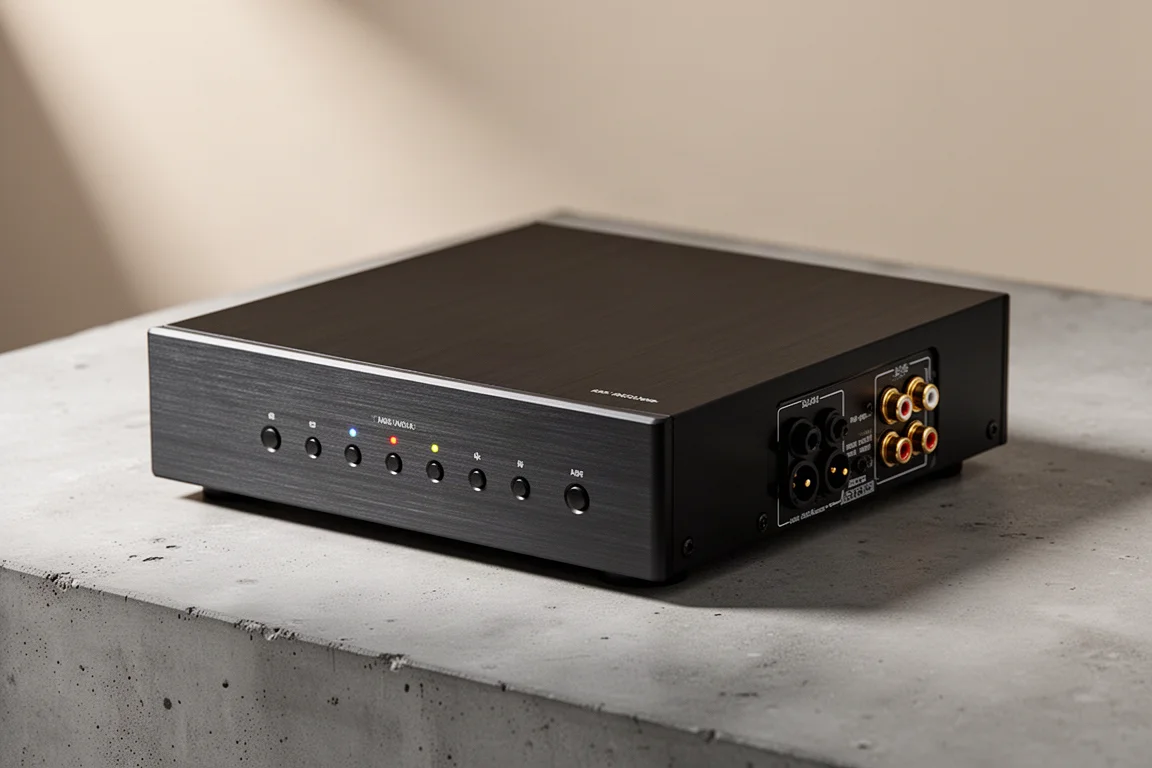
It also suits listeners who care about build quality as much as features. The casework and internal construction suggest a component intended to sit in a rack for years rather than be swapped out every season.
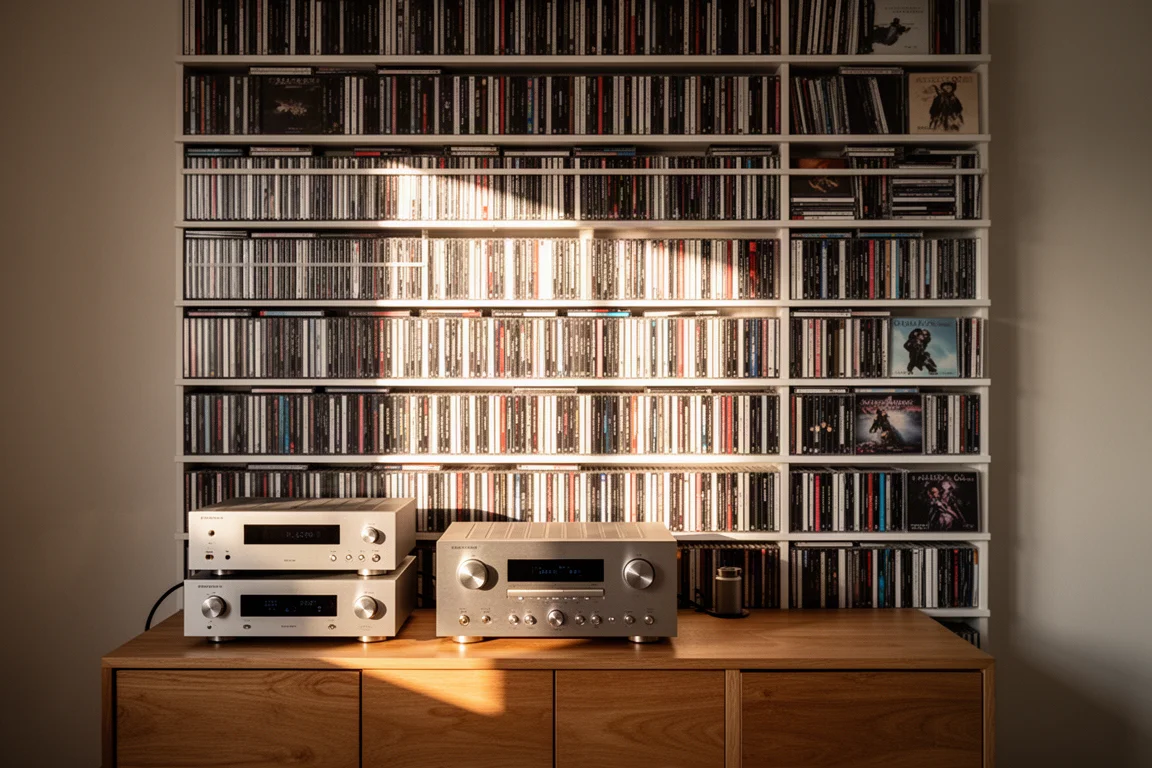
If your system already revolves around a single computer connection, the extra inputs are simply headroom for later. If you are building a disc-based system from scratch, they are the reason this DAC makes sense in the first place.
Design and Build Quality
The chassis is solid aluminium rather than folded sheet metal, and the result is a case that feels dense and substantial in the hand. For a $699 component, that is a meaningful statement about where the money went.
Inside, the layout is equally purposeful. A large O-core transformer occupies a good portion of the enclosure relative to its size, and the conversion stage itself is built from rows of tiny precision resistors arranged in a ladder. This is not an off-the-shelf chip doing the work. Each unit is assembled resistor by resistor, which is a slow and costly way to build a DAC and an unusual one at this price point.
Inputs, Outputs, and Format Support
The front panel is deliberately simple. A row of small red indicator lights sits above a line of buttons that select the active input, whether USB, coaxial, optical or I2S. Further buttons handle mute, oversampling, non-oversampling and phase invert.
Around the back you get a single-ended RCA output pair and a balanced XLR pair. The important detail is that this is a fully balanced design, with the internal circuitry balanced throughout rather than simply fitted with XLR connectors on the rear panel. On the format side, the Enyo 15th handles DSD up to 1024 and PCM up to a 1536 sampling rate at 24 bits, which is a remarkable ceiling for the price.
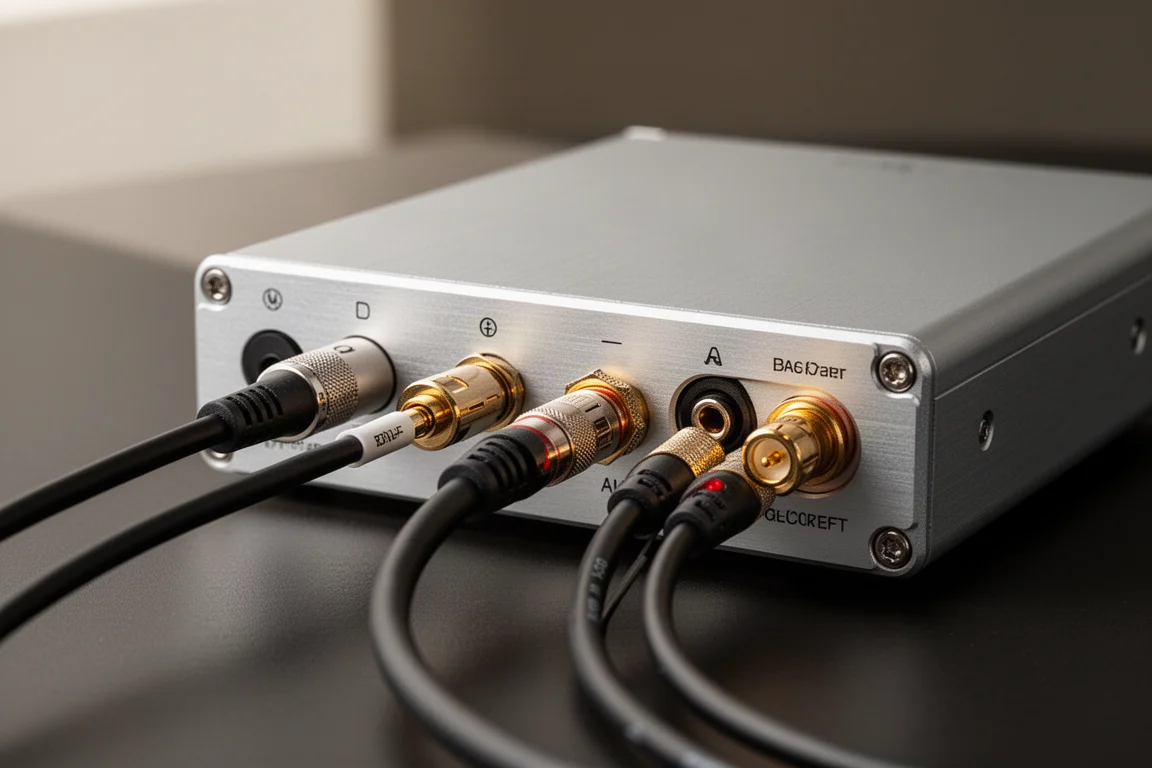
That combination matters if you run a balanced amplifier, since the design can take full advantage of it rather than merely offering the connector as a convenience.
Sound Quality: How It Compares to the Ares
The natural reference point here is the Ares, which set a high bar for what a converter under $1,000 could do. The two share a family resemblance in construction, but they do not sound identical. The Enyo 15th trades some of the Ares’ warmth for a noticeably clearer presentation.
Leading edge transients are where the difference shows first. Drums and brass instruments step forward with more energy, and the contrast between them and the rest of the mix is easier to follow. The Enyo 15th also comes across as more dynamically alive, and that applies not only to large swells but to subtle shifts in touch and phrasing, particularly in drumming. Spatial relationships between instruments are revealed more clearly, and timing feels a touch more secure.
Putting a figure on it is difficult, but across speed, resolution and clarity, the improvement over the Ares is in the region of 20 percent. That is a distinct and repeatable win, though not a night-and-day transformation. The Ares remains an excellent converter, and the gap between the two is one of degree rather than category.
Oversampling, Non-Oversampling, and Real-World Recordings
The Enyo 15th lets you switch between oversampling and non-oversampling operation, and the difference is subtle. Non-oversampling tends to sound a little smoother and simply more pleasant, while oversampling gives a greater sense of apparent detail. Neither mode is dramatically better than the other, and the switch is best treated as a taste adjustment rather than a core feature.
High-resolution support is generous, but it is worth remembering what actually makes a recording sound good. A 176 kHz, 24-bit album can still leave you cold if the microphones, preamplifiers, recording chain, venue acoustics and production choices were not up to the task. Resolution is the cherry on top, not the substance underneath it.
The opposite case proves the point just as well. A Latin jazz session recorded in a Manhattan church, with trumpet and congas and minimal microphone placement, came across as genuinely remarkable on plain CD. The Enyo 15th conveyed the size of the room, the relationships between the players and the natural dynamics of a session that was never compressed or equalised. On the other side of the ledger, a famously crunchy late-1960s transfer was laid bare in all its unpleasantness, which is its own kind of honesty. An emotionally direct 1997 singer-songwriter record still landed with full force.
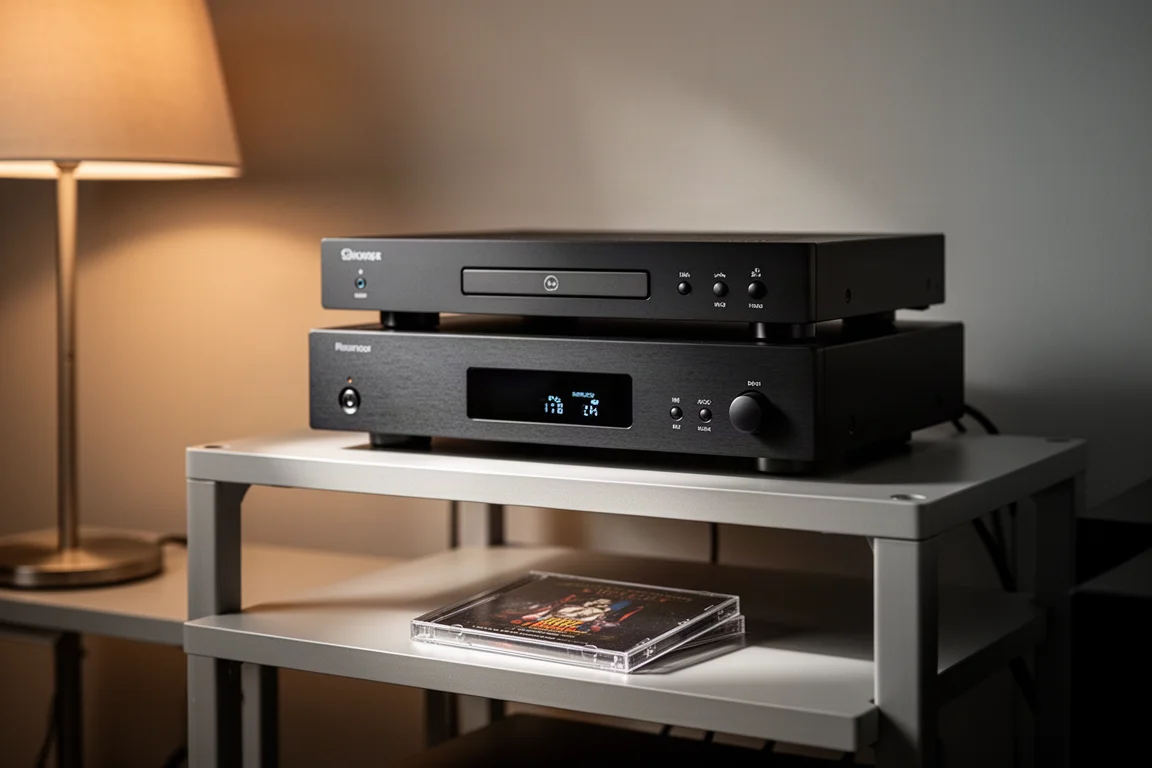
What emerges is a converter that does not flatter poor material and does not need to. It simply reports what is on the disc.
Things to Consider Before Buying
The step up from the Ares is real, but it is an evolution rather than a reinvention. If you already own the Ares and are happy with it, the Enyo 15th is not an automatic upgrade; the two are close enough that the difference may not justify the spend in every system.
The oversampling and non-oversampling switch is a refinement, not a headline feature, and the phase invert and mute buttons are practical housekeeping rather than sound-shaping tools. The balanced output is only fully exploited if the rest of your chain is balanced as well.
Finally, the generous high-resolution ceiling is worth having, but it will not rescue a mediocre recording. Buy this DAC for its build, its input flexibility and its clarity, not for a sample-rate number.
Buying Advice
Give it time before judging it. Roughly a week of continuous streaming playback is a sensible settling-in period, and the character described above holds up after it.
At $699, the Enyo 15th looks more expensive than it is, sounds like a considerably pricier component, and feels hefty enough for its size that it seems likely to last for many years. It is a straightforward recommendation for anyone assembling a disc-based digital front end under $1,000, or for listeners who want a fully balanced ladder DAC without moving into premium territory.
If you are choosing between this and the Ares, the decision comes down to character rather than quality. The Enyo 15th is the clearer, faster, more resolving option, and it is the one to pick if your priority is insight into the recording rather than a softer, easier presentation.
Conclusion
The Denafrips Enyo 15th Anniversary delivers a solid aluminium chassis, a fully balanced ladder conversion stage, four digital inputs and support for DSD 1024 and PCM 1536 at 24 bits, all for $699. In direct comparison it outperforms the Ares in speed, resolution and clarity by a margin that is easy to hear but not overwhelming.
It is a bargain in the most practical sense: a component that feels built to last, looks the part, and gives a large CD collection the hearing it deserves. For listeners shopping below $1,000, it belongs on the shortlist.
Product link
View more details for Denafrips Enyo 15th Anniversary
This product is mentioned in the review. Check the specifications, options, and compatibility before buying.
View more details for Denafrips Enyo 15th AnniversaryFurther reading
Related Reviews
Hi-Fi Audio
Accuphase C-57 vs Allnic H-7000V: Two High-End Phono Stages Compared
A fully balanced solid-state phono stage with a pitch-black noise floor meets a tube design built for well-loved records. Here is how to choose between them.
Hi-Fi Audio
Active vs Passive Hi-Fi: Five Components for a Modern System
Five components that define modern active and passive hi-fi systems, with the strengths, trade-offs and setup details worth weighing before you buy.
Hi-Fi Audio
Advance Paris A10 Apex Review: A Hybrid Integrated Amplifier That Covers a Lot of Ground
A French hybrid integrated amplifier with a class A tube preamp stage, analogue power meters, and an internal DAC and phono stage good enough to make extra boxes unnecessary.