Camping Tents
Decathlon Quick Hiker 2 Fresh & Black Review: Setup and Wet-Weather Problems
A two-person pole-sleeve tent that proved slow to pitch and struggled badly with leaking and condensation during a multi-day rain event.
Introduction
Some tents earn their keep the first time the sky opens. Others leave you counting the hours until morning. The Decathlon Quick Hiker 2 Fresh & Black falls into the second group once serious weather arrives, and that is worth knowing before you spend money on one.
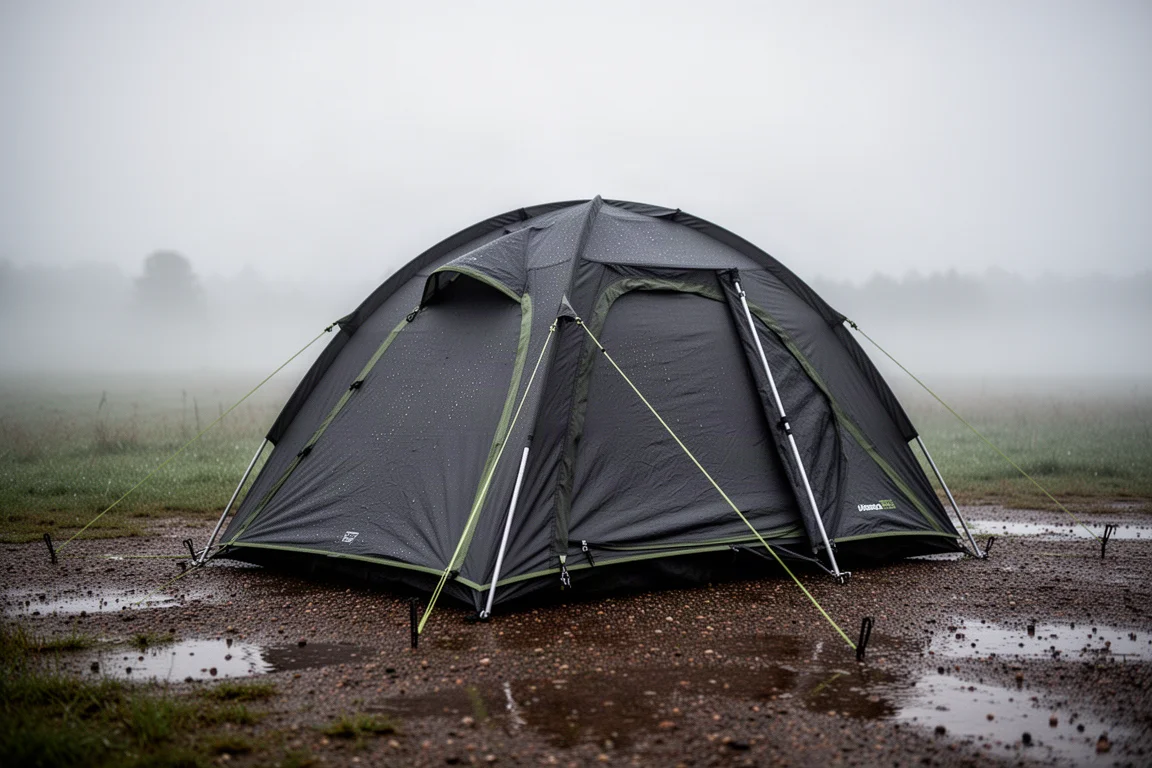
This is a two-person tent pitched with a pole-sleeve design, and it was put through a multi-day rain event that delivered roughly two and a half inches of precipitation. Over that period the inner tent became soaked, condensation built up heavily on the walls and ceiling, and water eventually pooled on the floor.
That does not mean the tent has no place at all, and it does not mean every owner will see identical results. It does mean that setup, weight and wet-weather behaviour are the three things to think about hardest before buying.
The sections below cover who the tent suits, what it genuinely gets right, and the specific issues that showed up during the rain test, followed by practical buying advice.
Who This Tent Is For
The Quick Hiker 2 Fresh & Black makes the most sense for campers who want a simple two-person shelter for dry, settled weather and short trips where the packed weight is not a major concern. Think summer car camping, festival weekends, or a first tent for occasional use in fair conditions.
It is a much harder recommendation for anyone who camps in wet climates, on exposed ground, or on multi-day trips where a fast pitch matters. A tent that is slow to put up and quick to soak through changes the character of a trip, and that trade-off should drive the decision more than the name on the stuff sack.
Main Strengths
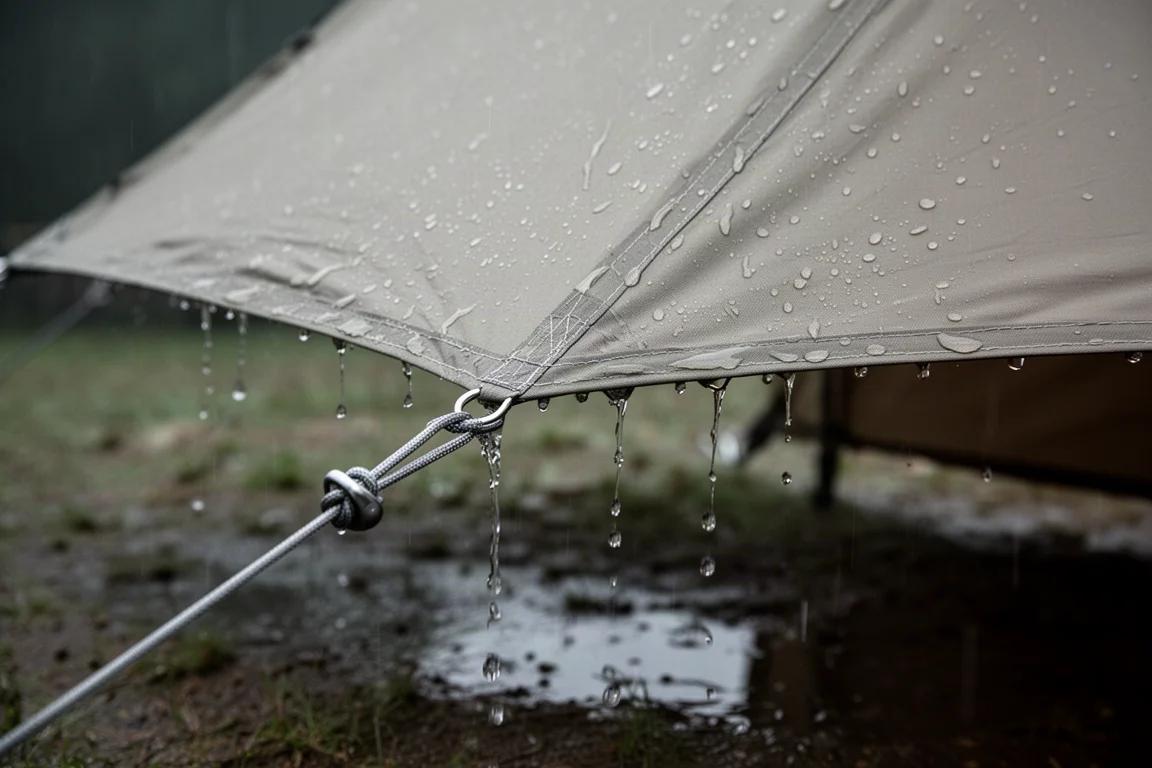
The tent does get a few fundamentals right. The fly carries running water down and away from the sleeping area rather than dumping it straight onto the floor, and during the first morning check the inner was damp without standing water inside the living space.
The double-wall arrangement, with a separate fly over an inner tent, is also a sensible basic layout. It gives you a layer that can be tensioned independently and an inner that keeps the sleeping area separated from the flysheet surface.
Those strengths are real, but they are baseline expectations rather than standout features, and they were not enough to keep the interior dry once the rain settled in.
Things to Consider Before Buying
Setup is the first obstacle. The tent uses pole sleeves that are narrow and unusually grippy, so feeding the poles through takes far longer than it should. Breaking the tent down is just as slow, and the whole process feels like a chore rather than a routine.
Weight is the second. This is a heavy tent for a two-person shelter, which limits how far you would want to carry it and pushes it toward car camping or very short walks.
Construction is the third. Light was visible through the seams during the initial inspection, along with small holes in the fabric at those seams. Holes at a seam are not automatically a leak, since they can be sealed or covered, but they are a detail worth checking carefully on any tent you buy.
Real-World Rain Performance
Rain began around nine in the evening and fluctuated between light and moderate, with heavier bands moving through later. Across the full period, roughly two and a half inches of rain fell.
By the first morning, droplets were visible on the inside of the fly and the inner walls were wet to the touch. There was moisture on the ceiling, on the side walls and across the floor area, and it was spreading rather than staying in one corner.
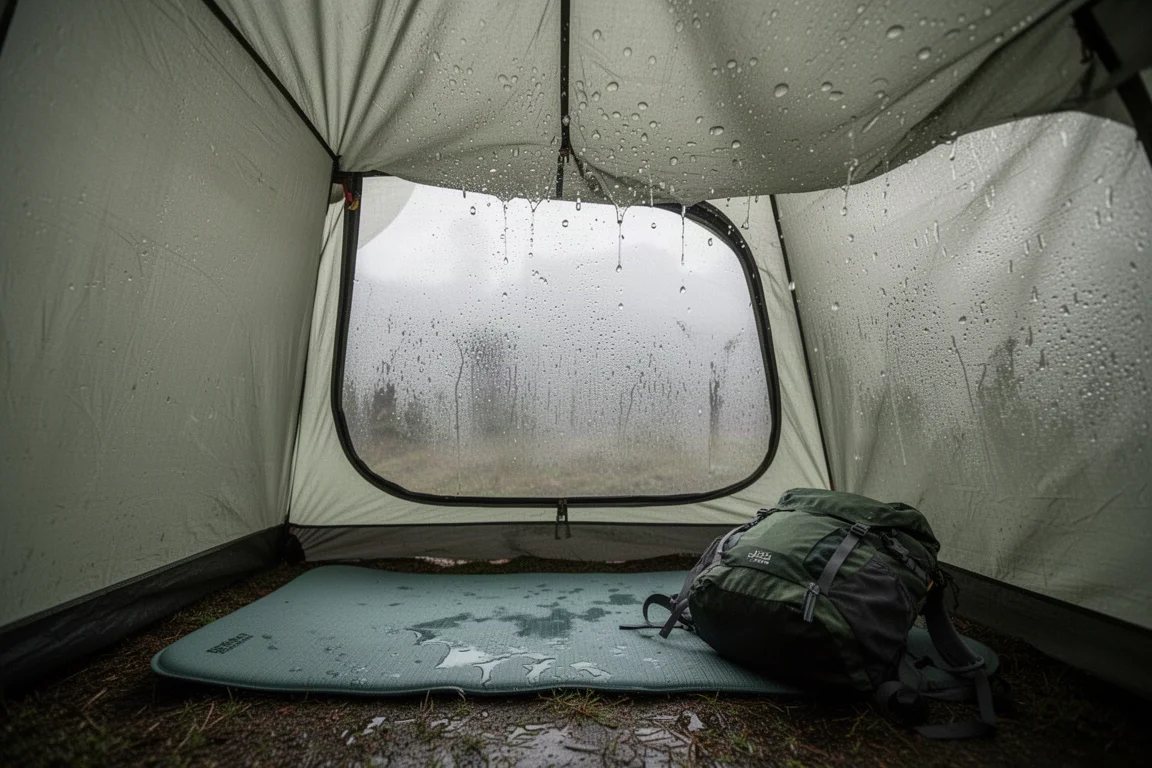
By the final morning the picture was worse. Water was running down the inner walls, pools had formed on the floor, and everything left inside the tent was soaked. Condensation was heavy enough that separating it from genuine leaking became difficult, and both problems were clearly present at the same time.
That combination is the core issue. A tent can manage condensation with ventilation, and it can manage rain with a well-sealed fly, but this one struggled with both at once.
Buying Advice
If you are considering the Quick Hiker 2 Fresh & Black, be honest about how you camp. For dry summer weekends with a short walk from the car, the tent will keep light rain off and give you a usable two-person space.
For anything wetter, longer or more exposed, the setup time, the weight and the wet-weather performance all point in the same direction. Budget for the possibility of re-sealing seams, and expect to spend real time on every pitch.
If a fast pitch and a dry interior matter to you, that money is better spent elsewhere. If you only need an occasional fair-weather shelter and the trade-offs are acceptable, go in with your eyes open.
Conclusion
The Decathlon Quick Hiker 2 Fresh & Black is a difficult tent to recommend. The pole sleeves make pitching slow and frustrating, the packed weight is high for a two-person shelter, and a multi-day rain event left the interior soaked with water pooling on the floor and condensation coating every surface.
There is a narrow case for it: dry, settled weather, short trips and a willingness to accept a slow setup. Outside that case, the drawbacks outweigh the appeal, and campers who expect to meet real rain should look at other options first.
Product link
View more details for Decathlon Quick Hiker 2 Fresh & Black
This product is mentioned in the review. Check the specifications, options, and compatibility before buying.
View more details for Decathlon Quick Hiker 2 Fresh & BlackFurther reading
Related Reviews
Camping Tents
3F UL Gear Taiji Two-Person Tent Review: Field Waterproofing Results and Buying Advice
The Taiji pairs an attached fly with a removable inner, but sustained rain exposed untaped vent seams that need sealing before this shelter can be trusted.
Camping Tents
3FUL Gear Lanshan 2 Pro 4-Season Review: A Sub-$200 Single-Wall Trekking Pole Tent
An early look at the 3FUL Gear Lanshan 2 Pro 4-Season, covering its straightforward pitch, generous interior space, and the condensation and seam-sealing questions that come with any single-wall shelter.
Camping Tents
Alps Mountaineering Lynx 1-Person Tent Review: Big Value in a Small Budget Tent
A close look at the Alps Mountaineering Lynx 1-Person Tent, covering real interior dimensions, materials, setup time, ventilation limits, and who should buy it.