Sleeping Pads
Decathlon Forclaz MT900 Air Insulating Sleeping Pad Review: Real Four-Season Warmth at a Fair Price
A light, compact four-season sleeping pad with an R-value of 5.4, a 9 cm depth and a price around £130, plus the sizing and packing details worth knowing first.
Introduction
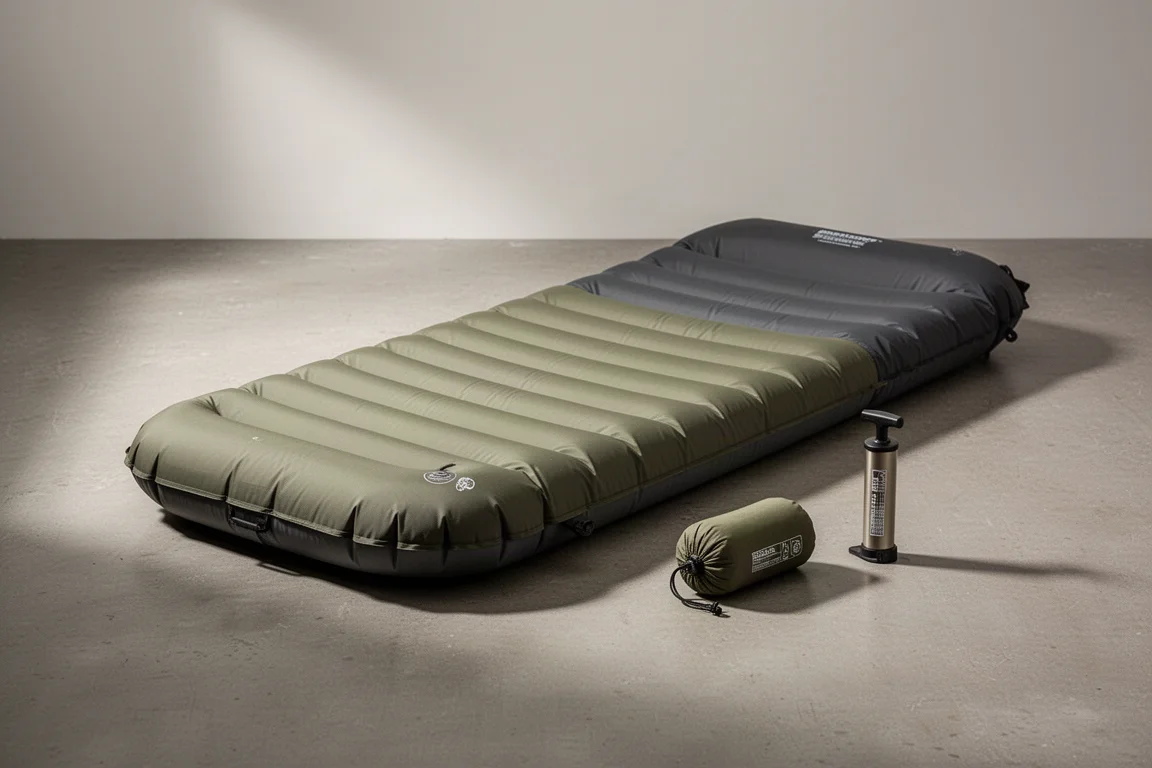
Cold-weather camping puts a lot of pressure on one piece of kit. The Decathlon Forclaz MT900 Air Insulating Sleeping Pad is an inflatable mat with an R-value of 5.4, which places it firmly in four-season territory, and it does that at a price of around £130. That combination is what makes it interesting: a pad warm enough for winter nights, light enough to carry on multi-day routes, and small enough to disappear into a pack.
Weight and packed size are the two numbers most people check first. The pad comes in at 615 g with its pump sack, and closer to 560 g if you leave the sack behind and inflate it with a separate pump. The stated packed size is 28 cm by 11 cm, and in practice it rolls down smaller, closer to 20 cm by 11 cm without the sack. For a pad carrying this much insulation, those figures are unusually competitive.
Who This Sleeping Pad Is For
This is a pad for anyone who camps beyond the summer months and wants a genuine winter-capable mat without moving into much higher price brackets. It suits backpackers counting grams, cold sleepers who feel the ground through thinner mats, and campers who simply want one pad that covers most of the year.
Sizing deserves attention. The Large measures 183 cm by 64 cm, which many other brands would label a regular, so it is worth checking the dimensions against your own height before ordering. A longer XL version measures 195 cm by 64 cm. Anyone taller, broader, or prone to moving around at night will likely be better served by the XL.

Thickness is the other part of the comfort story. At 9 cm deep, the pad lifts you well clear of cold ground, which matters more in winter than at any other time of year. The shape is a deliberate middle ground between a mummy mat and a rectangular one, with a mostly rectangular body, a very slight taper at the head, and a more noticeable taper at the foot.
Main Strengths
Four things stand out on this pad: the insulation rating, the packed size, the comfort, and the way it inflates.
Warmth and R-Value
An R-value of 5.4 is the headline. In practice the pad holds warmth comfortably down to around zero and into the early minus figures, which covers the majority of winter camping in Britain and northern Europe. Below roughly minus five, a pad with a higher R-value becomes the more sensible choice, particularly for sleepers who run cold. On a long-distance route with overnight temperatures dropping to around minus three, this pad performed without complaint.

One practical note: to get the full insulation value out of any inflatable pad, it needs to be inflated fairly firm. Soft inflation feels comfortable at first but reduces effective performance, so it is worth taking the extra minute to get it right.
Pack Size and Weight
At 615 g including the pump sack, or around 560 g without it, this sits at the lighter end for a four-season mat. The same applies to bulk. The official packed size is 28 cm by 11 cm, but leaving the pump sack at home brings it down to roughly 20 cm by 11 cm, which is small enough to strap to the outside of a pack or bury inside it.
Comfort and Shape
The 9 cm depth and the hybrid shape make this a genuinely comfortable mat rather than a survival tool. The near-rectangular profile gives you usable space across the whole body, while the tapered foot keeps the weight down. It is a shape that suits people who spread out or turn over during the night. For larger sleepers, the XL version is the safer pick.
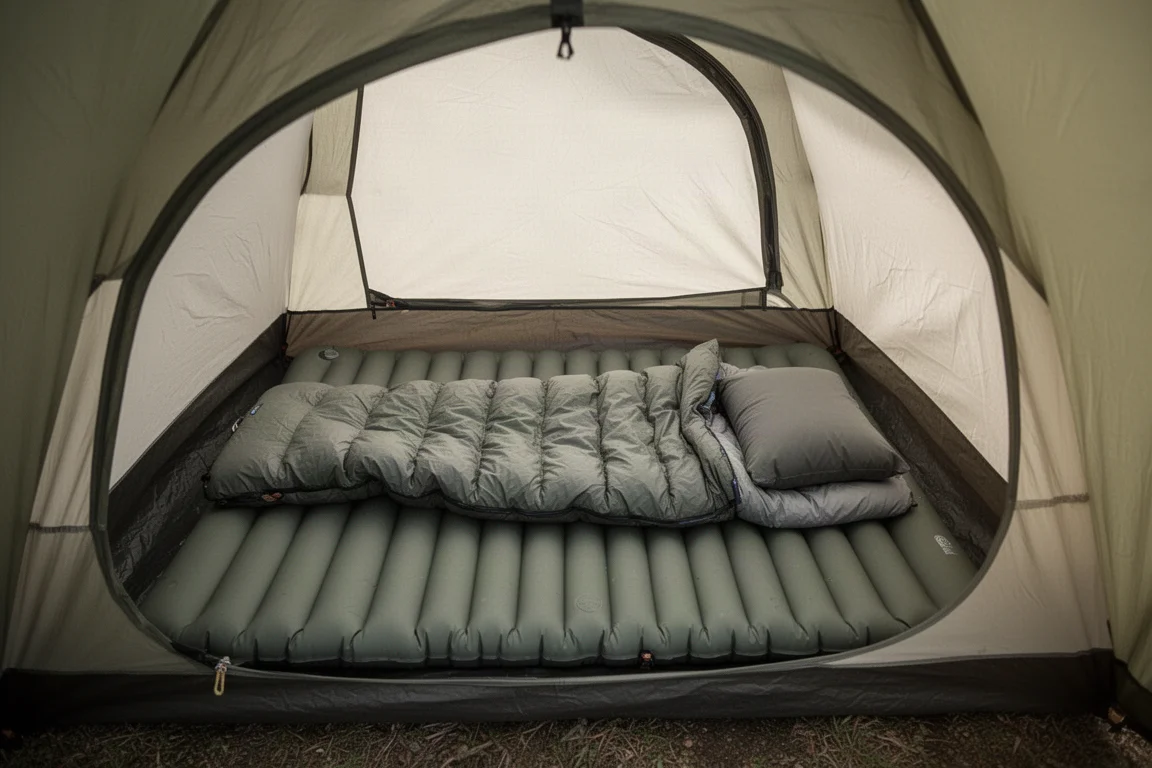
Build quality holds up well too. The material feels substantial for a pad at this weight, no air loss showed up in use, and the surface stays reasonably quiet when you move, which is not always true of winter mats.
Valves and Inflation Setup
The pad uses separate inflation and deflation valves, and the inflation valve is a non-return design, so air stays in while you work. There is no hiss of escaping air and no wasted effort between breaths.
Inflation is handled by a double-ended stuff sack. The pad goes in one end and an integrated pump sack sits at the other, with the outlet at the tip. It works, and it saves carrying a separate pump. The trade-off is packing: getting the pad back into its own sack is fiddly, which is a common reason to leave the sack at home and use a small third-party pump instead. A compact pump pairs with the valve well and makes the whole routine quicker.
Things to Consider Before Buying
A few points are worth weighing before you commit.
- Size naming. The Large at 183 cm by 64 cm is what many other brands call a regular. Check the dimensions rather than the label.
- Firm inflation matters. The R-value depends on inflating the pad properly, so budget a little extra time at camp.
- Cold limits. Below around minus five, a higher R-value pad is the better option.
- Repacking. The pad is awkward to squeeze back into its stuff sack, especially inside a small tent.
- Pump sack weight. The sack adds roughly 55 g. Leaving it behind saves weight but means carrying a separate pump.
Buying Advice
Judged on warmth, weight, packed size and price together, this pad covers a lot of ground. An R-value of 5.4, a 9 cm depth, a weight under 600 g and a packed size that shrinks to around 20 cm by 11 cm is a strong combination at around £130. That makes it a sensible single-pad solution for three-season campers who also venture out in winter.
It also fits neatly into a wider sleep system. It pairs well with Forclaz sleeping bags and pillows, so if you already use that range, the pad slots straight in.

The clearest guidance is this: choose the size carefully, inflate it firmly, and be realistic about the temperatures you camp in. If your winter nights sit around zero to minus three, this pad will handle them. If you regularly camp below minus five, look at a mat with a higher R-value instead.
Conclusion
The Decathlon Forclaz MT900 Air Insulating Sleeping Pad earns its place as a true four-season mat. It is warm, light, compact, comfortable and quiet, and it does all of that at a price that undercuts much of the winter pad market. The main things to plan around are the sizing and the fiddly repacking, both of which are easy to manage once you know about them.
Product link
View more details for Decathlon Forclaz MT900 Air Insulating Sleeping Pad
This product is mentioned in the review. Check the specifications, options, and compatibility before buying.
View more details for Decathlon Forclaz MT900 Air Insulating Sleeping PadFurther reading
Related Reviews
Sleeping Pads
Best Backpacking Sleeping Pads 2026: Nine Pads Rated on Price, Comfort, Warmth, and Weight
Nine backpacking sleeping pads compared on price, comfort, warmth, and weight, from a $65 summer pad to a year-round option rated at R-7.3.
Sleeping Pads
Best Backpacking Sleeping Pads: Comfort, Warmth, and Weight Compared
A practical comparison of the Nemo Quasar 3D, Therm-a-Rest NeoAir XTherm Max, and Big Agnes Rapide SL for backpackers choosing between comfort, warmth, and packed weight.
Sleeping Pads
Best Backpacking Sleeping Pads: Ultralight, Winter, Comfort and Budget Picks
A practical roundup of the sleeping pads that stand out for ultralight weight, winter warmth, pressure relief and value, plus three popular pads that fell short.