Backpacking Gear
Decathlon Forclaz Budget Backpacking Gear: Six Pieces Tested on the Trail
A practical look at six affordable Decathlon Forclaz backpacking pieces, including a standout 50-litre pack and two items worth skipping.
Introduction
Backpacking gear has a reputation for being expensive, and for anyone assembling a first kit, cost is often the biggest barrier to entry. That is what makes the Decathlon Forclaz range worth a closer look. Decathlon is the largest outdoor retailer in the world, with stores in 72 countries, and the brand has built its name on durable equipment sold at low prices.
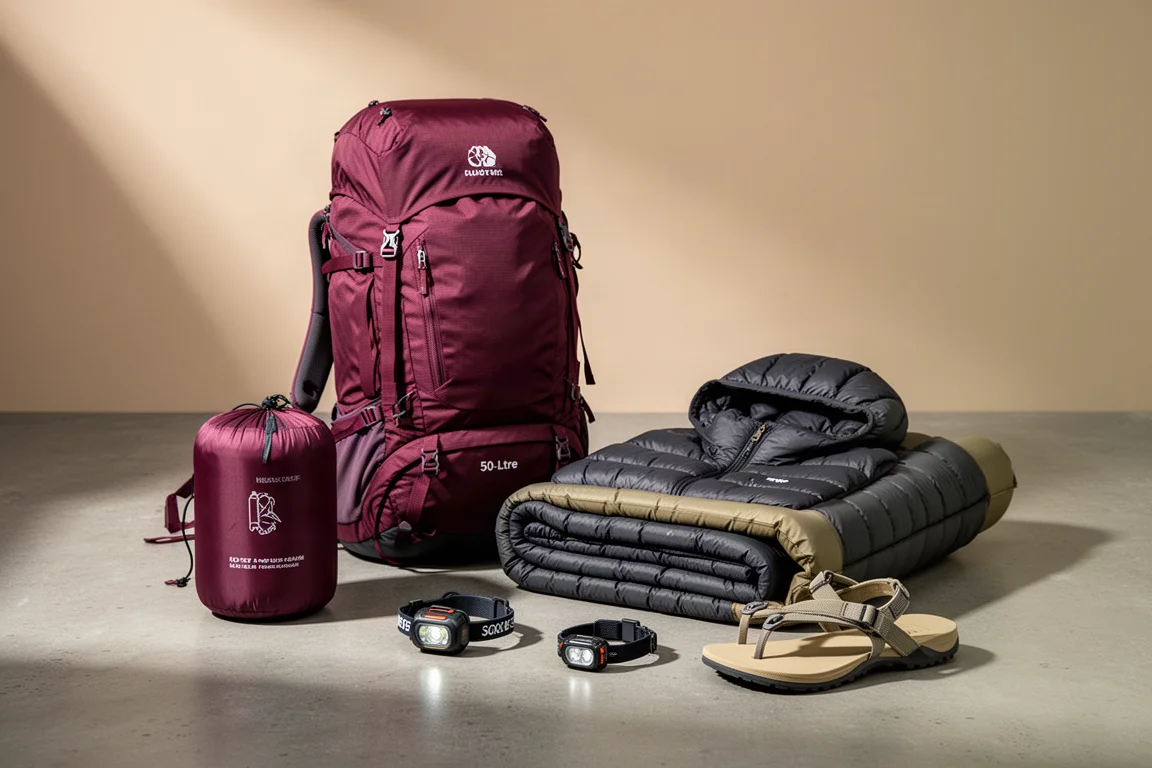
This guide covers six Forclaz pieces that went along on an overnight backpacking trip: a 50-litre pack, a synthetic sleeping bag, a self-inflating pad, a down hoodie, a rechargeable headlamp and a pair of camp sandals. Some of them are genuinely excellent for the money, and a couple are better left on the shelf.
What Matters in Budget Backpacking Gear
Budget gear almost always involves a trade-off. Strong, light and cheap rarely arrive together, so most affordable equipment manages two of the three. Decathlon Forclaz gear generally lands in the strong and cheap category: well made, built to last and inexpensive, with weight as the usual compromise. Much of the range is also backed by a five-year warranty, which is unusual at this price point.
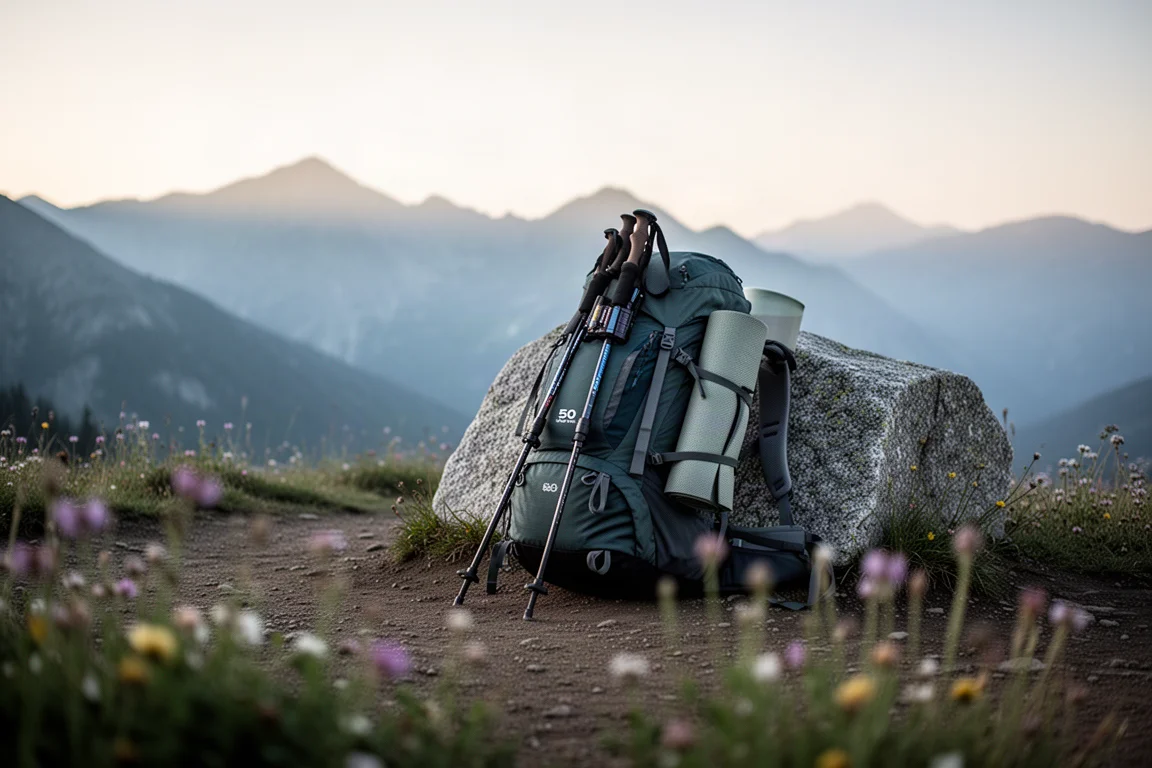
One practical note for anyone building a complete kit: Decathlon does not sell backpacking tents in the US, so a shelter from another budget brand has to fill that gap. Everything else in the sleep, carry and clothing system can come from the Forclaz line, which keeps the total cost of a starter kit remarkably low.
Forclaz Women’s MT 100 Easy Fit 50L Backpack
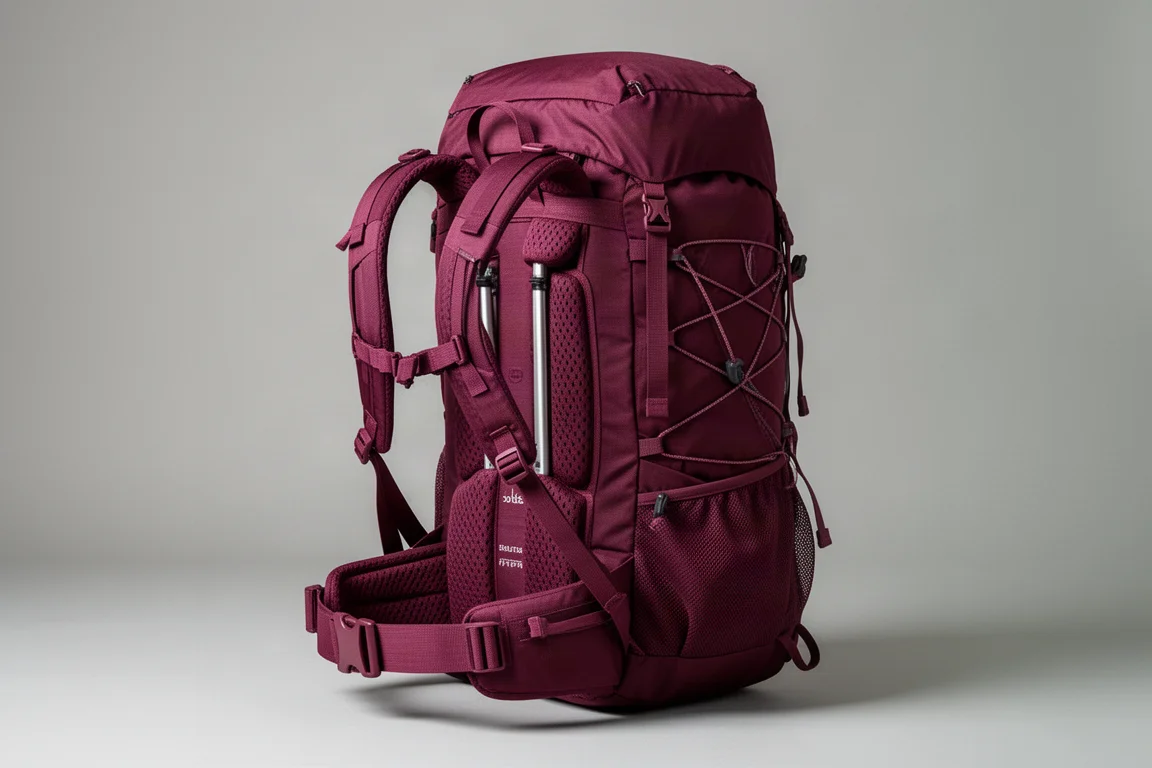
This is the standout piece of the group. At around $100 for 50 litres, the MT 100 Easy Fit makes the strongest case for the brand. The defining feature is the Easy Fit harness. Instead of measuring your torso and adjusting the pack by hand before a hike, you put it on, tighten the shoulder straps, and the harness slides into position against your back. For newer backpackers who are still working out their fit, that removes one of the more confusing parts of buying a pack.
The rest of the feature list is generous for the price: a rain cover, a mesh bungee cord across the front, side pockets, panel loading so the main compartment opens like a suitcase, and a dedicated sleeping bag compartment at the base. It carried a full load of roughly 30 pounds comfortably, which is a serious compliment at this price.
The compromises are about storage rather than performance. There is only one hip belt pocket and only one water bottle pocket, and the pack has fewer compartments overall than most hiking packs, so smaller items end up crammed into the lid.
Forclaz Trek 500 Sleeping Bag
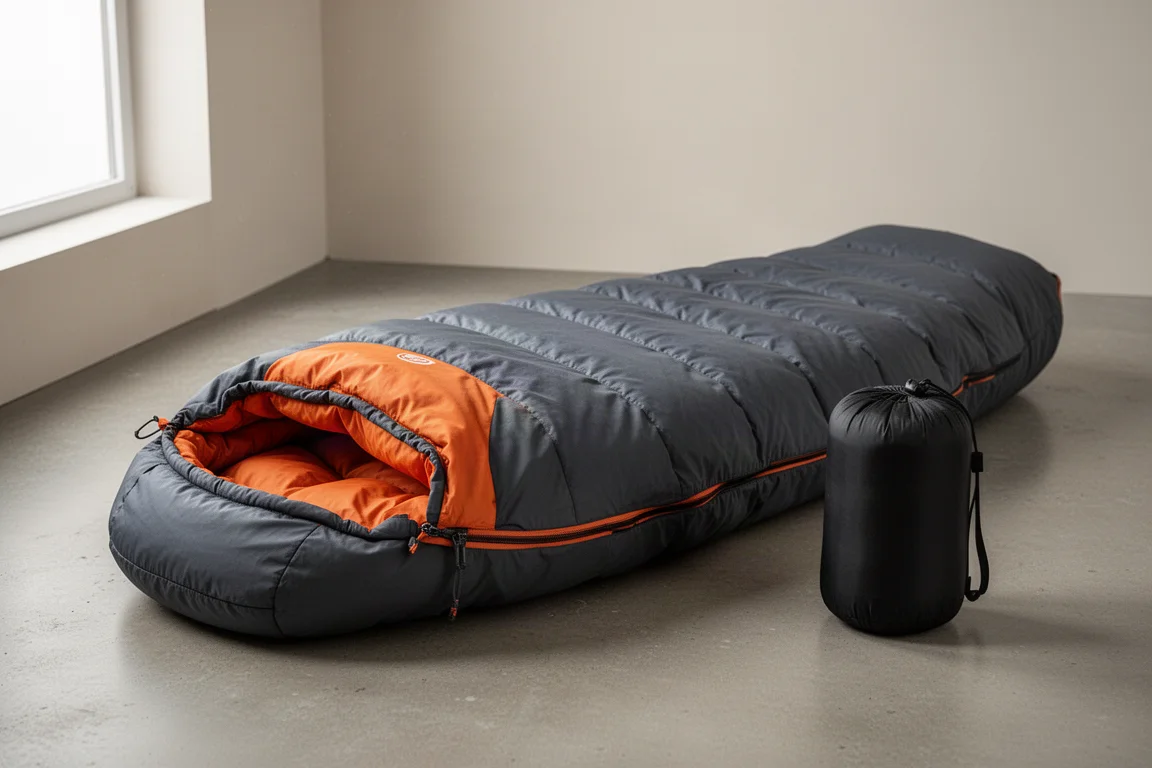
The Trek 500 is a synthetic sleeping bag rated to 0 degrees Celsius, or 32 degrees Fahrenheit. It ships in a compression sack, but it does not pack down small, and it claims a large share of a 50-litre pack. It normally sells for around $100 and is often discounted to roughly $60, which is the most attractive thing about it.
Comfort is where it falls down. The shell and lining feel rough against the skin, the hood and neck area has loose threads that catch the face, and a stiff section of material presses against the cheek. The zipper is fiddly to work. By the first morning, synthetic insulation was already working its way out at the seams.
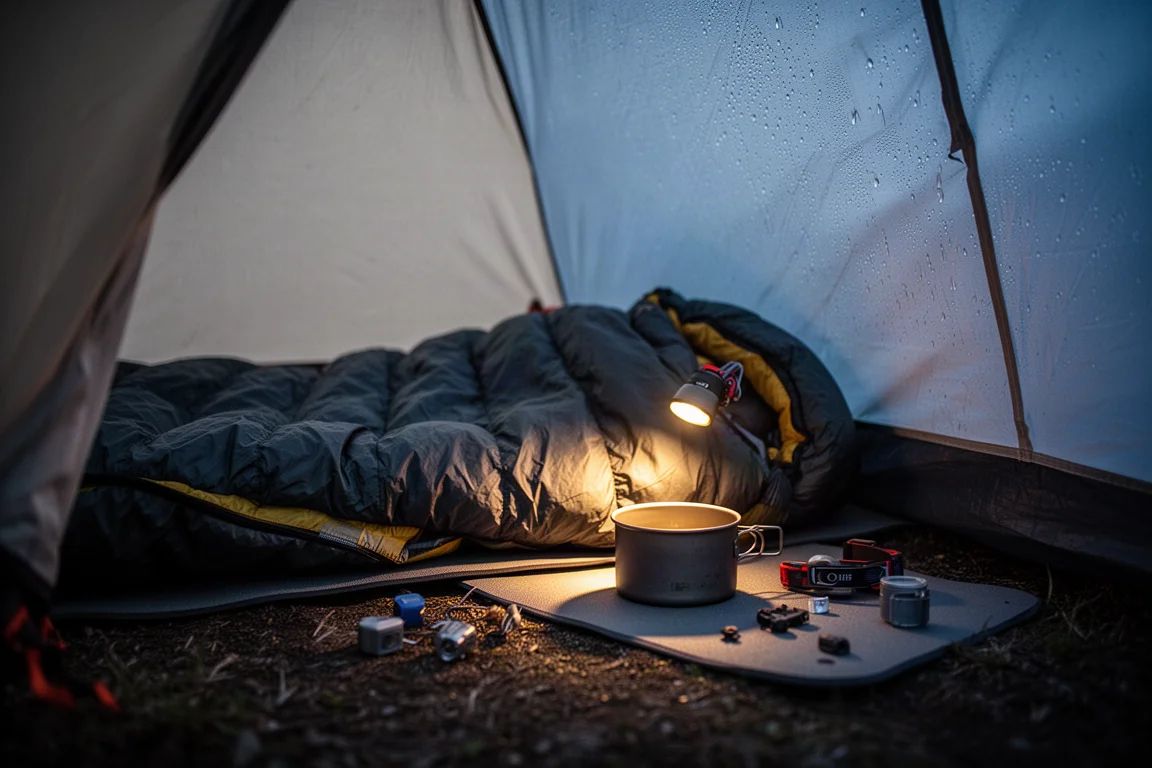
The temperature rating is also optimistic for shoulder-season use. In near-freezing overnight temperatures, this bag needed a liner to stay comfortable. It is a defensible choice for warm summer nights when price matters most, but it is the weakest piece in this kit.
Forclaz MT 100 Sleeping Pad
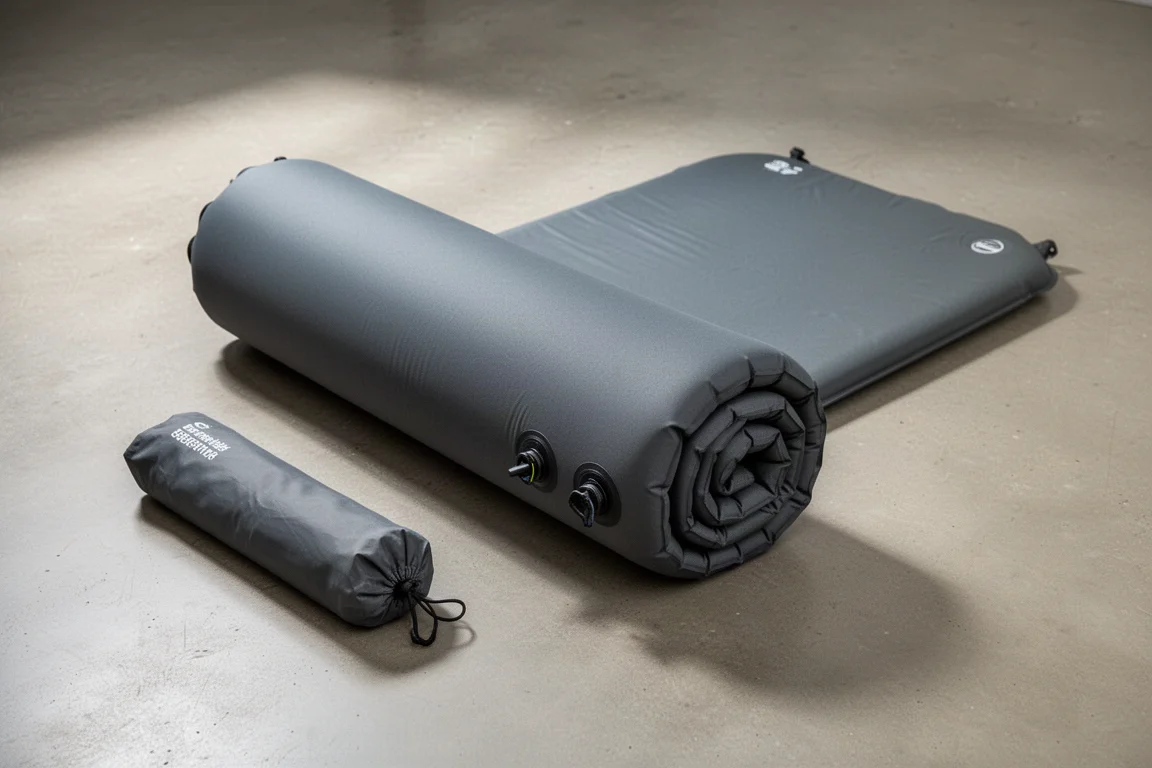
At about $50, the MT 100 is a self-inflating pad with an R-value of 2.7, which places it firmly in warm-weather territory. Two twist valves let it fill on its own, though the printed instructions recommend topping it up by mouth. It rolls up small enough to slide into a pack alongside a pillow.
The trade-off is firmness. This is a thin pad, and the foam inside does not give much, so it feels closer to sleeping on a board than on a mattress. It may suit sleepers who genuinely prefer a very firm surface, but for most people it is not a comfortable night’s sleep.
Forclaz Down Hoodie
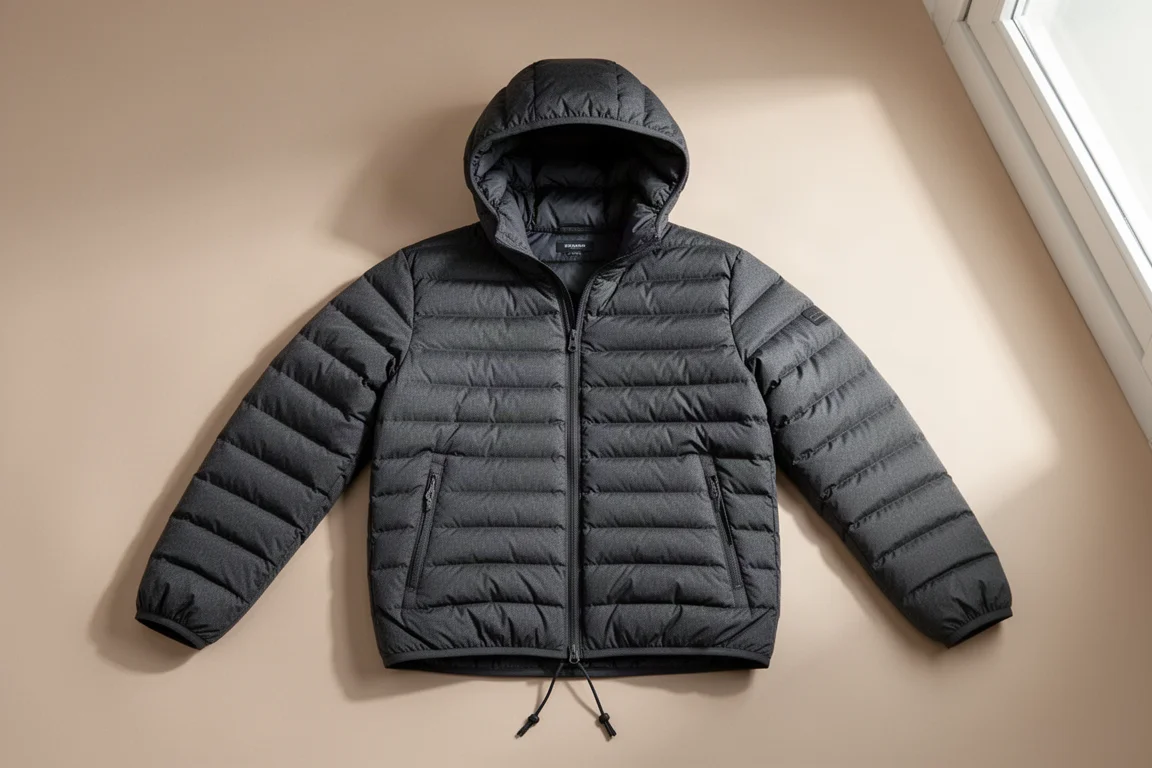
The Forclaz down hoodie has a strong reputation, and it earns it. At $100 it is warm, comfortable and feels well made. It also works as the outer layer of a simple, low-cost system: the Forclaz fleece costs around $40, so the two together come to roughly $140, which is about what some down jackets cost on their own.
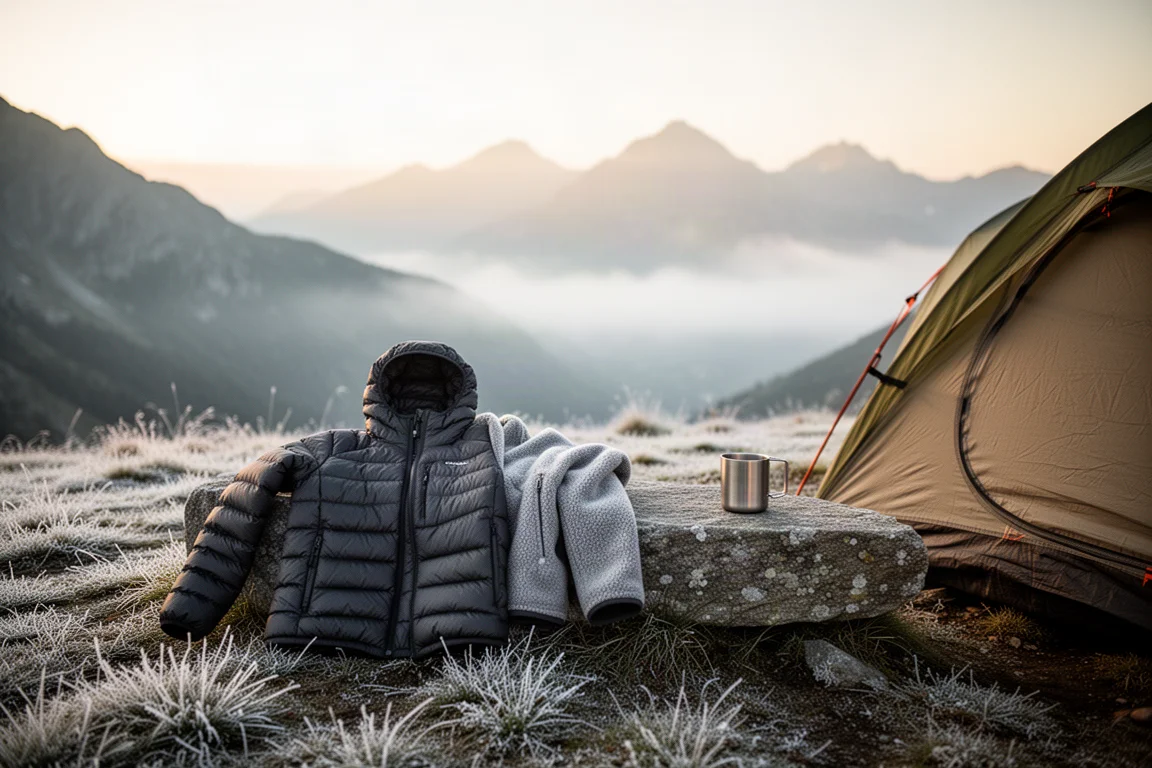
For three-season backpacking, that pairing covers most cool evenings and mornings around camp. The hoodie is also the piece most likely to be worn away from the trail, which makes it an easy recommendation for anyone who wants one insulated layer that does both jobs.
Forclaz 200 lm Rechargeable Headlamp
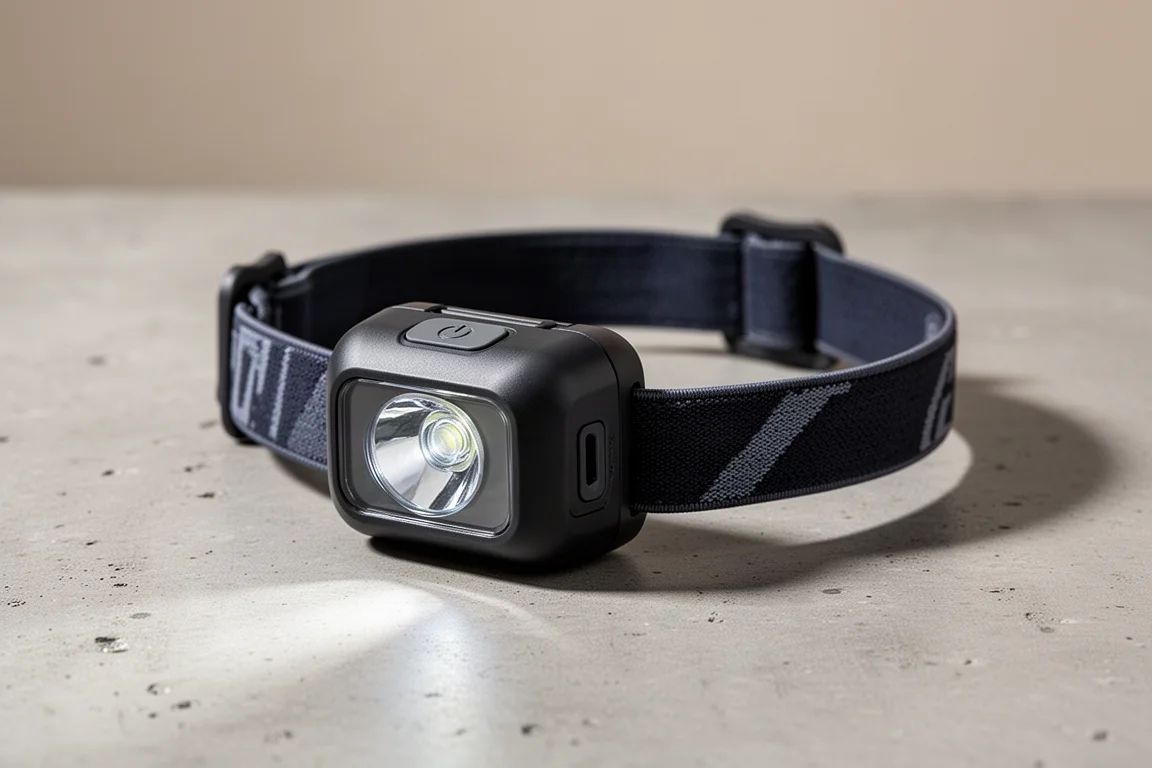
The rechargeable headlamp costs about $20 and puts out 200 lumens. That sounds reasonable until you compare it: a headlamp at roughly twice the price can offer double the output while weighing half as much. It is also not especially comfortable to wear. For a modest increase in budget, a brighter and lighter light is a better use of money.
Forclaz Camp Sandals
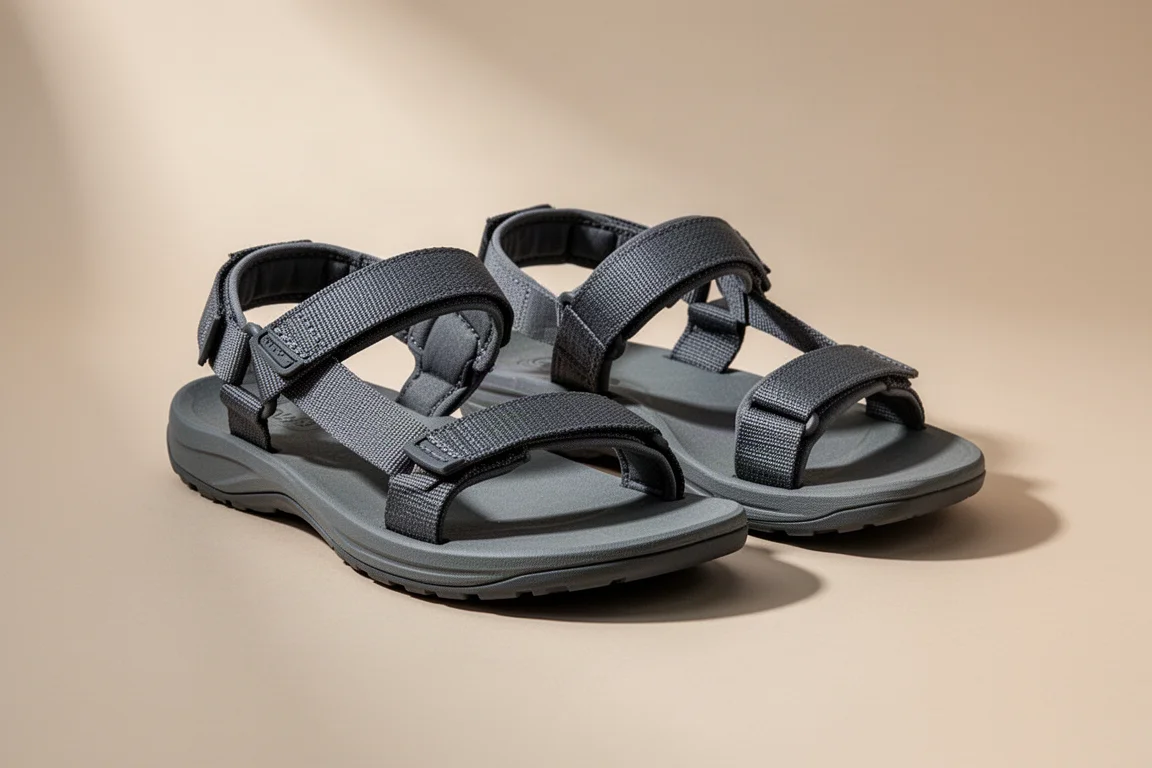
These are very lightweight camp sandals, and they were exceptionally comfortable after a day in hiking shoes. They pack down small and were pleasant to slip on around camp in the evening. One caveat concerns value rather than performance: they cost about $5 more than some comparable camp sandals from other brands, so they are not the bargain they first appear to be. Judged purely on comfort, they are excellent.
Buying Advice
If you are building a first kit on a budget, start with the pack. The MT 100 Easy Fit delivers the most value in this group, and the self-adjusting harness removes much of the guesswork from getting a good fit. The down hoodie is the second easy recommendation, particularly alongside the fleece, since the two together cover most cool-weather needs for about the price of one mid-tier insulated jacket.
The sleeping bag and the sleeping pad are the two pieces to skip. Both are inexpensive, but neither delivers the comfort that matters most on a cold night, and a modest increase in budget goes a long way in both categories. The headlamp tells a similar story at a smaller scale, and the camp sandals are worth buying for comfort rather than for savings.
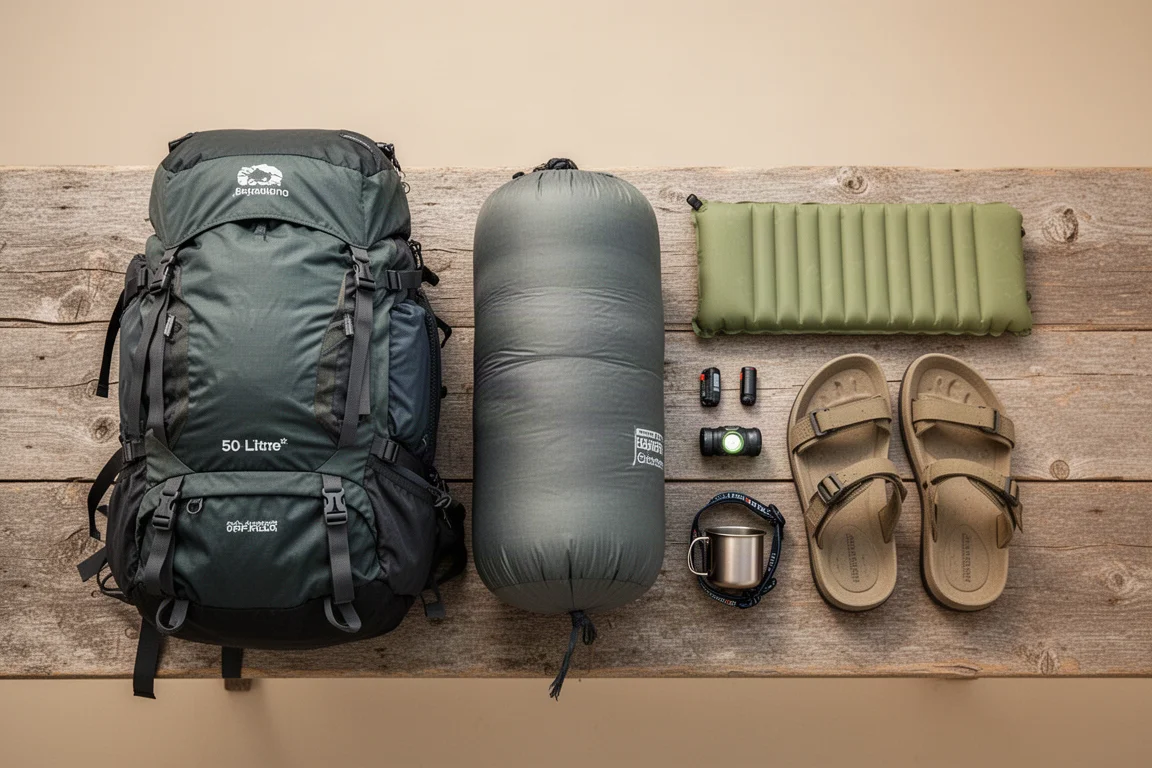
The rest of the kit performed well on trail. A lightweight wool t-shirt and a pair of stretchy hiking pants stayed comfortable in hot, sweaty conditions, and a pair of waterproof hiking shoes turned out to be far more comfortable than expected for the price. Small accessories such as a titanium mug did their job without complaint. Sizing across the clothing range is limited, so trying items on or ordering two sizes is worthwhile before committing.
Conclusion
Decathlon Forclaz gear is not uniformly good, and that is the most useful takeaway. The 50-litre pack, the down hoodie, the fleece and the camp sandals are strong value for the money, while the sleeping bag, sleeping pad and headlamp are better skipped in favour of slightly more expensive alternatives. Buy selectively and the brand can cover most of a first backpacking kit for a very modest outlay.
Further reading
Related Reviews

Backpacking Gear
Building a 10 lb Base Weight: An Ultralight Backpacking Gear List
A practical walkthrough of the ultralight pieces behind a 10 lb base weight, from a 765 g pack and a roomy one-person tent to a full camp chair and a dependable water filter.

Backpacking Gear
A 15-Pound Lightweight Backpacking Gear List for Solo Trips
A beginner-friendly 15-pound backpacking setup built from easy-to-find gear, with notes on what each piece does, how it packs, and where to spend your attention.

Backpacking Gear
8 Ultralight Backpacking Gear Upgrades Worth Carrying
Eight small, affordable backpacking upgrades that solve real trail annoyances, from a pillow that stays put to a fuel valve that rescues leftover canister gas.