Camping Tents
Decathlon 2 Second Fresh & Black 3-Person Pop-Up Tent Review: Waterproof but Frustrating
A waterproof pop-up tent with a double-wall inner, a darkening fabric treatment, and a long list of compromises to weigh before you buy.
Introduction
The Decathlon 2 Second Fresh & Black 3-Person Pop-Up Tent makes a confident pitch: a pop-up shelter that is genuinely waterproof, sleeps three, and uses the brand’s Fresh & Black fabric treatment. It costs around $180, and Decathlon also offers a two-person version plus variants without the Fresh & Black treatment at lower prices.
The waterproofing claim holds up. Almost everything else deserves scrutiny. This is a double-wall pop-up tent, which is unusual in a category where nearly every model is single wall, and that one design choice drives most of the trade-offs buyers will notice: interior space, airflow, condensation, and warm-weather comfort. If you are shopping for a summer tent for a family of three, the details below matter more than the headline features.
Who This Tent Is For
Realistically, this is a two-person tent. Two average adults and some gear fit comfortably, or two adults and a small dog. Three small children would work. Three adults would not, and taller campers will find the usable interior tighter than the quoted dimensions suggest, because the inner fabric walls slope inward and sag.
The door is another consideration. It has a raised lip, so closing it means bending forward and reaching around. Anyone with back trouble or limited stability on their feet will find that awkward, and a different shelter would serve them better. When the door is fully open, entry and exit are straightforward.
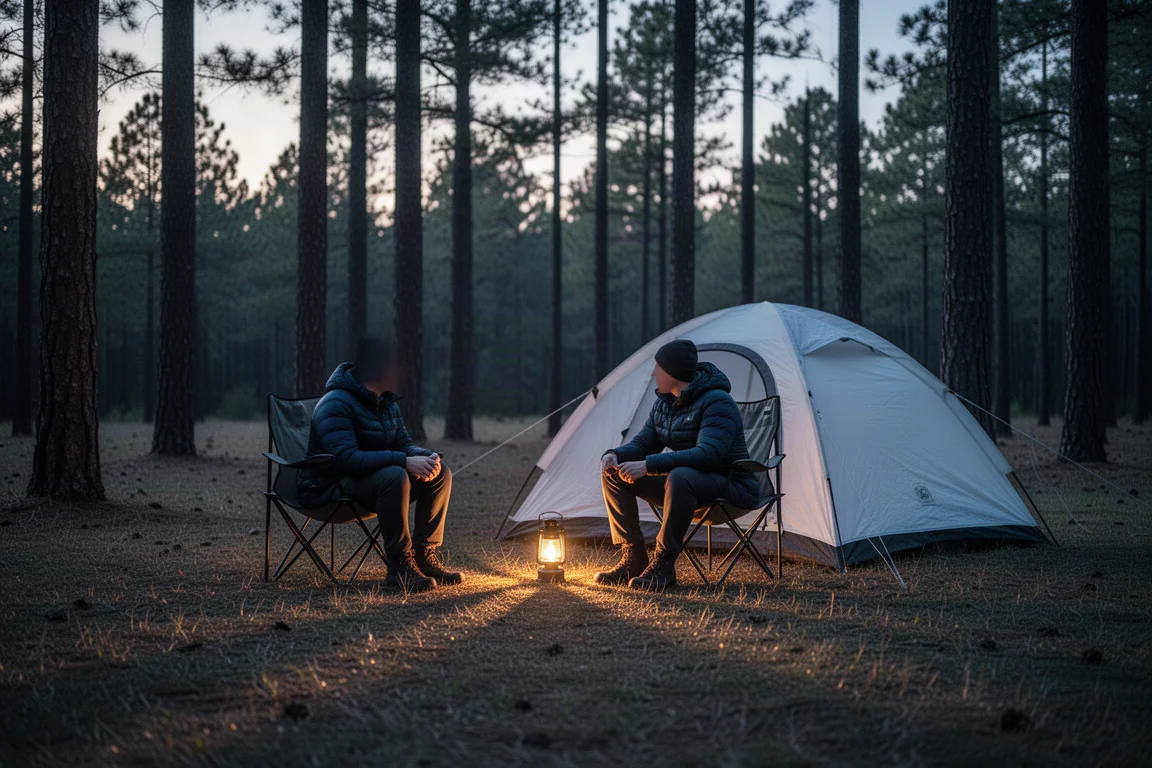
Campers who want a pop-up tent for cool-weather trips may find more to like here than summer campers will. Warm-weather buyers who value airflow and bug protection should look carefully at the ventilation section before committing.
Main Strengths
Waterproofing is the strongest argument for this tent. The fabric carries a 2,000 mm hydrostatic rating, and the shelter came through a heavy thunderstorm without leaking. It also held steady in strong wind during the same storm, which speaks well to the frame and staking setup.
The materials are straightforward: the fly, floor, and inner are all polyester. Decathlon includes nine stakes and three guidelines with the tent, which is enough to pitch and tension the shelter properly.
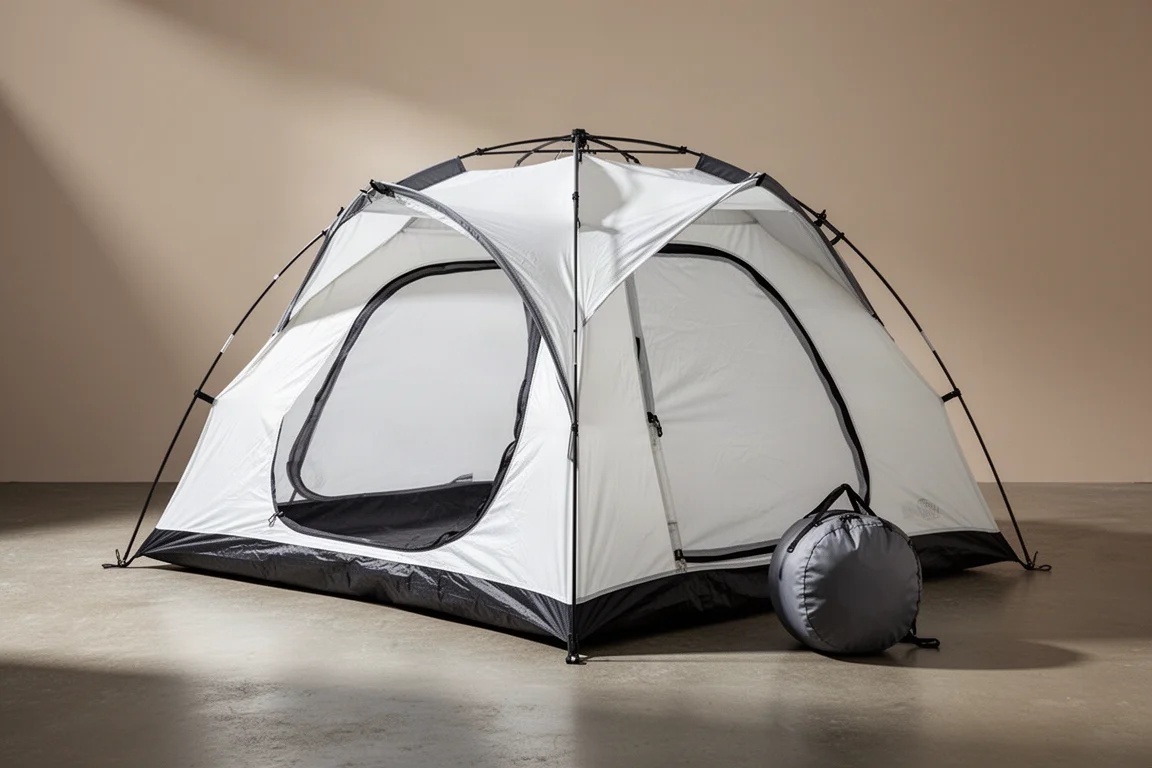
Visually, the design works. The white fabric with black accents looks sharp and modern, which is more than can be said for many pop-up tents in this price bracket.
Setup, once you know the sequence, is generally easy. Pull the tent from the bag, undo the straps and buckles, unfold it, stake it out, and tension the guidelines and side vents.

There is also a seasonal argument worth noting. Double-wall tents are typically built for colder conditions, and this one may make more sense on cool-weather trips than its three-season marketing implies. That possibility deserves a proper test in autumn or winter conditions before drawing conclusions.
Setup, Ventilation, and Living Space
The name is the first problem. Decathlon markets this as a 2 Second tent and prints that claim on the storage bag and on the tent itself, while the brand’s own product page also refers to pitching the tent in minutes. In practice, setup takes roughly five minutes once you account for unpacking, staking, and vent adjustment. The two-second figure does not describe any part of the process beyond opening a vent.
Packing it away is harder still. The breakdown sequence is unusually complex for a pop-up tent: a buckle inside the tent has to be released and reconnected, the shelter folded, additional buckles snapped, and then the whole structure twisted into a figure-eight before a final fold. It takes real physical effort. Most pop-up tents pack down in around 30 seconds; this one does not.
Inside, the tent measures about 35.2 inches at the peak. Maximum width is 78 inches, or 6 feet 4 inches, but the inward-sloping walls mean the realistic usable width is closer to 68 inches, or 5 feet 8 inches. Door to back measures 73 inches, or 6 feet. The fabric inner sags, and it consumes a noticeable amount of the interior volume.
Ventilation is the weakest area. There are vents on both sides and a roll-up option at the rear, but the vents are fabric rather than mesh, so opening them invites insects in. Only two small mesh panels exist in the whole inner, one at the door and one at the back. Everything else is fabric, including the side panels that read as mesh at a glance. The result is a shelter that blocks airflow, holds heat, and traps moisture, with condensation building on the inner fabric overnight. A pull cord at the rear opens the back slightly, but it does not solve the underlying problem.
Things to Consider Before Buying
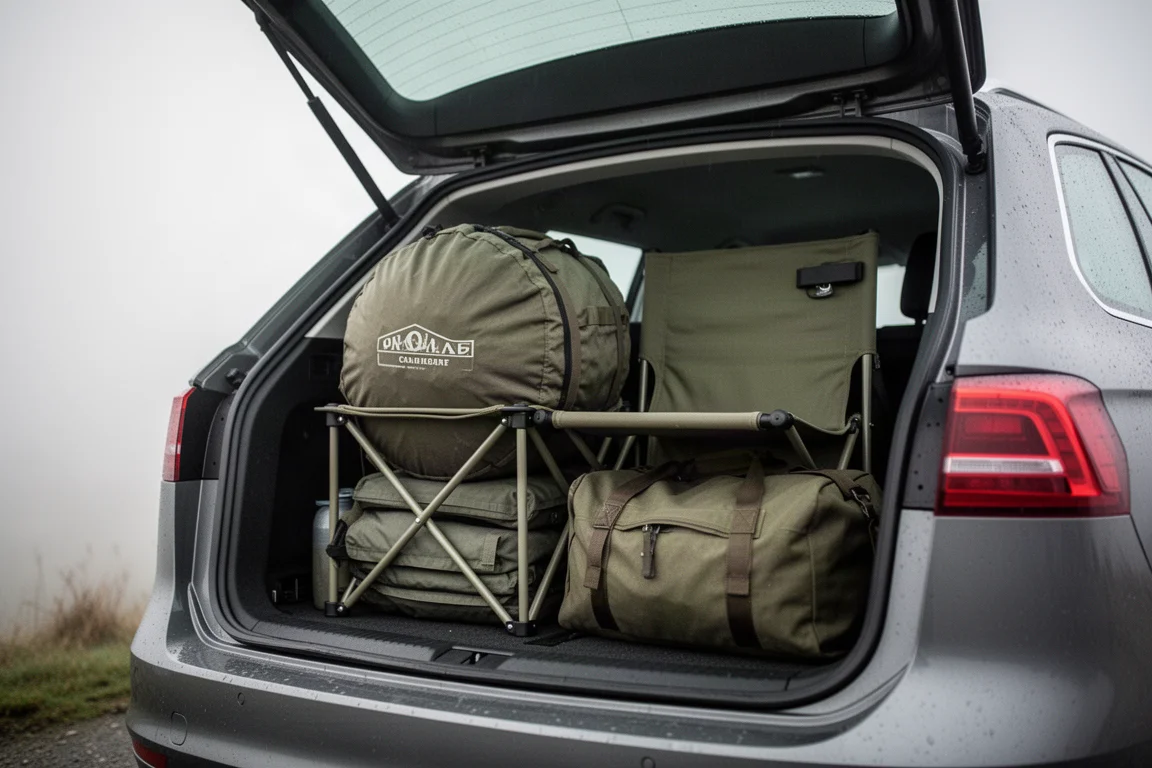
Stored, the tent measures about 30.3 inches wide and roughly 5 to 6 inches thick depending on how tightly it is compressed. It weighs about 10 pounds, which is heavy for a pop-up shelter.
The inner fabric has a strong, unpleasant odour out of the bag that resembles a bag of garbage. It is noticeable from the first night of use.
Fresh & Black is the brand’s darkening treatment, and it does limit how much light enters the tent, so a midday nap inside is genuinely dark. For most campers this adds little, since a standard tent is already dark enough to rest in and very few people sleep through the middle of the day while camping.
Decathlon describes this as a three-season tent for spring through autumn, which is difficult to reconcile with a fabric inner designed for cold-weather camping. Buyers should also note that the other Decathlon pop-up tents share the double-wall construction, so the same warm-weather limitations apply across the range.
Capacity claims deserve a reality check too. The tent is rated for three people, but the combination of the fabric inner and the sloping walls means it behaves much more like a two-person shelter with room for gear.
Fresh & Black and Seasonal Suitability
The Fresh & Black treatment is the feature Decathlon promotes most heavily, and it is the one that delivers the least for typical campers. It darkens the interior during daylight hours, which is a genuine benefit only for people who sleep in their tent during the day.
The double-wall construction points in a different direction. Most double-wall tents on the market are built for winter conditions, where trapping warmth is desirable rather than a drawback. This tent could plausibly serve as a cold-weather shelter, and that is the one scenario where the design logic starts to make sense.
Some problems would remain regardless of season. Condensation collecting on the fabric inner cannot be designed away with ventilation adjustments, because the vents have no mesh and opening them lets insects inside. Anyone considering this tent for winter use should weigh that limitation carefully, along with the awkward door and the compact interior.
Buying Advice
At around $180, this tent is priced like a considered purchase rather than an impulse buy, so the trade-offs matter. The waterproofing is real and the shelter handles wind well, which are meaningful strengths for anyone who camps in changeable weather.
The case for buying rests on a narrow set of priorities: you want a pop-up tent that stays dry, you mainly camp in cooler conditions where a fabric inner helps, and you are packing for two people rather than three. Under those conditions, the tent can make sense.
If you camp in summer heat, deal with heavy insect pressure, or need genuine sleeping space for three adults, this is not the shelter to choose. The lack of mesh, the trapped heat and moisture, the five-minute setup, and the demanding pack-down sequence all work against it. Buyers who want the convenience of a pop-up tent should also compare single-wall alternatives, which are lighter, faster to pack, and better ventilated.

For anyone with back or mobility concerns, the door design alone is a reason to look elsewhere. The raised lip requires bending and leaning every time the door is closed.
Conclusion
The Decathlon 2 Second Fresh & Black 3-Person Pop-Up Tent gets the hardest part right: it keeps rain out and stands up to wind. Almost every other decision works against the camper. The two-second claim does not match a five-minute setup, the pack-down takes strength and patience, the fabric inner traps heat and moisture, the vents have no mesh, and the interior is smaller than the three-person rating suggests.
Buy it if you want a waterproof pop-up shelter for two people in cool conditions and can live with its quirks. Skip it if you camp in warm weather, want real ventilation, or need a tent that genuinely sleeps three.
Product link
View more details for Decathlon 2 Second Fresh & Black 3-Person Pop-Up Tent
This product is mentioned in the review. Check the specifications, options, and compatibility before buying.
View more details for Decathlon 2 Second Fresh & Black 3-Person Pop-Up TentFurther reading
Related Reviews
Camping Tents
3F UL Gear Taiji Two-Person Tent Review: Field Waterproofing Results and Buying Advice
The Taiji pairs an attached fly with a removable inner, but sustained rain exposed untaped vent seams that need sealing before this shelter can be trusted.
Camping Tents
3FUL Gear Lanshan 2 Pro 4-Season Review: A Sub-$200 Single-Wall Trekking Pole Tent
An early look at the 3FUL Gear Lanshan 2 Pro 4-Season, covering its straightforward pitch, generous interior space, and the condensation and seam-sealing questions that come with any single-wall shelter.
Camping Tents
Alps Mountaineering Lynx 1-Person Tent Review: Big Value in a Small Budget Tent
A close look at the Alps Mountaineering Lynx 1-Person Tent, covering real interior dimensions, materials, setup time, ventilation limits, and who should buy it.