Camping Tents
Decathlon 2 Second Fresh & Black 3-Person Pop-Up Tent Review: Waterproof, but Full of Compromises
A genuinely waterproof pop-up tent with a double-wall design that keeps rain out and also traps heat and moisture. Here is what to weigh before buying.
Introduction
Pop-up tents trade refinement for speed. You pull one out of its bag, it springs into shape, and you get on with your trip. The Decathlon 2 Second Fresh & Black 3-Person Pop-Up Tent follows that formula, but it adds two ingredients that are unusual for this category: a double-wall construction and a 2,000 mm waterproof rating. At $180, it promises rain protection that most pop-up shelters simply cannot match.
That promise largely holds up. Through a heavy thunderstorm the interior stayed dry, and when strong wind rolled through the tent did not shift or collapse. The trouble begins once you are sealed inside. A fabric inner layer covers almost the whole interior, and it changes how the shelter behaves in warm weather in ways most campers will not enjoy.
The “2 second” part of the name is the other issue, and it deserves to be addressed early. Pitching this tent takes roughly five minutes, and the brand’s own product page notes that its designers worked to make pitching possible “in just minutes,” while the two-second wording appears on the storage bag and on the tent itself.
Who This Tent Is For
This is a shelter for two average adults who want pop-up convenience with real rain protection. It is not a comfortable three-person tent in practice. Maximum interior width is 78 inches (6 ft 4 in), but the inner fabric walls taper inward, so a realistic sleeping width is closer to 68 inches (5 ft 8 in), and the usable length from door to back is 73 inches (6 ft). Taller campers will find fabric resting against their head or feet.
The front door also asks something of the user. Because of the raised lip at the entry, closing and opening the door means leaning forward and bending around it. Anyone with back trouble, or anyone who is not steady on their feet, should look at a different design. With the door already open you can step inside and unzip from there, which removes the problem, but the first and last zip of each trip still requires that lean.
It is also worth being clear about where this tent does not belong: a hot, humid, buggy summer campsite. The design choices that make it storm-worthy work against it in those conditions.
Main Strengths: Waterproofing, Wind, and Looks
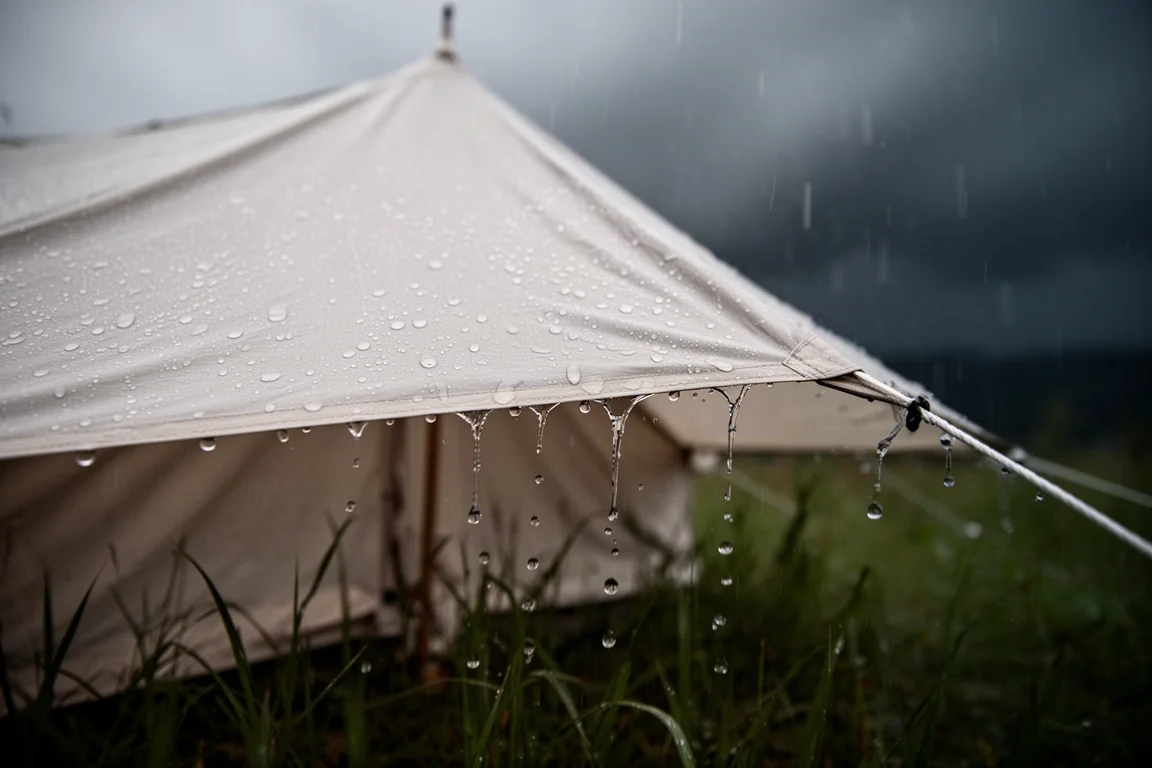
Start with what the tent does well, because the weather protection is not marketing talk. The fly, floor, and inner are all polyester, and the 2,000 mm hydrostatic rating translated into a genuinely dry interior during a knockdown thunderstorm. No water came through.
Wind performance was just as convincing. During the same storm the tent held its shape and did not budge, which is more than many pop-up shelters manage once gusts pick up. If your priority is staying dry and staying put, this tent delivers.
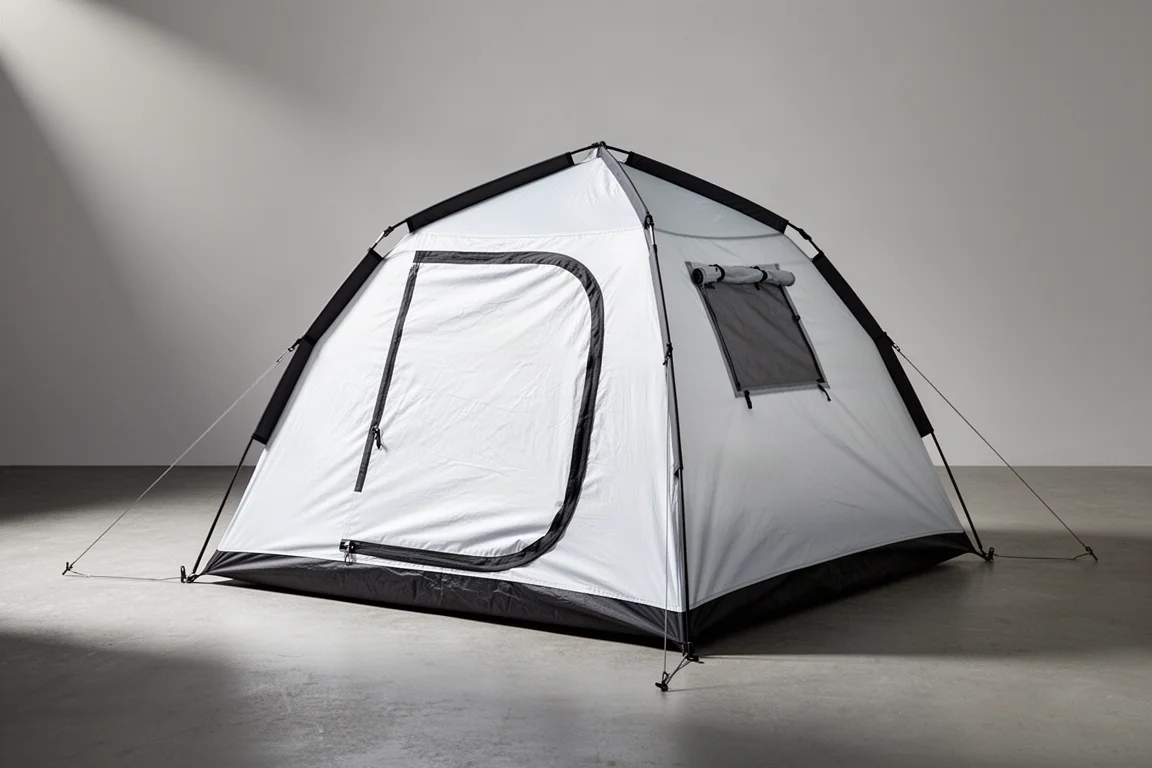
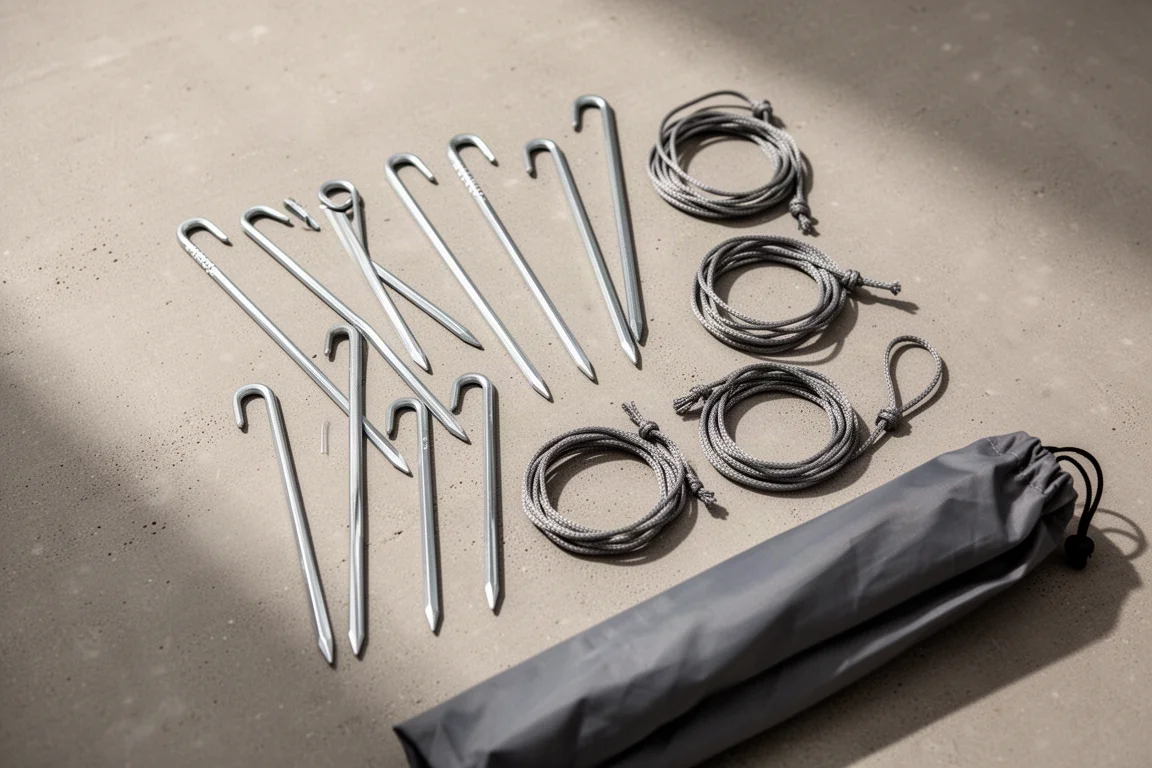
The look of the tent is another genuine plus. The white fabric with black accents reads sharp and modern on a campsite, and it stands apart from the usual bright nylon palette. The package is also reasonably complete: you get the storage bag, the tent, nine stakes, and three guy lines.
Ventilation, Interior Space, and the Fabric Inner
Here is where the design stops making sense for warm-weather camping. Roughly 95 percent of the interior is fabric. There are only two small mesh panels, one at the door and one at the back. The side panels look like mesh from a distance, but they are thin fabric.
Side zippers let you open the walls for airflow, yet there is no mesh behind them, so on a buggy night you cannot use them without inviting insects in. The same applies to the vents on both sides: they are fabric, not mesh, and almost no air moves through them. Open them and the bugs arrive.
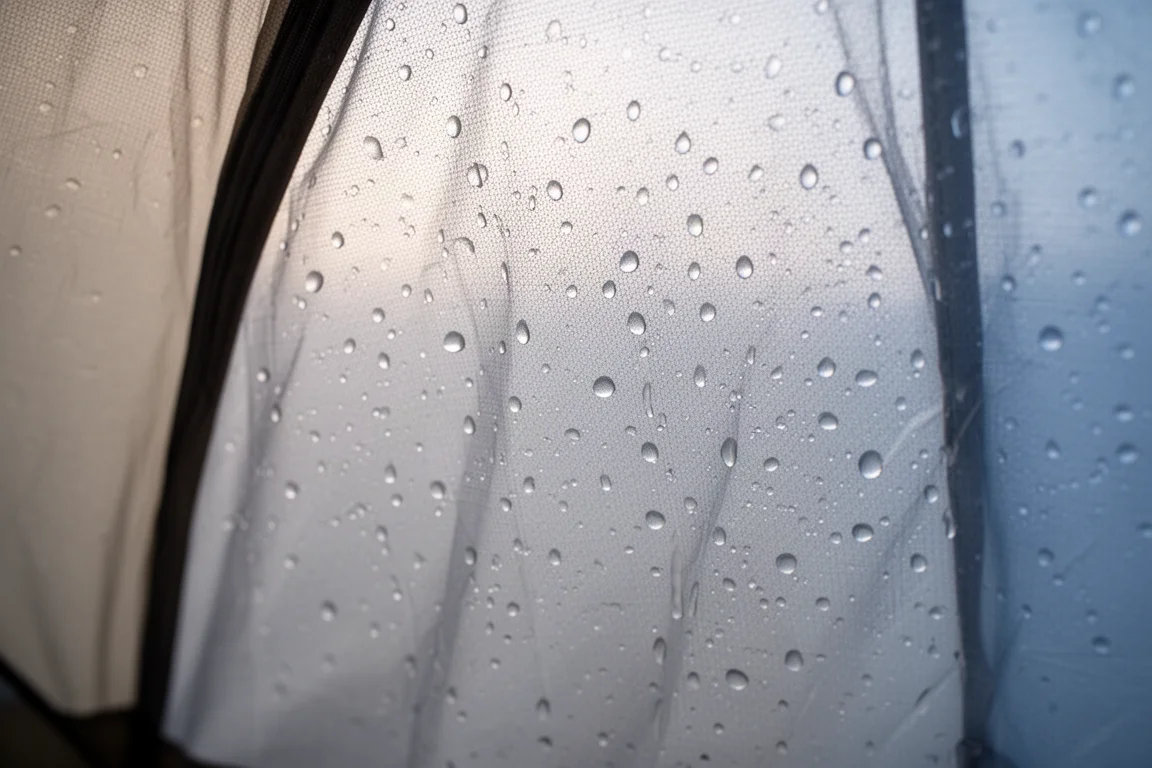
The consequences are predictable. The inner layer blocks airflow, holds heat, and traps moisture rather than letting it pass through. Condensation builds on that fabric in significant amounts, and the tent runs hot on a warm day. There is also an odour problem: the inner has a distinctly garbage-like smell that was noticeable from the very first night and had not faded by the end of the trip.
Space suffers too. The fabric inner sags and eats into the usable volume, which is why a tent that measures large from the outside feels tight from the inside.
Setup and Breakdown: What the “2 Second” Claim Really Means
Pitching is straightforward, just not fast. You pull the tent from the bag, undo the straps and buckles, let it spring open, then stake it out, tension the guy lines, and set the side vents. That sequence adds up to about five minutes, not two seconds.
The naming is the frustrating part. The brand calls this the 2 Second Fresh & Black 3-Person Pop-Up Tent, prints the claim on the storage bag, and prints it on the tent, while its own product page describes designers spending time so the tent can be pitched “in just minutes.” Two seconds and a few minutes cannot both be true, and the mismatch sets an expectation the product cannot meet.
Breaking the tent down is worse. Most pop-ups fold away in around 30 seconds. This one uses a buckle on the inside that you have to release, then a sequence of folding, snapping additional buckles together, and twisting the shelter into a figure eight before folding it once more. It is one of the most involved breakdown processes you will find on a pop-up tent, and it takes real physical strength to complete.
Things to Consider Before Buying
Packed size and weight matter as much as pitch time. Stored, the tent measures about 30.3 inches wide and roughly 5 to 6 inches thick depending on how tightly you cinch it, and it weighs around 10 lb. That is bulky and heavy for a pop-up, and it is worth checking against your car space or how far you plan to carry it.
The Fresh & Black feature, which limits how much light enters the tent, is the brand’s headline selling point here. In practice it mostly means a darker interior at midday. Most camping tents are already dark enough to rest in, and most campers are not sleeping in their tent at noon, so this is a minor benefit rather than a reason to buy.
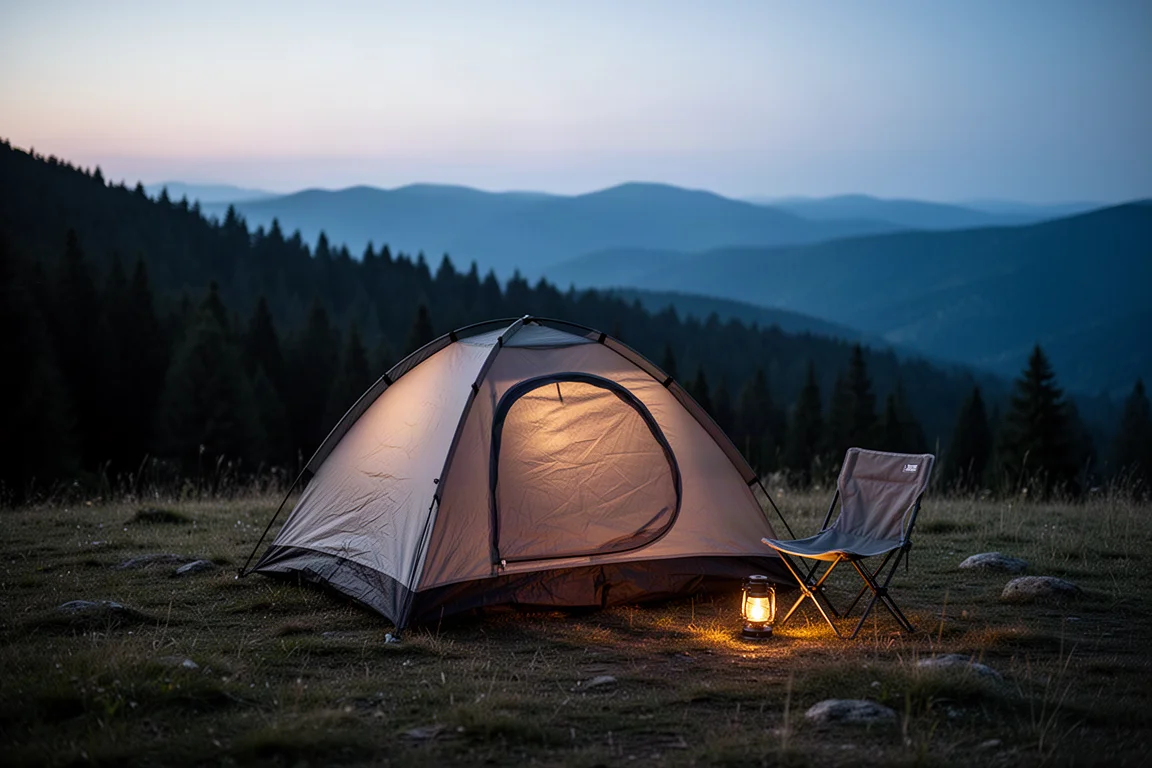
The brand markets this as a three-season tent from spring to fall. The fabric inner argues against that for summer use, because it blocks airflow and holds warmth and moisture. Double-wall construction is more typically found on cold-weather tents, which is where this design might make more sense. Note also that the other pop-up tents in the range use a double wall as well, so the same warm-weather limitations apply to the smaller and non-Fresh & Black versions.
Buying Advice
This tent makes sense for a specific camper: someone who wants a pop-up shelter for two adults, camps in cooler and wetter conditions, and values staying dry and stable over ventilation. If your trips involve rain, wind, and shoulder-season temperatures, the waterproofing and storm performance are the parts you will appreciate most.
It makes much less sense for summer camping in humid or buggy regions, for anyone who wants a true three-person tent, for tall campers, or for anyone who finds bending and leaning uncomfortable. The condensation, the trapped heat, and the mesh-free vents are not quirks you can work around with technique; they are built into the design. Buyers who need airflow above all else should look elsewhere, while buyers who want a waterproof pop-up for two and accept the trade-offs will find the core protection solid.
Conclusion
The Decathlon 2 Second Fresh & Black 3-Person Pop-Up Tent gets the hard part right. It keeps rain out, it holds up in wind, and it looks sharp on a campsite. It also carries a two-second name that the brand’s own product page contradicts, and its fabric inner turns a summer shelter into a hot, damp, condensation-prone space with vents you cannot use when insects are out.
For two adults on wet, cool trips, those compromises may be acceptable. For warm-weather camping, they are not. Weigh the weather you actually camp in before you buy, because that is what decides whether this tent works for you.
Product link
View more details for Decathlon 2 Second Fresh & Black 3-Person Pop-Up Tent
This product is mentioned in the review. Check the specifications, options, and compatibility before buying.
View more details for Decathlon 2 Second Fresh & Black 3-Person Pop-Up TentFurther reading
Related Reviews
Camping Tents
3F UL Gear Taiji Two-Person Tent Review: Field Waterproofing Results and Buying Advice
The Taiji pairs an attached fly with a removable inner, but sustained rain exposed untaped vent seams that need sealing before this shelter can be trusted.
Camping Tents
3FUL Gear Lanshan 2 Pro 4-Season Review: A Sub-$200 Single-Wall Trekking Pole Tent
An early look at the 3FUL Gear Lanshan 2 Pro 4-Season, covering its straightforward pitch, generous interior space, and the condensation and seam-sealing questions that come with any single-wall shelter.
Camping Tents
Alps Mountaineering Lynx 1-Person Tent Review: Big Value in a Small Budget Tent
A close look at the Alps Mountaineering Lynx 1-Person Tent, covering real interior dimensions, materials, setup time, ventilation limits, and who should buy it.