Tarps and Shelters
DD Hammocks x Varusteleka Erakko Tarp Review: One Small Tarp and Two Larger Alternatives
A close look at the 8.2 ft Erakko tarp, its 190T polyester build, packed size and weather limits, plus two larger tarps that cost similar money and include guy lines and stakes.
Introduction
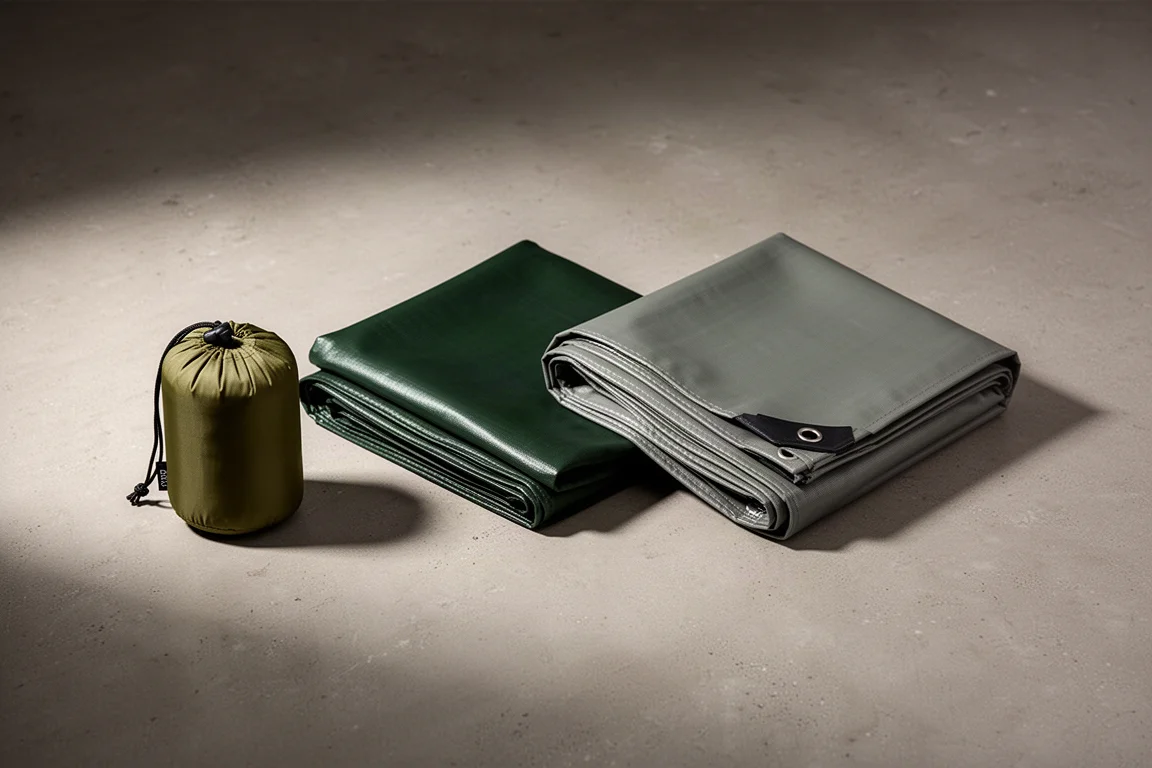
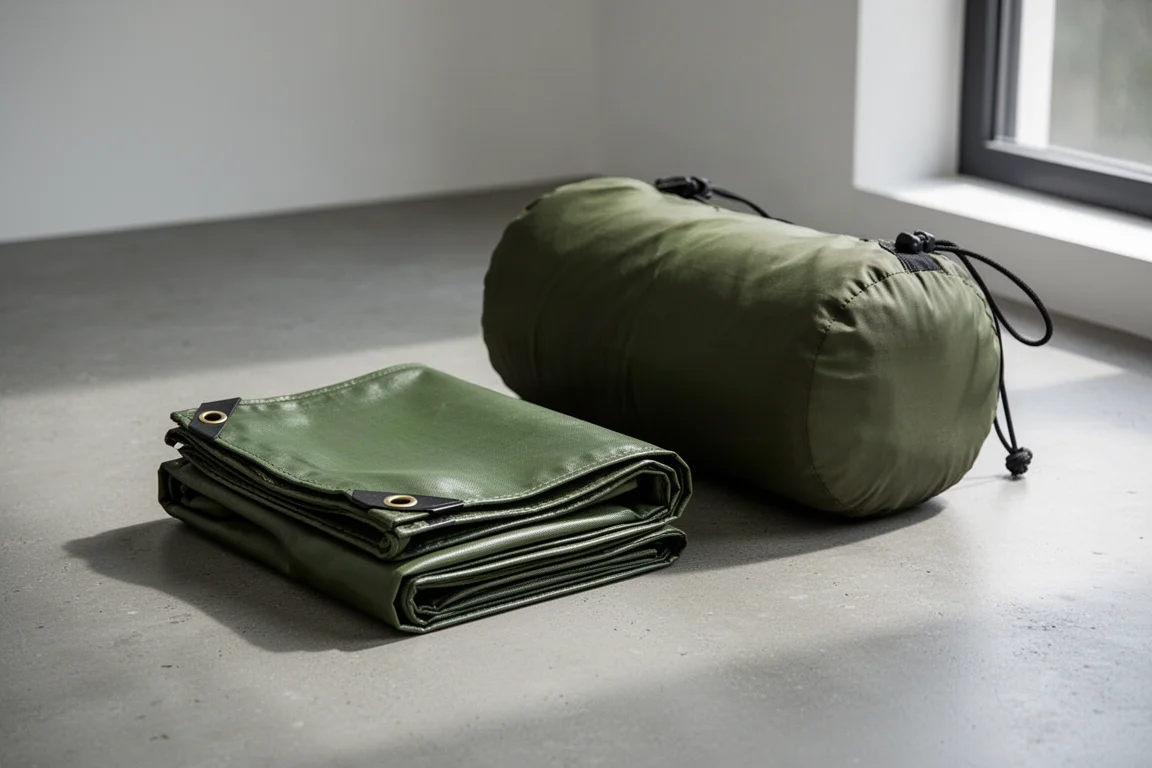
The DD Hammocks x Varusteleka Erakko Tarp is an unusual piece of shelter. It is an 8.2 ft by 8.2 ft flat tarp built for one person, and it ships with an oversized storage bag and nothing else. The name comes from the Finnish word for hermit, which fits the concept: a small, light, compact tarp for a single user who wants a minimal kit.
It is also a deliberate simplification of an existing design. The DD Hammocks 3x3m tarp measures 10 ft by 10 ft, and the Erakko trims that down with fewer tie-off points, a smaller packed size, lower weight, and no guy lines or tent stakes in the box. Whether that trade makes sense depends on where and how you sleep, so this article looks at that question alongside two larger tarps that cost similar money and arrive better equipped.
What to Look For in a Small Tarp
Size is the first number that matters, and it shapes everything else. A tarp that is too small cannot be pitched high in rain, because wind-driven water and splashback will reach underneath it. Pitch it low instead and you stay drier, but you lose the headroom and floor area that make a shelter genuinely livable.
Tie-off points are the second number. More attachment points mean more possible pitches, from an A-frame to a lean-to to a low storm configuration, and more options when the weather or the ground changes under you.
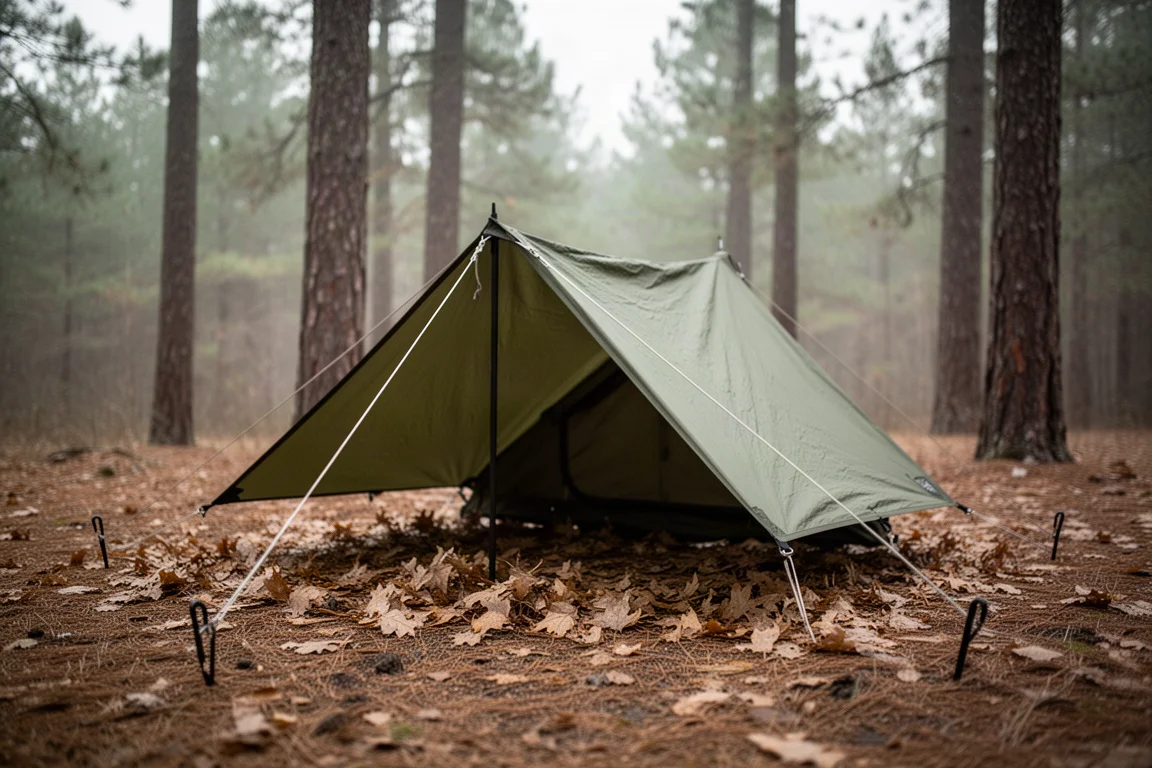
Material and coating come third. A coated polyester tarp is generally heavier and bulkier than lighter fabrics of the same size, and the coating rating indicates how much water pressure the material is designed to resist. Finally, check what actually arrives in the bag. Guy lines and stakes are small items, but sourcing and fitting them yourself adds both cost and effort.
Erakko Tarp: Size, Weight, and Materials
The Erakko measures 98.5 in by 98.5 in, which works out to 8.2 ft by 8.2 ft. Folded into its storage bag it measures about 10 in by 2 in, and the tarp plus bag weigh 1.2 lb on the scale.
The fabric is a 190T polyester treated with a polyurethane coating and rated to 3,000 mm of water resistance. There are nine tie-off points, including one in the centre of the sheet, and the tarp is priced at $60.
The reasoning behind the missing accessories is that users can carve pegs from sticks and typically replace stock guy lines with their own cordage anyway, which keeps the price lower. The counter-argument is straightforward: a stripped-down 8.2 ft tarp at $60 sits very close in price to larger tarps that include both guy lines and stakes.
Erakko Tarp: Build Quality and Weather Protection
The finish is the weakest part of the package. The fabric has two or three holes that are unrelated to the stitching, along with loose threads, and light passes straight through them. Each one is a potential leak path, and because they sit in the sheet itself rather than at a seam, they are difficult to repair neatly in the field.
The centre tie-off point uses two points of contact with a gap between them, which does not pitch as cleanly as a single central attachment would. One corner shows stitching that was run a second time, suggesting a correction during production. On the positive side, a seam is taped across the centre of the tarp and the tie-off points are reinforced with additional stitching.
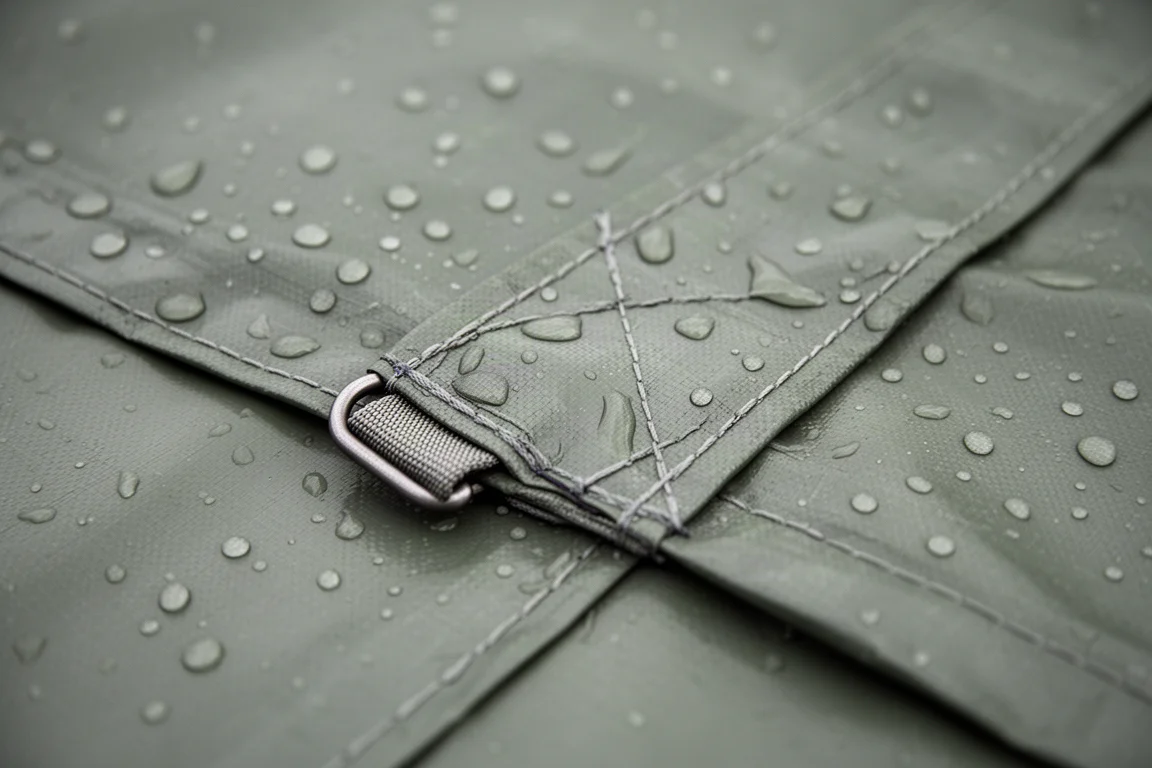
In use, an 8.2 ft tarp behaves as a short-duration shelter. It blocks wind well and will keep you out of rain or snow for a limited period, but it offers much less protection once precipitation is heavy or wind-driven. Splashback from the ground and fine mist carried through the air both find their way under a sheet this size, and pitching it low enough to stay dry leaves very little covered space.
That combination is why a tarp of this size is best treated as an emergency or fair-weather option rather than an overnight camping shelter. It can work well for a quick stop or a windbreak, but it is not the shelter to rely on when conditions turn.
DD Hammocks 3x3m Tarp: The Bigger Sibling
The 3x3m tarp from DD Hammocks is the design the Erakko is based on, and it keeps its full 10 ft by 10 ft footprint. That extra coverage translates into more usable space and more setup options, and it arrives with the accessories the Erakko leaves out: guy lines and tent stakes are both included. It also carries more tie-off points than the smaller model.
Price is the interesting part. The 3x3m tarp costs only a little more, and for buyers who want one tarp that handles real weather, the additional coverage and included hardware make it the more straightforward of the two DD options.
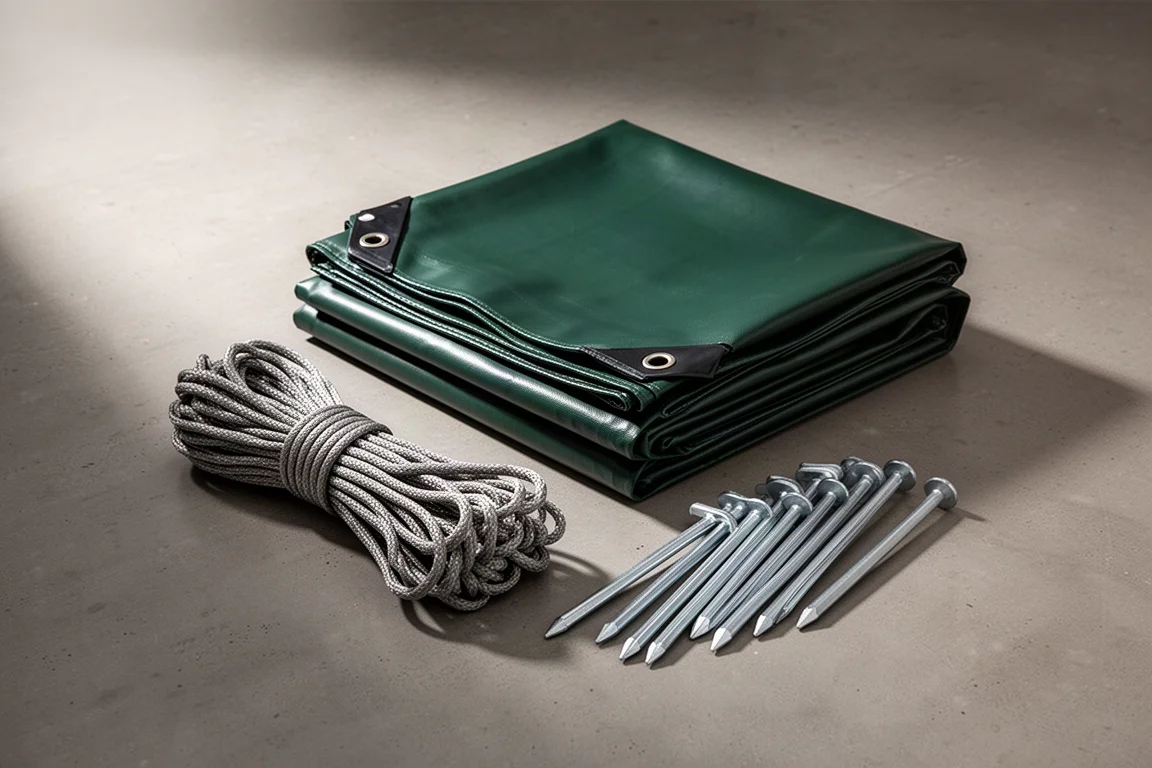
OneTigris Bulwark Tarp: A Larger Alternative
The Bulwark from OneTigris is priced at $54, which is below the Erakko. It is substantially larger, it ships with guy lines and tent stakes, and it carries a high number of tie-off points across the sheet.
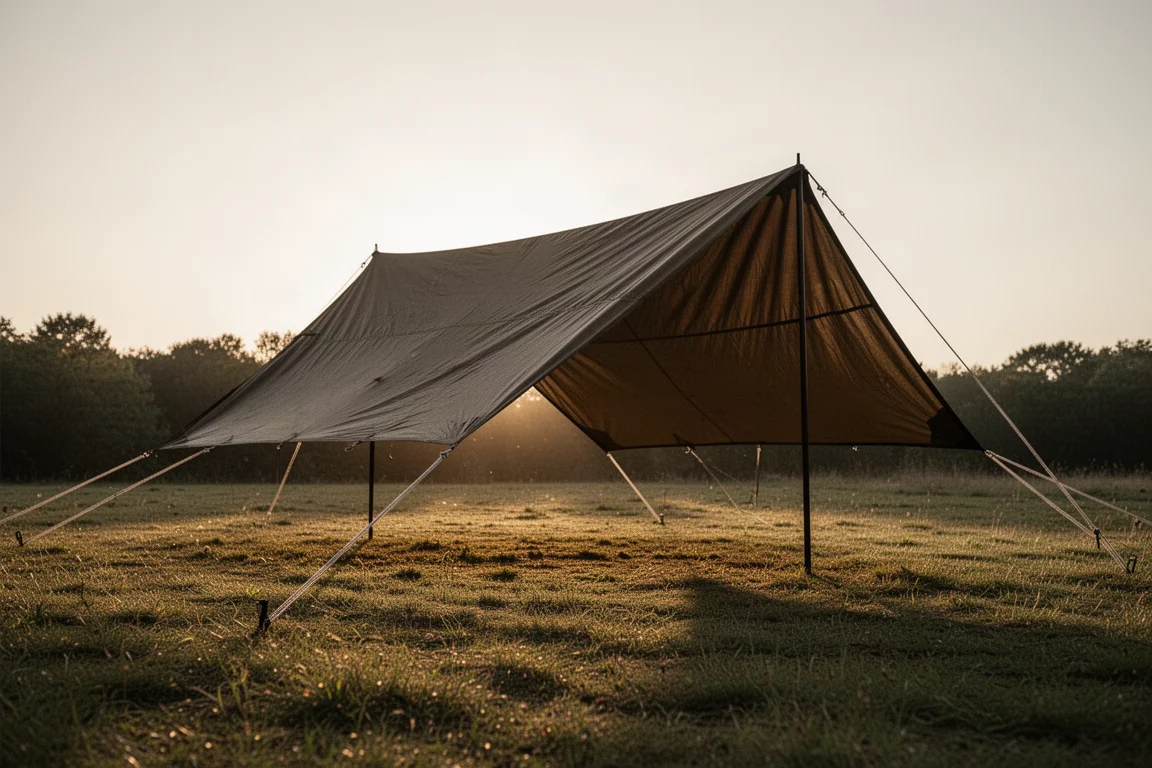
For anyone comparing on specification alone, the arithmetic is hard to argue with. Less money buys more coverage, more rigging options and a complete set of hardware. The trade-offs come down to packed size and weight, which are the areas where a bigger tarp inevitably gives ground.
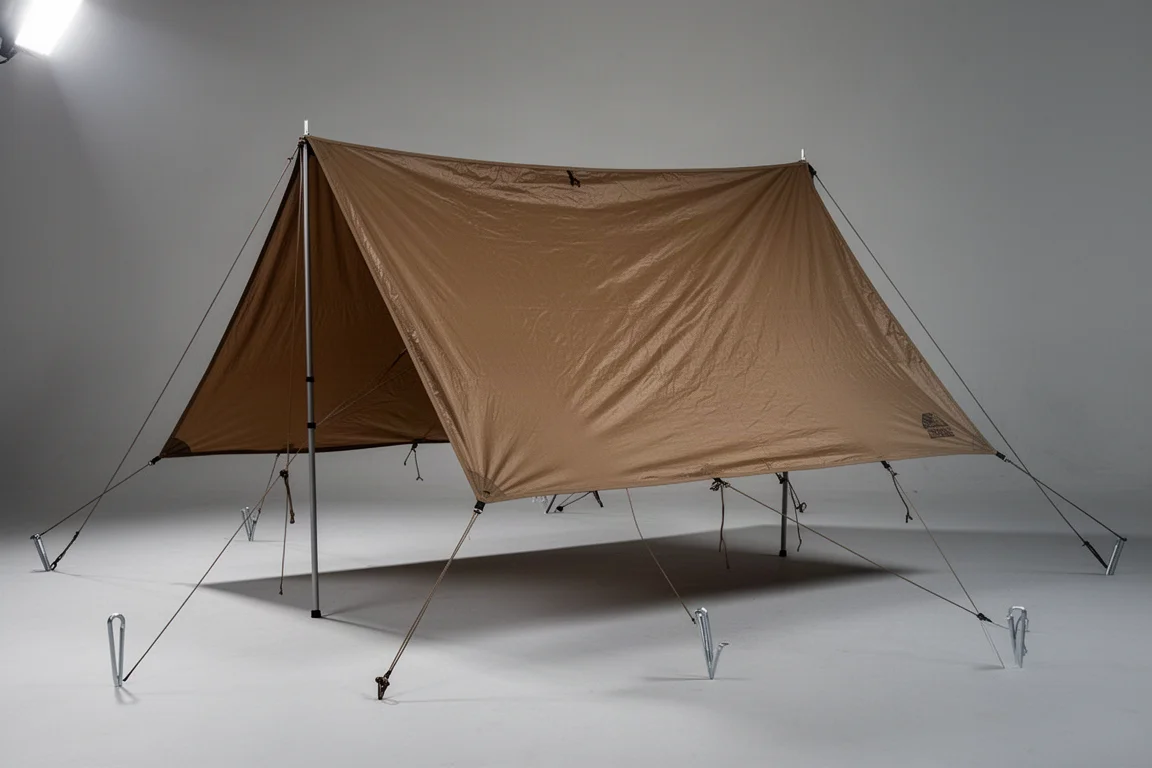
How the Three Tarps Compare
On coverage, the Erakko is the outlier. At 8.2 ft square it is the smallest of the three and the least adaptable, since fewer tie-off points and less fabric limit the number of useful pitches you can build around it.
On kit, it is also the leanest. Both alternatives include guy lines and stakes, while the Erakko expects you to supply your own. On materials, the 190T polyester and its 3,000 mm coating sit in the budget bracket, and tarps using this material class are widely available at much lower prices. Stepping up to around $90 moves you into lighter fabrics with more water resistance and more attachment points.
Where the Erakko does compete is packed size and weight. At 10 in by 2 in and 1.2 lb it is a compact bundle, and that is the honest case for it. Keep in mind that polyester is thicker and heavier than lighter fabrics, so its packed size depends on folding rather than rolling.
Buying Advice: Matching Size to Conditions
The decision here is mostly about how much shelter you actually need. If you want covered, livable space and dependable protection in a storm, 10 ft by 10 ft is a sensible minimum, and 10 ft by 13 ft gives noticeably more room and more setup options.
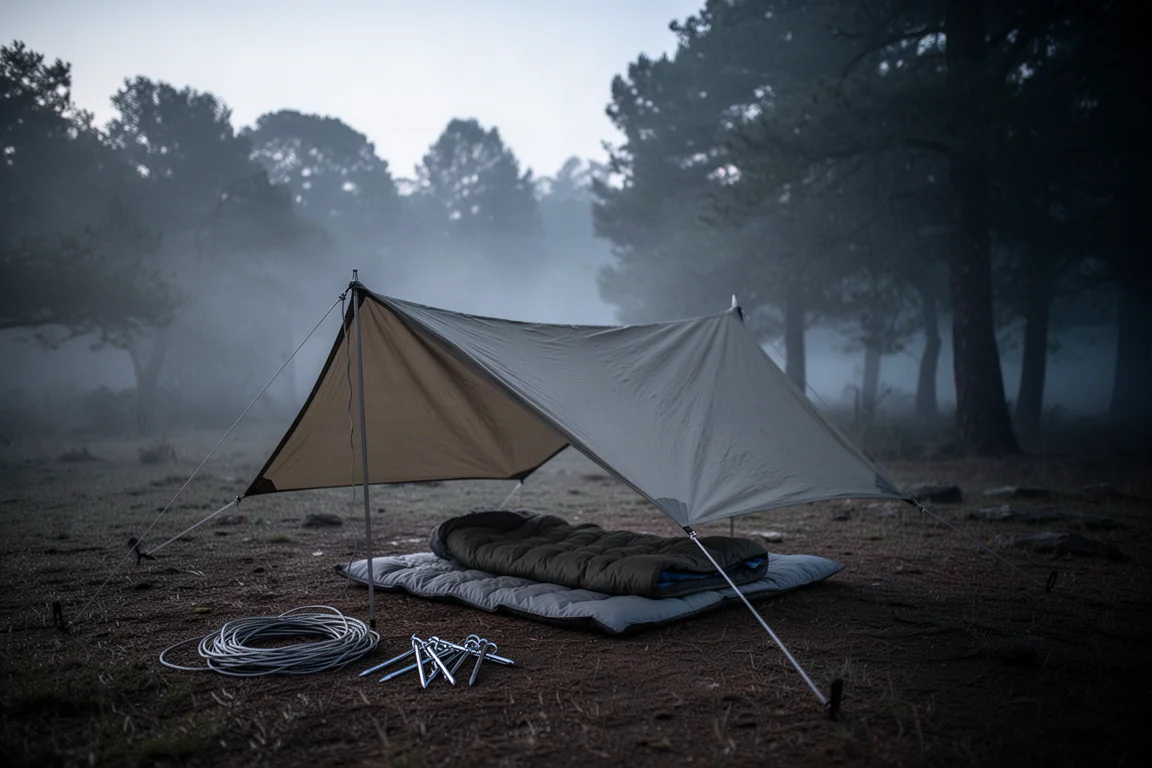
A tarp of that size also tolerates a wider range of pitches. Extra fabric keeps splashback and drifting mist further from your sleeping area, which matters more than any single feature when the weather is poor.
Whichever size you choose, plan to practise pitching it. No single guy line configuration works in every situation, so fast adjustments matter more than a perfect first setup. Guy lines of about 9 ft attached with slip knots make those changes quick, and they let you move an attachment point without untying anything.
If compact packed size and low weight are the priority, and you accept short-duration, fair-weather use, the Erakko is a coherent choice. If you want one tarp for general camping and unpredictable weather, either of the larger options is the safer buy.
Conclusion
The Erakko Tarp is an interesting idea with an awkward price. It is genuinely small and genuinely light, and its 8.2 ft square footprint suits a single user who wants a minimal emergency or fair-weather shelter. Against that, the finish shows holes in the fabric and loose threads, the centre tie-off pitches less cleanly than a single attachment point would, and the $60 price does not include guy lines or stakes.
Buyers who want a tarp for real camping conditions have better options at similar money. The DD Hammocks 3x3m tarp adds coverage, tie-off points and a full set of hardware for a little more, and the OneTigris Bulwark offers more size and a complete kit for less. Both make more sense for anyone who needs shelter that works when the weather turns.
Further reading
Related Reviews

Backpacking Gear
Building a 10 lb Base Weight: An Ultralight Backpacking Gear List
A practical walkthrough of the ultralight pieces behind a 10 lb base weight, from a 765 g pack and a roomy one-person tent to a full camp chair and a dependable water filter.

Road Bikes
10 New Road Bikes Worth Watching: Aero, Titanium, Steel and Endurance Standouts
A practical roundup of 10 new road bikes, from aero flagships chasing single-watt gains to titanium, steel and endurance platforms built for real roads.
Bikepacking Gear
11 Bikepacking Essentials for Long-Distance Cycling
Eleven bikepacking essentials for long-distance cycling, from a steel gravel frame and a two-person tent to helmet lights, packable gloves, and a frame bag that puts weight in the right place.