Bookshelf Speakers
Dayton Opal 1 Review: A Compact Bookshelf Speaker With Real Character
The Dayton Opal 1 pairs surprising bass weight and a tightly focused centre image with low sensitivity and a mid-range scoop that reward careful setup.
Introduction
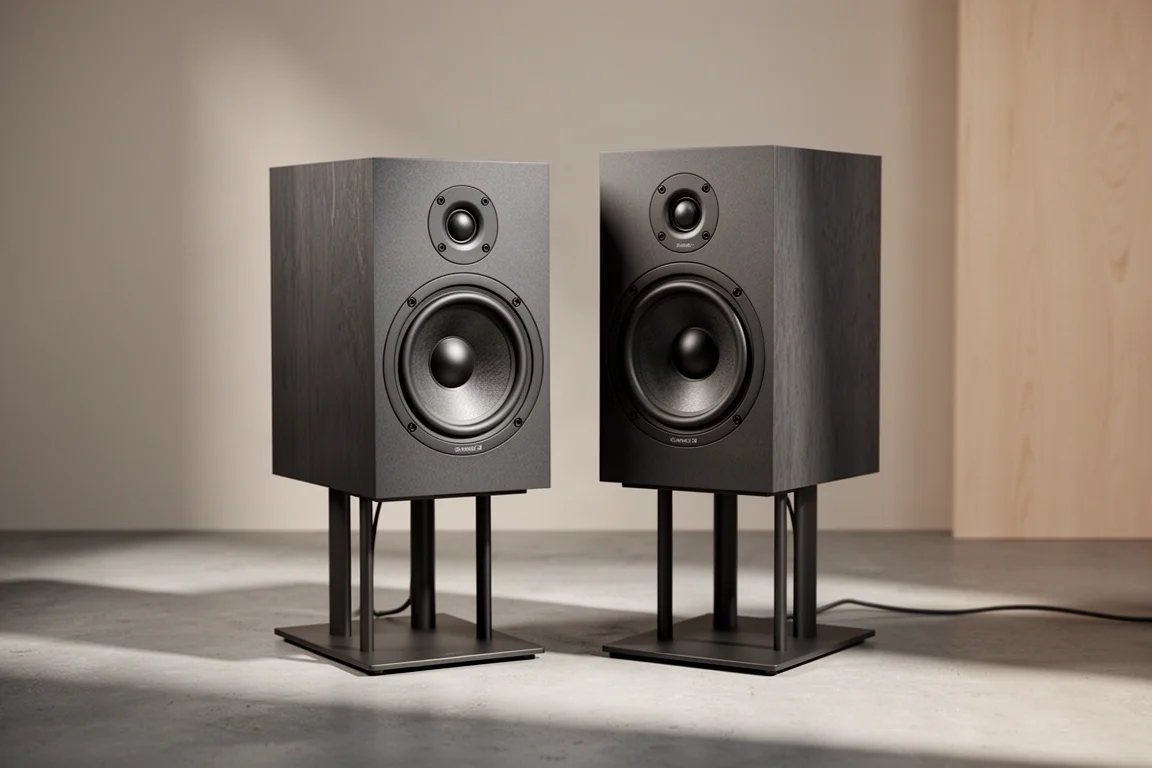
The Dayton Opal 1 is a compact passive bookshelf speaker built around a midwoofer of roughly 5.25 inches, a 1-inch dome tweeter, and a pair of passive radiators mounted on the back of the cabinet. Retail pricing sits at about $800 per pair, which places it in a busy part of the market where cabinet size, driver quality, and low-frequency behaviour all have to earn their keep.
Measured behaviour is tidy for the size. The response stays within roughly plus or minus 3 dB across most of its range, which works out to about a 6 dB window overall. The low end reaches an F3 of 55 Hz, with a calculated F10 of 30 Hz. A dip of almost 3 dB runs through the mid-range, and that dip shapes much of what you actually hear.
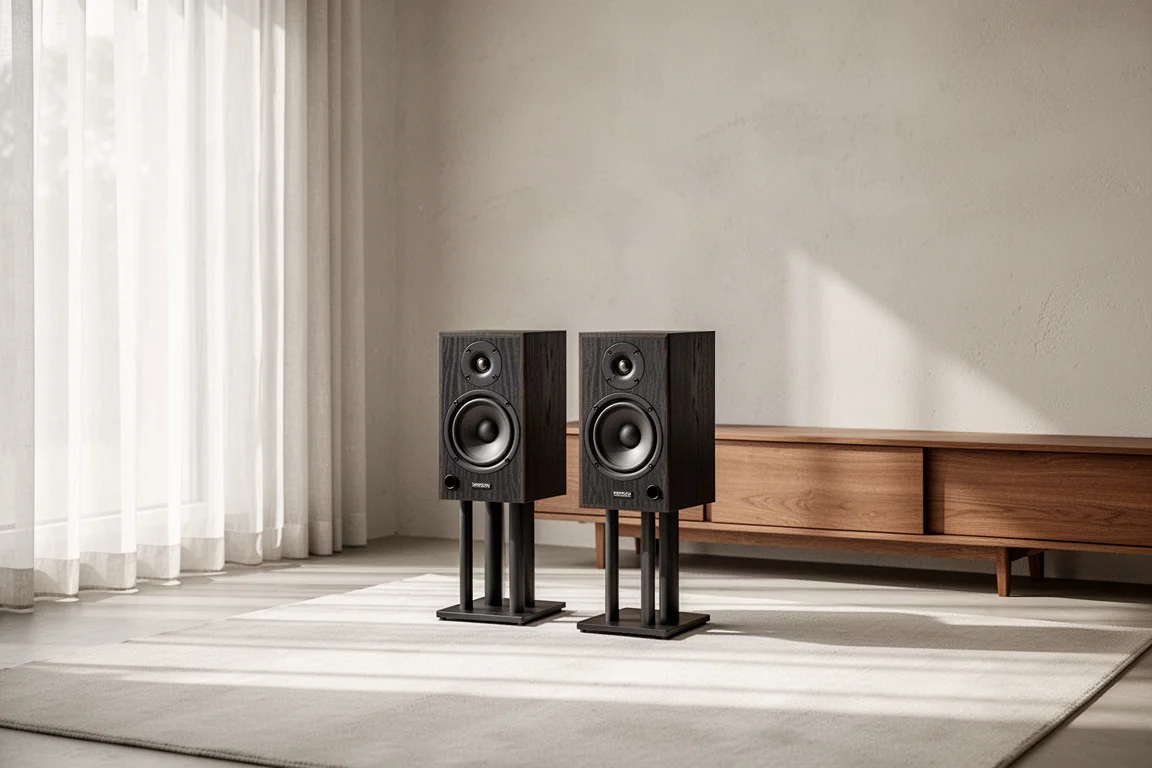
What makes the Opal 1 interesting is how deliberately its voicing interacts with the room and with the listener’s position. It rewards careful setup far more than raw amplifier power alone, and the trade-offs it makes are audible rather than academic.
Who the Dayton Opal 1 Is For
This speaker makes the most sense for listeners in a small to medium room who can place a pair of compact cabinets roughly one to two feet from the wall behind them. That is the placement the design was intended for, and the low end includes an extended bass shelf that supports closer-to-wall positioning without turning boomy.
It also suits listeners who already own a high-current, high-power amplifier. With a claimed sensitivity of 78 dB and a measured average closer to 75.7 dB, the Opal 1 asks for a lot of power before it reaches typical listening levels.
Finally, it is a strong match for anyone who values a tightly focused centre image over a wide, ambient presentation. Centred vocals lock into the middle of the stage in a way that is immediately noticeable.
Main Strengths
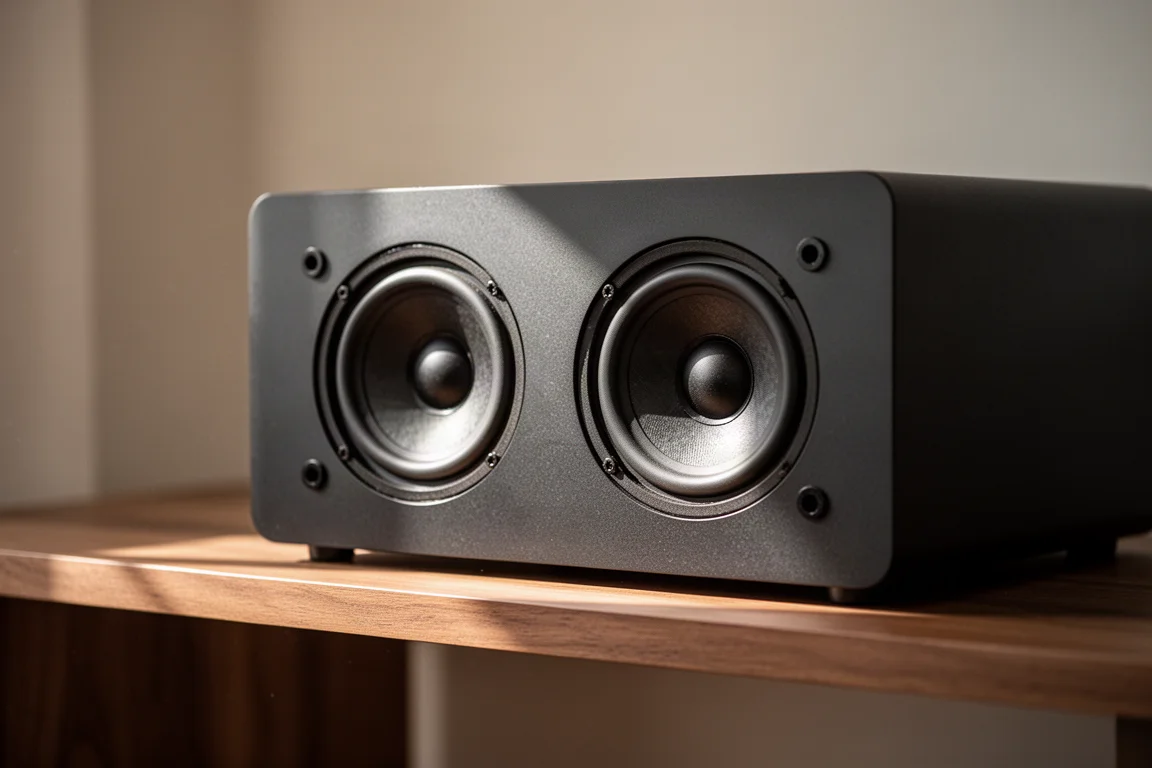
Low-frequency output is the first thing that stands out. The two rear passive radiators let a small cabinet produce genuinely useful bass, and a modest rise around 100 Hz gives kick drums and bass lines a punchy, mid-bass-forward character rather than a deep, distant one.
The centre image is the second strength. With the mid-range dip left as designed, a centred vocalist sits firmly between the two speakers and the stage stays disciplined. Horizontal radiation measures about plus or minus 60 degrees, which gives the presentation a reasonable sense of width without smearing the middle.
Measured harmonic distortion is good for a cabinet with a 5.25-inch midwoofer, and the speaker itself is a nice-looking object that fits comfortably into a living room.
Things to Consider Before Buying
Sensitivity is the biggest practical constraint. A modest integrated amplifier may struggle. Driven from about 10 feet away, output stayed in the mid-70 dB range, well below the 80 to 85 dB that many listeners prefer for everyday listening.
The voicing has three notable features. There is a scoop through the mid-range, roughly 200 Hz to 2 kHz, which strips away some fullness. There is a rise around 1 kHz that can make vocals sound forward and slightly aggressive. And there is a diffraction-related dip between roughly 2 kHz and 5 kHz, about an octave wide, which is difficult to correct with EQ because the reflected sound rises in the same region.
Treble rolls off above about 14 kHz on axis and drops away sooner when the speakers are aimed away from the listener. Toe-in beyond about 10 degrees costs air and percussive snap on cymbals and hi-hats. The vertical listening window is about plus or minus 20 degrees, so ear height relative to the tweeter matters.
Dynamic range is good across roughly 20 dB, but compression becomes noticeable above about 96 dB, and at 102 dB at 1 meter the lower mid-bass and mid-range output capability starts to fall away.
Sound Character and Room Placement
The Opal 1 is best understood as a speaker with a strong point of view. Left uncorrected, the mid-range scoop produces a focused but lean centre image. Add EQ to fill that region in and fullness returns, but the vocalist spreads out and the image becomes noticeably more diffuse.
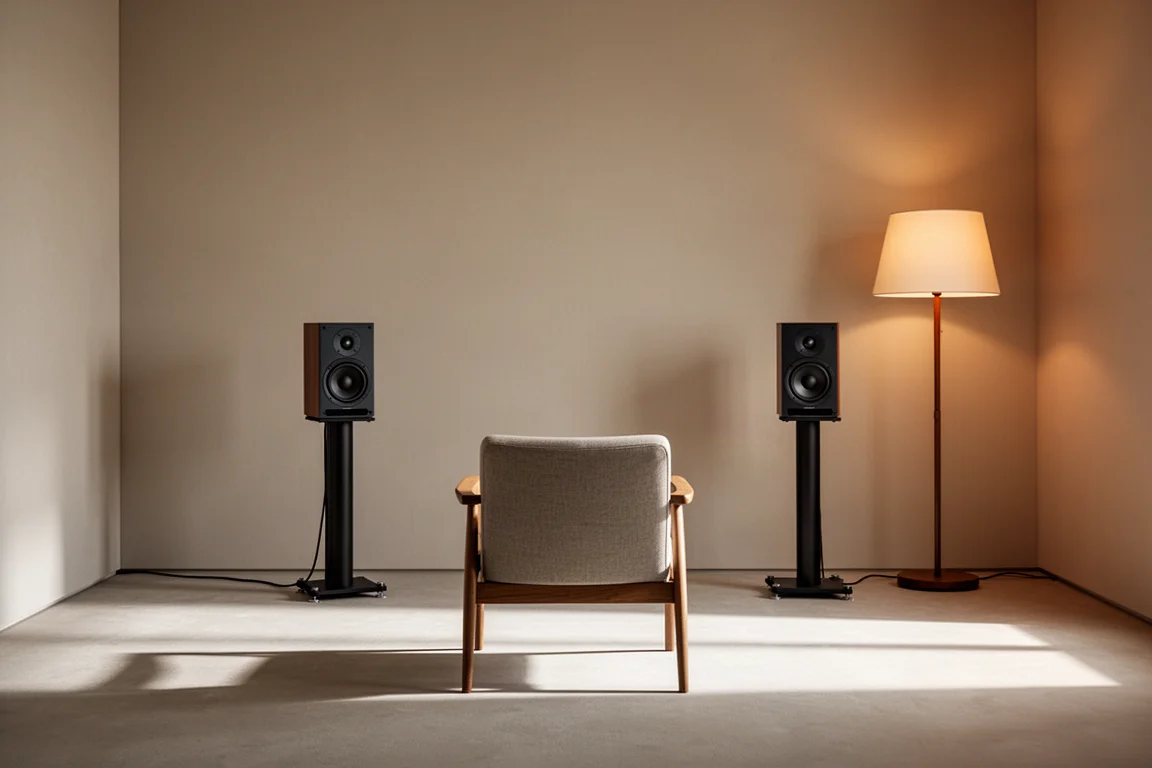
Placement does a lot of the work. Moving the cabinets to the recommended one to two feet from the rear wall made the character less pronounced without removing it entirely. Aiming the speakers at the listening position, or no more than about 10 degrees off axis, keeps the top end intact.
Equalisation in the 800 Hz to 2 kHz region can pull back the forwardness around 1 kHz if it bothers you. The 2 kHz to 5 kHz area is the one place where correction is not really viable.
Measurements and Amplifier Demands
The speaker holds within about plus or minus 3 dB across most of its range, with the mid-range dip accounting for most of the deviation. It is linear enough to respond well to careful EQ, and the data shows no significant mid-range resonances that would resist correction.
Power is the limiting factor. With a smaller amplifier the Opal 1 ran out of output well before it ran out of composure. Moving to a pair of monoblock amplifiers fed from a separate receiver produced adequate levels and allowed the bass character to be assessed properly.
Multi-tone distortion rises sharply somewhere between about 87 dB and 96 dB at 1 meter, which is the practical ceiling for clean playback. Crossing over to a subwoofer at around 80 Hz reduces mid-range distortion, although high-frequency distortion remains.
Buying Advice
Buy the Opal 1 if you want a compact speaker with real low-frequency weight, a disciplined centre image, and a character you are willing to tune. Plan for an amplifier with genuine power reserves, because low sensitivity is the one specification that cannot be worked around with placement or EQ.
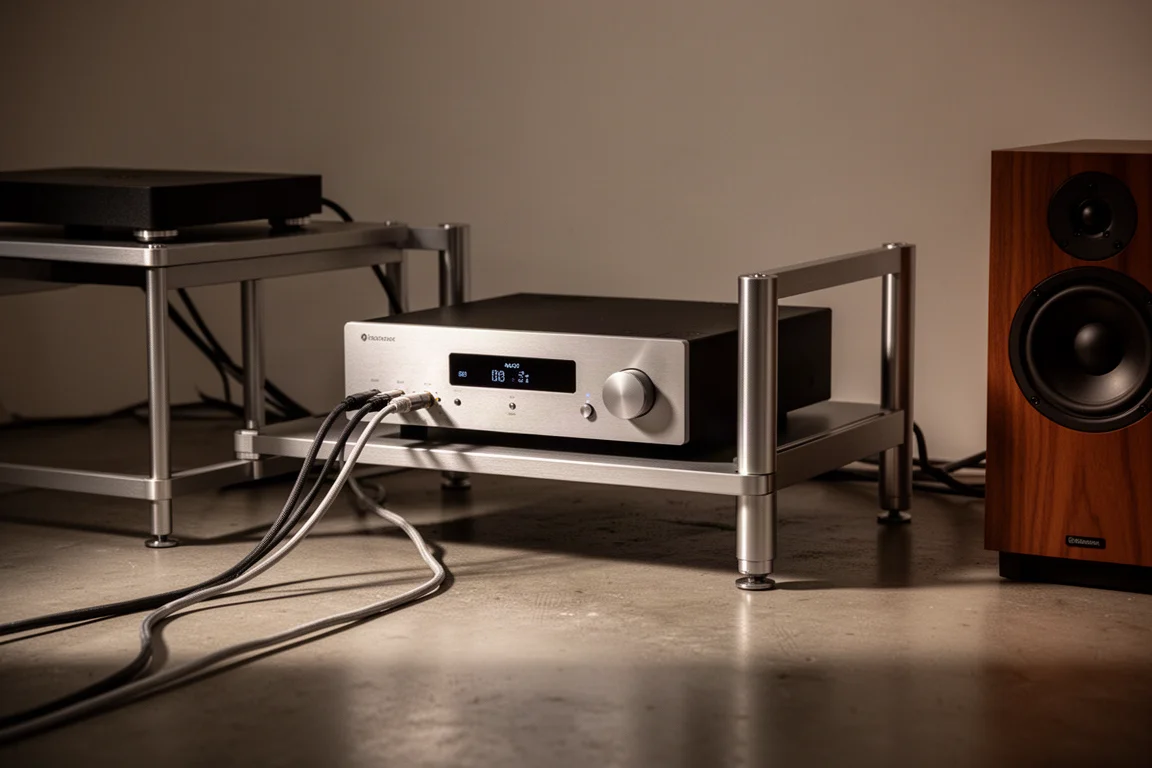
If your amplifier is modest, or if you listen at high levels in a large room, a subwoofer crossed around 80 Hz is worth budgeting for. It lowers the demand on the midwoofer and reduces distortion through the mid-range.
Setup is not optional here. Keep the speakers one to two feet from the wall behind them, aim them at your listening position with no more than about 10 degrees of toe-in, and sit with your ears close to tweeter height.
Conclusion
The Dayton Opal 1 is a distinctive compact bookshelf speaker at about $800 per pair. It delivers surprising bass weight for its size, a focused centre image, and a voicing that responds well to thoughtful placement and a little equalisation. Its low sensitivity, its mid-range scoop, and its diffraction dip in the 2 kHz to 5 kHz region are real considerations, and they will matter more to some listeners than others. Paired with a capable amplifier and set up with care, it is a speaker that rewards the effort.
Product link
View more details for Dayton Opal 1
This product is mentioned in the review. Check the specifications, options, and compatibility before buying.
View more details for Dayton Opal 1Further reading
Related Reviews
Bookshelf Speakers
Acoustic Energy A100 Mark II Review: A Compact Standmount With an Expansive Soundstage
The Acoustic Energy A100 Mark II brings clarity, natural tonality and a wide soundstage to an entry-level standmount, with a few setup details worth knowing first.
Bookshelf Speakers
Acoustic Energy AE-100 Mark II Review: Compact Bookshelf Speakers With Standout Imaging
A compact British two-way bookshelf speaker with deep, layered imaging, fast bass, and a slight treble lift to weigh against a crowded $500 field.
Bookshelf Speakers
Acoustic Energy AE100 MK2 Review: Measured Performance and Four Alternatives
A close look at the Acoustic Energy AE100 MK2 bookshelf speaker, what its measured performance reveals, and four alternatives with different trade-offs.