Astronomy
Daystar Quark Chromosphere vs Solar Spectrum 0.3 Angstrom: Solid Etalon H-Alpha Filters Compared
Two solid mica hydrogen alpha etalons for solar viewing: an affordable grab-and-go entry and a precision instrument. Here is how they differ and who each one suits.
Introduction
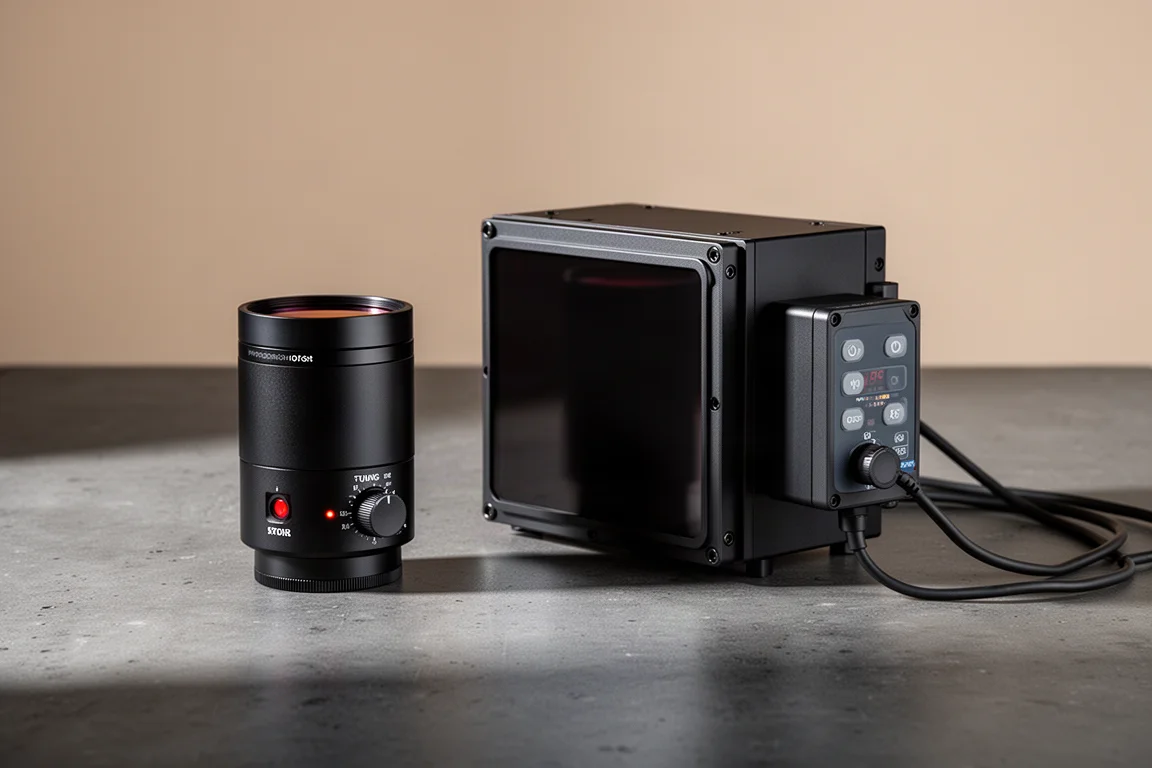
Solid mica etalon filters have opened hydrogen alpha solar observing to owners of ordinary refractors, and two names dominate that space: Daystar and Solar Spectrum. The Daystar Quark Chromosphere is the affordable grab-and-go option, while the Solar Spectrum 0.3 Angstrom Solid Etalon is engineered for stability, precision, and uniformity.
This comparison looks at thermal behaviour, tuning speed, bandpass quality, build differences, and who each system actually suits. The short version: the Quark is a reasonable low-cost entry with documented unit-to-unit variability, while the Solar Spectrum costs more, needs extra hardware, and delivers consistently brighter, sharper images.
Why Hydrogen Alpha Solar Viewing Is Different
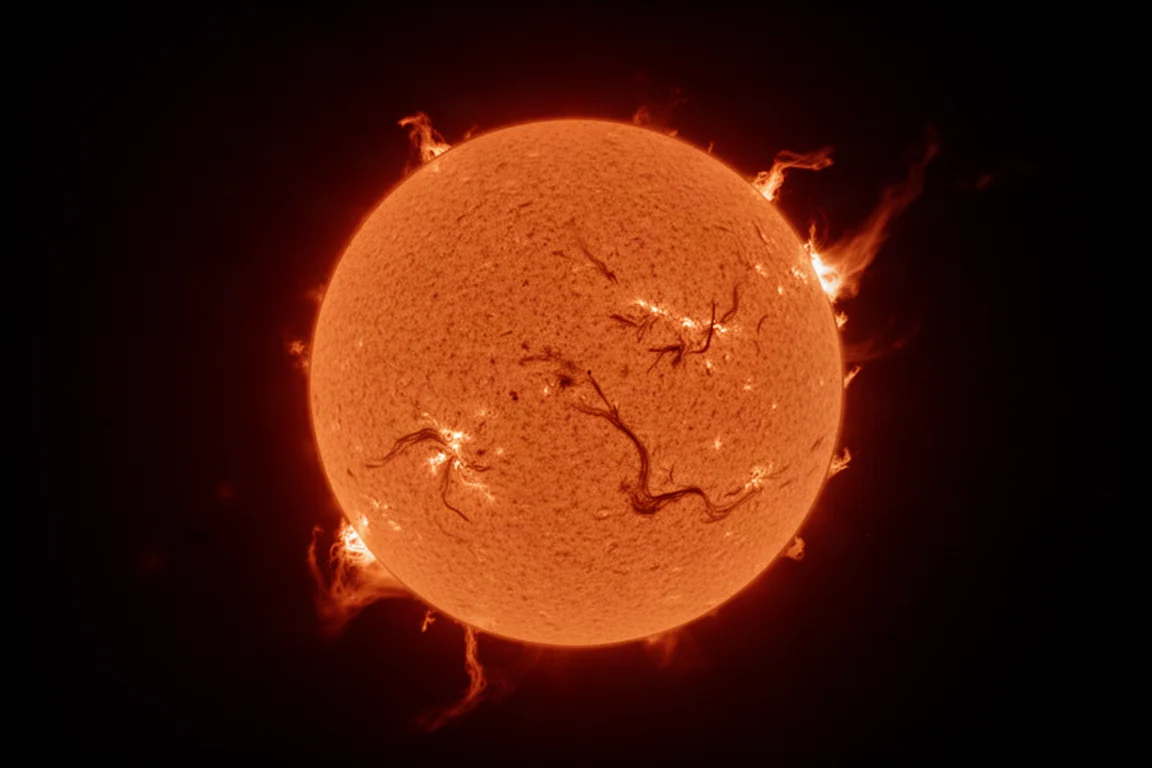
The simplest way to observe the sun is broadband, using a full aperture filter or a Herschel wedge on a refractor. That shows sunspots, granulation, and faculae at relatively low cost. Narrowband observing is different: most people choose the hydrogen alpha wavelength of 656.28 nanometers, which reveals filaments, prominences, flares, spicules, and active regions.
To isolate that wavelength you need an etalon, and there are several ways to build one. Tilt-tuned and pressure-tuned etalons are typically integrated into dedicated solar telescopes from Lunt and Coronado. Solid Fabry-Perot etalons, made with mica, are designed instead to work with an existing refractor, and properly made units can reach bandpasses as narrow as 0.3 angstroms, ideal for high-resolution hydrogen alpha work. Spectroheliographs can also produce spectacular multi-wavelength images, but they cannot be used visually, so they sit outside this comparison.
Why Mica Matters in Solid Etalons
Mica is the material of choice for solid hydrogen alpha etalons for good reason. It offers ultra-flat natural cleavage planes, excellent stability for thermal tuning, the right refractive index to enable sub-angstrom spacing, durability under repeated heating, and high finesse with moderate birefringence. No other material checks all of these boxes.
The catch is that mica varies in translucency, flatness, uniformity, and inclusions, and it is difficult to cleave consistently. Solar Spectrum selects extremely light, transparent, highly uniform mica and spectroscopically tests it. Daystar publicly states that it sorts mica into bins such as SE grade and PE grade, which feed different product lines.
Bandpass width, described by FWHM (full width at half maximum), is the key spec here. It measures the width of the transmission curve at 50% of maximum height. A smaller FWHM means a narrower bandpass and higher contrast; a larger one leaks more continuum light and reduces detail. That distinction matters a great deal when comparing these two systems.
The Daystar Quark Chromosphere
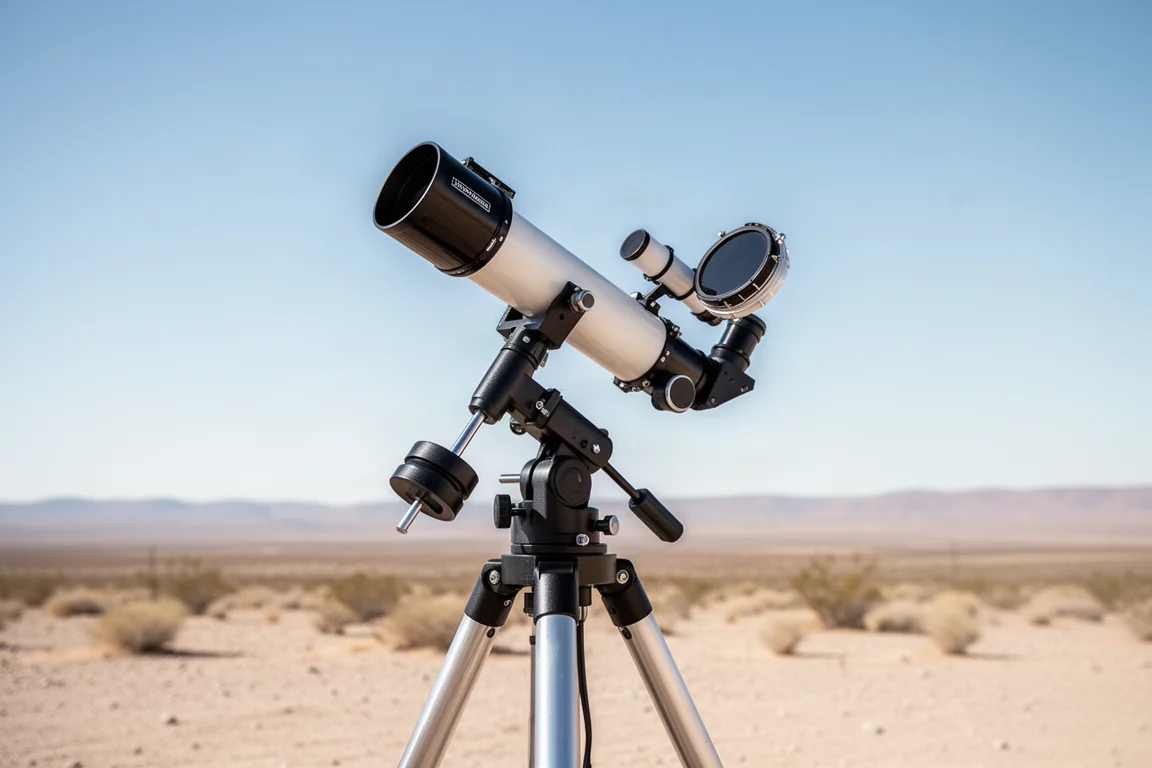
The Quark comes in two models, prominence and chromosphere. The prominence model has a wider bandpass supposedly optimized for prominences, while the chromosphere model uses a narrower bandpass for surface detail. In practice, and per most online reports, the chromosphere model does a fine job on prominences too.
The Quark includes an etalon with a strip heater, a soft-coated blocking filter, a built-in 4.3x telecentric, a tuning knob, and an LED status light. It is portable, lightweight, and easy to use, making it a low-cost entry into high-resolution hydrogen alpha if you already own a small refractor. Many owners are very satisfied, and a well-sorted unit can produce outstanding photos, especially when double stacked with a tilt etalon.
It is worth noting that a complete 50 mm hydrogen alpha telescope from Lunt can be bought for less money, and that the warranty excludes the blocking filter and trimmer, with no performance guarantee. Buyer awareness is recommended.
The Solar Spectrum 0.3 Angstrom Solid Etalon
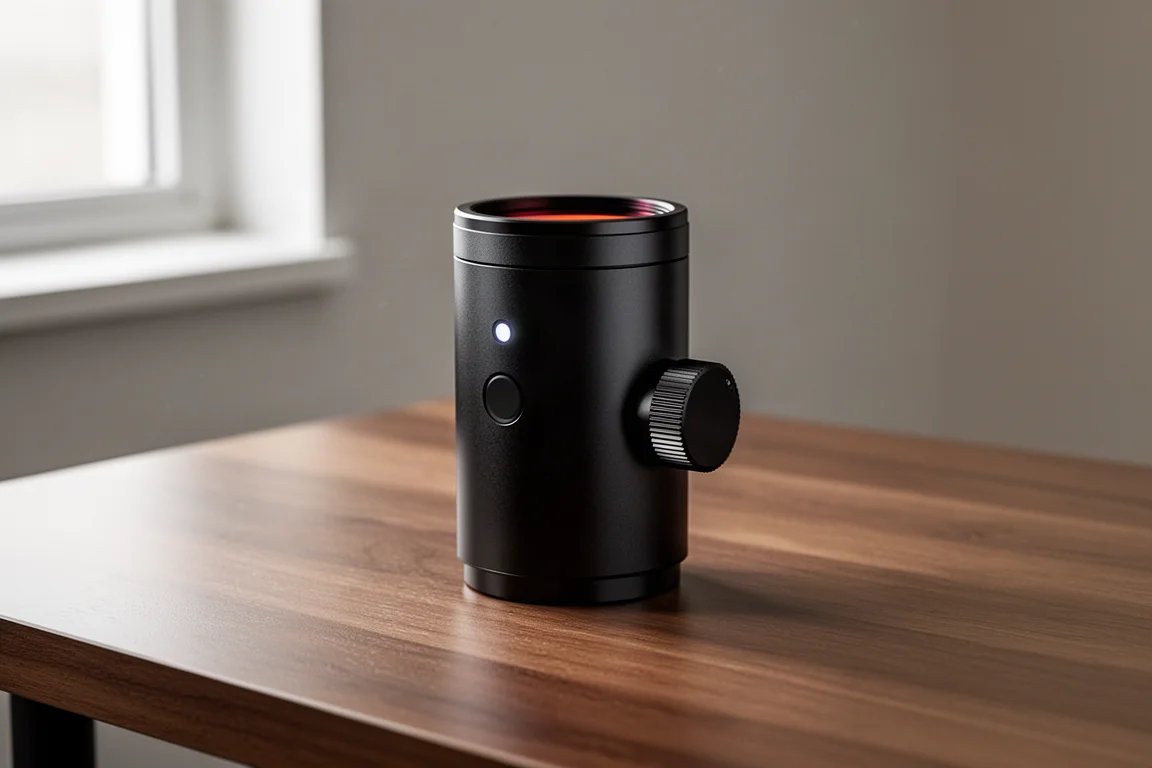
The Solar Spectrum etalon is built for stability, precision, and uniformity. It includes a TEC controlled etalon, a hard-coated blocker, and a controller box, but requires an external telecentric, which adds to the cost and bulk.
Every etalon is spectrometer tested and visually tested with a telescope on the sun before shipping. The bandpass is available in 0.65, 0.5, or 0.3 angstroms with explicit specs supplied, which contrasts sharply with the Quark’s unspecified and unit-dependent figure. The narrower bandpass yields much higher contrast, and images are noticeably brighter thanks to the hard-coated blocker and higher transmission throughput.
This is the unit that serious solar enthusiasts and researchers gravitate toward, and it is the kind of system people settle on for high-resolution solar imaging once consistency matters more than portability.
Thermal Control: Heat-Only vs a True TEC Oven
Thermal control is where these two systems diverge most clearly. The Quark is heat-only, using a strip heater that takes about 10 to 12 minutes to come on band. It cannot cool, and when the telescope warms the etalon it can drift off band because temperature is not regulated. Retuning even 0.1 angstroms requires another multi-minute wait. In very cold conditions it may never come on band, and in hot climates long sessions can be difficult: the manual itself states that if the LED has not turned green after 20 minutes of settling, the ambient temperature may be too hot or too cold for the Quark to regulate.
The Solar Spectrum overcomes this with a thermoelectric controlled oven. The TEC system provides active thermal regulation, heating or cooling as required, managed by a dedicated controller that holds the oven set point to within 0.1 degrees C. It comes on band in about a minute, is immune to tube heating and ambient temperature shifts, and is ideal for long time lapses and mosaics. It has been used in 110 degree Fahrenheit summers and below-freezing conditions at 7,500 ft with zero drift. Heat-only systems, by contrast, can show cyclic drift over time, which is why Quark time lapses can slowly lose contrast unless frequently checked.
Tuning speed follows the same pattern. Pressure and tilt etalons tune instantly, the Solar Spectrum needs about a minute, and the Quark needs 10 to 12 minutes initially plus several minutes to settle after any dial change. For prominences, active regions, and mosaic work, that difference adds up quickly.
Bandpass Quality and Real-World Measurements
The Quark Chromosphere’s FWHM is officially unspecified; Daystar says it should be typically 0.45 angstroms, but real-world measurements show it is unit dependent and often well over one angstrom. Public measurement data from solar expert Christian Valadrich, editor of the book Solar Astronomy, is telling: of eight Quark units tested, two met spec and six did not. A professional grade unit that should have measured under 0.5 angstroms measured 0.95, and one standard SE unit measured 2.1 angstroms, over four times out of spec. The average of six SE grade Quarks was 1.02 angstroms, twice the 0.5 angstrom expectation.
Daystar’s SE grade tolerance is specified as within plus or minus 0.5 angstroms of the full aperture average, but the full aperture average itself is not specified and may not be perfectly centred on 656.28 nanometers. An SE grade etalon can therefore be slightly off band overall and still meet spec. This is not a manufacturing defect; it is simply how SE grade is defined.
Build Differences and Blocking Filters
The Quark uses a soft-coated two-cavity filter with about 45% peak transmission, a sinusoidal profile, more continuum leakage, sensitivity to humidity and aging, a typical lifespan of 5 to 10 years, and a blocking filter excluded from the warranty. The Solar Spectrum uses a hard-coated three-cavity blocking filter with 90 to 96% transmission, a rectangular profile, very low continuum leakage, an expected life of 20-plus years, and complete coverage under a 5-year warranty. That blocker is a major reason the Solar Spectrum image is brighter than a Quark image at the same settings despite a narrower etalon.
The stacking order differs too. The Quark places the internal blocking filter element ahead of the telecentric lens system, while in Solar Spectrum configurations the blocking element sits after the telecentric, an arrangement widely regarded as superior for optical path cleanliness. Both units require energy rejection filters on the objective if your telescope exceeds 100 mm of aperture.
For context on pricing at the extreme: Daystar’s Quantum PE series, their premium professional line with a heater-cooler, approaches Solar Spectrum performance at 0.3 angstroms but costs $36,000, compared with $4,380 for the Solar Spectrum 0.3 angstrom unit.
Who Each System Is For
The Daystar Quark targets beginners and hobbyists. It is a low-cost, portable entry into high-resolution hydrogen alpha viewing if you already own a small refractor. The trade-offs are the slowest time to come on band of any hydrogen alpha system, tuning drift with time and temperature, and the unit-to-unit variation documented above. It is a reasonable value for the price, and thousands of people have started in hydrogen alpha because of it.
View more details for Daystar Quark Chromosphere
The Solar Spectrum targets serious solar enthusiasts and researchers. It delivers superior images with high uniformity and contrast, perfect thermal stability, and brighter images for the same bandpass. The costs are longer lead times, higher price, and greater weight and bulk, but the performance is consistent and trustworthy, with hard-coated components built for long-term durability, a 5-year warranty on everything, and an 8-year warranty on the etalon.
View more details for Solar Spectrum 0.3 Angstrom Solid Etalon
Conclusion
Both systems have their place. The Quark offers an accessible entry into hydrogen alpha solar observing and, if you get a good unit, can produce genuinely outstanding results, but community reports and independent measurements confirm significant unit-to-unit variation and mixed service experiences, so go in with realistic expectations. The Solar Spectrum costs more and needs an external telecentric, but in exchange delivers exceptional contrast, uniformity, and tuning stability that serious observers will immediately notice. Whichever route you take, hydrogen alpha solar observing remains one of the most rewarding areas in astronomy.
Further reading
Related Reviews
Astronomy
Astronomy Gifts for Dads: Binoculars, Telescopes and Accessories Worth Giving
A practical gift guide covering stargazing binoculars from around $50, beginner telescopes under $500, and accessories under $100.
Astronomy
Best Filters for EAA in Light Pollution: What Short-Exposure Testing Actually Showed
Five astronomy filters and two noise reduction tools tested under light polluted skies for electronically assisted astronomy, with practical results for broadband and narrowband targets.
Astronomy
Six Premium Eyepieces That Transform a Beginner Telescope
A hands-on comparison of Tele Vue Panoptic, Tele Vue Nagler, and Baader Hyperion eyepieces, and why upgrading the stock eyepieces is the best first move in stargazing.