Hi-Fi Audio
Dan D'Agostino Pendulum Integrated Review: Reference Sound, Real-World Friction
A close look at the Pendulum Integrated: 120 W per channel, a re-engineered JFET input stage, optional streaming and HDMI, and where everyday usability falls short.
Introduction
The Pendulum Integrated is the newest way into Dan D’Agostino amplification, and it arrives at a very different price than the brand’s previous entry point. The Progression Integrated retailed for over $30,000 once it was fully kitted out. The Pendulum starts with an all-analog base model at $18,000, and rises to $22,500 when the phono preamp and digital streaming module are added.
That is still serious money, but it changes who can consider a D’Agostino amplifier. It also raises a question the analog-only era never had to answer: can a reference-grade amplifier also behave like a modern centerpiece in a connected home system? The answer here is largely yes on sound, and only partly yes on convenience.
Who the Pendulum Integrated Is For
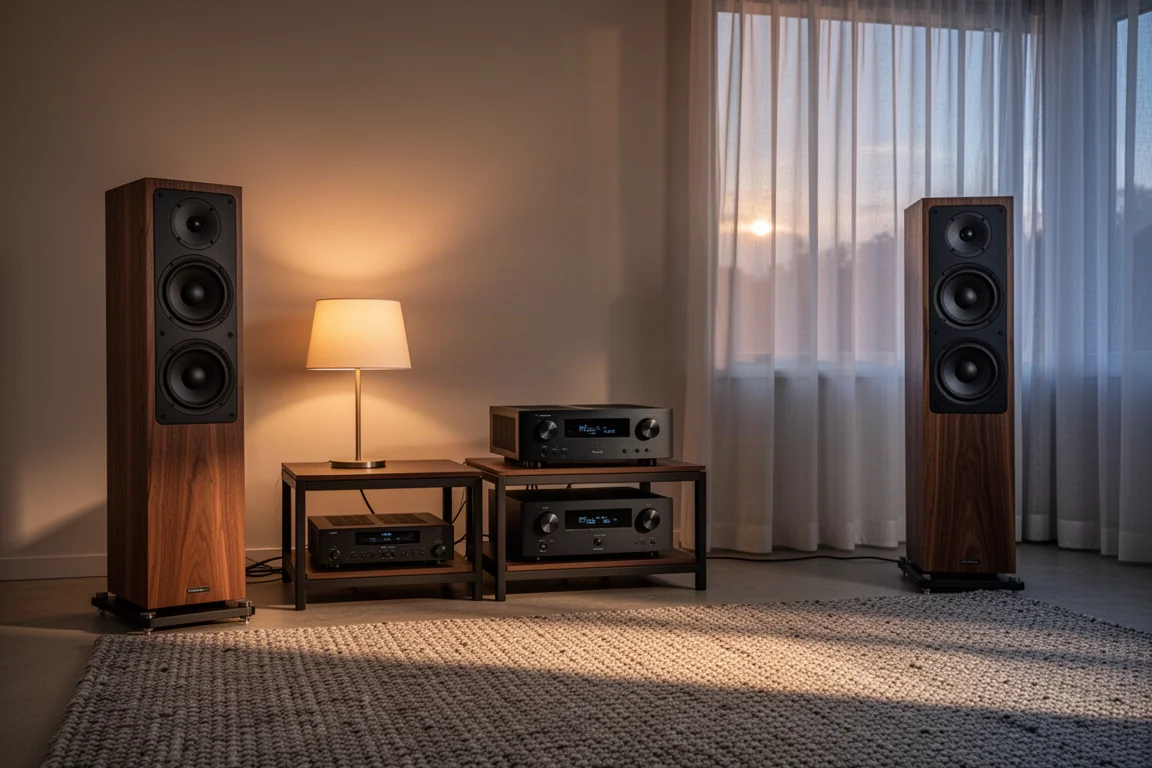
The Pendulum suits listeners who have already chosen demanding floorstanding speakers and want a single chassis that can drive them with authority. It is rated at 120 W per channel into 8 ohms and doubles that output to 240 W into 4 ohms, which is the kind of current delivery that hard-to-drive speakers respond to.
It also fits two distinct buying paths. Listeners who already own a DAC, a streamer, or a home theater processor can take the all-analog base model, spend less, and avoid most of the friction that comes with the optional digital module. Listeners who want one box to handle streaming, television audio, and vinyl can configure the amplifier with the phono preamp and digital streaming module and get Tidal, Spotify Connect, Qobuz, and locally stored high-resolution music in a single component.
Choosing between those two paths is the central decision here, and it shapes everything that follows.
Design and the Analog Foundation
The Pendulum is a class AB integrated amplifier built from solid aluminum. Its input stage is a re-engineered JFET circuit derived from the Momentum preamp lineage, which is the clearest signal that the analog engineering has not been treated as an afterthought.
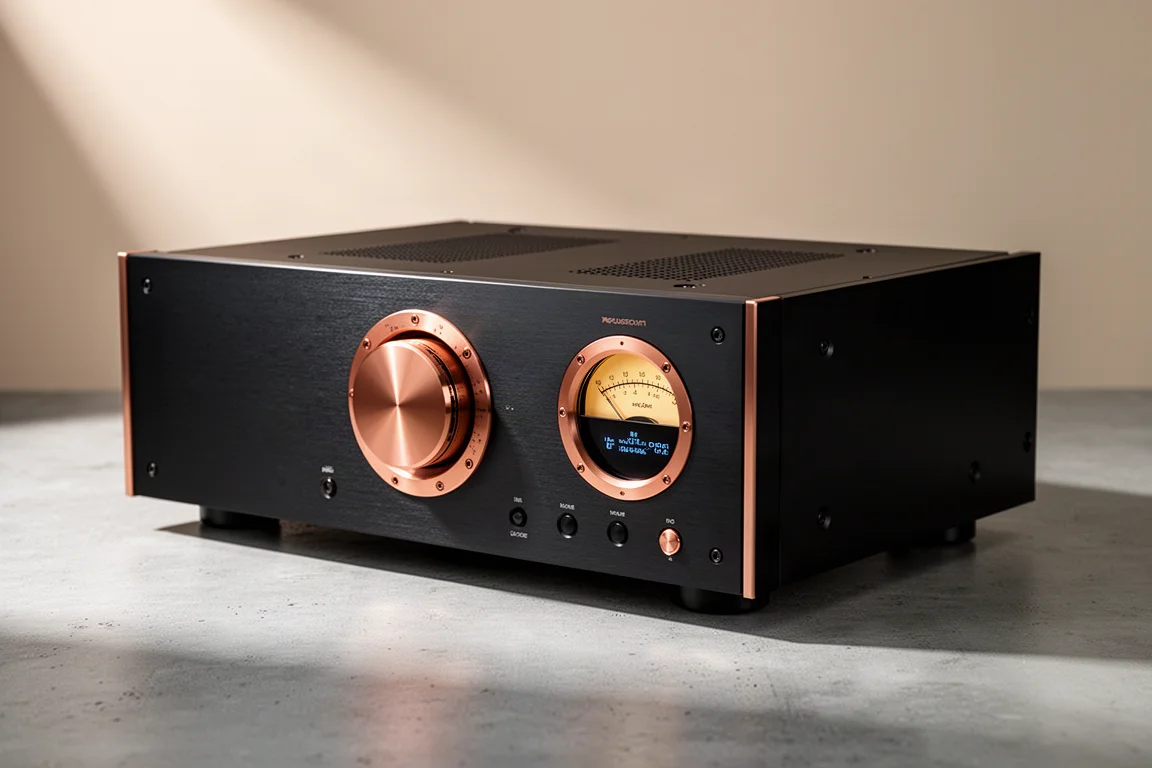
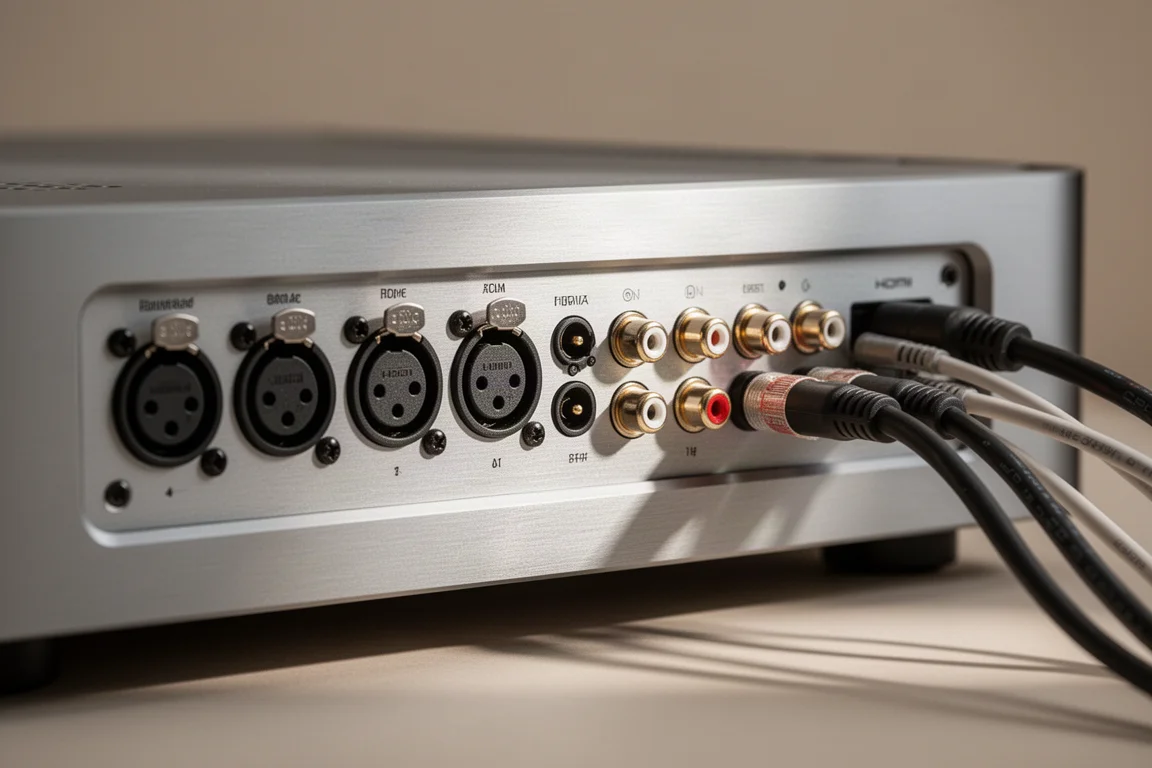
The base configuration includes one RCA input, three balanced inputs, and a headphone jack. The amplifier is available in silver or black, with copper accents around the control and volume dial and around the large digital meter, which is displayed in a porthole-style LCD screen. It is a distinctive front panel, and the copper detailing gives that meter a focal point rather than a decorative flourish.
How the Pendulum Integrated Sounds
The Pendulum’s defining quality is focus. Each layer of a recording locks into place, and nothing sounds smeared together or soft around the edges. Compared with other reference amplifiers, it offers a more exploded view of a mix, so individual parts become easier to see, follow, and appreciate.

Tonally, the amplifier is neutral, controlled, and largely colorless, and that honesty has a cost. On some recordings, high notes carry more presence and occasionally a touch more glare than most amplifiers coax out of a resolving tweeter. Those highs stay controlled and never tip into fatigue, but the combination of a very precise amplifier and a very resolving speaker can push certain recordings, and certain listeners, right to the edge of comfort.
Bass Control, Dynamics, and Soundstage
Bass has long been a strength of D’Agostino designs, and the Pendulum keeps that reputation intact. It maintains excellent control over woofers, drawing impressive depth from eight-inch drivers on bass-heavy tracks, particularly at higher volumes. Low-frequency waves that can unsettle a speaker, and even some subwoofers, stay firmly under control, and at times the system sounds as though a subwoofer is already in the room.
Balanced XLR preamp outputs make it possible to add a subwoofer, although the amplifier has no bass management of its own. Crossover, phase, and level need to be set on the subwoofer itself.
The same control carries into soundstage scale and definition. Instruments and performers are easy to place, not because the image is exaggerated, but because everything stays cleanly organized. Dialogue stays locked in and easy to follow when watching films and television. Dynamics never feel constrained or watered down either, preserving the contrast between quiet and loud, soft and sharp, without any sense of the amplifier running out of steam. That effortlessness holds across every input.
Modern Features and Connectivity
The optional digital streaming module is what turns the Pendulum into a one-box system. It adds HDMI with eARC, wireless music support, and app control, along with access to Tidal, Spotify Connect, and Qobuz, plus playback of locally stored high-resolution files. A recent firmware update also makes the amplifier Roon Ready, which is welcome news for listeners who already run a Roon library.
For a small high-end manufacturer, that is a meaningful commitment: keep the analog performance intact, then wrap modern conveniences around it. The phono preamp deserves its own mention. Vinyl playback through the module reached a level comparable to a dedicated phono stage that costs a quarter of the amplifier’s price on its own.
Things to Consider Before Buying
The HDMI input does not deliver the level of control that modern components typically offer. The amplifier would not power on or off with a television over HDMI eARC, and volume could not be adjusted with a streaming box remote. A representative has said an update to enable CEC for the HDMI input is in development, but that is a planned feature rather than a shipped one.
The rotary remote brings its own friction. It goes to sleep to preserve its internal USB-C rechargeable battery, and turning the dial does not wake it. You press down, wait, then twist. Press too hard or press one time too many and the setup menu opens instead of the volume changing. Button remotes are faster, easier to learn, and harder to misuse.
The control app does not resolve those frustrations. Its interface looks dated, the menu structure mirrors some of the remote’s awkwardness, and the depth of control is limited. The app remains a useful extra route for streaming and internet-based features, but it does not make the amplifier easier to live with.
The absence of onboard bass management also matters if a subwoofer is part of the plan. That is a setup step rather than a flaw, but it belongs on the list before purchase.
Buying Advice: Base Model or Fully Loaded
The recommendation depends entirely on what is already in the room. If you own a DAC, a streamer, or a home theater setup you are happy with, the all-analog Pendulum at $18,000 is the cleaner path. It costs less, sidesteps most of the friction described above, and still delivers the part of the amplifier that is hard to criticize: the sound.
If you want a single component to handle streaming, television audio, and vinyl, the fully configured version at $22,500 makes sense, and the phono stage alone is strong enough to justify part of that step. Other modern integrated amplifiers that bundle DACs, HDMI, apps, and wireless support handle the day-to-day routine more effortlessly and more intuitively, and their sound quality is not as far behind as the price gap suggests. The Pendulum retains the edge in focus, bass control, and the effortless grip that makes music feel real, but the difference is one of degree rather than category.
The practical conclusion is that the Pendulum rewards buyers who treat it as a purist amplifier first. Configure it around what you already own, and the experience is far smoother than loading it with every module and expecting it to behave like a mainstream receiver.
Conclusion
As an amplifier, the Pendulum Integrated is exceptional. Its focus, bass control, and tonal neutrality put it among the most capable integrated designs available, and the price of entry is now lower than it has ever been for this brand. As a connected centerpiece, it is a work in progress: HDMI control is promised rather than present, and the remote and app add steps instead of removing them. Buyers who already have a digital front end can take the analog version and enjoy the best of what this amplifier does. Buyers who want one box should weigh the convenience gap carefully before committing to the fully loaded configuration.
Product link
View more details for Dan D'Agostino Pendulum Integrated
This product is mentioned in the review. Check the specifications, options, and compatibility before buying.
View more details for Dan D'Agostino Pendulum IntegratedFurther reading
Related Reviews
Hi-Fi Audio
Accuphase C-57 vs Allnic H-7000V: Two High-End Phono Stages Compared
A fully balanced solid-state phono stage with a pitch-black noise floor meets a tube design built for well-loved records. Here is how to choose between them.
Hi-Fi Audio
Active vs Passive Hi-Fi: Five Components for a Modern System
Five components that define modern active and passive hi-fi systems, with the strengths, trade-offs and setup details worth weighing before you buy.
Hi-Fi Audio
Advance Paris A10 Apex Review: A Hybrid Integrated Amplifier That Covers a Lot of Ground
A French hybrid integrated amplifier with a class A tube preamp stage, analogue power meters, and an internal DAC and phono stage good enough to make extra boxes unnecessary.