Sleeping Bags
Cumulus Panyam 450 Review: A Customizable Down Sleeping Bag for Three-Season Backpacking
A close look at the Cumulus Panyam 450, a Polish-made 850 fill power down bag with trapezoid baffling, a differential cut, and factory customization options.
Introduction
A sleeping bag carries more of a night outdoors than almost any other item in a pack. It decides whether a cold forecast feels manageable or miserable, and it takes up the largest single share of both weight and pack volume on a three-season trip. The Cumulus Panyam 450 sits in a particularly interesting spot in that landscape: a Polish-made down bag built with high-end materials, a well-considered baffle layout, and a factory customization program that lets buyers tune the specification before it is sewn.
The headline numbers are straightforward. The 450 in the name refers to the grams of down insulation inside, and that fill is 850 fill power ethically sourced Polish down wrapped in Pertex Quantum fabric. Cumulus also offers a warmer 600 variant for anyone who expects to sleep in deeper cold. The base 450 is rated at a 32°F comfort level, and the design leans on trapezoid baffling and a differential cut to squeeze more warmth out of that specification. The base configuration is priced at $379.
Where the Panyam gets unusual is the build-to-order side. Rather than choosing between a handful of fixed models, buyers can adjust fabric colours, zipper length and size, down treatment, and the amount of insulation itself. That flexibility is normally associated with small-batch quilts, so having it available on a full sleeping bag is a meaningful difference.
Who This Product Is For
The Panyam 450 is aimed at three-season backpackers who want a genuine cold-weather margin without carrying a bag that is overbuilt for summer. The 450 fill weight is the middle of the two available variants: lighter and more packable than the 600, but still capable of being taken down toward freezing when the forecast turns.
It suits sleepers who run cold and would rather add insulation than risk a drafty night, and it suits anyone who wants a bag specified to their own preferences instead of accepting whatever a catalogue offers. Buyers who mainly camp in warm summer conditions, or who count every gram, may find a lighter quilt a better fit. Buyers who routinely sleep well below freezing should look at the 600 variant or the customization path.
Design, Materials, and Construction
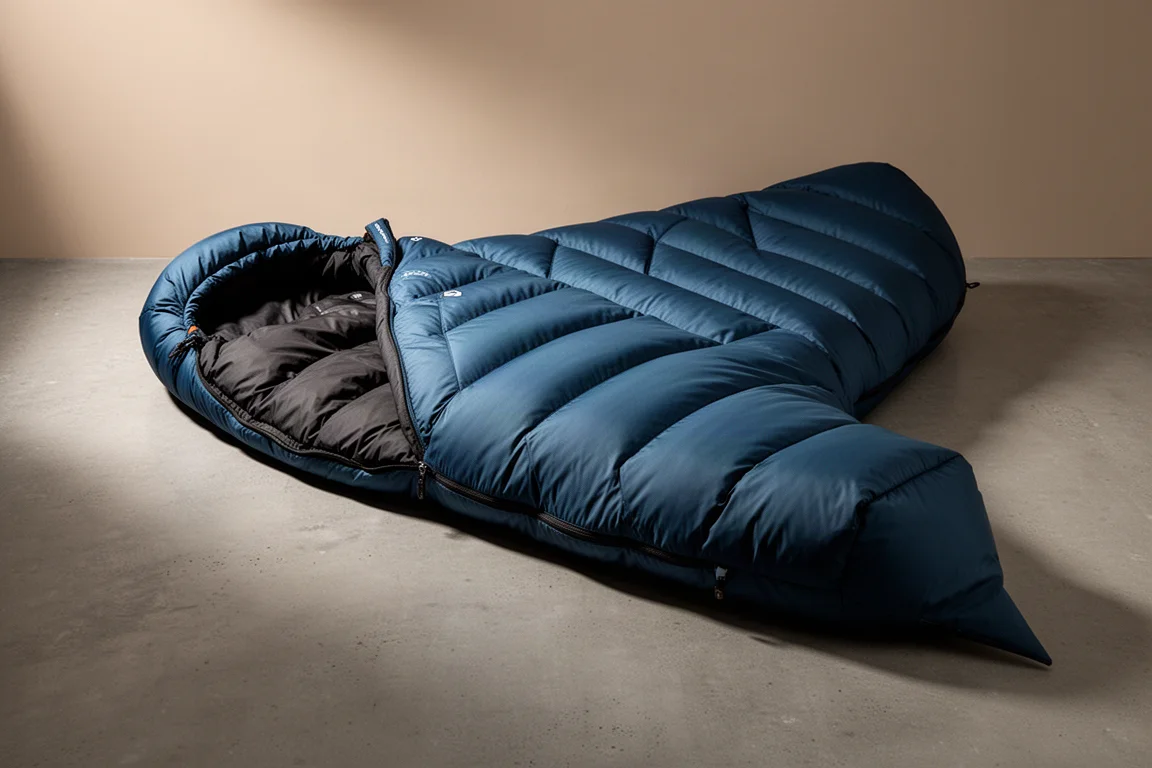
The 450 carries 450 g of 850 fill power down, and the shell uses Pertex Quantum in a 29 g fabric weight. The baffle geometry is the most interesting engineering detail. Instead of running parallel stitch lines straight across the bag, the baffles are trapezoid shaped and alternate between narrower and wider sections, so the seam lines of neighbouring baffles are offset rather than aligned. That offset reduces the continuous stitch channels where cold spots tend to form, which in practice means a warmer and more comfortable night for the same amount of down.
The bag also uses a differential cut, meaning the inner shell is cut smaller than the outer shell. That extra outer dimension makes it harder to compress the down from the inside, so the insulation keeps more of its loft while you are lying in it. A full-length side zipper is standard, the foot box is a roomy shark-fin shape with flared sides so the natural lay of the feet does not press against the walls, and there is a mesh zipper pocket inside for a water filter or a phone.
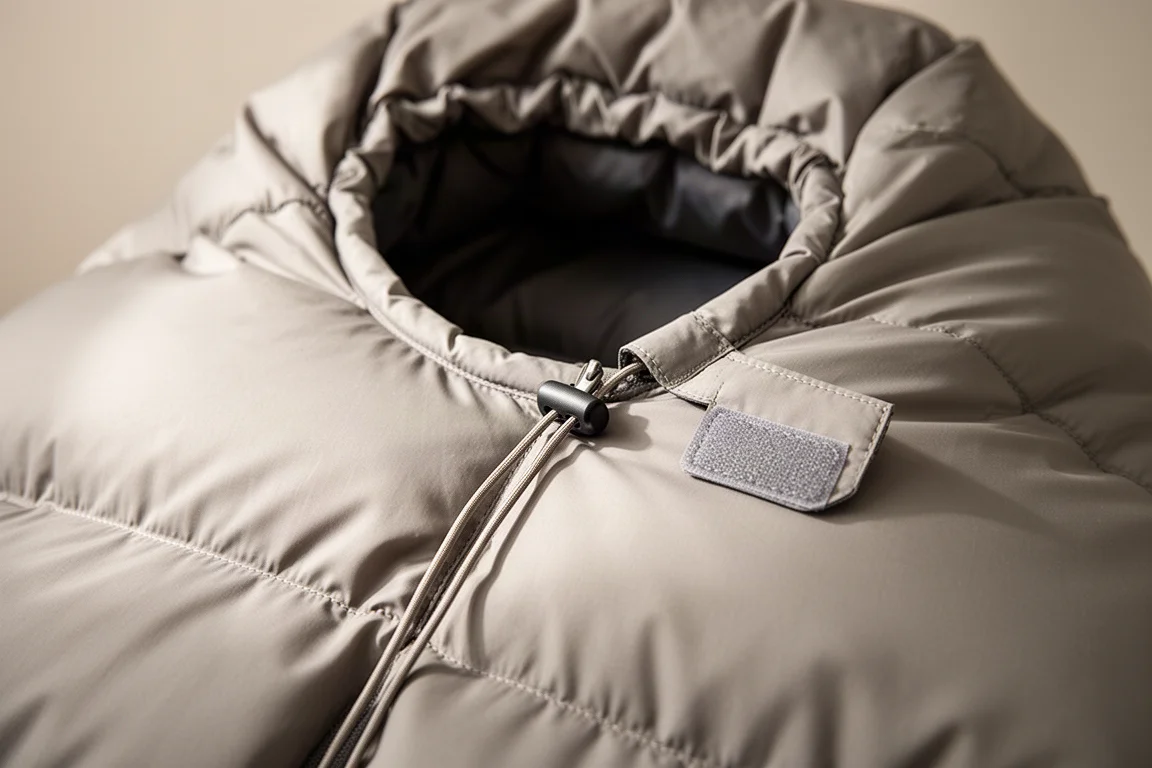
The top of the bag is where the heat retention work happens. A draft tube runs along the zipper, and a separate draft collar around the shoulders and neck can be cinched down, with a hook and loop tab sealing the gap. The hood has its own cinch that avoids pressing on the forehead or the bridge of the nose. A no-snag zipper pull rounds out the details.
Custom Build Options
Cumulus allows a wide range of changes to a standard order, and the more changes are made, the more the final price climbs. A heavily customized bag can reach $600 to $700. A light touch keeps the value story intact.
One practical example of a modest custom build: an ocean blue exterior with a black interior, retaining the 29 g Pertex Quantum fabric; a two-thirds length zipper so the foot box has no zipper running down it, which trims a little weight while still allowing easy entry and exit; and a number five zipper rather than the lighter number three, for durability. Adding 50 g of 850 fill power down to that build moves the comfort rating from 32°F to 28°F, and the finished bag comes in at roughly 29 oz, comfortably under two pounds, for just under $400.
Other options include hydrophobic treated down in place of the standard down, and a 900 fill power upgrade. Going to 900 fill power costs more, but because it insulates more efficiently it requires fewer grams of down, so it is not possible to reach the same total fill weight as an 850 build. Fabric colours and zipper configurations, including full, two-thirds, and half length, remain selectable throughout.
Cold-Weather Performance
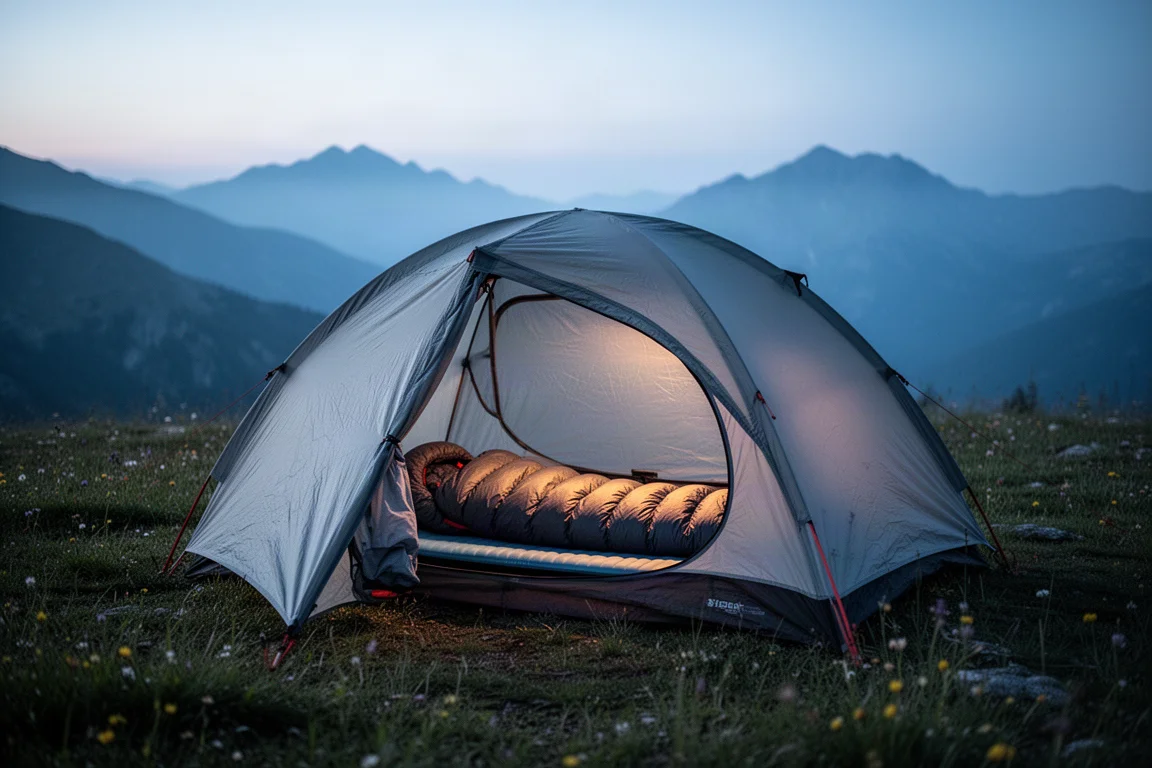
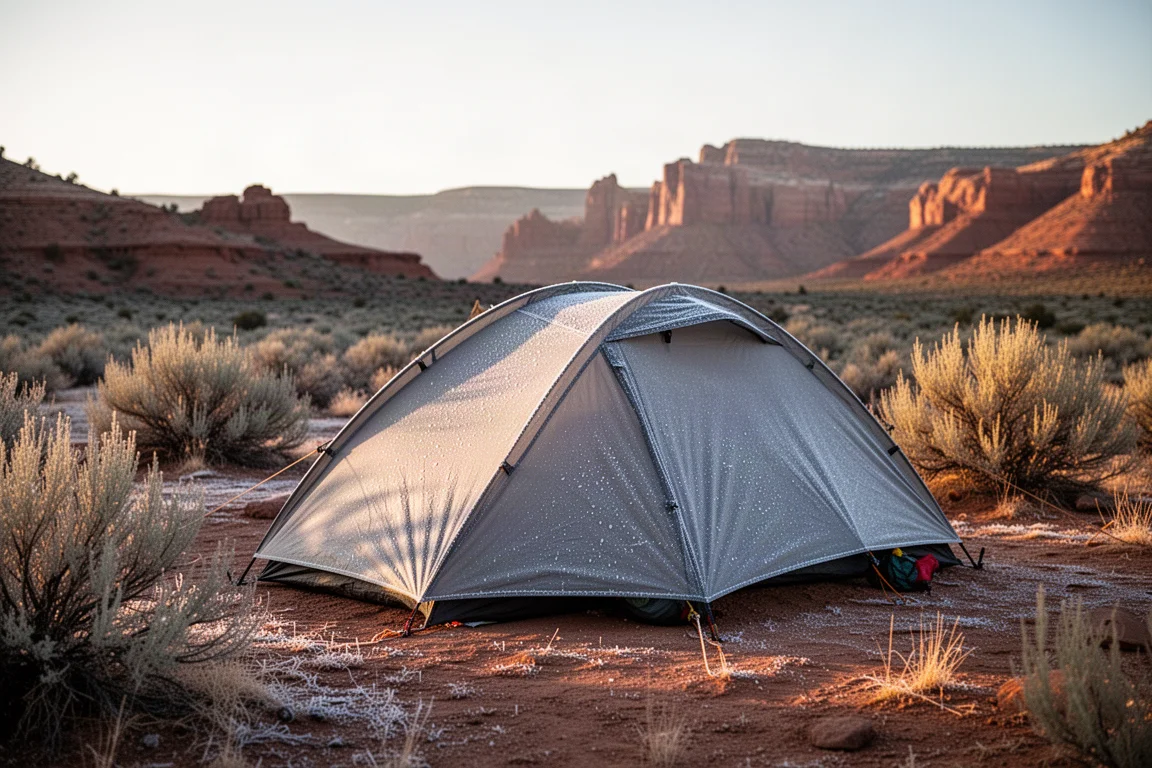
The bag has been used across freezing temperatures, wind, rain, snow, and cold desert springtime conditions, and the comfort rating has held up in practice. Nights in the high 20s in cold, humid weather have been comfortable rather than marginal, which is the outcome the 28°F rating after the extra fill predicts.
The draft collar deserves much of the credit. Cinching it around the shoulders and neck creates a genuine barrier against heat escaping and cold working its way in, and the closure sits without putting odd pressure on the neck. The hood cinch is similarly well placed, keeping the opening sealed around the face without pressing on the forehead or the bridge of the nose.
The differential cut contributes more than the spec sheet suggests. Because the down is harder to compress from inside, the bag keeps its loft through the night, and that loft is what actually traps warmth. Trapezoid baffling supports the same goal by removing the aligned stitch lines that usually become cold spots.
Things to Consider Before Buying
The most noticeable trade-off is weight. At around 29 oz in the custom configuration, this is not the lightest option available. Quilts and other bags with a comparable 30°F comfort rating can come in 5 to 8 oz lighter. The counterpoint is that those lighter options more often let in drafts or leave a sleeper feeling colder than expected, which is exactly the problem the Panyam is built to avoid. Buyers who prize minimum weight above all else should weigh that trade-off carefully.
There is also one specific design detail worth knowing about. The hood uses two different materials: a grosgrain strip to cinch the section around the face, and shock cord for the lower section around the neck. Because the grosgrain sits next to the thicker shock cord, it does not carry as much tension, and it can slide through the cord lock without the spring being depressed. In practice that means the hood adjustment can loosen overnight as a sleeper shifts position, letting in a draft. Using shock cord on both sections would be a better solution. It is a small, fixable annoyance rather than a fundamental flaw, but it is the one thing most worth changing.
Finally, pricing has risen slightly since the bag first launched, and every customization adds cost. Budgeting for a modest custom build rather than an extensive one keeps the value proposition strong.
Buying Advice
The clearest decision is insulation level. The 450 is the right starting point for a broad three-season range where most nights sit around or slightly above freezing, with enough headroom to handle colder forecasts. Anyone who regularly sleeps well below freezing should step up to the 600 variant, or use the customizer to add down as described here.
The second decision is whether to customize at all. A short list of changes delivers most of the benefit: a two-thirds length zipper for a small weight saving, a durable number five zipper, and a modest addition of down to shift the comfort rating into the high 20s. That combination keeps the bag under two pounds and under $400, which is a strong position for an 850 fill power down bag with this construction. Extensive customization pushes the price toward $600 to $700 and should only make sense when the fit or fabric requirements genuinely call for it.
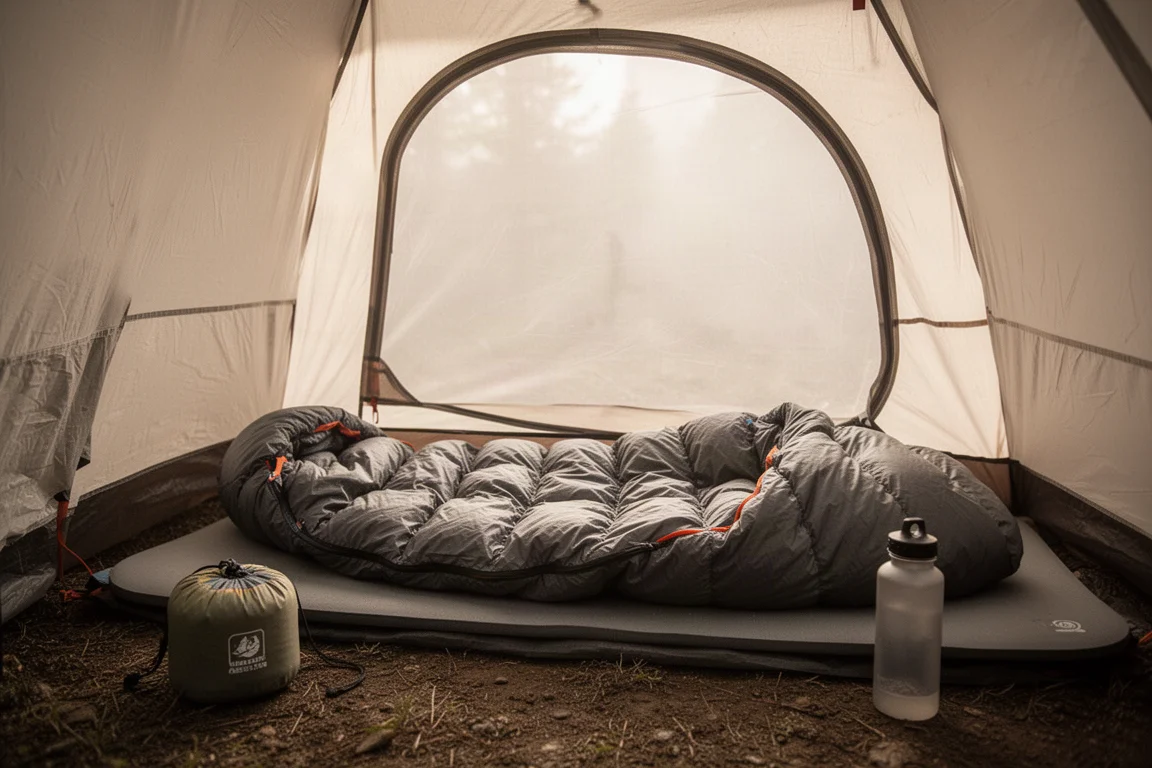
For buyers who want a bag that stays warm through humid, windy, and wet-cold conditions rather than one that merely looks good on a spec sheet, the base 450 at $379 already represents solid value. The trapezoid baffling, differential cut, and effective draft collar are the features that justify the price, and they are the ones that show up night after night in the field.
Conclusion
The Cumulus Panyam 450 is a well-engineered down sleeping bag with a rare degree of buyer control over the final specification. Its strengths are structural rather than cosmetic: trapezoid baffling that cuts down on cold spots, a differential cut that preserves loft, a draft collar that genuinely seals in warmth, and a comfortable hood and foot box. Its weaknesses are minor and specific, chiefly the grosgrain hood cinch that can loosen overnight and a weight figure that sits a few ounces above the lightest quilts.
For three-season backpackers who want a bag that performs in freezing, humid, and mixed conditions and can be ordered to their own preferences, the Panyam 450 makes a convincing case. Buyers chasing the absolute lowest weight should compare carefully, and anyone planning serious sub-freezing trips should consider the 600 variant. For everyone else, the base 450 is a well-priced, highly capable starting point with a customization path that can make it better still.
Product link
View more details for Cumulus Panyam 450
This product is mentioned in the review. Check the specifications, options, and compatibility before buying.
View more details for Cumulus Panyam 450Further reading
Related Reviews
Sleeping Bags
Best Down Sleeping Bags Under $300: Four Backpacking Options Worth a Look
Four down sleeping bags that stay under $300, compared on fill power, baffle design, hood comfort, and packed size.
Sleeping Bags
Best Sleeping Bags and Sleep Systems: Five Premium Down Picks Compared
Five premium down sleeping bags and sleep systems compared on warmth, weight, construction, and value.
Sleeping Bags
Big Agnes Lost Ranger UL 3-in-1 Sleeping Bag System Review: One Bag, Three Setups
A practical look at the Big Agnes Lost Ranger UL 3-in-1 Sleeping Bag System, covering how the three configurations work, where it shines, and the details worth weighing before buying.