Hi-Fi Audio
Crown DriveCore and Schiit Lokius: Tuning a Pro Amplifier to Taste
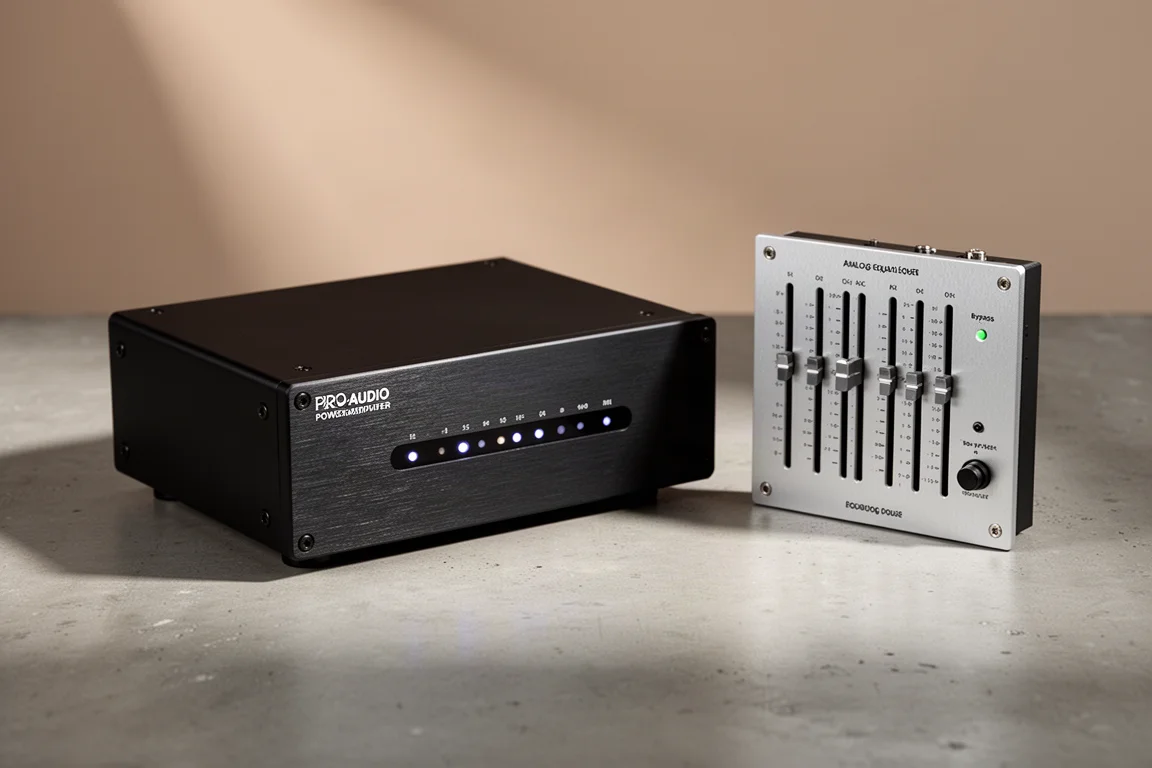
A high-power pro-audio amplifier and a six-band analog equalizer, considered as a pairing that reshapes the tonal balance of a home system.
Introduction
Some amplifiers earn respect for what they can do rather than for how they sound. The Crown DriveCore is a good example: a pro-audio power amplifier built for stage and studio work, with output figures that make most home amplifiers look modest, and a tonal character that can come across as slightly dry on a domestic system.
The more useful question is whether that character can be adjusted without replacing the amplifier. A six-band analog equalizer placed between the source and the amplifier changes the balance by hand, and it can turn a neutral pro amplifier into something considerably warmer.
This guide looks at what the Crown DriveCore brings to a home setup, how the Schiit Lokius fits into a modern system, and which adjustments made the most audible difference.
What the Crown DriveCore Amplifier Brings to a System
The DriveCore is a pro-audio design, and the output ratings make that clear. It delivers 215 watts into 8 ohms and 350 watts into 4 ohms in stereo, and it can be bridged for 700 watts into 8 ohms or 1,100 watts into 4 ohms. For most rooms that is far more headroom than a pair of standmount speakers will ever ask for, which means the amplifier spends its life well away from its limits.
Despite the power on tap, the chassis is light. It weighs around 11.5 pounds and can be lifted with one hand, which is unusual for an amplifier in this output class. The rear panel reflects its professional heritage: XLR and RCA inputs for balanced and single-ended sources, plus TRS connections. Balanced and unbalanced sources can both be accommodated without extra hardware.
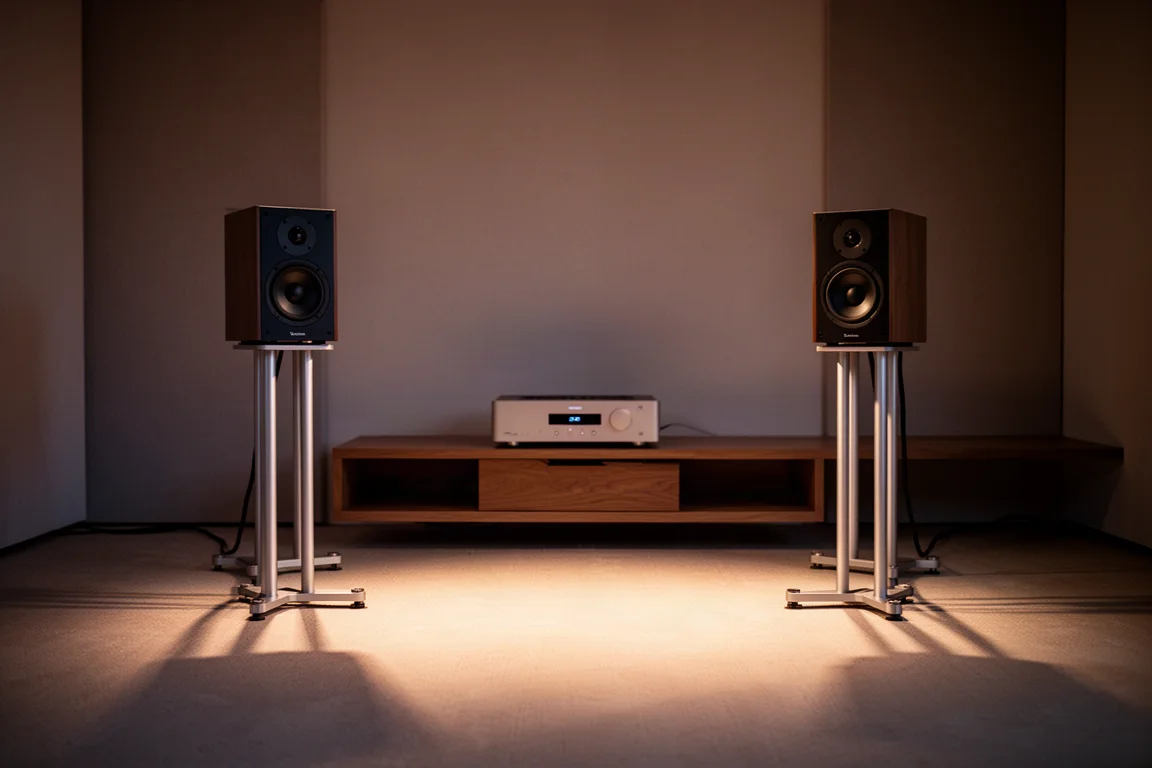
On sound, the DriveCore leans slightly dry rather than lush. Bass is thicker and more present than a specification-first reputation would suggest, and the low end holds together well when the music asks for it. The treble is where opinions tend to form, since some material can sound a little artificial or brittle through the upper registers. That single characteristic is the main reason an equalizer becomes interesting.
Filters, Gain, and Level Monitoring on the DriveCore
The DriveCore carries a small set of processing tools that are unusual on a home amplifier. A high pass filter removes low frequencies from whatever speakers are connected to it, which is useful when the amplifier is asked to drive satellite speakers while a subwoofer handles the bottom end. A band pass filter works the other way around: it keeps a band of the frequency range and discards both the top and the bottom, so only the midrange reaches the speakers.
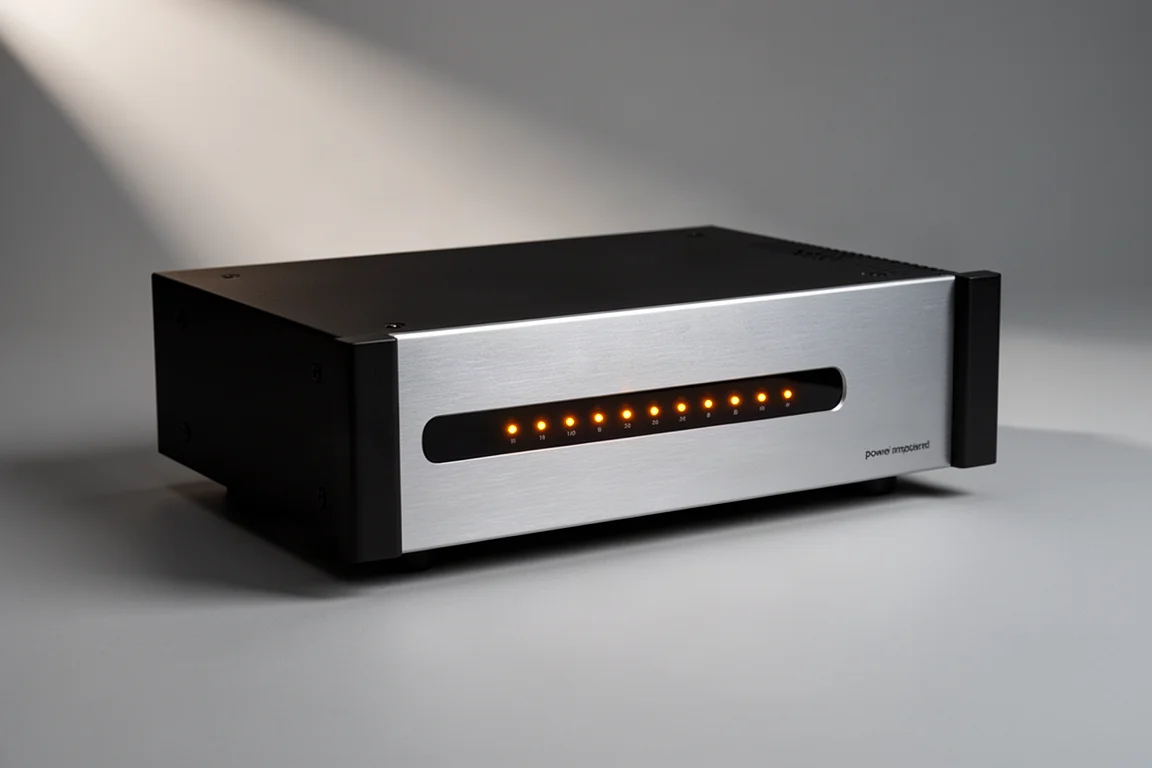
There is no volume control on the amplifier itself, only a gain control, and the two are not interchangeable. Volume has to come from the source, which is why a source with variable output is the natural partner. A clipping indicator and a signal level display sit on the front, and the level indicator behaves like an old-school LED meter, rising with the music so it is easy to see how close the signal is getting to clipping.
The Schiit Lokius EQ: Six Bands of Analog Adjustment
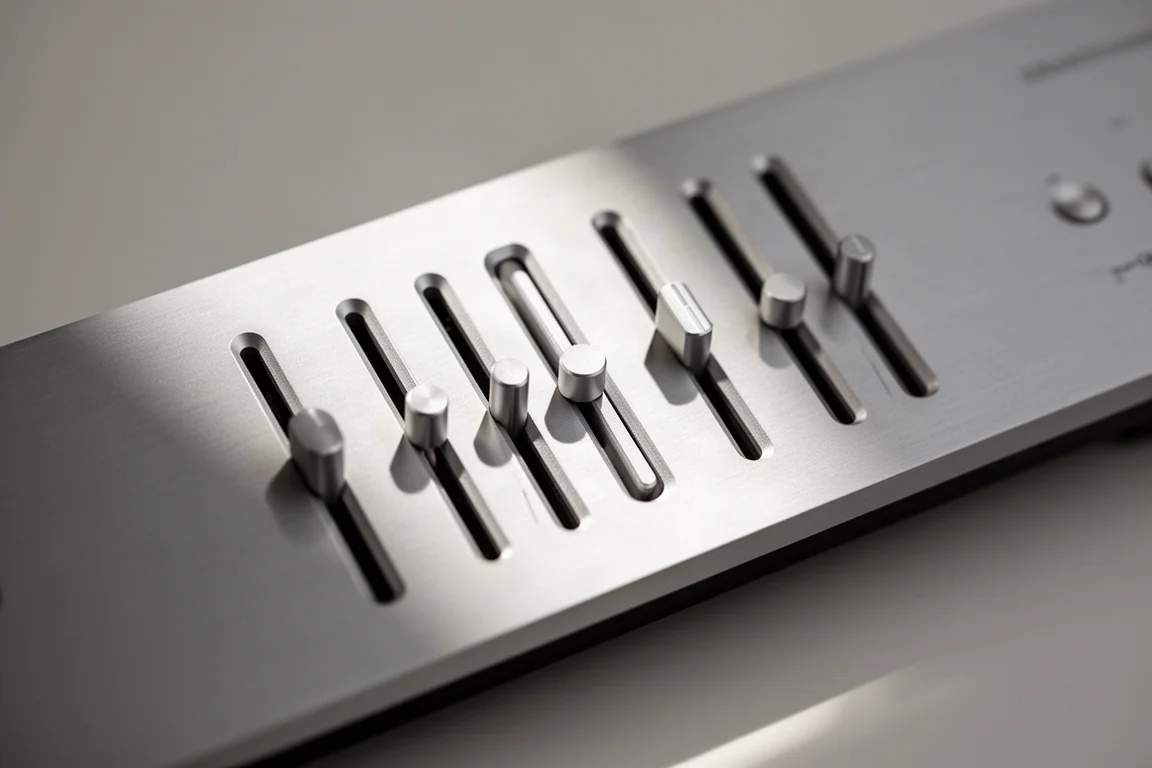
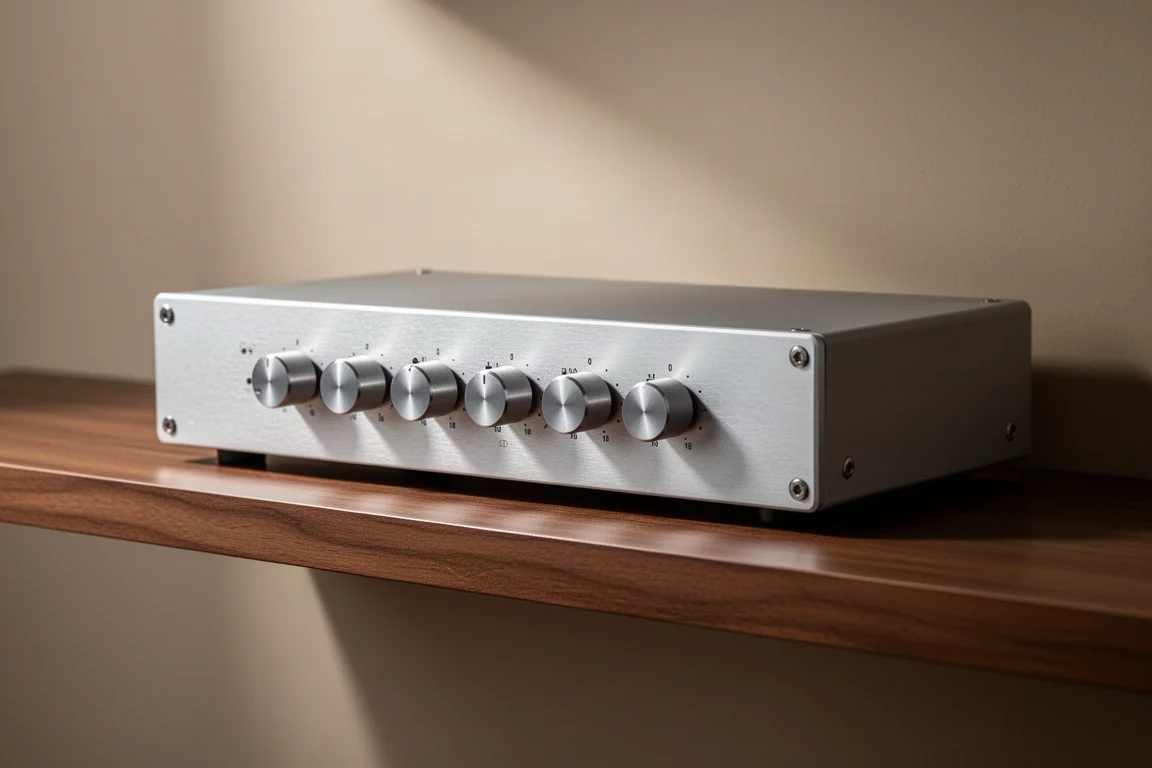
The Lokius is a six-band analog equalizer with balanced inputs and outputs alongside single-ended RCA connections, so it can slot into either a balanced or an unbalanced chain. The bands are labelled in broad terms rather than by frequency, running from low through medium low, medium, medium high, and high to high high. Nothing is marked with an exact frequency, and that turns out to be a feature rather than an omission: adjustments are made by ear, which suits the way most listeners actually work.
The range of each band is moderate. The Lokius is not heavy handed, and it will not let you reshape a speaker’s fundamental character in one move, but it offers enough swing to fine-tune a system. There is also a bypass switch, which makes comparisons straightforward: engage it to hear the corrected balance, disengage it to hear the signal flat.
Everything happens in the analog domain rather than in digital signal processing. For listeners who prefer to keep the digital path untouched, that is the central appeal, and it is a long-established approach. Analog tone shaping has been part of hi-fi systems for decades, and the reason is simple: not all speakers sound alike and not all amplifiers sound alike, so a fixed system can only ever be a compromise.
Placing an EQ in a Modern System
The classic arrangement for an equalizer is source into the equalizer, equalizer into the amplifier. On vintage receivers this was easy, because a tape loop made the connection available to anyone. The tape output fed the equalizer, and the equalizer’s output returned to the receiver, so the equalizer sat in the middle of the chain without any special provisions.
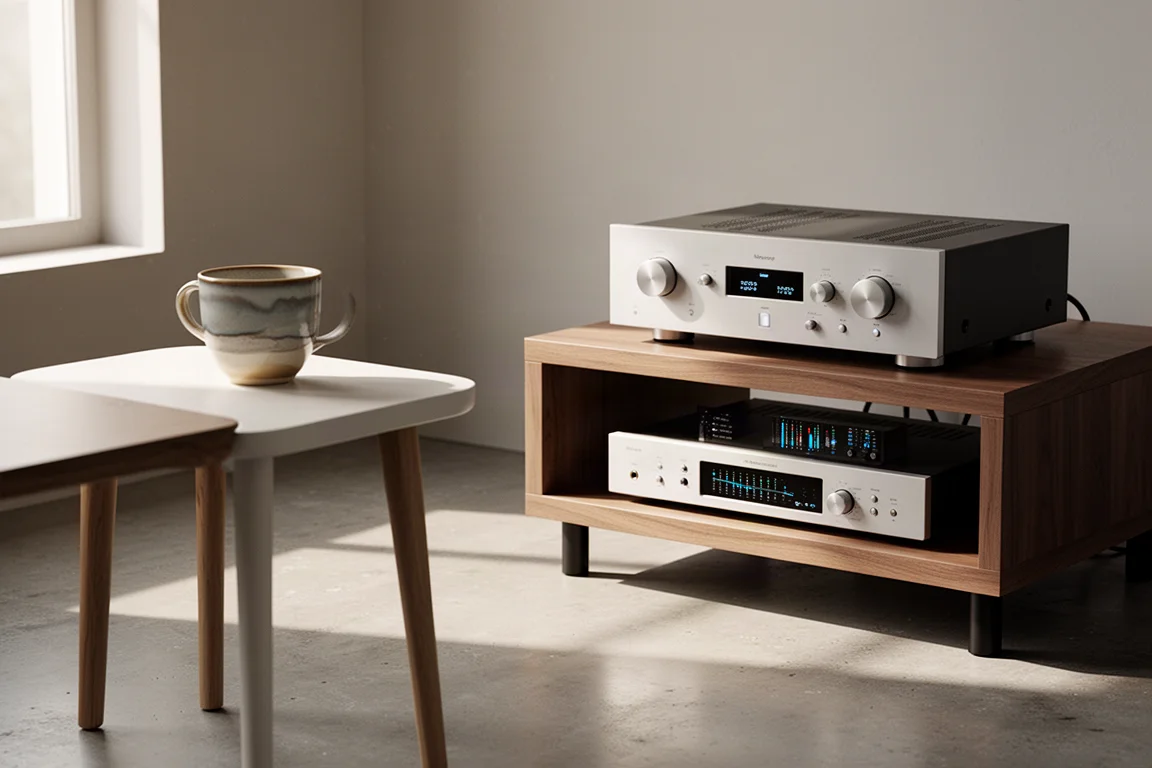
Modern systems make the same job harder. An equalizer needs its own source and its own amplifier to work as intended, and an integrated amplifier usually cannot accommodate one because the preamplifier and power amplifier sections are combined. A small number of integrated amplifiers include a preamplifier output and a main input, which allows an equalizer to be inserted between them, but those models are uncommon. A separate source with its own volume control and a separate power amplifier, which is exactly what the DriveCore is, avoids the problem entirely.
Tuning the Crown to Taste: Settings That Helped
The starting point for any equalizer is flat, with every control at noon, and the useful method is to move one band at a time and listen for what changes. With the DriveCore, the adjustments that made the biggest difference were modest. A small boost to the lower bass and a slightly smaller boost to the upper bass added weight without thickening the sound. A touch of cut at the lower midrange and the upper midrange cleaned up congestion in the vocal region, while the midrange itself stayed flat.
The medium high band is worth particular attention, because that is where sibilance tends to sit. Backing it down slightly removed a hot edge on certain recordings without dulling the overall presentation. The treble band, which sits higher in the range, responded differently: a boost there added clarity to cymbals and detail to the top end rather than fatigue.
The end result is not a dramatic transformation. It is a shift of a few decibels in a handful of places, and that is enough to move the amplifier from dry and slightly brittle to warm and easy to listen to for long sessions. It is also worth verifying what each band actually affects, since a control can influence a different part of the range than its label suggests, and a curve built on the wrong assumption will sound skewed.
Volume, Loudness, and Why EQ Settings Shift
An equalizer setting is only accurate at the volume it was dialled in at. Human hearing changes with level, and the midrange, where speech and vocals live, stays comparatively consistent while bass and treble become less audible as volume drops. That is exactly what a loudness control compensates for on older equipment, boosting the extremes at low levels and easing off as the volume rises.
Since most current amplifiers omit a loudness control, an equalizer effectively becomes a custom one. The practical consequence is that a curve set for quiet evening listening will sound different when the volume climbs. Listening levels between roughly 70 and 85 dB are where most home sessions sit, and setting the curve at the level used most often gives the most consistent results.
Buying Advice
Two different purchases are on the table here, and they solve different problems. The Crown DriveCore makes sense for a listener who needs substantial power, wants pro-audio connectivity and filtering options, and is comfortable with a source-controlled volume arrangement. Its light chassis and professional heritage are practical advantages, and the level monitoring takes some of the guesswork out of how hard the amplifier is being pushed.
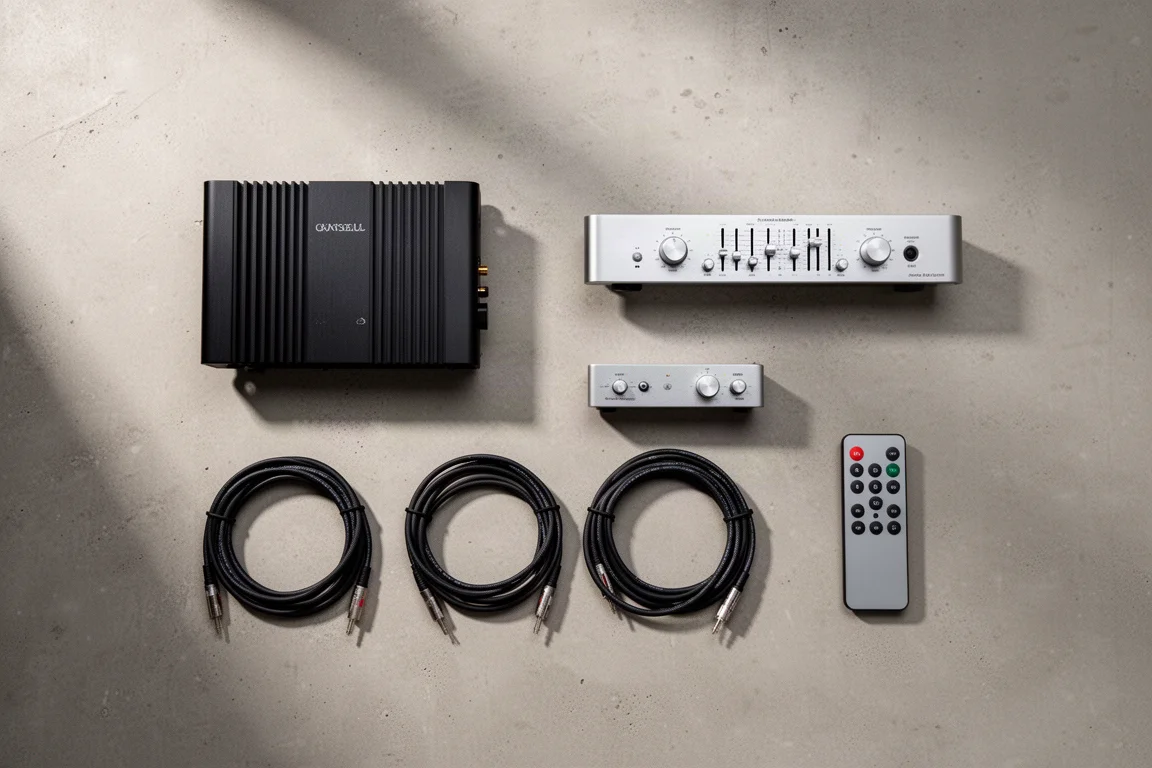
The Lokius makes sense for a listener who already likes the core of their system but wants to fine-tune the balance. It suits anyone running a separate source and a separate power amplifier, and it is the more flexible purchase of the two because it keeps working across future amplifier changes. At around $299 it costs far less than the large-format equalizer in the same range, which sits closer to $1,500.
If the goal is simply to make an amplifier that sounds slightly dry feel warmer at everyday listening levels, the equalizer is the cheaper route and the one that delivers the change directly. If the goal is more power and more control over what reaches the speakers, the amplifier is the place to start. Buying both makes sense when a system already has the separate source and power amplifier sections that an equalizer needs.
Conclusion
A pro-audio power amplifier and an analog equalizer are an unusual pairing on paper, but they address the same practical problem from two directions. The Crown DriveCore supplies clean power, flexible connectivity, and filtering options that most home amplifiers do not offer. The Schiit Lokius supplies the tonal adjustment that turns that power into a sound that suits the room and the listener.
Neither product is a magic fix. The equalizer works best at the volume it was set for, and the amplifier’s character is only shifted by a few decibels. Within those limits, the combination is a convincing argument for keeping tone controls in the chain, and for treating the sound of a system as something to be adjusted rather than accepted.
Further reading
Related Reviews
Hi-Fi Audio
Accuphase C-57 vs Allnic H-7000V: Two High-End Phono Stages Compared
A fully balanced solid-state phono stage with a pitch-black noise floor meets a tube design built for well-loved records. Here is how to choose between them.
Hi-Fi Audio
Active vs Passive Hi-Fi: Five Components for a Modern System
Five components that define modern active and passive hi-fi systems, with the strengths, trade-offs and setup details worth weighing before you buy.
Hi-Fi Audio
Advance Paris A10 Apex Review: A Hybrid Integrated Amplifier That Covers a Lot of Ground
A French hybrid integrated amplifier with a class A tube preamp stage, analogue power meters, and an internal DAC and phono stage good enough to make extra boxes unnecessary.