Camping Tents
Core Equipment 10-Person Straight Wall Cabin Tent Review: How It Handles Rain
A close look at how the Core Equipment 10-Person Straight Wall Cabin Tent copes with rain, where it stays dry, and when to plan extra waterproofing.
Introduction
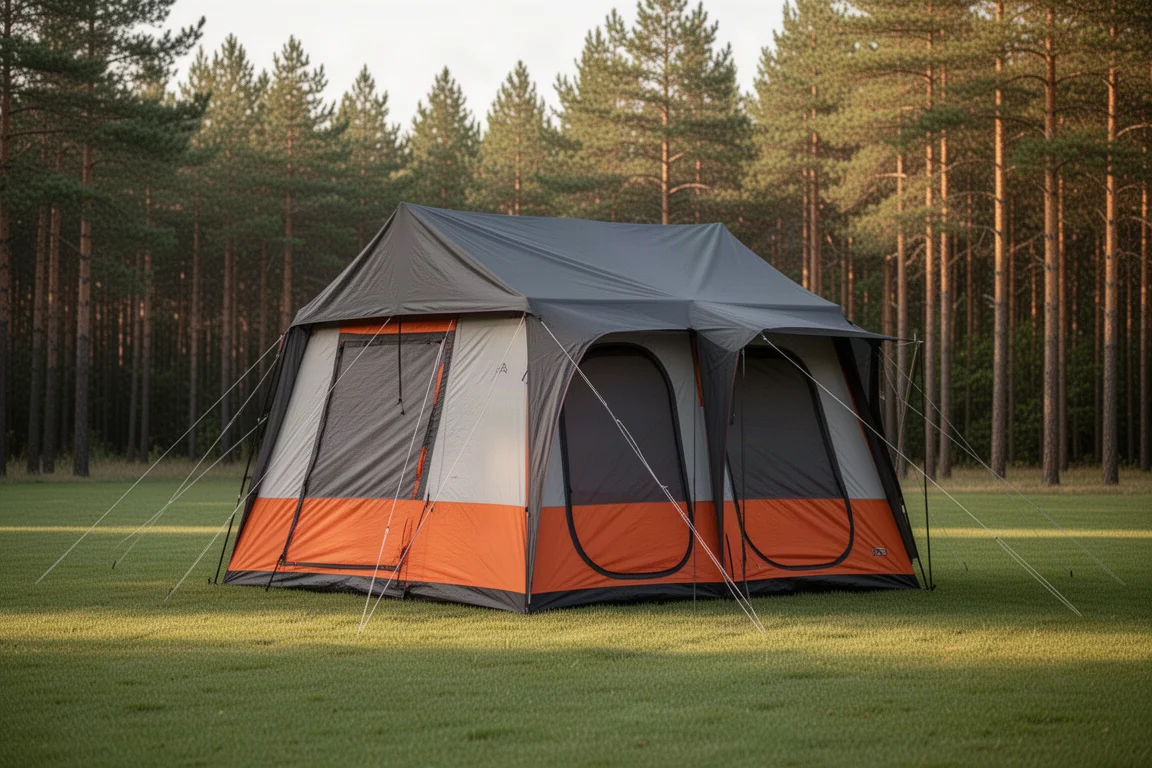
The Core Equipment 10-Person Straight Wall Cabin Tent is built around a clear idea: give a large group standing-height space with near-vertical walls, so the interior feels more like a room than a dome. That extra volume is exactly why rain performance matters. A tent this size carries a lot of fabric, a lot of seams, and a large footprint to keep dry.
To see how it copes, the tent was put through a one-hour rain simulation using a hose, with the spray concentrated on a single wall to approximate moderate rainfall. The result is a genuinely useful picture of where this tent is strong and where it needs help.
What follows is a practical breakdown: the design choices that keep water out, the specific seams and zippers that let it in, and how to decide whether this tent suits the weather you actually camp in.
Who this product is for
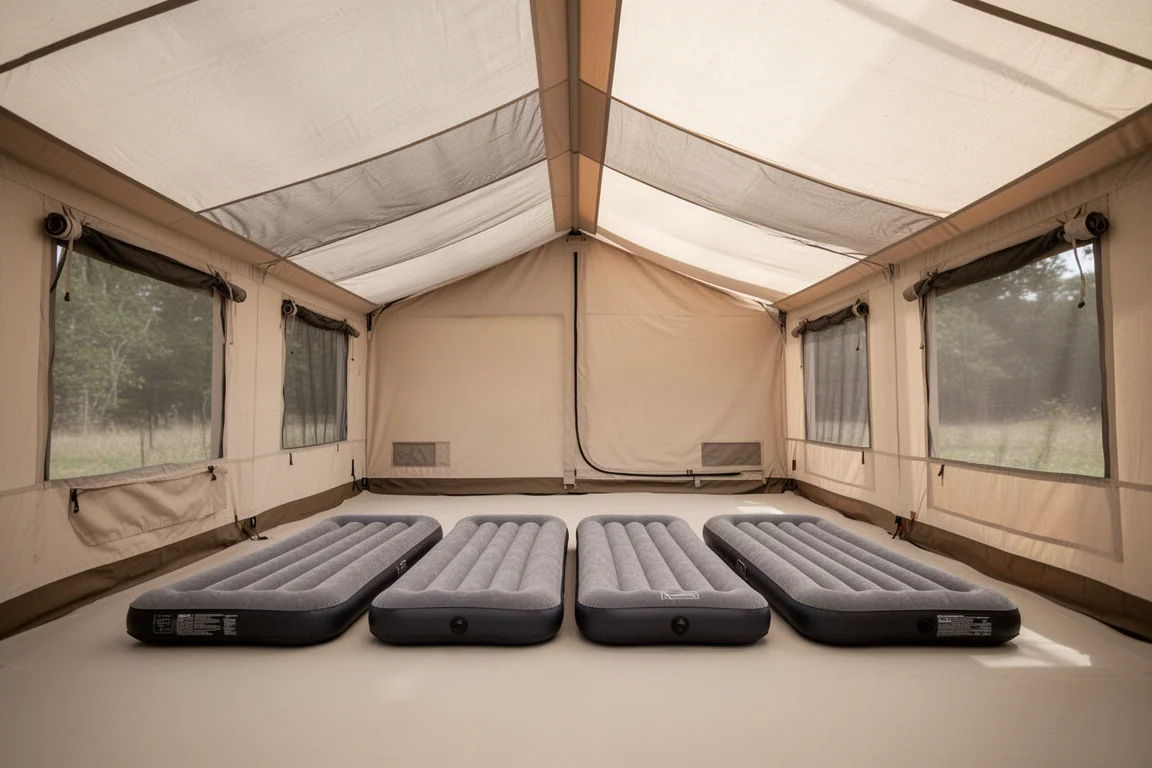
This is a tent for campers who want interior space and headroom more than they want a compact pack size. Families, groups of friends, and car campers who set up in one spot for a weekend are the natural audience. The straight wall design makes the floor plan usable right to the edges, which matters when you are arranging several sleeping pads.
It is also a tent for people who camp mostly in fair weather with the occasional shower. If you expect light rain, it is a comfortable choice. If you expect many hours of moderate to heavy rain, plan to add your own waterproofing or consider a different tent.
Main strengths
The curved roof is the standout design decision. Because the roof arcs, water does not collect at the top and instead drips down and away. The rainfly is shaped to stop water seeping in through the ceiling mesh, and it does that job well.
Seam taping is thorough where it counts. The window seams are completely taped on all windows, both doors are seam taped, and the two ground vents are taped as well. The vertical seams on the body are taped up to a certain point, and the third horizontal seam from the top, the one between the white and orange fabric, is taped and showed no leaking at all.
After a full hour of moderate rainfall, the flooring was still dry and most of the tent body was dry too, including the white fabric and the majority of the orange fabric. Taken as a whole, the tent held up quite well, with only minimal leaking apart from one door zipper.
Rainfly coverage and seam behavior
The rainfly only partially covers the tent. That is intentional, since its main job is to keep water from seeping through the ceiling mesh, but it does leave the window mesh exposed. Even in light rainfall, rain reaches the window mesh, so it is best to keep the windows fully closed, or at least almost fully closed.
Seam by seam, the picture is mixed but understandable. The top-most horizontal seam is not taped, though it sits under the rainfly, so it is protected anyway. The second seam from the top is not taped and did not leak. The bottommost horizontal seam, the one that joins the orange body fabric to the flooring, is not taped, and that is where water eventually found its way inside. There are also a few small holes where the guylines attach to the body; these sit fairly high up and are seam-taped, so water does not pass through them.
Door zippers and window mesh in wet weather
After about 30 minutes of rainfall, one of the two doors began leaking through the zippers, at one particular position along the zip. Moving the zippers a little higher up stopped the leak entirely, and the other door never leaked at all. That makes it a manageable quirk rather than a design failure: if a zipper starts to weep, reposition it and the leaking may stop.
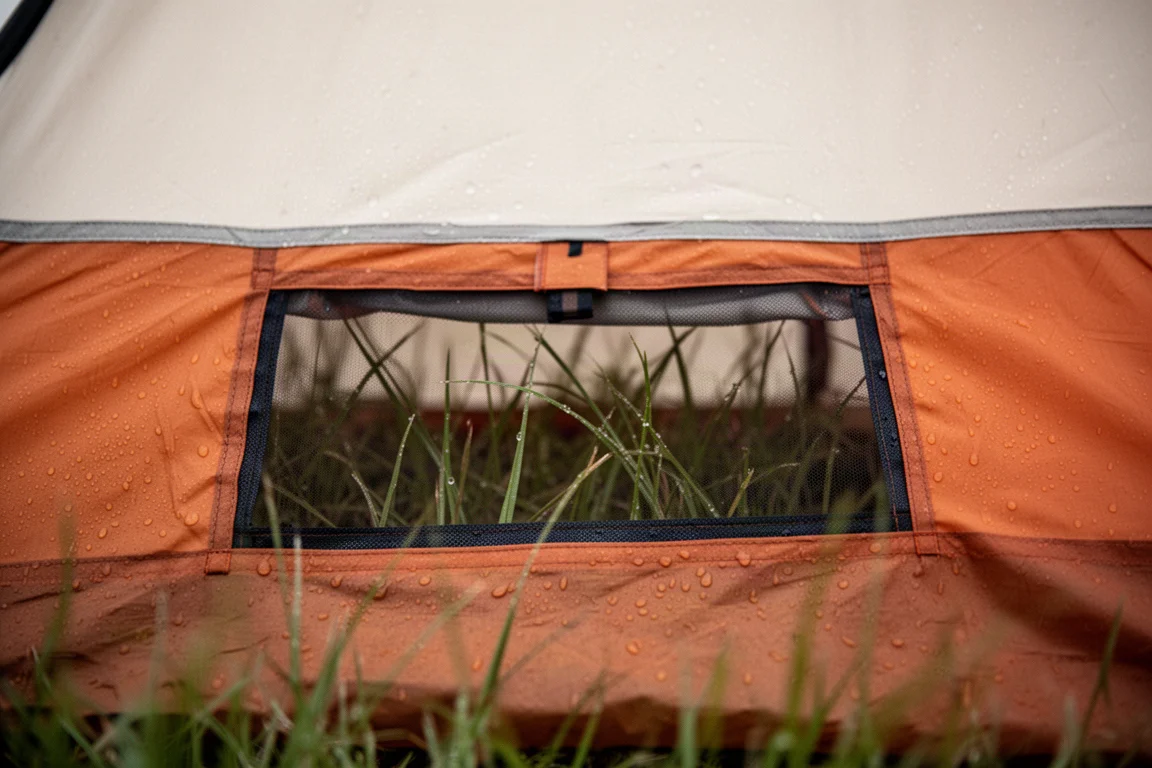
Windows are the other area to watch. Because the fly is small, the mesh takes rain directly in anything but the driest conditions. Closing the windows before the weather turns is the simplest habit to build with this tent, and it removes the most likely source of interior dampness.
Things to consider before buying
The most important limitation is the floor-to-wall junction. This tent does not have bathtub flooring, and the seam connecting the orange body fabric to the flooring is neither taped nor sealed. After roughly 55 minutes of moderate rainfall concentrated on that side, water began seeping in through that seam. No water came through the flooring itself, which stayed dry across the whole hour.
A small patch of the orange fabric near the ground vent also became slightly damp, most likely because it was the most exposed part of the body. The practical takeaway is that about one hour of moderate rainfall is close to the limit for this tent as it ships. If you camp in wetter climates, treating the seams and that floor junction yourself is a sensible upgrade.
Buying advice
For light rain, this is a capable and comfortable option: a big, tall cabin that keeps its interior dry through a normal shower. For multi-hour moderate to heavy rain, plan on waterproofing the seams and the floor junction, or look at a tent with a fully sealed floor and a larger fly.
If your trips are mostly fair-weather weekends with the occasional shower, the Core Equipment 10-Person does its job and does it with a lot of liveable space. If you regularly camp in sustained rain, set aside room in your planning for seam sealant, or choose a tent designed for that kind of weather.
Conclusion
The Core Equipment 10-Person Straight Wall Cabin Tent earns its place as a roomy, light-rain tent. The curved roof sheds water, the taped windows and doors hold up, and the floor stays dry through an hour of moderate rainfall. Its limits are specific and knowable: an untaped seam at the floor junction, a small rainfly that leaves window mesh exposed, and one door zipper that prefers a particular position. Know those three things before you buy, and this tent will meet expectations rather than surprise you.
Product link
View more details for Core Equipment 10-Person Straight Wall Cabin Tent
This product is mentioned in the review. Check the specifications, options, and compatibility before buying.
View more details for Core Equipment 10-Person Straight Wall Cabin TentFurther reading
Related Reviews
Camping Tents
3F UL Gear Taiji Two-Person Tent Review: Field Waterproofing Results and Buying Advice
The Taiji pairs an attached fly with a removable inner, but sustained rain exposed untaped vent seams that need sealing before this shelter can be trusted.
Camping Tents
3FUL Gear Lanshan 2 Pro 4-Season Review: A Sub-$200 Single-Wall Trekking Pole Tent
An early look at the 3FUL Gear Lanshan 2 Pro 4-Season, covering its straightforward pitch, generous interior space, and the condensation and seam-sealing questions that come with any single-wall shelter.
Camping Tents
Alps Mountaineering Lynx 1-Person Tent Review: Big Value in a Small Budget Tent
A close look at the Alps Mountaineering Lynx 1-Person Tent, covering real interior dimensions, materials, setup time, ventilation limits, and who should buy it.