Home & Workshop Tools
Cordless Air Duster vs Small Air Compressor: Three Ways to Stop Buying Canned Air
A cordless electric air duster and two compact 2-gallon air compressors compared, with real-world dusting results and cost math.
Introduction
If you have ever tallied up what you spend on canned air, the number gets uncomfortable fast. Single cans run around eight dollars, two-packs around fourteen, and a six-pack around thirty. That adds up to real money over a few years, all for a product that runs out, gets cold, and ends up in the trash.
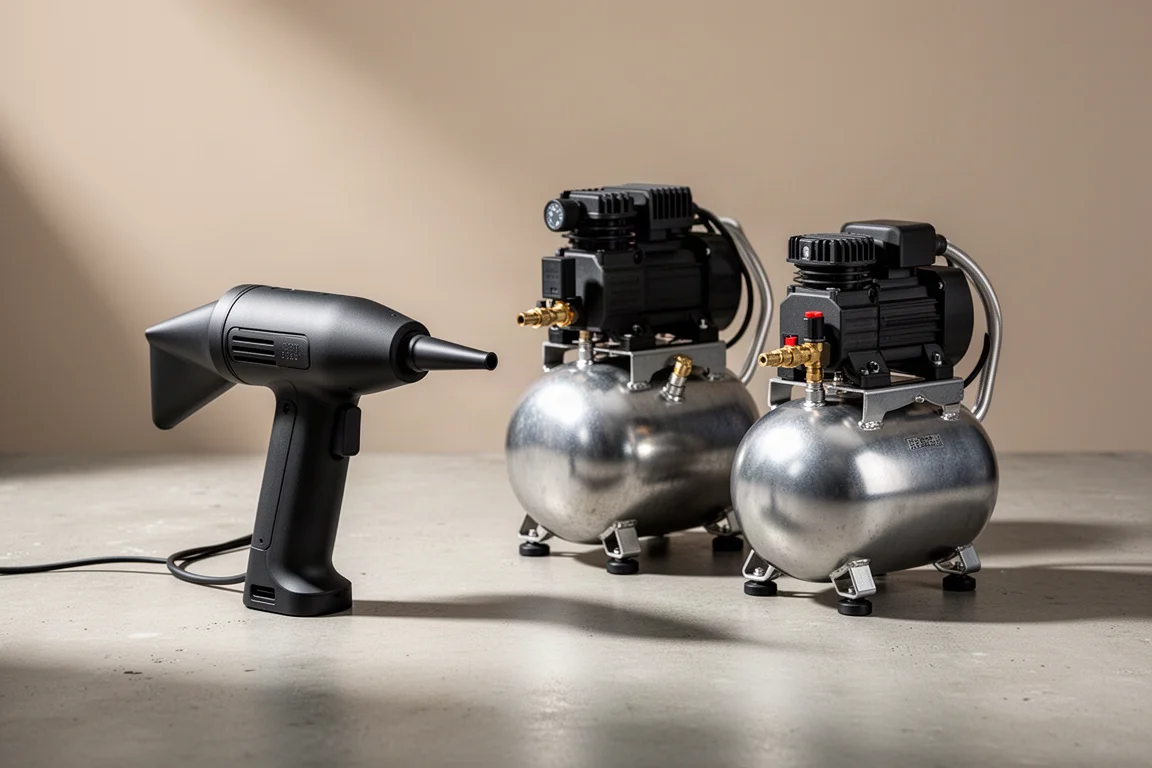
There are two better long-term answers: a cordless electric air duster you recharge instead of rebuy, and a small air compressor that handles dusting plus tires, inflation, and general shop work. Here is how three options compare.
First up: the cordless electric air duster
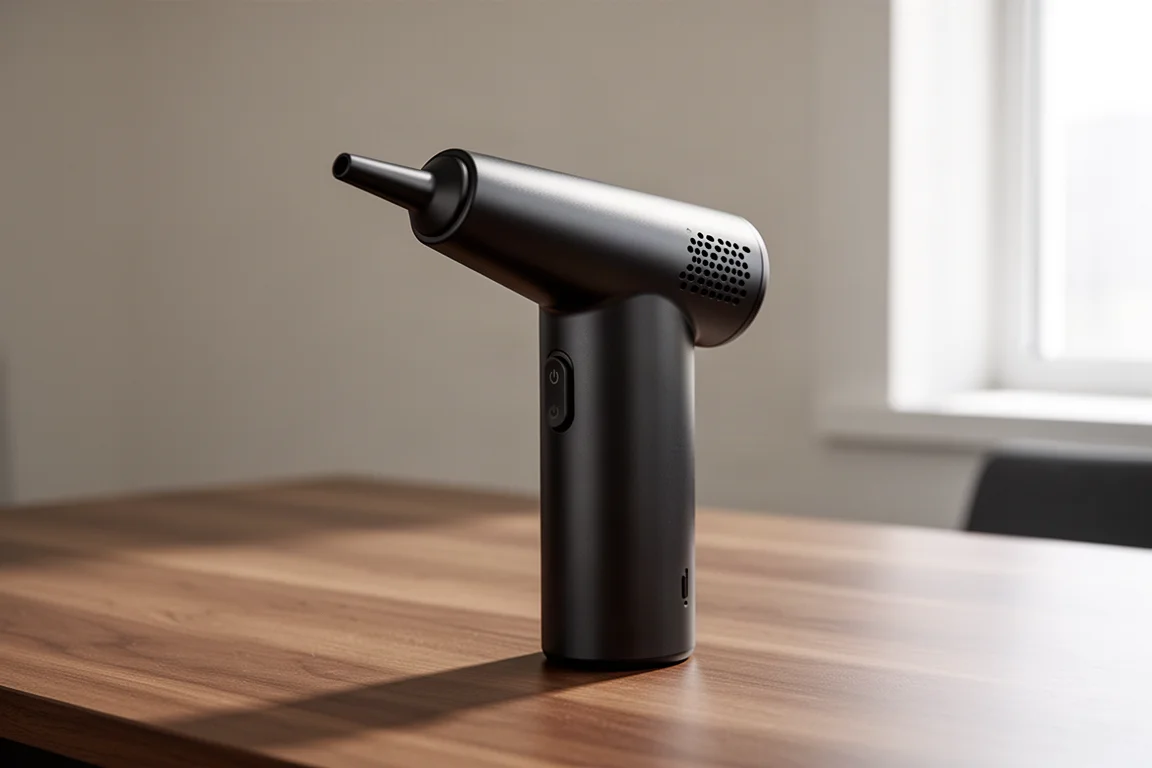
This one looks a bit like a tiny hair dryer, and it hides a surprising amount of power in that little fan. It runs on a built-in lithium-ion battery with the air intake at the back. Two warnings matter here: do not block the intake, because you can burn the motor out fairly quickly, and note that some air vents through the battery area for cooling. It is not enough to blow anything around, but you will feel it.
The cone nozzle screws off, and the three speed settings are pressed in sequence: one press for a light stream, two for more, three for full blast. In practice, full power is genuinely strong. In a head-to-head keyboard test against canned air at the same distance, the duster was just shy of matching the can, and up close it was not even close. It cleared debris the can had left stuck between keys, and it did so without the freezing cold bite you get when a can runs low.
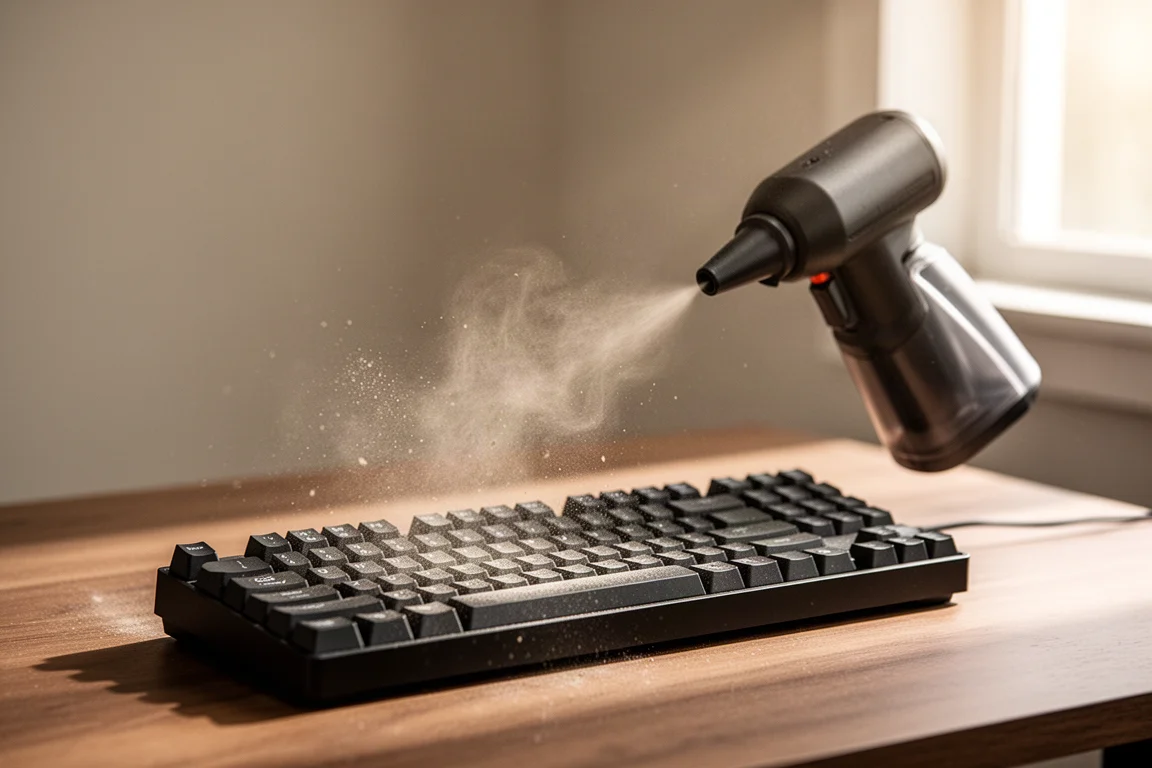
The main trade-off is runtime. Expect roughly five minutes of continuous use on a charge. That sounds limiting until you remember you rarely use canned air for five straight minutes anyway; most people empty half a can on a single keyboard. For repeated short jobs around a desk or studio, it is fast, convenient, and always ready on the shelf.
There is also a simple cost case. At a standard price of sixty dollars after a ten-dollar coupon, one duster costs about the same as twelve cans of compressed air. Based on how quickly the battery was cycled down and back up during testing, getting a dozen cans’ worth of use out of it seems very likely, which makes the payback period short for regular users.
What is inside, and is it serviceable?
Getting into the casing takes some persuasion. The clips sit along the sides: start at the edge, work inward, then dig underneath and the shell pops off. Expect a little plastic casualty along the way, but nothing catastrophic. Inside you find a compact motor mounted on anti-vibration padding, what appears to be thermal overload protection cushioning, a control wheel, and a three-cell battery pack made of 2,000 mAh 18650 cells. The control board is held down by two screws with soldered connections.
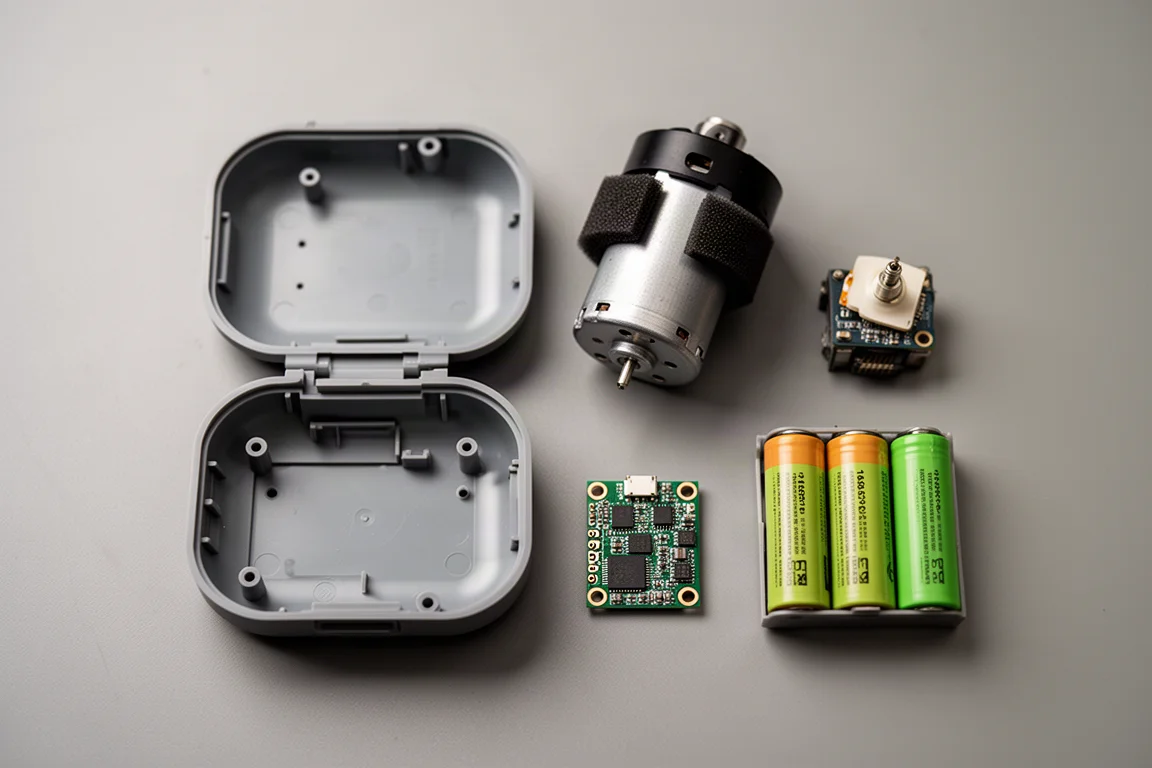
So yes, it is serviceable, though not elegantly so. The ideal version of this product would have a screw-off base plate and clip-in batteries instead of soldered cells and popped plastic catches. That is not a dealbreaker today, but it is the kind of design refinement worth hoping for as this product category matures. One more note on buying: this model had the highest review count of the options surveyed, with well over a thousand ratings, and it appeared to offer visible screw access where competing units require prying apart plastic catches.
Small air compressors: the long-term value pick
For overall flexibility and long-run cost, a small air compressor is hard to beat. The Harbor Freight Fortress 2-gallon tops out at 135 PSI and delivers 2.1 CFM. It can match the duster’s dusting output depending on the nozzle you fit, and it adds everything else a tank of air enables, from tire inflation to blow-off work around a shop.
The catch is portability. You are lugging around roughly forty pounds of compressor, so it makes sense when the job happens near the compressor, and less sense when you want to grab something, dust off a keyboard, and move on. Realistically, the answer for most people is owning both: the compressor stays in the shop, and the cordless duster lives on the desk.
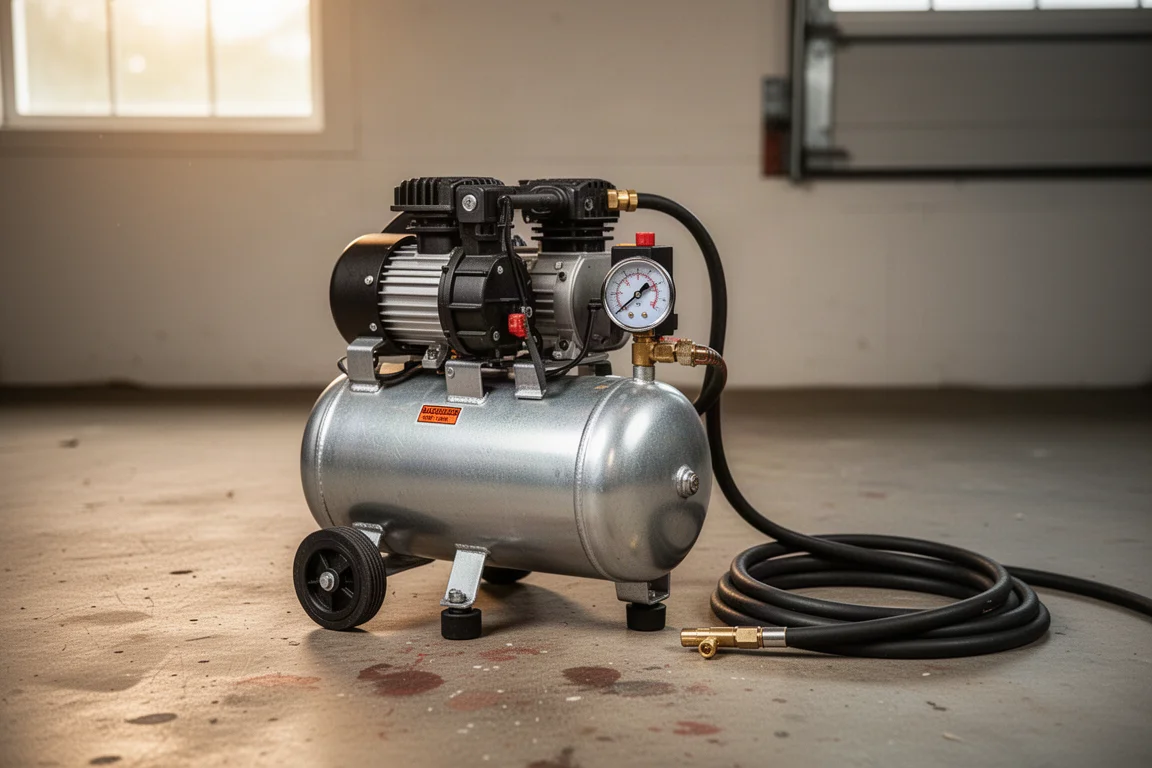
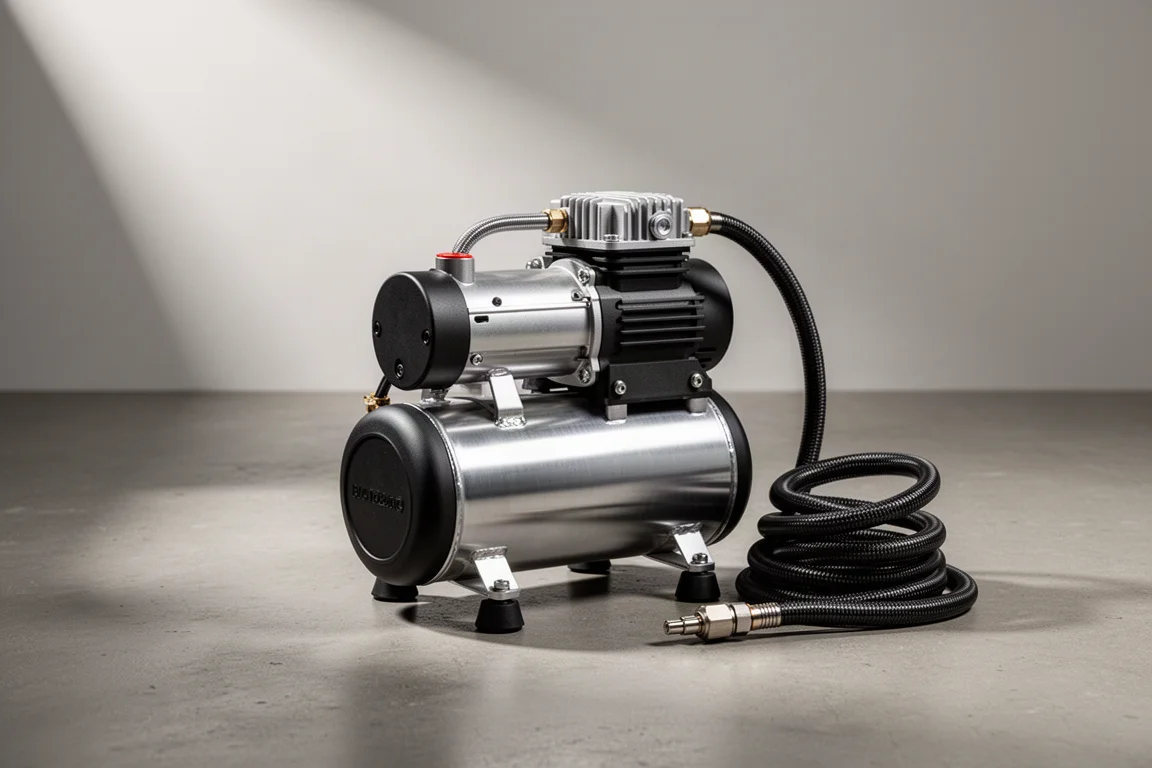
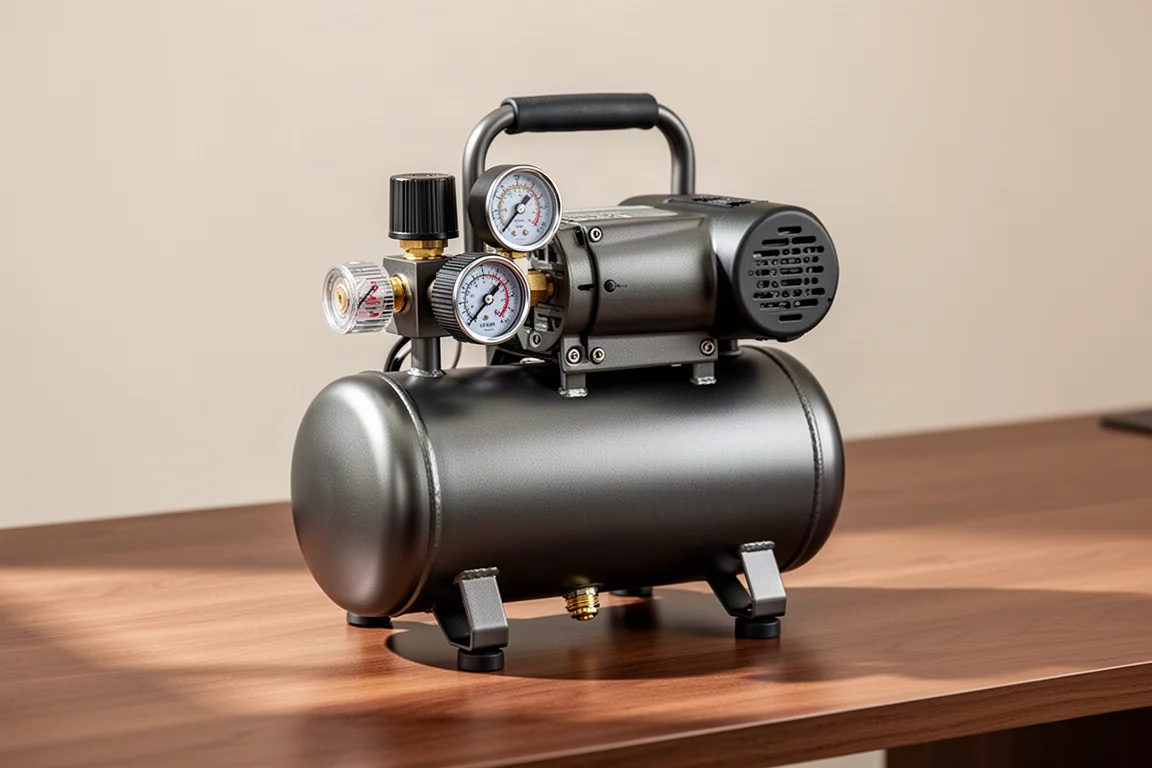
If the Harbor Freight option does not suit you, the Stealth 2-gallon oil-free compressor is a very similar machine with a 3/4 horsepower oil-free pump. The notable difference: it has a single air outlet, with the second port location plugged, whereas the Fortress has both ports open from the factory. You could fit a second port yourself without much trouble, but it is one less thing to do on the Fortress. Pricing differs too, so check both before deciding.
Do not cheap out on the hose kit
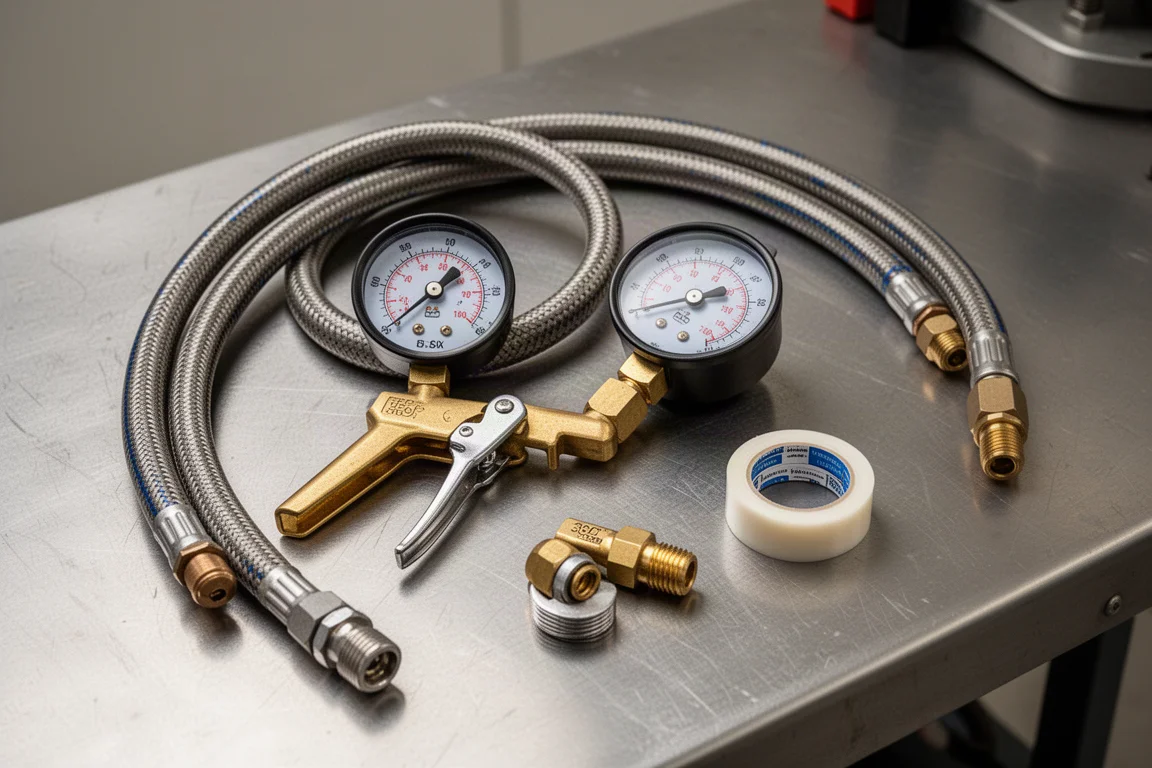
Whichever compressor you buy, skip the stiff yellow hard-plastic hoses. They are frustrating to use, prone to leaking, and will eventually split. A better accessory kit with a flexible hose, an automatic clip-on tire chuck, a larger gauge dial, a 360-degree swivel fitting, thread tape, and a set of tips costs roughly thirty dollars more. That is a meaningful bump, but it buys better tire inflation, fewer leaks, and a hose that does not fight you on every job.
Which one should you buy?
If your main enemy is dust on keyboards, electronics, and studio gear, the cordless air duster is the easiest win. It is always charged and waiting, powerful enough to embarrass canned air up close, and it pays for itself after about a dozen cans’ worth of use. The five-minute runtime is the only real limitation, and for most dusting jobs it does not matter.
If you also want tire inflation, blow-off capability, and general shop flexibility, a 2-gallon compressor is the better long-term investment, with better cost over time and far more uses. It is simply not pocketable, which is why the strongest setup is both: a compressor in the shop and a cordless duster within arm’s reach.
Conclusion
Canned air had a good run, but the math has shifted. A sixty-dollar cordless duster replaces twelve cans, and a compact 2-gallon compressor covers everything else while costing less per job over the years. Pick based on where your dust actually lives: at the desk, go cordless; around the shop, go compressor. For many people, the honest answer is one of each.
Further reading
Related Reviews

Backpacking Gear
Building a 10 lb Base Weight: An Ultralight Backpacking Gear List
A practical walkthrough of the ultralight pieces behind a 10 lb base weight, from a 765 g pack and a roomy one-person tent to a full camp chair and a dependable water filter.
Road Bikes
10 New Road Bikes Worth Watching: Aero, Titanium, Steel and Endurance Standouts
A practical roundup of 10 new road bikes, from aero flagships chasing single-watt gains to titanium, steel and endurance platforms built for real roads.
Bikepacking Gear
11 Bikepacking Essentials for Long-Distance Cycling
Eleven bikepacking essentials for long-distance cycling, from a steel gravel frame and a two-person tent to helmet lights, packable gloves, and a frame bag that puts weight in the right place.