Turntables
Coolest Turntables Under $5,000: Seven Designs Worth Knowing
Seven turntables well under the $5,000 mark that pair distinctive design with strong engineering and a story worth sharing.
Introduction
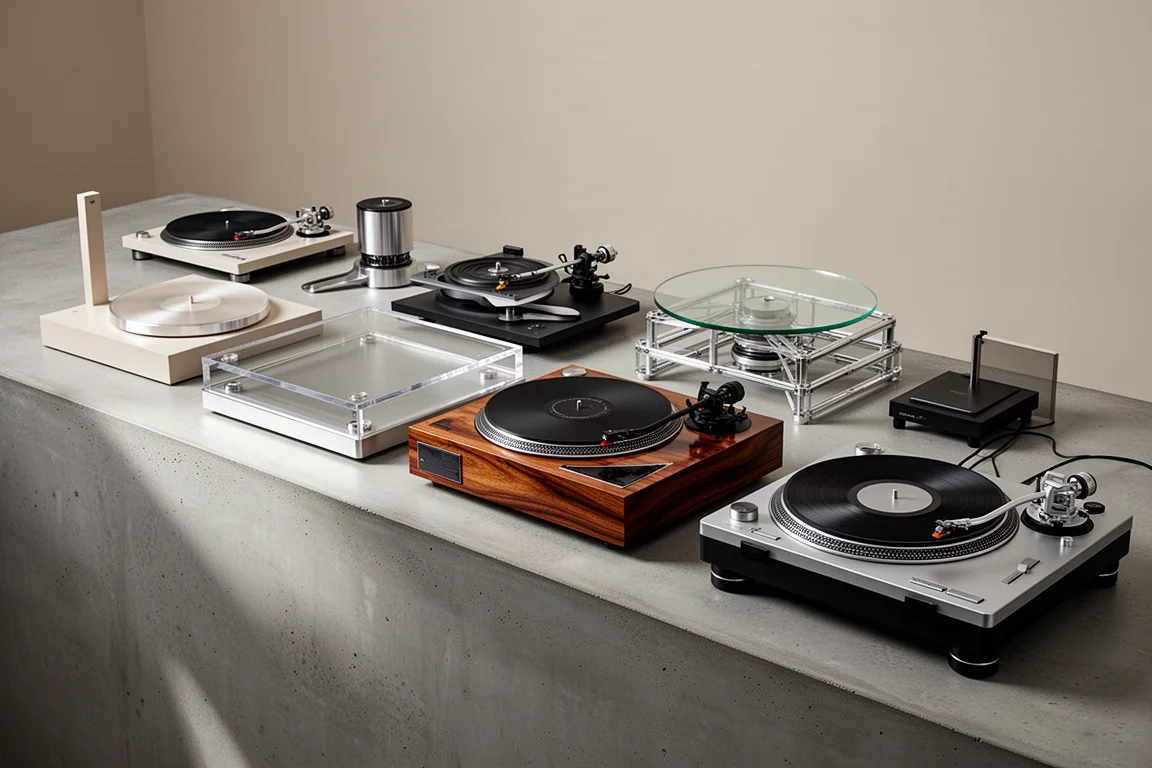
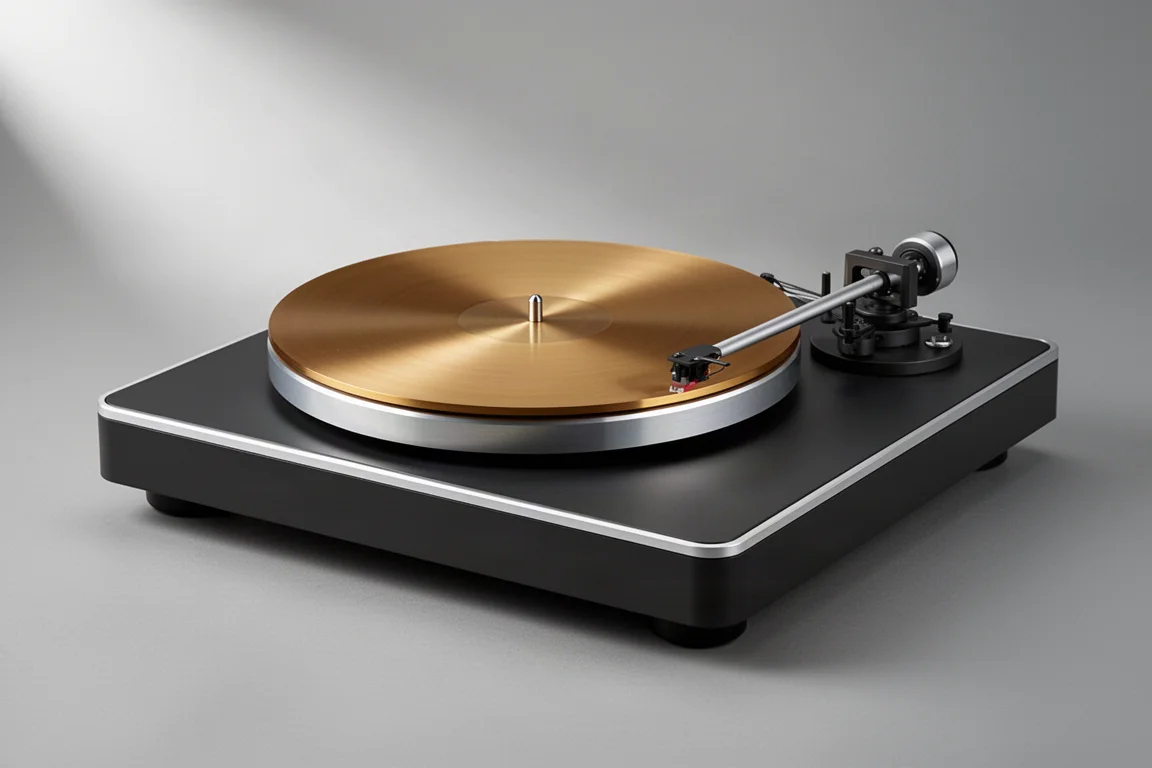
Since the 1960s, the audio world has produced some genuinely memorable turntable designs, and the current market keeps that tradition alive. The seven decks below stand out right now because they combine distinctive looks, strong sound quality, and a story worth telling the next time someone asks about the record player in your living room.
Everything here sits well under the $5,000 mark. These are not budget models by any stretch, and each one takes a different route to the same goal: getting a stylus through a groove without adding anything the record did not contain. The list starts with the least expensive option and works upward.
How to Judge a Turntable’s Design
Before comparing individual decks, it helps to know which details actually matter. Plinth material comes first: MDF and hardwood add mass and damping, acrylic is inert and resists resonance, and open-frame or foam-core designs chase rigidity while removing weight. Bearing design comes next, since lower friction and better isolation mean a quieter background. Motor placement matters too, especially on decks that separate the motor from the chassis to keep vibration out of the platter.
Then there is the tonearm, which has more influence on tracking than most buyers expect, and the power supply, which determines how accurately speed holds. Finally, consider where the deck is built and how far it can grow with your system. A turntable that can be upgraded piece by piece tends to stay in a system far longer than one that cannot.

None of these choices is automatically better than another. A lightweight, rigid design and a heavy, damped design can both sound excellent; they simply take different paths to stability and quiet.
U-Turn Orbit Special: American Minimalism
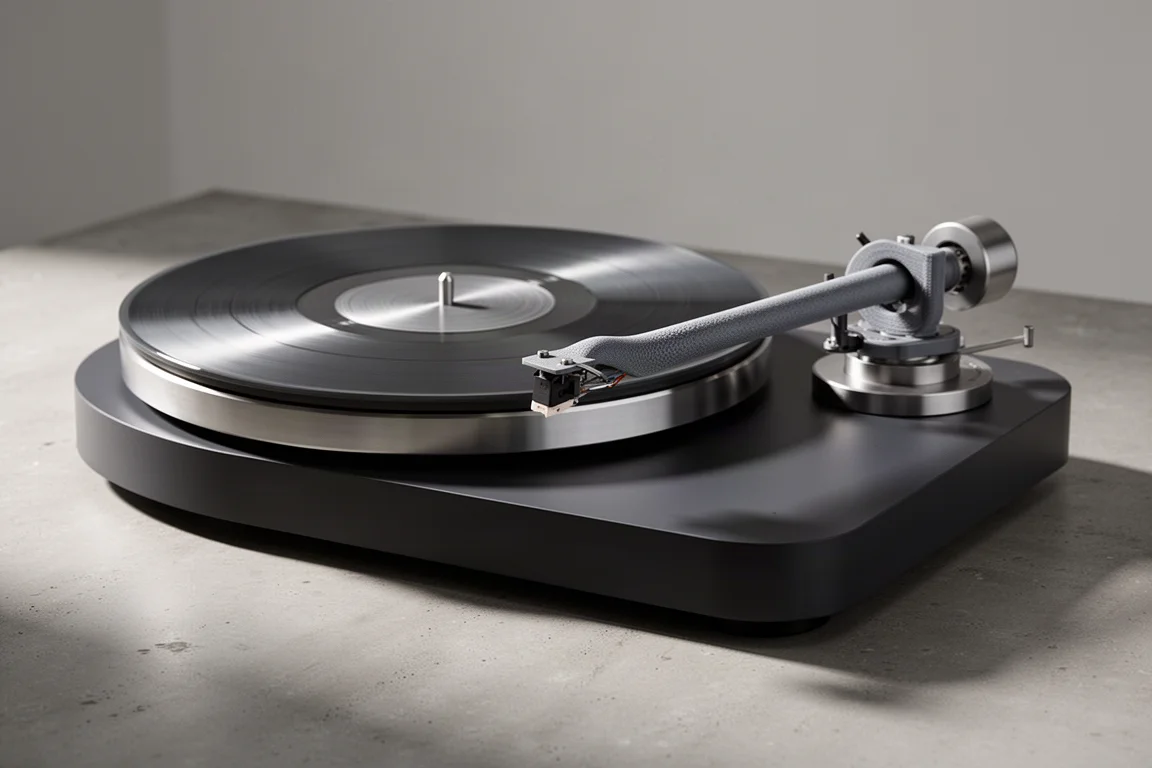
The U-Turn Orbit Special proves that a modest budget does not have to mean a disposable deck. You can choose a clean powder-coated MDF plinth in one of several colors, made in Minnesota, or step up to a solid hardwood plinth in sustainably sourced walnut or oak harvested in the United States. Both feel more substantial than the price suggests.
The story behind it is part of the appeal. U-Turn assembles these turntables in Massachusetts and uses locally supplied parts wherever possible, which is unusual in a category where most decks under $1,000 come off overseas assembly lines. The performance follows the same philosophy: an acrylic platter, a precision gimbal tonearm, and a deliberately simple layout keep the sound clean, quiet, and refined, letting the cartridge do its job without drama.
Michell TecnoDec: British Engineering Heritage
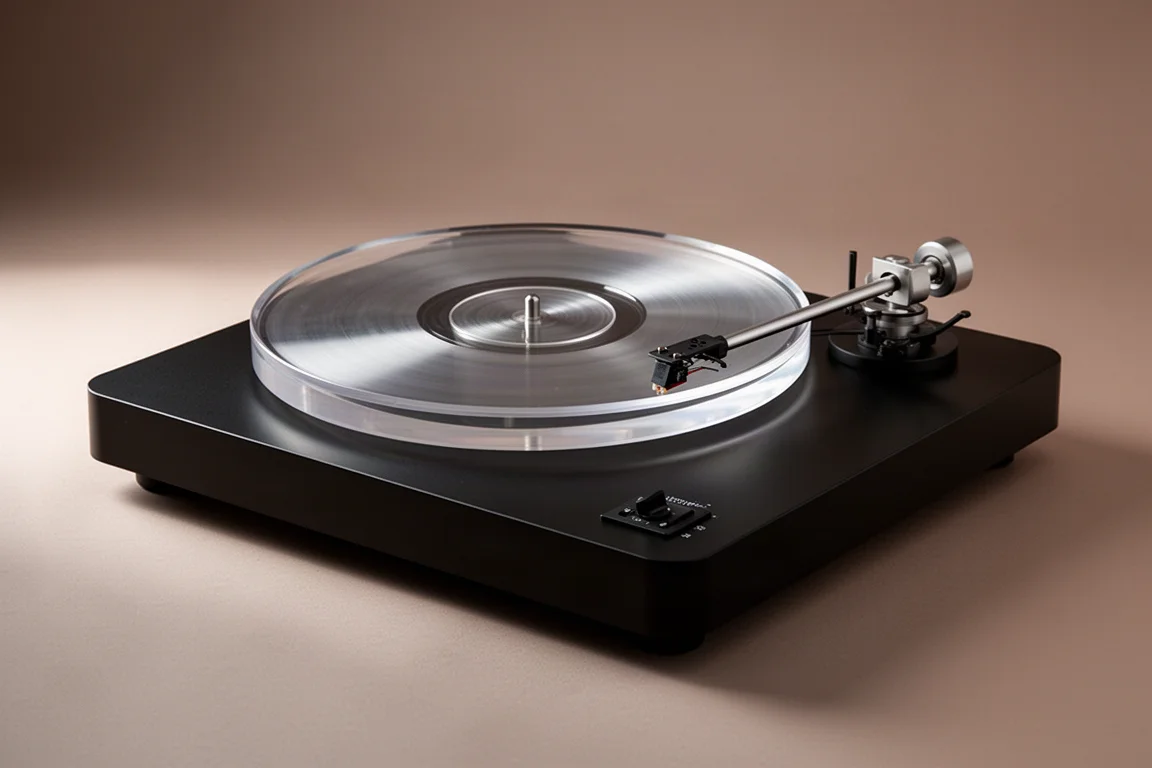
The Michell TecnoDec is the entry point into Michell’s lineup, but it carries the same engineering DNA that made the GyroDec a high-end icon. That means vibration-controlled architecture, an inverted oil-circulating main bearing, and a freestanding motor design that keeps unwanted noise out of the music.
Visually it makes no attempt to look like a traditional wood-plinth deck. Instead you get a clean acrylic platter, a compact precision-machined base, and the signature standalone motor sitting just outside the chassis. Before Michell ever built a turntable, founder John Michell was a precision engineer who made scale models, including the Discovery spacecraft for 2001: A Space Odyssey, a project later cited as the inspiration for the GyroDec. The company is still small and family run, hand-building turntables in Herefordshire, England, with each TecnoDec assembled and checked at a single UK facility.
Where this deck shines is composure. The freestanding motor cuts vibration dramatically and the inverted bearing keeps friction extremely low. It is also a table you can grow with rather than out of, since it can be upgraded piece by piece as your system evolves.
Pro-Ject XA B: A Balanced Approach
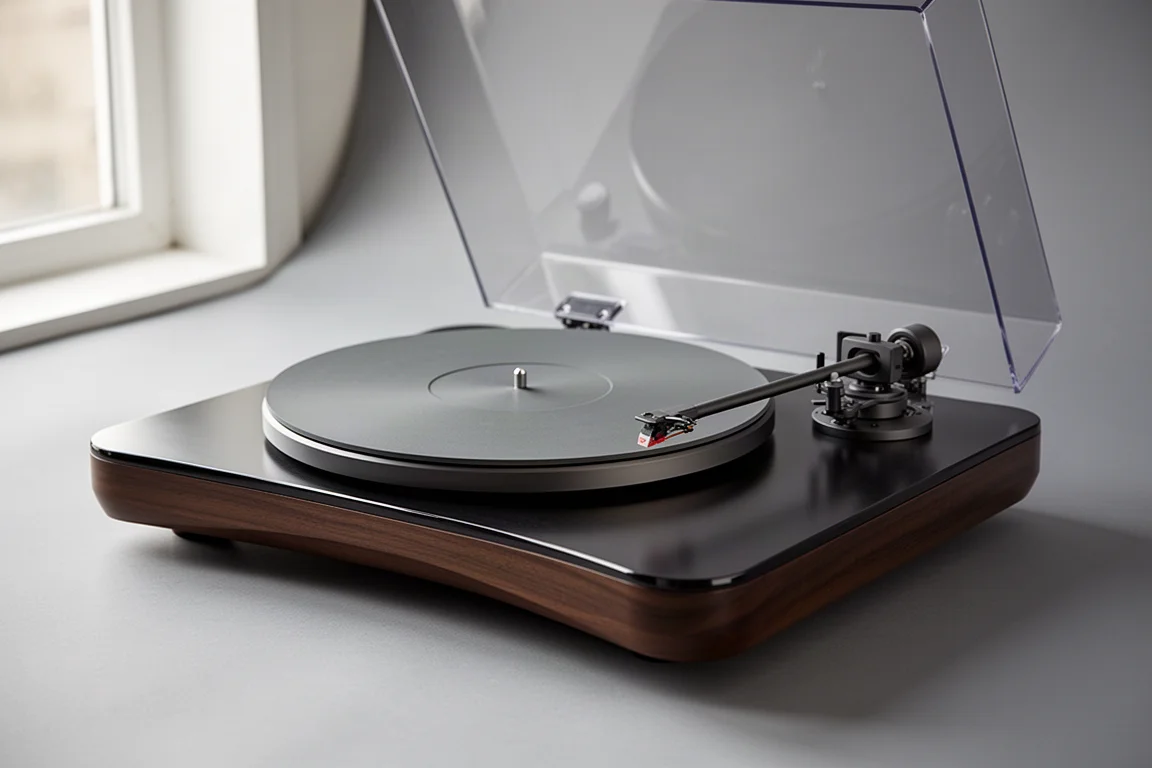
The Pro-Ject XA B stops people in their tracks the moment they see it. A thick acrylic plinth and polished aluminium accents give it the look of something carved from a single block of ice, and the visual legacy of the classic Perspex designs is clearly present. Every flourish serves a technical purpose, though: acrylic is an inert material that helps black out the vibrations that can blur music.
The B in the name stands for balanced, and this is where the engineering gets interesting. Most turntables use unbalanced RCA cables that behave like a long antenna for noise. The XA B instead offers a fully balanced 5-pin output, which, paired with a balanced phono stage, allows the noise floor to drop to virtually zero. You also get a 10-inch aluminium tonearm, a factory-mounted balanced cartridge, and a heavy aluminium platter that signals serious intent the moment you feel its weight. Like all high-end Pro-Ject tables, it is handmade in Europe, and it exists because the company’s founder spent the 1980s buying up factories when the rest of the world was throwing its turntables away.
VPI Scout 2.1: New Jersey Hot Rod
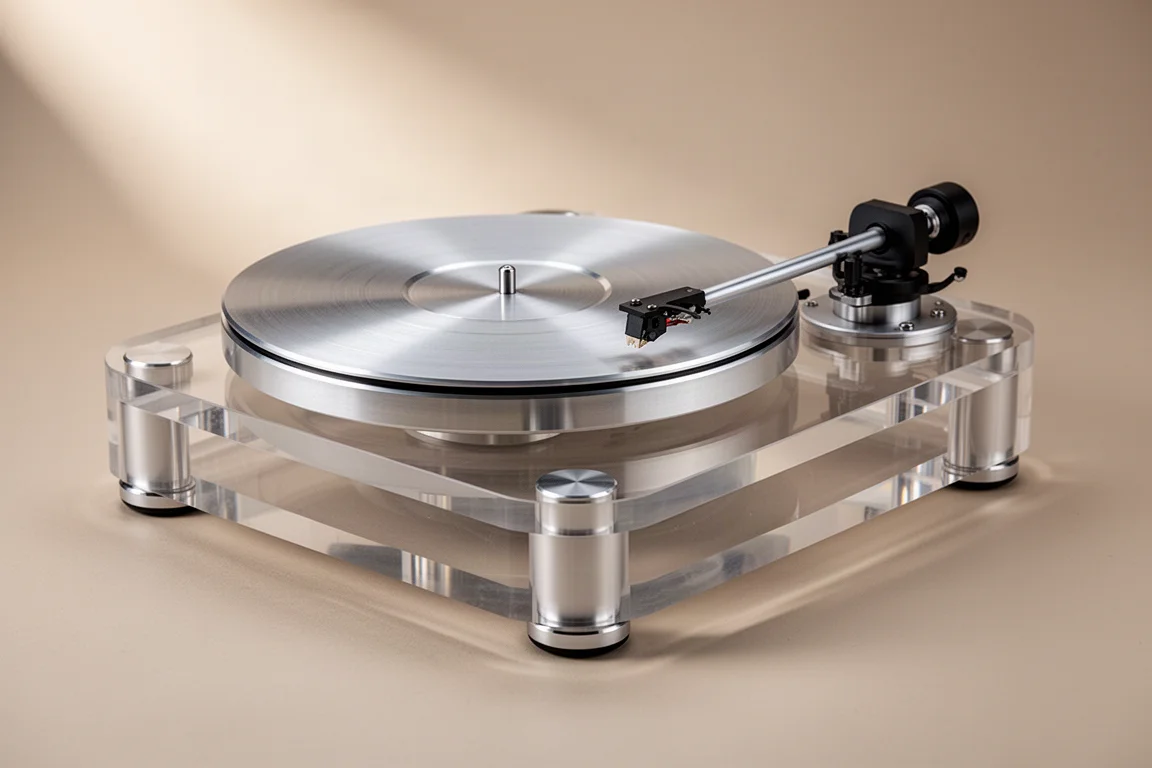
The VPI Scout 2.1 carries forward one of the most successful turntable designs ever made in the United States. VPI has been building turntables in New Jersey for more than 40 years, and the Scout lineage is a big part of what put the company on the map. Visually it has an unmistakable American hot rod industrial feel: a low-profile plinth, a heavy platter, and a sculptural arm that looks like it was built by people who love machines.
What really sets it apart is the 3D-printed tonearm, printed in a single piece with internal structures that cannot be machined conventionally. It is the least expensive turntable you can buy with a true 3D-printed arm. Pair that with the rigidity of VPI’s unipivot bearing and you get a combination that tracks beautifully and brings a lively, open character to the music. Every Scout 2.1 is hand assembled in the New Jersey factory, and it is a platform you can grow with, from platter upgrades to record weights and peripheral rings.
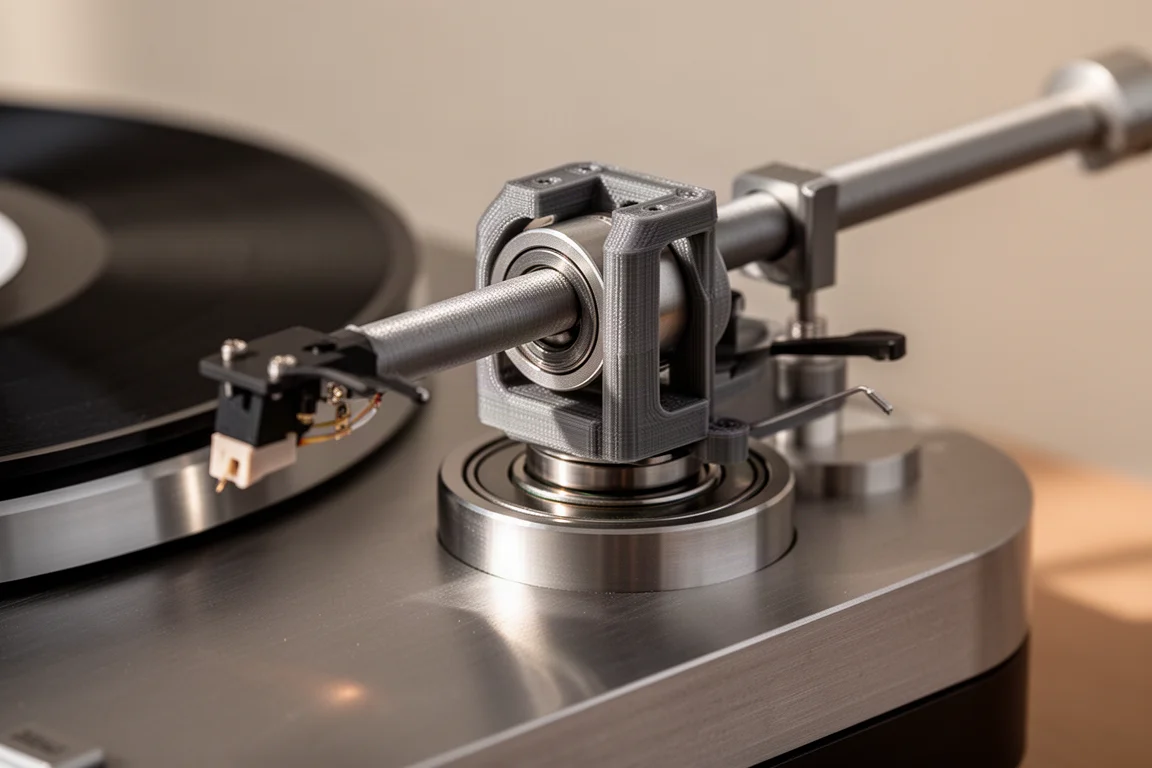
That upgrade path is a large part of the value here. Rather than replacing the deck when the rest of your system improves, you can refine it in stages.
MoFi x Fender American Vintage: Guitar History in a Turntable
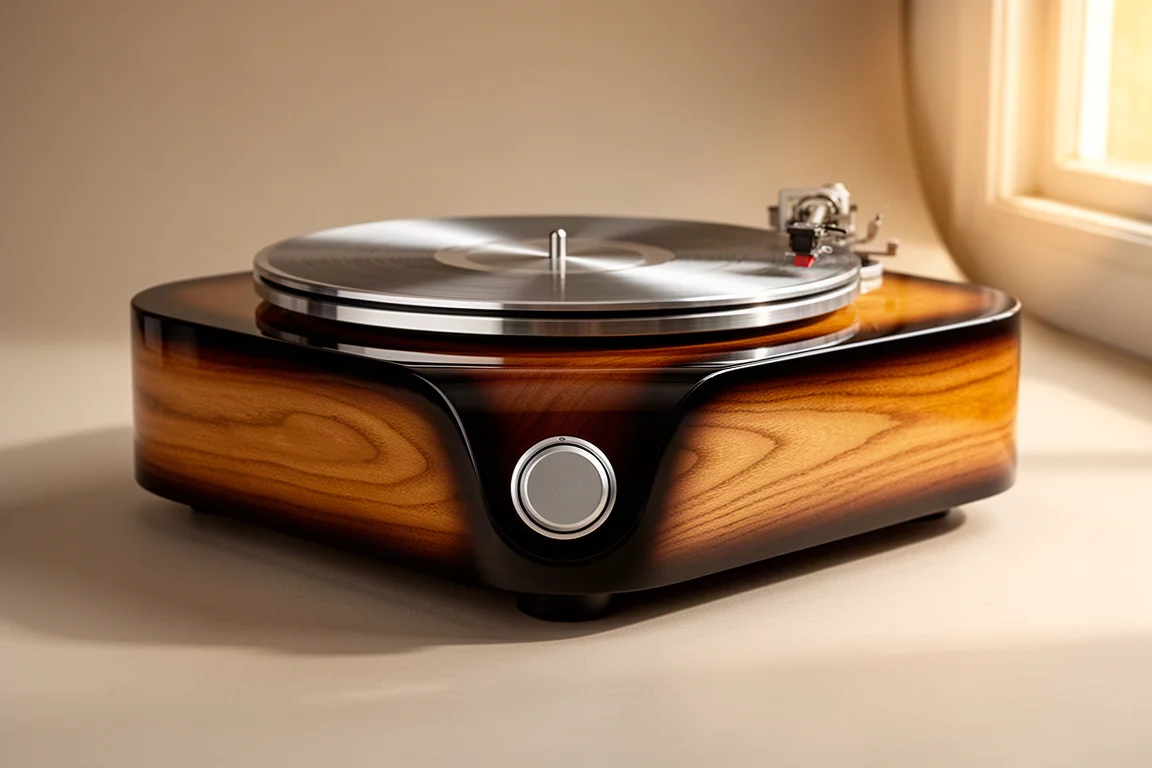
If you want a turntable that bridges the gap between audio gear and a legendary musical instrument, the MoFi x Fender American Vintage is hard to ignore. Its solid alder wood plinth honors the classic mid-century Stratocaster and is finished in the same three-tone sunburst used on Fender’s American guitars. A replica Fender pickguard surrounds a highly convenient push-button electronic speed control, and when light hits the plinth you can see the grain through the burst, giving the whole table the feel of a finely crafted electric guitar.
The story behind it is just as compelling. Before MoFi built turntables, it was known as Mobile Fidelity Sound Lab, one of the most respected mastering houses in the history of vinyl. When the company decided to build its own decks, it worked with one of the best analog engineers in the United States, and his fingerprints are all over the bearing design and the mechanical layout. A 6.8 lb Delrin platter, a precision bearing, and HRS-designed isolation feet give the table a quiet confidence, and music flows from it with a smooth, open, naturally dynamic presentation that reflects those mastering roots.
Rega Planar 8: Lightweight Rigidity
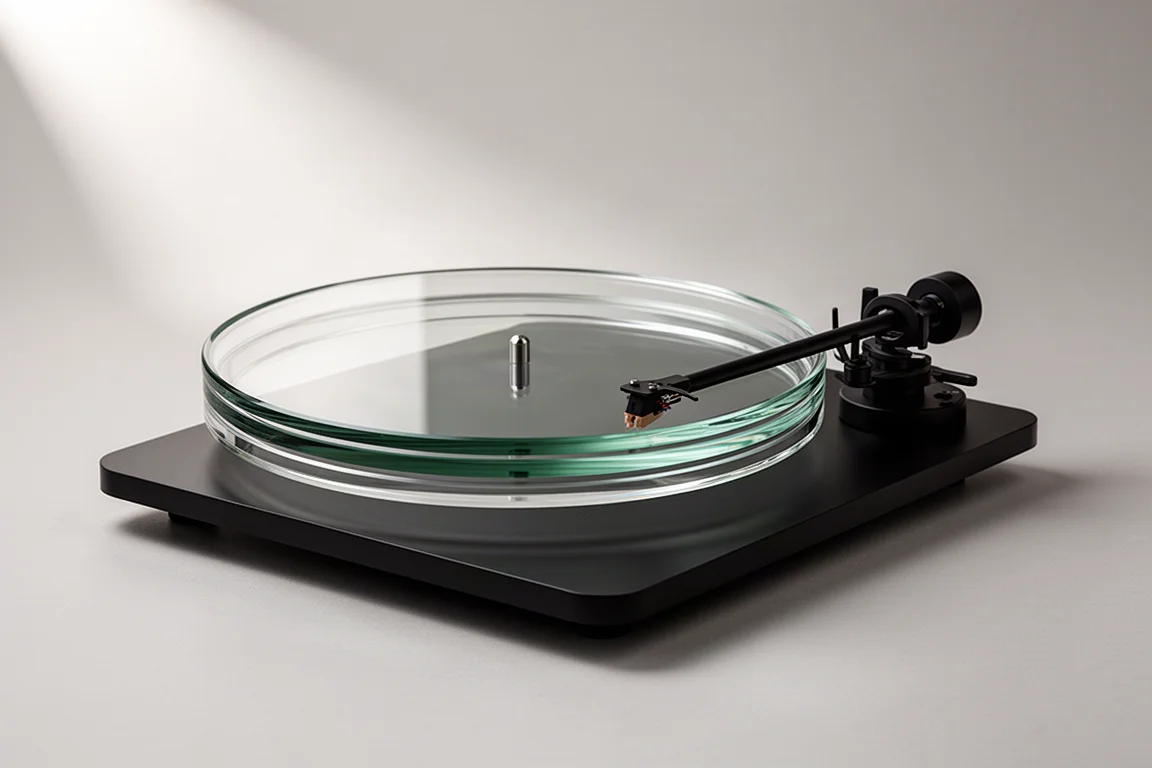
If you want something that looks like it belongs in a modern art gallery, the Rega Planar 8 is the one to study. It looks different because it is different. Rega took the ideas behind its no-compromise Naiad turntable project, a design that sells for around $40,000, and distilled them into a real-world deck that is lightweight, ultra rigid, and musical.
The history runs deep. Roy Gandy started building turntables in the UK in the early 1970s, in the heyday of vinyl, and from the beginning his focus was mechanical simplicity, rigidity, and precision. The Planar 8 is one of the clearest expressions of that philosophy. Its skeletal plinth is made from a Tancast 8 foam core with stiff laminate skins, removing every gram of unnecessary mass, while the dual brace system ties the arm base and the bearing together to keep the structure extremely rigid. With the triple-layer float glass platter spinning on that ultra thin plinth, the table almost looks like it is floating. Rega also equips it with an RB880 tonearm and includes a Neo power supply as standard for very accurate electronic speed control.

That combination of low mass and high rigidity is what makes the design so distinctive. It is arguably the most radical turntable in this group.
Technics SL-1300G: Direct Drive Heritage
The Technics SL-1300G brings serious heritage into the modern age. Technics essentially invented the practical direct-drive turntable in the early 1970s, and the SL-1300G is a modern expression of everything the company has learned over more than five decades of building precision drive systems.
Its motor is a new-generation coreless direct-drive design that delivers exceptionally stable speed with effortless control. It starts and stops with authority but runs with a smoothness that sets it apart. The S-shaped aluminium tonearm is a beautifully built piece in its own right, mounted on a high-precision gimbal bearing assembly and hand assembled in Japan. Build quality is exactly what Technics fans expect: a heavy brass and aluminium platter, a dual-layer chassis, and superb machining. Placed on a cabinet, it genuinely looks and feels like a tank.
Buying Advice
Start with the room and the rest of your system, not the spec sheet. If you are building a first serious setup, the U-Turn Orbit Special delivers honest materials and clean sound without asking for a large commitment, and the Michell TecnoDec is the natural next step for listeners who want a specialist British deck they can upgrade over time. If noise is your priority, the Pro-Ject XA B’s balanced output is worth planning around, provided you have a balanced phono stage to pair with it.

For everyone else, the decision usually comes down to character. The VPI Scout 2.1 suits listeners who like to tinker and upgrade, the MoFi x Fender American Vintage is for anyone who wants a piece of guitar history in the listening room, the Rega Planar 8 rewards those who value a lightweight, rigid approach, and the Technics SL-1300G is the pick for anyone who wants direct-drive stability and a deck that feels engineered to outlast everything around it. Whichever you choose, take the time to set it up properly and match it with a cartridge that suits the rest of your system.
Conclusion
Seven turntables, seven different answers to the same question. The U-Turn Orbit Special shows how much craftsmanship a modest budget can buy. The Michell TecnoDec and Pro-Ject XA B bring specialist engineering and distinctive materials. The VPI Scout 2.1 and Rega Planar 8 push rigidity and low mass in opposite directions. The MoFi x Fender American Vintage turns a plinth into a piece of music history, and the Technics SL-1300G carries half a century of direct-drive development into the present.
The common thread is that each of these decks was designed by people who care about how a record sounds and how the machine looks while it does it. If you are choosing between them, let the story you enjoy most break the tie.
Further reading
Related Reviews
Turntables
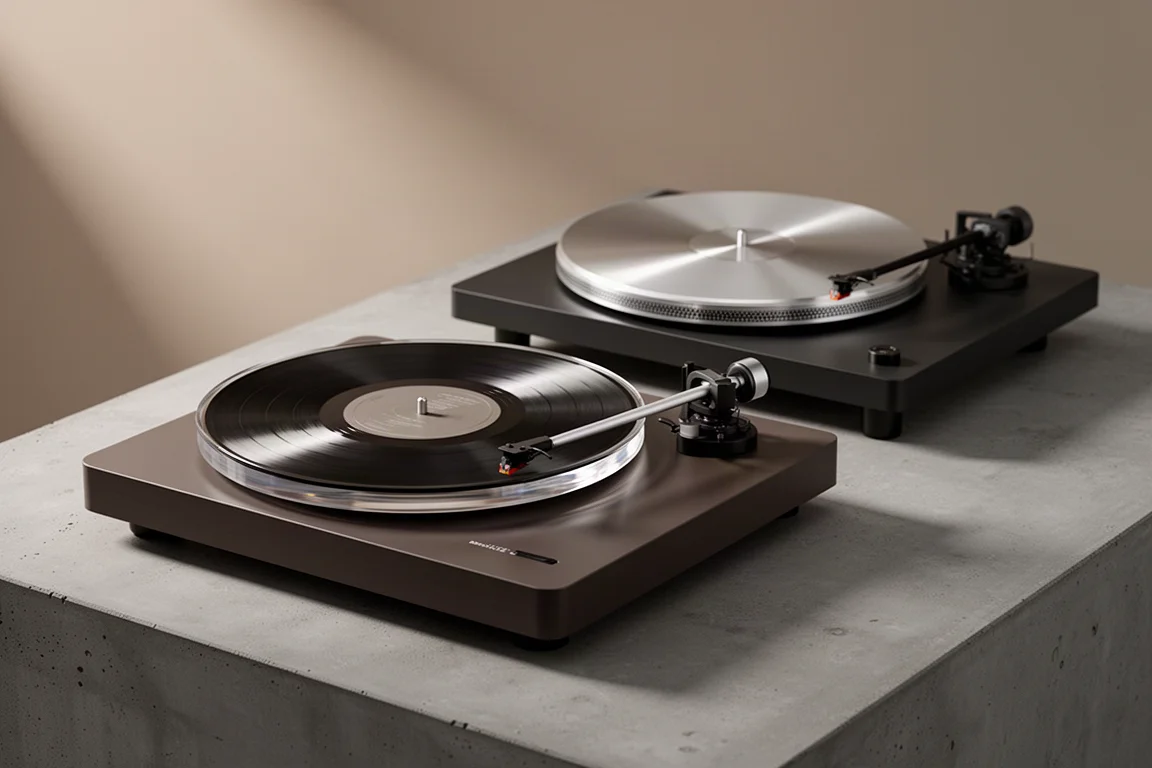
Best Turntables 2026: Seven Standout Picks From Entry Level to Premium
A practical roundup of seven turntables worth considering, from a US-made budget deck to small-batch premium models with a clear upgrade path.
Turntables
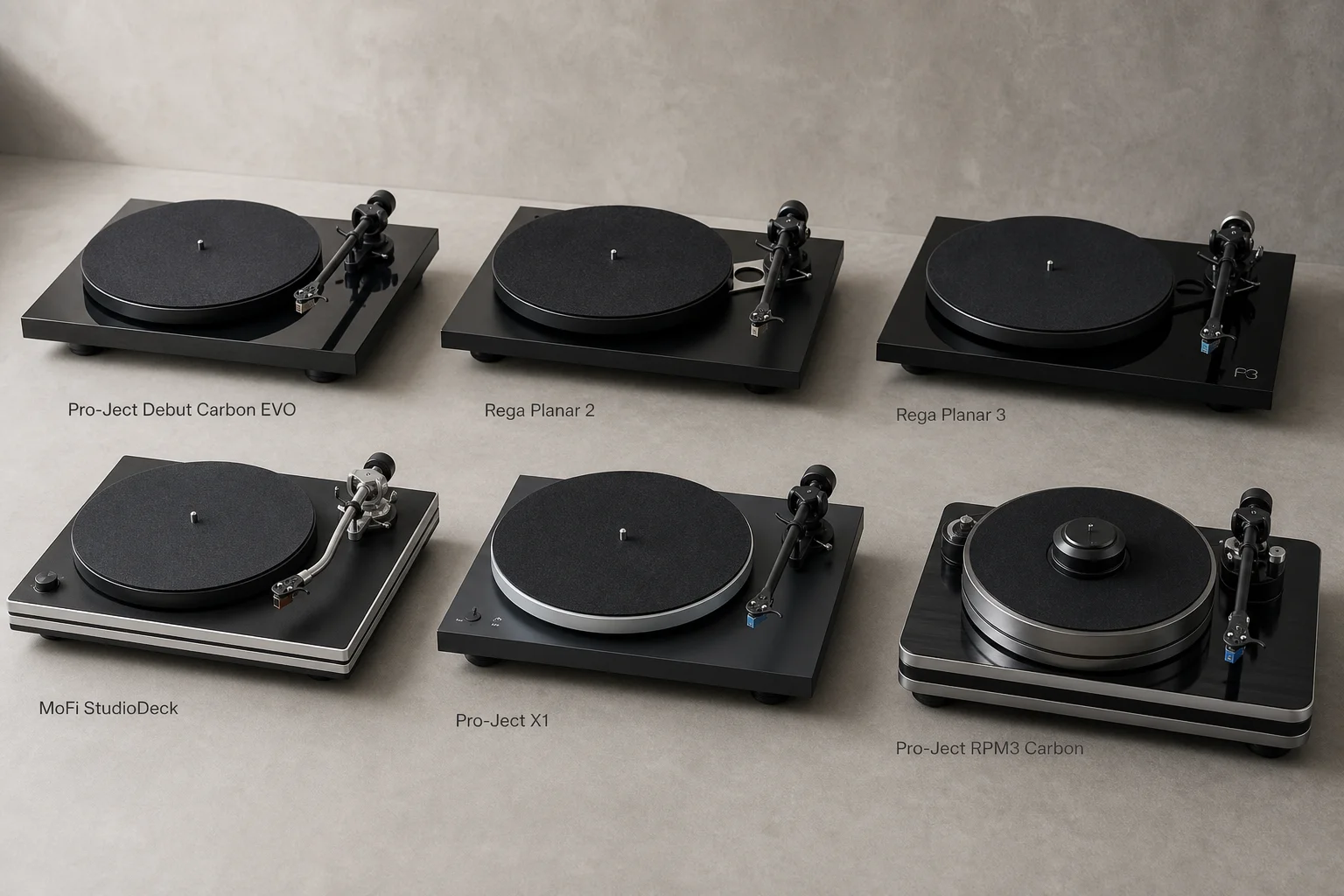
Best Turntables Under $1,000: Five Fully Manual Picks Worth Considering
Five fully manual turntables under $1,000, compared on build quality, cartridges, upgrade potential, and the character of sound each one brings to a system.
Turntables
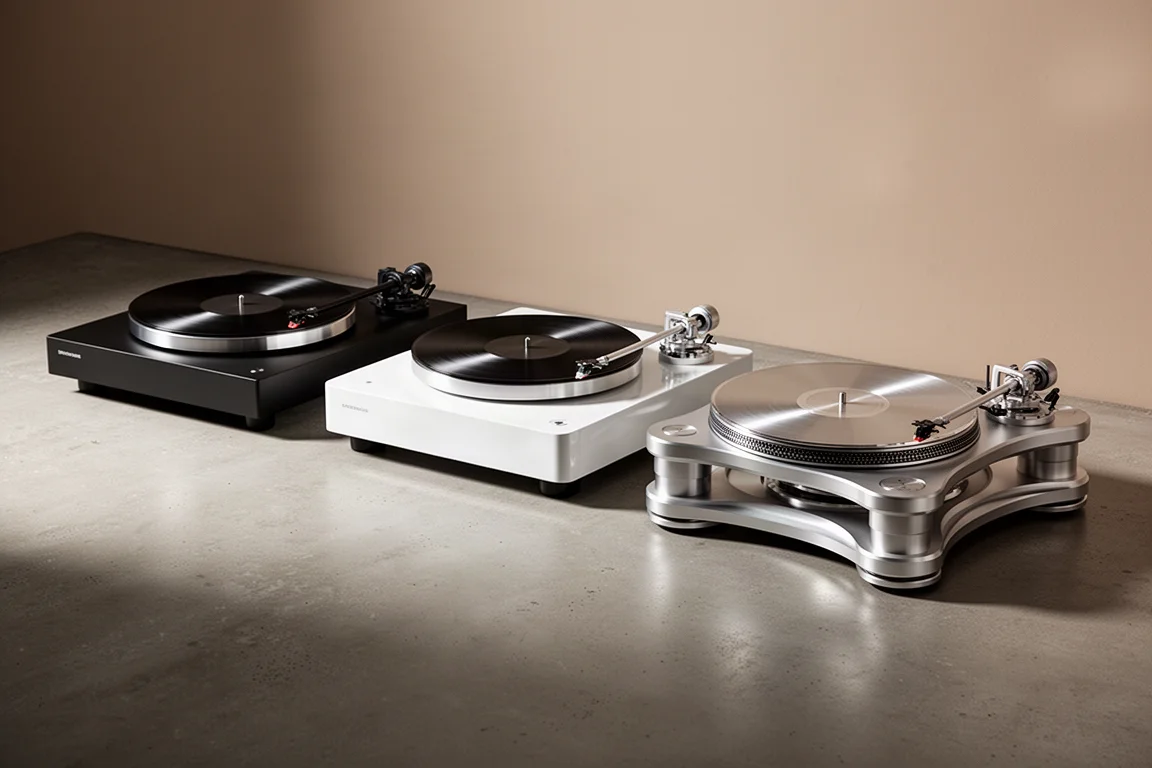
Best Turntables Under $2,000: Six Vinyl Decks Worth Building a System Around
Six turntables under $2,000, from a value-focused belt-drive deck to a fully balanced design, with the strengths and trade-offs that matter before you buy.